MOUNTAIN SCORES
CATEGORY BREAKDOWN
See our criteriaMountain Score by Area
GOOD TO KNOW
1-Day Ticket: CHF 92–99 ($112–$121 USD)
Pass Affiliation: Epic Pass
On-site Lodging: Yes
Après-Ski: Moderate
Nearest Cities: Zurich (2.5 hrs), Milan (4 hrs), Geneva (4 hrs)
Recommended Ability Level:

+ Pros
Unique train-linked layout
Stunning high-alpine views
North-facing advanced terrain at Gemsstock
Low-key, down-to-earth town
– Cons
Maze-like traverses across Oberalppass-Sedrun
Long tram lines at Gemsstock
South-facing slopes prone to sun-bake
Three areas not practical to combine in a day
MOUNTAIN STATS
Skiable Footprint: 570–1,260 acres per area (2,485 combined)
Ski Areas: 3
Marked Pistes: 86 km
Top Elevation: 9,705 ft
Vertical Drop: 3,796–5,075 ft per area
Lifts: 35
Trails: 75
Beginner: 33%
Intermediate: 46%
Advanced/Expert: 21%
VIDEO
Mountain Review
Andermatt-Sedrun-Disentis is on the Epic Pass held by millions of Americans, but few of them know much about it. This Swiss Alps region spans three distinct mountain zones, and its modestly sized town offers a reprieve from the hustle and bustle of the biggest European resorts. It also recently changed hands: Vail Resorts acquired a majority stake in 2022, marking the company's first European ski resort operation.
Size and Terrain Layout
The region is made up of three physically separate ski areas. Andermatt-Gemsstock, on the left of the trail map, is primarily advanced and expert terrain. Andermatt-Oberalppass-Sedrun (AOS) is the biggest and widest part of the resort. Disentis is mainly beginner and intermediate cruising terrain. Gemsstock and AOS are marketed together as SkiArena Andermatt-Sedrun, while Disentis joined the same pass in 2023 and is technically not part of SkiArena.
Public transportation links the three areas: a bus from Gemsstock to AOS, and the Matterhorn Gotthard Bahn train from AOS to Disentis. Headways run about every 30 minutes for the bus and anywhere from every 15 minutes to over an hour for the train, so the areas aren't practical to bounce between in a single day. AOS is also exceptionally wide, and at times feels more like a network of traverses than a well-designed ski resort. The main Andermatt and Sedrun faces have decent vertical (2,952 and 2,345 feet), but the high-alpine terrain between them breaks into runs of only 1,000 to 1,500 feet that mostly serve as links to the next lift. It takes five of these short lifts and trails to get from the Andermatt side to the Sedrun side, and four to go the other way. Gemsstock and Disentis are better designed for longer laps, with nearly 5,000 feet of vertical at Gemsstock and over 3,000 feet of continuous groomers at Disentis. Aside from a few trails at the bottom of Sedrun and Disentis, the whole ski area sits above treeline, which makes for stunning views on clear days and poor visibility during storms and flat light.
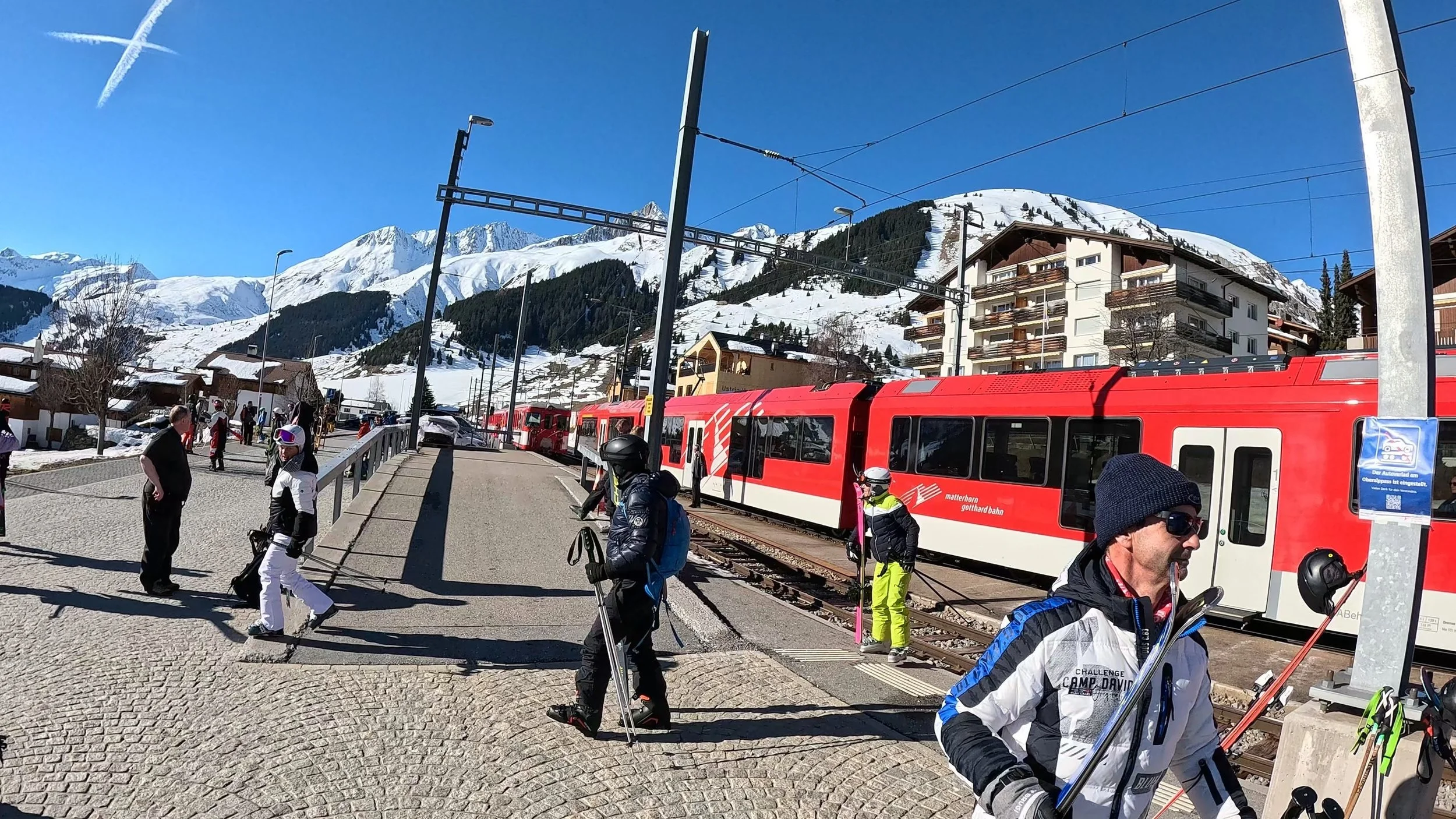
The Matterhorn Gotthard Bahn train runs from Andermatt to Disentis, providing skiable access to many different parts of the resort.
Beginner
Despite its wide footprint, Andermatt is fairly strong for beginners. The bulk of the Andermatt face of AOS is gently sloped blue piste, and the shorter trails on the upper mountain suit people still getting familiar with skiing or riding. The very long #1 piste down to the Andermatt base may be too drawn out for some, but it keeps a forgiving pitch and offers great views of town as it follows the Gotthard Bahn train line, and the gondola or train offers a way to download instead. A large portion of Disentis is well-groomed beginner terrain, Sedrun has easier runs on the lower half of its front side, and learning areas sit in Sedrun, Disentis, and halfway up the Andermatt face. The resort isn't perfect for novices, though: Gemsstock has no beginner terrain, and crossing AOS from one side to the other requires intermediate ability.
Intermediate
Intermediate skiers and riders will find modestly sloped red cruisers across most of the mountain. Sedrun has the largest concentration, with wide-open cruisers on its main face and shorter but distinct-feeling runs between Sedrun and the mid-mountain Schneehüenerstock lodge. Disentis adds high-alpine red runs boxed in by striking peaks. Gemsstock has the fewest intermediate pistes, but its nearly 5,000-foot descent is doable on red terrain, which makes for quite the adventure. The lower section of the red #70 trail has some mild uphill stretches, so keep your speed.
Terrain Parks
Freestyle snow parks sit around Gemsstock, the Andermatt front side, and the Sedrun front side. They mainly feature small-to-large jumps, rollers, and banked slaloms, with a few boxes and rails.
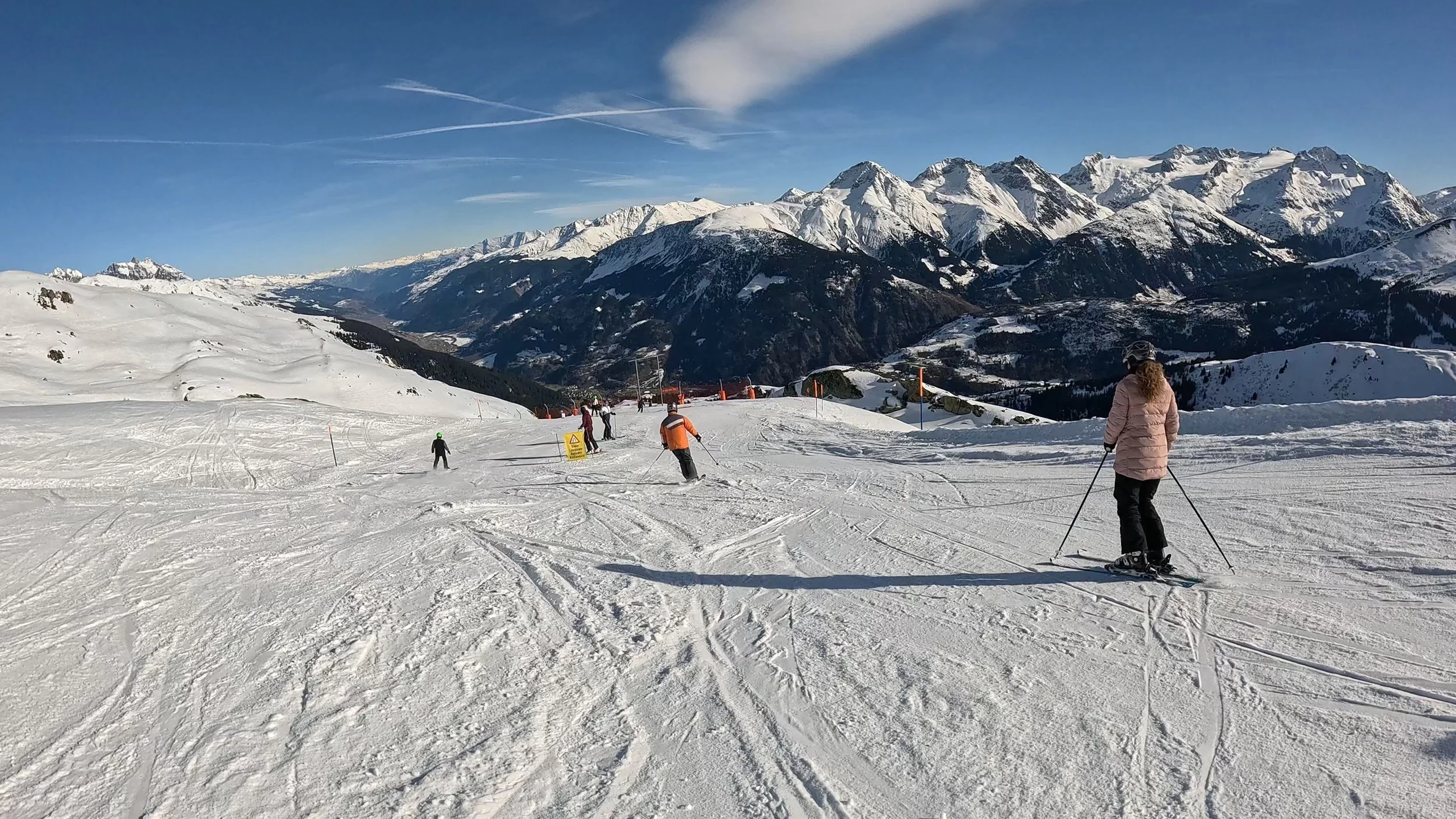
Intermediate skiers and riders will find modestly sloped red cruisers across most of the mountain.
Advanced and Expert
Gemsstock is the place for advanced and expert skiers and riders. The upper mountain holds two notably difficult runs, the steep, consistently groomed #71 black and the long, ungroomed #72 yellow piste, and the Lutersee t-bar serves similarly pitched but shorter terrain. On-piste black terrain elsewhere is limited. Only small sections of trails at AOS and Disentis are marked black or yellow, and some open inconsistently. A couple of reasonably challenging pistes stay open all winter at AOS, though apart from #29 at Schneehüenerstock they are fairly brief. At Disentis, the promising #130 and #134 runs can go several seasons without opening because of poor snow at lower elevations, and skiing past the closed signs can mean bare ground halfway down with no way back to the lifts besides walking.
Off-Piste
Andermatt has surprisingly enjoyable off-piste terrain. Solid unpatrolled lines sit off most upper-mountain lifts, especially at Gemsstock and to skiers' left of Oberalppass, and a short hike off the upper Gemsstock tram leads to a few truly extreme chutes and couloirs. Longer routes include a hike to the Péz Ault summit at Disentis and a descent to Hospental from the back of Gemsstock. Thanks to the resort's family-friendly crowd these areas rarely get tracked out, and freeze-thaw cycles typically decide whether conditions are good. The off-piste is not patrolled for avalanches at all, so bring proper training, equipment, and a partner, because the avalanche danger is considerable.
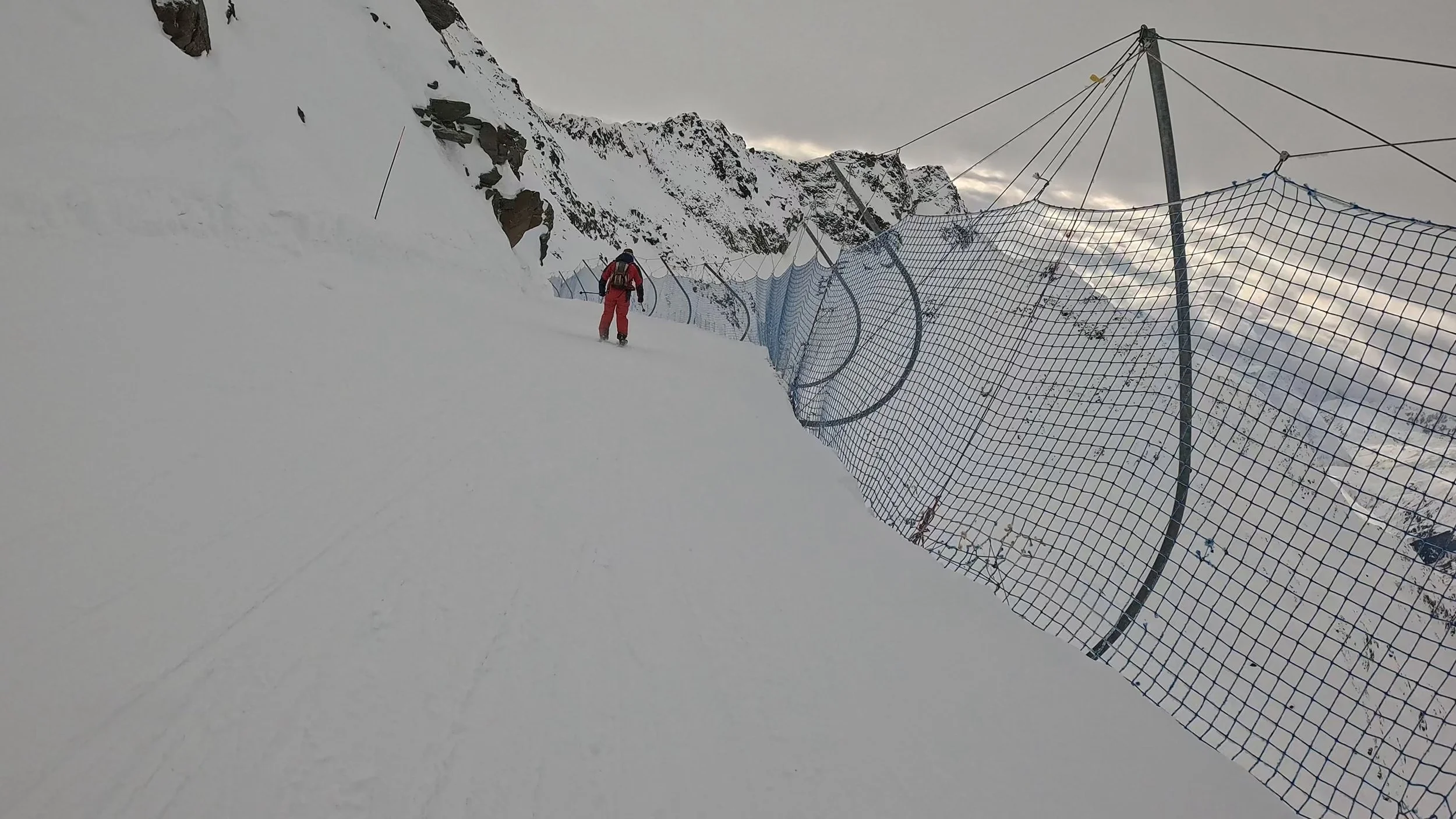
Solid unpatrolled lines sit off most upper-mountain lifts, especially at Gemsstock.
Snow Quality and Resiliency
Annual snowfall averages just under 200 inches, decent for the region but well short of the best in the North American Rockies. The Andermatt Valley is somewhat colder than other Alpine resorts at similar altitudes, which helps preserve the snowpack, but tall nearby peaks block storms from certain directions. As at other Swiss resorts, snowfall isn't always consistent: the resort can see great powder days as well as snow droughts that last weeks.
Conditions vary by area. Gemsstock has the best and most consistent snow because its slopes face almost entirely north, and the black and yellow slopes off the upper tram stay shaded most of the day, avoiding the freeze-thaw cycles seen elsewhere. South-facing AOS and Disentis are prone to sun-bake, with icy mornings and soft, spring-like afternoons. Disentis bottoms out at the lowest base elevation of the three, and unreliable snow cover keeps its lower valley runs from opening consistently. Snowmaking and snowfarming cover portions of AOS and Disentis.
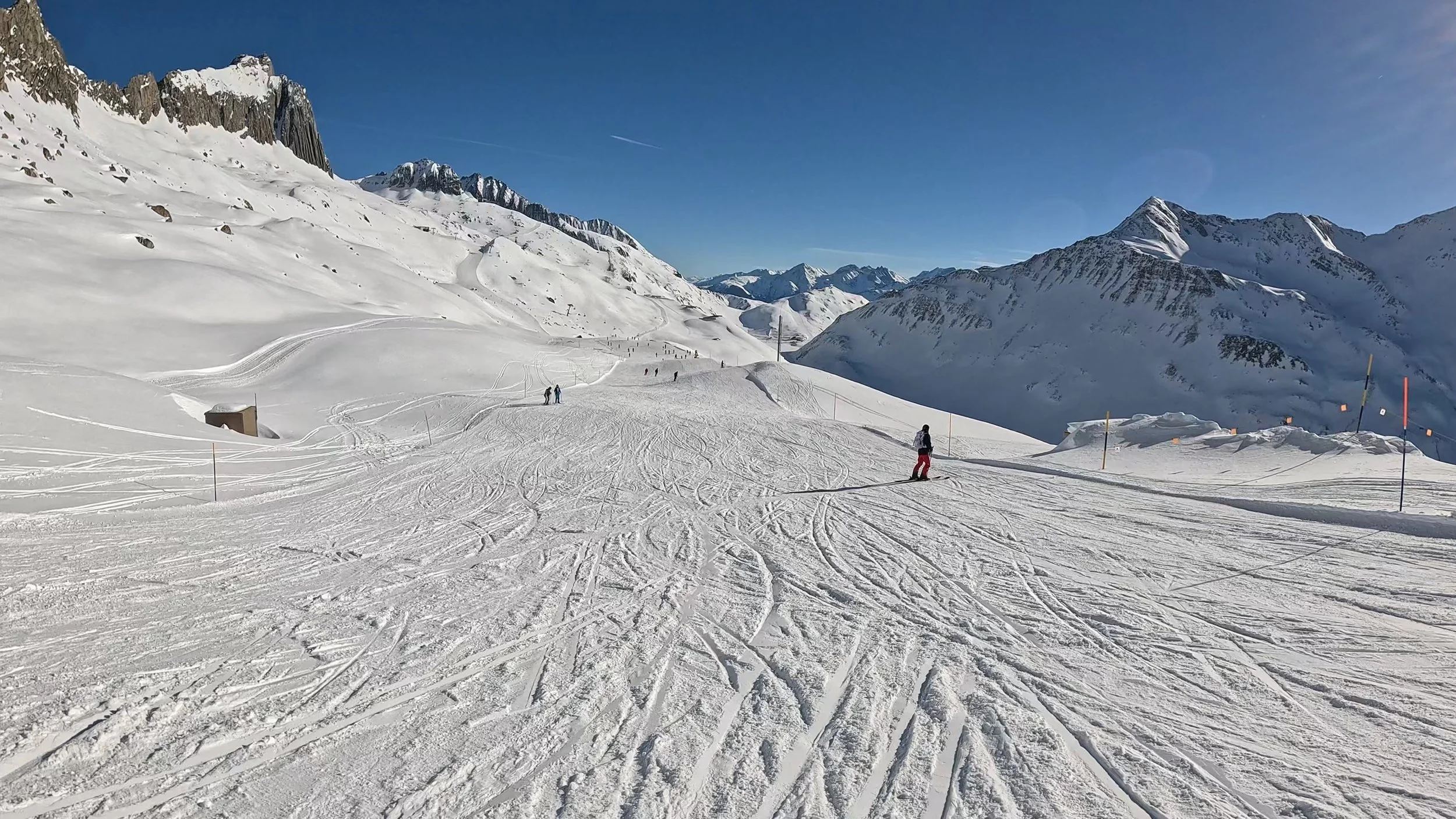
While it often sees colder temperatures than some competing mountains, many of the slopes at Andermatt-Sedrun-Disentis are prone to sun-bake.
NOTE: We may receive a small affiliate commission if you click on the below links. All products listed below are unisex.

Recommended all-mountain ski

Recommended carving ski

Recommended glade ski

Recommended expert/touring ski
Lifts
Each area has a fairly modern lift setup, though it falls short of some Swiss competitors. All but a few lifts at AOS are high-speed, and two gondolas, one on the Andermatt front face and one from Oberalppass to the Schneehüenerstock lodge, carry guests to the upper mountain. The only slow, fixed-grip chairs are the #7 and #8 quads serving the Val Val zone between Oberalppass and Sedrun, which are reasonable on their own but add up for anyone crossing the resort.
Gemsstock is held down almost entirely by two trams, one on the lower mountain and one on the upper. They are fast and shelter guests from the elements, but long headways and low capacity mean significant lines, especially at the upper tram serving most of the advanced terrain. A mid-mountain high-speed quad and t-bar avoid the waits, but the runs they serve are short and get old quickly, so Gemsstock is a poor choice for peak weekends, holidays, or school vacations. Disentis falls between the two: trams out of the base, a mix of slow and high-speed chairs mid-mountain, and only t-bars and platter lifts on the uppermost slopes, which keep traffic down but are physically taxing. It is also the only area without a reliable trail link to the base during the core season, so guests often need to download a tram.
Navigation
AOS is the hardest area to navigate. The wide, traverse-like footprint makes getting around a protracted experience, a few junctions have irritating flat areas, and confusing signage doesn't help. Gemsstock and Disentis are much easier, though each still has a few confusing intersections or unexpected flat sections. The Gotthard Bahn makes it easy to skip the traversing entirely, with two intermediate stops in the higher parts of the resort.
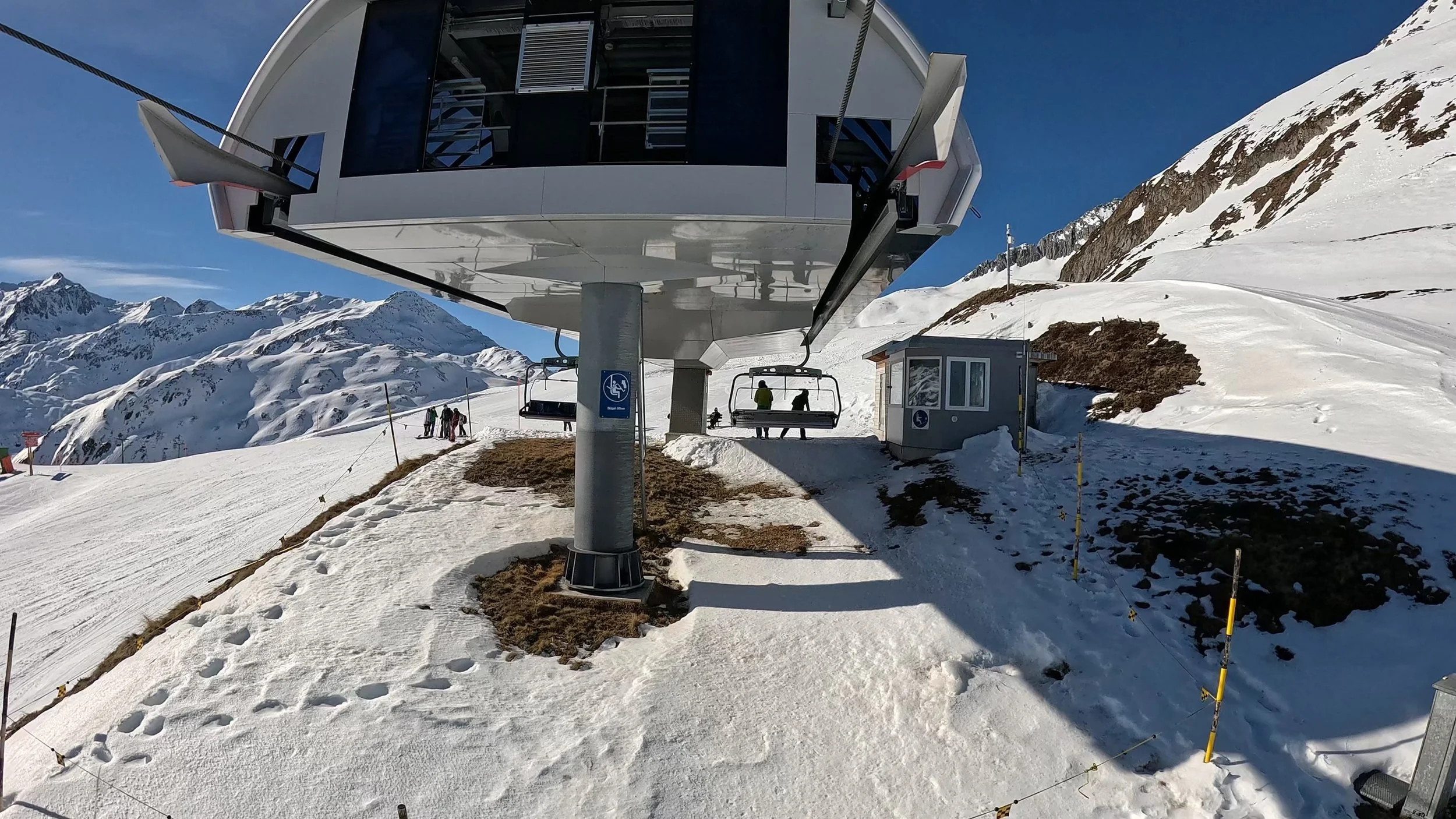
Andermatt-Sedrun-Disentis has modern lifts in most areas, although some zones are held down by slow chairs, surface lifts, or infrequent trams.
Crowds
Andermatt isn't among the busiest destinations, but it does see a fair amount of traffic from Zurich on weekends and holidays. Lift lines are generally manageable apart from the Gemsstock trams, though a handful of chokepoints exist because of missing lift redundancies. At Disentis, arrivals by train at the Sedrun station need the low-capacity Sedrun bunny hill t-bar to reach the Disentis tram, and guests taking the Caischavedra tram from Disentis village have to ride a magic carpet first. Both create morning lines.
Facilities
Guests can find solid, independently run restaurants across all three zones, including a Michelin-star Japanese restaurant at the top of the Andermatt front side, and most have outdoor seating for soaking in the views. The caliber doesn't match the top tier of European destinations. One place to skip is the resort-run cafeteria at the top of Schneehüenerstock, which is expensive for the quality of the food.
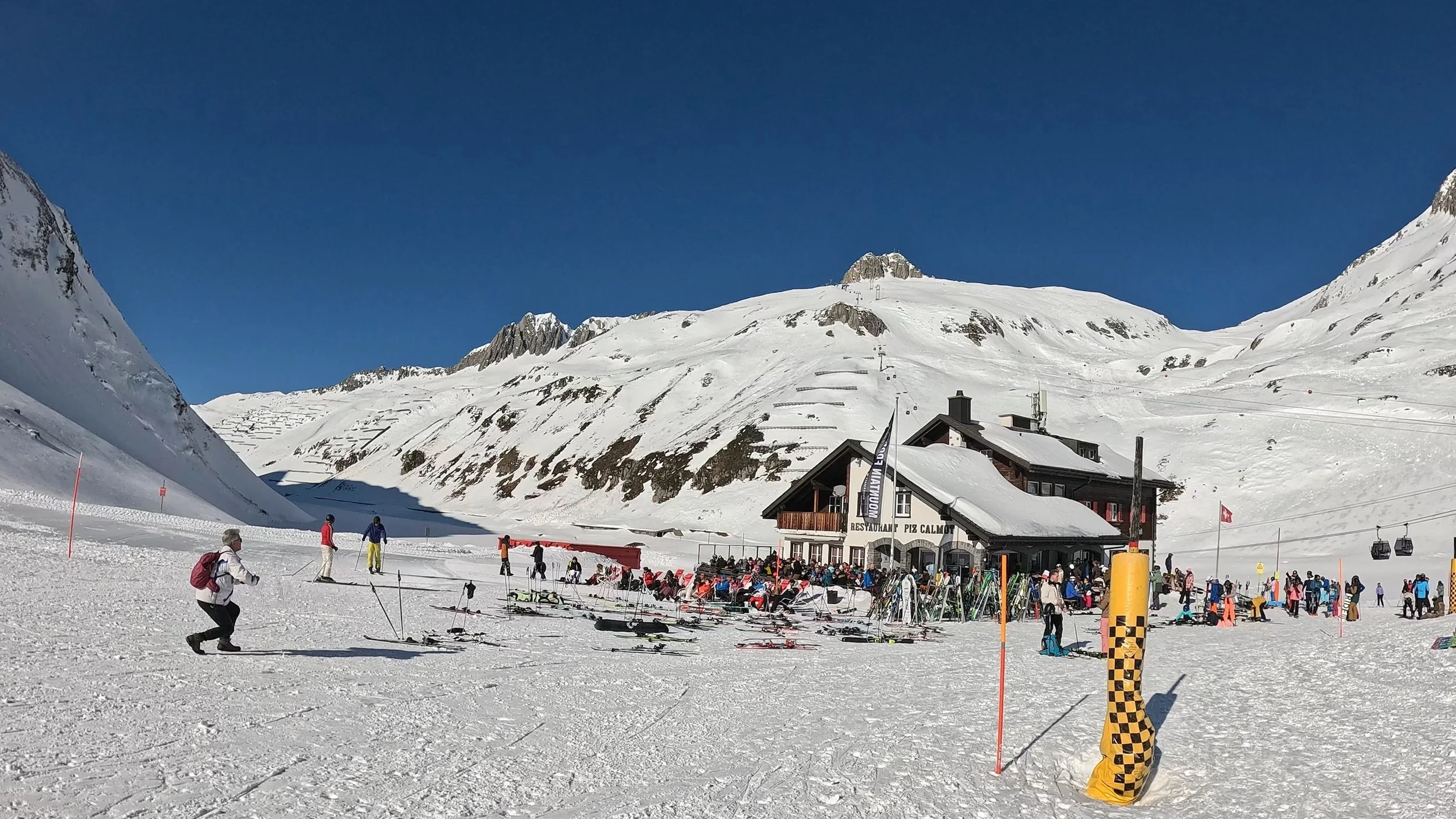
Solid, independently run restaurants across all three zones.
Getting There
Getting to Andermatt is easy thanks to Switzerland's national rail network. By public transportation the resort is just under two and a half hours from Zurich airport and just over four hours from Milan and Geneva. Driving from Milan takes just over two hours. The road between Andermatt and the other two towns closes in winter, so the train is the only way between them.
Lodging
Most visitors will want to stay in the town of Andermatt, a smaller and more down-to-earth village than Zermatt or Verbier. Options range from upscale but no-frills rooms to the ultra-luxury Chedi Andermatt. Only the Chedi and the Radisson Blu have pools, and only the Chedi's is outdoors. Basecamp Andermatt is a good shared hostel option. The nearby town of Hospental has more economical options, including shared-room hostels, and connects to Andermatt by a free, half-hourly shuttle bus. Sedrun has cheaper apartments with stunning views and limited buildup, and Disentis has modern hotels and condos, including the Catrina Hotel, which offers the cheapest access to a pool in the region (indoors).

Recommended intermediate board

Recommended advanced board

Recommended expert board

Recommended touring board
Après
Après is lower-key than in Austria or other high-profile Swiss mountains, but on-mountain bars get decently lively at or after lunch. Stick to the areas closest to Andermatt: the Rondodrom globe bar at Gemsstock, and the Himalayabar off the #1 trail on the Andermatt front side, where you can ski directly back into town and last call tends to be well after the lifts close.
The town of Andermatt has a range of bars and restaurants for evening après, though not lively clubs. Disentis is more muted. The Bar Nevada umbrella bar is the one on-mountain spot worth visiting, and the bars in Disentis town are better for a drink or two with your group than for partying.
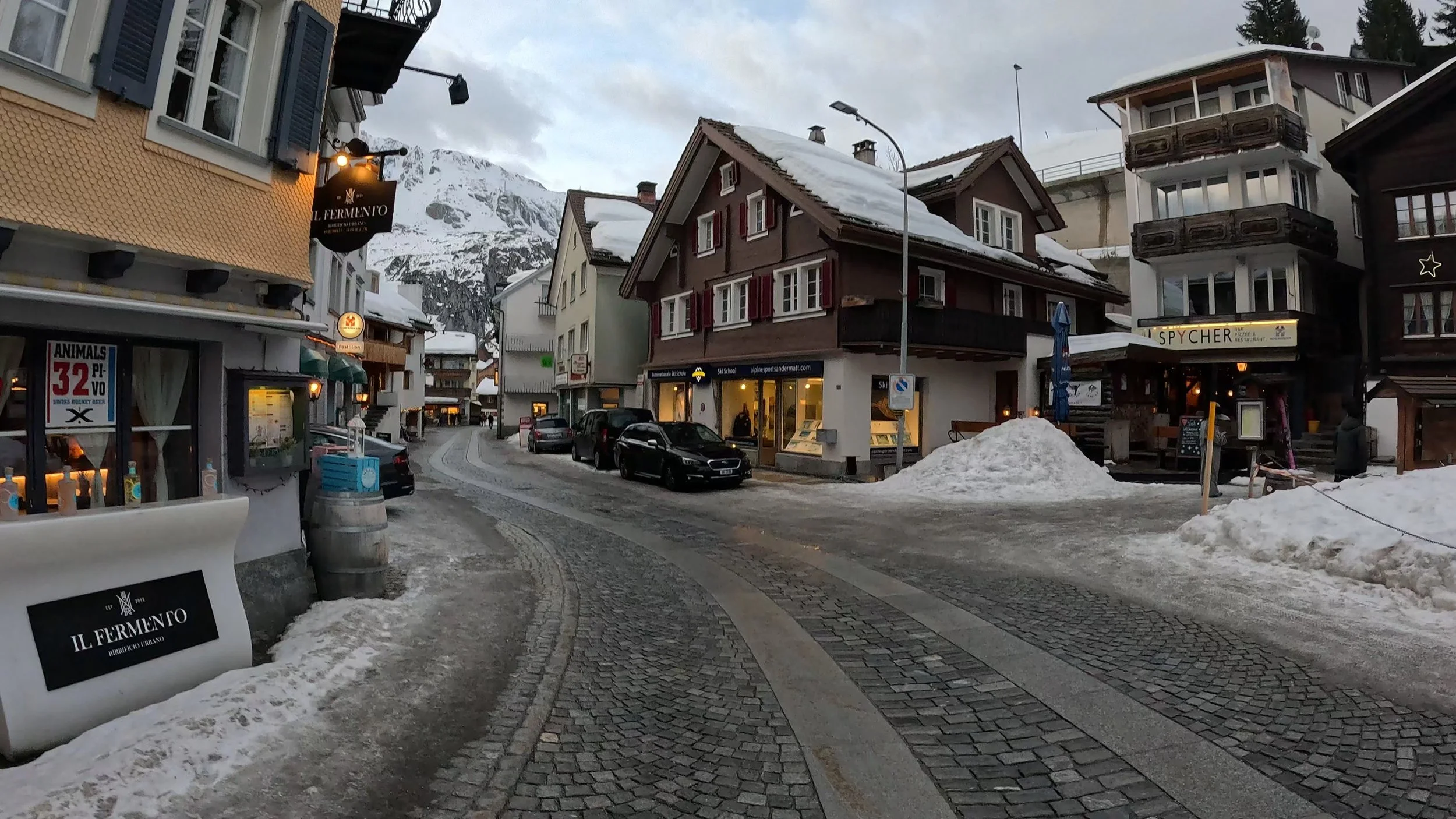
Andermatt’s village center is a short walk from the lifts, with bars and restaurants in the relatively low-key town.
Pass Partnerships
Andermatt-Sedrun-Disentis is an unlimited destination on the full Epic Pass and a 5-day member of the Epic Local Pass, one of only two European resorts on the Local Pass. Epic Pass holders need to pick up a special RFID card at the ticket window to redeem their days, and the resort hands out goodies including crackers and Swiss hand lotion. Locals report that the experience and crowds have changed little since Vail's acquisition.
Mountain Aesthetic
Andermatt may not be the most prominent destination in the Swiss Alps, but it is surrounded by stunning peaks and feels especially isolated in the middle areas of the resort. The train system adds to the character.
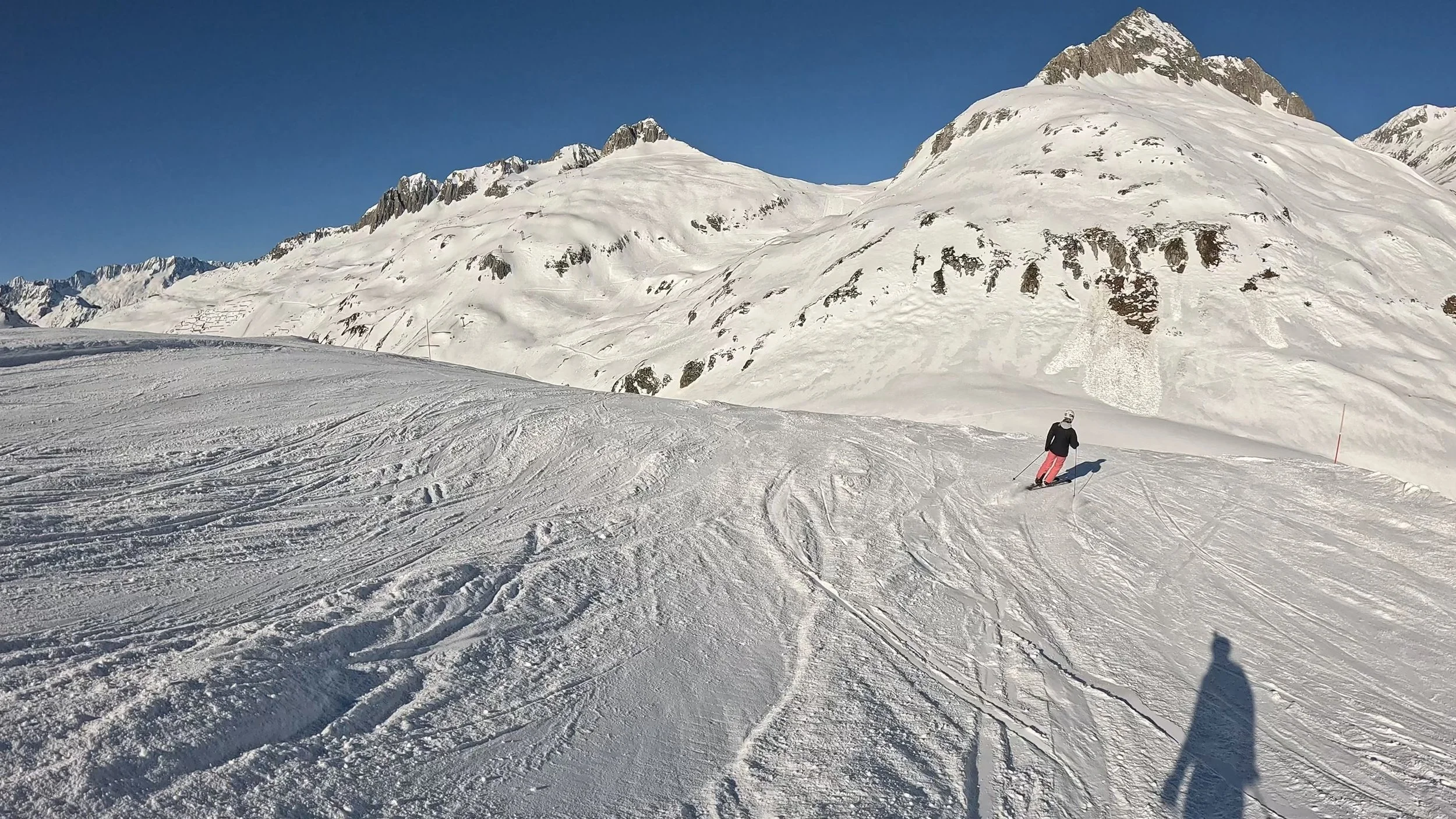
Andermatt is surrounded by stunning peaks and feels especially isolated in the middle areas of the resort.
Verdict
Andermatt-Sedrun-Disentis is a lower-key, family-friendly alternative to Switzerland's best-known resorts. The main mountain's maze-like footprint limits guests' ability to take advantage of the prominence the Swiss Alps are known for, and the largely south-facing slopes hurt snow reliability. The experience is fun, but a bit too rough around the edges to beat out the world-class destinations elsewhere in the Alps. It probably isn't worth choosing over other Epic Pass destinations such as Les 3 Vallées and Verbier for an international vacation, but for a weekend getaway from Zurich, you could do far worse.
Pricing
Day tickets use three fixed prices rather than dynamic pricing. For 2026/27, an adult day pass costs CHF 92 when bought online by 11:59 PM the night before, CHF 96 on the day, and CHF 99 on premium ski days (December 19 to January 3 and February 1 to March 7). That is still expensive for Europe, but below the prices at Vail Resorts' US and Canada destinations.