MOUNTAIN SCORE
#2 in Argentina
#6 in South America
CATEGORY BREAKDOWN
See our criteriaGOOD TO KNOW
1-Day Ticket: ARS 155,000 ($105 USD)
Pass Affiliation: None
On-site Lodging: Limited
Après-Ski: Moderate
Nearest Cities: Ushuaia (30 min)
Recommended Ability Level:

+ Pros
Consistent conditions
Incredible Patagonian scenery
Exceptional quantity of on-mountain lodges
Clear trail maps and signage
Flat drive from town
– Cons
Expert terrain closed to the public during race training
Slow lifts
Icy groomers with almost no direct sunlight
Long, costly trip to reach Ushuaia
MOUNTAIN STATS
Skiable Footprint: 1,331 acres
Total Footprint: 1,600 acres
Lift-Serviced Terrain: 100%
Top Elevation: 3,093 ft
Vertical Drop: 2,473 ft
Lifts: 11
Trails: 43
Beginner: 14%
Intermediate: 51%
Advanced/Expert: 35%
Mountain Review
Cerro Castor is the southernmost multi-lift ski area in the world, at the southern tip of the South American continent. That location gives it a consistent climate and Patagonian scenery you won't find anywhere else, but it also raises the question of whether the resort is worth all the travel required to reach it. Here is how Cerro Castor's overall mountain experience stacks up in our South American rankings.
Terrain Layout and Aesthetic
Like many resorts in the Southern Hemisphere, Cerro Castor’s terrain is defined by dramatic top-to-bottom contrasts. The lower mountain winds through dense, tree-lined trails, while the upper elevation opens into wide-open bowl terrain spanning two distinct peaks. It might come as a surprise just how much of the resort sits above the treeline given that it tops out at barely over 3,000 feet in elevation. However, because the mountains rise so abruptly and steeply, visitors are treated to truly extraordinary, unique views from the summit. The trade-off to this exceptional rise is that the number of people who will be able to experience it is limited, as much of the terrain off the summits is advanced or expert in nature. That said, Cerro Castor still offers an excellent range of terrain for all ability levels across the rest of the footprint.
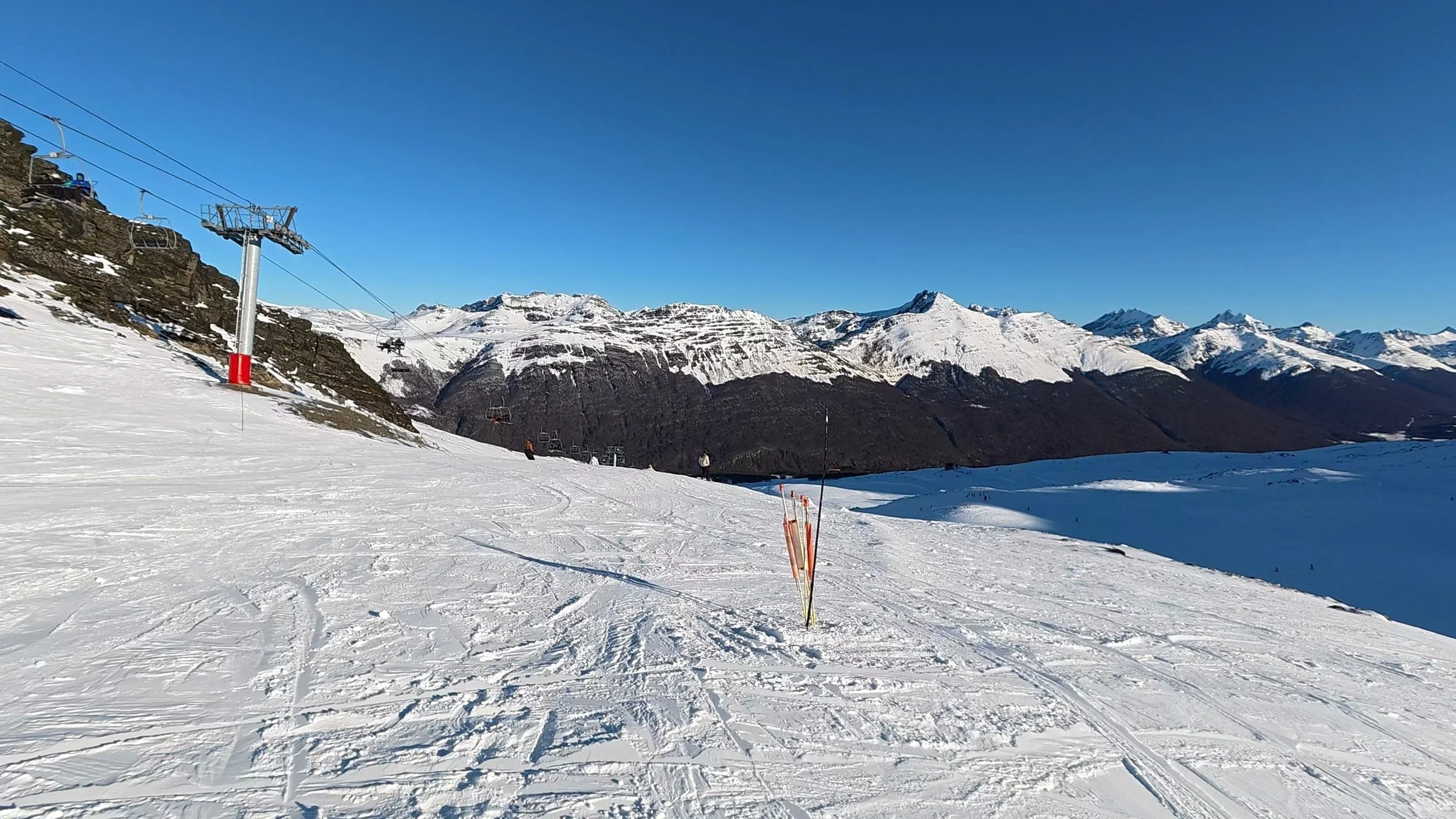
Cerro Castor has above-treeline bowl terrain between two peaks and dense, tree-lined trails below.
Beginner Terrain
Cerro Castor’s true beginner terrain is concentrated mid-mountain, accessible via the Del Bosque lift. Once up top, beginners will find a dedicated learning zone with a number of bunny hills served by magic carpets and a pommel lift. For those looking to sample a bit of the upper mountain terrain, taking the Las Piedras lift and unloading at the mid-station offers a fun, approachable run across the bowl. It is worth noting that no true green runs lead all the way back down from mid-mountain to the base, meaning those not comfortable with blue or harder runs will need to download the Del Bosque chair to leave the resort at the end of the day.
Intermediate Terrain
Progressing to blue intermediate runs opens up slightly more of the mountain, though options still remain limited compared to larger destination resorts. Intermediate skiers and riders can take the Las Piedras quad all the way to the top for the Aguila Mora run, which provides a full top-to-bottom descent across enjoyable cruising terrain, though be aware that the first 100 feet of the descent are noticeably steeper than your average blue run. It’s also worth noting that with a short walk up on a clear day, those at the top of the Las Piedras lift are treated to spectacular views of the mountains beyond the resort. Here you might find some locals sipping on mate before heading back down for your descent. Moving up to the blue level of terrain also unlocks a majority of the lower-mountain and provides seamless access to all on-mountain facilities.
When navigating intermediate terrain, take note that the Cerro Castor trail map uses orange dashed lines to designate "traverse" runs. While trails like La Lenga ride very flat (similar to a green run, with occasional slight uphill sections), others have more pitch to them. Overall, all traverse trails fall within blue difficulty or easier.
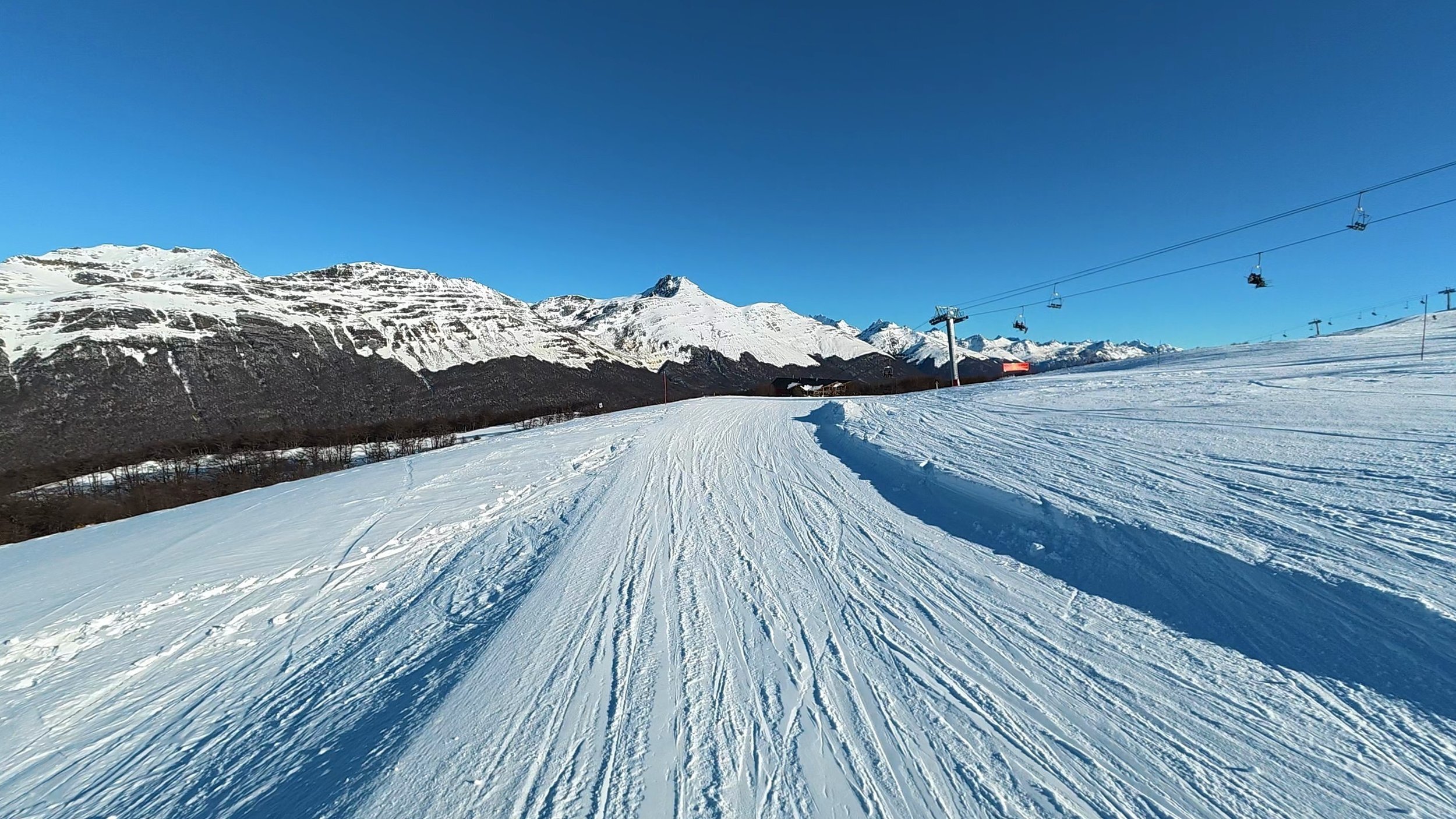
The Las Piedras quad gives intermediates a full top-to-bottom run.
Advanced Terrain
Like many other Southern Hemisphere ski resorts, Cerro Castor utilizes a red trail rating for advanced terrain. This is where the resort really begins to level up its offerings. Off the skiers’ left peak, the signature La Brecha run begins with a unique, narrow passage squeezed between rock faces before opening up to sweeping views of the back side of the mountain. However, it’s also worth noting the top of this run through the rock passage is usually very congested and a pain to go through sometimes.
While all marked red runs are regularly groomed, the mountain’s far-south latitude and predominantly south-facing aspect mean these slopes receive virtually no direct sunlight. As a result, groomers can become extremely firm and icy during gaps between snowstorms. The resort actively warns riders of these conditions with signage reading “Nieve Dura” (translated to “Hard Snow” in English) on particularly slick trails.
Unlocking advanced terrain also grants access to the main bowl's off-piste zones. Veering off La Brecha or Chulengo into the middle bowl offers fun, ungroomed terrain where you can find windblown powder stashes or navigate through unique rock terrain.
Expert Terrain
For expert skiers and riders, Cerro Castor features a solid selection of long, steep black-diamond groomers on the skiers’ right side of the resort. However, there is a major catch: because Cerro Castor serves as the primary Southern Hemisphere training hub for international race teams, virtually all expert terrain found to the skiers’ right is essentially always off-limits to the public from late July through mid-to-late September. The trail map provides no warning about these closures, and the resort’s reputation as a professional training ground might reasonably lead visitors to expect strong access to steep terrain. As a result, it can be a major disappointment if you visit specifically to spend time on these runs.
However, if you do happen to visit when these runs are open, expect exceptionally hardpack or icy surfaces. That is partly because firm snow is ideal for race training, but also because the total lack of direct sunlight keeps this part of the mountain from ever softening up. Among the few expert trails on the upper mountain that are regularly open, standout runs like Castor Cross and Chimango are steep, ungroomed trails featuring some of the most engaging lift serviced terrain on the mountain, alongside some of the best hidden powder stashes.
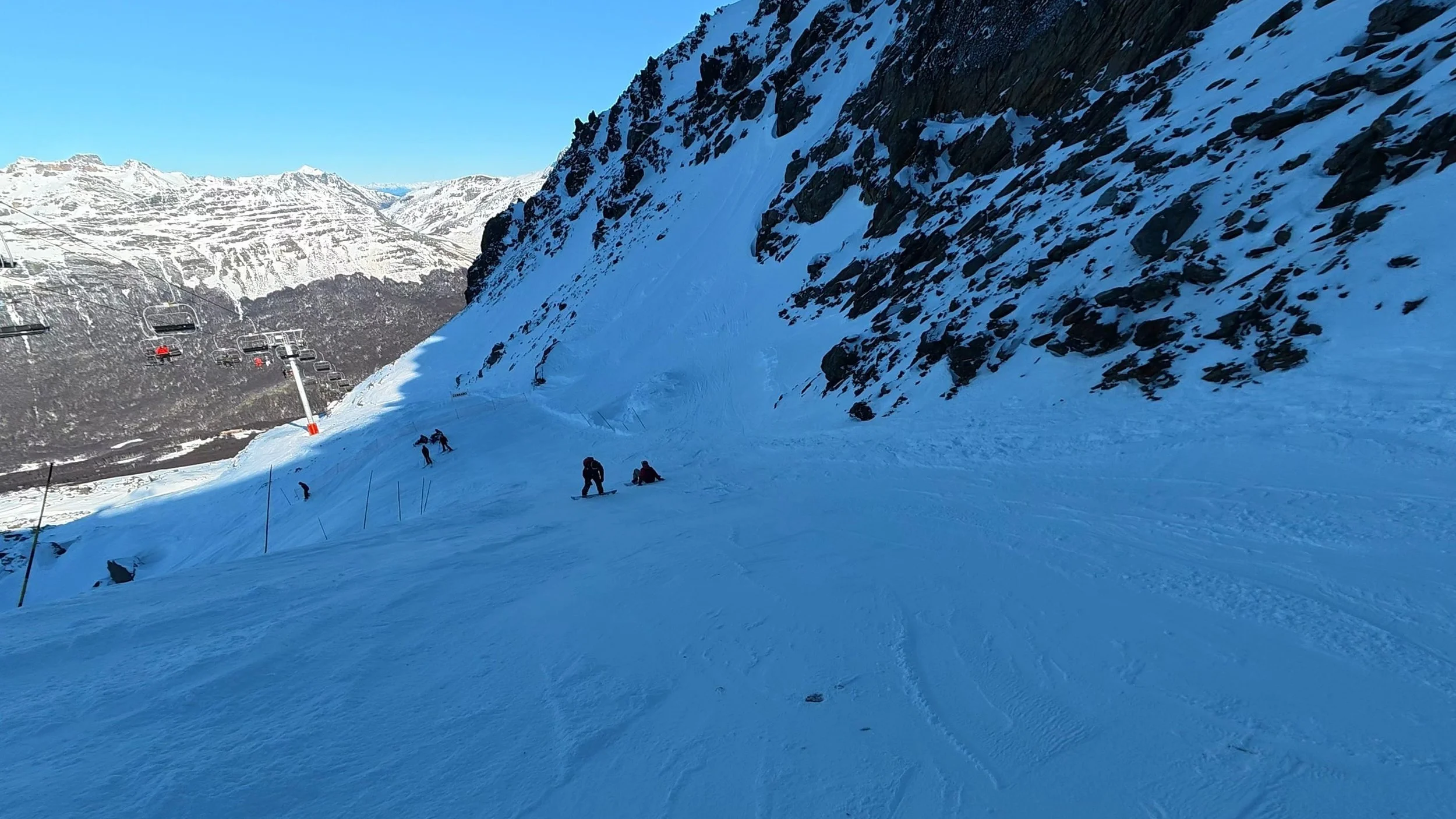
La Brecha begins in a narrow passage between rock faces.
Backcountry
Cerro Castor offers two distinct backcountry hiking routes off the top of the Las Piedras lift, marked by black dotted lines on the trail map. Similar to North American resorts, these routes function as backcountry gates and may be opened or closed by ski patrol depending on conditions. When open, patrollers will typically check for proper safety gear (i.e. a backpack, avalanche beacon, shovel, and probe) before letting you pass, though enforcement of its open status and gear requirements can be somewhat variable depending on the day. The lookers’ right hike on the map takes you directly to the top of the main bowl terrain, while the lookers’ left hike wraps around the back of the main Cerro Castor peak.
Both routes deliver equally stunning views behind the resort. While low snow coverage can make the steep, rocky main bowl unrideable, during good snowfall this area can be home to some of the steepest, most technical and fun off piste riding in the vicinity. Taking the somewhat longer and steeper lookers’ left route is likely to yield much better (albeit often still spotty) coverage and some of the most open, untouched terrain at the resort. But it is important to be extremely cautious along the high ridge on the left hike. The ridge drops off steeply to the backside, and high winds build massive cornices where a single misplaced step could lead to a fall hundreds of feet. Hiking all the way to the absolute peak in hopes of riding down isn't worth the effort unless high snow conditions are just right. It’s a steep, rocky scramble with no clean lines down. Sticking to the main snowfield path is exceptional fun, but keep in mind that this terrain does not funnel back to any lifts. You must begin cutting hard back to the left before dropping too low unless you want a long hike out.
Terrain Parks
Cerro Castor is one of the few resorts in Argentina with a dedicated, regularly maintained terrain park. Easily lappable via the Del Parque lift, the park features a solid progression of small-to-large jumps, as well as a selection of small boxes and rails. You may spot international freestyle athletes training here during the Northern Hemisphere off-season, though not quite on the scale you’d see at major resorts in Australia and some parts of New Zealand.
Snow Quality & Resiliency
Sitting at the southernmost tip of South America, Cerro Castor shares a relative latitude with southern Alaska. Even at a low physical elevation, winter temperatures stay consistently cold and well below freezing, allowing for a long season that stretches from late June to early October and new snowfall to stick around for the long haul. Cerro Castor also stands out as one of the few South American ski resorts where snow does not typically arrive in violent bursts; instead, frequent light dustings are common, gradually building coverage without causing the same degree of operational disruption as the multi-foot, zero-visibility, high-wind storm cycles that occur more frequently farther north.
However, while snow conditions tend to be very reliable for South America once a base develops, the resort’s raw snow totals aren’t always the highest. The resort typically gets about 80 to 150 inches (200 to 380 cm) of snow a season, which, while not terrible, falls a bit short of the resorts closer to Bariloche and Mendoza. And because of the resort’s snowfall patterns, while deep powder days can still happen, they are less common than at some northerly competitors.
In addition, Cerro Castor’s extreme southern latitude and predominantly south-facing exposure come with a major trade-off: even at midday, the slopes receive almost no direct sunlight. If the resort goes a few days without fresh snow, groomed trails quickly turn extremely firm or outright icy. Furthermore, the top 300 feet of the mountain rise abruptly and sit fully exposed to heavy winds, which frequently strip snow off the upper ridge. Combined with the rocky terrain underneath, the summit needs significant snowfall to open consistently. Because snowmaking is limited strictly to the lower mountain, upper-mountain trail conditions can be highly variable during low-snow cycles. Additionally, because race training is such a high priority for the resort, snowmaking and grooming resources are visibly focused on the closed race courses.
Ultimately, the consistently low temperatures and lack of sun keep Cerro Castor’s floor for conditions much higher than everywhere else in South America during bad seasons, but they also put somewhat of a ceiling on how good things are likely to get.
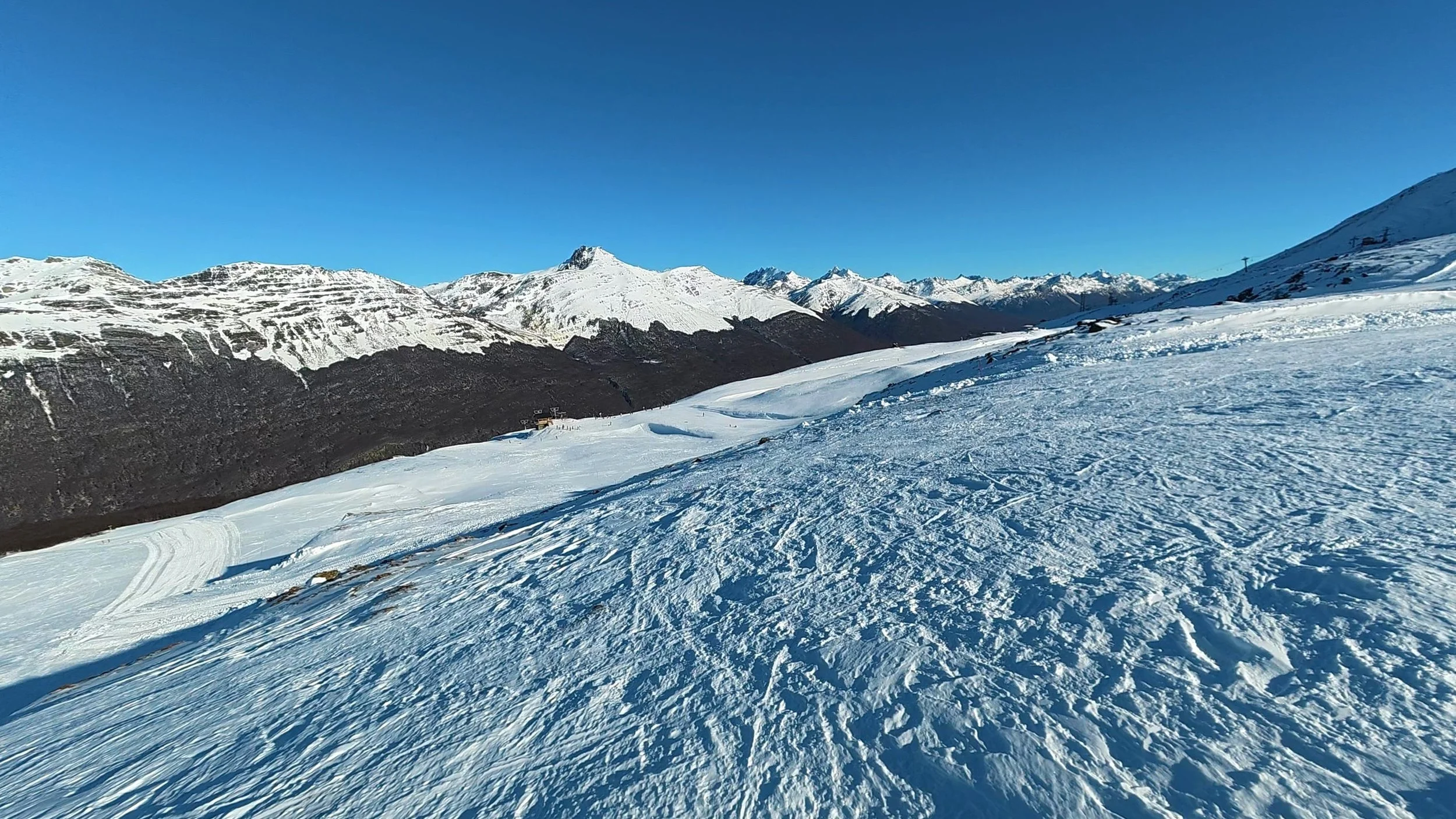
The consistently low temperatures keep Cerro Castor’s floor for conditions high.
NOTE: We may receive a small affiliate commission if you click on the below links. All products listed below are unisex.

Recommended all-mountain ski

Recommended carving ski

Recommended glade ski

Recommended expert/touring ski
Navigation
Cerro Castor is perhaps the most predictable ski resort in South America when it comes to snow conditions, and the same can arguably be said when it comes to getting around. Unlike many South American ski resorts that struggle with poor signage, Cerro Castor is exceptionally well-marked, making navigation incredibly straightforward. Large, clear trail maps are stationed at every base area, highlighting your location and providing real-time status updates on open and closed trails. On the slopes, directional signage at junctions is excellent, clearly marking trail names, color-coded difficulty ratings, and explicit directions to the lift bases or base lodges accessed by each trail.
Lifts & Crowd Flow
By Argentine standards, Cerro Castor features a solid lift infrastructure consisting entirely of four-person fixed-grip quad chairs, supplemented by pommel surface lifts in high-density areas like the terrain park. Yes, all of the chairlifts are slow, but this is par for the course in most parts of South America. That said, even by South American standards, the lift network has a couple of issues. One, getting to the far-skiers’-left zone requires taking a minimum of three somewhat indirect chairlift rides from the base. This makes top-to-bottom runs on this side of the resort impractical.
Second, the Las Piedras quad is the single most critical chair on the mountain, serving as not only the sole access point to the true summit and the resort's best upper-mountain terrain, but also playing the role of serving some of the resort’s most popular beginner and intermediate runs via a mid-unload station. This funnels a massive mix of skiers and riders into this single line, creating a huge chokepoint and resulting in the longest wait times on the mountain. Also given the nature of slower chairlifts and the amount of vertical, expect to spend a significant time just riding up chairlifts, with Las Piedras, which is the longest chair, taking at least 12 minutes (and that’s with no misloads).
The resort does have two chairlifts out of the base of the resort. Del Rio primarily services the advanced ski racers trails. You still can ride down a green run to the beginner area. But most traffic out of the base area will use the Del Bosque lift to upload and download at the start and end of the day. This can create some backup, especially at the end of the day when less experienced guests are trying to download rather than skiing or riding the blue and black trails directly down to the base.
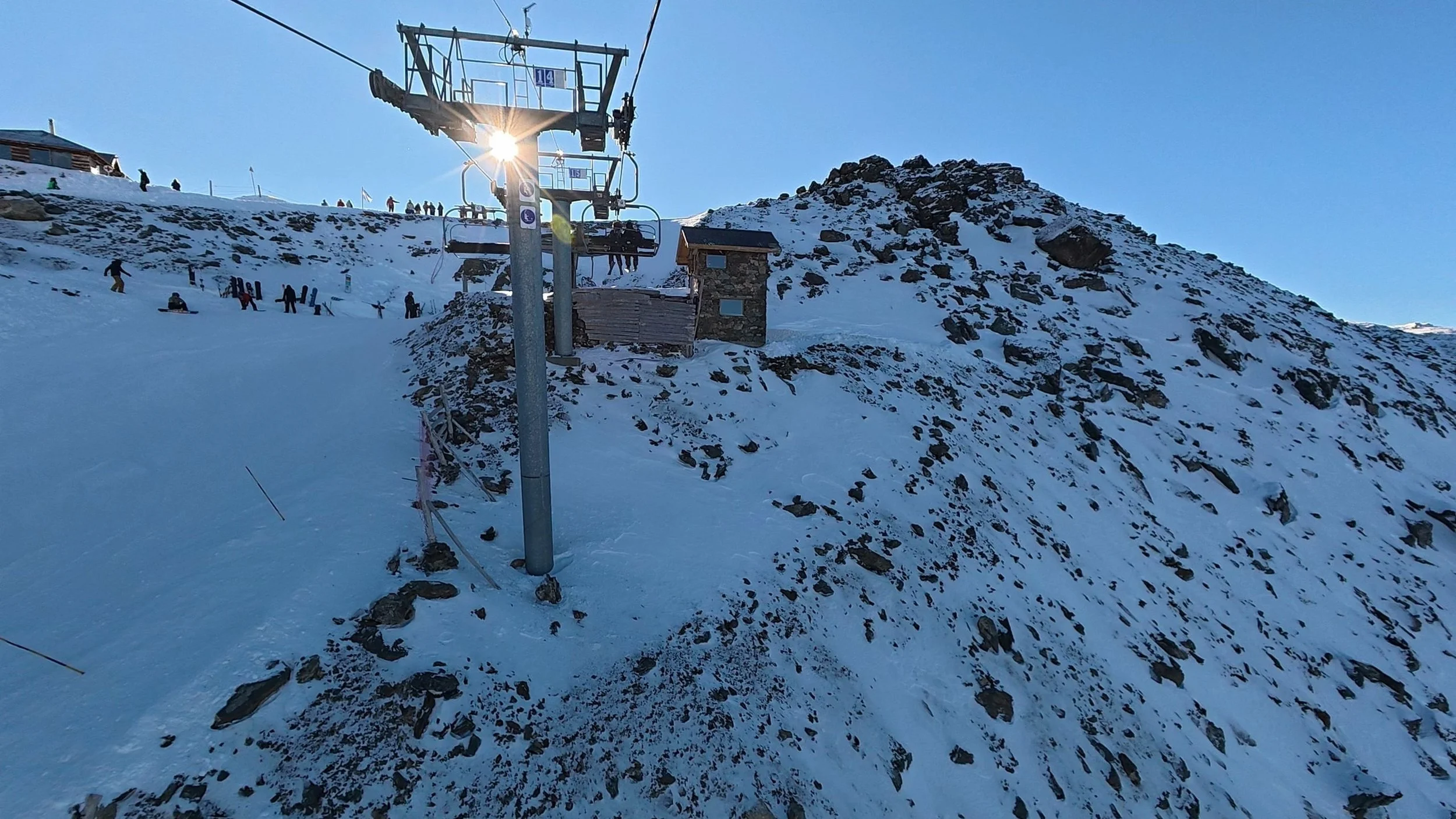
Las Piedras is the only lift to the true summit.
On-Mountain Facilities
If you’re not familiar with the resort, one of the most shocking things about Cerro Castor is how comprehensive its on-mountain dining offerings are. The base of every mid-mountain lift features a large lodge offering a mix of sit-down service, buffets, and multi-level cafes. Despite their impressive capacity, these lodges tend to be quite full with people, making it feel as though a significant majority of resort visitors are actually inside them rather than skiing or riding on the slopes. Even so, efficient service and the sheer amount of table space mean finding a seat and fast service is rarely a hassle.
Down at the main base hub, visitors will find the central rental shop and two additional full-service restaurants. One of these, the Alpino Sports Bar, sits adjacent to an outdoor ice rink where guests can rent skates for a fun change of pace.
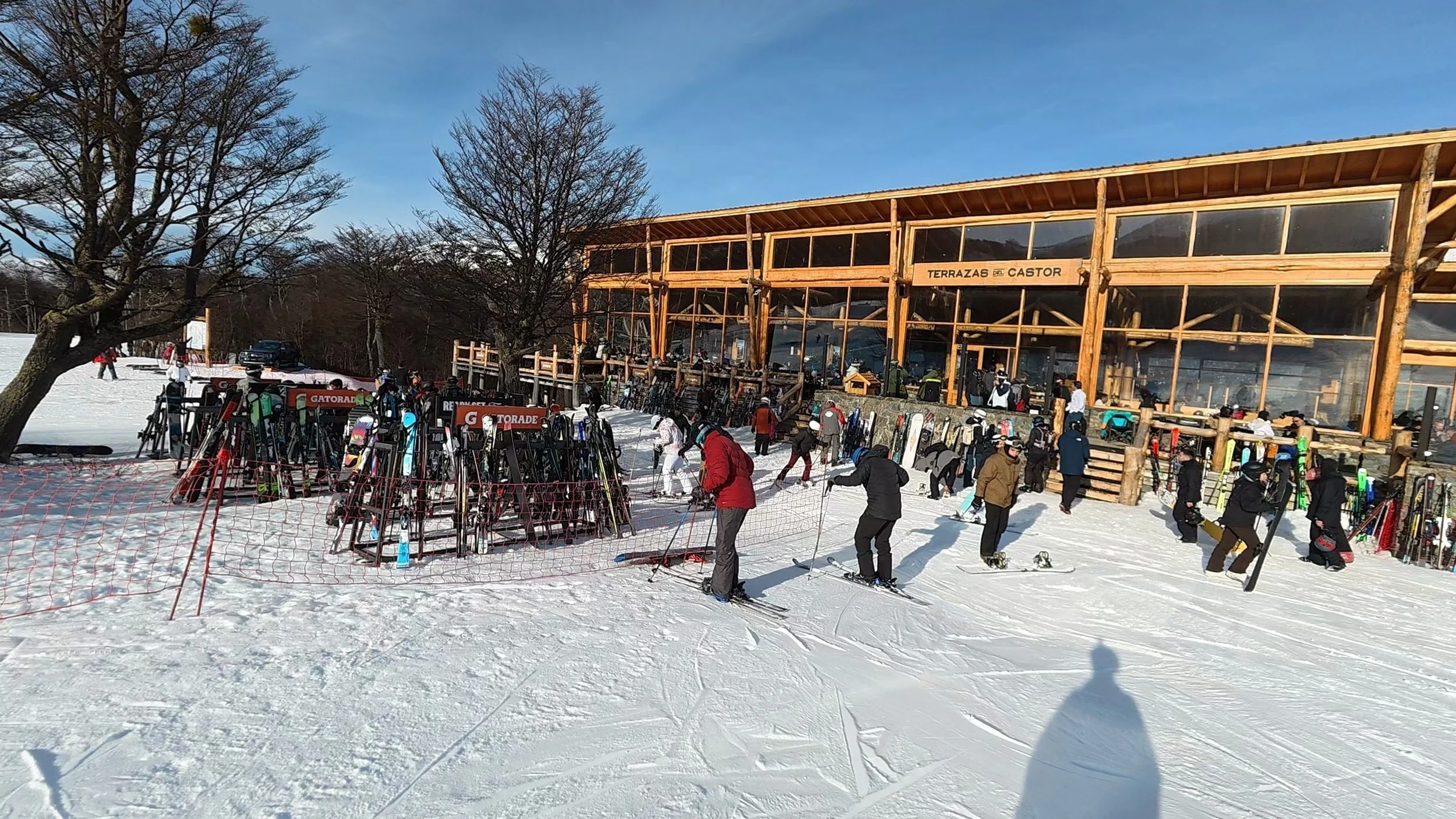
The base of every mid-mountain lift has a large lodge.
Getting There & Parking
Due to its location right at the tip of the South American continent, Cerro Castor is located in an incredibly isolated area compared with virtually every other ski resort in the world. As a result, getting there is effectively a journey in and of itself. Nonstop domestic flights operate from Buenos Aires, Córdoba, and El Calafate, along with a handful of seasonal routes, but most visitors arriving from outside the country will still connect through Buenos Aires. If you’re coming from overseas, just getting to Buenos Aires will probably already take you 10 or more hours by air. But from there, Ushuaia is another roughly three-and-a-half-hour flight, with limited availability meaning that a lengthy, potentially overnight layover may be required. Needless to say, flying to Ushuaia adds considerable time and potentially significant cost compared to reaching resorts through Santiago, Mendoza, or Bariloche.
But once in Ushuaia itself, reaching Cerro Castor is actually remarkably easy by South American standards. Because its base elevation is basically at sea level, getting to the resort does not require a gnarly access road with multiple switchbacks and crazy elevation gain. Instead, it's a mostly flat 30 minute drive from Ushuaia along a single main highway, and the paved road is cleared and opened quickly after storms. There are no public transit options, making taxis, private shuttles, or airport rental cars the primary ways to commute. At the mountain, parking is straightforward and free. However, the main lot is relatively small, and on high-traffic days, it typically fills up by 11:00 AM, forcing late arrivals to park along the highway.

Recommended intermediate board

Recommended advanced board

Recommended expert board

Recommended touring board
Lodging
Cerro Castor offers a very limited number of slope-side, cabin style lodges at its base, so the vast majority of visitors stay in the nearby city of Ushuaia. Ushuaia provides a wide array of accommodations, ranging from standard hotels to full condo rentals.
Après-Ski
Because on-mountain lodging is so sparse, Cerro Castor lacks a true slope-side après scene once the lifts stop spinning. Instead, the energy shifts to downtown Ushuaia, which features a vibrant collection of restaurants, bars, and retail shops. Driven by the constant influx of international race teams, Ushuaia feels strikingly “international,” and it was one of the few ski towns in Argentina where English was widely spoken without needing a translation app.
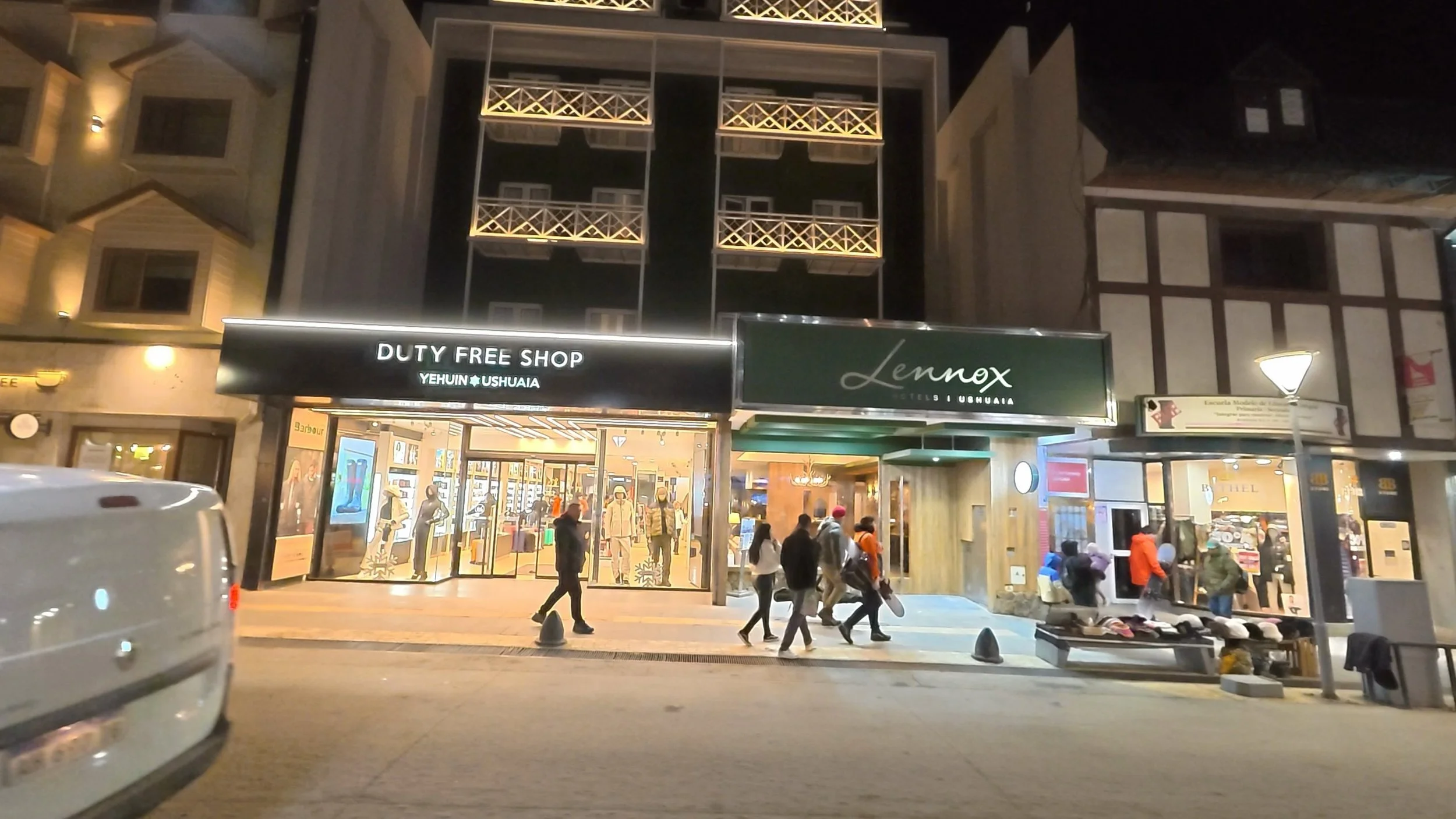
Après-ski happens in downtown Ushuaia.
Verdict
Cerro Castor is worth the trip for skiers who want a one-of-a-kind Patagonian setting and a cold, consistent snow floor, as long as they understand the trade-offs. Most of the expert terrain is closed to the public during race training months, groomers get icy without fresh snow, and the travel to Ushuaia is long and expensive.
Pricing and Value
An adult daily lift ticket costs $155,000 ARS (roughly $105 USD at current exchange rates) making it on the pricier side for South American ski resorts. Also, unless you plan on riding more than five consecutive days, multi-day pass savings are minimal and must be used on consecutive days. Passes can be purchased in advance and printed at self-service kiosks at the base. As an added bonus, your daily lift ticket includes free access to the base-area ice rink and cross-country ski trails.