Most Shocking Things About Skiing in New Zealand
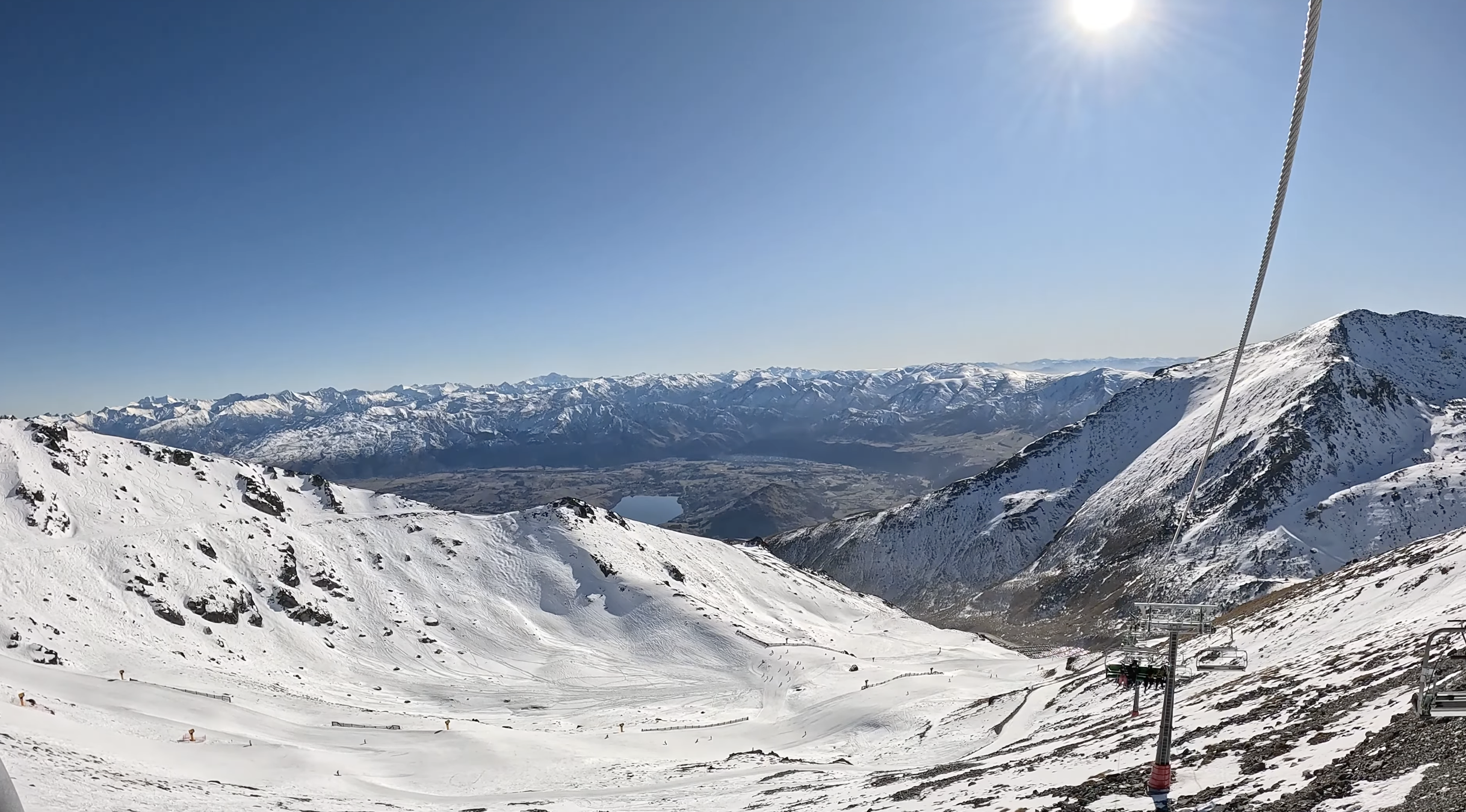
Skiing in New Zealand can be absolutely stunning, though there are some circumstances to be aware of.
Background
When you think of New Zealand, the first things that probably come to mind are sheep and rolling hills. But it turns out that this remote island country is actually home to some staggering skiable mountains as well. Yes, that’s right, not only does New Zealand offer a legitimate ski scene among the best in the Southern Hemisphere, but it also has a number of unique traits that can’t be found anywhere else in the world. So what exactly makes New Zealand skiing and riding so different from that of North America, Europe, or elsewhere, and is it the right place for you to go on your next ski vacation?
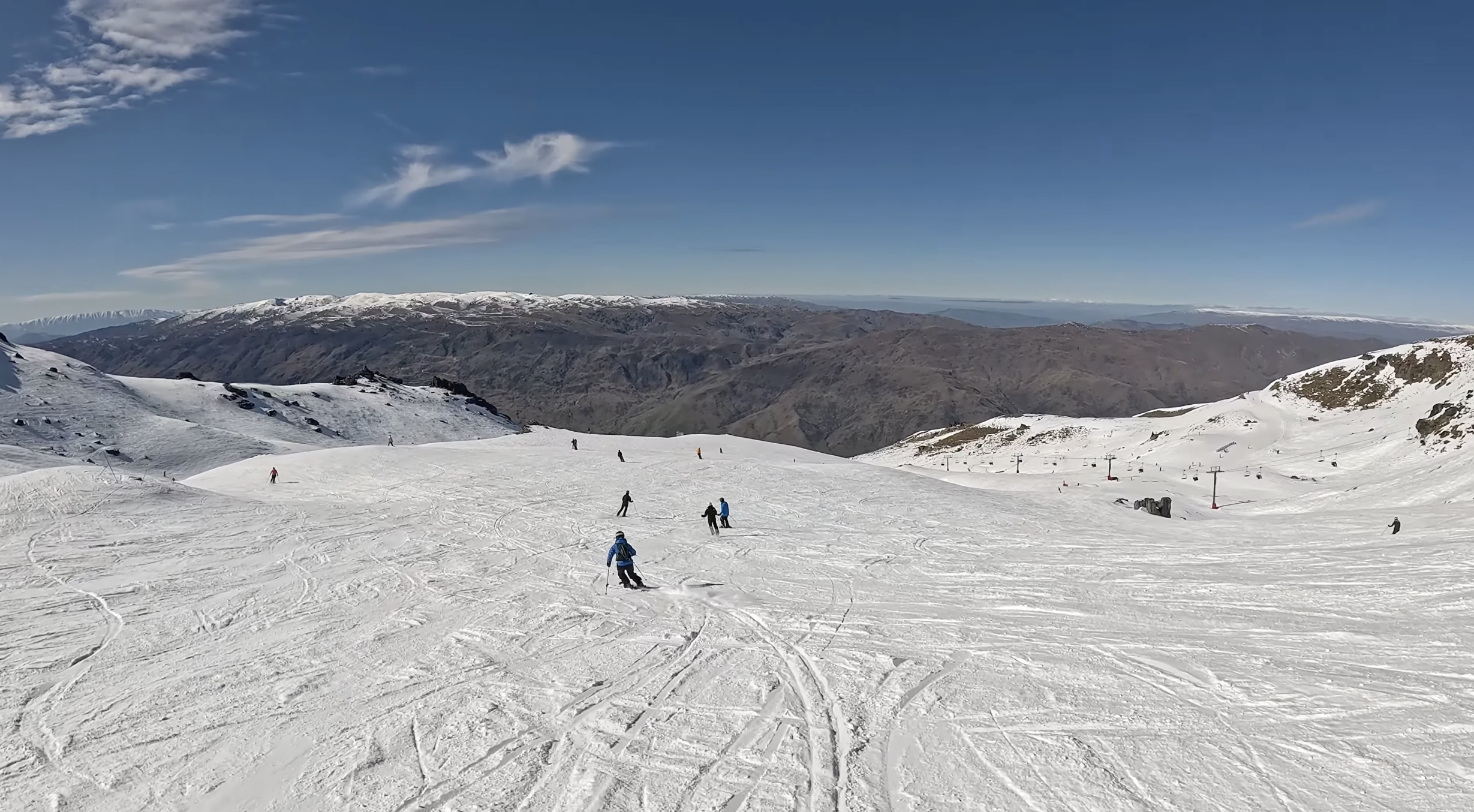
Most of the time, you will be facing snowless mountains as you ski or snowboard down a New Zealand slope.
New Zealand’s Mountain Aesthetic
The first thing that stands out about New Zealand is its ski resorts look totally unlike anywhere else in the world. New Zealand skiing takes place on some of the most prominent mountains anywhere, with ski slopes often overlooking valleys that are as far as 6,000-7,000 feet (1,800-2,100 meters) below, with some even offering views down to sea level and even the ocean in the distance. New Zealand ski resorts are completely above treeline, so you are likely to get these views from pretty much everywhere within the ski resort. But it’s also worth noting that New Zealand’s snow line is actually quite high, so when you are skiing or riding these resorts, you will be looking down onto not just the valleys, but the mid and lower sections of these mountains, with no snow at all. This makes for a distinctive white-on-brown view at most of these resorts unless it’s an exceptionally cold and snowy period. Some people will find this aesthetic cool, but others may find that it detracts from the winter ambience.
But whether or not you like looking onto the brown-colored surroundings below, one thing that’s undeniable is that the New Zealand topography makes for viewpoints of some very cool natural features. Besides the ocean in the distance that we mentioned earlier, some resorts look over pristine lakes, with some of the bluest hues we’ve ever seen in a body of water. From certain resorts, you’ll also see towns and farmland way down below, and from others, you’ll have incredible views of neighboring mountain peaks.
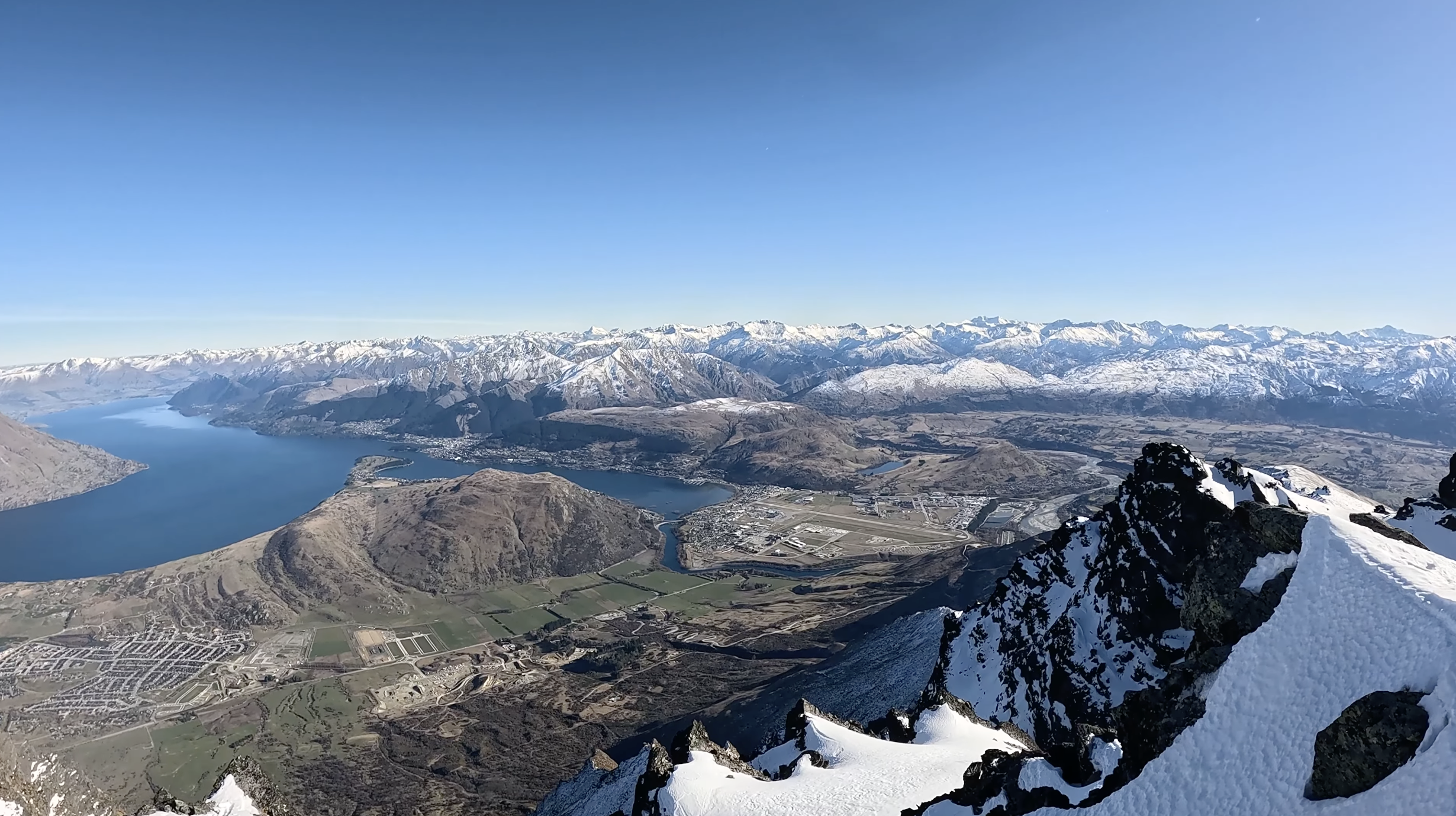
The top ridges of New Zealand ski fields will often grant you views of lakes, villages, and farms thousands of feet into the valleys below.
Speaking of peaks, New Zealand’s ski resort mountains, at least on the South Island, are not only prominent, but also quite striking in the way they present. New Zealand’s main mountain range down there is called the Southern Alps (although it is worth noting there are technically separate names for sub-ranges and smaller ranges on the South Island), and it’s for good reason—they have the jagged and striking structure that’s reminiscent of their European brethren, rather than more rolling hills in other prominent skiable mountain ranges. Resorts like The Remarkables and Treble Cone have incredible rock structures directly in bounds that make for an exotic and big mountain feel not replicable at your typical destination resort.
Convenience
Several New Zealand ski resorts are quite close to each other as well. The most popular lodging hubs are only a short distance from multiple different resorts, making for straightforward day trips to a range of mountains—at least distance-wise—essentially no matter where you stay. This is great for folks who want some variety on their next ski trip without having to commit to long-haul travel in the interim. In fact, several New Zealand commercial ski resorts are owned by the same parent companies; this means that you can often buy lift tickets for one that will also be valid at one or two other resorts.

Example of a combined lift pass that gets you into three different NZ ski fields: Coronet Peak, Mt. Hutt, and The Remarkables.
Season Timing
Another obvious but important difference about New Zealand skiing and riding is its season timing. Given the country is in the Southern Hemisphere, its winter occurs opposite to that of North America, Europe, and much of Asia, and the season typically extends from late June to early October, although the exact window varies considerably by mountain and season. For the most reliable conditions, August and early September are typically the best months. June through early July brings early-season conditions, while mid-September and beyond is the spring skiing season.
Mid and late July do constitute the beginning of the core season on paper; however, the resorts do typically still see fairly thin snowbases during this time, making non-snowmaking and off-piste terrain tough to plan around. Also, New Zealand’s school holiday break falls around the first two weeks of July, bringing significant crowding with it, so the middle of the month really won’t be ideal for foreigners planning a vacation here. There is another school break around late September and early October, although by then the season is winding down at most fields, if they are still open.
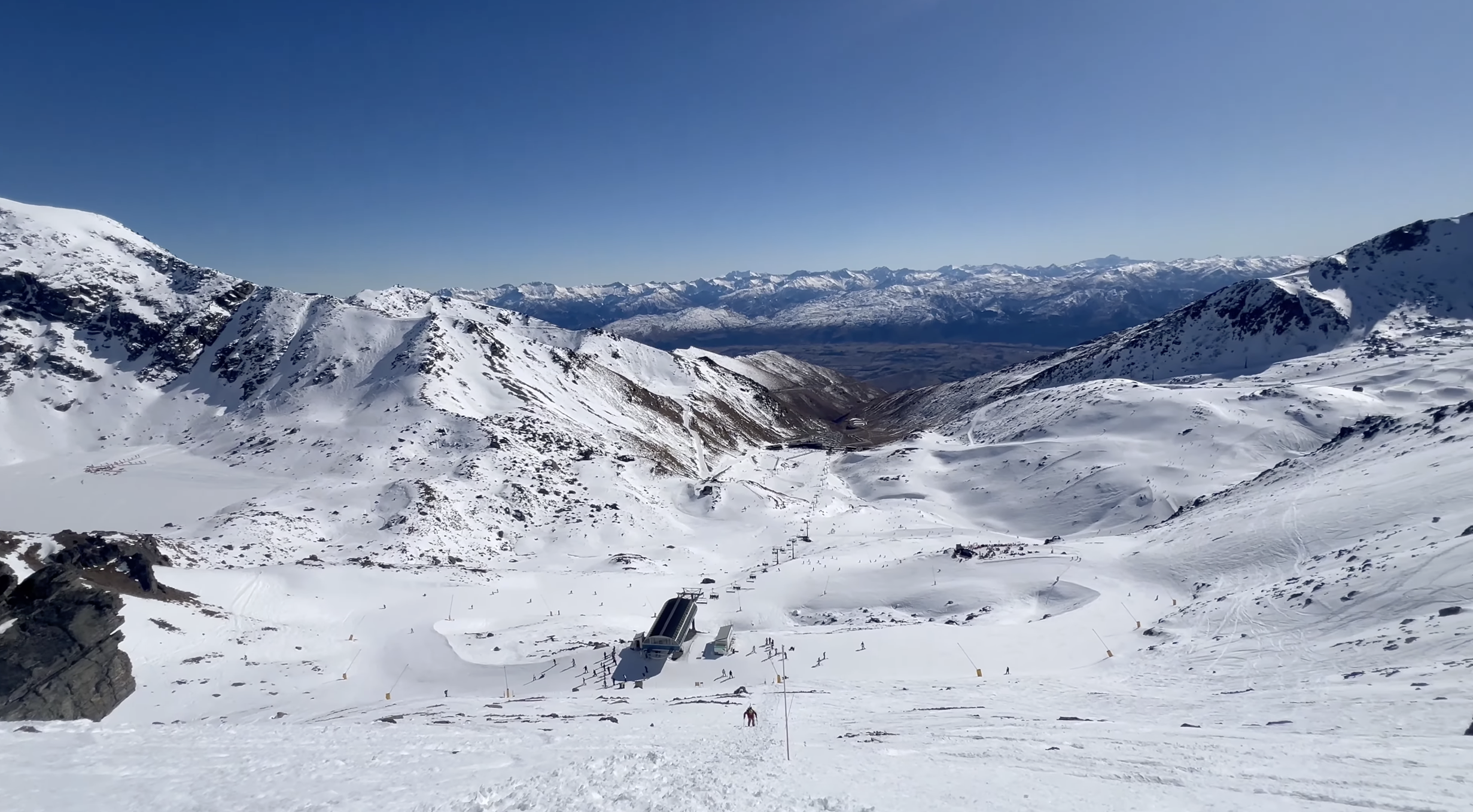
A comprehensive view of The Remarkables’ above-treeline footprint. Notably, lift service tops out below the true summit, which is then accessible by a bootpack.
Terrain & Hiking
When it comes to terrain, New Zealand’s fully-above-treeline footprints make for states of affairs that are quite distinct from most places in North America, Australia, and Japan, although those familiar with the European Alps may find some of the circumstances to be similar. Because the ski mountains themselves are not defined by trees, the routes down are either groomer lines manufactured throughout the mountain or ungroomed bowls and chutes that take advantage of the natural terrain. Oftentimes, exposed rock bands and other terrain features create natural boundary lines for these groomers.
The main commercial fields generally offer well-developed cruising areas consisting of chiefly intermediate and advanced groomers, although beginner terrain can be somewhat lacking at some of them, often being confined to the bunny hills. When it comes to the ungroomed terrain, the intricate nature of the Southern Alps makes for anything from wide-open bowls to steep chutes and gullies. That said, some New Zealand ski resorts are much more technical than others, and a good chunk of the popular commercial fields are actually fairly mellow for what some experts in North America and Europe might expect.
One trait common to the vast majority of New Zealand ski fields is that if you’re willing to earn your turns, you can find some really nice expert lines by engaging in some hiking. Those same prominent peaks that make the resorts so distinctive also make it difficult to build the lifts all the way to the top of their respective mountains, so the highest and most technical aspects often require some bootpacking to reach. But engaging on these bootpacks can reward with untouched snow, if not some of the best views of the region into neighboring mountain ranges, thanks to many of them topping out on dramatic ridges. Many of these bootpacks also provide de facto touring route access, with the non-resort sides of these ridges often offering great backcountry terrain, conditions depending. However, while the hike-to terrain inside an open ski-area boundary may be monitored and avalanche-managed, this won’t be the case for the uncontrolled backcountry. Visitors should be sure to take requisite avalanche gear, including a beacon, shovel, probe, and backpack, if going out of bounds, and hire a guide if unfamiliar with the area.
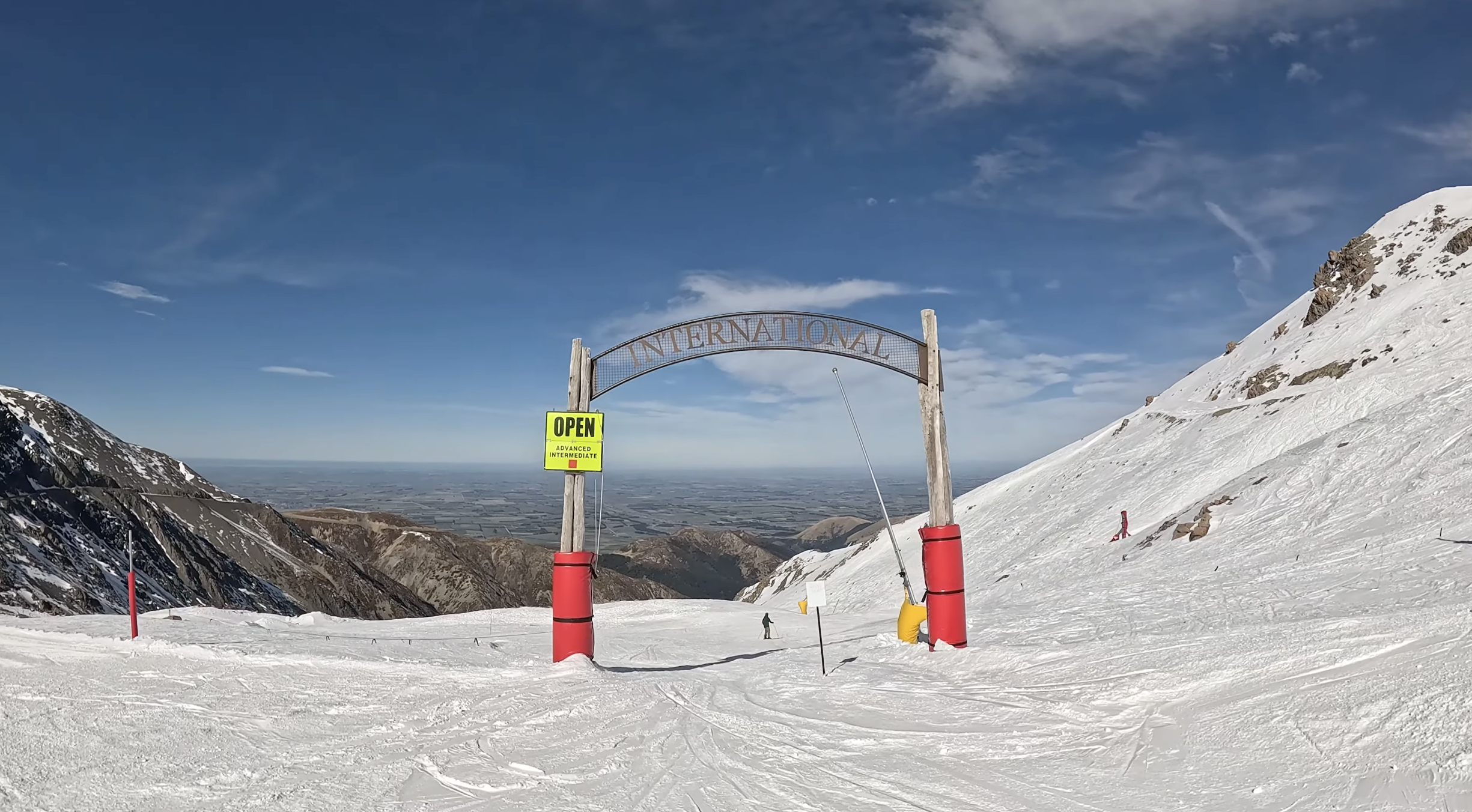
The entrance to an advanced intermediate run at Mt. Hutt, marked by a red square symbol.
Terrain Difficulty Ratings
One other thing to note about New Zealand’s trail difficulties is that it uses a slightly different rating system than other parts of the world, combining several aspects of markings found in other countries. In addition to the green circle, blue square, and black diamond ratings used in North America and Australia, most of New Zealand’s ski resorts also use a red rating similar to that of Europe or South America, slotting in between the intermediate blue and expert black designations. But unlike Europe, where trail difficulty ratings usually are not associated with a shape, the red trails at many of New Zealand’s ski resorts are denoted by a square, meaning that both blue and red runs are associated with the same shape. In New Zealand, just as one might expect in similarly-high-alpine parts of Europe and South America, trail boundaries are often delineated with boundary poles, although not every resort within the country reliably marks these.
Freestyle Terrain
Like with most ski areas in North America, New Zealand’s freestyle terrain is denoted by the color orange. But New Zealand is no ordinary country when it comes to its terrain parks, with some of the most competitive builds in the world on its South Island commercial fields. It’s not out of the ordinary to see professional athletes training on the largest feature lanes when at places like Cardrona and The Remarkables. However, your mileage will vary depending on the resort. Because the same parent companies own groups of resorts, they tend to reserve their world-class terrain park setups for one mountain while leaving the others less built out. For example, since Cardrona and Treble Cone are owned under the same umbrella, Cardrona boasts a world-class freestyle setup while Treble Cone has nothing. A similar pattern exists among the three fields operated by NZSki: The Remarkables has by far the most extensive build, while nearby Coronet Peak is much more limited. Mount Hutt, which sits several hours north of the other two and attracts a different clientele, has a regionally competitive but not world-class freestyle build.
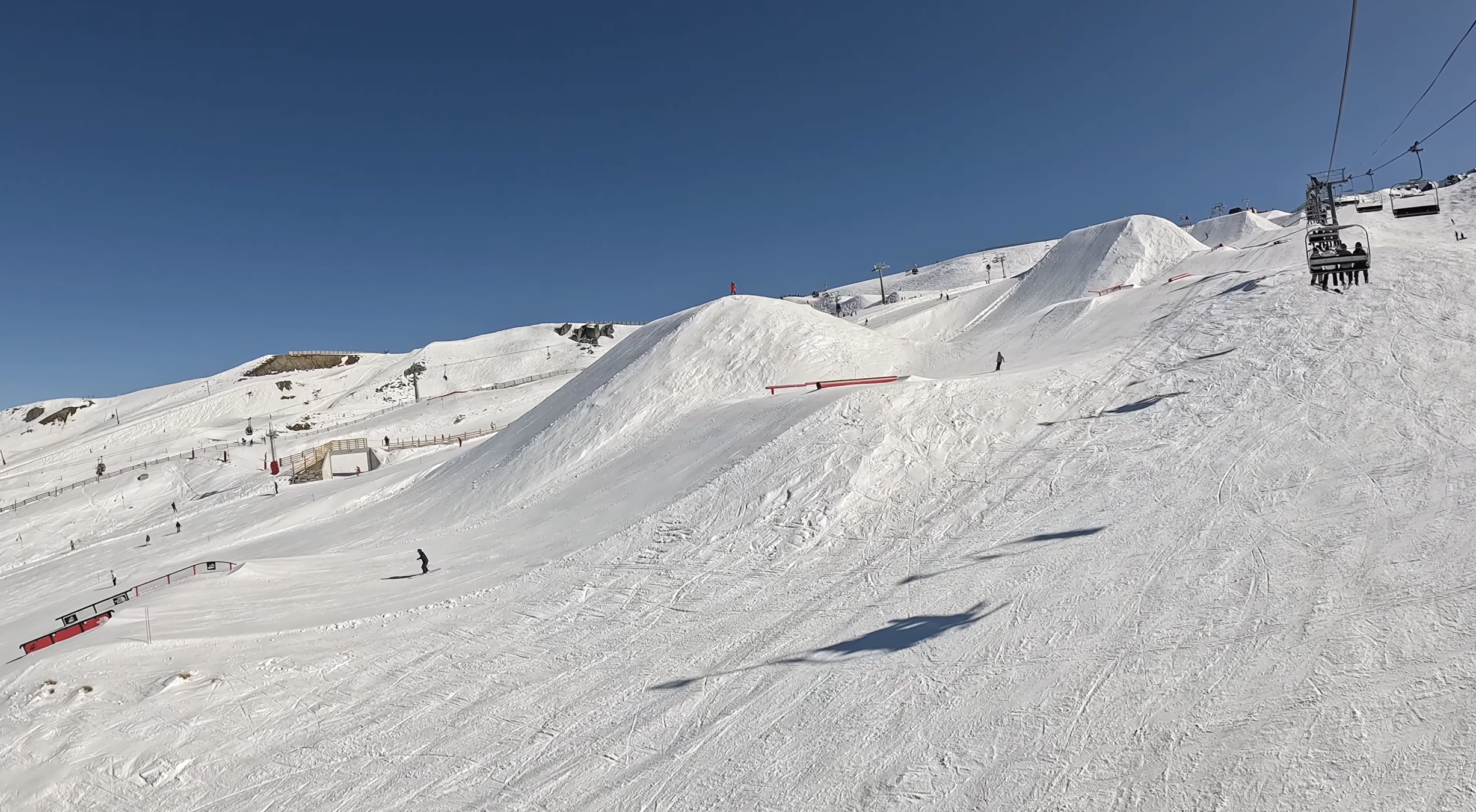
The terrain park setup at Cardrona features massive jumps and a plethora of boxes and rails.
Lifts
At least at the commercial ski resorts, New Zealand’s mountains have surprisingly up-to-date lift networks as well. No, they’re not quite to the same level as the best Europe resorts; you won’t find bubble lifts or crazy boutique funitels, but the main commercial fields have been on a bit of an upgrade streak, and a lot of their chairlifts have been replaced in just the last few years. The overwhelming majority of lift rides are fast and comfortable, and for the Southern Hemisphere, it’s as competitive as it gets.
On-Mountain Facilities
New Zealand’s commercial fields also have on-mountain facilities that feel distinctly Kiwi. Most offer fairly normal base lodges with cafeterias, rental shops, and bars, but the food and drink offerings are somewhat exotic compared to what North American and European visitors might expect. Yes, you’ll often still see burgers, chicken tenders, and fries, but menus commonly include distinctly New Zealand delicacies like meat pies and sausage rolls alongside items such as flat whites, local beers, and soft drinks like L&P. But one drawback common across New Zealand ski resorts is that indoor seating can also become difficult to find during busy periods, so you may have to hunt for a bit to find a spot inside at lunch hour.
Some ski fields also offer amenities that are decidedly not standard in other regions of the world. Complimentary sunscreen is commonly available around the base lodges, which is helpful given New Zealand’s intense ultraviolet exposure and the complete lack of shade above treeline. A few mountains even have outdoor hot tubs where visitors can soak while overlooking the slopes.
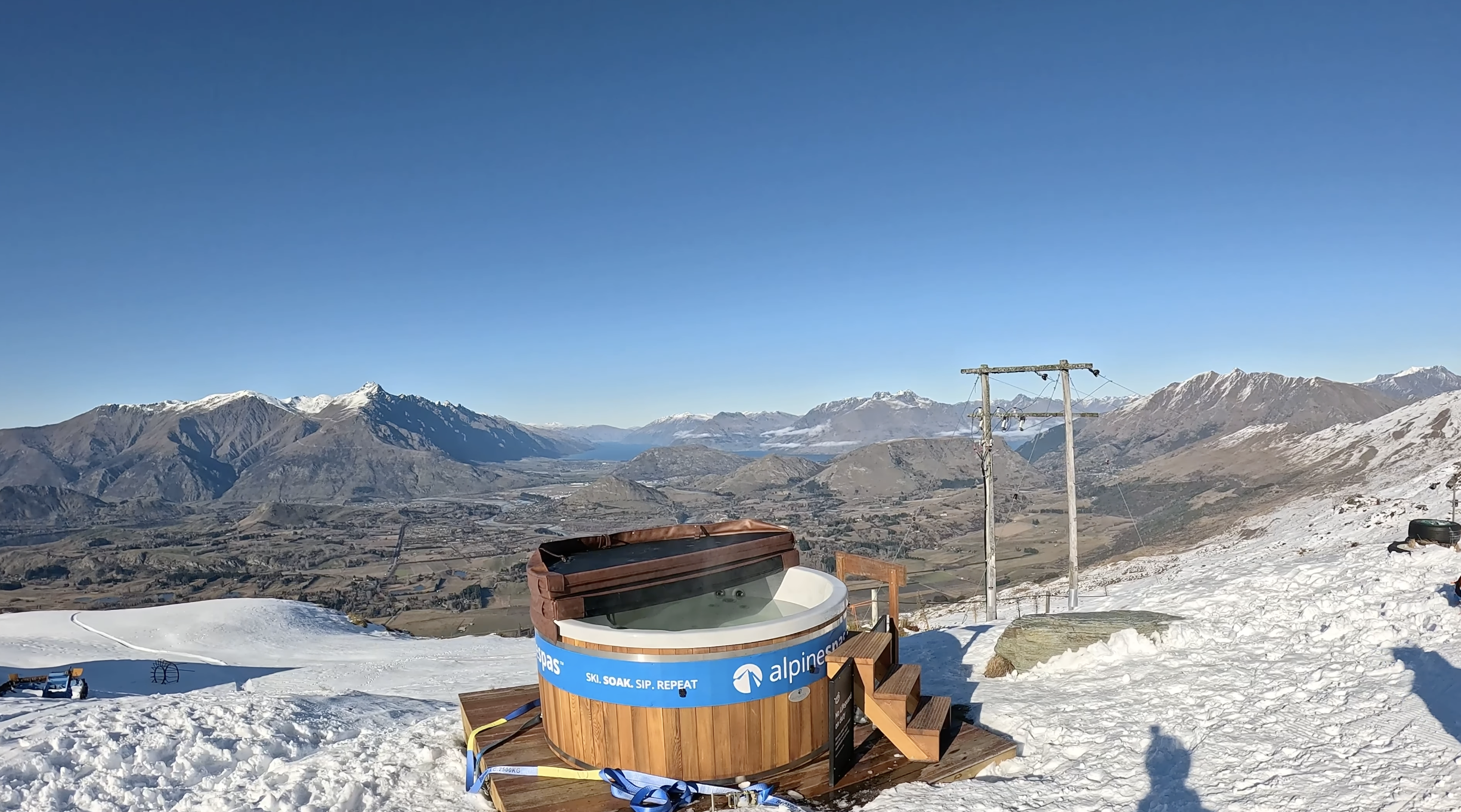
Alpine hot tub at Coronet Peak.
Club Fields
However, it’s important to note that everything we just mentioned about the amenities is only applicable to one side of the New Zealand ski scene. That’s because while the best-known ski resorts in New Zealand operate as traditional companies in the same manner as those elsewhere in the world, the country is also home to a wholly unique and different kind of ski resort experience: the club field. These club fields are much smaller and more rudimentary than the commercial mountains, but they pack some of the most epic in-bounds terrain in the country, especially if you are willing to hike to get to it. New Zealand club fields are locally run, often by members of the club itself, and thanks to their lack of commercialization, daunting and uninviting access roads, and other hurdles required to visit, you’ll often find yourself as the only outsider when you visit one of these fields.
The Nutcracker
Perhaps the biggest of these hurdles, especially at the club fields with the hardest terrain, is learning how to ride a nutcracker lift. These specialized rope tows are only found at select New Zealand club fields—yes, that means you won’t find them anywhere else in the world—and they get their name because of the specialized heavy-duty metal contraption you have to utilize while riding it. Yes, you have to latch this so-called “nutcracker” to the rope and hold on directly to it because your hands cannot touch the rope—that’s because unlike a normal rope tow but similarly to a chairlift or gondola, the rope goes directly through the sheaves, and your fingers would be toast if they made contact with them. Riding a nutcracker lift takes a pretty intense learning curve; getting the nutcracker contraption latched on the rope requires a very specific swinging technique, and the most advanced lifts run at the same speed as a detachable chairlift. And even if you are an expert skier or rider, it’ll probably take you quite a few tries before you get the hang of it.
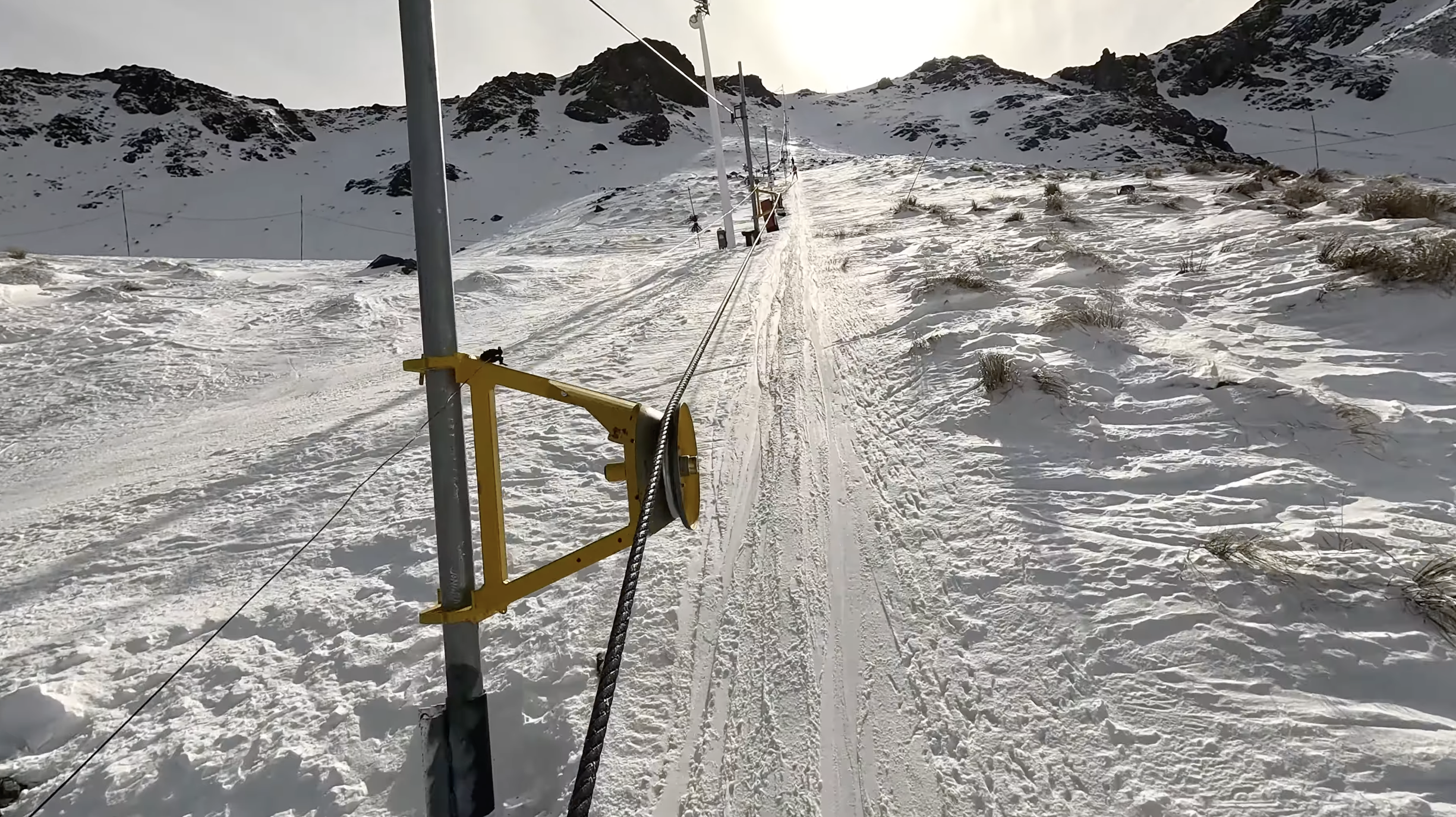
Riding up the main “nutcracker” surface lift at Mount Olympus, a club field.
Snow Conditions
But while New Zealand ski resorts bring a number of distinctions when it comes to terrain and infrastructure, these things are only as valuable as the snow conditions allow. And one of the biggest caveats about skiing and riding in New Zealand is that snow conditions are highly variable. Annual average snowfall totals at South Island ski resorts tend to be around 100 inches, which is not nothing, but that's still well below many destinations in places like the Alps, Rockies, and even North American East Coast. New Zealand’s ocean-influenced climate keeps temperatures relatively mild compared with many major ski destinations; when it's not storming, winter daytime temperatures at the resorts often hover around 40-50°F (5-10°C), with overnight temperatures just below freezing. In the valleys below the ski fields, temperatures are much warmer, often staying above 50°F (10°C) even in the dead of winter.
Unlike many other regions, accumulation doesn't tend to come in a consistent and settled manner in New Zealand. Calm bouts of a few inches of snow are very rare. Long dry periods can develop between storms, while subsequent freeze-thaw cycles can turn previously soft terrain into firm hardpack. The mild temperatures can make for some nice soft skiing once the sun has had time to work on it, but thin cover can be a serious problem during snow droughts.
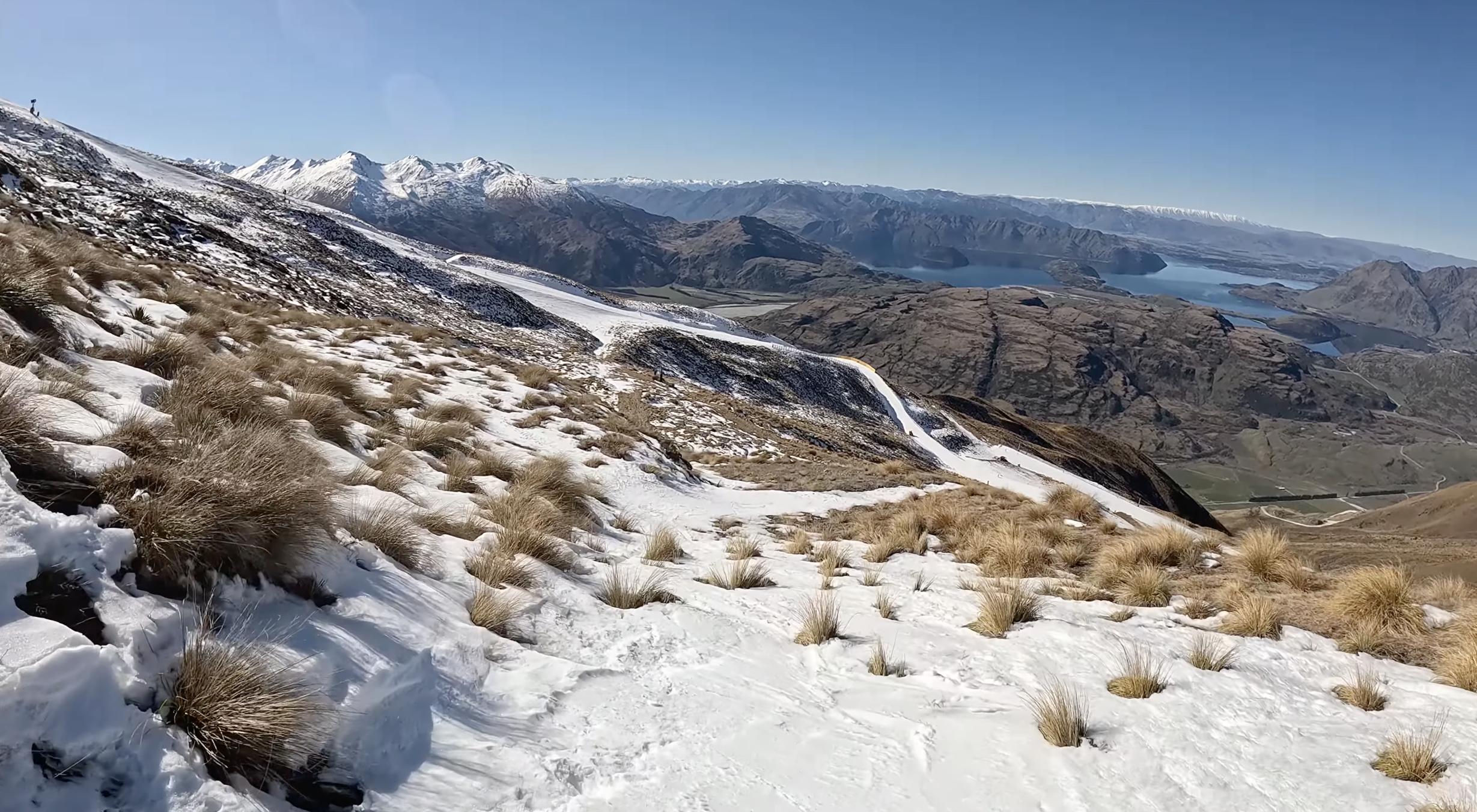
Thin cover on off-piste terrain is a consistent issue at New Zealand ski fields.
When it comes to slope aspect, the ideal relationship is in some ways opposite of what Northern Hemisphere skiers are accustomed to. Because New Zealand is in the Southern Hemisphere, south-facing slopes receive less direct winter sunlight and generally preserve snow better, while north-facing terrain receives more sun. As a result, the best aspects for snow preservation face south and southeast, versus north and northeast in the Northern Hemisphere. At some fields, a north-facing mountainside can be brown or extremely thin while a nearby south-facing slope still holds respectable coverage. This favorable southern exposure is one reason certain terrain zones can ski or ride surprisingly well even during a poor overall snow year. But it also means that two nearby fields—or even two sides of the same mountain—can offer dramatically different conditions based on their aspect and exposure.
Snowmaking is therefore extremely important at the larger commercial fields, often being used as a lifeline to establish dependable groomed routes and protect their core lift networks during dry periods. But snowmaking does not cover every acre, and lower-mountain or more peripheral terrain zones are often much less reliable. At many resorts, lower-elevation terrain areas can remain closed for significant time periods or even full seasons while the resort’s central basins offer solid skiing and riding. And smaller resorts that do not have the capacity to employ snowmaking can remain closed for significant periods of time while waiting for the next storm.
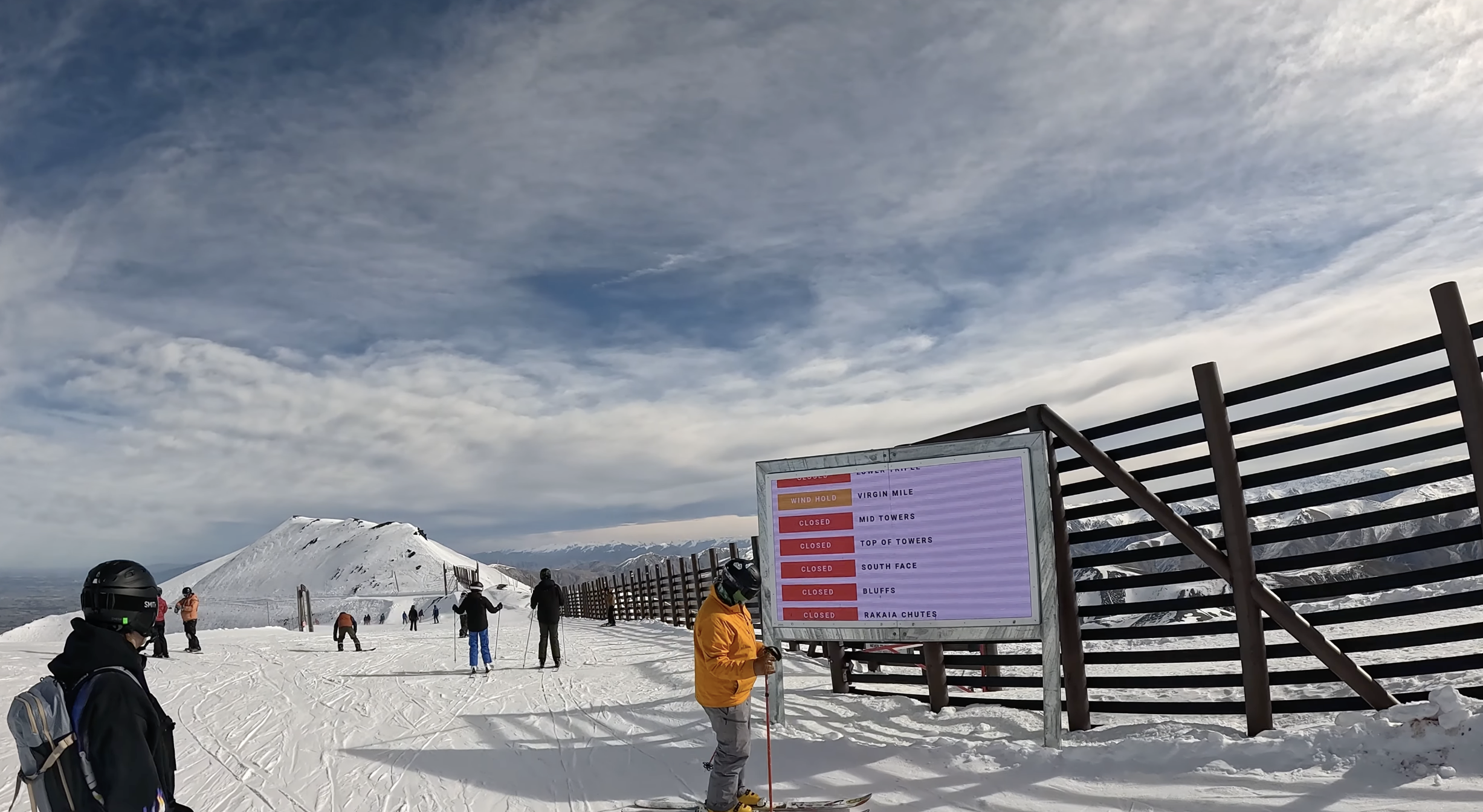
It isn’t uncommon at New Zealand ski fields for huge portions of the skiable footprint to go down for wind, even on clear days.
Storms & Wind
But when snowstorms do come in New Zealand, they come in full force. The typical New Zealand snowstorm delivers feet of accumulation and can last days, but also brings serious operational challenges. In several circumstances a season, these conditions may force full resort closures.
But even if the slopes remain open, storms are often accompanied by near-zero-visibility conditions. With no trees and inconsistent, low-lying rock formations, there is often almost nothing to provide visual definition during inclement weather throughout an entire resort. Boundary pole markings can help you from accidentally going off-piste, but it's still pretty daunting to ski or ride when you can't tell what the slope angle ahead of you is.
But the true Achilles' heel of New Zealand's storm cycles is the wind. The ski fields occupy prominent, exposed mountainsides, and strong winds regularly place individual lifts on hold, even if it's clear out. On particularly severe days, winds will shutter operations at a resort entirely. Surface lifts can sometimes continue operating when exposed chairlifts cannot, which is one reason they remain useful at certain fields and especially at the club areas, but they are not immune to bad weather either. High-alpine bowls are usually among the first areas to close because of wind, visibility, or avalanche concerns.
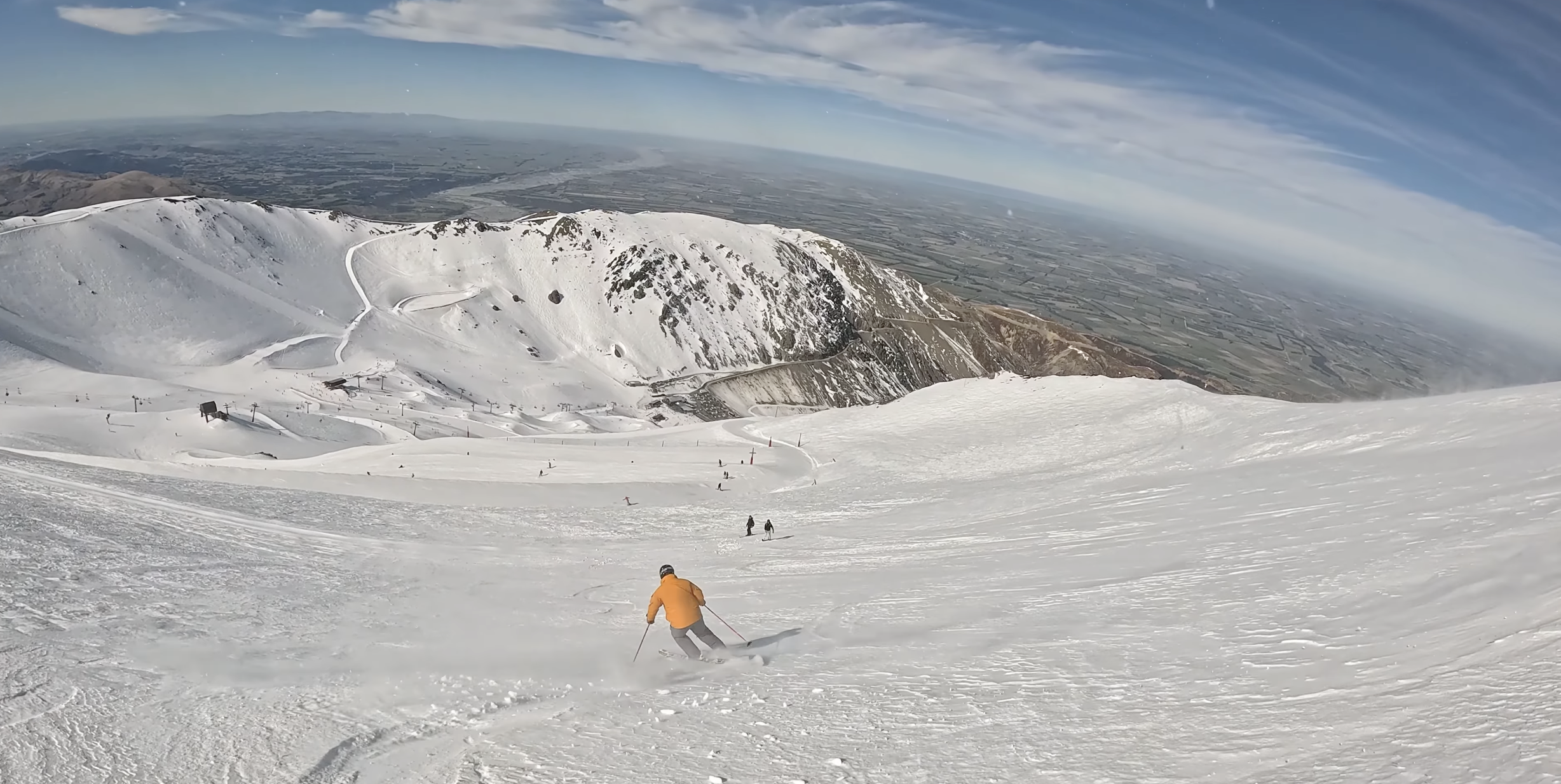
Wind can cause snow to be unevenly distributed across New Zealand’s exposed alpine footprints.
The wind associated with storms also has some important implications for new snowfall at New Zealand's ski fields. Wind can transport snow into sheltered bowls and gullies while stripping exposed ridges and faces down to hardpack, rocks, or (in extreme cases) bare ground. This means one section of a resort can hold deep, wind-deposited snow while another area at a similar elevation holds almost no fresh accumulation.
And at the resorts, storms aren't always guaranteed to bring snow. Warm systems can still bring rain or wet snow, particularly at lower elevations. It's pretty easy to tell where the rain line is based off your drive up the mountain, given the access roads for all the major ski resorts extend up from valleys that usually receive rain before rising up into snow territory; the closer the fresh snow starts to the resort base, the wetter the storm is likely to have been.
Size of Ski Fields
It’s also worth noting that while its physical mountains are huge, the very small portion that can be used for skiing and riding means that New Zealand’s ski resorts aren’t all that big. Now, that’s not to say they are truly small—the South Island’s Cardrona ski resort now offers over 900 acres of skiable terrain according to our measurements following a recent expansion—but New Zealand’s mountains are closer in size to East Coast North American ski resorts than destinations out west, and that’s not even to mention how much they are dwarfed by big European ski domains. It’s good that New Zealand’s ski resorts are so close to one another, because you’ll often be able to fully cover them in a day or two.
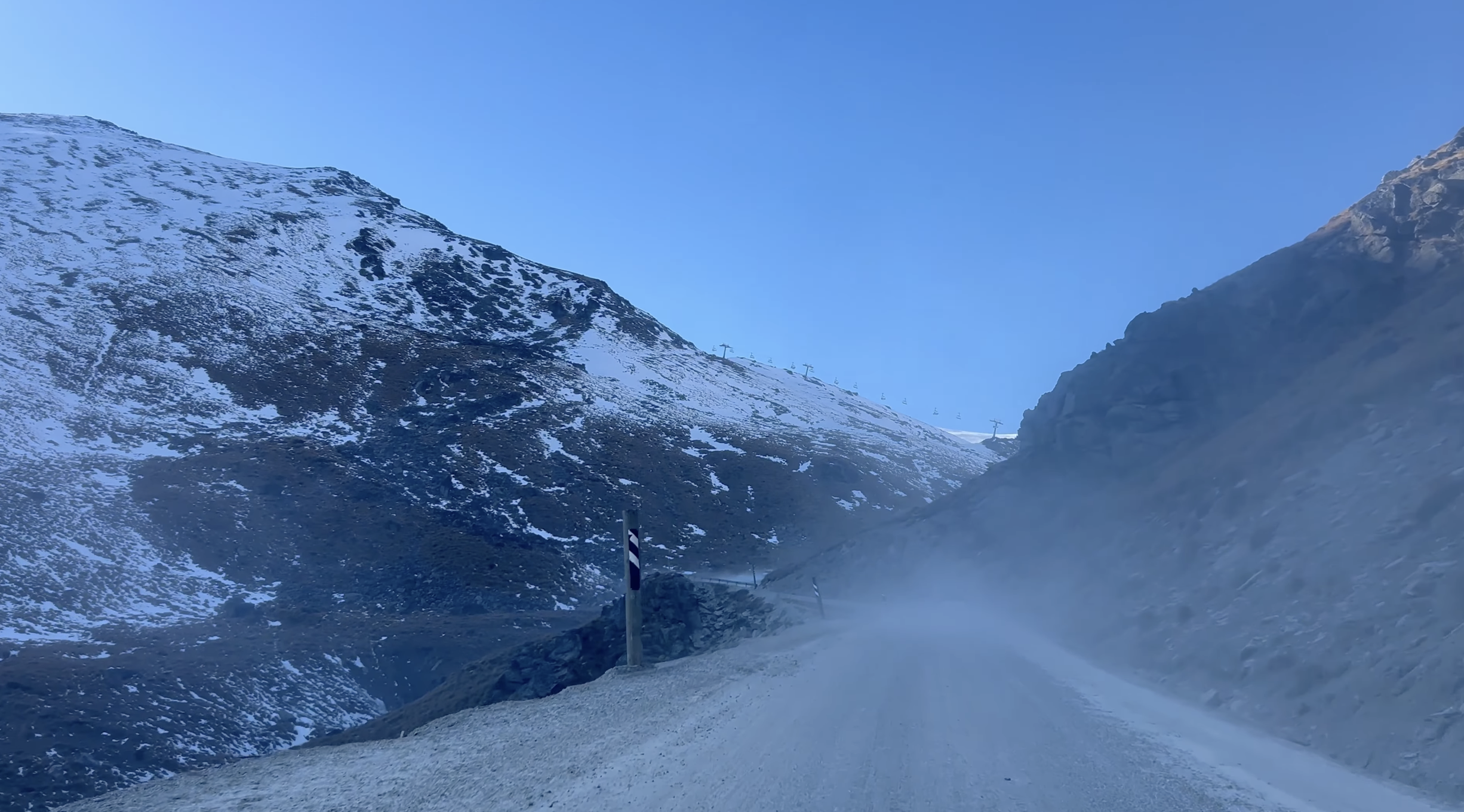
Stay alert when driving up the ski field access roads in New Zealand.
Access Roads
And the extremely prominent nature of the physical mountains paired with nonexistent snow at their bases makes for another very important thing to note in New Zealand skiing and riding: the access roads are among the sketchiest in the world, at least by developed country standards. Not only does getting to most of New Zealand’s resorts require driving several thousand vertical feet from a physical mountain base to the actual resort base, but the roads are winding with several switchbacks, plagued by limited or no guardrails, and—at most resorts—unpaved for some or all of the route up. When inclement weather rolls in, chains may be required on these roads, even at times for 4WD vehicles. As a result, driving up these roads is not for the faint of heart, and it is critical to know how to put chains on your car before your trip so you don’t get stuck. Thankfully, most rental car companies do include chains with your hire. In addition, several of these resorts do operate shuttle buses from the bottom of their access roads, so if you’re not comfortable making the journey yourself, you can often park before the dangerous driving and leave it to the resort staff.
For those coming from most of the Americas and parts of Europe, driving is further complicated by the side of the road you’re on. Unlike in those locations, you’ll be piloting the car on the left side of the road, with the driver’s seat on the right. This can be pretty disorienting at first, although it is typically manageable for most people after a day or two on the road. But it is incredibly important to get comfortable with right-hand-drive traffic, as well as placing the corners of your car, before tackling the treacherous access roads.
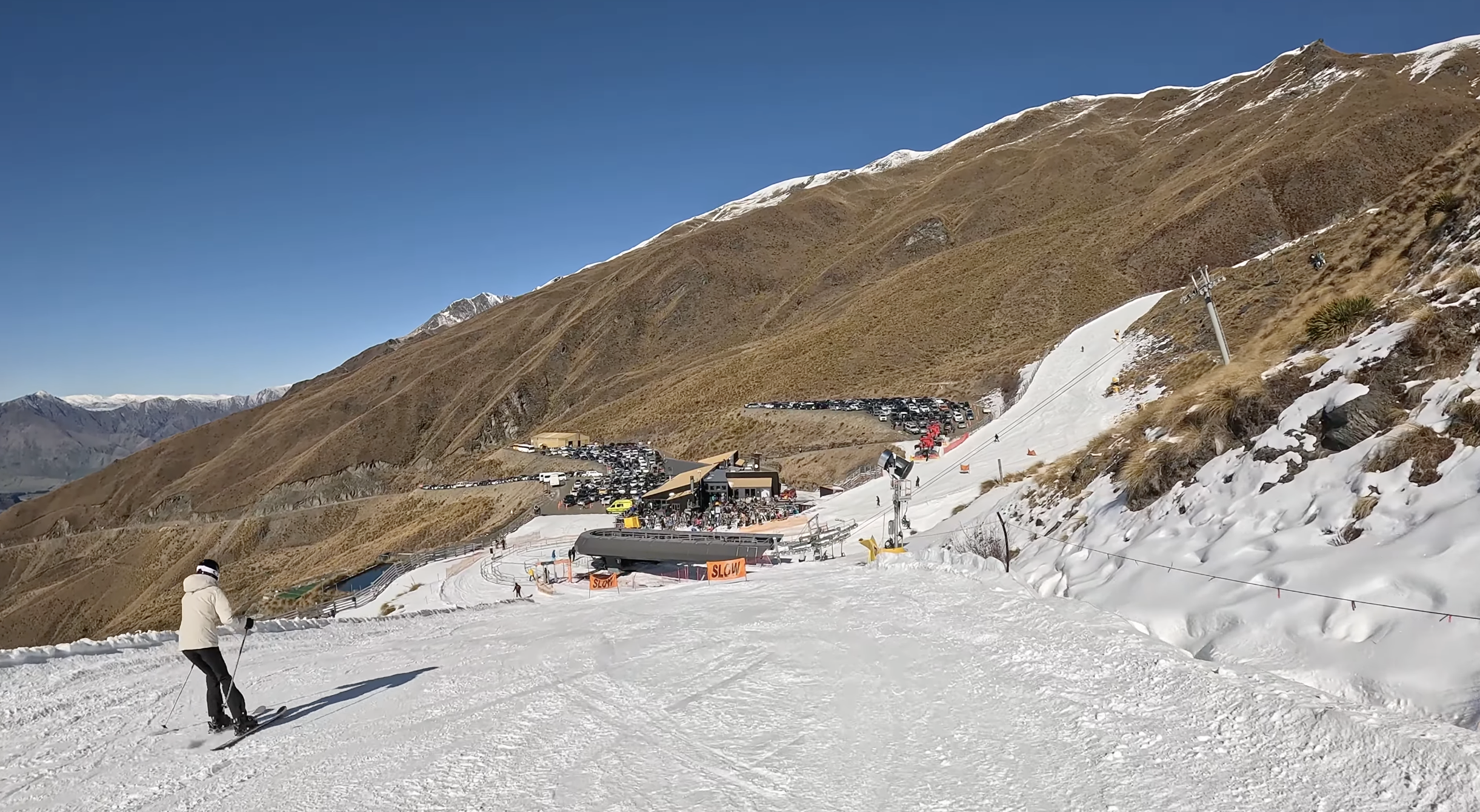
The bases at many ski fields are simply too small or precariously positioned on mountainsides to accommodate much more than limited parking capacity, let alone any kind of lodging or accommodations.
Lodging & Parking
And all this information about New Zealand’s access roads is important to note for almost everyone, because on-site lodging is incredibly limited, and at most popular commercial resorts, completely nonexistent. This means that most New Zealand skiers and riders will be staying in a town several thousand feet below their skiing or riding destination, and making that drive on a daily basis. The main lodging hubs on the South Island of New Zealand are Queenstown, Wānaka, and Methven, and they do have much milder temperatures than the already typically-comfortable ski resorts, but traffic in and out of the resorts can be really heavy during peak times on busy days.
If you’re staying in Queenstown especially and don’t want to wait in a massive traffic jam on a weekend or holiday, we recommend leaving your resort before 3pm. Traffic does go down later in the morning, but if you wait to drive to the mountain on a busy day, you might be trading the access road congestion for an inconvenient (or nonexistent) parking spot. Since New Zealand’s ski resorts start right on the sides of mountains, rather than at the bases of them, the truly convenient parking is limited, and overflow lots usually require significant uphill walking or waiting for a shuttle bus, the latter of which is often not consistent enough or requires waiting for multiple buses to go by to get a spot.
Ironically, if you do want to stay on-site at a ski resort, your best bet is to visit a club field; getting up the access road may be a challenge, but if you make it there and are comfortable with basic, communal accommodations, many of the best-known club fields offer hostel-style bunkrooms where you can crash for the night. However, club members do sometimes get priority, and if it’s a busy period, they may be sold out.

The temperatures in the towns below the ski fields, such as Queenstown, are typically pretty mild.
Activity Diversity & Après-Ski
But this separation between the slopes and the lodging towns also creates a ski-trip experience unlike that found in most other countries. Because of the mild climate and temperatures, activities like hiking, biking, and boating are available to do at these lower elevations, meaning that a ski trip to New Zealand can often be turned into a broader multi-activity trip. And even if the resorts themselves are quite sleepy after the slopes close, these ski towns do have some fun après, with a decent selection of bars and restaurants to choose from after your day on the slopes. Of the three main South Island towns, Queenstown offers by far the strongest collection of bars, restaurants, and nightlife, while Wānaka provides a smaller but still lively après scene. Methven is considerably quieter, although it still has enough pubs and restaurants to support visitors returning from Mount Hutt.
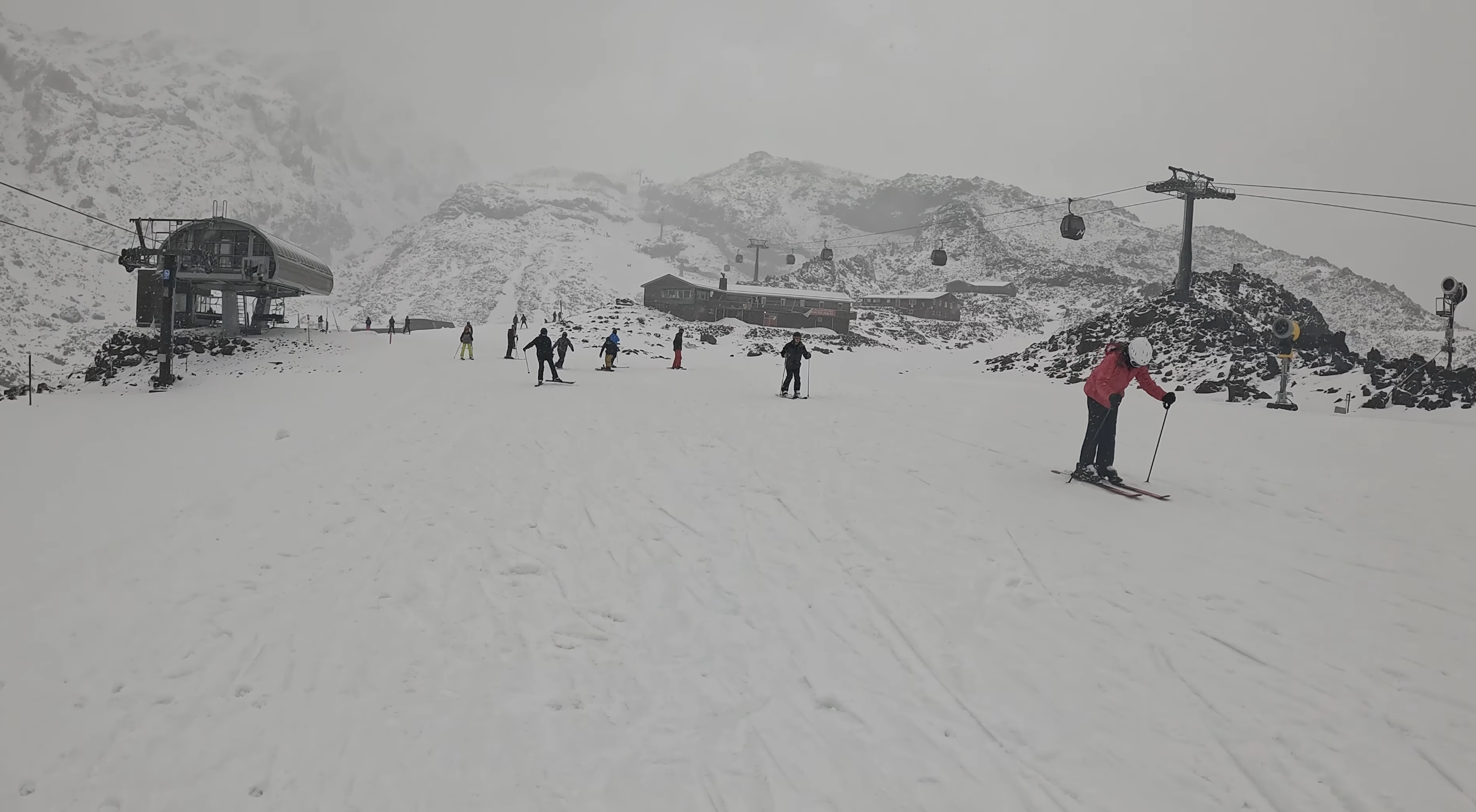
Skiing on the North Island means dealing with even more volatile weather around an active volcano.
Skiing on the North Island
It’s also worth noting that while the vast majority of commercially-viable ski areas in New Zealand are on the country’s South Island, there is also limited skiing on the North Island. All of the major North Island skiing is on a singular volcano, Mount Ruapehu, with two key commercial resorts, Whakapapa on the north side, and Tūroa on the south side. You are much more likely to see Auckland locals than fly-to destination goers up north, and a large part of that may be because the snow and conditions are way less consistent. The volcano’s extreme weather patterns mean you rarely know what you’re going to get weather-wise, and while you can get crazy powder dumps, you can also get ice storms, hail, fog, and violent winds, among other things.
But when conditions line up, Ruapehu’s ski resorts are home to some incredible and distinct skiing and riding, with a volcanic landscape that feels fundamentally different from down south and hosts awesome natural features like gullies and rock chutes that were formed in large part by lava flows. However, Ruapehu’s active volcanic nature creates unique risks, most notably lahars, which are flows of volcanic debris that can quickly move through the valleys in and around the ski fields. Given that eruptions can occur without warning, there are warning sirens and marked procedures in place to escape these valleys in the event of volcanic activity. Experienced skiers and riders may want to check out the North Island for some truly fantastic touring opportunities, including on Ruapehu itself, although the volcanic nature of the mountains warrants special knowledge and makes hiring a local guide a really good idea. A few other North Island benefits: there is some on-site lodging as well as more convenient access roads than the South, with way less elevation gain required.
And the North Island has one other skiing advantage that cannot be found anywhere else in New Zealand: an indoor ski resort. The Snowplanet complex is small with only a few acres, but if everything else looks to be shut down due to wind, you can make your way to Auckland and won’t have to worry about whether the indoor area will keep operating. Snowplanet also operates during the summer, so it might be the only ski resort in the Southern Hemisphere that fully operates during the same winter as North America, Europe, and Asia, which is honestly kind of weird to think about.
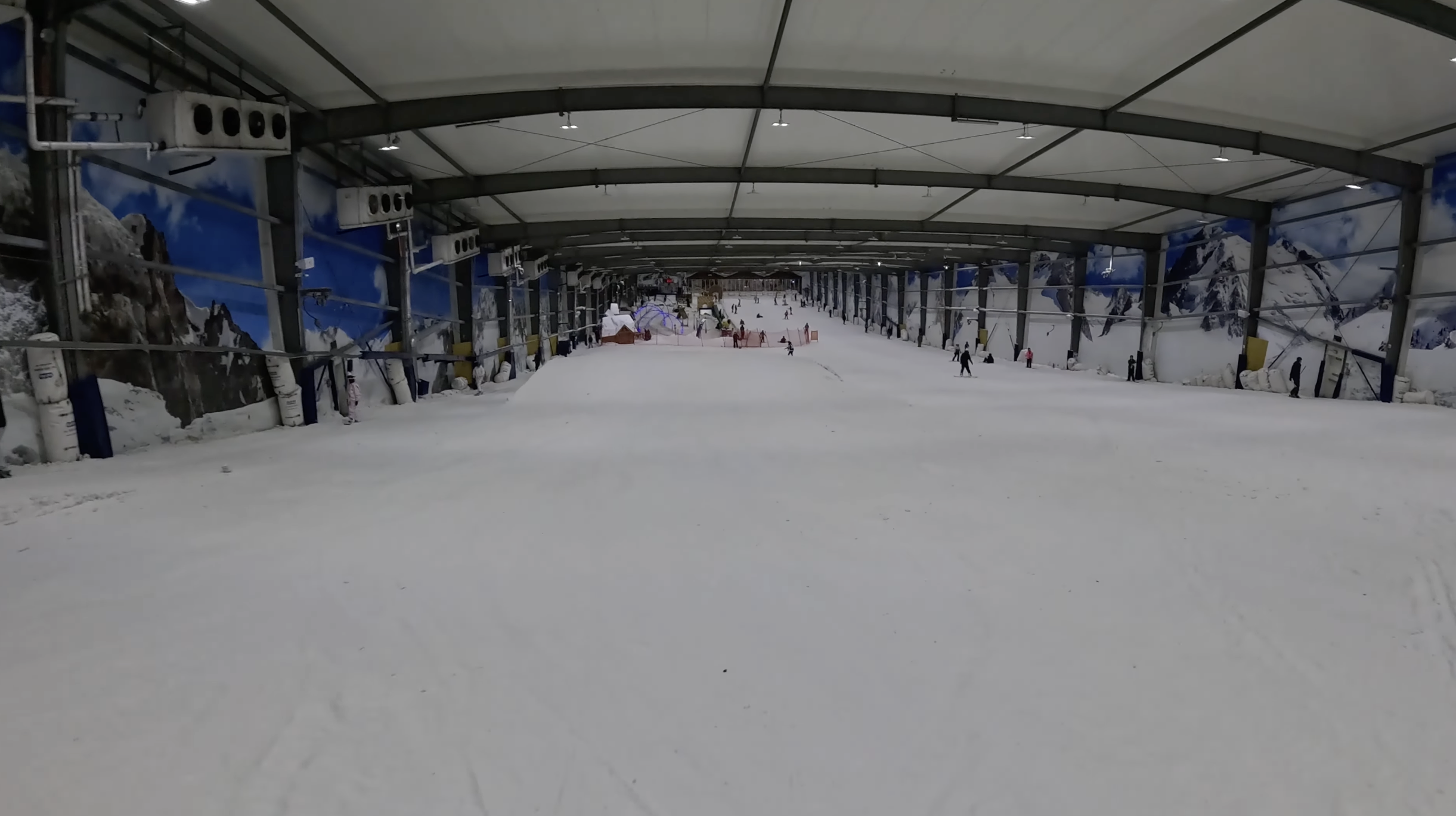
Snowplanet in Auckland is fully indoors and open year-round.
Pricing
And finally, it’s worth discussing the thing that will often make or break a ski trip: the price. And when it comes to the cost of a New Zealand lift ticket, rates aren’t what we’d call true bargains for what you get, but they can be reasonable, especially compared to places like the U.S. and Canada. At the major commercial fields, 1-day lift tickets go for around $180-$200 NZD, which is about $110-$120 USD with today’s exchange rates, but you can score significant discounts if you book for multiple days or you grab them in advance. Due to the unpredictable operating schedule of New Zealand’s ski resorts, doing either of those things may feel like a risky bet, although if a resort doesn’t open on a given day, most pass products either allow you to exchange your day ticket credit for another activity, defer the pass to another day, or request a refund if no future days work with your schedule. Also, club fields tend to be significantly cheaper, going for 30-50% less than the commercial fields.
For most people coming from abroad, the single biggest expense will be the long-haul flight cost. From places like North America and Europe, New Zealand is about as far away as one can get, and as such, getting there is rarely easy, both distance and expense-wise, even compared to South America. But one thing that can help bridge the cost gap with South America is the Ikon Pass. For 2026, three major New Zealand resorts—Coronet Peak, The Remarkables, and Mount Hutt—are included on Ikon, versus just one, Chile’s Valle Nevado, in South America. The former two are also on the Mountain Collective Pass. This means if you’re planning to visit multiple resorts, you can save a decent amount in lift ticket costs if you have one of these multi-resort passes.
Final Thoughts
So thanks to its unique topography, New Zealand is home to some of the most distinctive ski resort terrain in the world. But that same topography means that your experience may be a crapshoot, with a ton of logistical factors that you need to take into account when planning your trip there.
No, New Zealand won’t provide the most predictable experience, but it’s almost guaranteed to be an adventure. Love it or hate it, there is no other country with ski slopes that feel the way New Zealand’s do, and paired with the beautiful nature taking a ski trip here will naturally bring you to, it’s a worthy bucket list destination for many folks looking to earn turns during the Southern Hemisphere winter.
What do you think about skiing in New Zealand? Would you take a trip here from wherever you live? Let us know in the comments below.