Introduction
If you’ve been on a ski trip before, chances are you’ve ridden multiple ski lifts. Most winter sports goers think of lifts as a fairly standardized piece of mountain infrastructure. There’s a cable, towers, chairlifts or cabins, and hopefully, a quick ride to the top. How different can they be from one another? But if you start to look deeper, ski lifts start to become almost like cars: different manufacturers have different design languages, different eras, different quirks, and very different legacies.
And in North America, that story is especially interesting because the lift industry used to be much more fragmented than it is today. A few decades ago, ski resorts buying a lift could choose from a long list of companies. But today, the market is much more consolidated, and there are only a few main players left in the ski lift manufacturing industry.
So which companies are still building new lifts for North American ski resorts today? Which ones have been folded or absorbed into larger operations? And which companies no longer exist at all, but still have dozens of lifts spinning just fine, at resorts all over the continent?
In this piece, we’re going manufacturer by manufacturer: what lifts they’ve built, how to identify their lifts, how their designs evolved over time, and where you can still find them today. Let’s jump right into it.
The Big Two: Doppelmayr
Doppelmayr is one of the two dominant ski lift manufacturers in North America today, and probably the most globally recognizable name in the ropeway industry. The company is based in Austria, but it has had a major North American presence for decades, with its U.S. subsidiary dating back to the early 1970s. The modern North American business was shaped heavily by the 2002 merger between Doppelmayr and Garaventa CTEC, which eventually created the Doppelmayr Garaventa Group. Doppelmayr’s U.S. operations were based in Colorado before later consolidating in Salt Lake City.
Doppelmayr builds almost every major category of lift, even including projects outside the ski world such as urban ropeways, inclined elevators, and specialty people-mover systems. At ski resorts, the most common Doppelmayr installations are fixed-grip doubles, triples, and quads, detachable quads and six-packs, and gondolas.
Historically, Doppelmayr was central to the rise of the detachable chairlift in North America. The first detachable quad, the Quicksilver SuperChair at Breckenridge, was a Doppelmayr installation in 1981.
Today, Doppelmayr equipment is everywhere, with at least one lift operating at over 240 ski resorts in North America. Doppelmayr makes up a majority of the lift fleet at over 150 ski areas and at least 19 major destination resorts, including places like Big Sky, Mammoth, Whistler, Sunday River, and Tremblant. If a large North American resort is installing a flagship lift, chances are Doppelmayr is in contention.
But if you’re at a ski resort, how can you tell if a lift was made by Doppelmayr? Outside of just looking at the nameplate often attached to the bottom terminal, there are actually a few key ways to identify a Doppelmayr lift.
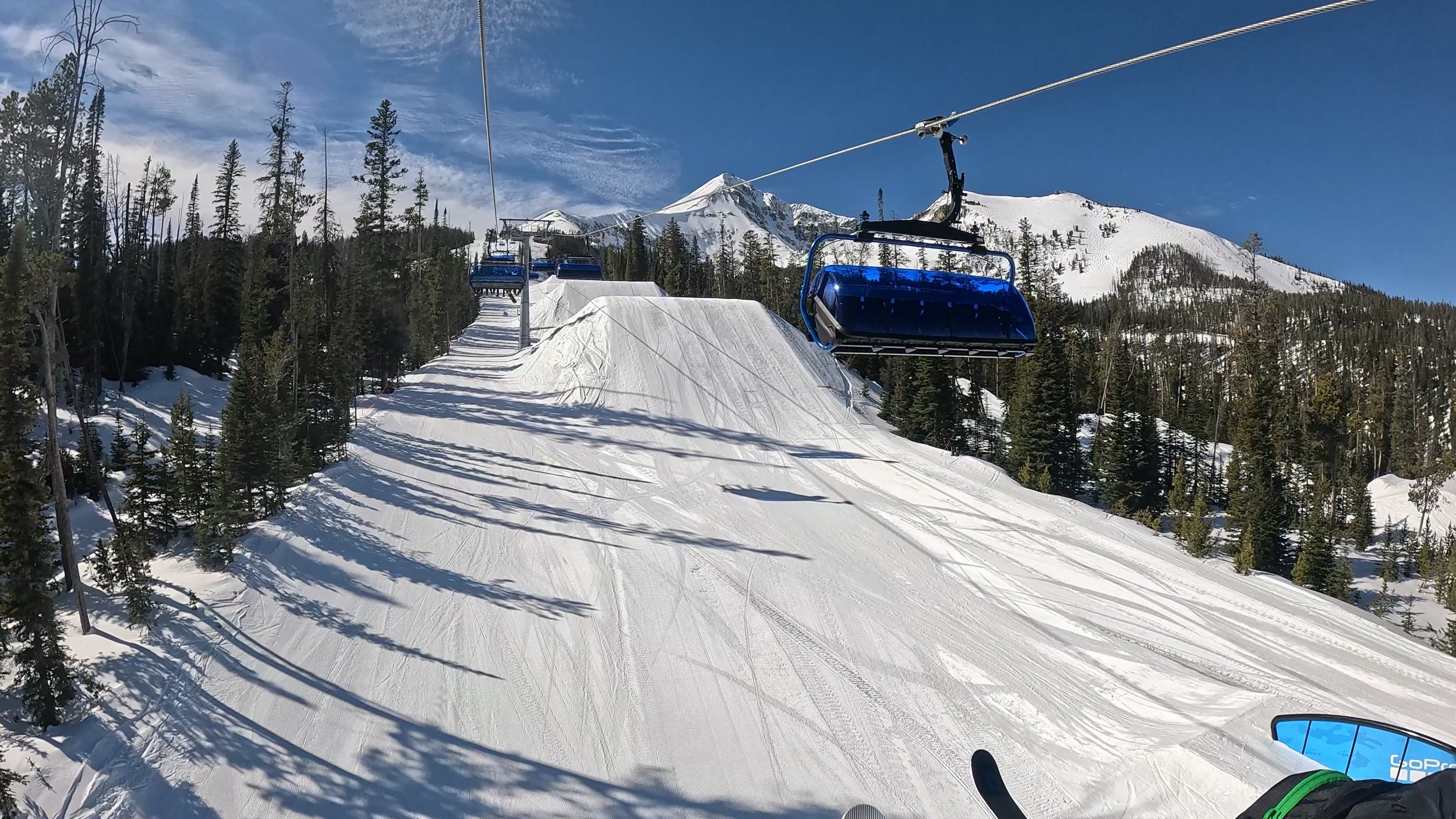
Doppelmayr makes up a majority of the lift fleet at destination resorts like Big Sky.
First, the terminals, or lift stations. 2000s-era Doppelmayr detachable lifts, which make up a significant portion of the lifts you’ll see at major North American ski resorts, have terminals associated with a specific design series known as UNI. The UNI-GS terminal skin was introduced by Doppelmayr CTEC in 2003, and a whopping 88 were built before the model was discontinued in 2009. These UNI-GS terminals are perhaps the most immediately recognizable aspect of a Doppelmayr lift from that era. They tend to have a clean but somewhat bulky profile, with rounded station covers.
However, the current flagship Doppelmayr detachable terminal design is known as the D-Line. D-Line terminals are more modern, more integrated, and generally more polished. They have a boxier but smoother design, which allows for both easier maintenance access and quieter operations.
As for Doppelmayr fixed-grip terminals, they can be identified by their relatively compact designs and tidy tower heads, which stand out from other fixed-grip installations. The tower assemblies often look nearly the same as the non-D-line detachable lifts. For many resorts that are still installing fixed-grip lifts today, Doppelmayr is a go-to, because they deliver a modern-looking product that is still cost-effective compared to a detachable.
But the history of the actual chairs used on Doppelmayr lifts has a separate lineage from the terminals. In the 1970s, the first North American Doppelmayr installations were center-pole lifts with green slatting. Notably, the center poles on these lifts sit behind the seating area, meaning that unlike most other center-pole carriers, guests will not need to worry about whacking themselves on the pole while loading. The next generation of Doppelmayr carriers, known colloquially as the E or EC generation, debuted in the mid-1970s with full-length bail frames, albeit more rounded ones than those used on modern chairs. And in the mid-1980s, Doppelmayr introduced the EJ generation of carriers, which brought a more angular, squared-off frame. This became a major Doppelmayr chair style in the decades following, and with only a handful of exceptions, has remained the default for all non-bubble, non-D-Line Doppelmayr chairlifts since. This also makes it the longest-running carrier design that’s still in production in North America, as well as one of the most recognizable.
In rare circumstances for flagship lifts, Doppelmayr has used other carriers. Some installations starting in the late 1990s are home to special-order “comfort” chairs, which have a much more substantial metal contraption connecting the hanger to the chair. Doppelmayr installed many of these as bubble lifts, but a decent number have no bubbles. In the late 2010s, D-Line introduced a newer, more premium chair family, often with sculpted, heated seats, optional bubbles, automatic locking bars, and other high-end features. And while the traditional EJ carrier is still very much part of the Doppelmayr ecosystem, still accounting for the vast majority of carriers on fixed-grip lifts and detachable quads, the company has installed a new generation of this EJ-style chair in recent years, with a slightly different design for the metal connecting the hanger with the bail that’s a bit more triangular. So far, it’s only been installed on one North American lift: the Aurora chair at Deer Valley, which opened during the 2024–25 season.
The Big Two: Leitner-Poma
Leitner-Poma is the other of the two leading North American ski lift manufacturers today, and they are Doppelmayr USA’s main competitor. The company is the product of a complicated lineage. Leitner and Poma were originally two separate companies, the former Italian, the latter French, and they eventually merged their North American operations in the early 2000s. And much like Doppelmayr, the company builds lifts of all sorts, including even some specialty designs outside the ski world.
Where do you find Leitner-Poma today? Almost everywhere. Poma lifts exist at more than 190 ski areas across the U.S. and Canada. They make up a majority of the lift fleet at 74 of those areas and at least 9 major destination resorts, including Winter Park, Snowmass, Breckenridge, Killington, and Okemo, the latter of which is entirely a Poma fleet. In Colorado, Vermont, and the American Southwest, you’ll find more lifts built by Poma than by Doppelmayr.
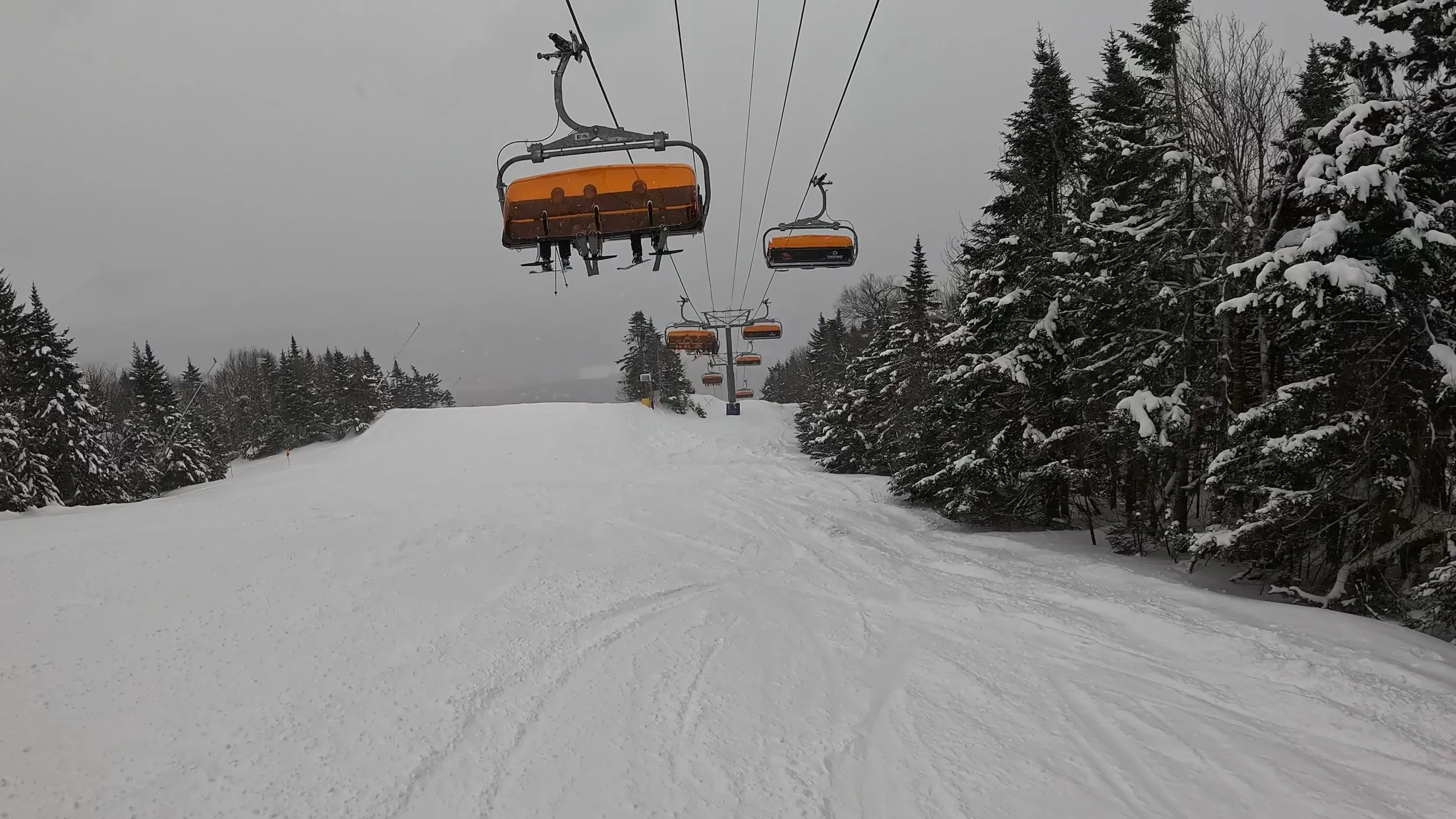
Okemo’s lift fleet is made up entirely of Poma and Leitner-Poma chairlifts, such as the Sunburst Six bubble chair above.
But to understand Leitner-Poma, you really have to understand its numerous North American design eras. The French manufacturer Poma was already selling ski lifts in the United States in the 1950s, initially becoming best known for its distinctive platter-style surface lifts. In fact, many skiers and snowboarders today still refer to platter lifts as “pomas”, due to how prevalent this model became. The earliest chairlifts still in operation today date back to the 1960s. If you happen to ride one of the rare remaining original lifts from this vintage, the carriers are distinguished by a diagonal brace that forms a triangle between the hanger arm and the top of the chair frame.
But in 1970, Poma's American operations merged with Heron Engineering, one of the U.S.'s pioneering chairlift manufacturers. Founded by Bob Heron, the company had helped build some of America's earliest chairlifts, including installations at Aspen and Berthoud Pass. The combined company, known as Heron-Poma, briefly became one of the biggest lift manufacturers in the United States. The partnership didn't last particularly long, though. By 1974, Heron and Poma had separated, with Heron returning to independent chairlift manufacturing and Poma continuing to expand its own North American operations. The double chairs from this era are perhaps the simplest design-wise of the Poma lineage, looking fairly boxy.
After the split, Poma's chairlift designs went through several distinct generations. The next set of double carriers were the short-lived teardrop design, which exist on a handful of lifts built in the mid-1970s through early 1980s. But following that was one of the company's most iconic carrier styles, and one that is still greatly widespread throughout North American lift networks to this day. The Arceaux, or “Falcon” carrier design as it’s called by some enthusiasts, started appearing on fixed-grip lifts by the early 1980s and went through several revisions over the following decade. This carrier is immediately recognizable for its arched bail design, one that starts narrow at the top and curves outward toward the seat.
When Poma began installing more high-speed quads in North America, it introduced another recognizable chair design known as the Competition carrier. These chairs still had slightly curved hanger arms, but the frame was more boxlike than that of the Arceaux design, albeit still somewhat curved. Nevertheless, both styles were offered on fixed-grip and detachable quad lifts during the late 1980s and early 1990s. And despite being the older model, the distinct Arceaux carriers remained widespread throughout the 1990s, appearing on all Poma double and triple chairs, as well as both fixed-grip and detachable quad lifts.
The next major step was the Omega era. Starting in the late 1990s, Poma introduced the Omega terminal and Omega T-grip. And even after Leitner-Poma merged into the company we know today back in the early 2000s, the Omega-era carriers continued to be used. These chairs look pretty similar to the old Competition chairs, with the same general boxy-but-rounded-edge design. The big difference is the more streamlined bail; while the Competition carrier had a big metal piece along the entire top of the bail extending all the way to the sides, the metal piece is much smaller throughout the top of the Omega carrier. But the Omega carrier was only Leitner-Poma’s flagship for about a decade. In the early 2010s, Leitner-Poma introduced the LPA detachable chairlift, with updated grip, carrier, and terminal designs, which replaced the Omega generation and is now the company’s current North American detachable system. LPA chairs are most easily distinguished by their chunky hanger arms and slightly more rounded carrier designs. To this day, Leitner-Poma’s fixed-grip chairlifts mainly retain the Omega carriers and grips.
Like with Doppelmayr, a few higher-end Leitner-Poma lifts have their own comfort chairs, with a very similar damped metal contraption where the hanger arm meets the chair frame. The vast majority of Leitner-Poma bubble lifts use this design, as do a handful of regular detachable quads.
As for the terminals, Leitner-Poma uses a terminal design known as Alpha for the vast majority of their fixed-grips, seen on nearly all new installations over the past four decades. Lifts installed before the early 1980s have somewhat different terminal designs. Early Poma detachables in the 90s and early 2000s used a mix of a few different terminal designs, including the Alpha, Omega, Competition, and another, more compact variant known as the Challenger. Good examples of Challenger terminals can be found on the Ramshead Express at Killington, and the Crystal Ridge Express at Whistler Blackcomb. However, despite this wide variety of terminals in use historically, all new Leitner-Poma detachables have followed the LPA design since its introduction in the 2010s.
The terminal design is actually a quick and easy way to tell the difference between a modern Doppelmayr lift and a modern Leitner-Poma lift. Leitner-Poma installations in the current LPA generation generally have smooth, rounded roofs, whereas Doppelmayr terminals are a little bit boxier and more modular. For the clearest example, Utah’s Snowbasin now has a current generation lift from both manufacturers sitting side-by-side. The Leitner-Poma Becker Express and Doppelmayr Wildcat Express have bottom terminals right next to one another, and the subtle but distinct differences between the two show the design directions that the two biggest lift manufacturers are going in today.
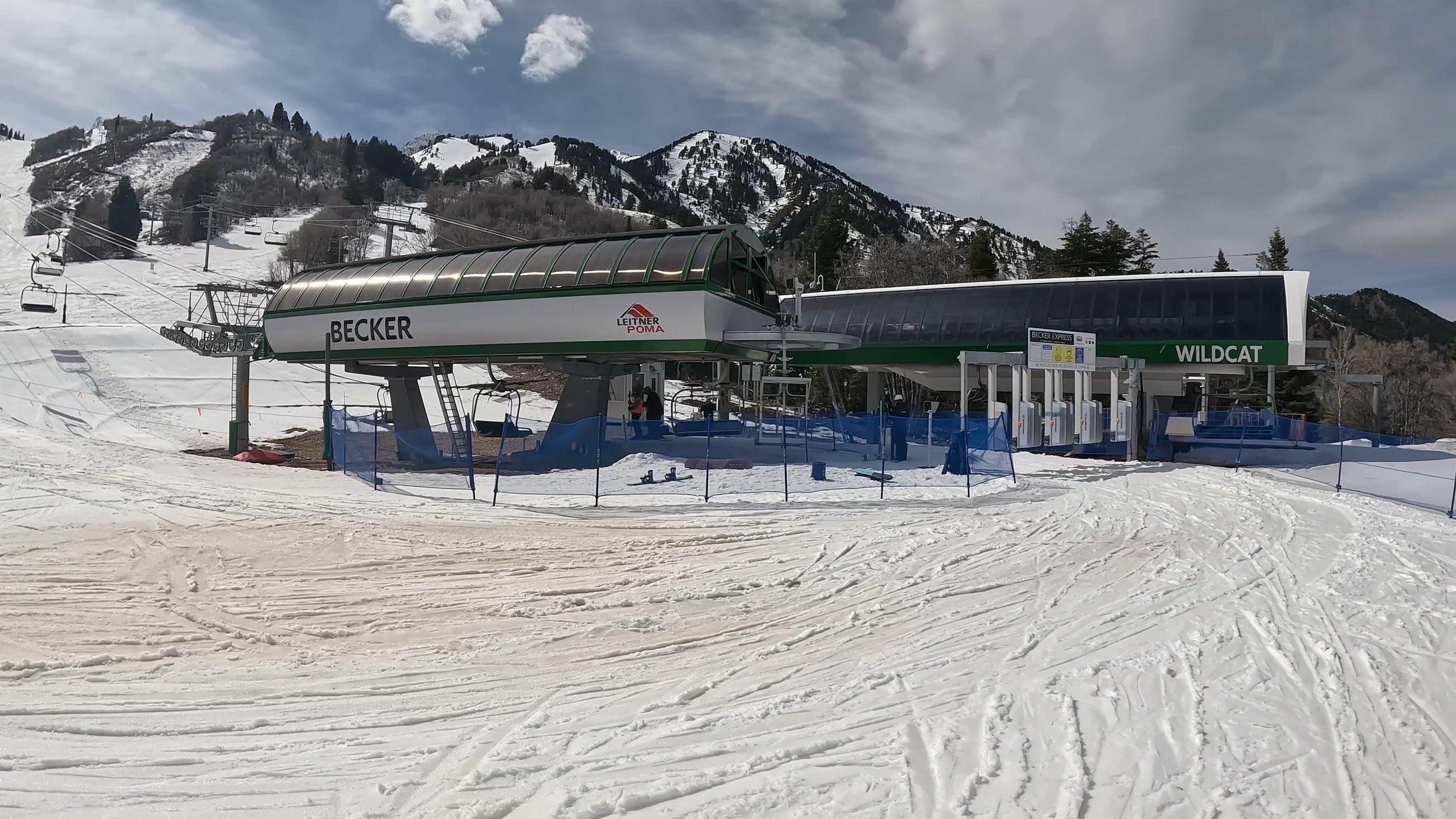
If you want to see modern Leitner-Poma and Doppelmayr terminals side by side, there’s no better place than Snowbasin, Utah’s neighboring Leitner-Poma Becker and Doppelmayr Wildcat lifts.
Skytrac: An Alternative (But Only On The Surface…)
While Doppelmayr and Leitner-Poma are the two big names in the North American lift market, there are still other smaller companies with their hat in the ring. Perhaps the most notable of these alternative manufacturers is Skytrac, but this company’s status as a separate entity from the big two does come with a huge asterisk.
Skytrac was founded in 2010 in Salt Lake City, positioning itself as a lower-cost alternative to existing manufacturers. Skytrac described itself as the first new North American aerial ropeway manufacturer in more than 30 years. However, in 2016, the company was acquired by Leitner-Poma, meaning that today, it is technically a part of the lift manufacturing duopoly. But Leitner-Poma notably allowed Skytrac to keep its own branding, designs, and perhaps most importantly, its own prices. And even now, Skytrac’s presence in the market has become increasingly important in the shadow of Doppelmayr and Leitner-Poma’s dominance.
Since its inception, the company has filled important lift manufacturing niches across the North American continent. The company’s bread and butter has been the majority market of fixed-grip chairlifts and retrofits; many smaller and mid-sized ski resorts work with the company to both overhaul old lifts and install new ones. For independent ski areas, Skytrac represents a much more sensible investment than going all in for an expensive Doppelmayr or Leitner-Poma installation.
While they’re not as common at the largest resorts, Skytrac lifts are actually fairly easy to identify once you know what you’re looking for. They tend to have compact terminals with the drives distinguishable by two narrow windows on the end facing away from the lift line. Their chair designs are incredibly distinct as well, with a unique narrow bail frame on their triple and quad chairs that does not extend to the edges of the carrier.
Skytrac lifts are fairly common at smaller or independent ski areas all over the US. At some resorts in the Midwest and Mid-Atlantic, they make up half or more of the chairlift fleet. Mid-sized resorts all over the country like Powder Mountain, Monarch, and Whiteface have also recently gone with Skytrac investments for replacements of old lifts and even terrain expansions. And while most larger destination ski resorts don’t invest in Skytrac for major lift projects, the company’s distinct chairs do often pop up on lifts serving bunny hills or real estate access. For example, Snowbird’s newest lift is a Skytrac quad servicing its Chickadee beginner area, opening this season, while a Skytrac lift has held down service to Jackson Hole’s bunny hill for years. So while Skytrac isn’t technically a proper challenger to Doppelmayr and Leitner-Poma due to being owned by the latter, it is allowed to operate as a separate entity that fills in a lot of important lift-related work all around North America.
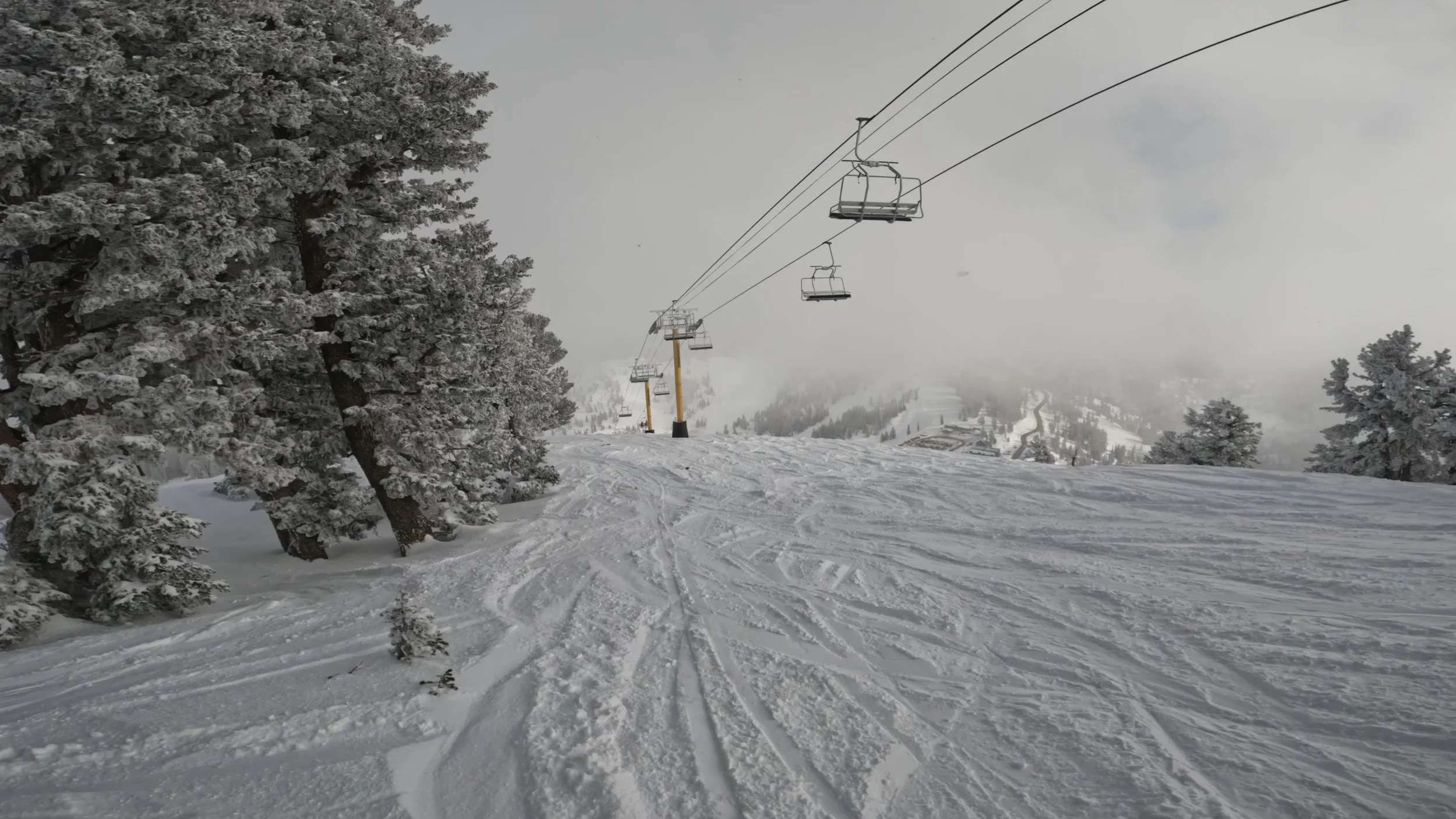
Mid-sized resorts like Powder Mountain have recently turned to Skytrac for lift replacements and terrain expansions.
MND & Partek: The Only Other Companies Still Holding On
There are also a couple of other small lift manufacturers worth mentioning that are currently active. The first is MND Ropeways. MND is a France-based company, and is a very established mountain-infrastructure provider in Europe, with a foothold in developing equipment for snowmaking and avalanche prevention alongside lifts. In North America, however, it is still a much smaller player.
The company has merged with and acquired numerous smaller European companies to become what is known as the MND Group today. The company is still based out of France, but maintains two North American satellite offices in Colorado and New Hampshire.
MND’s most notable North American aerial ski lift project is the Tecumseh Express at Waterville Valley in New Hampshire, a six-person detachable bubble chair that opened in 2022. That lift was completed through a partnership involving Bartholet, but Bartholet was later bought out by the HTI group, the parent company of Leitner-Poma. This ended the partnership, and the Waterville Valley lift ended up being the only joint U.S. project between Bartholet and MND.
Other than that, MND has only installed a few surface lifts in North America, such as conveyor lifts and T-bars, and largely under the previous LST branding until 2021. They worked with Waterville Valley again in 2025, installing a new T-bar there, and the company has made it clear that they plan to expand into the North America fixed grip market. However, whether they will actually be able to grow enough to occupy a similar niche to Skytrac remains to be seen.
The second small active company worth mentioning is Partek, an American manufacturer with roots in an older lift company known as Borvig. Partek was founded in 1996 in Pine Island, New York, after Borvig went out of business. The new company became closely associated with Borvig replacement parts, service, and similar fixed-grip lift designs. The design and manufacturing rights for Partek were acquired by Doppelmayr CTEC in 2005, including rights connected to Borvig equipment. But unlike with Leitner-Poma’s acquisition of Skytrac, Doppelmayr did not purchase Partek outright, and after a five-year non-compete, Partek resumed making lifts independently.
Partek’s focus has historically been fixed-grip chairlifts and surface lifts, largely in the Northeast, Mid-Atlantic, and Midwest. But while Borvig and Partek share a family history, their chairs look quite different. Many classic Borvig chairs have a boxier carrier silhouette, with sides that are oh-so-slightly bent with a distinct kink in them midway down. The hanger arms are distinguished by consisting of two parallel welded pieces of steel that curve at the bottom to form a rounded triangle with the top of the bail. Borvig also made a handful of center-pole chairs, including quads. Newer Partek chairs have a slightly hunched look, with a curved hanger arm that sweeps into a wide plate across the top of the frame, sides that tuck inward near the seat, and seatbacks that are punched with small circular holes. But if you see these chairs on your next ski trip, not all of them may fully be Borvig or Partek installations. In fact, many lifts that contain any infrastructure from these brands today are composite combinations of hardware from several different manufacturers.
Partek built fixed-grip lifts from the ground up as recently as 2023. However, sadly, those were its final new lift projects. The company operates today in the capacity of replacing and overhauling old lift parts only, and no longer sells newly constructed lift projects. This means that other than Skytrac, which is effectively Leitner-Poma in disguise, and MND, which is very new to the North American scene and has an uncertain future, there are basically no real challengers to the present-day duopoly.

The Tecumseh Express bubble six-pack is the only chairlift MND ever built in the United States, although it has produced a handful of additional surface lifts.
Defunct Manufacturers: Yan / Lift Engineering
But what about the challengers that existed in the past? Even today, you will find many ski lifts that were operated by companies that are now defunct. Perhaps the most infamous is Yan. Founded by Janek Kunczynski and formally known as Lift Engineering, Yan became a major manufacturer in the 1970s, 1980s, and early 1990s, especially in the western U.S.
Yan built many fixed-grip doubles, triples, and quads. These lifts were often relatively affordable, which made them attractive to North American ski areas that wanted to expand quickly or add capacity without paying the European prices. Many Yan fixed-grips had a simple appearance, with basic towers, exposed terminals, and chairs that often looked lighter and less refined than competing equipment, to the point they could almost be described as skeletal. Plenty of these fixed-grips still operate today at big and small North American ski resorts alike. Many of them still lack modern infrastructure amenities like station housing on the terminals and safety bars on the chairs.
But Yan’s legacy is dominated by detachable lifts. Yan built over 30 high-speed quads in North America, in a rapid burst of an era between 1986 and 1994. The company’s faulty detachable grip technology eventually caused serious accidents, including incidents at Sierra-at-Tahoe and Whistler Blackcomb. Yan filed for bankruptcy in 1997, only a few years after its last lift installation.
As for identifying a Yan lift in person, it can sometimes be tricky, because many of them have been modified. Once upon a time, Yan detachables were some of the most recognizable in the industry. They were fitted with distinct and iconic carriers that were shaped either like teardrops or pentagons, unlike any other chairs on the market. However, in the wake of numerous incidents with the detachables, the old Yan hardware has been gradually phased out over the years. This most often has manifested with new chairs, grips, and terminals from other manufacturers like Doppelmayr, even if the original Yan towers and alignment are still in use. You can still see the original carrier designs in use at three locations: June Mountain in California, and Killington and Pico in Vermont.
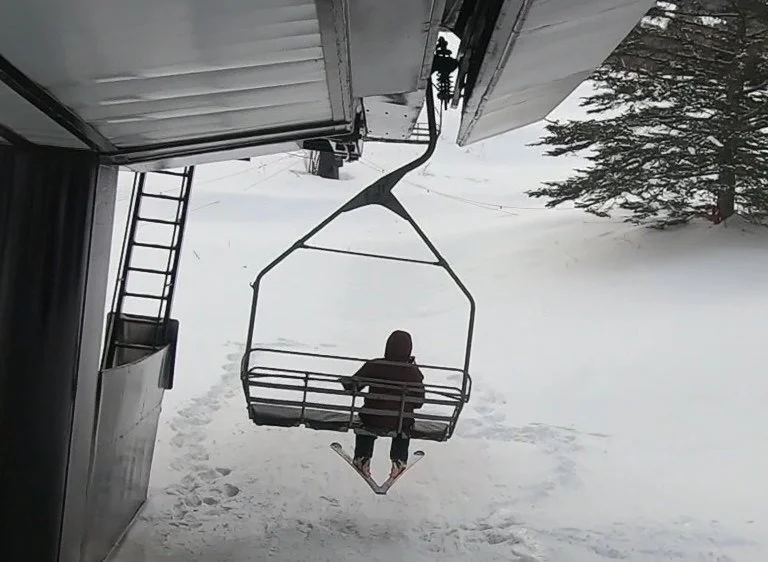
Original Yan carrier designs are still in use at Killington, Pico, and June Mountain.
Yan fixed-grips are much more common and recognizable in their original forms. Many major US ski resorts such as Mammoth, Winter Park, Steamboat, and Mount Snow operate Yan fixed-grips as infill lifts, redundancy lifts, or lifts serving isolated pods of advanced and expert terrain. These lifts largely spin with the original fixed-grip carriers, and represent arguably the most recognizable alternate chairlift design outside the Doppelmayr/Leitner-Poma duopoly still in use today. For the most part, two different chair designs were used for Yan’s fixed-grips: one with a rounded bail, and the other with a square-tube bail design and diagonal brace. The latter design was reserved for double chairs, while the rounded bails made their way onto triples and quads as well. There were two other extremely rare Yan carrier designs; the manufacturer made three center-pole double chairs, all of which were originally installed at Alta; the only one that hasn’t been decommissioned or relocated is the Wildcat lift. And Yan also installed three pentagon-style fixed-grip quad chairs with slightly different designs than the detachable carriers, all of which were installed at Sunday River, Maine, and all three of which are still in service today.
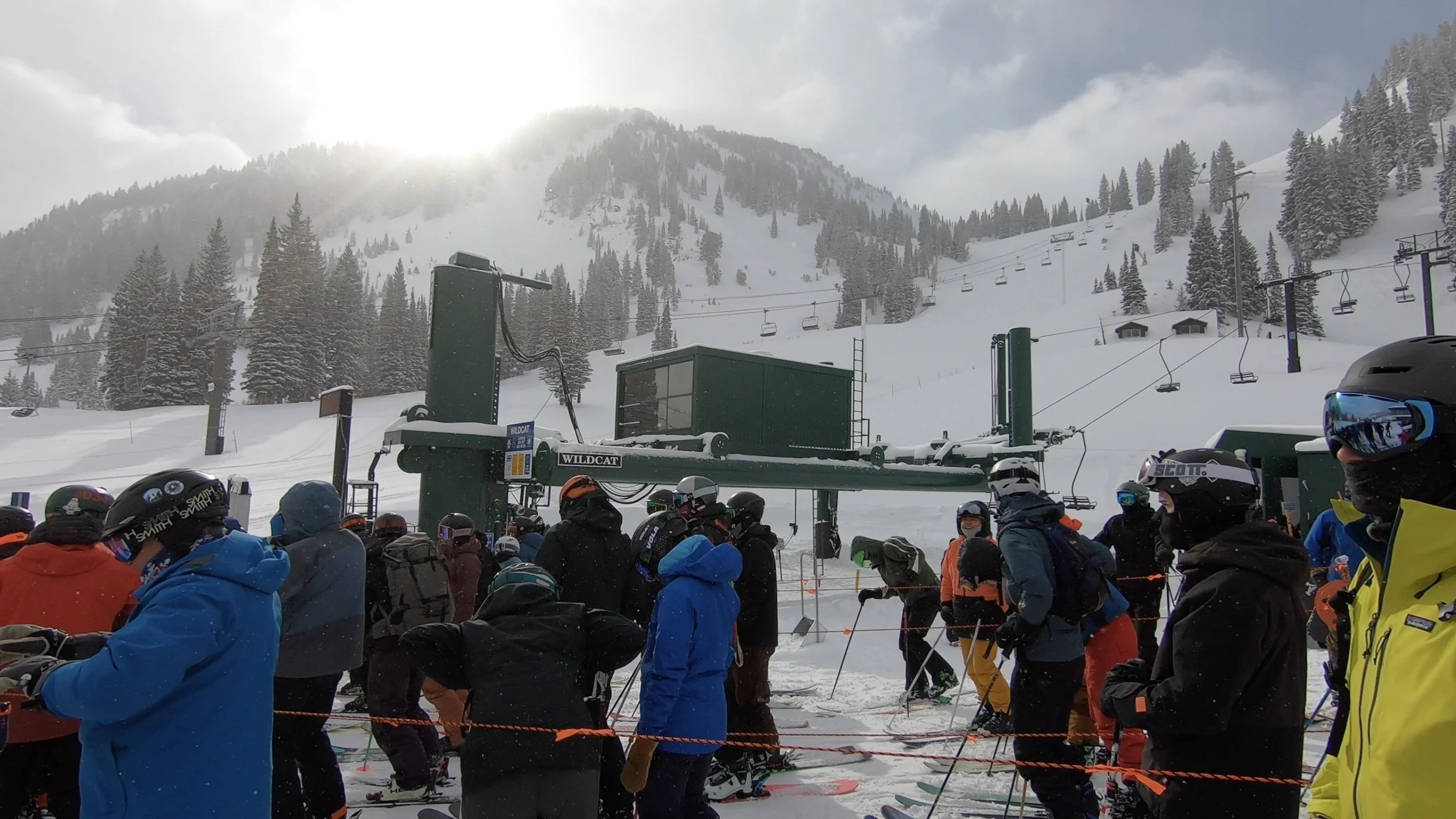
Alta’s Wildcat is the only one of Yan’s three center-pole double chairs that hasn’t been decommissioned or relocated.
Defunct Manufacturers: Riblet
On the other side of the coin from Yan, you have Riblet. Riblet is widely known in industry circles as one of the great defunct American lift manufacturers. Based in Spokane, Washington, the company built hundreds of lifts across the second half of the 20th century, and became especially dominant across the Pacific Northwest, Inland Northwest, Rockies, and many smaller U.S. ski areas.
Riblet mainly built fixed-grip chairlifts, including doubles, triples, and quads. Even as the industry began to shift toward detachables in the 80s and 90s, they stuck to their original niche, and remained relatively prevalent during this time. However, the company did eventually slow down, and built its last lift at Cooper Spur in Oregon in 2002. The following year, Riblet went out of business.
However, there are still a surprising number of Riblet lifts operational all over North America. The company’s installations were designed to last, and it has become more and more clear with every passing year of Riblet lifts spinning on, that the company’s durability was almost second to none. Today, their upkeep is handled by parts supplied by other companies, including the aforementioned Partek. But the original design elements that defined Riblet are still largely intact on many of their chairlifts.

Riblet lifts are distinctive for their near-invisible hanger arms, with many produced as center-pole doubles.
One thing that sets Riblets apart is the design of the grip, or the technology that connects the chair to the cable overhead. Almost all modern lifts feature an external grip system, where a piece on the end of the chair’s hanger arm clamps around the outside of the cables. Riblets used an internal design instead, where the grip was put inside the weaves of the cable. This setup had its own advantages and drawbacks, but if you ride a Riblet lift today and happen to look up, it will almost appear as if the chair is barely attached to the cable.
However, for the less eagle-eyed lift riders, a much easier distinguishing factor for Riblets is the chair design. Riblet carriers typically feature a very utilitarian and barebones design, with low chairbacks and very simplistic hanger designs. Many will have heard of the iconic center-pole double and quad chairs, which featured a single pole as the bail instead of a full frame, connected right to the middle of the seat between the riders. This pole also notably doubles as basically the only thing to hold onto during the ride. A handful of these center-pole lifts still operate today at places like Winter Park, Red Lodge, and Stevens Pass, though they are being slowly phased out by many resorts. The center-pole quads are much rarer, living almost entirely in the Midwest. There are a few other Riblet fixed-grips in operation that were not part of the center-pole model, including the company’s only triple chairs.
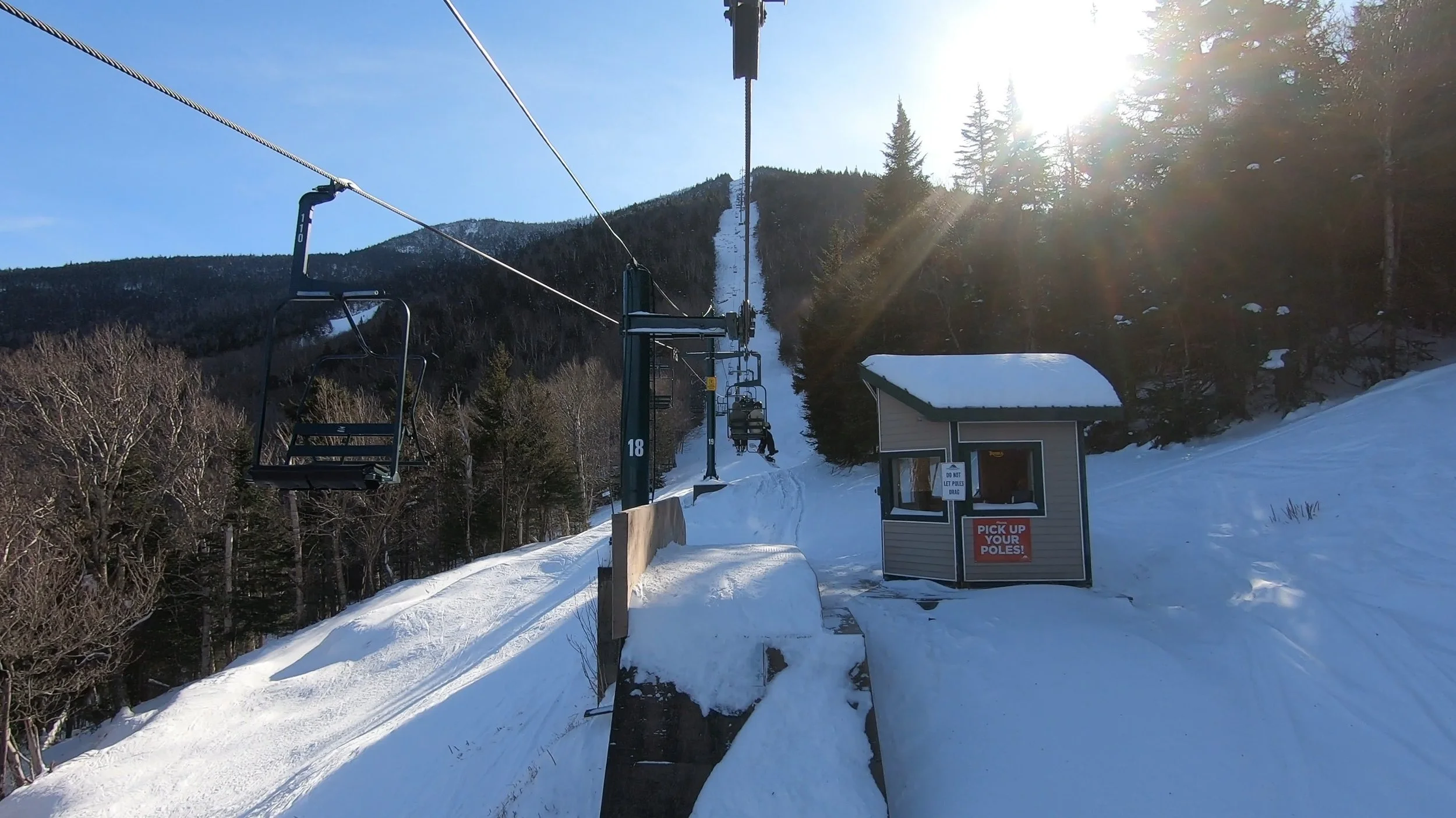
A large number of decades-old double chairs from defunct manufacturers, such as the Hall chair at Smugglers’ Notch pictured above, are still operating at North American ski resorts.
Defunct Manufacturers: Hall, Müller, and Städeli
Hall is another old-school American manufacturer whose chairs you can still ride all over the continent. Despite folding in the 1980s, there are still more than 200 Hall-built chairlifts across the U.S. and Canada, making them nearly as widespread as lifts from the contemporary makers. On many of the classic doubles, the easiest thing to spot is the hanger arm. It drops almost straight down from the cable, then makes a short bend just above the chair frame. The chairs themselves are simple, with low, slatted backs and squared-off frames with rounded corners.
While far rarer than Hall, two other old-school lift manufacturers, both Swiss in origin, are Müller and Städeli. You can still ride about three dozen from the former and just over a dozen from the latter in North America. To see if you are on a Müller lift, look for the open steel lattice towers and a distinct kink in the hanger arm. Städeli lifts mostly have square carriers with hanger arms that also have a noticeable hook shape, although there are a handful of center-pole installations. But one of the most reliable ways to identify a Städeli is by their drive terminals, with their machinery tucked inside a small, pitched-roof building. And then finally, one of the rarest but most distinctive lift manufacturers left is SLI, with about a dozen double chairs still standing, all originally constructed from the late 1960s through mid-1970s. These lifts have carriers shaped unlike any others, with bails that have a clean, almost-perfectly half-circle design.
Merged/Absorbed Manufacturers: Garaventa CTEC
Now, it’s worth discussing a couple of former North American lift manufacturers that ended up being totally absorbed by larger companies. The first of these is Garaventa CTEC, which actually itself is the product of one company absorbing a smaller one. On the American side was CTEC, or Cable Transportation Engineering Company. It emerged from the old Thiokol lift business in the late 1970s to become a major American player, and the company’s first independent lift was built at Seven Springs in Pennsylvania in 1978.
Like most manufacturers at the time, CTEC began with fixed-grips. The first few CTEC lifts were built with Thiokol-derived designs, which had square carriers with diagonal braces. But by the early 1980s, CTEC fixed-grips were switched to a sturdier, much more modern design philosophy, with a boxy carrier but curved sides.
Meanwhile in Europe, Swiss manufacturer Garaventa was making a name for itself in installing more specialty mountain transportation infrastructure, such as aerial cable cars, gondola cabins, and funiculars. The company’s American presence was limited up until the 1990s, with its only two lifts being aerial trams at Snowbird and Palisades Tahoe.
However, what set Garaventa CTEC apart from companies like Yan or Riblet was that it not only attempted to break into the detachable market, but actually did so successfully and without catastrophic design flaws. CTEC installed its first detachable in 1989, the Eagle Express at Solitude in Utah, made possible through a brief partnership with Swiss industrial group Von Roll. But this was not an in-house design, and for its own detachable hardware in the United States after the Eagle Express, CTEC decided to partner with Garaventa. And in 1992, the two officially merged to become Garaventa CTEC.
Over the next decade or so, Garaventa CTEC became a major player in detachable lifts across North America, with installations at Park City, Deer Valley, Grand Targhee, and Stratton, among others. Plenty of those lifts still run today, and the easiest way to tell their chairs apart is to look at the bail, the frame that wraps around the seat.
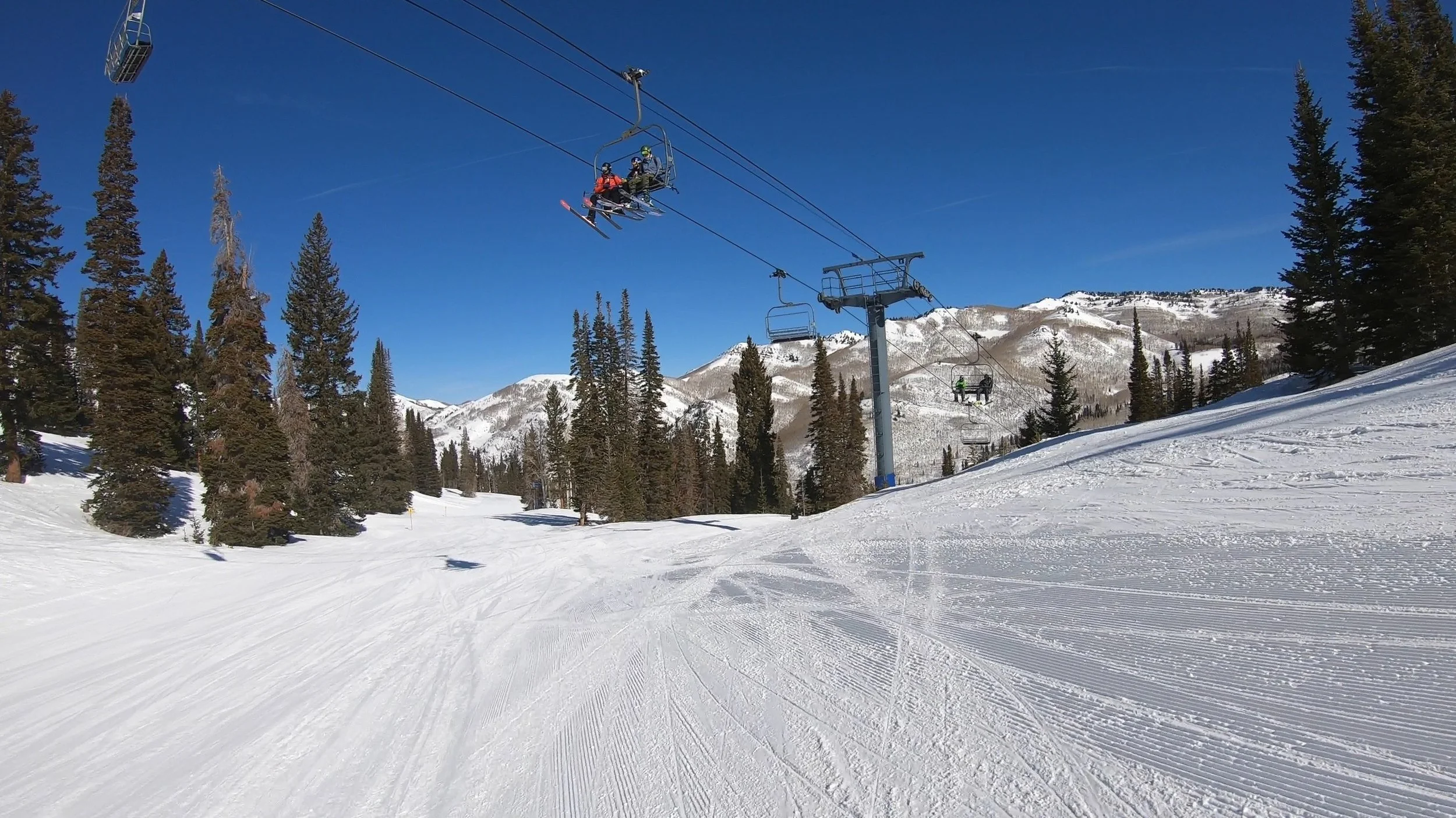
CTEC installed its first detachable, the Eagle Express at Solitude, in 1989.
The standard CTEC fixed-grip chair has rounded corners and a straight, even top rail. The CTEC-style detachable chair has a broader piece of metal where the hanger meets the bail, and the frame bows outward through the middle, giving it a slightly spade-like shape. The Garaventa-style detachable quads are the boxiest of the three, with straighter sides and often a backrest made of separate horizontal slats. Garaventa CTEC six-packs use one carrier design, with a massive galvanized steel bar connecting the hanger with the chair frame. If you’re looking to ride a Garaventa CTEC machine, Utah has more of them than any other state, and Park City alone still has over a dozen, from fixed-grip triples and quads to high-speed quads and six-packs.
The company was also a forward thinker in the realm of terminal design. CTEC’s series of Stealth terminal designs, including the Stealth I, II, and III, were some of the most modern-looking and sleek designs for detachable terminals at the time.
In 2002, Garaventa CTEC merged with Doppelmayr in Europe. The North American side of operations became Doppelmayr CTEC, which was then renamed to just Doppelmayr USA in 2011. While both the Garaventa and CTEC names were gradually phased out of Doppelmayr’s branding and portfolio, the legacy of their hardware very much lives on in North America. Before the onset of the Doppelmayr UNI-GS terminal design we mentioned earlier, the newly merged company still briefly used the CTEC Stealth terminal design on its detachables. The final set of Stealth III terminals was installed on the Collins lift at Alta in 2004, where they can still be seen today. Garaventa and CTEC carriers continued to be installed as late as 2010. Meanwhile, Doppelmayr still supplies parts for the existing Garaventa CTEC lifts for maintenance and upkeep.

Park City alone still has over a dozen Garaventa CTEC lifts, including the Town lift pictured here.
Merged/Absorbed Manufacturers: Leitner
A slightly different circumstance from Garaventa CTEC is the Italian manufacturer Leitner. Leitner is not defunct globally, but it is effectively defunct as a separate entity in North America. The company dates back to 1888, and built its first chairlift in Corvara, Italy, in 1947. Of course, as we already covered, Leitner eventually merged its North American operations with that of French company Poma in the early 2000s. From 2002 onward, most North American lifts produced by the combined company used Poma-derived designs instead of Leitner-derived ones, although starting with LPA, grips and terminals were jointly developed. The few exceptions have largely come with installations using bubbles and heated seating, such as the Super Angel LX at Sunshine Village.
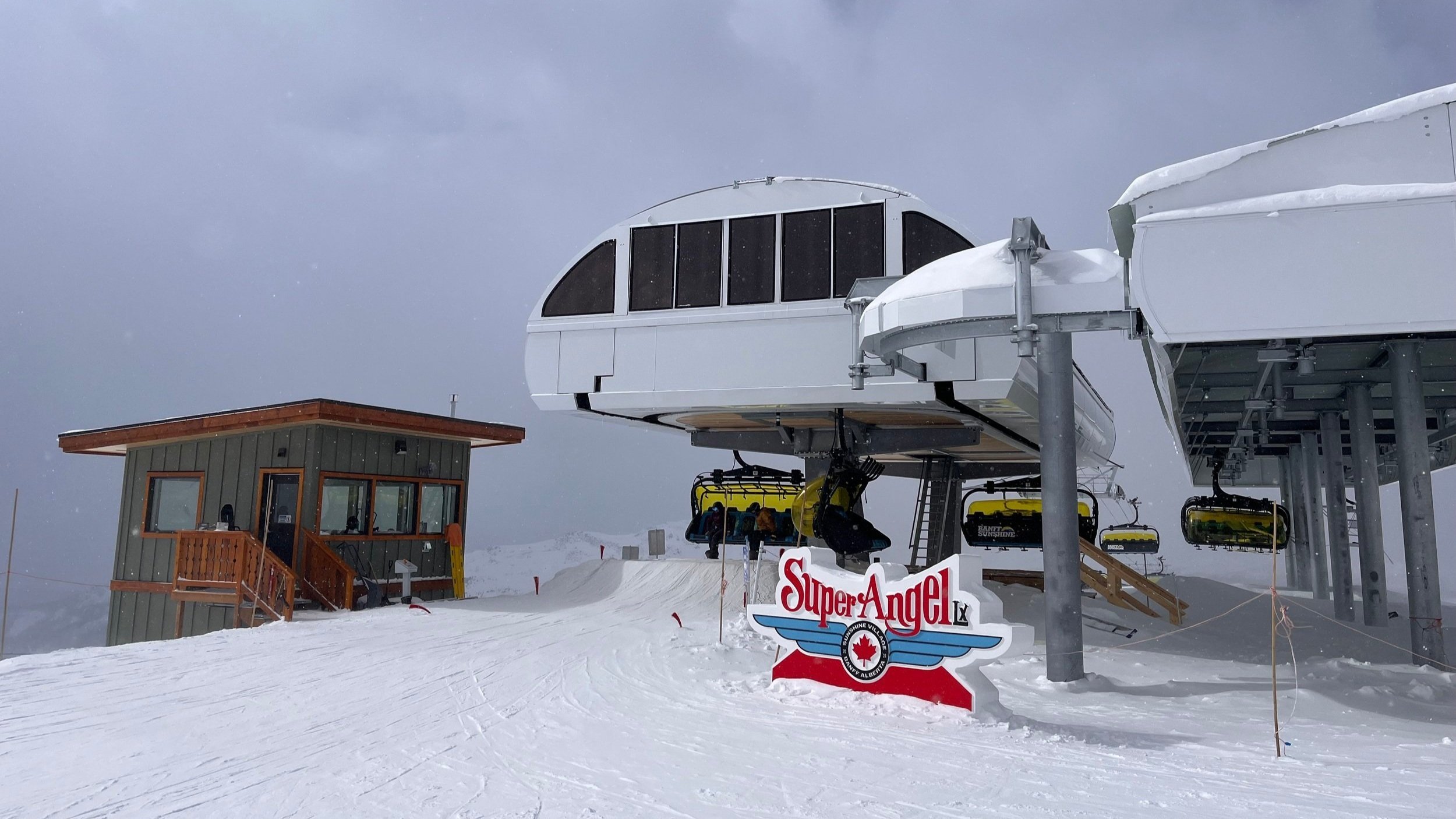
The Super Angel LX at Sunshine Village is one of the few post-merger lifts with Leitner-derived designs.
However, before the merger, Leitner itself did have a limited, but still notable, North American presence. It installed fixed-grip and detachable quad lifts at places including Fernie, Kimberley, Big White, Mount Norquay, Lake Louise, Granby Ranch, and Jay Peak, as well as one gondola at Big White. Most of those lifts went to Canada, and even there, standalone Leitner was a much smaller presence than the established manufacturers.
Older Leitner lifts are most distinguished by their rounded, spaceship-like terminals with a singular support block, or chair carriers that look fairly similar to Doppelmayr EJs but have more metal reinforcement on the top of the bail. But very few of these were ever installed, meaning only a handful exist today; after Leitner and Poma’s North American businesses were combined, the separate Leitner design identity largely disappeared from new U.S. ski lift construction.
Notably, Leitner and Poma only operate as a merged company within North America. Globally, both of them are still active as separate companies with separate design philosophies, so if you head to Europe, you’re substantially more likely to see Leitner-designed lifts. But in the US and Canada, only Poma’s legacy is still ongoing on the vast majority of equipment.
Why is the North American lift industry so consolidated?
And this brings us to a pretty crucial factor at the center of all this. The North American lift industry has consolidated dramatically.
In the 1960s, 70s, and 80s, ski areas had a long list of potential suppliers, many of them domestic. While a few big names survive, a lot of those smaller-name manufacturers that went defunct or got absorbed often served specific regions or provided specific sorts of specialized lift hardware. And perhaps most importantly, resorts had tons of options at many different price points to choose from.
Today, the ski lift market is much narrower. Doppelmayr and Leitner-Poma dominate major lift projects at basically every destination ski resort on the continent. Even the one volume lift brand that’s technically separate, Skytrac, is under the ownership umbrella of one of these two larger businesses. MND Ropeways has expressed intent to become a more serious alternative, but its North American footprint remains limited, and Partek is effectively out of the new lift business.
But ultimately, there are still dozens of distinct ski lift designs, across multiple different manufacturers, generations, and price points, that exist in the North American market today. For skiers and riders, the fun part is that these companies have left visible fingerprints all over the mountains that say so much about the history, culture, and vibe of the resorts that installed them. And throughout the detachable boom and merger era of the 80s, 90s, and 2000s, many lifts all over the continent have become interesting composite constructions, operating hardware from different eras and manufacturers simultaneously. For ski lift sickos, identifying these lifts and where they have sourced their individual parts from is one of the coolest aspects of ski industry history.
As for the future, Doppelmayr and Leitner-Poma may face very little competition outside of each other, but they still produce high quality and innovative products every year. Thanks to these companies, ski lifts today are sleeker, faster, and more comfortable than ever, which absolutely has its place in the ski world just as much as those traditional fixed-grips do. And the fact that all of these types of lifts can exist side-by-side on the same slopes, is one of the best visual examples of the ski industry’s complex and beautiful history.