Skiing Solo: Why It’s Hurting Your Vacation More Than You Think
Introduction
In the North American ski scene, the news cycle is usually dominated by threats to the future. Skyrocketing lift ticket prices, increasingly erratic weather, and ski towns becoming more and more unlivable, just to name a few examples. But there’s another secret circumstance hurting the long-term sustainability of the winter sports world, and it’s kept in the shadows due to its very nature: social isolation.
Skiing and riding have been defined by their community for almost their entire existence. If you’ve ever been on the mountain, you know that a huge part of what makes it fun and memorable is both the people you meet and the people you go with. But in today’s landscape, a growing number of would-be skiers and riders simply don’t have easy access to this sense of camaraderie. So why exactly does this lack of community block and push people out of the sport? Are you experiencing the consequences of it, even if you’re not actively aware? And perhaps most importantly, can anything be done to fix it? In this piece, we’ll go through the cons of navigating the world of skiing and riding without a community, as well as how to proactively counteract them. Let’s dive right in.
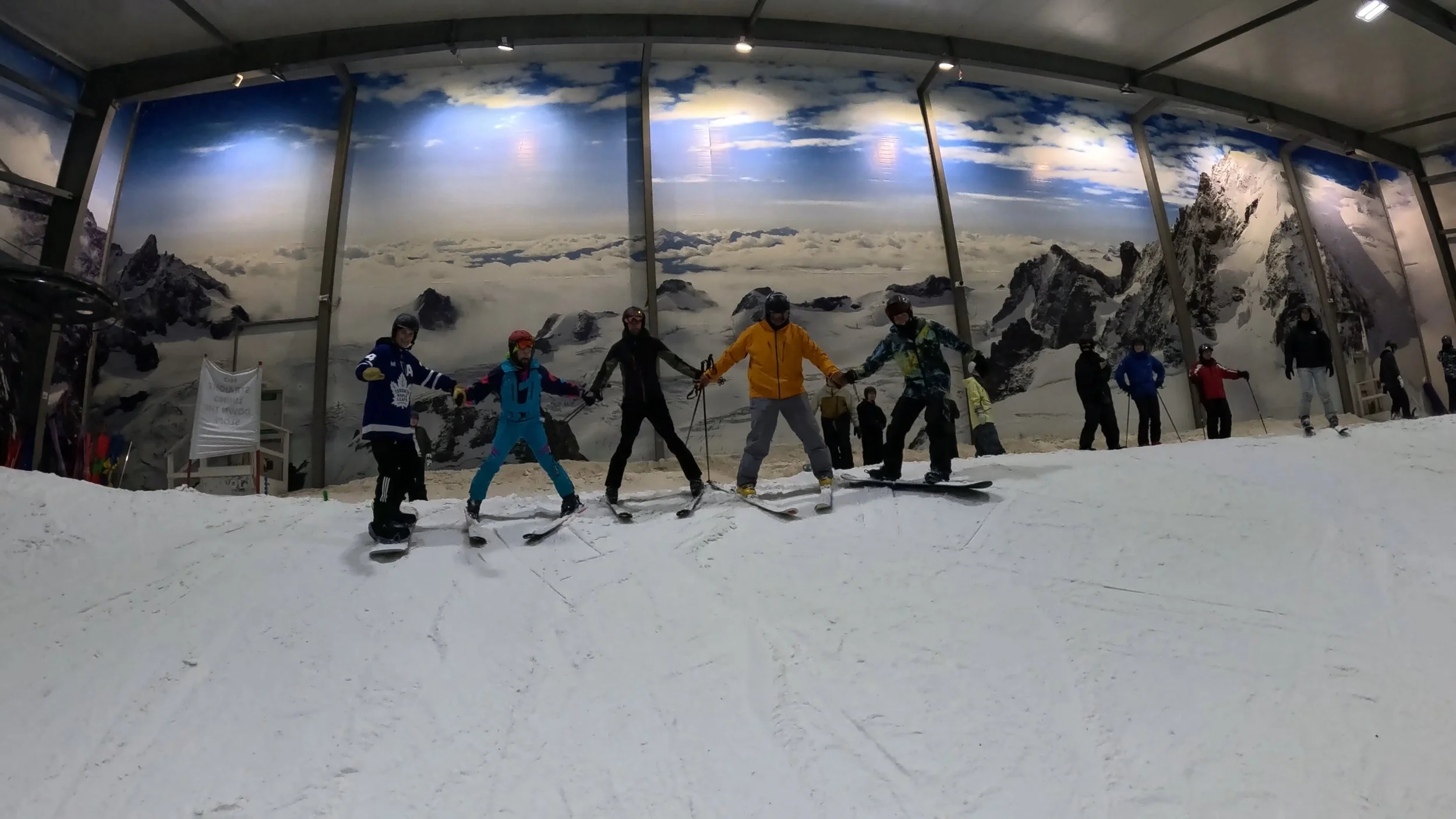
A huge part of what makes skiing memorable is the people you go with.
No Crew = No Plans
The first issue that comes with not having a group to ski or ride with is that a trip just won’t happen in the first place. Oftentimes, ski trips begin from a conversation with others that ignites a mutual or group initiative, rather than just one person deciding in their own mind that they’re going skiing. Without that social infrastructure, potential ski days often have trouble getting off the ground. And there are a couple of perhaps obvious, but nevertheless notable, reasons why this is the case.
Ski trips are immensely more complicated than many other leisure activities such as going for a run or visiting a museum. They even require an additional level of planning and effort compared to other high-cost sports that involve extensive equipment or infrastructure like golf or mountain biking. Having to actually plan a ski outing by yourself is a daunting task even for seasoned travelers and recreationists. Choosing the ski area, destination resort, or larger region of resorts you want to go to is just the tip of the iceberg. You also have to figure out lodging, transportation, food, and depending on your personal circumstances, rentals or flights. Not to mention that all of these factors can have a huge retroactive influence on the initial choice of destination as well. It’s a maliciously easy trap to fall into - you start by picking a destination, begin planning the details, and realize those details add up to be too complicated, making you second-guess your entire plan from the start.
This is a whole lot of work and stress for a singular person. Plus, if you’re an experienced skier or rider, the best resorts for you are typically the ones that take the most complex logistical planning. If you’re not already incredibly stoked to get on the slopes and know exactly where you wanna go—and you don’t commit early enough to get practical rates on lodging and passes—the complexity and decision paralysis is often enough to keep you away if you don’t have a group to encourage you along. And that leads us directly into our second reason why solo skiing is so impractical to make happen…
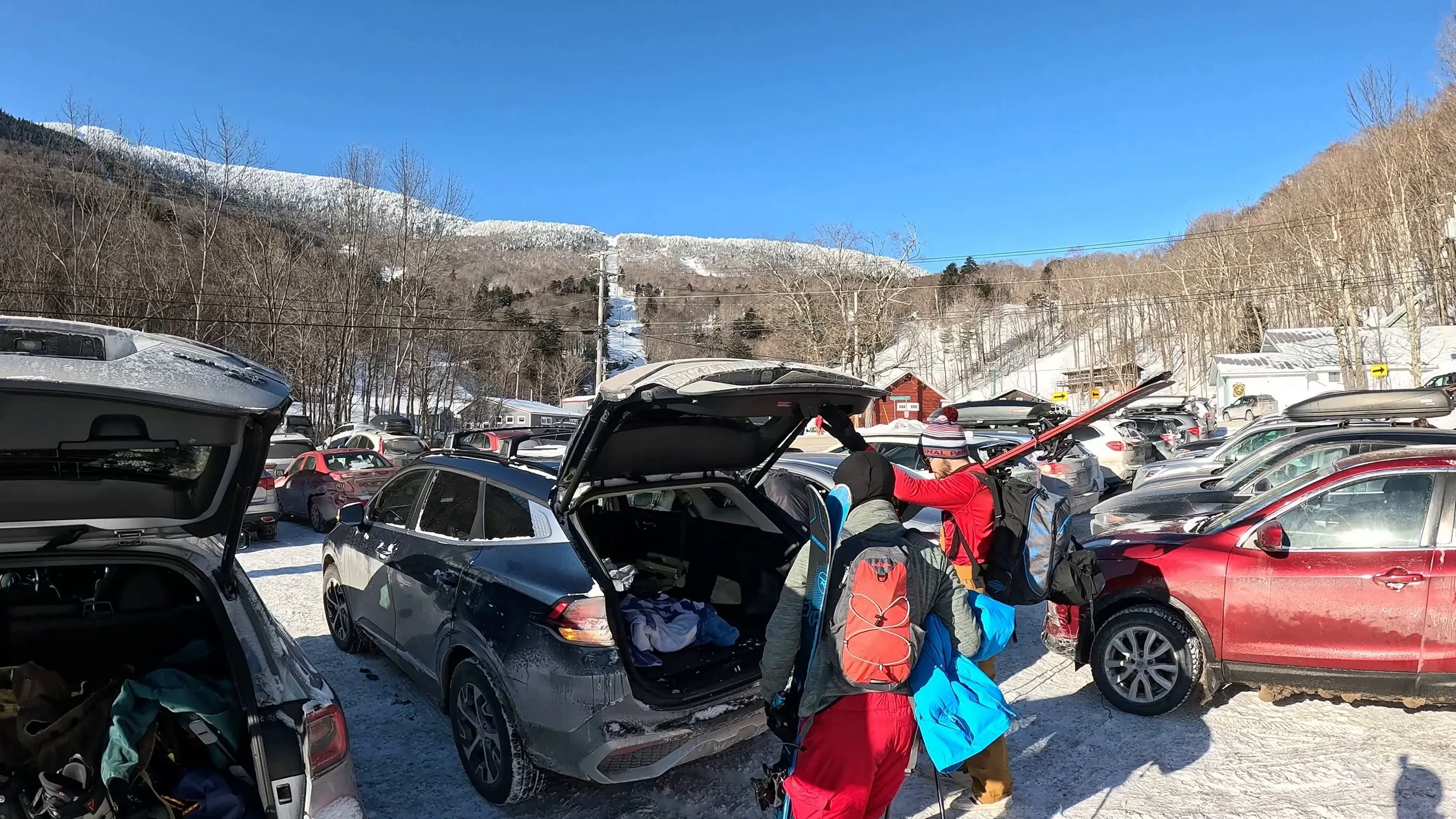
Filling a car with others splits the cost of gas, parking, and the driving itself.
Solo Costs More Money
Skiing is already expensive, but going alone makes it even pricier. Indeed, with only a handful of exceptions, the infrastructure for a ski vacation is not optimized for lone individuals. While many destination-tier ski regions and areas around resorts can occasionally have budget hostels designed for solo travelers, these don’t exist everywhere, and they seldom have the amenities to suit anyone except those satisfied with the most barebones experience. Staying in a place like this almost always means sharing a room with other people, and not everyone has the tolerance to do that with complete strangers, especially when a ski trip is supposed to be a vacation. The rest of the available lodging is neither priced nor designed for one person; you’re looking at hotels and condos that are really intended for a minimum of two, and in many cases only set up for the right value when you have a whole group.
The same principle applies to transportation. While a handful of ski resorts do actually have decent public transit, the options are woefully inadequate in most North American ski regions. Most of the time you’ll simply have to have a rental car to get around, and it’ll always make sense to fill that car up with as many people as possible in order to split the cost and save money. This is especially the case nowadays, when resorts have moved to charge for parking but often offer discounts, or even waive parking fees entirely, if you have a carpool of three or four people. Also, if you’re the only one in the car, you’re the only one who can drive it - and while driving distances between resorts, airports, and sensible accommodations can be comparatively short in certain regions, they can also easily exceed several hours in others. Not to mention that regardless of distance, ski trip driving generally involves narrow, winding roads with dramatic changes in elevation, and wintery conditions such as snow, ice, fog, and other hazards. These demands can really pile on the stress when you’re handling all the driving alone.
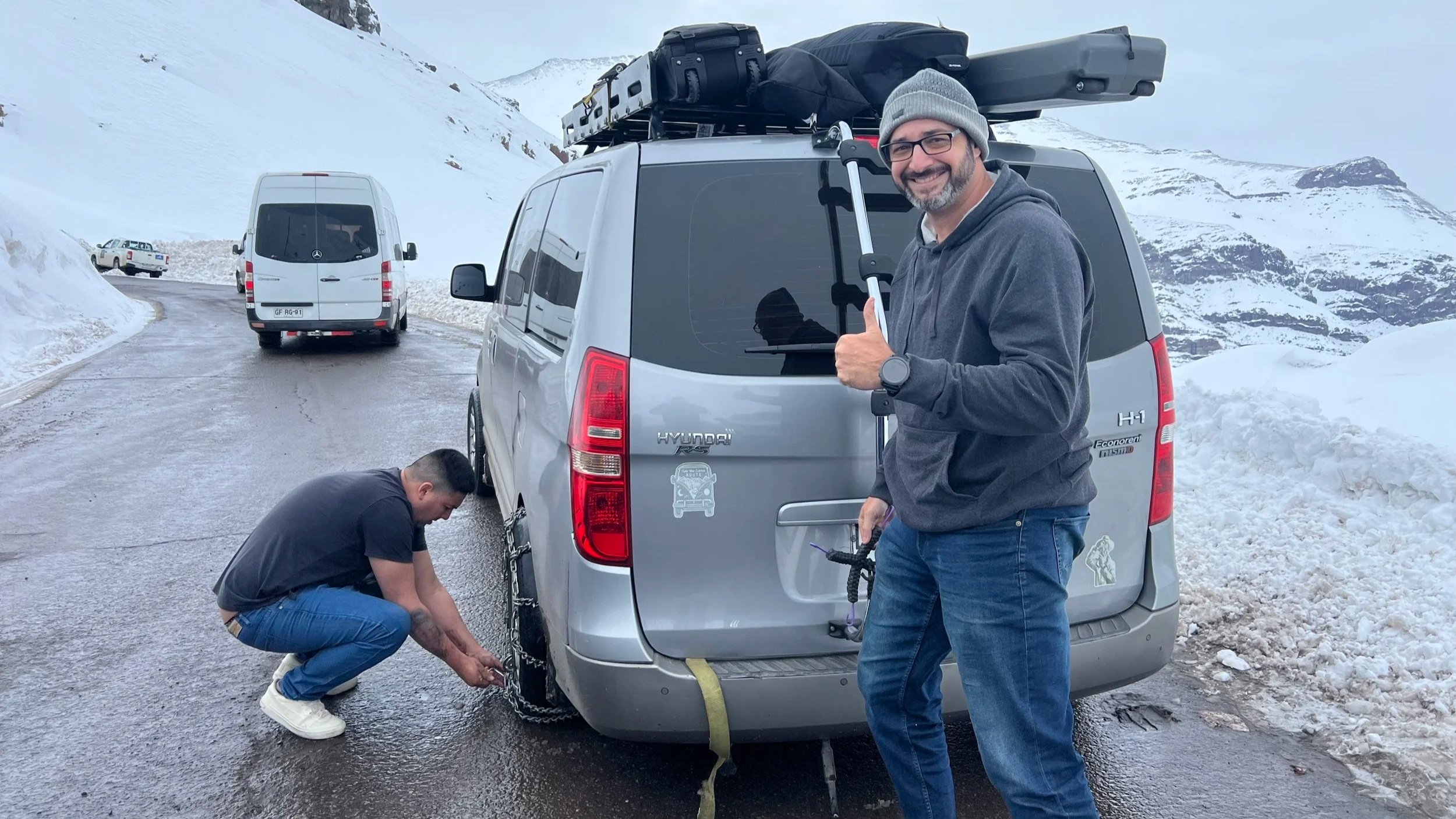
Hiring a shuttle van is often a lot cheaper with five people than just one.
And then…there’s food. Cooking pretty much always saves money versus eating out, but if you’re by yourself, cooking can be a pain. Not only is there no one to help out with the task, but it’s hard to make food in small enough portions for just a single person without wasting any. But even before you’d reach that point you’d have to actually find a place to cook, it’s almost impossible to find a reasonable solo lodging accommodation that actually has a feasible kitchen unless you stay in one of those budget hostels. As a result, if you’re traveling solo, it’s tough to see a situation where eating out for all meals, and accordingly spending more money, is not the default choice.
Last but not least, with a lack of community comes a lack of connection to the informal “passholder economy” in the ski world. If you didn’t do your planning with friends or a group ahead of time, it’s probably less likely that you had the forethought to pick up an Epic, Ikon, Mountain Collective, or even Indy pass product, making it so that you’ll be stuck paying the exorbitantly priced lift tickets that exist at many of today’s resorts. A couple of these multi-pass products have recently introduced friends and family discounts, where a passholder can get a non-passholder on the mountain for a reduced price. But if that passholder friend doesn’t exist, then you’re out of luck.
The result is that solo skiing not only costs more money in the immediate planning phase, but also puts you in a multitude of inconvenient situations where the most expensive option is often the only sensible one.
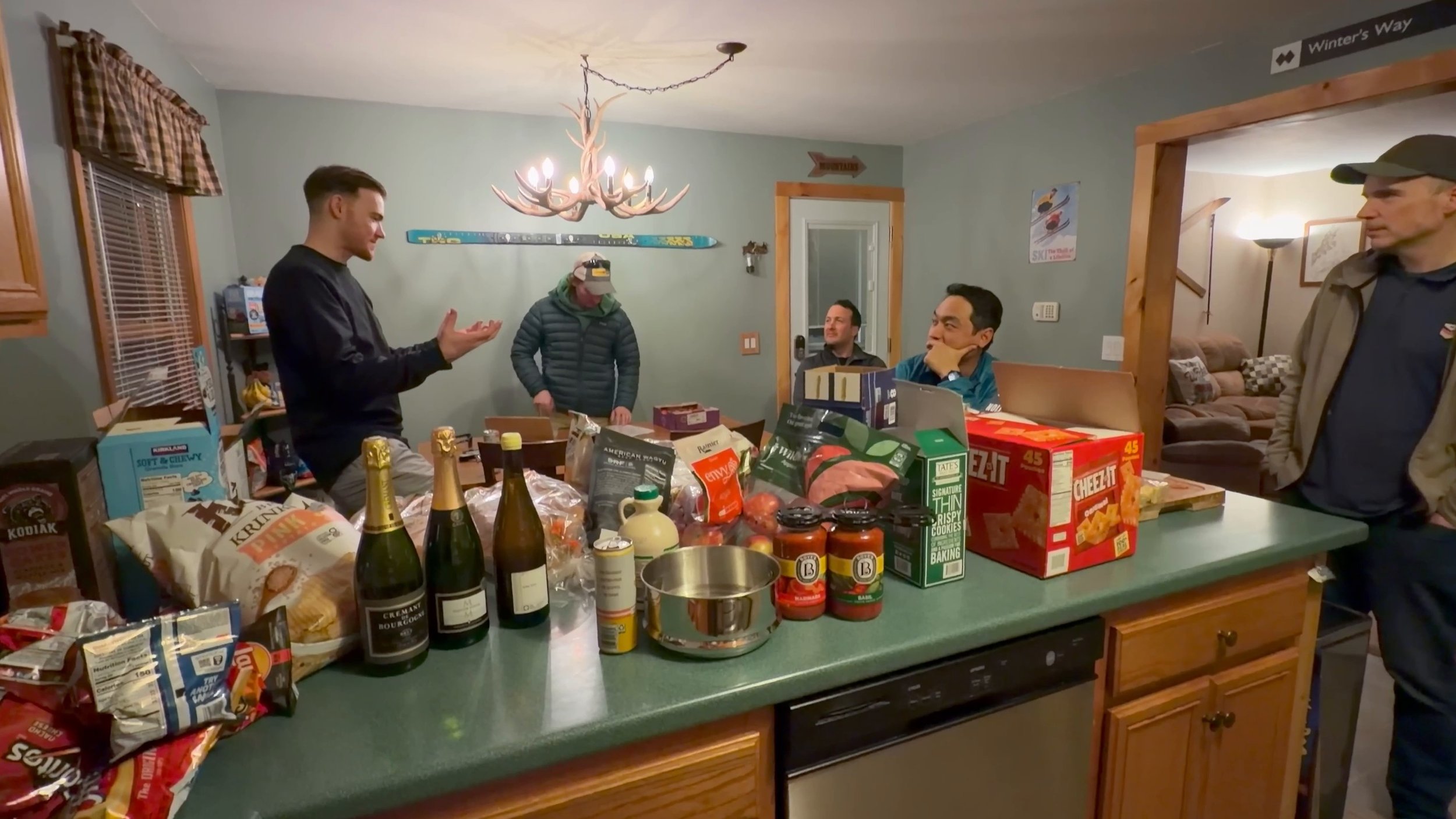
Lodging and groceries get much easier when split across a group.
Progress Stalls Without Peers
But let’s say you manage to get past all the complexities of planning a solo ski trip. You’ve booked your own accommodation, rented your own car, and gotten yourself to the mountain. But now that you’re skiing or riding by yourself, there’s another problem that happens - and it’s one that becomes a huge barrier for a lot of people. And that’s that it’s often much harder to improve in winter sports if you’re alone.
If you’ve ever skied with friends and family before, you know this is true. Progress in skiing doesn’t happen in a vacuum. Friends and family coax you onto tougher runs, give pointers you can’t see yourself, and celebrate the sends with you. There’s a mix of healthy encouragement, and perhaps just the right dash of peer pressure, that you simply don’t get when you’re alone. When we’re not with others, many of us naturally self-limit even if we don’t realize it. That can manifest through going over the same comfortable runs and avoiding unfamiliar ones, getting bored or cold and going in earlier, and lacking the feedback that makes you better. Without outside influence, it’s easy to fall into a loop of habits that put you in a form of skiing stasis. And once you’re stuck in that stasis, frustration or boredom creep in very easily, leading many to quit the sport before they ever really get going.
Of course, this doesn’t consider the potential factor of taking a lesson, which obviously involves receiving direct feedback from a ski instructor, and in the case of a group lesson, a more organized form of community encouragement and progress. But lessons can become one of the biggest expenses on a ski trip if you feel they’re necessary, which just brings you right back to the solo cost issues we mentioned earlier.
With all that being said, people are built with different mentalities, and not everyone who skis alone is necessarily going to underchallenge themselves. Some may find a thrill in pushing themselves onto riskier terrain, even if they are alone. But that’s where the next issue solo skiers and riders run into comes in…
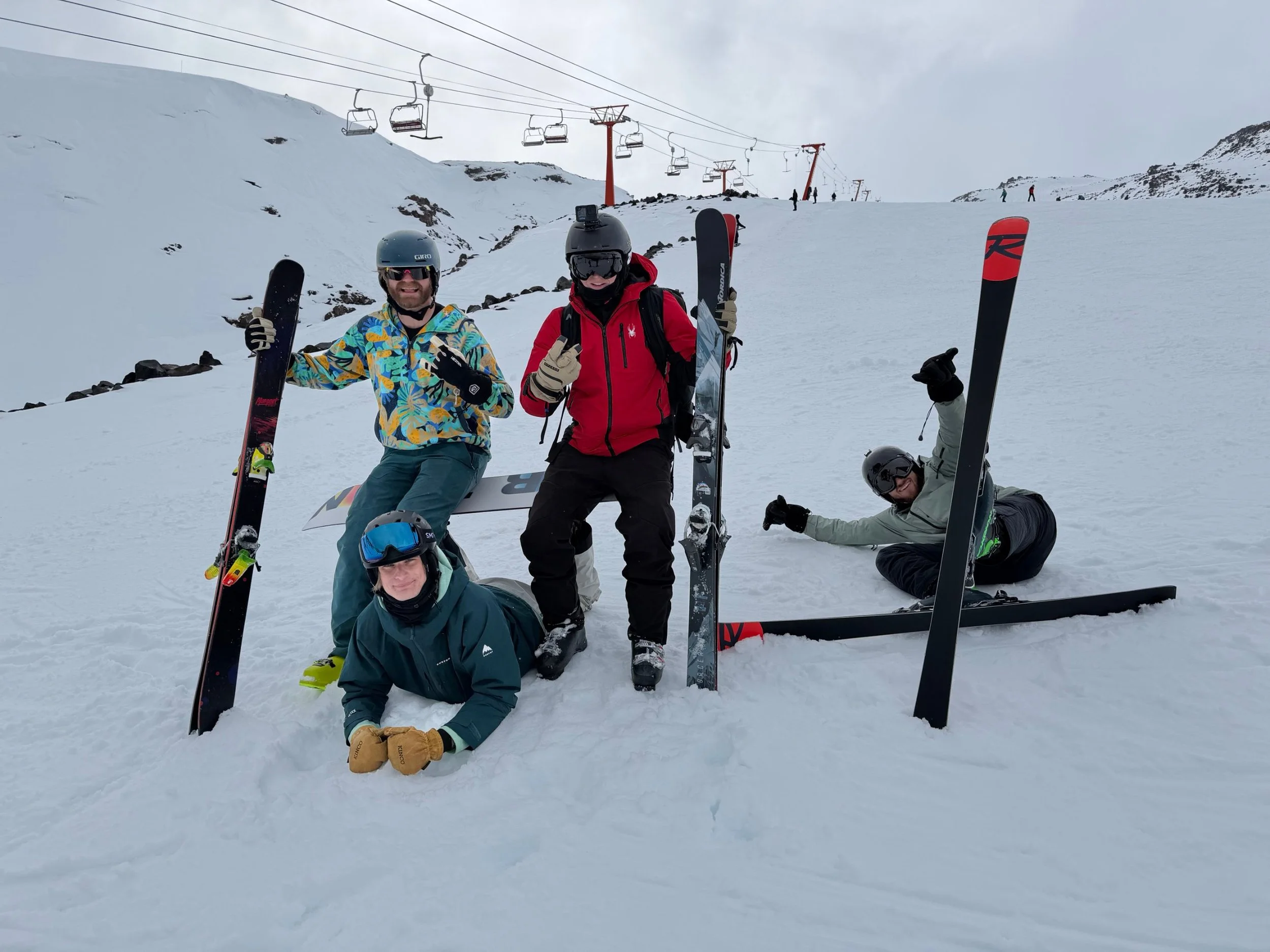
Friends coax you onto tougher runs and give pointers you can’t see yourself.
Safety Compromised Without Partners
Once you step into advanced and expert in-bounds terrain—or, even more so, the backcountry—being alone can get downright dangerous. When steep faces, trees, and expert-level obstacles like cliffs and rocks get thrown into the mix, the potential for injury increases. And even a minor injury can be a serious issue if there’s no one around to help you. Partners can assist you themselves or call patrol to keep a bad situation from spiraling. But even if you don’t get injured, you might get lost. These types of terrain areas tend to be sparsely marked and difficult to navigate, whether you’re deep in the woods or in the middle of an open bowl. Being alone increases your chances of picking a bad route and getting cliffed out or running into some other obstacle that you can’t feasibly navigate, even if you think you’re familiar with the area. Even just one more set of eyes in the form of a buddy can make an expert terrain run go that much more smoothly, helping with perspective and navigation.
All of that applies to in-bounds terrain at resorts, but in the backcountry, the stakes rise even further. Backcountry terrain is almost never marked by signage or other navigation infrastructure, meaning you will have to rely on your own knowledge and navigation tools. The snowpack on this terrain is essentially never managed or controlled either, leading to significant avalanche risk. Avalanche gear like a beacon, shovel, and probe can be a lifesaver, and should always be carried in the backcountry. But all this equipment is only designed to function properly in a scenario where there are at least two people involved - the person in need of rescue and the person rescuing them. So if you’re alone in the backcountry and you end up lost, injured, or buried, the situation can quickly turn catastrophic.
Essentially, tackling extreme terrain by yourself, whether in-bounds or not, is an extremely high risk decision. There’s a reason so many people love to go on these types of terrain in groups, and that’s because when handled safely, it can be the pinnacle of your skiing and riding journey. Unfortunately, the reality of this situation means that the folks who are rightly choosing not to tackle the most extreme lines alone are also not building the skills to properly progress through them, and as a result, may never get the chance to experience them.
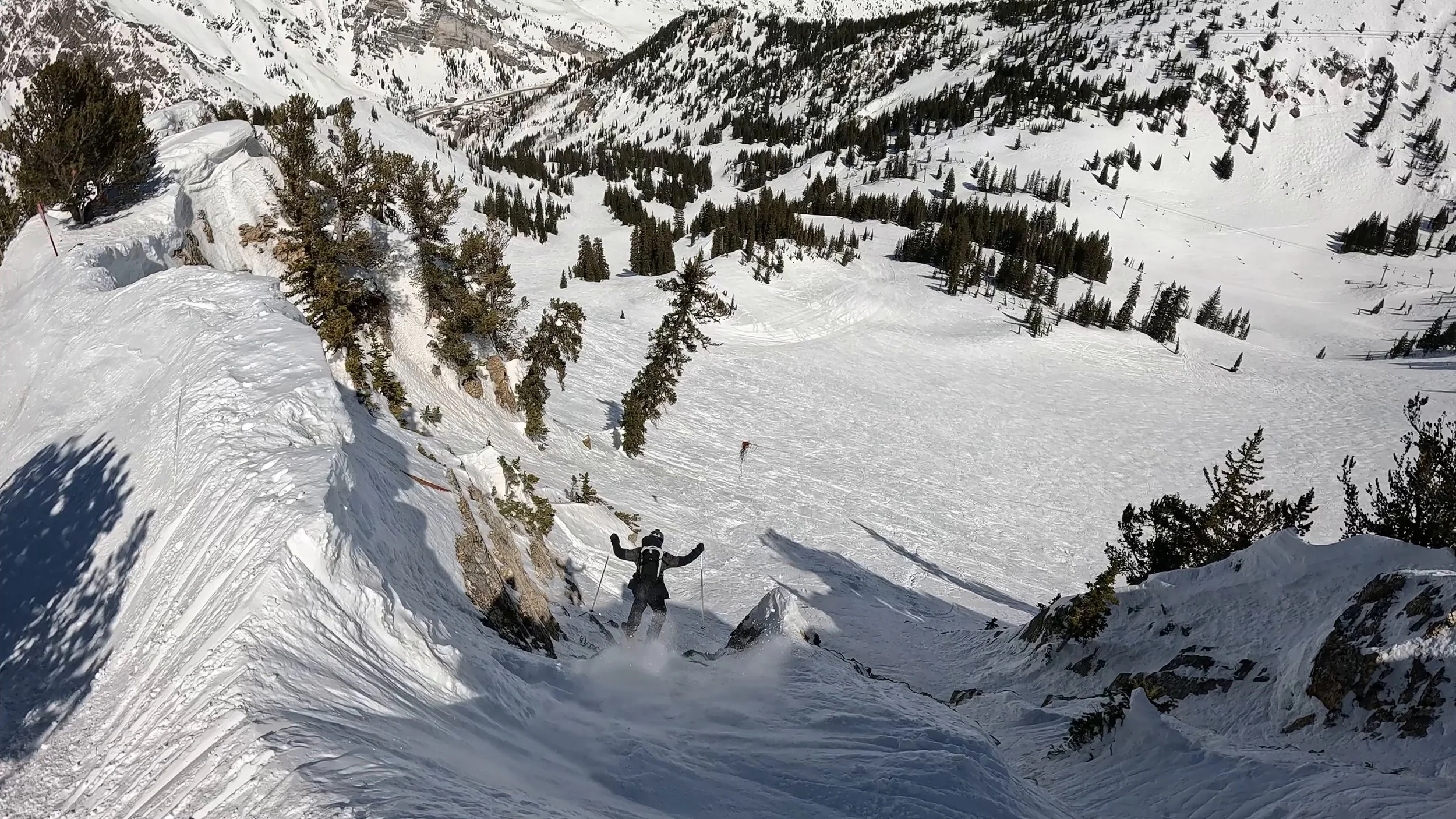
In expert terrain, even one extra set of eyes can make a line go much more smoothly.
Awkwardness in Solo Spaces
Okay, so there are some clear disadvantages to being a solo skier or rider when you’re planning your trip, as well as when it comes to the actual skiing or riding on the mountain. But what about all the parts of the trip that happen off the slopes?
Well, if you’ve skied or snowboarded before, you already know that ski resort indoor spaces are structured for groups. For efficiency’s sake more than anything, ski resort cafeteria tables are built for several folks in the same party to share a meal together, and even multiple parties who don’t know each other often have to share table space, especially at peak times. If you don’t have others to ski or ride with, you will probably end up sitting in the midst of strangers in the cafeteria. For many, this can be awkward, and even anxiety-inducing.
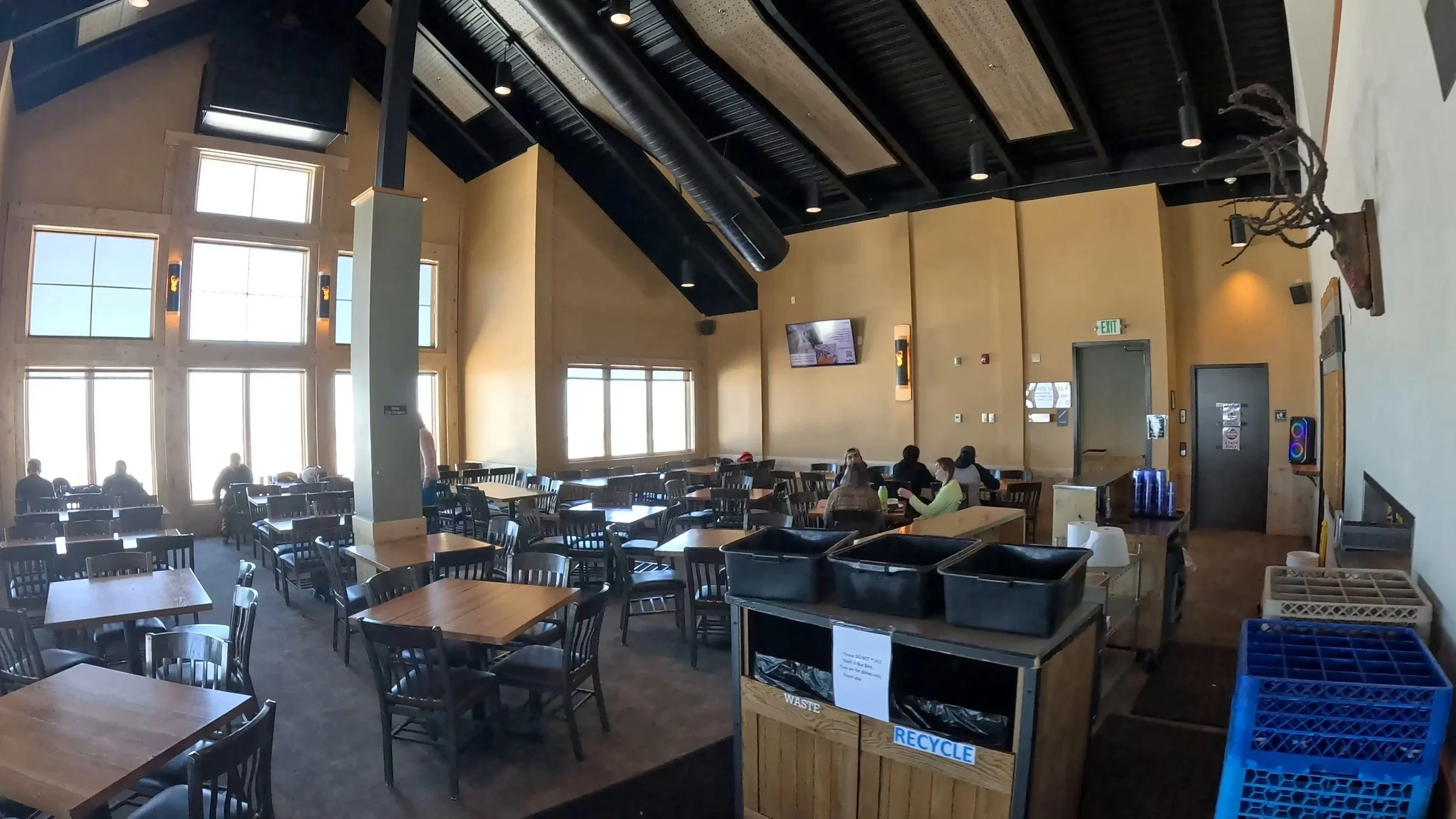
Cafeteria tables are built for groups, often leaving solo skiers seated among strangers.
This circumstance becomes even more relevant when it comes to après ski. What fun is going out to drink or party if you don’t have the friends to do it with? Some people are happy to head to the bar alone, maybe more frequently or easily when they’re in their hometown. But we’d bet that the vast majority of people don’t find the idea of solo après very appealing when they’re supposed to be on a relaxing vacation, because they’d have to entirely rely on meeting strangers for any kind of social interaction, which can be another big exhausting challenge at the end of what’s probably been a physically taxing day on the slopes.
Ultimately, very few resorts have invested meaningfully in creating spaces that make solo skiers and riders feel like they belong.
And that brings us to a broader point. Why haven’t resorts invested more into this? Well, ski resorts want to attract people who are interested in coming back. And for many people, the most fun memories of a ski vacation that actually make you want to go back are rarely about the skiing itself—they’re about who you were with. Think about the last time you went skiing: was the most fun part of your vacation something you did alone? Or was it banter on the slopes, a shared difficult run, a ridiculous crash, or a memorable après adventure on town? Yeah, while skiing or riding solo can still be plenty fun, it often becomes emotionally muted. If you don’t have that shared stoke, specific stories that come out of the trip, or perhaps most importantly, people bringing it up with you after the trip ends, it becomes less likely that you’ll have the interest to book another trip next winter.
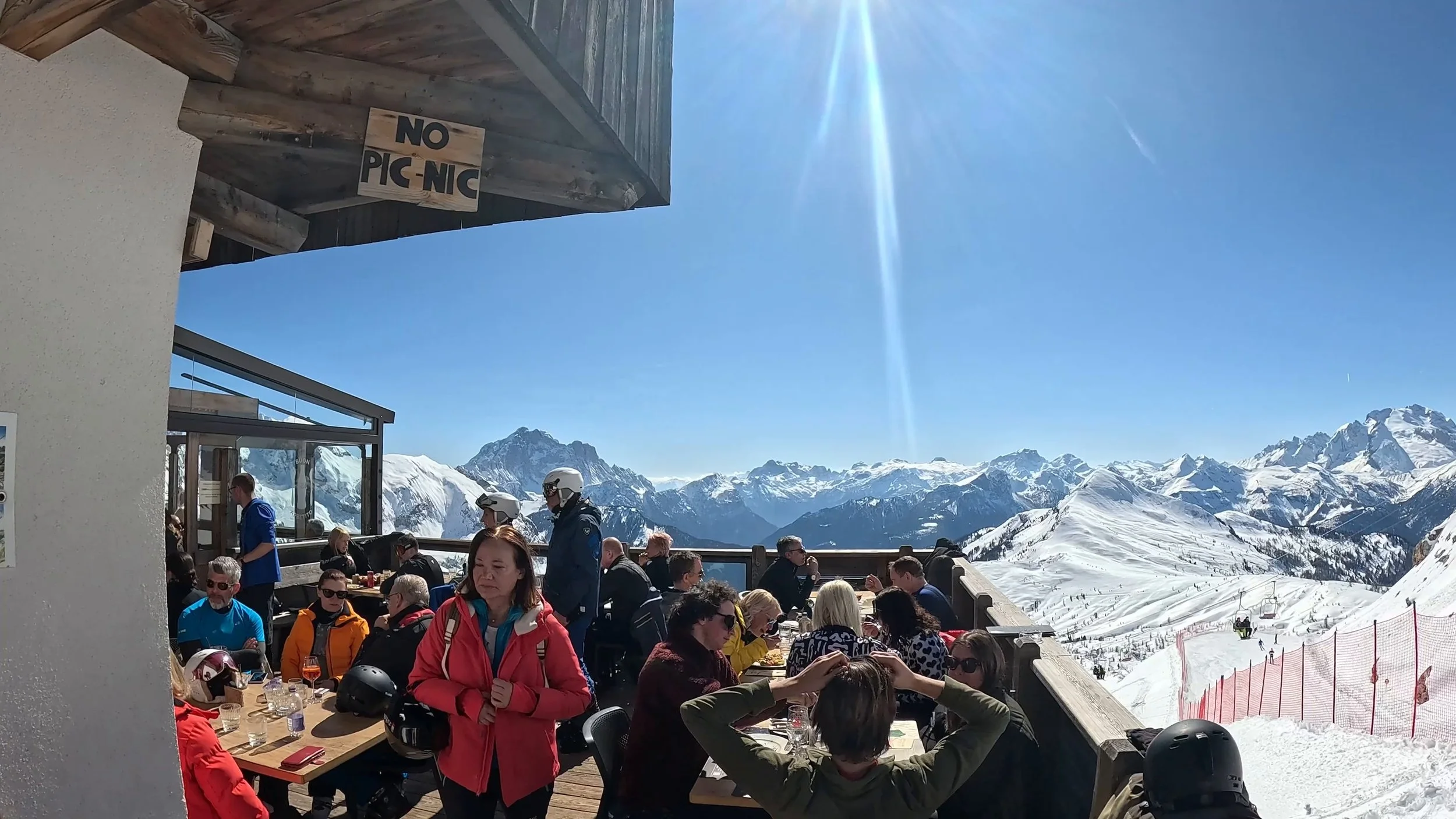
Ski resort dining and après spaces are built for groups.
Pros of Skiing Alone
Now, we would be remiss if we didn’t at least entertain the idea that solo skiing or riding has its benefits. For example, while we just said that resorts haven’t meaningfully invested in infrastructure for solos, there is one place where they have - the singles line. Many lift lines at major resorts nowadays have a separate roped-off lane that is designated for singles. This is especially true of lifts that are popular, run directly out of resort bases, or have high capacities, because this generally means that a larger and more complex maze of ropes and lanes will be developed around the bottom terminal to handle the demand. In a time where lift lines are longer than ever, more and more resorts are seeing the benefit of adding a singles line. For gondolas, eight and six-seater chairlifts, and even quads, resorts have an interest in filling every seat on every chair, especially on peak days. A separate singles line to sort from allows them to fill in odd spaces here and there when parties from the main line don’t have the exact number to perfectly fill the chair. And it’s really a win-win, because the people who use the singles line often have to wait far less time to board the lift compared to those in the main queue. If you’re skiing or riding solo and don’t have the burden of caring about riding up with anyone you know, it’s easy enough to slip into the singles line and bypass a ton of people, allowing you to get in much faster laps.
And this brings us to a more general positive with skiing or riding solo: you have significantly more freedom. If you’re the type of person who prioritizes efficiency, then you have no one to hold you back. You can spend all day lapping those singles lines and getting in as much skiing as possible, with your own limitations as the only obstacle. The larger the group on a trip, the more voices and opinions there are to be considered when it comes to any one decision, which can slow you down both on and off the mountain. By contrast, if you’re the type of person who likes to take things slow, then you can relax the pace as much as you want. No one is there to wake you up earlier than you prefer in the morning, drag you away from lunch when you’re trying to really enjoy your meal, or urge you back up the lift when your legs are ready to take a break. For some, this freedom to go as fast - or as slow - as they want, will be enough of a positive to get over all the logistical roadblocks we’ve been mentioning.
But to be frank, these benefits only apply to a small group of travelers in the larger wintersports world, and in order for them to really hit, you have to be of a certain mentality, you probably have to be at a certain level of financial comfort, and - let’s be honest - you probably need to be willing to deal with the host of difficulties and risks that just come up with planning anything complicated and dealing with strangers in today’s world. So for the rest that these factors don’t apply to, the much bigger issue is involuntary isolation. While a select few may be perfectly happy with a solo ski trip, many others would rather ski or ride with a group, and since that group isn’t available to them - they end up not skiing or riding at all.
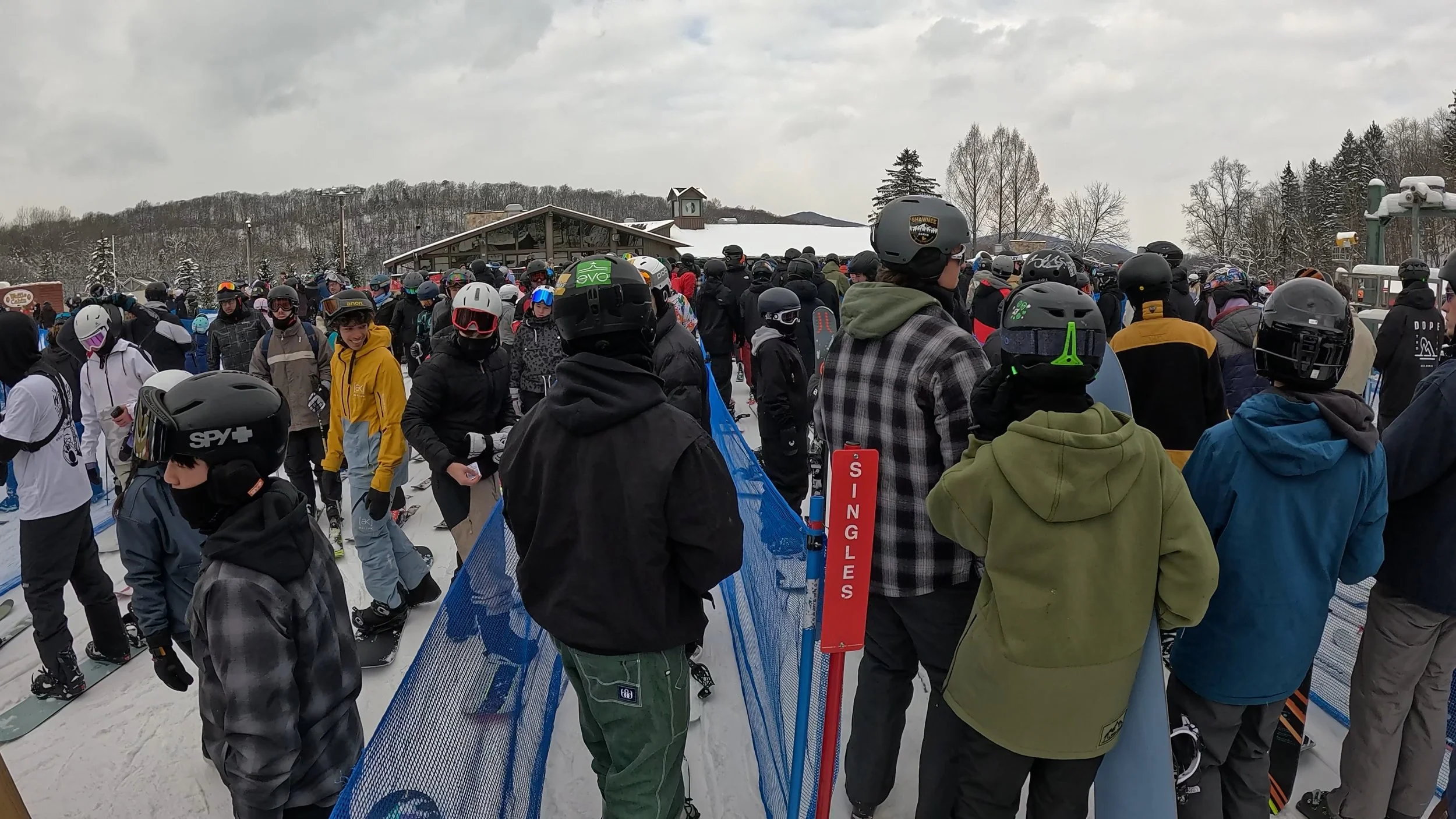
Singles lines can let solo skiers bypass much of the main lift queue.
Solutions
So what’s to be done about this, then? Solutions to this problem, unlike many of the more operational problems threatening the future of the ski industry, are harder to identify due to the problem’s nebulous nature. Since skiing and snowboarding are not team sports and are done alone by default, forming and strengthening community is a proactive, and perpetually ongoing, process.
If you’re a person who wants to go on a ski trip, but you don’t know anyone who’d be interested, a good first step might be to search in your local area for an established organization. Most cities have clubs and groups that are centered around various hobbies in order to facilitate community, and skiing and snowboarding is no exception. These groups often use social media like Facebook or Instagram to get the word out, and are typically welcoming by nature. This avenue can often bring you directly to like-minded people. And through these groups, there will no doubt be organized outings to ski or ride, or at least attempts at them, that you can participate in.
But not every city or community is going to specifically have a club or group for skiing and riding, especially if you don’t live in a region with mountains or any kind of proper winter season. In that scenario, it could make sense for you to look into an organized community for any kind of outdoor recreation activity near you, whether that’s hiking, biking, camping, climbing, or even competitive sports like soccer or tennis. In these environments, you may not find existing skiers or riders, but you are guaranteed to find people who like the outdoors, like challenging themselves physically, and like those things enough that they’re probably willing to spend a bit of money on them. In that vein, if you make friends there and then suggest a ski trip, there might be a higher likelihood that people will find the idea exciting and hop on board.
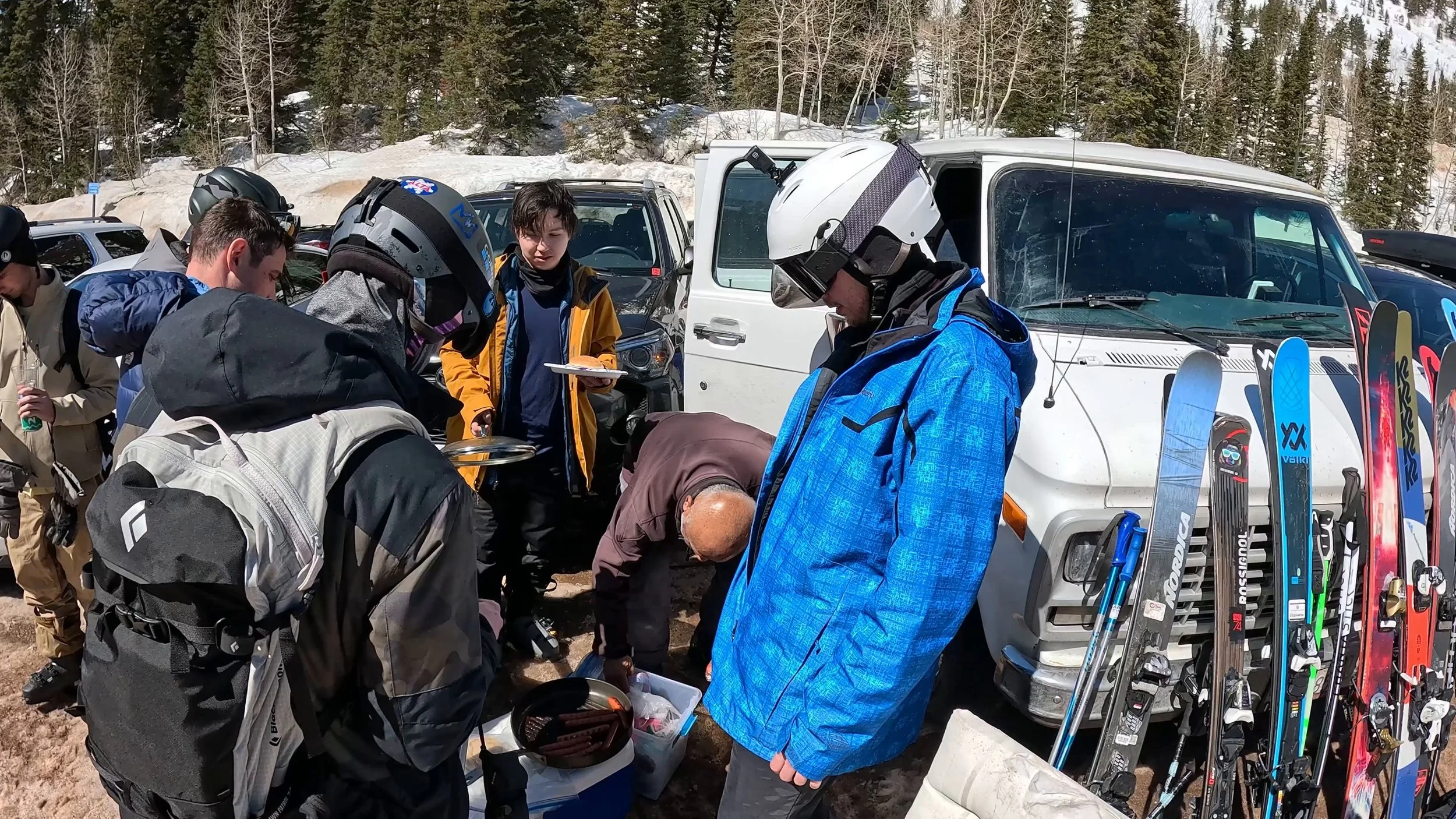
Local ski clubs and outdoor groups often organize trips that newcomers can join.
But let’s say you’re in a slightly different scenario. Maybe you have actually tried solo skiing a time or two despite all the stress and logistical hair-pulling, because you’re just that passionate about the sport. Therefore, you’re already on the mountain by yourself from time to time. In this case, it might make sense to just bite the bullet and put yourself out there. Whichever resort you’re at will doubtlessly have forums related to it, on places like Reddit or otherwise. Make a post asking if anyone wants to shred on the day you’re there. You’ll be far from the first or only person to try this tactic. Of course, this does come with certain risks and uncertainties, and not everyone will find those risks worth it. The potential reward, however, is that you could make friends, and since they’re the type of people who already frequent ski forums in this scenario, they’d no doubt be interested in further ski trips.
And even one step further from putting yourself out there online is doing it in person. If you’ve been at a ski resort before, you’ve probably ended up in a chairlift conversation with a total stranger at some point. Being a solo at a ski resort can certainly be isolating, but ironically, due to the difficulty and possible danger of pulling out one’s phone on the lift, chairlifts are one of the few spaces left in today’s world where it makes total sense to strike up a chat with someone you don’t know. These conversations may be a product of their environment more than anything, and they often lead nowhere as you separate from the other person at the top terminal exit ramp, but they can be used to foster a connection in the right circumstances. Maybe you take a lap with that person after they discuss an interesting trail off the particular lift you’re on. Maybe you find common ground over working in similar fields or even coincidentally coming to the resort from the same area.
And this principle extends to more than just the lifts. One of the most surprisingly effective places on a mountain to make friends is on hikes. If the resort has hike-to terrain and you’re good enough to do it, these hikes can spark a similar camaraderie among strangers as lifts do, but even more potent due to the higher challenge involved—and the extremely low number of people who are willing to do such a thing. A lot of people might balk at the idea that you can make a real friend while literally on the slopes, but it is nevertheless an option.
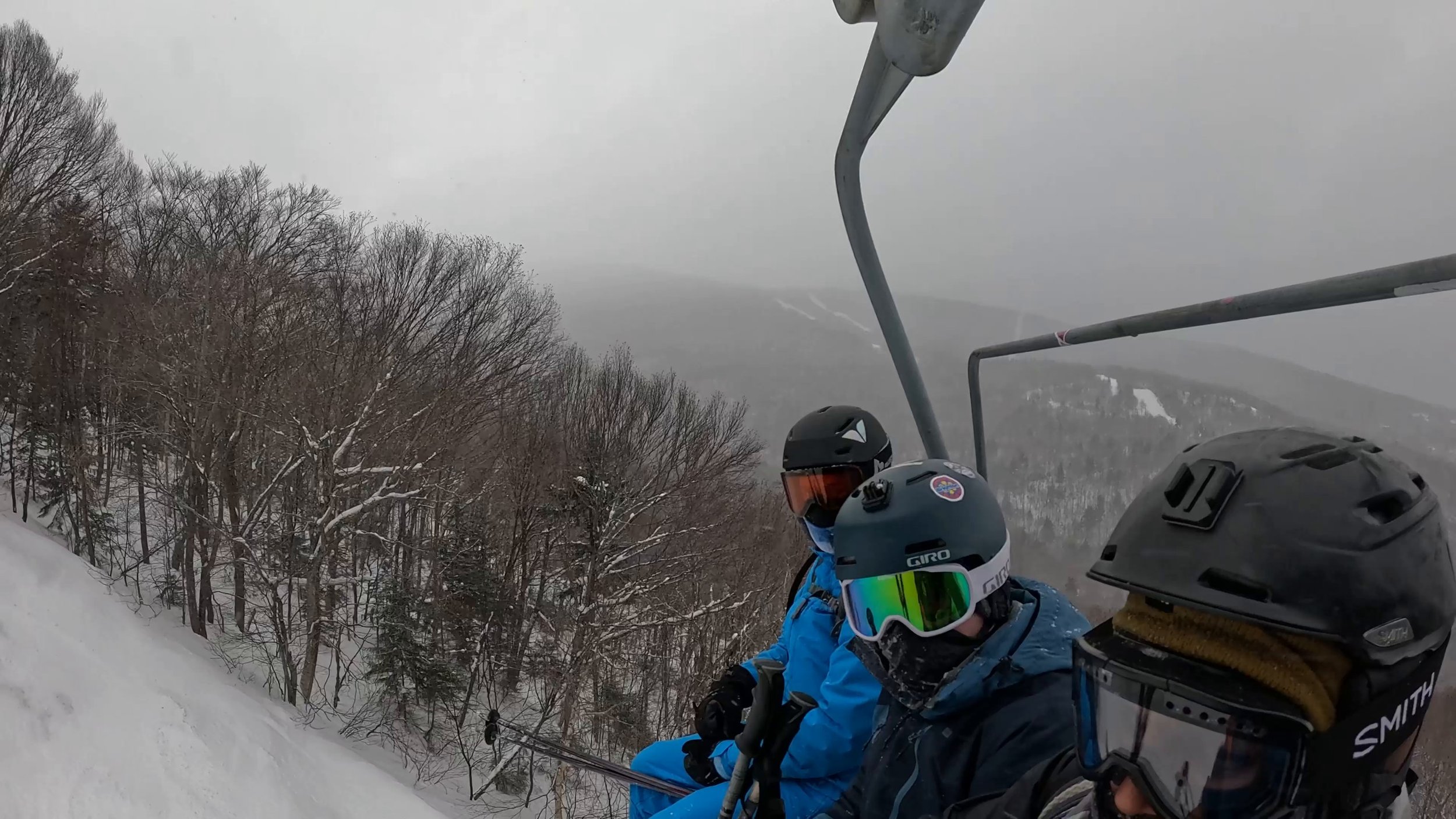
Chairlifts are one of the few places left where chatting with a stranger feels natural.
For all these solutions, though, anxiety and fear can hold one back. Much like tackling a difficult ski run, taking the step to form a community or join an existing one can be incredibly daunting, even if you can see what you’ll have to do right in front of you. At PeakRankings, we’ve tried to play our own role in fighting against the problem of social isolation in the ski world, by forming our own community at multiple levels. We have live discussion groups and forums such as our Discord and Circle communities, but perhaps more obviously, we’ve developed our PeakHouse trip program. PeakHouse aims to offer a solution to the difficulties that solo skiers face in two big ways: number one, our team handles as many of the logistics as possible to foster a smooth and stress-free vacation experience, and number two, we assemble a big group of people who all share the same love of the sport. One of the best things about a successful PeakHouse trip is seeing the tripgoers make friends with each other and then go on to plan their own trips and meetups together after the fact. Seeing the community sustain and multiply itself in that way shows that this skiing loneliness problem - despite its deep and complicated roots - is very much solvable.
Conclusion
So that’s our take on isolation in the world of skiing and riding today. While some people may prefer to take on the mountain by themselves, there’s no arguing that the industry is far from optimized for solos, and is in some cases actively hostile to them. This hostility and all the logistical roadblocks that come with it are a huge demotivator for anyone who is looking to get into winter sports today, and if we want to see these sports have a future despite all the other adversity they face, then the most important thing is to make people feel welcome. If you’re reading this, and especially if you made it all the way here to the end, then you’re probably really into skiing and riding. That means there’s no doubt a part you can play in strengthening our community, and if you yourself feel the struggles of going it alone, there’s steps you can take to put yourself out there, too.