Mountain Review: Boyne Mountain
MOUNTAIN SCORE

CATEGORY BREAKDOWN
See our criteriaGOOD TO KNOW
1-Day Ticket: $50-$130
Pass Affiliation: Ikon Pass
On-site Lodging: Yes
Après-Ski: Moderate
Nearest Cities: Traverse City (1.5 hrs), Grand Rapids (3.5 hrs), Detroit (4.5 hrs)
Recommended Ability Level:

+ Pros
Light lake-effect snow in typical winters
Snowmaking covers 90% of the terrain
The Midwest’s only high-speed eight-person chairlift
Extensive lodging, après and the Sky Bridge
– Cons
Very little true expert terrain
Modest vertical drop
Expensive on-site lodging
Weekend and holiday crowds
MOUNTAIN STATS
Skiable Footprint: 385 acres
Total Footprint: 415 acres
Lift-Serviced Terrain: 100%
Top Elevation: 1,154 ft
Vertical Drop: 441 ft
Lifts: 10
Trails: 76
Beginner: 54%
Intermediate: 23%
Advanced/Expert: 23%
Mountain Review
Boyne Mountain, in Michigan’s Lower Peninsula, offers a unique blend of history and amenities to keep skiers happy both on and off the slopes. It is the namesake of Boyne Resorts, the company that also owns Sugarloaf, Sunday River, Brighton and Big Sky. So how does Boyne Mountain measure up against some of its sister resorts? Let’s take a look.
Size and Terrain Layout
Boyne Mountain isn’t as large as its sister resorts in the West or the East, but by Midwest standards its terrain is well up to par. With a respectable 400 acres and about 500 vertical feet, skiers and riders will find plenty to lap. The wide footprint means different areas of the mountain feel distinct from one another, so guests can move between zones over the course of the day. Every lift also serves terrain for all ability levels, so it’s hard to get in over your head.
Navigation
Moving between the different areas of the resort is easy, with plenty of signage and trail maps making quick work of getting from one zone to the next.
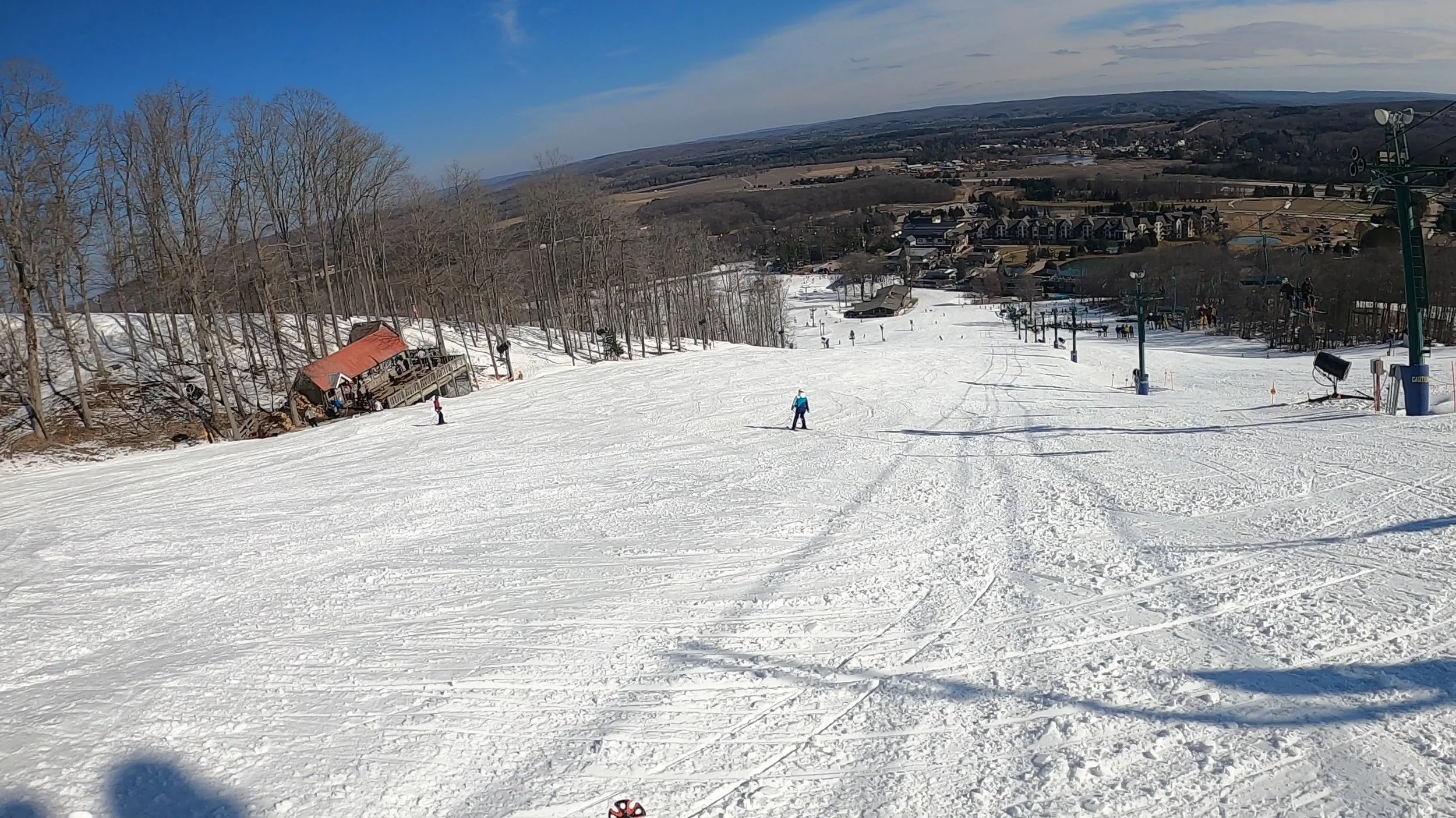
Boyne Mountain has 400 acres of terrain and about 500 vertical feet.
Mountain Aesthetic
Boyne Mountain has no striking peaks or rock formations, but the views of the rolling Michigan hills are enough to bring a sense of solitude. There is a fair amount of development around the mountain, from hotels and houses to the golf course at the top, so it can feel commercialized at times. Still, standing at the bottom of the hill with the wide-open slopes filling your entire field of vision is an inspiring sight.
Snow Quality and Resiliency
We visited during a historically bad snow year, but in typical winters Boyne Mountain sees plenty of light, cold lake-effect snow from Lake Michigan. It usually isn’t as light and dry as snow at high-elevation resorts, but it makes for great powder skiing, and big lake-effect storms can bring large dumps.
In good snow years, the resort’s northern location keeps the snow cold and chalky, so conditions are reliable. When lake-effect snow is down, Boyne Mountain has one of the best snowmaking systems in the Midwest, with snow guns covering 90% of its terrain, which is fitting given that Boyne pioneered much of modern snowmaking. The grooming team’s work covering bare spots also does not go unnoticed.
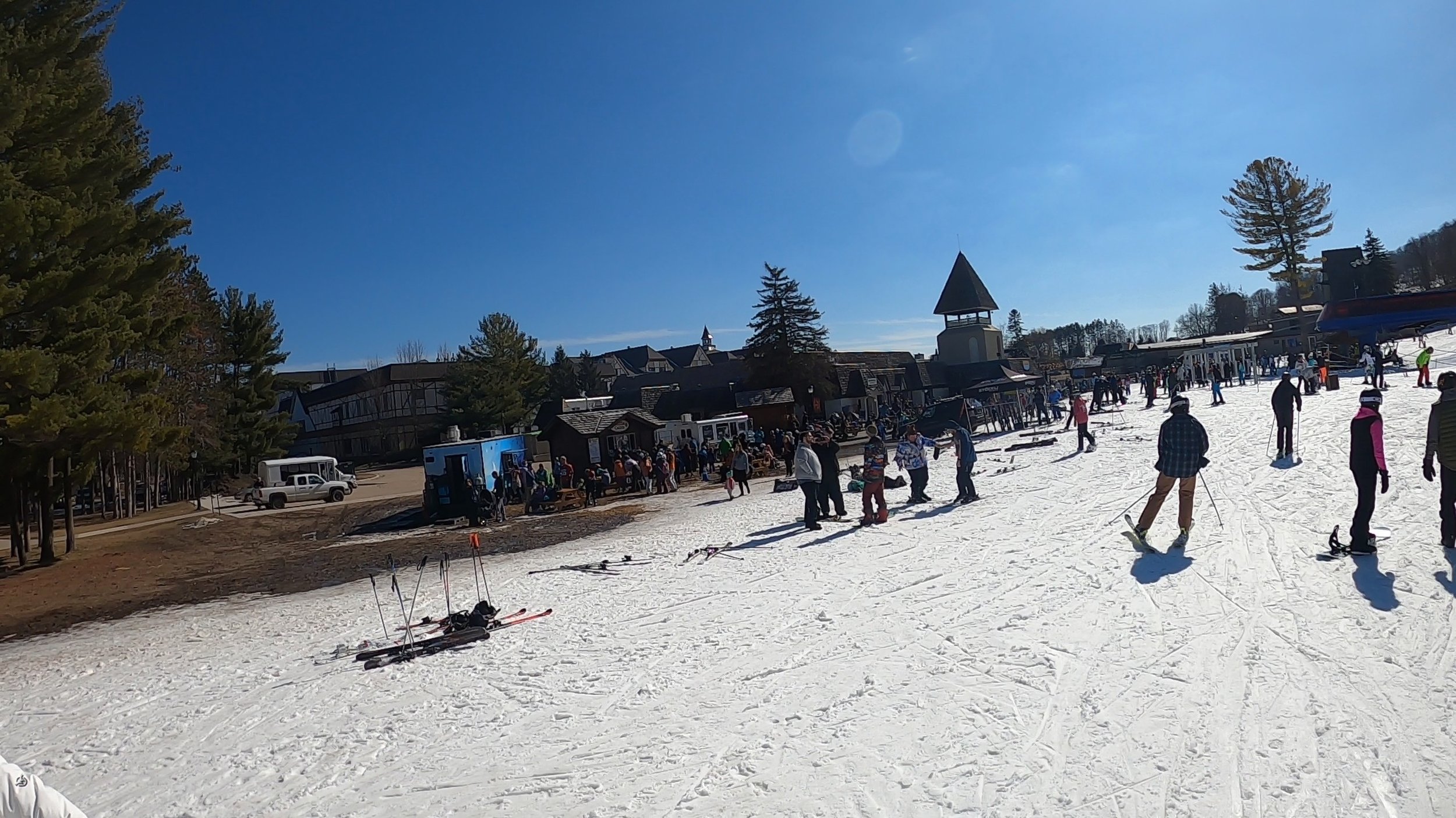
Boyne Mountain's base area has plenty of buildup, from hotels to houses.
Beginner
Boyne Mountain offers a solid beginner experience, with dedicated beginner zones, an enclosed magic carpet and a large pod of winding green trails off the Disciples 8 chair. Other areas have fewer green runs, but those still make for a great learning experience through the forest. It is also possible to get almost boundary to boundary on green runs alone, which can enhance the experience for new skiers.
Boyneland, geared toward younger kids, has cheaper lift tickets and its own terrain park, which makes it a great option for families with young children.
Intermediate
Intermediate skiers will find runs spread across the resort, with rolling descents and some wide-open, treeless runs reminiscent of alpine bowls. Some of the blues off the Disciples 8 chair follow a winding path down the hill and connect with other trails, so groups can choose their own adventure. While it shows as a terrain park run on the map, the Campbell’s Alley cross course has rollers and berms to rip through, which makes it a great fit for intermediates. A few short glades are also scattered around the resort for exploring lower-angle trees between runs.
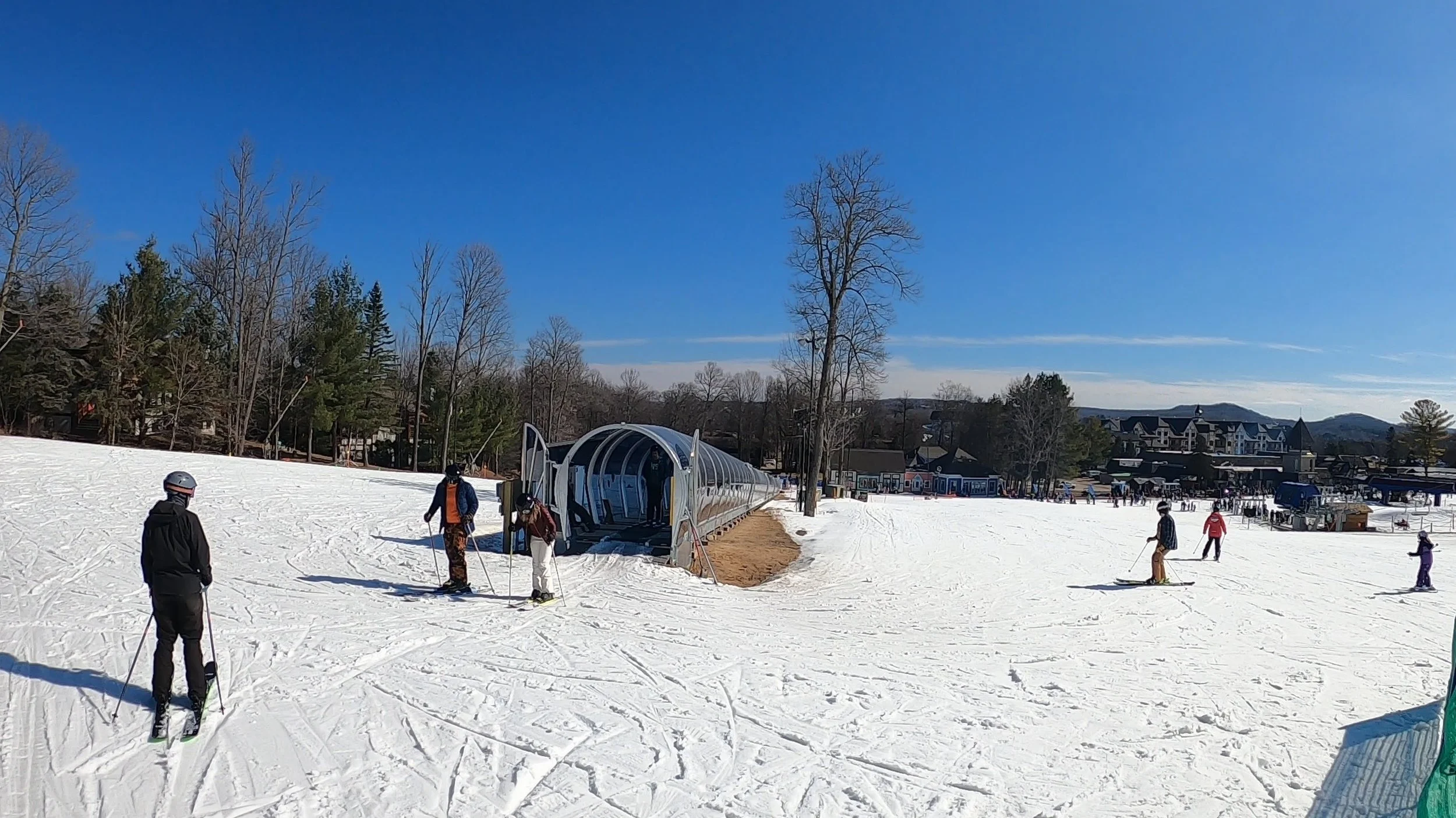
Boyne's dedicated beginner zone has an enclosed magic carpet.
Advanced
Boyne Mountain’s advanced terrain offers a solid mix of groomers, bump runs and glades when conditions allow. For hot laps on wide groomers, the front side of the hill is the place to be, with tree-lined and open runs made for serious carving. On the Superbowl side, local teams frequently race, with one side of the run groomed for racing and the other left to bump up, making for a great area to lap. Boyne’s glades are well spaced and hold great snow. They weren’t skiable during our visit in a dry season, but they looked excellent and should be a highlight when snow allows. With several pockets of advanced terrain to explore, you’ll be hard pressed to run out of options when conditions are right.
Expert
While advanced terrain at Boyne Mountain is abundant and varied, true expert terrain is minimal, to say the least. There are two double black runs, but they are relatively short and only become truly challenging when bumps are allowed to build up. We also didn’t see any cliffs or natural features during our visit, so it’s unlikely there is a hidden stash of expert terrain known only to locals. There is no backcountry access at Boyne Mountain.
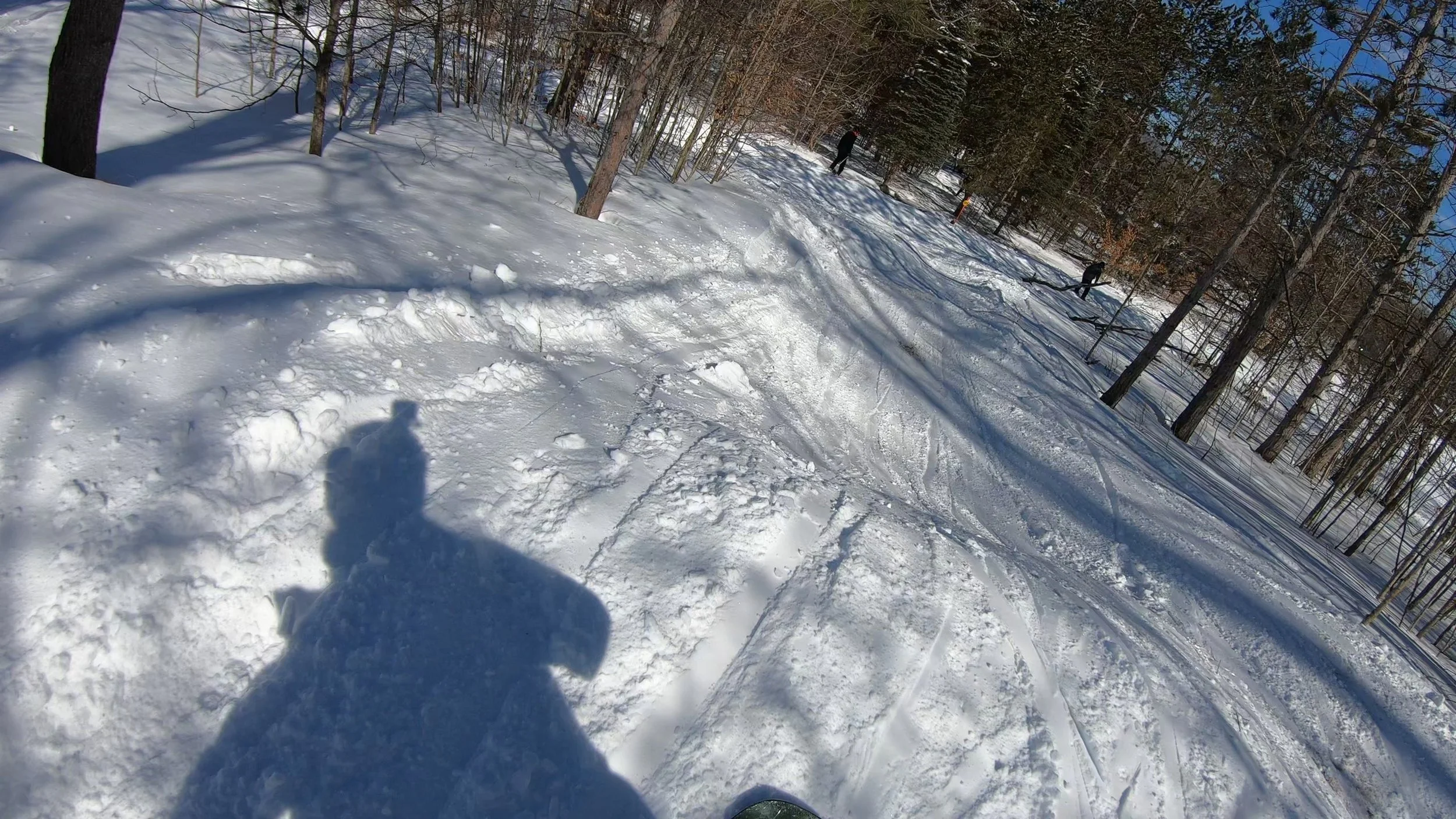
True expert terrain at Boyne is lacking, those there are some nice woods when conditions allow.
Terrain Parks
The terrain parks are one of Boyne Mountain’s strong suits, with multiple parks and features of all sizes. The largest, Ramshead, is built into a small bowl that allows for unique snow and metal features, and with multiple jump lines from medium to large, those working on jibs and jumps will have a field day. Boyne also installed a tow rope in the park to maximize laps and ease chairlift lines, which shows its commitment to the park setup. In the small park, Fritz’s small jumps and boxes offer a great place to learn away from Ramshead.
Lifts
On paper, Boyne Mountain has an impressive fleet of chairlifts. The resort has the Midwest’s only high-speed eight-person chairlift, the Disciples 8 bubble chair, plus a high-speed six-pack out of the main base, giving it a solid chunk of high-speed lift coverage. All of the other chairlifts are fixed-grip doubles, triples and quads, though three of them run faster than traditional chairs thanks to loading carpets at the base terminal. A covered magic carpet gives true beginners a place to warm up.
The rest of the fleet is made up of two old quads and two old doubles. One of those doubles, the Hemlock chair, may well be the oldest chairlift in the world, using the same terminals Sun Valley first installed 90 years ago, and today it serves mostly as a scenic ride up to the Sky Bridge.
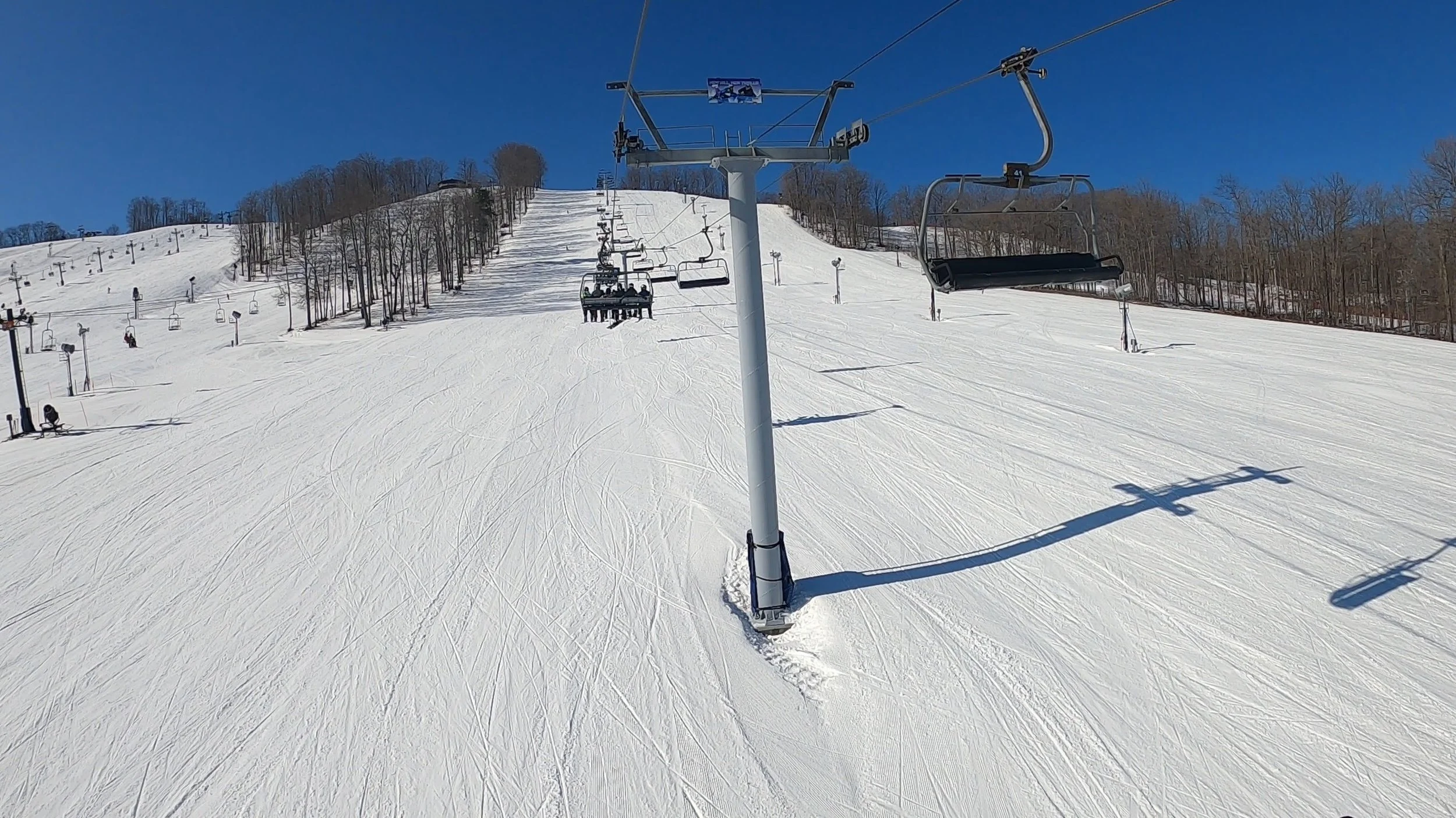
The Mountain Express is one of two high-speed lifts at Boyne Mountain, along with the Disciples 8.
Facilities
Boyne Mountain has some of the best on-mountain facilities in the Midwest, with multiple restrooms, a couple of small dining options and warming huts. Its most impressive attraction is the Sky Bridge, a 1,200-foot-long bridge rising 120 feet above the slopes that claims the title of the world’s longest timber-towered suspension bridge. Tickets to walk the bridge are separate from lift tickets, but it makes a great break from skiing or an après activity, and watching the terrain park and slopes from above is truly special. The Eagle’s Nest lodge at the top of the Hemlock chair also has drawings on its walls by Warren Miller from his days filming and skiing at Boyne, making it a must-stop for anyone who enjoys a good ski movie.
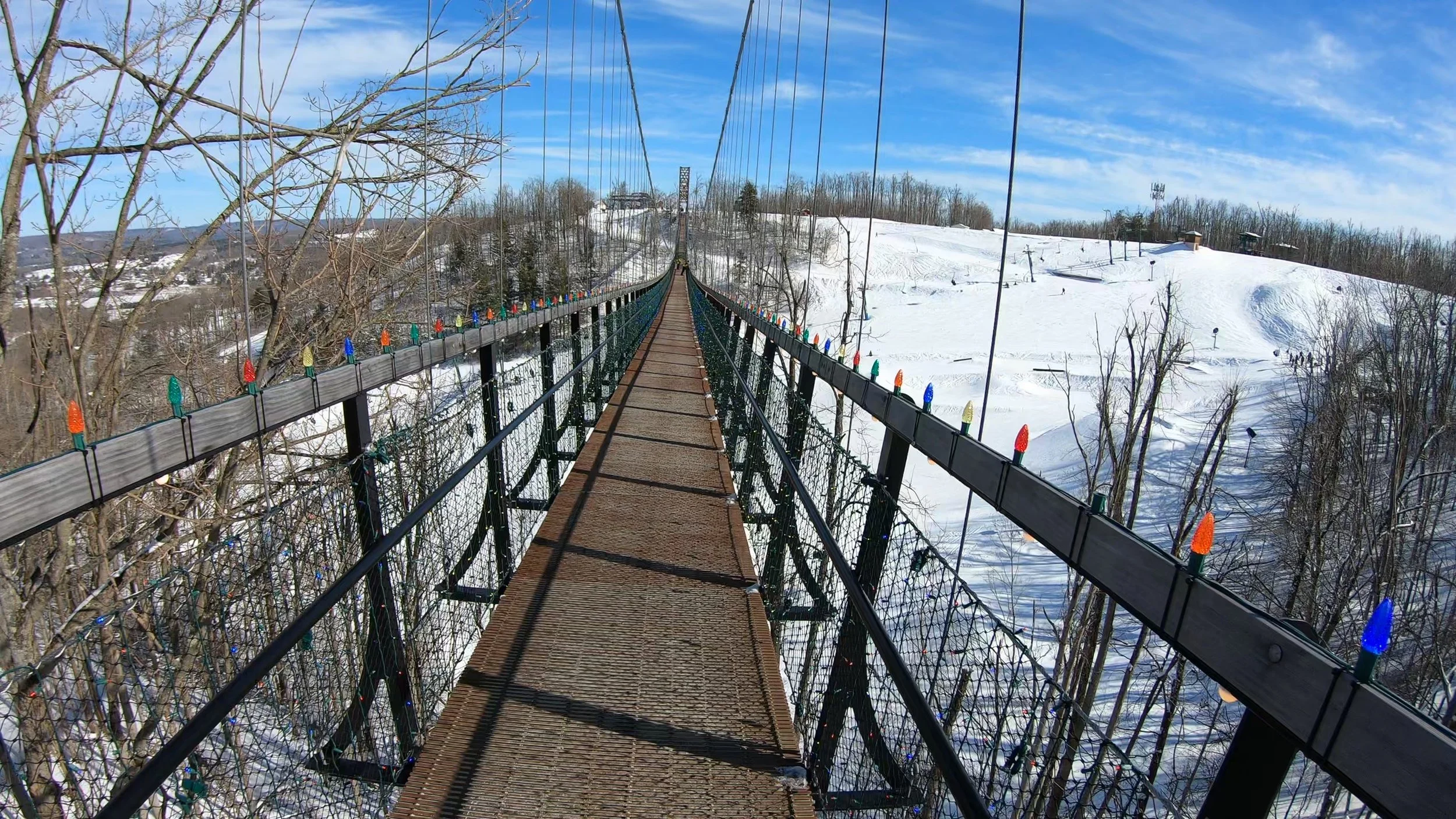
At 1,200 feet long, the Sky Bridge is the world's longest timber-towered suspension bridge.
Crowds
With terrain as expansive as Boyne Mountain’s, crowds are to be expected, but the high-capacity lift fleet keeps them mostly under control for those willing to ride lifts other than the two marquee high-speed chairs. In fact, chairs on the eight-pack often go up less than full, and the six-pack sees the same to a lesser extent. Boyne Mountain is also on the Ikon Pass, so Detroit-area Ikon holders visit on holidays and weekends, which can mean longer lines, though nothing major.
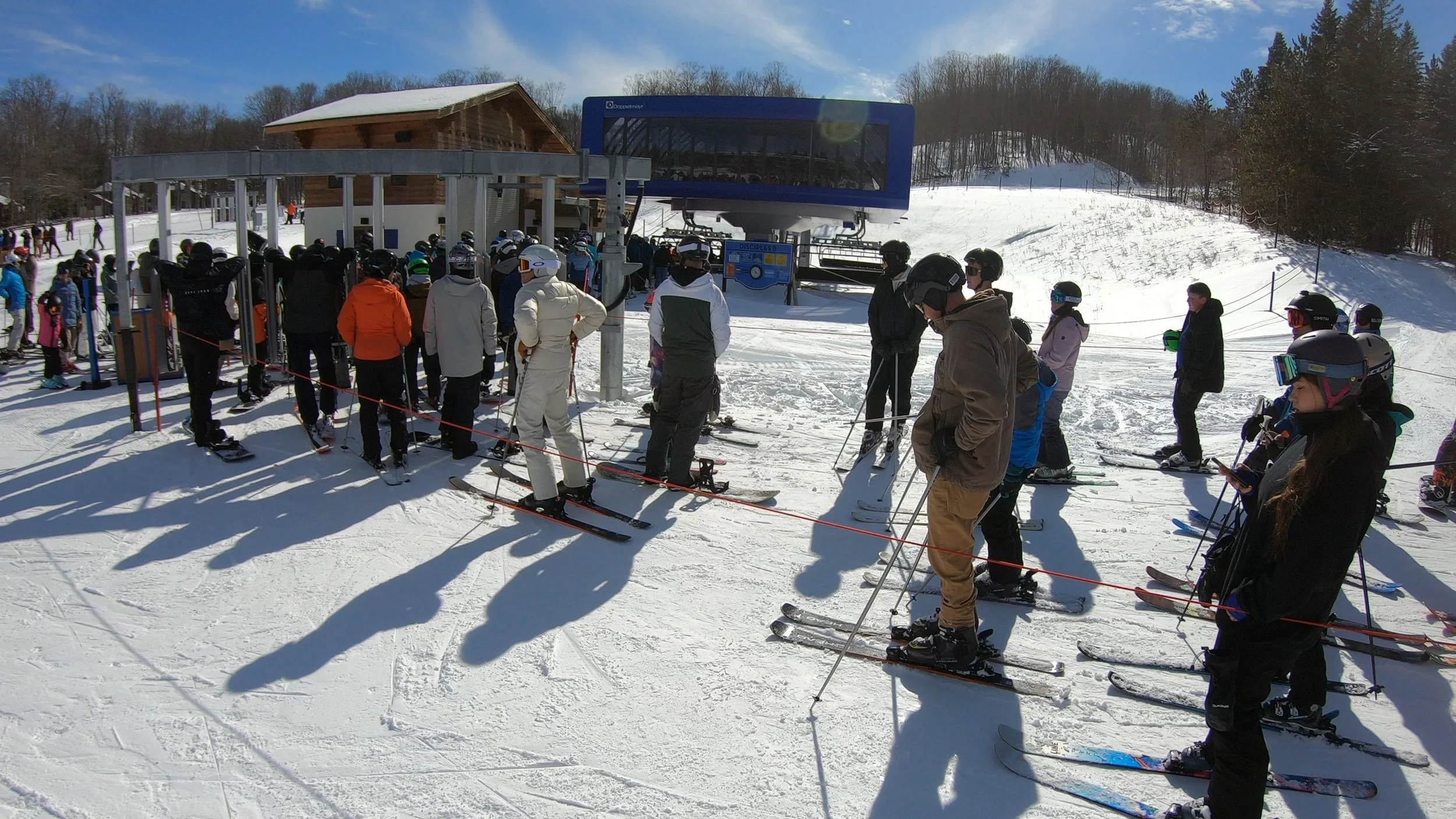
Weekend and holiday crowds at Boyne Mountain mostly gather at the two high-speed lifts.
Getting There
Getting to Boyne Mountain isn’t strenuous, but it can be a long drive from major airports and metro areas. It is close to four hours from Detroit and five and a half hours from Chicago, albeit an easy drive. The regional airport in Traverse City is only an hour away, though flights there can be hard to find. For a truly unique arrival, Boyne Mountain Airport (BFA) sits about as close to the hill as possible. Flights there are private or charter only, but flying in slopeside for a winter getaway is a rare option.
For those not flying in, the parking lots are expansive, with options for hotel guests and large free lots for day visitors. Some lots are unpaved and can get sloppy in spring, but a shuttle runs regular loops to bring skiers slopeside without the walk, similar to Big Sky’s system.
NOTE: We may receive a small affiliate commission if you click on the below links. All products listed below are unisex.

Recommended intermediate board

Recommended advanced board

Recommended expert board

Recommended touring board
Lodging
For a ski hill with its own airport next door, it’s no surprise Boyne Mountain has rooms for everyone, with hotels, condos and cabins steps from the lifts or right on the slopes. The resort’s hotel also has a fully indoor waterpark for those who still have energy after a day of skiing. However, on-site accommodations are very expensive and will likely be out of budget for many travelers.
For those looking to save money, towns such as Petoskey offer lakefront scenery and a whole other town to explore. Petoskey is also a great base for skiing both Boyne Mountain and The Highlands.
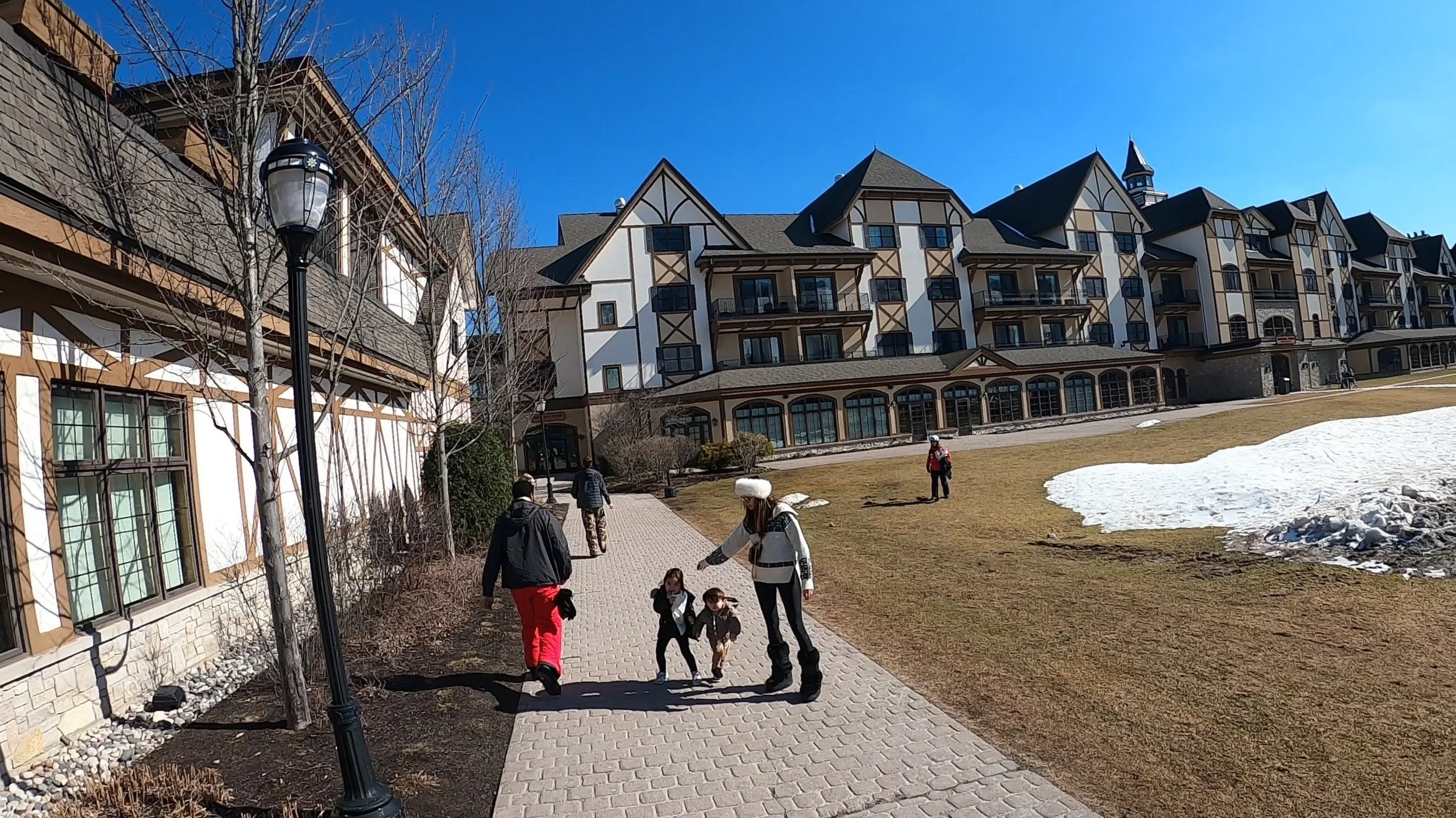
Boyne Mountain's hotels, condos and cabins are steps from the lifts.
Après
Boyne Mountain has a host of après options at the base lodges, with a handful of restaurants and bars for relaxing after skiing, and food carts and trucks also visit the base. The base area can have a very energetic atmosphere in spring, with music adding to the vibe. Bars to check out include the Trophy Room and the Snowflake, which offers a club experience on Fridays and Saturdays. Nearby towns add even more variety. Petoskey has a great small-town restaurant and shopping scene, and the Traverse City area is home to more than 50 wineries.
Pass Partnerships
Boyne Mountain is on the Ikon Pass, with five days and blackout dates on the Ikon Base Pass and seven days on the full Ikon Pass. Boyne Mountain season passes also include access to The Highlands, and the top-tier Gold pass adds three free days at each of the other Boyne Resorts, such as Big Sky and Sunday River, while other Boyne passes come with discounts at those resorts.
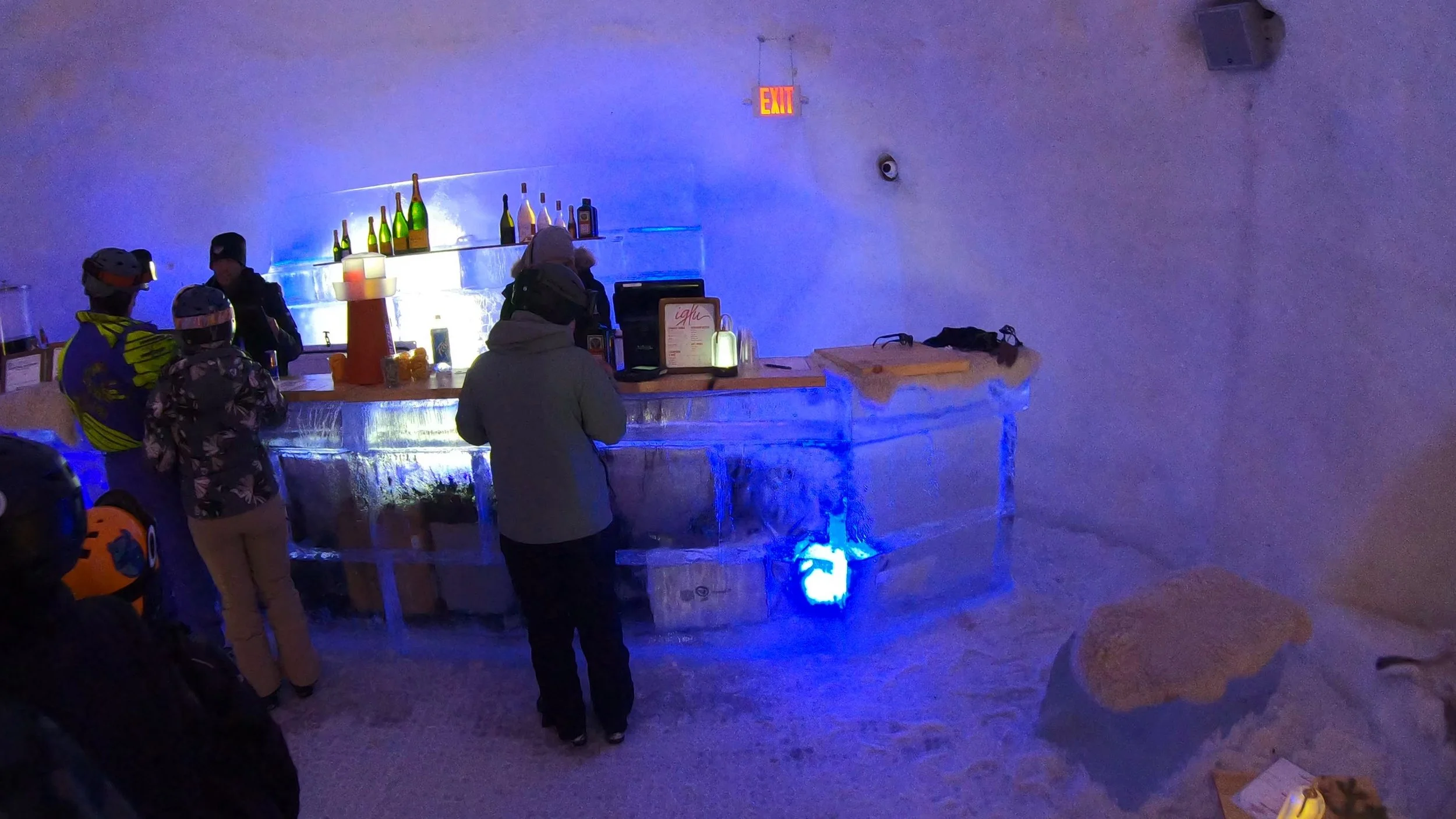
Boyne Mountain's base area has a handful of bars and restaurants for après.
Verdict
Boyne Mountain may not have the most demanding terrain by any standard, but its infrastructure makes it one of the more unique resorts in the Midwest, made even more distinctive by the skiing history rooted at the base of a 500-foot hill in Michigan.
Pricing
Boyne Mountain’s lift tickets aren’t the cheapest in the Midwest, but the resort offers substantial early bird discounts on day and night tickets. Single-day tickets range from $50 to $130 and night tickets start as low as $30, so skiing here is fairly accessible for those who plan ahead. Season passes range from $400 for midweek-only access to $1,100 for full access with days at other Boyne Resorts, and Ikon Pass days give Midwesterners another way to get value out of that pass.