MOUNTAIN SCORES
CATEGORY BREAKDOWN
See our criteriaMountain Score by Area
GOOD TO KNOW
1-Day Ticket: CHF 54–85 ($66–$103 USD)
Pass Affiliation: Ikon Pass
On-site Lodging: Yes
Après-Ski: Extensive
Nearest Cities: Zurich (3 hrs), Milan (3 hrs), Munich (4 hrs)
Recommended Ability Level:

+ Pros
World-class on-mountain dining
Spectacular high-alpine views
Modern, luxurious lifts at Corviglia
Quiet slopes at Corvatsch and Diavolezza/Lagalb
A historic town with plenty to do off the slopes
– Cons
Modest snowfall for the Alps
Three separate, mid-sized ski areas linked by bus
Slow funicular access from downtown
Little challenging terrain on-piste
MOUNTAIN STATS
Skiable Footprint: 355–1,820 acres per area (3,168 combined)
Ski Areas: 4
Marked Pistes: 310 km
Top Elevation: 10,837 ft
Vertical Drop: 2,995–4,941 ft per area
Lifts: 47
Trails: 202
Beginner: 24%
Intermediate: 60%
Advanced/Expert: 16%
VIDEO
Mountain Review
When it comes to an old-money playground for winter sports, few places come to mind more than St. Moritz. This famous Swiss region pioneered luxury winter tourism in 1864, making it, by many accounts, the world’s oldest ski destination. Today, St. Moritz retains its moneyed atmosphere, with Prada ads on lift towers and champagne bars across the slopes. But if prestige isn’t a priority for you, what does St. Moritz have going for it?
Size and Terrain Layout
Like many European destinations, St. Moritz doesn’t ski as one continuous footprint. The region has three distinct ski areas: Corviglia, which has direct access from town, the largest and fanciest footprint, and terrain for all ability levels; Corvatsch, which has north-facing slopes and more advanced terrain, plus the slightly mellower Furtschellas area on skier’s left; and Diavolezza/Lagalb, which is out of the way from town and the smallest and least built up of the three, but has the best snow retention of the bunch.
Unlike many prominent Swiss destinations, St. Moritz isn’t a mega-resort. Corviglia spans about 1,800 acres from boundary to boundary, Corvatsch is roughly half that size, and Diavolezza/Lagalb is about a fifth the size of Corviglia. For the most part, the three areas are disconnected from one another, with public buses as the main link. When conditions allow, advanced skiers and riders can ski from Corvatsch to Corviglia, but not the other way around.
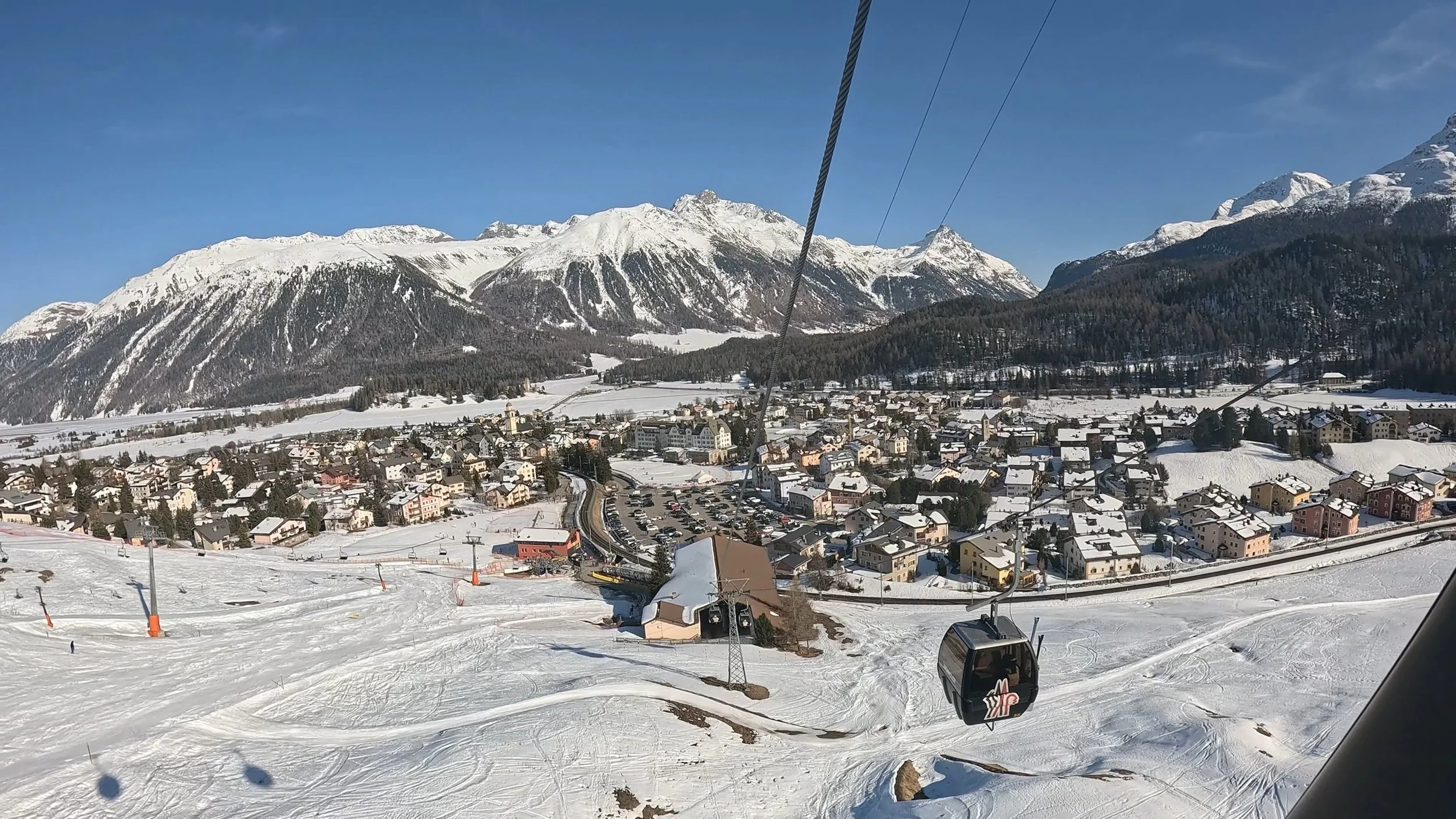
Corviglia sits directly above St. Moritz and the surrounding Engadin villages.
Beginner
Corviglia is the place to be for easier terrain, with blue-rated pistes across lower and mid-mountain areas. Corvatsch and Diavolezza/Lagalb are much less beginner-friendly: Corvatsch has only two main-mountain blue runs, the larger and more popular of which is in the Furtschellas zone, and Diavolezza/Lagalb doesn’t have a single one. There are a handful of bunny hill areas at the bases of Corviglia and Corvatsch. Those who want to ride the tram to Corviglia’s iconic summit restaurant will need to take a red piste down or download the tram.
Intermediate
St. Moritz opens up considerably once guests reach intermediate proficiency. Nearly every lift serves red-rated pistes, and the vast majority of marked pistes at Corvatsch and Diavolezza/Lagalb carry that rating. At Corviglia, red runs have some of the most iconic backdrops in the region, most notably the Piz Nair descent from the top. Most reds are similar in difficulty to blues at typical North American resorts, although a few have steeper sections closer to blacks at regional mountains.
Terrain Parks
St. Moritz has strong freestyle terrain across the region. The main attraction is the Crowland snowpark at Corviglia, with jumps, rails, boxes and specialty features for all abilities, including airbag features. Corvatsch has a park below its middle station with its own chair, plus a superpipe, and hosted the halfpipe and slopestyle events at the 2025 FIS Freestyle World Championships. Furtschellas has another park, and Corvatsch runs night skiing on select Fridays.
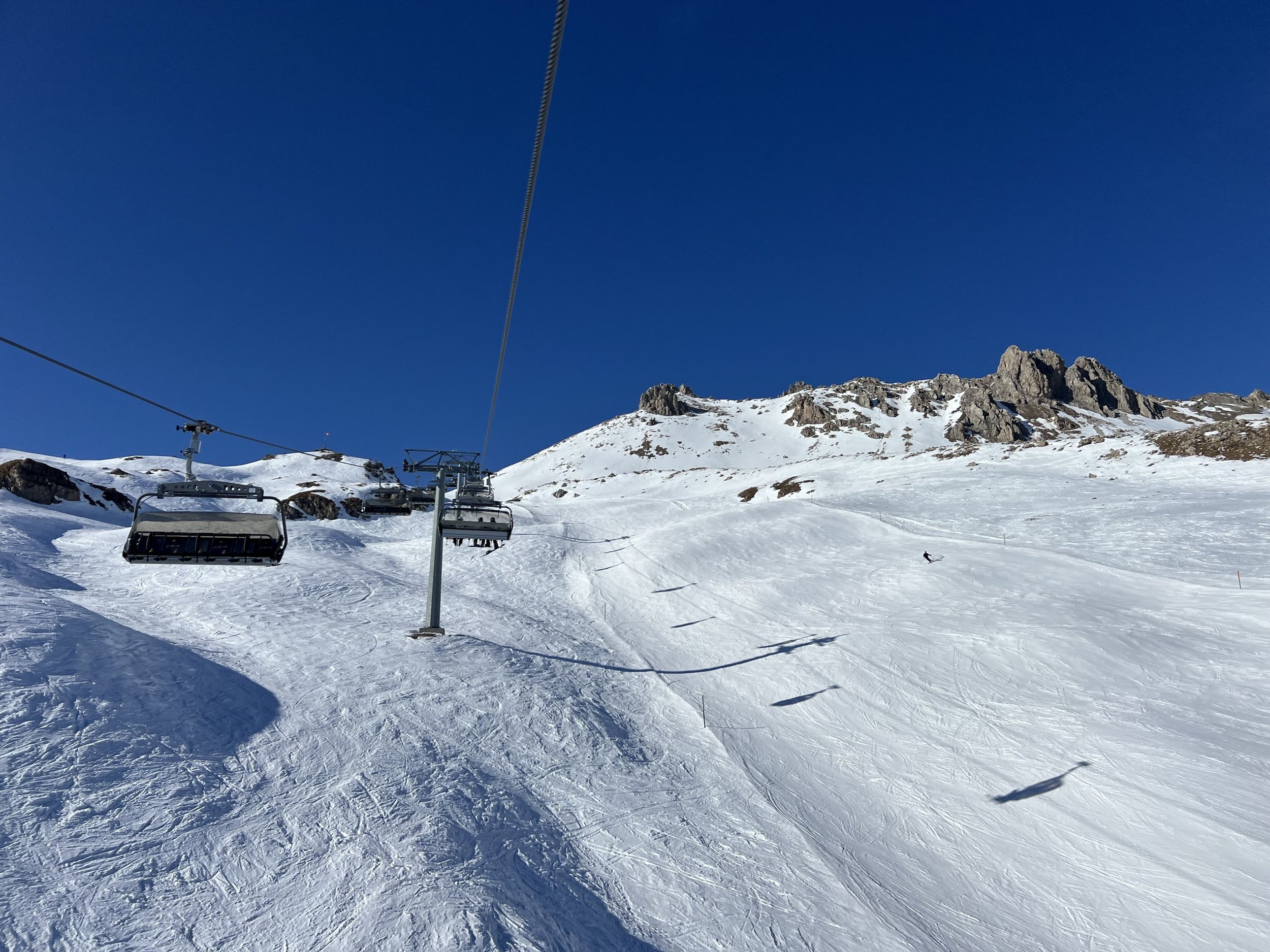
Wide red-rated pistes make up most of the region’s terrain.
Advanced and Expert
St. Moritz’s marked advanced terrain is somewhat lacking compared to other destinations. Corviglia’s blacks are on the easier side for Europe; while narrow in places, they aren’t any harder than a groomed single black in North America. The blacks at Corvatsch and Diavolezza are more technical but limited in number, and a few Corvatsch blacks have steep pitches that transition to mellow terrain abruptly. The only in-bounds freeride route in the region is the Diavolezza glacier run, an eight-kilometer (five-mile) descent past jagged rock faces and ice fields, with a full view of the Morteratsch glacier about halfway down. It ends with a long catwalk to the Morteratsch train station, so time your descent to the hourly trains, and watch for crevasses along the way.
Off-Piste
St. Moritz isn’t widely known as a freeride destination, but it has quality off-piste terrain, and because relatively few visitors come here to leave the slopes, lines can stay untracked for days. The standout is Corvatsch, particularly from the upper tram and on the backside of Furtschellas, where northerly aspects hold snow well, although many lines cliff out if you don’t know the route. Diavolezza has true big-mountain lines when it hasn’t snowed recently, and Corviglia has steep, obstacle-filled terrain off the Piz Nair tram, including the downhill race courses when they aren’t being prepped for competition. None of this terrain is patrolled or avalanche-controlled, so bring a beacon, shovel and probe, and hire a guide if you don’t know the area.
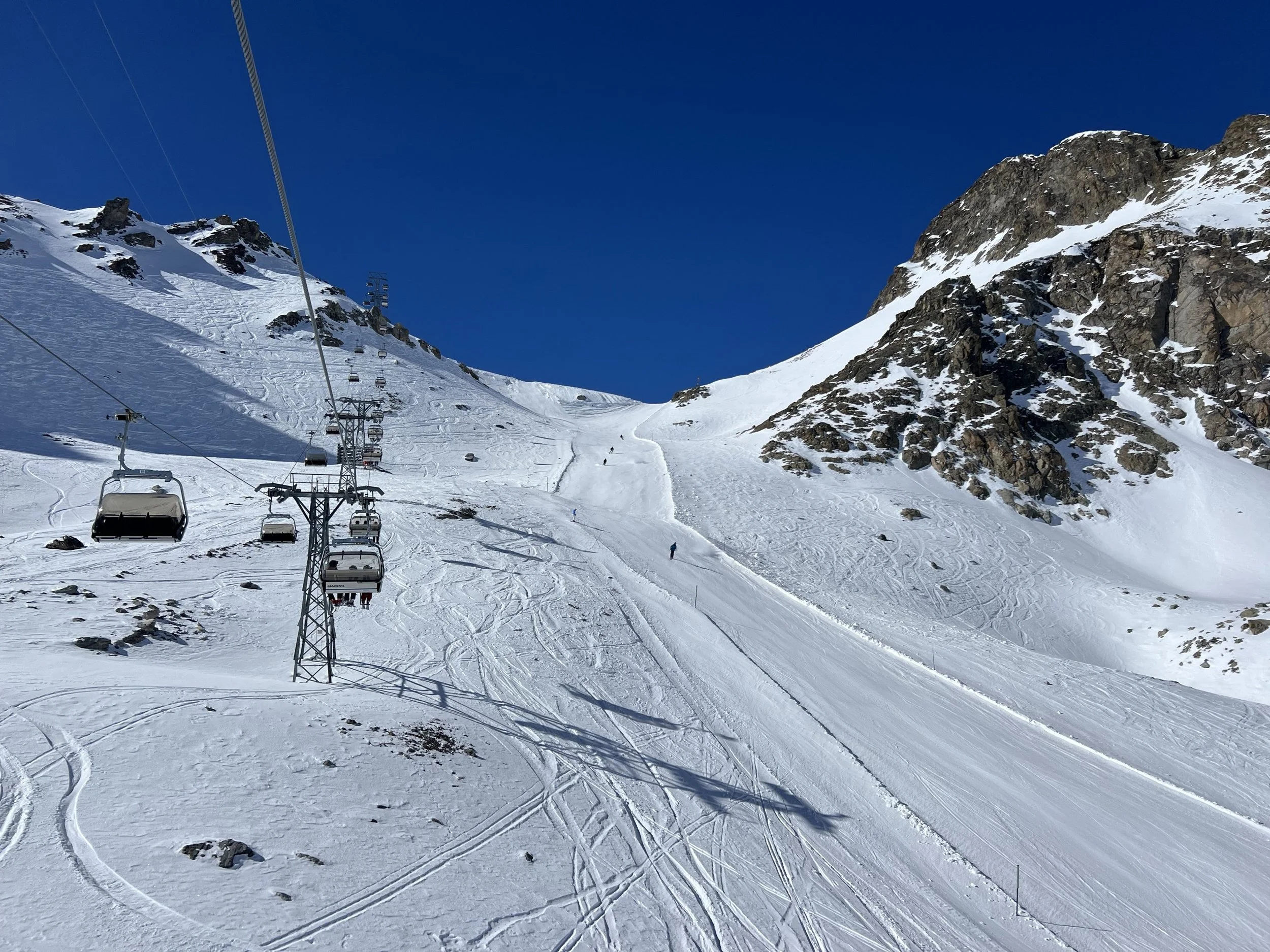
Much of St. Moritz’s best advanced terrain is off-piste, beyond the marked runs.
Snow Quality and Resiliency
St. Moritz sees high-quality snow for the Alps, but there’s less of it than at many of the best destinations in Europe, since the Engadin valley is relatively dry. High elevations help, with Corvatsch topping out around 10,800 feet and the other areas close behind, while north-facing slopes at Corvatsch and glacier terrain at Diavolezza keep conditions good through winter and into spring. The town sits at about 6,000 feet, so valley runs are often skiable, which isn’t a given in today’s Alps.
The region sees plenty of sun between storms, which makes for comfortable days but also freeze-thaw cycles at lower elevations, especially on Corviglia’s south- and east-facing slopes, so some lower runs can be variably open. All three areas have snowmaking on piste, and select areas use snow farming to build a reliable base early in the season.
Thanks to its glacier terrain, Diavolezza has the best snow retention in the region.
NOTE: We may receive a small affiliate commission if you click on the below links. All products listed below are unisex.

Recommended all-mountain ski

Recommended carving ski

Recommended glade ski

Recommended expert/touring ski
Lifts
St. Moritz’s lift infrastructure is generally impressive, but the experience depends on where you are. Corviglia has a modern, luxurious setup, with bubbles on nearly every chairlift and high-speed service out of all but one minor base. A few areas, mostly at Corvatsch, still have slow fixed-grip chairs, and some routes there require surface lifts, including the only way from the main Corvatsch side to Furtschellas.
The biggest challenge is access. From the center of town, the only way up Corviglia is a two-stage funicular that has operated in some form for over a century, with a bottom terminal that starts underground before rising into the open. It’s a memorable ride, but trains run only every 15 minutes, and on busy days it can take multiple trains to load, both on the way up and when downloading at the end of the day. The funicular was overhauled in summer 2026, with reopening planned for the 2026-27 season. The gondola from Celerina and the tram from St. Moritz Bad are more efficient but out of the way for those staying downtown, and the St. Moritz Bad tram is slated to be replaced by an eight-seat gondola, targeted for 2028-29. Corvatsch, Diavolezza and Lagalb are reached only by tram, and the summits of Corviglia and Corvatsch also require tram rides, with some of the most breathtaking views anywhere but potential lines on busy days.
Navigation
St. Moritz isn’t too hard to get around, despite the Swiss habit of signs pointing to general landmarks rather than specific lifts, restaurants or runs. Plenty of trail map postings show lift and piste status, and guidance at major intersections is clear. Corviglia is the most cohesively designed of the three areas, although it can be tricky to end the day at the right base. Corvatsch and Diavolezza/Lagalb both feel like two resorts joined together: getting between Corvatsch and Furtschellas means a long trip down toward the base and at least one surface lift, and getting from Lagalb back to Diavolezza requires either a cross-country trail or a bus that comes every half hour.
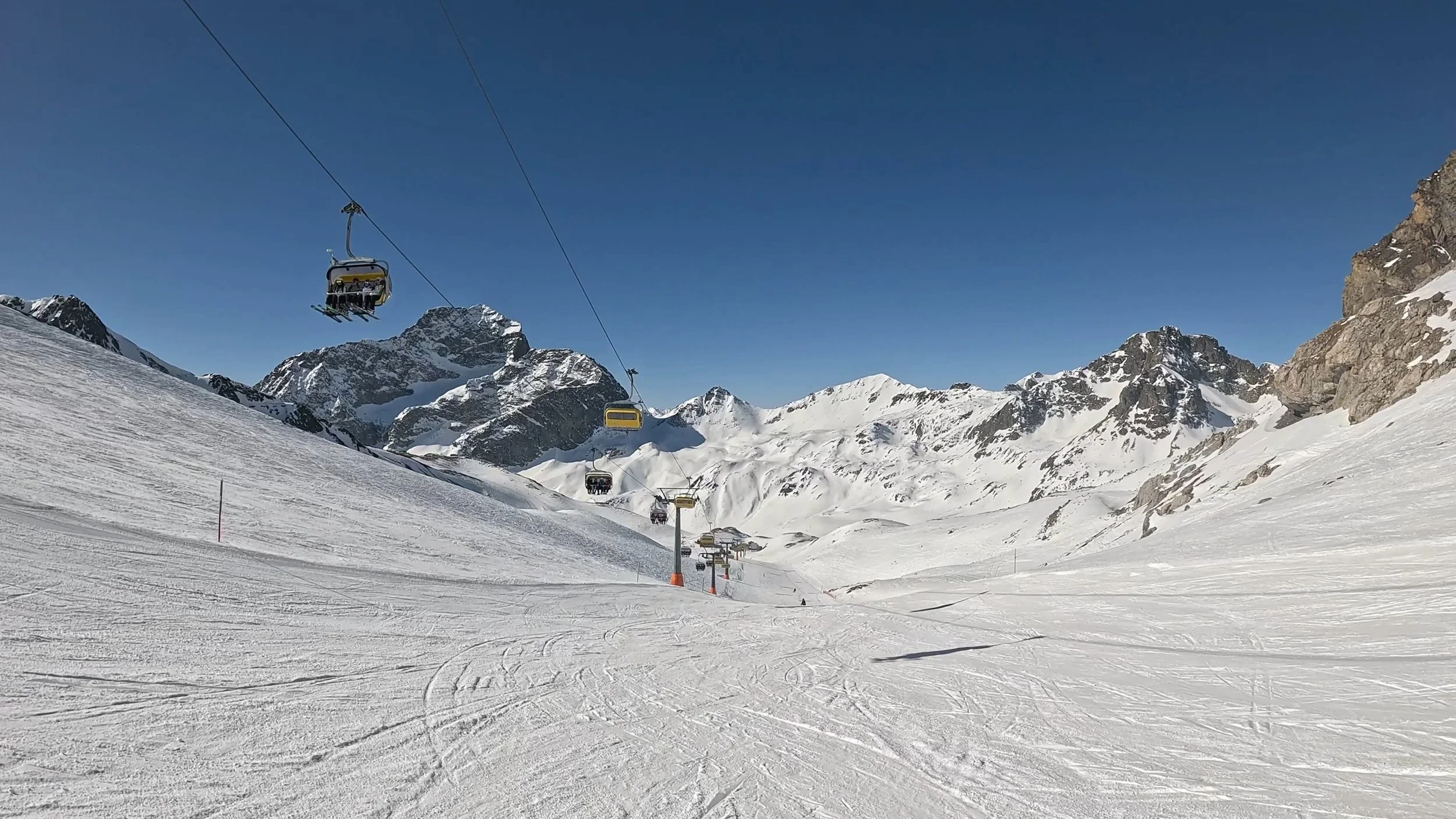
Corviglia has one of the most modern lift systems in the region.
Crowds
St. Moritz is busiest during the December break and February school holidays. The region doesn’t see the skier volume of some destinations, but crowds can be significant at Corviglia, where direct access from town leads to lines at mid- and upper-mountain lifts and longer waits at the funicular. Corvatsch, Diavolezza and Lagalb stay much quieter thanks to their more remote locations, and the latter two essentially never see serious crowds.
Facilities
On-mountain dining is one of the best parts of the St. Moritz experience. Corviglia has exceptional restaurants seemingly around every corner, ranging from casual cafés to high-end spots, and many are more reasonably priced than you might expect. The Piz Nair restaurant at the Corviglia summit might be one of the most magnificent in Europe, with panoramic views from every seat. The other areas have plenty of food and drink too, although they aren’t as upscale or widespread. At Diavolezza, the main restaurant is at the summit, with a small coffee shop and a glacier VR exhibit in the base terminal.
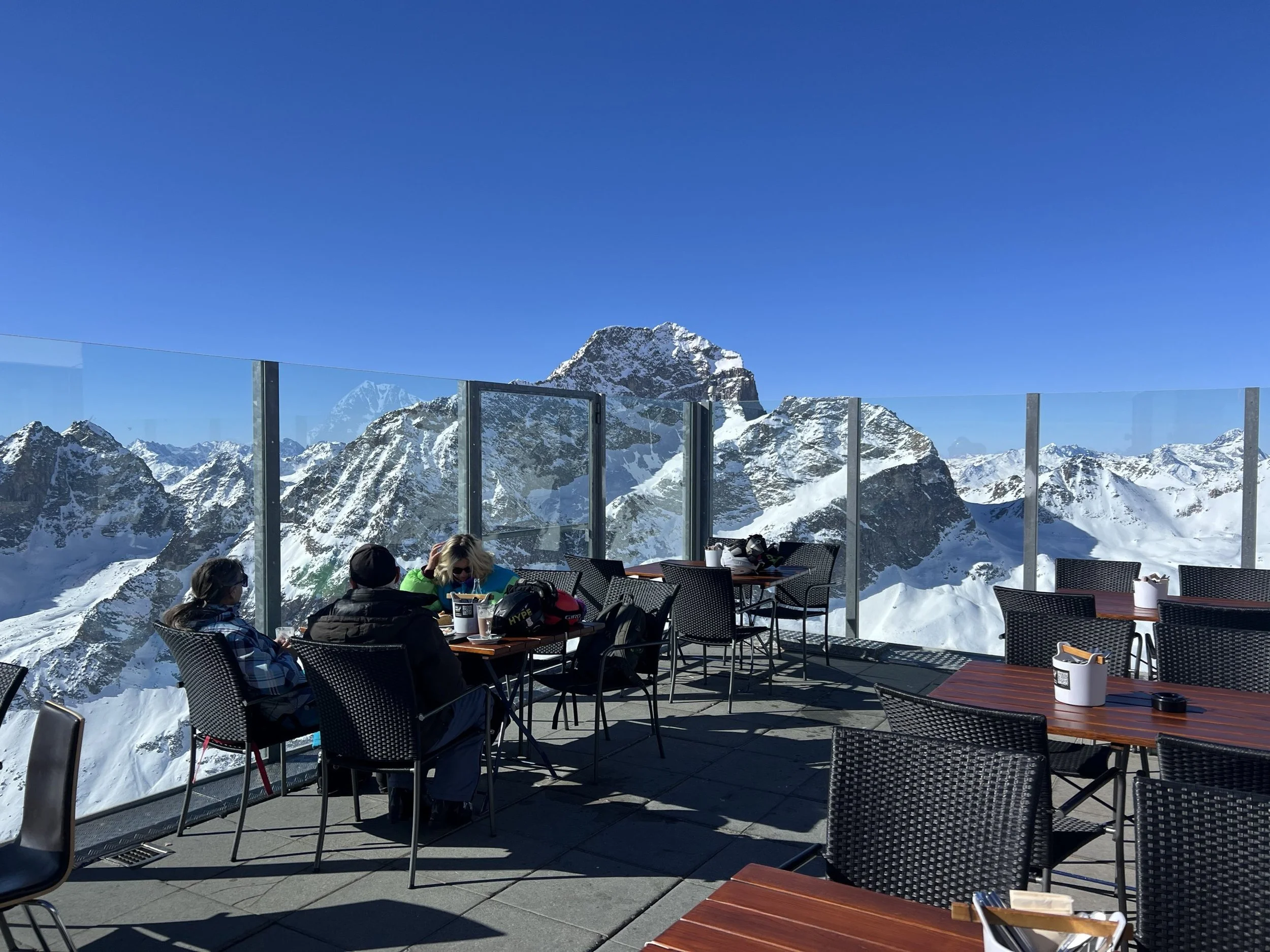
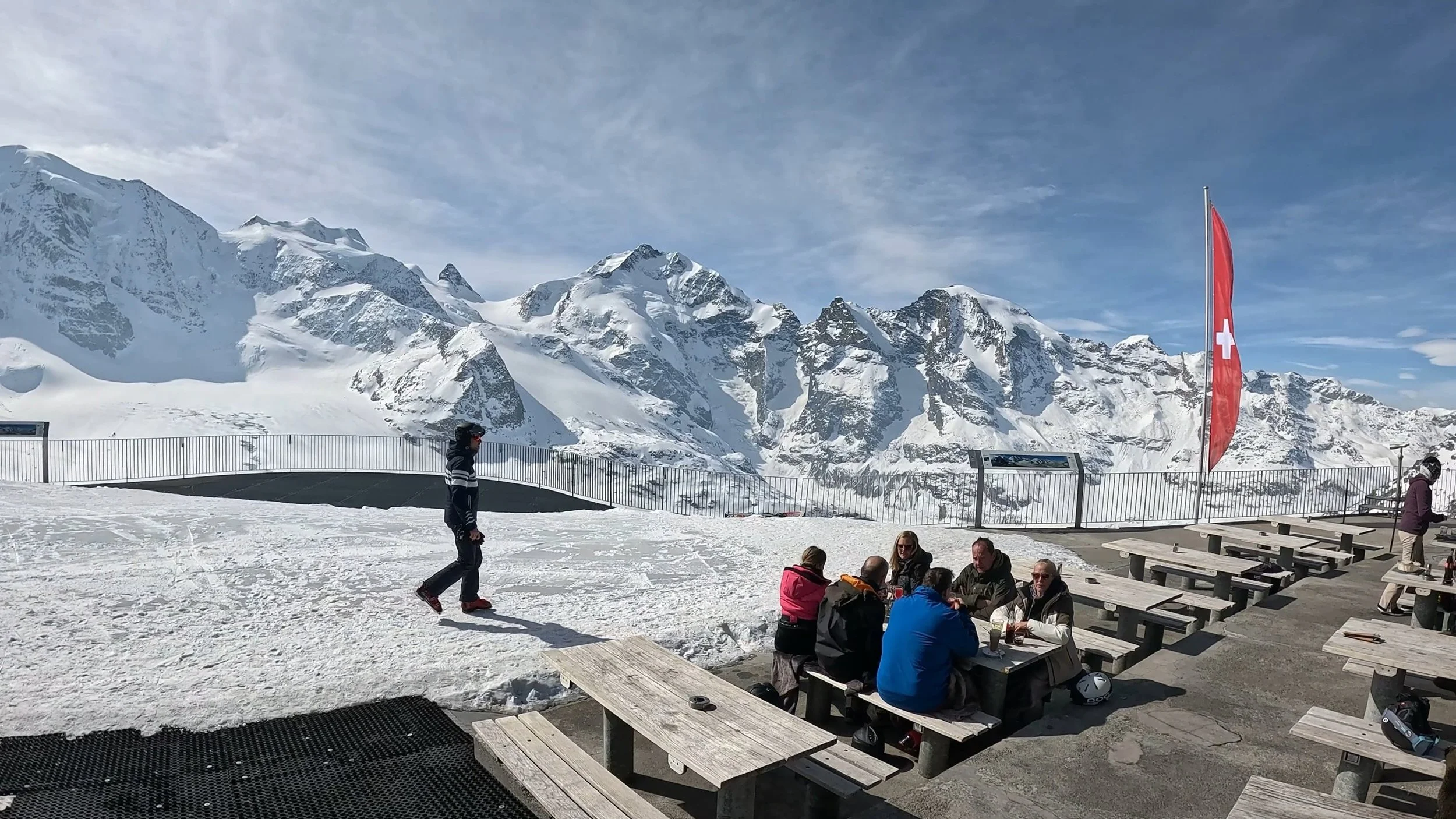
On-mountain restaurants with outdoor seating and big views are a highlight across the region.
Getting There
St. Moritz is easy to reach by public transportation, about three hours by train from Zurich. By car, it’s about three hours from Zurich or Milan and about four hours from Munich. Driving doesn’t make much sense if you’re staying in town, but there’s parking at Corviglia’s secondary bases and at the main bases of the other areas. For those flying private, Engadin Airport is a short drive from the slopes.
Lodging
St. Moritz Dorf has some of the most luxurious hotels of any ski town in the world, with plenty of five-star options, but the town also has more modest hotels and traditional pensions if you book early. St. Moritz Bad, Celerina and Silvaplana are more relaxed and still have direct lift access to Corviglia or Corvatsch, often with a less busy start to the day than the funicular. Samedan and Pontresina are cheaper and on the valley bus network, and there’s a hostel at the edge of St. Moritz Bad. At the top of Diavolezza, Berghaus Diavolezza is a summit hotel with all meals included, but once the lifts close, you’re up there for the night.

Recommended intermediate board

Recommended advanced board

Recommended expert board

Recommended touring board
Après
St. Moritz’s après reflects its ultra-luxe reputation, with the scene centered on high-end bars and lounges, both on the mountain and in town, although there are a few divier spots if you know where to look. Even if you don’t want to go out, downtown is worth walking around for its historic Alpine architecture.
Beyond skiing, there’s plenty of luxury shopping, world-class dining and surprisingly affordable bakeries and grocery stores. Horse racing and polo on the frozen lake are signature winter events, and the Engadin valley has one of the most extensive Nordic trail networks in the world, with tracks running right through town.
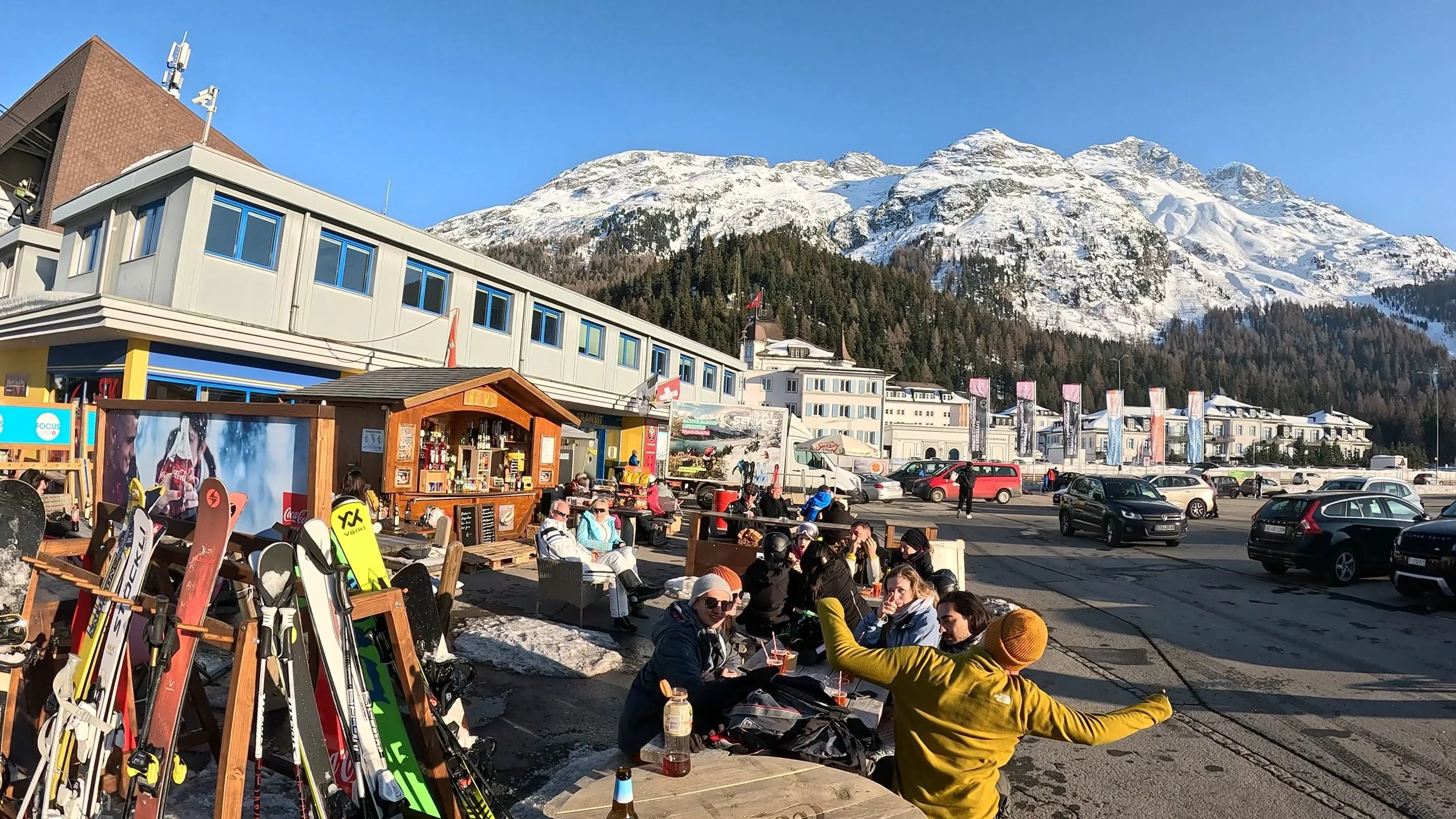
Base-area bars in St. Moritz Bad fill up once the lifts close.
Pass Partnerships
St. Moritz is on the Ikon Pass, with seven days on the full Ikon Pass and five on Ikon Base, both covering all of the region’s ski areas. Ikon isn’t valid for Corvatsch’s Friday night skiing.
Mountain Aesthetic
St. Moritz’s mountain aesthetic is defined by its opulence, especially at Corviglia, where luxury branding appears on lift towers and gondola cabins. But that moneyed atmosphere is balanced by phenomenal upper-mountain views, with jagged summits that place the region among the most scenic in the Alps, and plenty of sunny days to enjoy them. The broader Engadin valley has a more traditional character, with small villages and working farmland, and the quieter ski areas away from downtown feel much more down to earth.
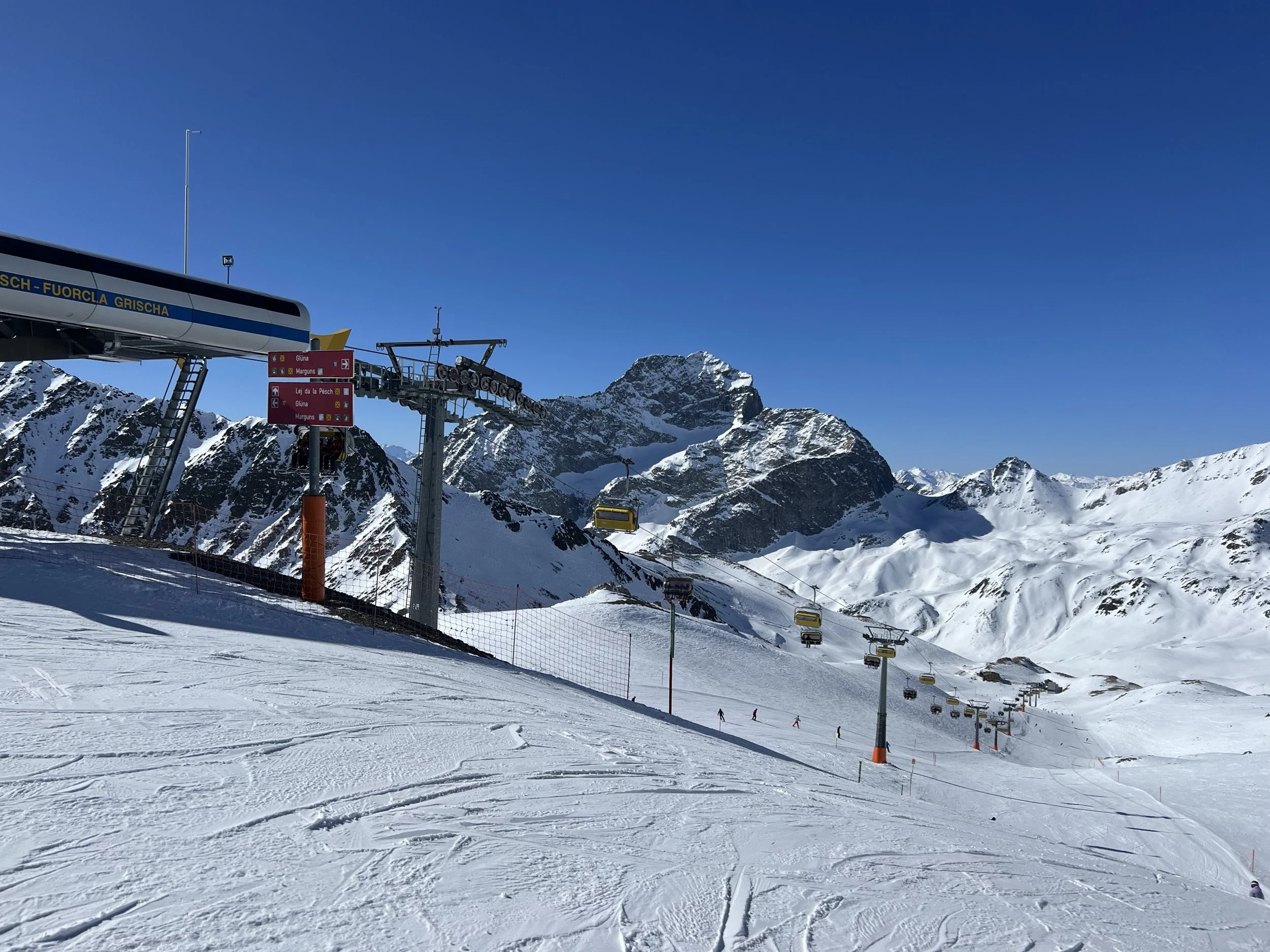
St. Moritz’s jagged upper-mountain scenery is among the best in the Alps.
Verdict
If the most snow or the best value is your priority, St. Moritz may not be the right choice, and the same goes if you want a gigantic footprint. But if you’re looking for the ultimate old-school luxury experience, with the restaurants, town and activities to match, this region delivers. Facilities and scenery are standouts everywhere, Corviglia brings strong lifts, and the other two areas offer light crowds and reliable snow, but none of the three have the snow totals or size to compete with the best resorts in the Alps.
Pricing
Despite the region’s luxury positioning, lift tickets are reasonable by Swiss destination standards. Tickets use dynamic Snow-Deal pricing, with the lowest prices for early bookings and off-peak dates, and a peak-season adult day covering the whole region has recently topped out around CHF 85. Tickets for individual areas, multi-day passes and families are cheaper.