Why Do “No Snowboard” Ski Resorts Still Exist?
Background
Since its invention in 1965, the sport of snowboarding has exploded in popularity. Standing sideways on snow has now become a ubiquitous sight at most ski areas, but not all of them. That’s because while many ski resorts have embraced snowboarding as an integral part of mountain culture, a handful of notable U.S. ski resorts continue to enforce bans on snowboarders.
But why? Well, it turns out that only a few decades ago, these resorts were not the exception, but rather the norm across a surprisingly skeptical industry. As snowboarding spread through the late 20th century, much of the ski industry was deeply concerned about how the new sport would fit alongside traditional skiing, and many resorts maintained substantial restrictions or even outright bans before eventually opening their mountains fully to snowboarders.
So what changed? How did snowboarding go from being banned or heavily restricted across much of the industry to being accepted almost everywhere? Why did some resorts hold onto their restrictions far longer than others—including several that didn’t fully open to snowboarders until the 2000s? And why have the final few holdouts maintained their bans even today? In this piece, we’ll trace how snowboard bans emerged, how most of the ski industry gradually abandoned them, the very different histories and rationales behind the resorts that still prohibit snowboarders, and whether those final bans could eventually disappear as well.
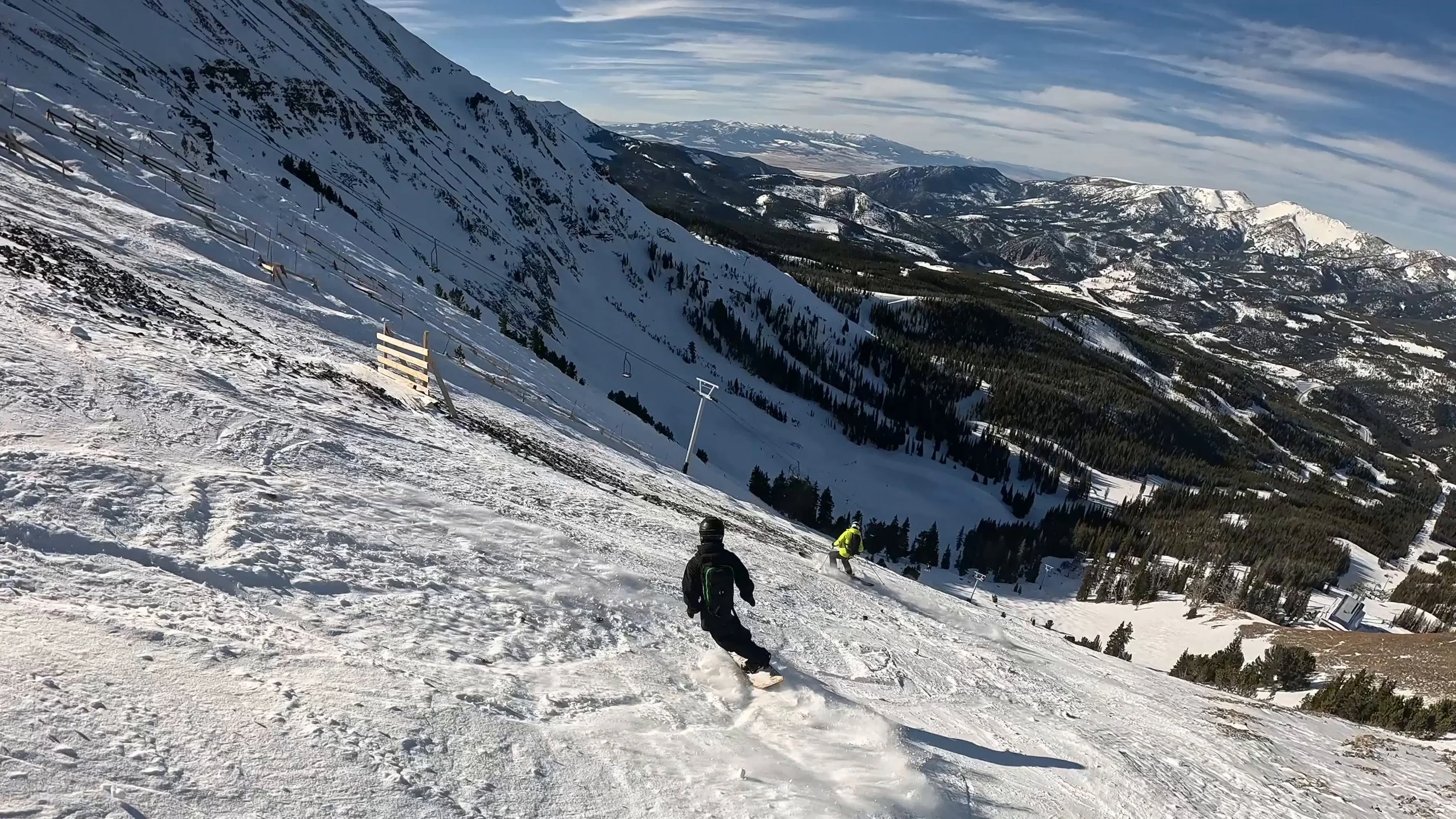
Standing sideways on snow is now a ubiquitous sight at most ski areas, but it wasn’t always that way.
The Struggle for Acceptance
To understand how snowboarding got to a place where only three ski resorts—Deer Valley, Alta, and Mad River Glen—ban snowboarding today, we have to rewind back to the late 1970s, when the sport struggled to get resort operators to allow it across a vast swath of the North American ski world. Back then, sport pioneers Jake Burton Carpenter, Tom Sims, and Dimitrije Milovich were building the first modern snowboards and testing them out mostly in the backcountry. Some resorts allowed it on a case-by-case basis, including Snowbird, which allowed Milovich to try out his prototypes, but there simply were so few people using snowboards back then that it wasn’t a big issue.
Through the early 1980s, details on formal snowboard access policies are difficult to ascertain, in large part due to how few people actually used them. Some early adopters recounted some resorts, including many in Vermont, being ski-only, with others having different policies depending on who was selling the ticket. Donner Ski Ranch’s former owner claims that his resort became the first one to sell a snowboarder a lift ticket in Tahoe, saying the ticket worker initially refused service and that he himself overrode that decision. Other resorts just allowed the few snowboarders who showed up to get on the slopes, provided there were no complaints from other guests.
But as the sport grew to define itself, it also began making enemies. After Aspen Ski Corporation invited a group of snowboarders to participate in a camera shoot in the early 1980s, some of the riders reportedly left the shoot and used their complimentary lift tickets to ride elsewhere on Aspen’s slopes. According to the event organizer, the company was not pleased and told the group they would not be invited back. At Vermont’s Stratton ski resort, snowboarders would poach the mountain before they were officially allowed, reportedly getting chased off by ski patrollers on multiple occasions.
Some resorts claimed problems with insurance coverage in refusing to allow snowboarding. Exactly how much of that reflected actual policy exclusions versus uncertainty among operational stakeholders is somewhat murky. As early as 1977, some insurers had confirmed that they would be able to cover snowboarders under conventional ski-area liability policies. But as snowboarding became more visible in the early 1980s, many resorts were still being told—or at least believed—that allowing the new sport could jeopardize their coverage or expose them to substantial uninsured liability. A big part of that liability came from the differences in snowboarding equipment; with both feet fixed to a single board and little in the way of established safety data, it was hard to tell whether resorts would be serving a much more risky clientele by allowing snowboarders on the slopes. There was particular concern about whether snowboarders would be able to properly load lifts with both feet attached to the same board.
There was also a cultural problem. Early snowboarders drew heavily from surfing and skateboarding, and the sport quickly developed an image that clashed with the comparatively traditional ski establishment. Resort operators worried not only about accidents, but also about complaints from existing customers. Contemporary and retrospective accounts describe skiers objecting to snowboarders’ clothing, language, riding style, and generally rebellious reputation. There was also a massive problem with early snowboard designs; the vast majority lacked metal edges, which meant riding on hardpack or even groomed terrain was really undesirable. This created significant worries for resorts, given these board designs effectively pushed riders toward riskier powder and ungroomed terrain. At some mountains, the question was therefore not simply whether snowboarding was safe, but whether resorts even wanted snowboarders as customers.
Together, those concerns gave many mountains plenty of reasons to prohibit the sport. By the 1984-85 season, only around 40 U.S. ski resorts—or less than 10% in the whole country—allowed snowboarding. And most of them were small local hills with more incentive to experiment with a new source of ticket sales.
But at the same time as these barriers to snowboarding were emerging, the same people who had pioneered the sport in the first place had begun a systematic effort to knock them down.
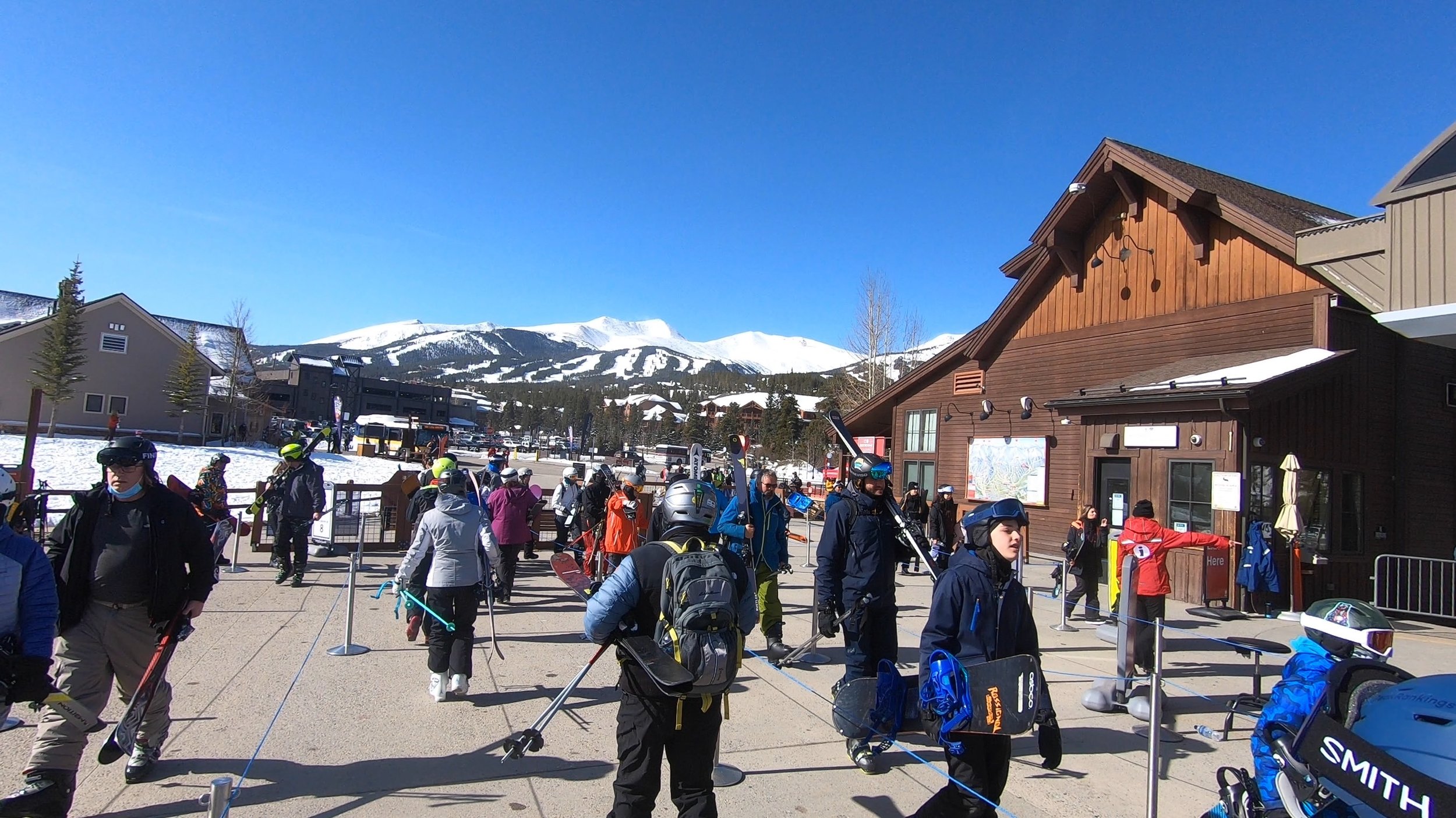
By the 1984-85 season, only around 40 U.S. ski resorts allowed snowboarding, like Breckenridge, shown here.
Winning the Resorts Over
For the folks trying to build snowboarding into a widespread pastime, getting ski resorts to accept the sport was an existential necessity. So these early industry advocates went directly to the ski areas to convince them that snowboarding could safely coexist with skiing.
Perhaps the biggest part of the effort was demonstrating that snowboarding could happen on the slopes safely. Several industry pioneers met with both mountain managers and ski patrollers to demonstrate controlled turns and stops as well as to establish the formal procedures for safely using lifts. And at the same time, snowboard designs were rapidly improving. Highback bindings replaced rubber slip-ins, while metal edges had become the norm over surfboard-style plastic or wooden ones; both of these things drastically increased edge control and reduced injury risk, especially on the hardpack conditions common at many popular resorts.
One of the clearest early breakthroughs—and perhaps the first at a major resort—came at Stratton. Only a few years after snowboarders had been chased off the mountain for poaching its slopes, Jake Burton worked directly with Stratton’s ski patrol to demonstrate that experienced snowboarders could control themselves on the mountain. In 1983, Stratton began allowing snowboarding, making one of the sport’s former adversaries into one of its earliest major footholds, and it was followed soon after by a substantial number of Vermont staples.
Over in the Rockies, a similar success story was unfolding at Breckenridge. After Paul Alden worked directly with that mountain to address safety concerns, the resort became the first well-known Western destination to allow snowboarding in 1984 (while Aspen Highlands had opened for snowboarding in 1983, it was independently owned at the time and wasn’t widely considered a destination in its own right).
Insurance issues also became increasingly worked out. Burton, Alden, and other advocates took their arguments to the insurance companies as well, and as more resorts allowed snowboarding without experiencing the catastrophic liability problems some had feared, it became clear that insurers could provide coverage for snowboarders without significantly changing their policy frameworks.
Over the next few seasons, those diplomatic efforts proved incredibly successful. Between 1985 and 1990, the American ski industry had gone from only about 40 ski resorts allowing snowboarding to more than 400.
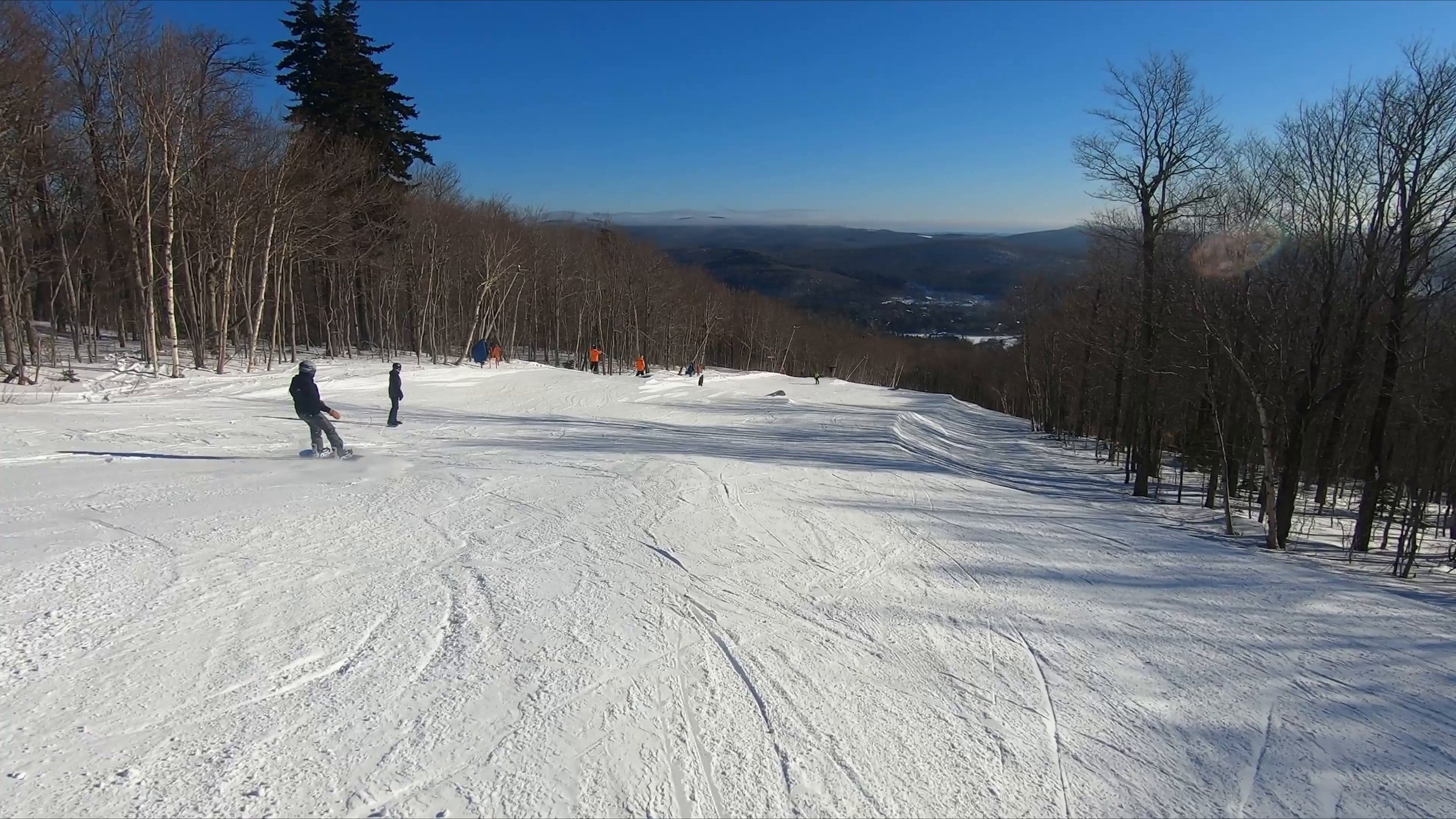
Vermont resorts were among the first to open their slopes to snowboarders.
But just because ski resorts became so open to allowing snowboarders on the slopes didn’t mean they were going to immediately receive the same access as skiers. Many mountains instituted trial periods of a few weeks or months before fully allowing snowboarders in future seasons. Other resorts restricted riders to only certain sections of terrain. For example, Stowe banned riders from its notorious Front Four trails for a couple of years, while Boreal initially only allowed them on “far side” lifts.
And perhaps most notably, even when fully allowing snowboarding during the same time period or on the same slopes as skiers, many resorts, especially high-end destinations, required riders to pass proficiency tests. These proficiency tests derived from concerns that snowboarders could not control themselves at the same level as skiers, and they tested riders for basic skills like stopping, turning, and loading lifts. Since on-site staff had to conduct them, taking these tests often required paying a fee. Some ski resorts required separate tests for different parts of the mountain; despite becoming a trailblazer in allowing snowboarding in 1983, Stratton was one of the most notable examples of this tiered-access system.
From a modern perspective, making snowboarders earn a license to access terrain that skiers could simply buy a ticket for seems extraordinary. But when looked at in the context of the time, these tests served as an important compromise. Resorts did not have to immediately accept every snowboarder who arrived at the ticket window, while snowboarders finally had a defined path onto mountains that had previously prohibited them entirely. More importantly, every successfully passed trial allowed the snowboarding industry to show that resorts could accommodate them safely on the slopes.
Another development helped turn these temporary compromises into permanent acceptance: resorts were learning how to actually teach the sport. When it worked with Burton to allow snowboarding in the early 1980s, Stratton established what it describes as the world’s first snowboard school, with Burton supplying rental boards and members of his team helping introduce newcomers to the sport. By 1987, the Professional Ski Instructors of America had begun developing formal snowboard training programs, and its first official snowboard instructor manual followed in 1989. By the late 1980s, several destinations across the entire continent offered snowboard lessons and rentals. Increasingly prominent snowboard competitions became a thing, attracting even more people to the sport.
And eventually, the financial incentives to accept snowboarding became hard to ignore. The early 1980s were a period of stagnant growth in the ski industry after the explosive growth in the 50s and 60s, and snowboarding could theoretically provide a new and rapidly-growing customer base to keep the slopes growing. In other words, revenue from those new tickets, lessons, and rentals could provide a significant anchor to the bottom line.
But widespread acceptance did not mean universal acceptance. Even as hundreds of mountains opened their slopes to snowboarders throughout the 1980s, some of the most prominent resorts in the country remained unconvinced—and the reasons they held out were not always the same.
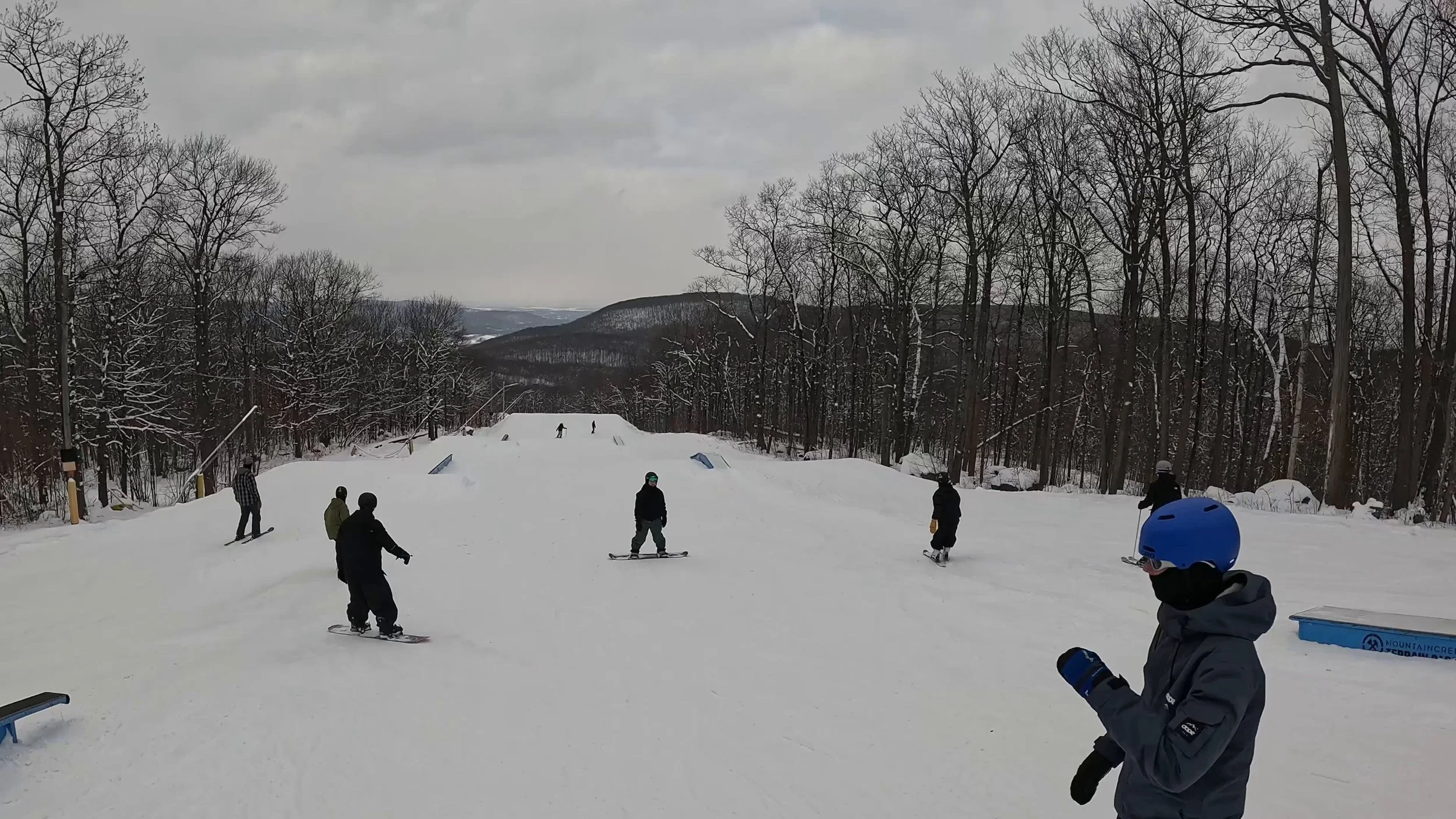
By the late 1980s, several destinations across the continent offered snowboard lessons and rentals.
Remaining Holdouts… And Their Fall
By the early 1990s, snowboard bans had gone from the norm to the exception at North American ski resorts. But even as the overwhelming majority of the ski industry embraced the sport, a small collection of prominent resorts continued to hold out. And in most of these cases, doing so was either a deliberate business or cultural decision.
It’s worth noting that while so many ski resorts opened to snowboarding by that point, doing so was still a controversial decision. One 1991 survey of U.S. skiers found that 41% said snowboarders made them nervous, 43% preferred they be confined to separate trails, and 20% wanted snowboards banned outright.
One of the most surprising holdouts was Park City, a resort that is widely associated with snowboarding today. But through the mid-1990s, the resort had maintained its snowboard ban because, according to the resort, they regularly heard from visitors who specifically chose to ski there because of the absence of riders. The contradiction became particularly conspicuous in February 1996, when Park City was selected to host the snowboarding events for the 2002 Winter Olympics. It might not come as a surprise that this announcement generated a significant amount of controversy, as at the time, the resort had no public plans to allow the general public to snowboard there. But only a few months later in May 1996, the resort did officially reverse course, announcing it would open to all snowboarders for the upcoming 1996-97 season.
The press surrounding that Olympics controversy also swayed another significant holdout. Through the mid-1990s, California’s Alpine Meadows had actively marketed itself as “The Skier’s Mountain” and remained the final Tahoe-area resort to prohibit snowboarding. But the resort was owned by the same parent company as Park City, POWDR Corp, and perhaps influenced by that leadership, Alpine Meadows opened to snowboarders on a trial basis during the final week of the 1995-96 season before permanently dropping the ban the following winter.
Another surprising holdout, Colorado’s Keystone resort, reversed its policy for the 1996-97 season as well. The timing there was particularly interesting. As late as May 1996, Keystone had not publicly committed to allowing snowboarders, putting it in contrast with Park City and Alpine Meadows, which had already called off their bans by then. But that July, Vail Resorts agreed to acquire Keystone and its sister resorts from Ralston Resorts, and Keystone announced the decision to reverse its snowboard ban shortly thereafter.
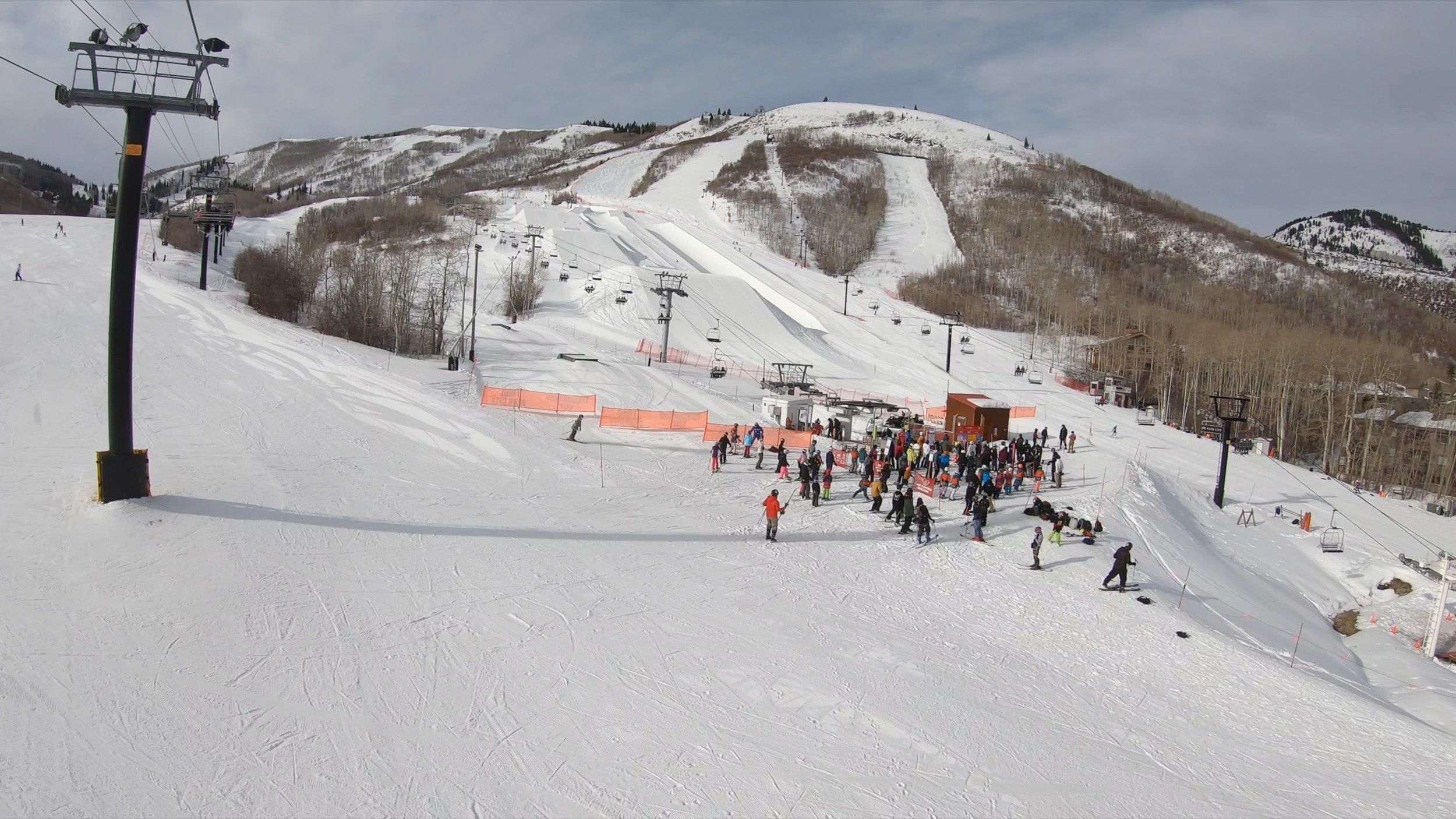
Most of the remaining holdouts reversed course during the mid-1990s.
It’s difficult to know exactly how much the pending ownership change influenced Keystone's local management, but there was little ambiguity about how Vail viewed the opportunity. Rather than simply begrudgingly accepting the sport, Keystone immediately began catering to snowboarders, adding a halfpipe and the terrain park that would become Area 51.
Sure, localized circumstances may have been a catalyst in some ways, but there were other economic factors that were becoming hard to ignore for all but the most niche of mountains. By the mid-90s, snowboarding had exploded in popularity, especially among younger ski resort patrons. And because parents who skied increasingly had children who snowboarded, keeping a riding ban could mean losing the entire family to competing resorts.
But even after outright bans disappeared from mountains like Park City, the debate over whether skiers and snowboarders should fully share the same terrain did not immediately die. A few years after opening to snowboarders, Park City was still facing complaints from more “traditional” customers who wanted snowboarders off their slopes. To try to address that, they experimented with an unusual compromise: certain trails would be reserved for skiers, while others would be designated for snowboarders. The trial took place during the 2001-02 season, the same winter in which it would be hosting the snowboarding events for the Winter Olympics.
It was a complete flop. After just five days, Park City abandoned the experiment. Guests objected to being told which runs they could use, and perhaps more importantly, the policy split up families and groups containing both skiers and snowboarders. By this point, it was clear that separating the two sports was not a feasible way to run a mountain, and snowboarding on the same slopes as skiing would be here to stay.
At least this would be the case for most North American ski resorts. Because while most of the remaining holdouts reversed course during the 1990s, a few prominent destinations entered the new millennium without budging.
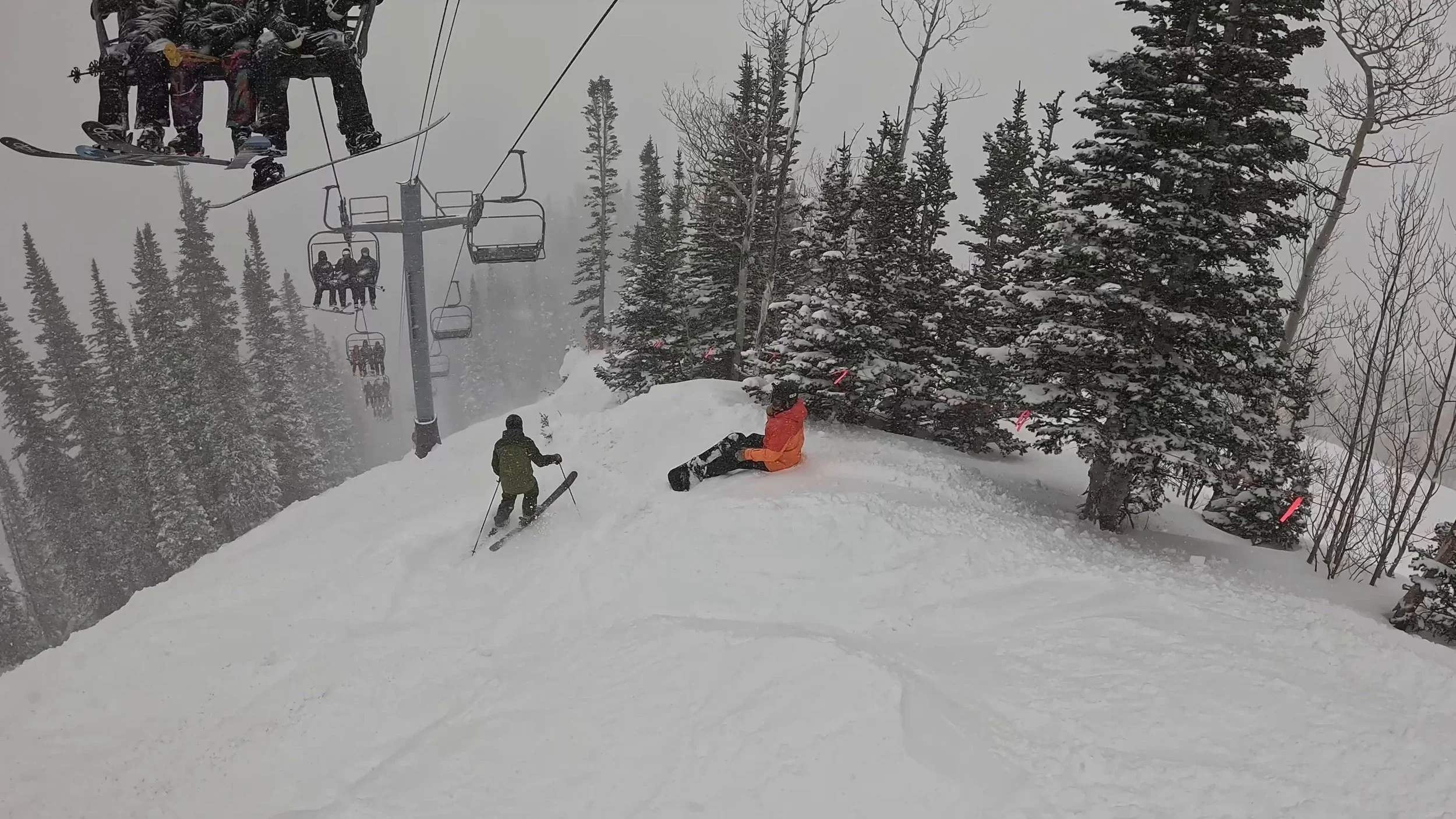
Separating the two sports proved not to be a feasible way to run a mountain.
2000s: The Last Bans to Be Lifted
Perhaps none was more conspicuous than Aspen Mountain. By then, the situation was especially interesting because Aspen Skiing Company had already allowed snowboarding at Buttermilk and Snowmass for more than a decade, and it also now owned Aspen Highlands, which had independently made the decision to allow snowboarding well before almost anyone else in the state. But for a long time, the resort’s rationale was its clientele. As the mountain directly above downtown Aspen, SkiCo believed that Aspen Mountain attracted a more traditional demographic that preferred snowboarders off of its slopes. Arguments were also made that the resort’s steep, narrow, and mogul-heavy footprint would be incompatible with the riding styles of snowboarders.
But by the late 1990s, several circumstances made the policy increasingly hard to defend. Snowboarders already made up a substantial portion of visitors to the Aspen area, and SkiCo was actively trying to market its other three mountains to them, despite excluding them from what many considered to be the flagship of the four. The Aspen Mountain ban created so much confusion that SkiCo even attempted to emphasize the mountain’s local nickname, “Ajax”, in part to distinguish the snowboard-free mountain from the broader Aspen brand. But that also backfired, as snowboarders organized a “Free Ajax” campaign and regularly reminded the company that one of Colorado’s most famous mountains remained off limits to them.
Finally, on April 1, 2001, Aspen Mountain opened to snowboarders. And despite years of warnings about what might happen when skiers and riders were finally mixed together, remarkably little did.
The next North American ski resort to lift its snowboarding ban is one that most people outside the Midwest have probably never heard of: Perfect North Slopes in Indiana. This family-owned local resort briefly opened its slopes to snowboarders in the late 1980s, right around the same time as many other North American ski areas. But according to several local accounts, problems with the behavior of some of those early riders soured management on the sport, and the resort reinstated a complete ban. The person who ultimately kept the prohibition alive was Perfect North founder Clyde Perfect; under his leadership through the 90s and into the 21st century, the policy remained in place, long after virtually every other comparable ski area had changed course. But when Clyde retired in 2002, the resort immediately reversed course, lifting its ban on February 1 of that year and making it the final ski area in the Midwest to allow snowboarders.
That left four major holdouts going into the rest of the 2000s. And of those four, New Mexico’s Taos Ski Valley would eventually become the final one to give in. Taos had prohibited snowboarding for the entirety of its existence, and supporters of the ban offered familiar arguments—that snowboarders wouldn’t be compatible with the mountain’s steep terrain, that their turns would ruin moguls formed by skiers, or that being ski-only had simply become a part of the resort’s identity. Indeed, by the early 2000s, the snowboarding ban had become a significant Taos marketing distinction.
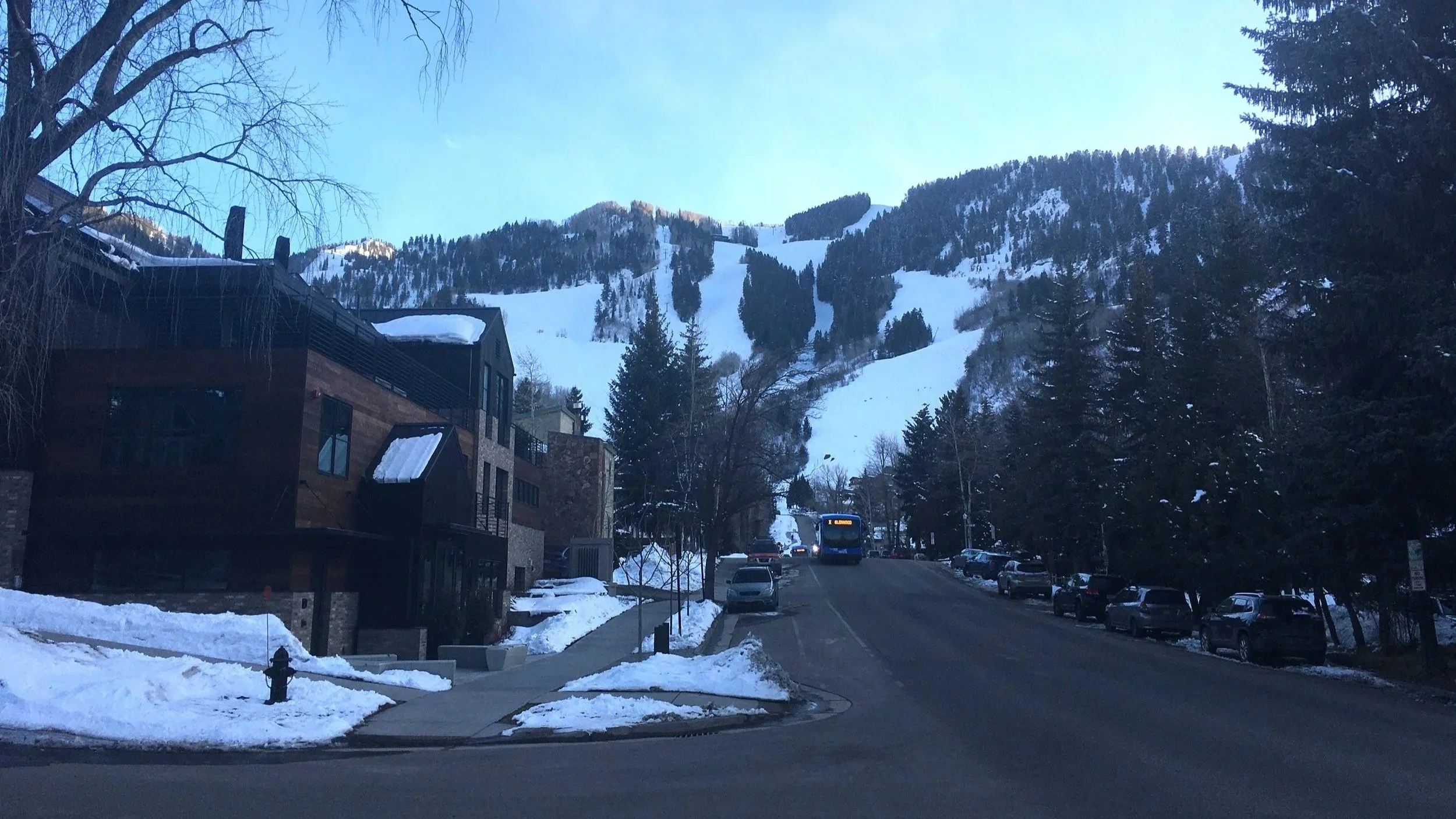
Aspen Mountain finally opened to snowboarders on April 1, 2001.
But local snowboarders eventually decided they weren’t going to take that distinction sitting down. A local movement developed around the slogan “Free Taos,” with riders lobbying management, distributing stickers, poaching terrain, and even appealing to the U.S. Forest Service because much of the resort operated on federal land. One famous printing error transformed an order of “Free Taos” stickers into “Free Tacos,” inadvertently creating a slogan that would become permanently associated with the movement.
But ultimately, the same economic forces that had persuaded so many other resorts began weighing on Taos as well. Snowboarders represented nearly a third of the potential market, and management increasingly heard from visitors and prospective real-estate buyers who would not come because someone in their group rode a snowboard. Resort officials later acknowledged that visitation had begun to stagnate, and that the ski-only policy would eventually come to cost more business than it was attracting.
On March 19, 2008—more than two decades after most of the industry had begun opening its lifts to snowboarders—Taos finally ended its ban. And as many in the winter sports world expected by that point, the lifting of that ban had little detrimental impact on resort operations.
But despite nearly everyone else accepting snowboarders on their slopes, three ski areas have kept their bans in place… and with notable differences in their rationales.
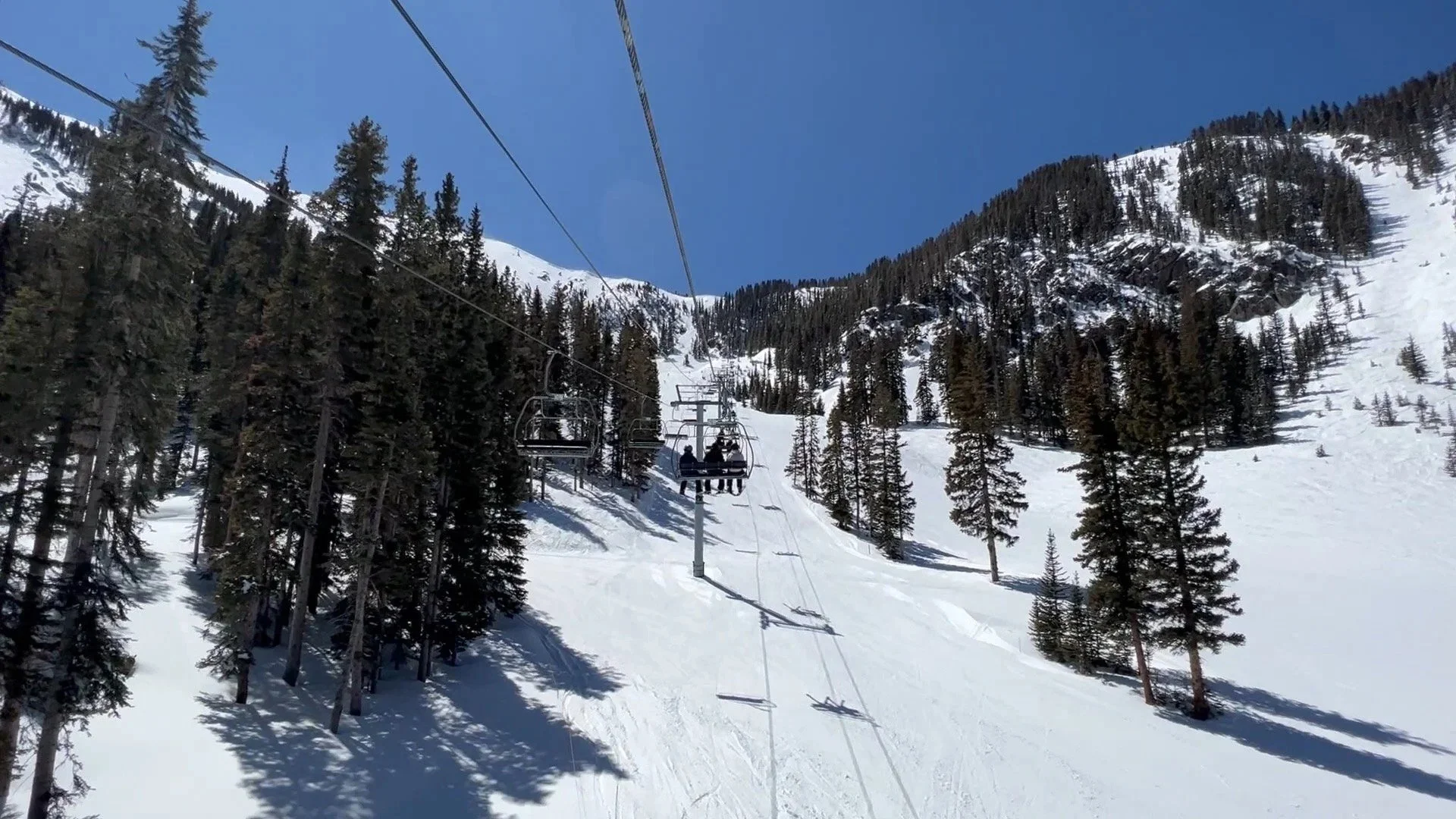
Taos finally ended its snowboard ban on March 19, 2008.
The Big Three: Resorts That Still Ban Snowboarding
As of late 2026, there are three ski resorts left that still ban snowboarders—one out East, and two in Utah.
Mad River Glen, Vermont
The final ski-only area on the East Coast and by far the smallest of the three, Mad River Glen stands as a representation of old-school skiing. Founded in 1948, the cooperative-owned resort is famous for its challenging terrain, natural snow policy, and iconic single chairlift.
Interestingly, like so many other East Coast resorts, Mad River Glen actually did at one time allow snowboarders on its slopes starting in the mid-1980s. Its official timeline dates its first season allowing snowboards to the 1986-87 season, putting it broadly in line with the wave of Eastern ski areas embracing the sport during that period.
However, issues with the resort's unique lift setup started to cause problems. The single chair’s flat unloading area made it difficult for snowboarders to stand up and move away, causing some riders to push off against the chair itself. This in turn caused haul rope derailment problems, prompting management to respond with a snowboard ban on that lift. The ban started as just for the single chair, but tensions lingered, as that lift did and still provides access to some of Mad River Glen’s most unique and difficult terrain. And after those tensions culminated in what was described as an “infamous confrontation” between a group of snowboarders and the mountain’s owner, Betsy Pratt, the resort decided to ban snowboards throughout the entire mountain beginning with the 1991-92 season.
In 1995, Mad River Glen transitioned to cooperative ownership, with shareholders gaining the ability to vote on major policy decisions. Under the co-op’s new bylaws, changing the resort policy to allow snowboarders would require approval from two-thirds of the cooperative’s shareholders via a formal vote. But in their initial 1995 vote on what to do about snowboarding, more than 75% of shareholders supported retaining the snowboard ban. No additional votes on the issue have been held since.
Alta Ski Area, Utah
The next-biggest of the resorts maintaining snowboard bans is Utah’s Alta Ski Area. Located in the snow-heavy Little Cottonwood Canyon in the Wasatch Mountains, Alta is one of the oldest ski resorts in the United States. Opened in 1938, the resort is renowned for its exceptional snow and low lift-to-terrain density.
Alta’s ban on snowboarding has been in place for over four decades, but like so many of the resorts that allow riders today, it actually did experiment with allowing snowboarding for a short period. But perhaps shockingly, it was actually one of the sport’s earliest original adopters. The resort first allowed snowboarders in early 1982, putting it ahead not just of every other resort in the Cottonwoods, but effectively any other destination ski area that people were traveling long distances to visit. However, this timing came with a couple of complications. First, because of insurance concerns, Alta would not let snowboarders ride its lifts with their boards attached, meaning they had to ride up on skis and swap equipment at the top. And secondly, this was before metal edges had become widespread on snowboards, leading to riders preferring powder terrain and, according to locals, many of them ducking ropes into closed areas and eventually getting their passes pulled. By 1984, management decided that the experiment had failed, and despite significant advancements in board design in the following years, they never reneged.
Alta’s current defense of its policy has combined terrain considerations with a desire to preserve a particular skiing experience. Its less-tracked terrain often requires traversing, sidestepping, or hiking to reach, movements that it claims can be substantially more awkward on a snowboard. The resort also uses arguments that were familiar to many holdouts in the 90s and 2000s, saying they’ve developed a customer base who specifically want a skiing-only mountain.
That policy became the subject of perhaps the most prominent legal challenge against a snowboard ban in U.S. history. In 2014, a group called Wasatch Equality, joined by several individual snowboarders, argued that the ban violated the Equal Protection Clause of the Fourteenth Amendment, asserting that Alta’s prohibition was rooted in animosity toward snowboarders rather than any legitimate safety or operational concerns. Because the U.S. Forest Service administers roughly 85% of the land Alta operates on and annually approves its operating plan, the plaintiffs argued that the snowboard ban was sufficiently connected to the federal government to trigger constitutional scrutiny. Indeed, since Taos lifted its ban in 2008, Alta had been the only skier-only ski resort to operate on federal land.
The courts disagreed. The U.S. District Court dismissed the case later in 2014, and in April 2016, the Tenth Circuit Court of Appeals upheld that dismissal. But importantly, the appeals court did not rule that Alta’s reasons for banning snowboarders were necessarily rational or justified. Instead, it ruled that Alta’s equipment policy was not sufficiently attributable to the federal government to constitute governmental action. The Forest Service knew about the ban and continued permitting Alta to operate, but it had neither ordered nor encouraged the snowboard restriction. Without that government involvement, the plaintiffs’ constitutional claim could not proceed.
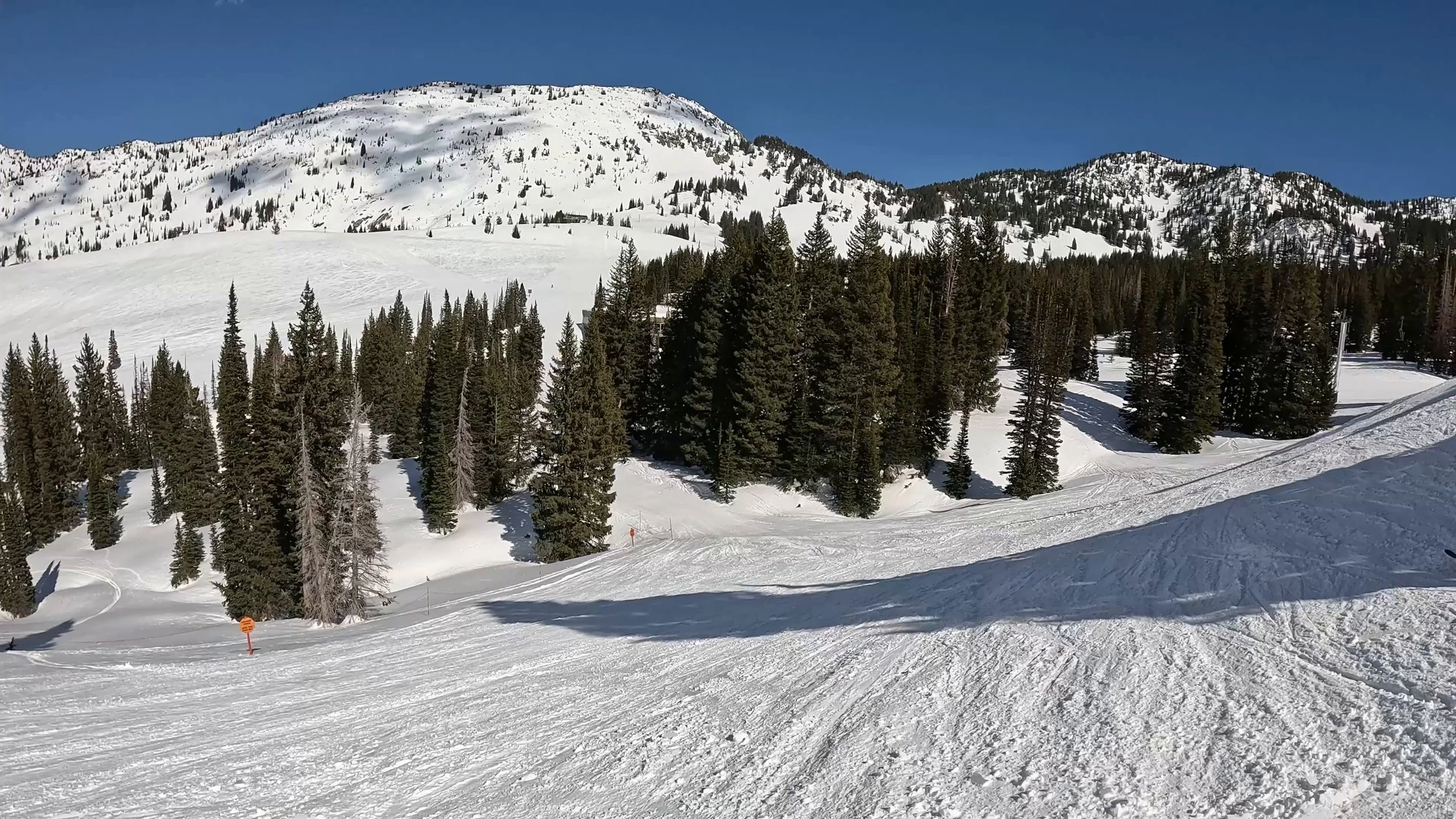
Alta’s ban on snowboarding has been in place for over four decades.
So despite operating predominantly on public land, Alta has remained free to maintain its skier-only policy as a private business decision.
During the ski season, there is one theoretical workaround: because Alta borders snowboard-friendly Snowbird, riders have occasionally entered Alta terrain from neighboring public-land access points without using Alta’s lifts. But contrary to common misconception and despite ample anecdotal evidence that Alta personnel have sometimes tolerated this in practice, the resort’s formal policy prohibits snowboards on its ski terrain just as much as it does its lifts.
Deer Valley Resort, Utah
Just a short distance east from Alta, Deer Valley is the only ski resort in North America that has never allowed snowboarding—and perhaps the best known in the world to maintain such a policy. The resort was one of the last major destinations to open in North America when it opened on December 26, 1981, and it debuted just as snowboarding was beginning to develop into an organized sport. Therefore unlike Alta, Deer Valley wasn’t faced with adapting a decades-old operation to a new activity; rather, it was establishing a completely new resort, and one with a very particular vision from a hospitality standpoint.
And strong hospitality it achieved. The resort became known for its impeccable grooming, top-notch service, and limits on the number of the people allowed on the mountain per day. And a skier-only mountain was always part of the original concept.
Of course, excluding snowboarders in 1981 did not distinguish Deer Valley nearly as dramatically as it does today. In the years following the resort's founding, much of the ski industry still prohibited or heavily restricted the sport, and even prominent competitors like Aspen Mountain and Park City would remain ski-only for more than a decade afterward. The much more consequential decision was maintaining the policy as virtually every competitor around it changed course.
For years, Deer Valley has justified that decision largely through its customers and brand. Resort representatives have repeatedly said that guest surveys show strong support for remaining ski-only.
And perhaps the clearest recent evidence that Deer Valley has no immediate plans to reconsider has come with its massive expansion. The resort is currently undergoing what is called “Expanded Excellence,” a multi-year project that is ultimately planned to nearly triple Deer Valley’s terrain footprint, taking it to over 5,700 skiable acres and making it the fourth-largest ski resort in North America. When the new expansion was originally under construction, some speculated that snowboarders could potentially be allowed; this was in part due to two reasons.
First, much of that new terrain had long been planned as a separate development known as Mayflower Mountain Resort, before Deer Valley announced that the terrain would be incorporated into its own resort. Second, the broader project also had an unusual public-private structure, with Utah’s Military Installation Development Authority funding and constructing significant public infrastructure to support the surrounding development.
But in August 2023, when Deer Valley announced that the project would be incorporated directly into its existing resort rather than a separate Mayflower ski area, they made it clear that the new terrain would follow Deer Valley’s snowboarding ban. If there were ever an obvious moment to create a carve-out for snowboarders without changing the historic core of Deer Valley, this would seemingly have been it. Instead, the resort used the expansion to reaffirm the policy.
And then finally, we’re aware of one remaining ski resort that generally allows snowboarding on its slopes, but continues to restrict the sport only on specific terrain—and that’s Silver Mountain, Idaho. For the most part, snowboarders can access the same terrain as skiers—and in fact, they’re not strictly banned from accessing any true downhill ski runs. The issue comes with Silver’s Wardner Peak traverse, an extremely narrow track that allows skiers to reach some of the resort’s best advanced terrain without hiking. Snowboarders are prohibited from using the traverse, meaning that if they want to ride the full runs beyond it, they instead have to bootpack to the top of Wardner Peak. So in practice, there is terrain at Silver Mountain that skiers can reach by riding lifts and traversing, while snowboarders have to hike uphill to access the same runs from the top.
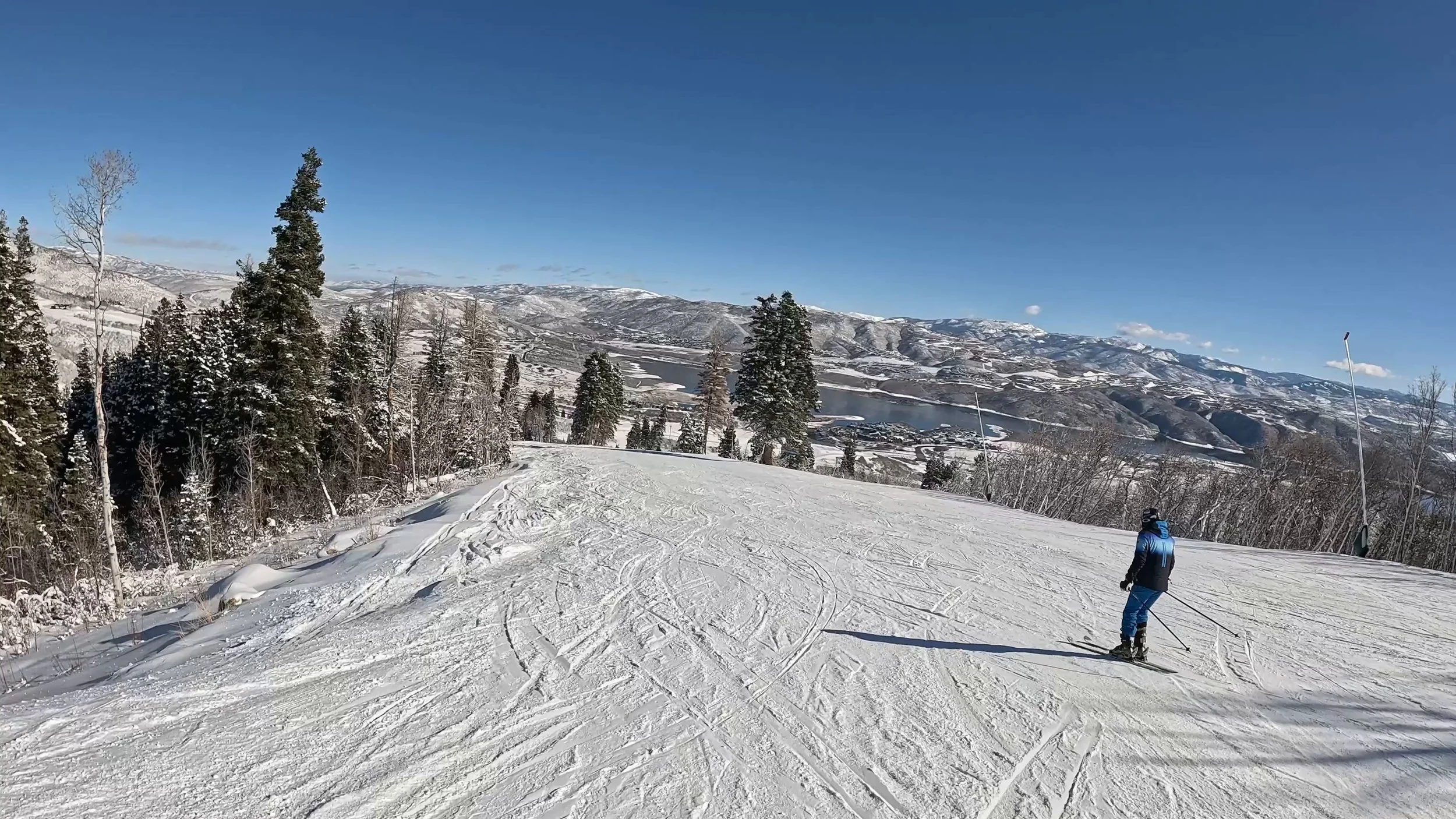
Deer Valley is the only ski resort in North America that has never allowed snowboarding.
Could the Final Three Bans Ever Disappear?
So could any of these final three ski resorts ever reverse course on their snowboard bans?
If taking the late ‘80s through mid-2000s as any indication, one could argue that snowboard bans are hard to keep permanently. Even holdouts like Park City, Alpine Meadows, Keystone, Aspen Mountain, and Taos defended their restrictions for years before eventually abandoning them due to economic or leadership changes.
But Alta, Deer Valley, and Mad River Glen are in substantially different positions.
There’s little evidence today that any of these three resorts are facing the kind of demand crisis that forced the hands of many earlier holdouts. In fact, quite the contrary. In recent winters, Alta has needed to resort to paid parking reservations to manage capacity during peak times. Mad River Glen recently reported some of the strongest financial and visitation numbers in the history of its cooperative. And Deer Valley regularly sells out despite charging over $300 for peak lift tickets. To put it another way, there is currently little indication that excluding snowboarders is creating enough economic or reputational pain to outweigh the value from remaining ski-only.
Despite the high-profile lawsuit last decade, Alta offers perhaps the clearest case of maintaining its snowboarding ban for the foreseeable future. Management could theoretically change the equipment policy whenever it wants, but there is little indication of any desire to do so. Alta’s newly appointed general manager, Dave Hirasawa, is only the fifth in the resort’s nearly nine-decade operating history, and he was selected through a process that specifically emphasized preserving the existing culture of the resort. So absent a shock pivot from Dave or a substantial change in customer preferences, it’s hard to see a policy shift any time soon.
Because it’s owned by a co-op, Mad River Glen could theoretically change its policy if approved by two-thirds of shareholders. A proposal can reach the ballot either through support from members of the Board of Trustees or through a petition signed by at least 10% of shareholders.
And this is not purely theoretical. During the December 2024 board meeting, a shareholder asked about putting snowboard access back up for a vote. But not a single board member expressed support for doing so.
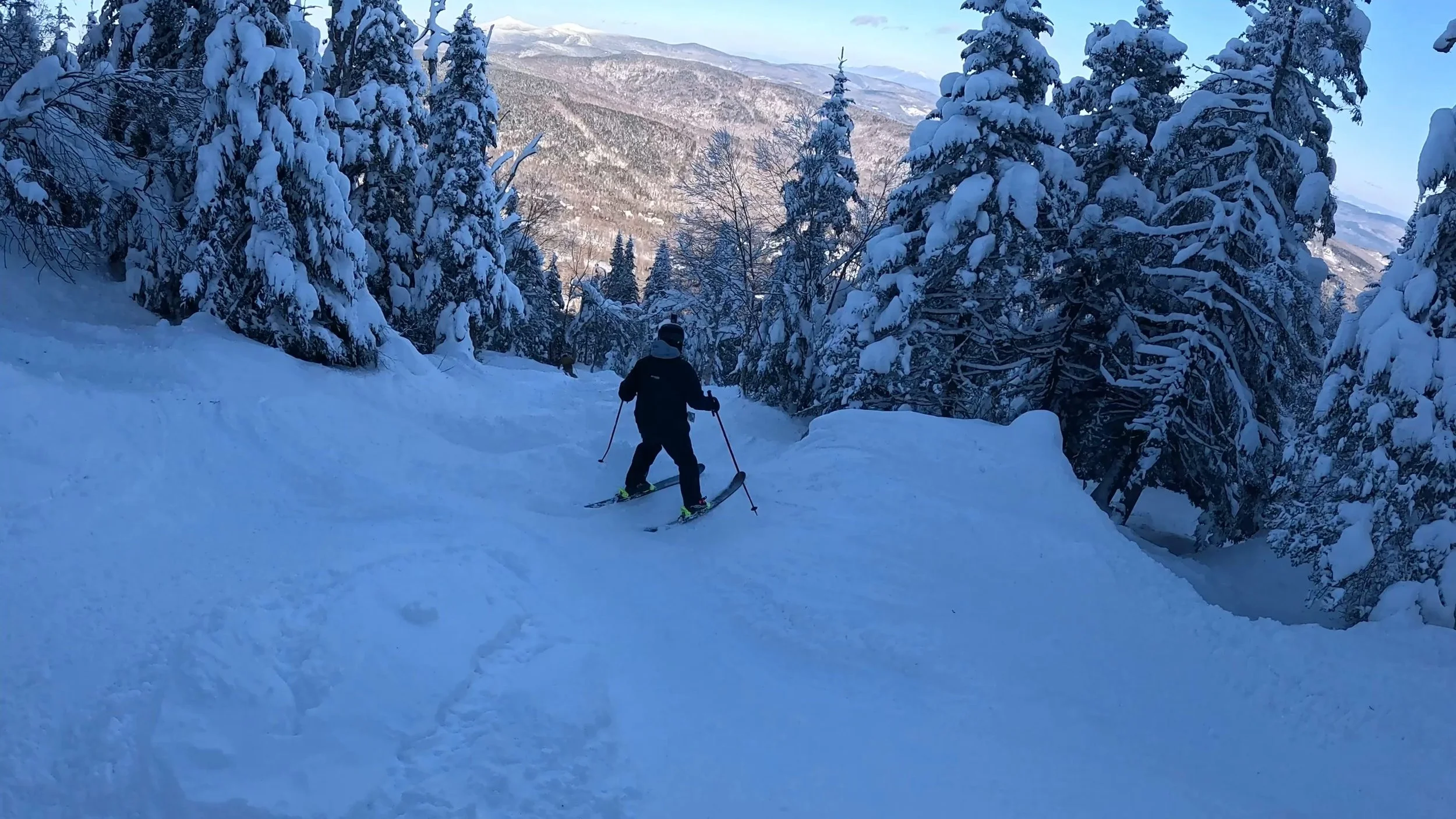
Mad River Glen could only change its policy with approval from two-thirds of its shareholders.
Shareholders could still organize a petition themselves, but getting the proposal onto the ballot would only be the beginning. They would then need to convince two-thirds of a membership whose predecessors voted by more than 75% to retain the ban in 1995. So Mad River Glen arguably has the clearest procedural pathway to allowing snowboarders—but there is currently little evidence that its owners actually want to use it.
Deer Valley presents perhaps the most interesting case study of the three. Unlike Alta and Mad River Glen, it is not independently-owned. Since 2017, the resort has been owned by the group that became Alterra Mountain Company, one of the largest ski-resort operators in North America and the company behind the Ikon Pass. Alterra is a massive resort company with every financial incentive to maximize the value of its assets.
One might expect a company of that scale to eventually standardize Deer Valley’s policies or broaden its potential customer base. Instead, Alterra has done essentially the opposite. It has allowed Deer Valley to preserve much of the operating philosophy that made it distinctive in the first place, including its limits on daily visitation and its ski-only policy.
And the resort’s customer profile may explain why. Deer Valley’s clientele are exceptionally high spenders for the ski industry, paying anywhere between $200-$350 for a 1-day adult lift ticket. And even within the multi-resort pass market, Deer Valley occupies a uniquely premium position. For the 2026-27 season, it is the only North American destination on the full Ikon Pass that is completely excluded from both the cheaper Ikon Base Pass and the Mountain Collective, meaning adult pass buyers will have to pay at least $1,400 for a product that contains any access to it.
In other words, Deer Valley has cultivated a customer base willing to pay an unusually high price for a ski vacation—likely bringing lodging, restaurant, and retail spend with them—while ski-only access remains one of the explicit pillars of the experience those customers are buying. So even if the resort has ever toyed with the idea of allowing snowboarding, it might believe doing so could risk far more revenue by some of its high-net-worth skiers choosing to go elsewhere.
That calculation could someday change. If Deer Valley’s high-net-worth customer base started to disappear—or if Alterra ever came under enough financial pressure that maximizing utilization of the resort became more important in the near term—opening the mountain to snowboarders would provide an obvious way to expand the potential customer base. But despite a very rocky debut to a large chunk of its Expanded Excellence terrain last winter, there is very little evidence that Deer Valley needs to make that trade.
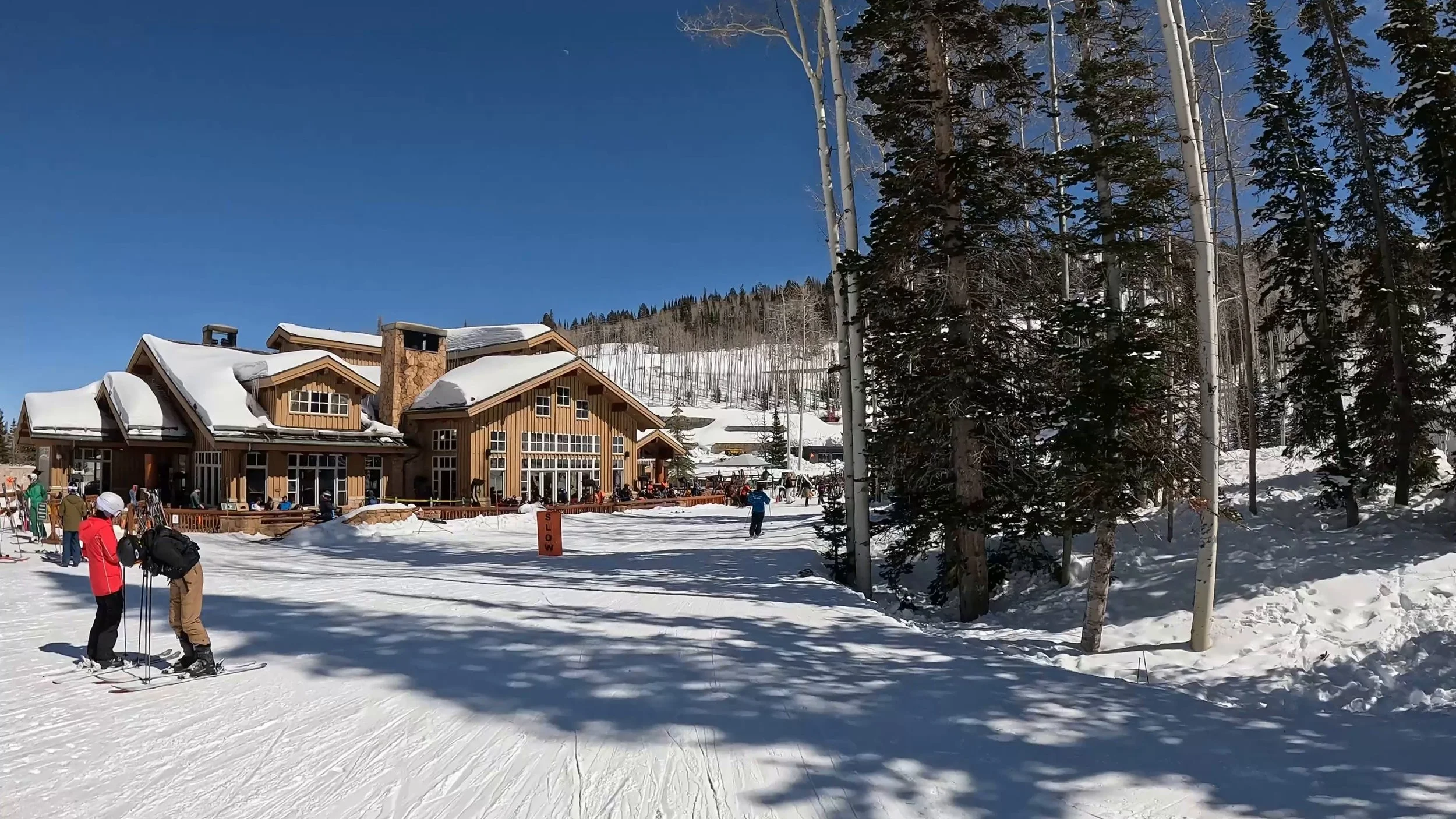
Deer Valley’s clientele are exceptionally high spenders for the ski industry.
Have Any Resorts Considered Banning Skiers?
With all this talk about resorts banning snowboarders, there is one obvious question left to ask: has anyone ever tried doing the opposite and banning skiers? Surprisingly, yes—although never at anything resembling a major destination resort.
Perhaps the clearest example came at Ski Green Valley, a small Southern California ski area that was struggling to compete against much larger mountains nearby. In early 1993, management tried an unusual experiment: skiers would continue to be allowed on weekends and holidays, but Monday through Friday the mountain would become snowboard-only.
And apparently, the experiment worked well enough to go all in on it. For the 1993-94 season, Ski Green Valley rebranded itself as Big Air Green Valley and went fully snowboard-only. The decision was explicitly economic: management believed it was fighting a losing battle for traditional skiers against larger competitors like Snow Valley, Bear Mountain, and Snow Summit, while the rapidly growing snowboard market presented an opportunity to create a completely different niche. For several seasons, that meant doing the exact opposite of resorts like Alta and Deer Valley: snowboarders were welcome, while skiers were not.
But even that experiment eventually came to an end. In 1998, the mountain was renamed Big Air Winter Park, signaling the return of skiers.
Another famous experiment took place outside Chicago at Raging Buffalo Snowboard Park. The tiny hill invented itself around snowboarding in 1993 in direct response to the large number of ski areas that were still restricting the sport. The entire operation was built around terrain-park riding, with halfpipes, jumps, rails, and surface lifts instead of the conventional trail network of a traditional ski area. For years, skiers simply weren’t allowed.
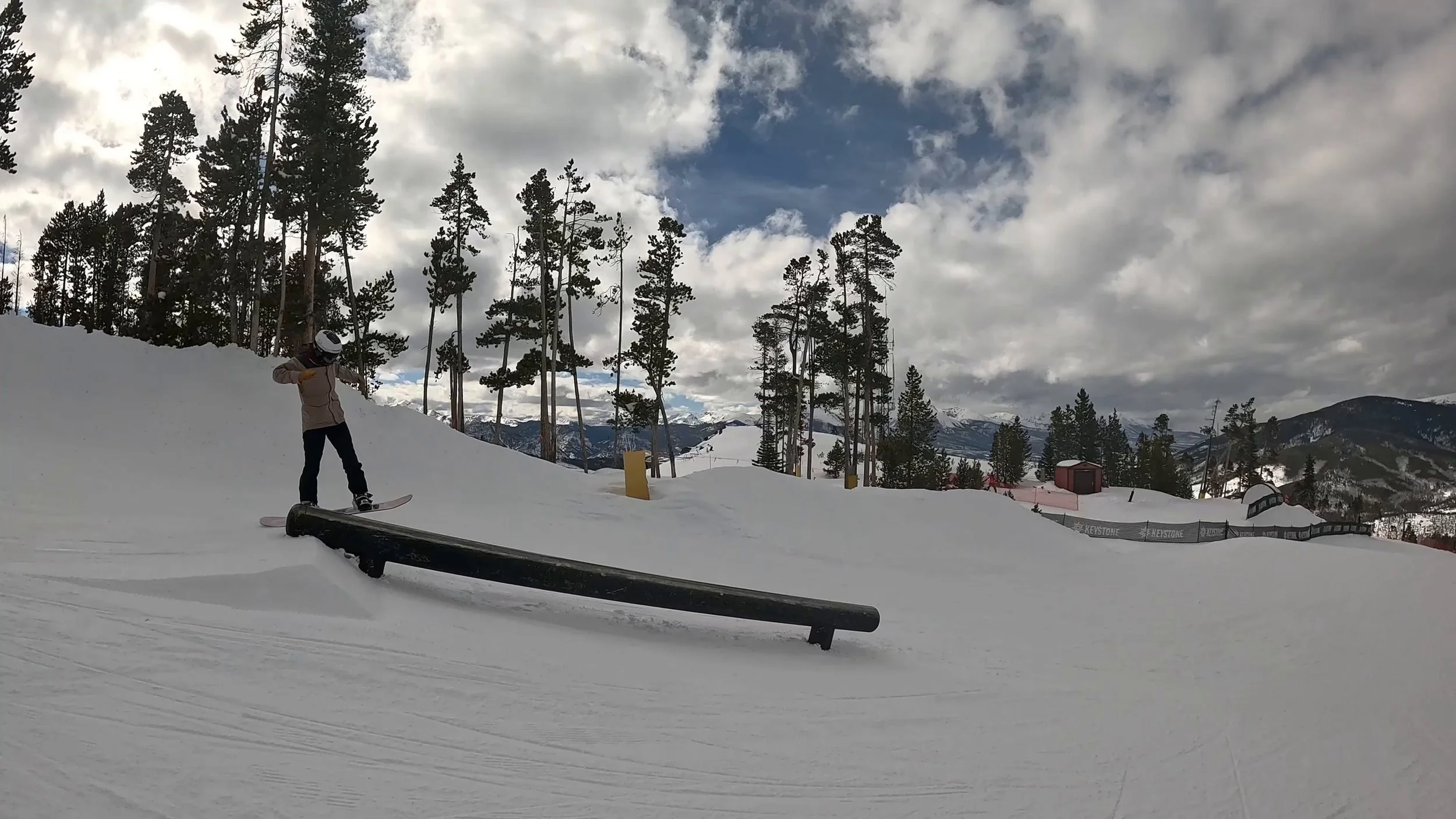
Snowboard-only ski areas never became anything close to a notable industry trend.
But ironically, Raging Buffalo eventually went through essentially the reverse of what had happened at conventional ski resorts. As snowboarding became mainstream and freestyle skiing exploded in popularity, excluding skiers became increasingly unnecessary. By the 2000s, Raging Buffalo had begun allowing skiers as well, although its terrain remained overwhelmingly focused on park riding.
There have also been private snowboard-only facilities. Perhaps the most famous was the DC Mountain Lab near Park City, Utah. Created by DC Shoes co-founder Ken Block in the early 2000s, the 22-acre property featured its own rope tow, professionally built jumps and rails, and facilities for testing snowboard equipment and filming professional riders. But this wasn’t really a ski resort that banned skiers—it was a private snowboarding research, training, and filming facility built specifically for DC athletes and guests.
Today, even facilities that are heavily rooted in snowboard culture generally welcome both sports. Woodward Park City, for example, is almost entirely focused around progression and terrain-park features, but openly offers lift tickets, rentals, and lessons to both skiers and snowboarders.
And economically, that probably explains why snowboard-only resorts never became the inverse of places like Alta, Deer Valley, or Mad River Glen. Snowboarding entered an industry in which skiing already represented an enormous established customer base. Even a resort designed primarily around snowboard culture had little incentive to turn away skiers once twin-tip equipment and freestyle skiing made the same parks appealing to both groups. So while skier bans have existed, they never became anything close to a notable industry trend.
Nowadays, the equipment debate has largely moved on to newer forms of downhill recreation. Resorts now face decisions about devices like snowbikes, snowskates, and other alternative equipment—meaning the same basic question ski areas were asking about snowboards four decades ago still exists, just with a different set of gear.
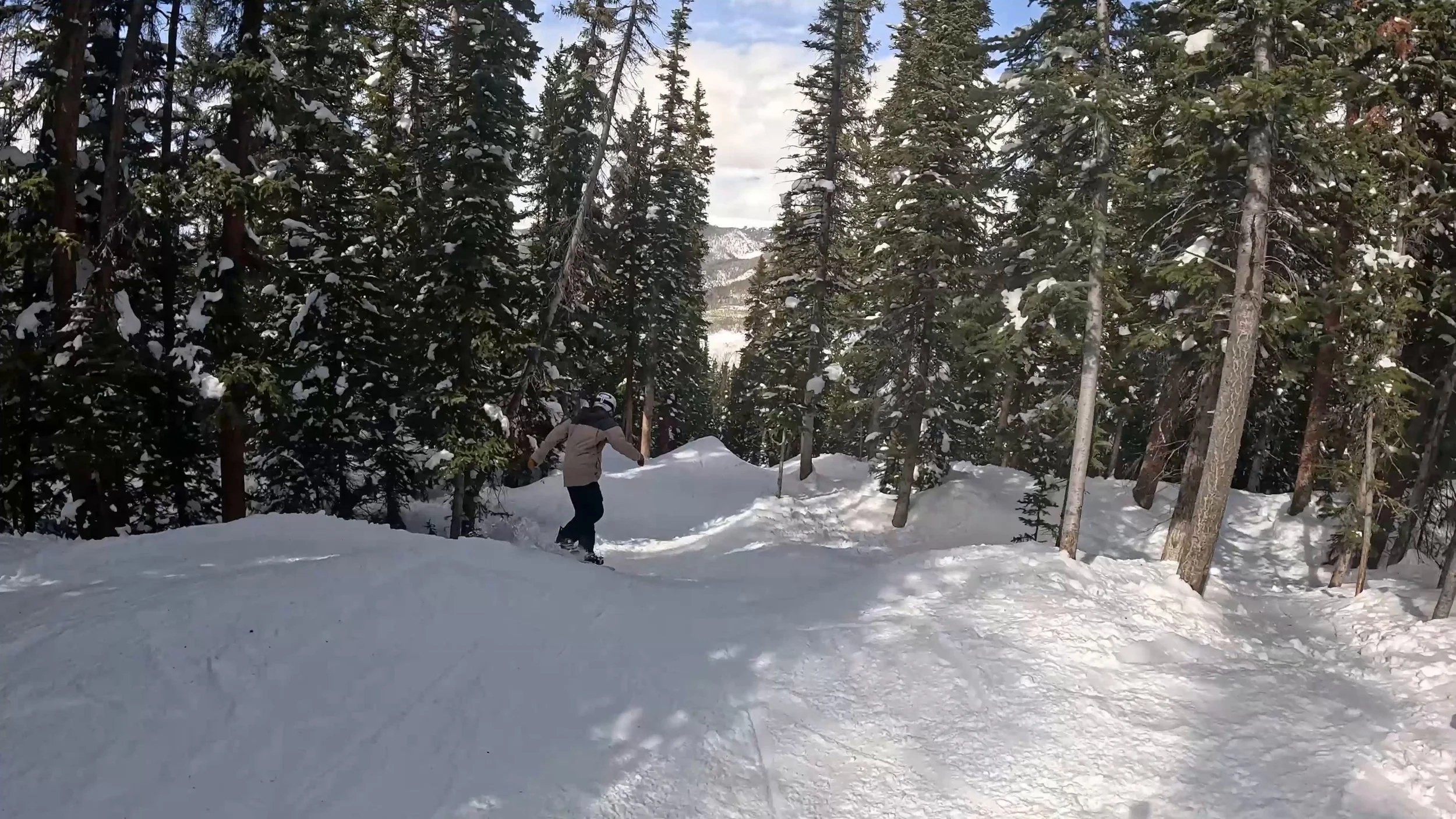
Today, snowboarders can ride at every U.S. ski area except Alta, Deer Valley, and Mad River Glen.
Conclusion
So that’s how snowboarding went from having no presence across the ski industry to being prohibited at just three mountains in the entire United States. There is obviously still plenty of controversy surrounding those remaining bans, but what makes Alta, Deer Valley, and Mad River Glen so interesting is that their policies were once completely ordinary. Today, they have survived because of a highly specific mix of cultural and economic reasons that extend nowhere else.
But perhaps the more fascinating part of this story is just how hard snowboarders had to fight for acceptance in the first place—and how long it took for even some of the most prominent ski resorts in the country to finally let them in. Whether those final three ever change course remains to be seen. But considering snowboarders once had to fight just to get on a chairlift at mountains that now build entire resort areas centered around them, stranger things have certainly happened.