
MOUNTAIN SCORE
CATEGORY BREAKDOWN
See our criteriaGOOD TO KNOW
1-Day Ticket: CHF 39–90
Pass Affiliation: Epic Pass
On-site Lodging: Yes
Après-Ski: Extensive
Nearest Cities: Geneva (2 hrs), Zurich (2.5–3 hrs), Milan (3–3.5 hrs)
Recommended Ability Level:

+ Pros
Outstanding on-mountain restaurants
Stunning, sunny views of the Alps
Modern lifts with no fixed-grip chairs
Light crowds outside peak holidays
Strong terrain parks
– Cons
Mostly south-facing slopes with variable snow
Limited in-bounds expert terrain
Confusing connections between mountain pods
Overworked Nationale chair between sectors
MOUNTAIN STATS
Skiable Footprint: 3,053 acres
Marked Pistes: 140 km
Lift-Serviced Terrain: 98%
Top Elevation: 9,603 ft
Vertical Drop: 4,649 ft
Lifts: 24
Trails: 61
Beginner: 39%
Intermediate: 50%
Advanced/Expert: 11%
VIDEO
Mountain Review
Looking for a luxury ski vacation like no other? Switzerland’s Crans-Montana is one of the best around. Known for its sunny plateau, with lifts sponsored by brands like Prada, L’Oréal Paris, and Bucherer, this resort makes no effort to hide its moneyed roots. But what does the actual skiing look like, and is there a way to avoid breaking the bank?
Size and Terrain Layout
Crans-Montana is a decently sized resort for the Valais region of the Swiss Alps, with 140 km of slopes and 61 marked runs. Its vertical drop of about 1,417 meters (4,649 feet) is slightly above average for Europe. That full top-to-bottom vertical includes the Plaine Morte glacier at nearly 3,000 meters; if the glacier isn’t open, the vertical drops to roughly 1,000 meters.
Crans and Montana used to be two separate villages sharing the same plateau, although they have since essentially sprawled into each other, and the resort eventually expanded east to Barzettes as well. As a result, Crans-Montana has three base areas, each serving its own mountain pod. The bases at Crans and Montana feed into the Cry d’Er zone and, from there, the upper-mountain Bellalui area, while the Barzettes base feeds into Les Violettes and, from there, Petit Mont Bonvin and Plaine Morte. Crans also has a separate learning zone for kids on the snow-covered golf course.
Crans-Montana used to have another base even further east at Aminona, but the gondola out of the village was removed in 2014, leaving the town without lift service. If you ski down there, you’ll need to take the free shuttle bus back. A new gondola from Aminona has been discussed for years, but local officials now point to around 2030 at the earliest.
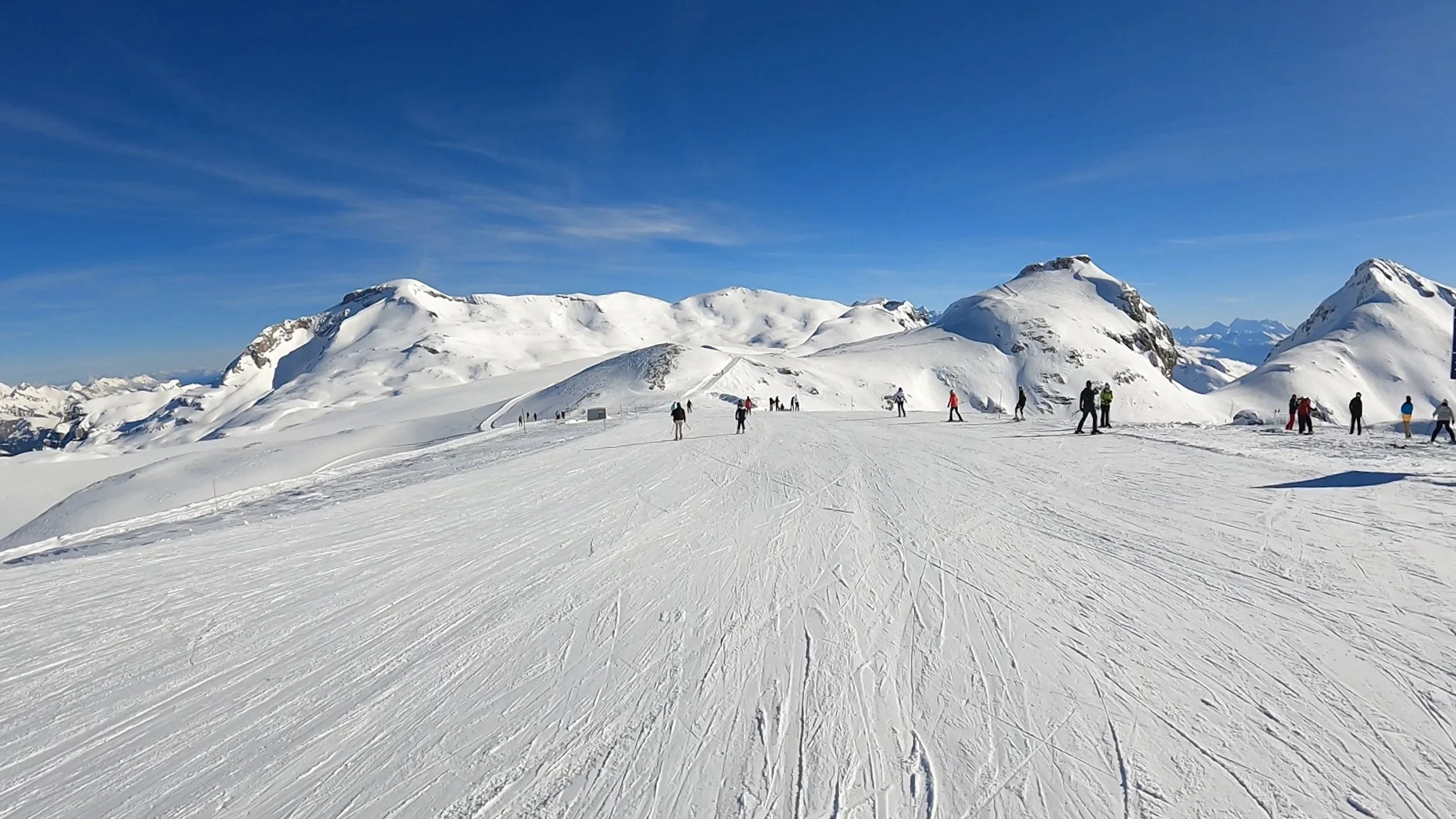
Crans-Montana’s 140 km of pistes spread across several distinct mountain zones above the plateau.
Snow Quality and Resiliency
All that sunshine comes with a downside. Crans-Montana is primarily south-facing, so the snow usually turns to slush within a day or two of the last storm. That slush can refreeze into ice first thing in the morning, then soften to corn at lower elevations later in the day.
Crans-Montana regularly sees powder throughout the season, but the snow is slightly on the wet and heavy side, and on sun-exposed slopes it gets crusty after a few days without a refresh. Above 2,500 meters, the sun has much less effect and snow retention is a lot better. Lower elevations occasionally see rain, but areas above 1,700 meters reliably get snow, and snowmaking on most trails helps keep a resilient base even in tough conditions.
When it does storm, Crans-Montana can face operational issues, with low visibility or strong winds causing trail and lift closures. If the weather looks unsettled on the day of your visit, keep an eye on trail status so you don’t get stuck somewhere you don’t want to be.
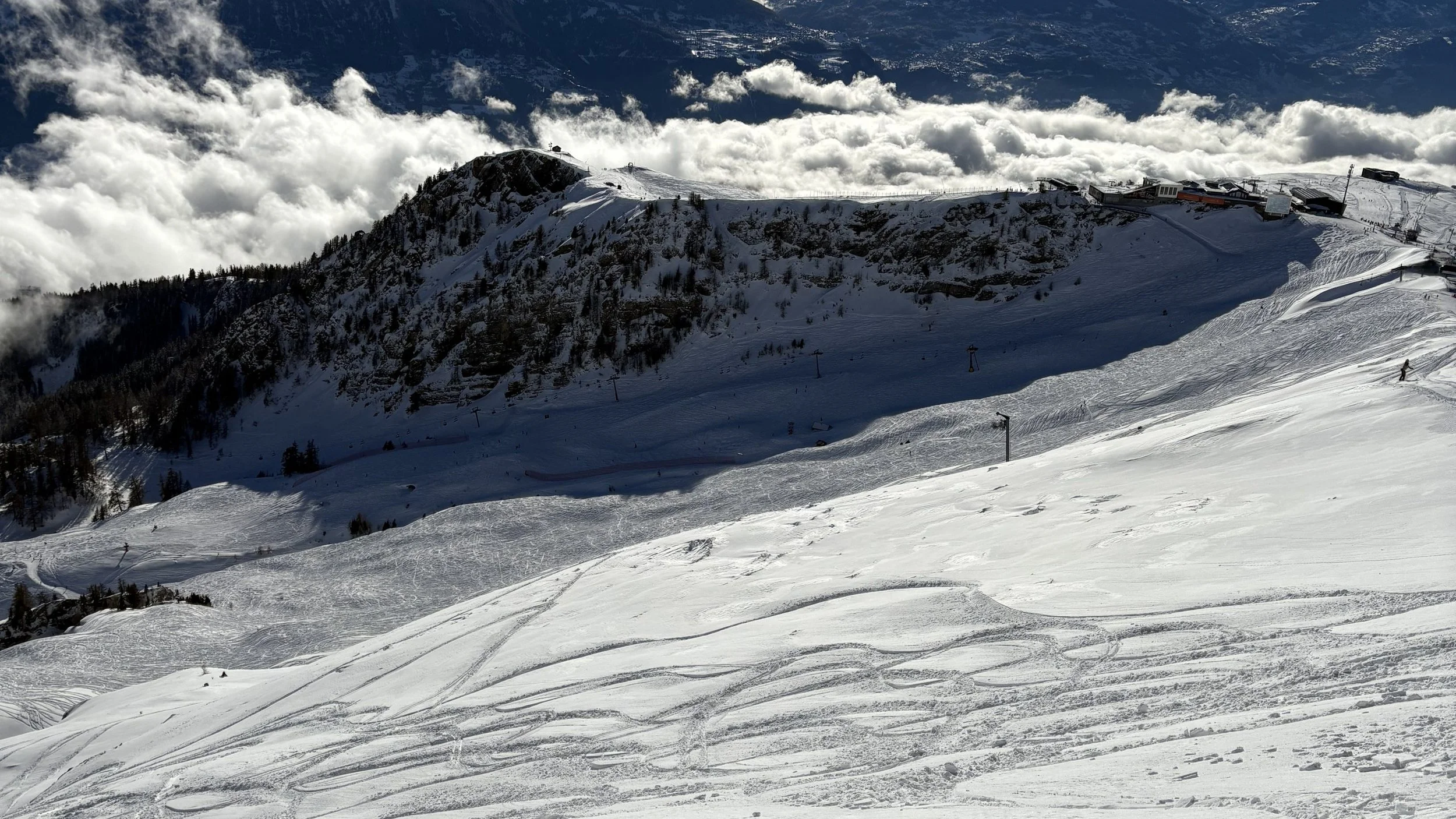
Crans-Montana sees regular snowfall throughout the season, though the snow tends to be on the wet and heavy side.
Beginner
Crans-Montana has some great beginner terrain, although the number of runs rated at this level is fairly limited. Blue pistes span a range of elevations, from wide-open cruisers to scenic below-treeline paths, but they only exist in a few areas, most notably Petit Mont Bonvin, Cry d’Er, and Arnouva, and in some cases there’s no beginner route back to the base without downloading a lift. There’s also no marked easy way to get from one side of the resort to the other. A few red pistes are doable for beginners, with runs like Colorado and Brigitte offering ways around the steeper sections, but check with locals or an instructor about which ones are suitable.
For true first-timers, there are two bunny hills with magic carpets and platter lifts, one at Arnouva and one on the golf course. The golf course learning area is perfect for those who have just learned to ski or ride, with a wide, extremely mellow run down to the driving range.
Intermediate
Once you reach intermediate proficiency, you’ve unlocked the bulk of Crans-Montana. Ranging from long tree-lined runs to swaths of high-alpine terrain, the resort has it all at this level. With perhaps the exception of the glacier and a few upper-mountain chairs at the far east end, there really isn’t any area without very solid intermediate trails, and most of the red runs are groomed almost every night.
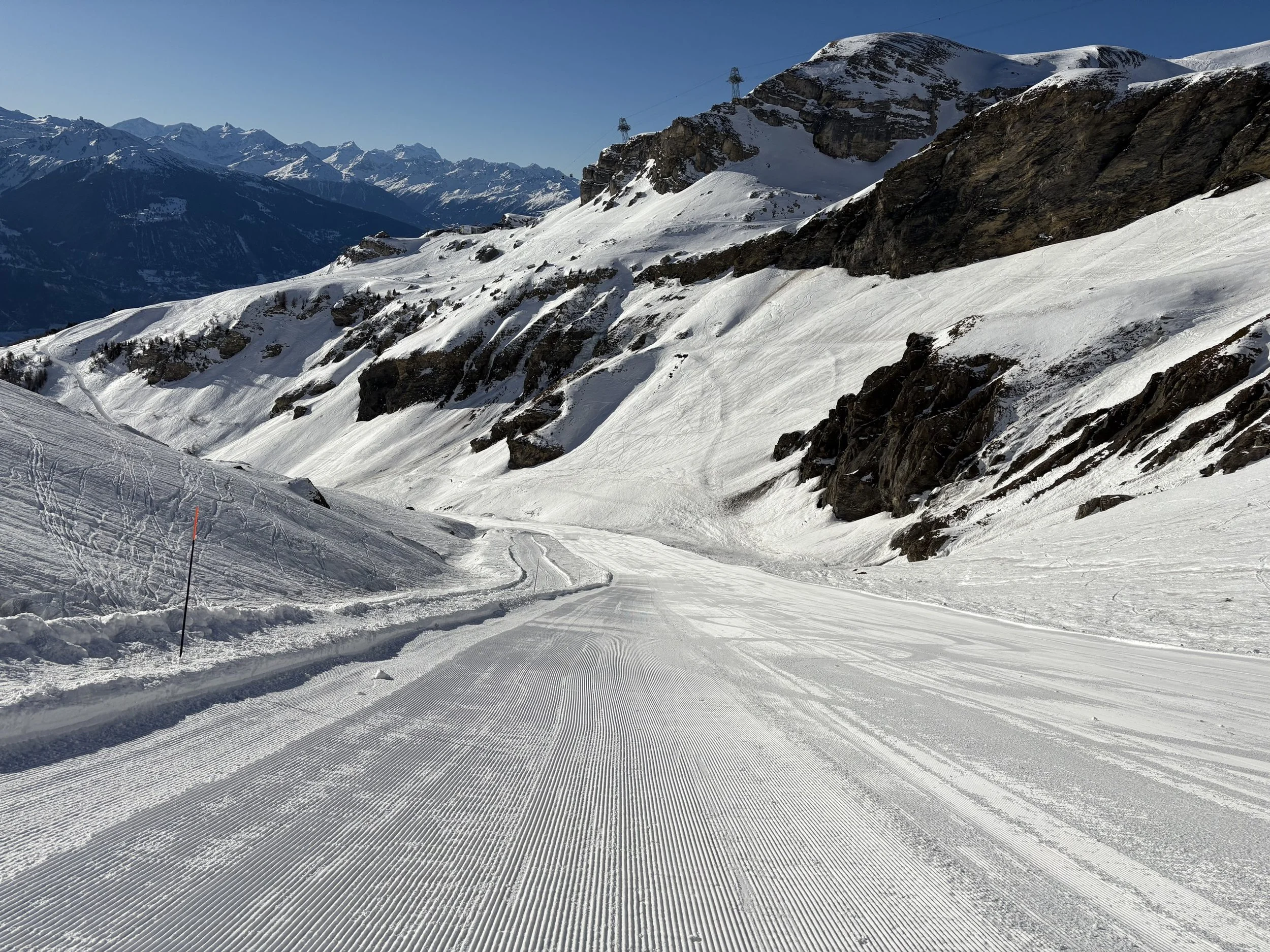
Blue and red slopes span the vast majority of Crans-Montana, opening most of the mountain to intermediates.
Terrain Parks
Crans-Montana’s terrain parks are extremely competitive, perhaps second only to Laax in Switzerland. There are parks with boxes, rails, and jumps from extra-small to extra-large: the smaller parks can be lapped on the Merignou platter, while the large and extra-large parks are served by a platter aptly named Snowpark. There’s also a big half pipe and a banked fun zone. In recent years, the half pipe hasn’t opened as early as it used to, but snowmaking usually has it running by the end of January.
Advanced and Expert
While it’s not the best resort in the world for thrill-seekers, Crans-Montana has some really solid advanced and expert terrain, including steep slalom and downhill race runs, mogul trails, and off-piste steeps, chutes, and cliffs. Lower-mountain areas even have some glades, but if you care about your equipment, save them for a deep powder day. For the hardest in-bounds terrain, head to the upper reaches of the east end of the resort. The top half of the Toula chair offers steep moguls on the Les Bosses piste if it hasn’t snowed in a while, and the resort’s other yellow runs are rarely groomed either.
If you want to test your endurance, the Plaine Morte glacier is the place to be. The long Kandahar black piste is the longest run at the resort, and while the run itself is groomed, the areas immediately next to it are often skied and get bumped up, making for seriously leg-burning turns. These just-off-piste lines see some avalanche control because they can affect the groomed piste below, but avalanches aren’t out of the question, so use your best judgment.
Off-Piste
Crans-Montana also has plenty of lift-accessed backcountry lines, but we only recommend skiing them with proper avalanche gear and an experienced guide. In the mid- and upper-mountain areas, there are some extremely steep, rock-riddled couloirs, including skier’s left of the entrance to the Bouby Rombaldi piste, skier’s right of the Toula chair, just below the Zabona T-bar, and directly under the La Tsa chair. If you don’t mind bootpacking or skinning, you can unlock even more serious terrain, with the Les Faverges sector, reached by cutting skier’s left off the Kandahar piste, opening into a massive hidden valley with outstanding views down toward Vallon de la Tièche and Aminona. As with most of Europe, off-piste terrain isn’t avalanche-secured, so bring proper gear and hire a guide if you don’t know the area.
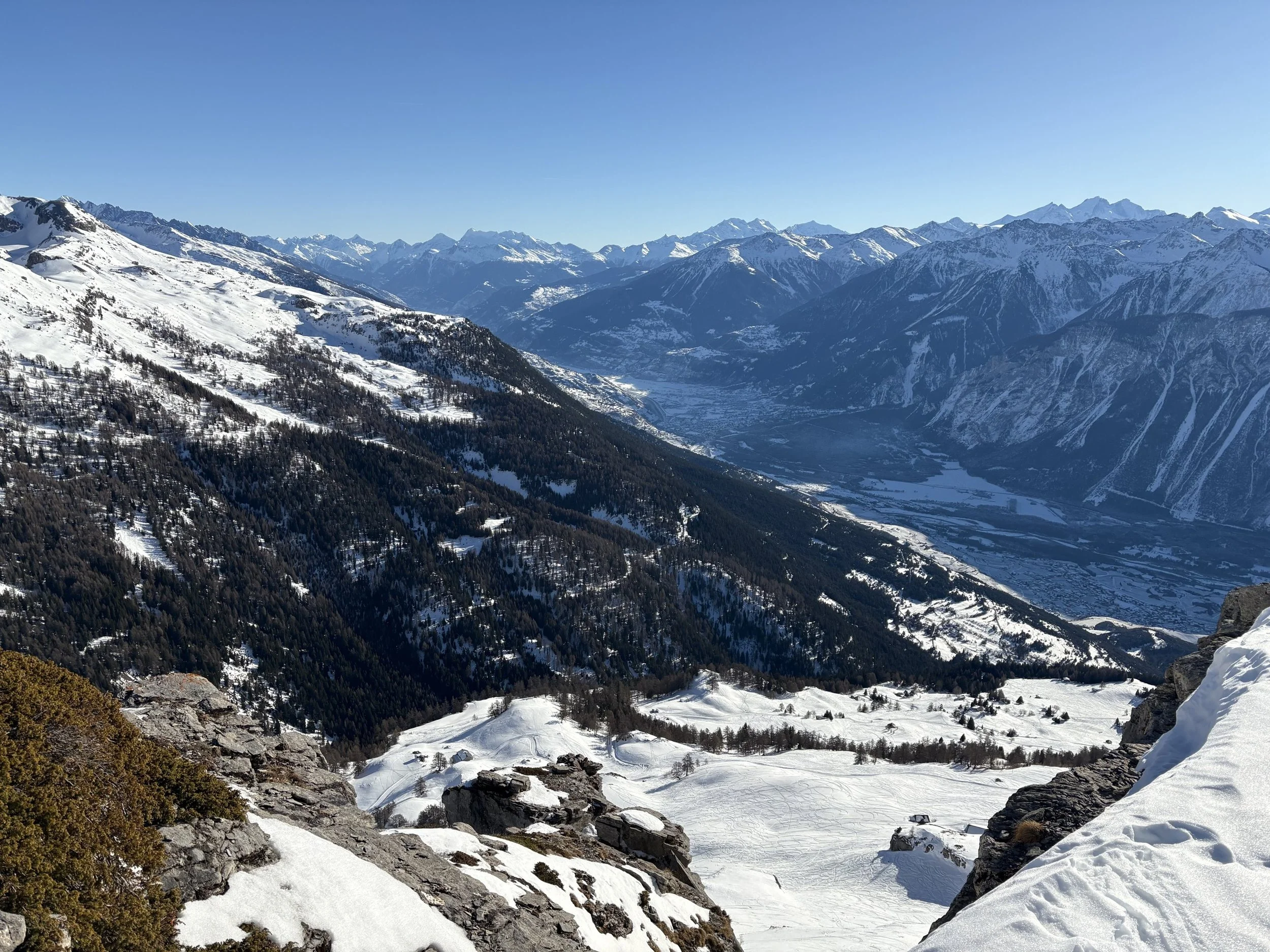
Experts will find their biggest challenges off-piste, in steep chutes and rocky couloirs.
NOTE: We may receive a small affiliate commission if you click on the below links. All products listed below are unisex.

Recommended all-mountain ski

Recommended carving ski

Recommended glade ski

Recommended expert/touring ski
Lifts
Crans-Montana has a strong lift system. Every chairlift is detachable, with a mix of high-speed quads and six-packs, gondolas, and a funitel, and while there are a number of surface lifts, they aren’t long and can generally be avoided. The gondolas and funitel all have mid-stations, which lets visitors, especially beginners, skip parts of the runs if they wish. You can ski from the top of any zone to one of the bases, though ending up at a specific base can take some planning. If you end up at Barzettes or anywhere west of it, getting back to Crans and Montana takes some work, because the Nationale chairlift is the only way to cross from Les Violettes to Cry d’Er, which makes it extremely overworked. In low-snow years, the Tonossi slope connecting Cabane des Bois to Marolires can also close, forcing everyone coming from Plaine Morte and Aminona onto the Cabane des Bois six-pack.
Navigation
Within the resort, it’s easy enough to find your way around. Getting between the distinct mountain pods can be confusing if you don’t know the route, but the signs are very helpful, pointing you to the general areas of the resort rather than to individual runs. Once you know the mid-mountain landmarks, it’s straightforward, and most lifts have wall-mounted live trail maps showing whether the key crossover points are open.
Night Skiing
Crans-Montana offers night skiing on select evenings in the heart of the season on the Verdets piste at Arnouva, served by the Verdets drag lift. It’s only a beginner slope, but it’s still a fun outing for skiers and riders of all levels.
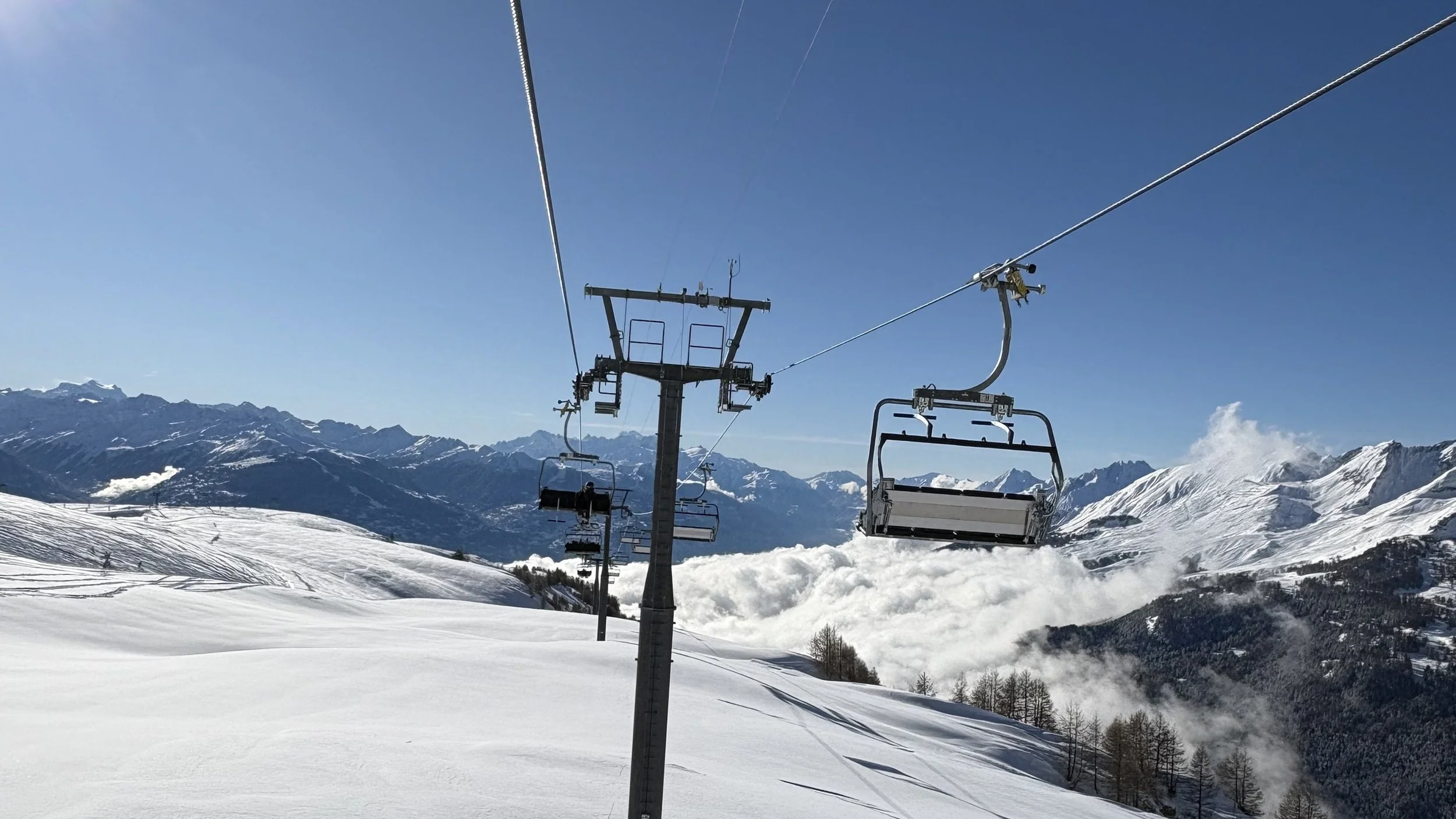
Every chairlift at Crans-Montana is detachable, with no fixed-grip chairs anywhere on the mountain.
Crowds
Aside from the chokepoints mentioned above, Crans-Montana doesn’t see many crowds outside the busiest peak periods. Apart from the December holidays, mid-February, and Easter, lift lines are essentially nonexistent, and it’s possible to have a Saturday bluebird powder day almost to yourself. Regulars don’t tend to ski when visibility is poor, so even at peak times, the mountain can be nearly empty if it’s not sunny, and even at its worst, lines longer than 15 minutes are very unlikely. There is a paid fast-track option, but with crowds this modest, there’s little reason to buy it. Trail congestion does happen, though: most people ski from 9 to noon, so heading out in the afternoon trades slightly worse snow for fewer people.
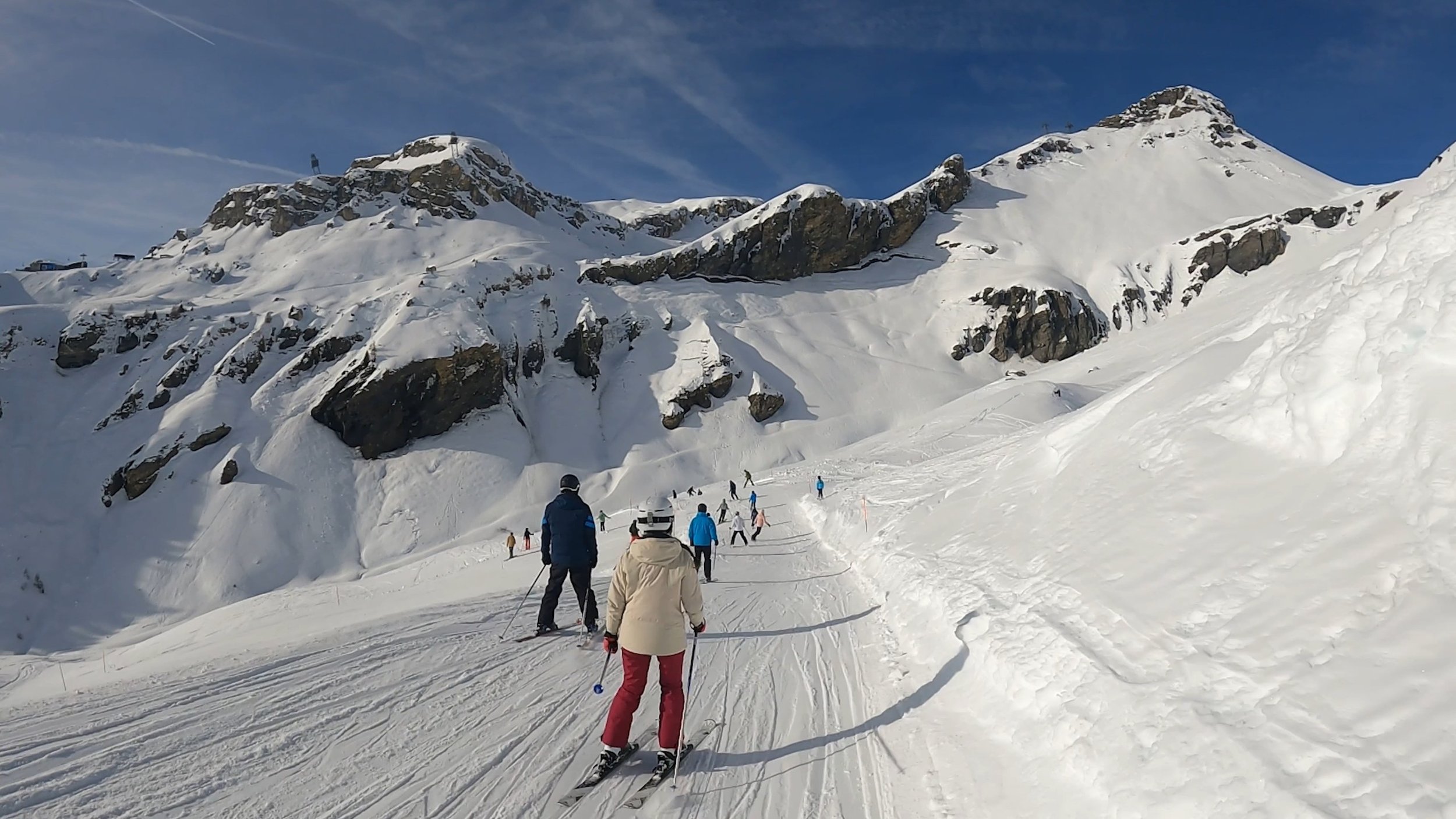
Lift lines are rare outside peak holidays, though the slopes are busiest between 9 and noon.
Getting There
Crans-Montana is easy to reach by road or rail. A funicular links Montana to Sierre on the valley floor, but its top station is in an out-of-the-way spot, so we recommend using the free bus service to reach it from around the village. Sierre is a little over two hours from Geneva by train or by car, and to drive on the Swiss highways, you’ll need a vignette, which is sold at border crossings and already included in cars rented in Switzerland. Besides Geneva, the closest major airports are Zurich and Milan.
Parking
If you plan to drive up to Crans-Montana, prepare to pay for parking. Rates generally run 2 to 4 CHF per hour, with the main Crans base on the higher end in winter, and there aren’t any free options. Only the Crans base has above-ground parking, though underground lots throughout the resort are reachable on foot or by the free bus.

Recommended intermediate board

Recommended advanced board

Recommended expert board

Recommended touring board
Lodging
Crans-Montana has lodging for every budget, from economical options to ultra-luxury. Guests can even stay directly on the mountain at Chetzeron or Cabane des Violettes, reached only by snowcat taxi. The slopeside Six Senses resort offers all the five-star amenities you could ask for, while the Crans-Montana youth hostel offers shared rooms within walking distance or a short bus ride of the Crans and Montana bases.
Facilities
Besides perhaps its views, Crans-Montana’s greatest strength is its on-mountain facilities. There are more than 20 on-mountain restaurants, ranging from grab-and-go buffets to cozy mountain huts and sit-down restaurants from Michelin-starred chefs, and all have indoor and outdoor seating, with live music widely available. Even the bathrooms are designed to impress, with some offering views of the surrounding peaks. For a memorable meal, the brasserie at the Merbé mid-station, known for its dry-aged beef, is a standout.
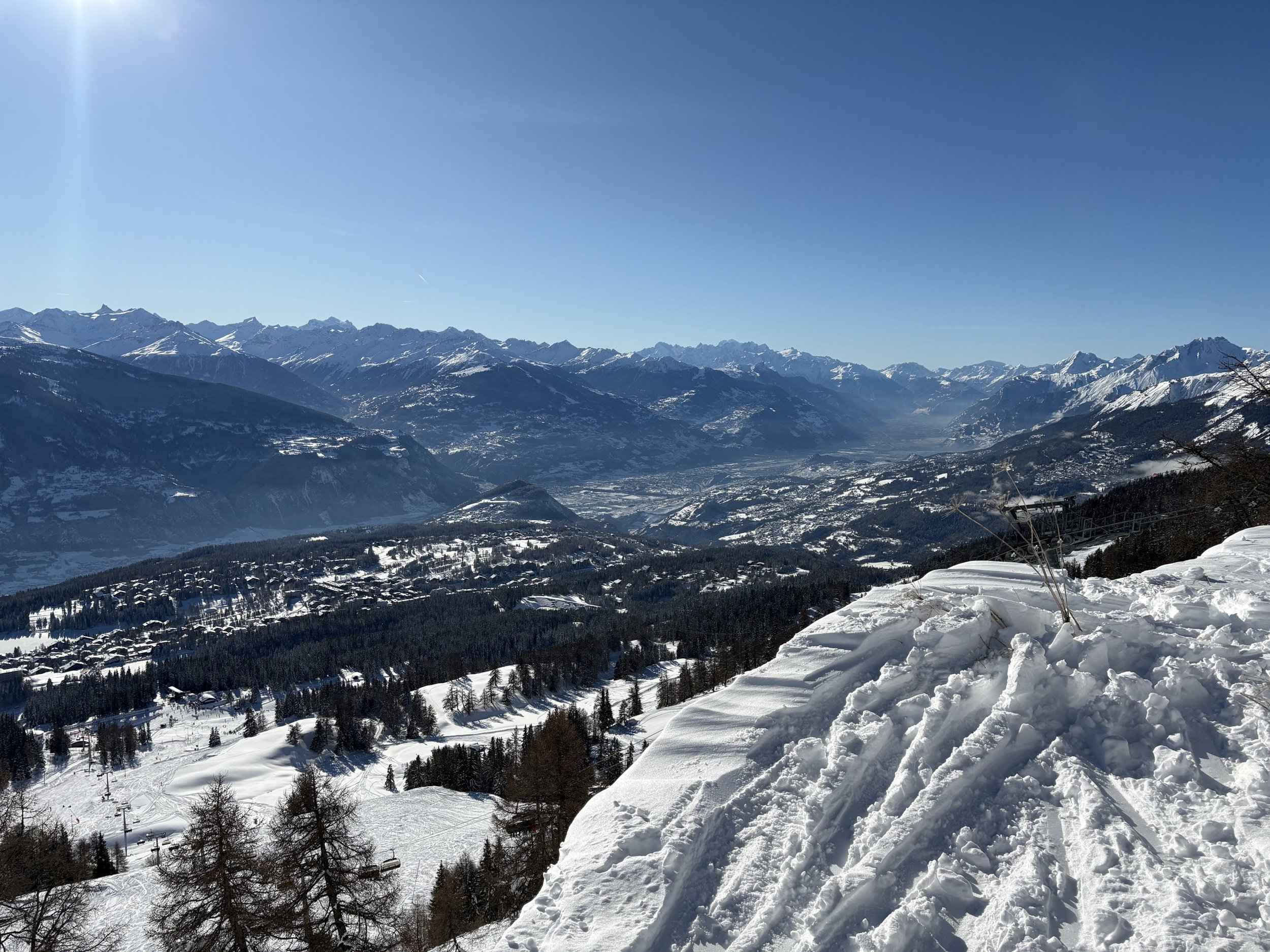
The villages of Crans and Montana, home to most of the resort’s lodging, sit on a sunny plateau just below the slopes.
Après
Après is another highlight. There are plenty of options on and off the mountain in both villages, and each base has live music in the afternoons, most notably at Zerodix at the Crans base. The ritzy villages are full of cozy bars, restaurants, and boutiques, and while Crans and Montana aren’t quite as one-of-a-kind as some other Swiss and Austrian resort towns, they’re still great. Crans-Montana has long drawn a wealthy clientele, and while it isn’t as moneyed as Gstaad, St. Moritz, or Verbier, Crans’s Rue du Prado has its share of Louis Vuitton, Prada, and Hermès, while the Montana side has a more laid-back, local atmosphere.
Pass Partnerships
Vail Resorts bought Crans-Montana in 2024, and the resort is now on the Epic Pass. It’s unlimited and unrestricted on the full Epic Pass and has five unrestricted days on the Epic Local Pass, making it an easy choice for anyone who already holds one of those passes. Note that the funicular from Sierre and on-mountain rescue insurance aren’t included with lift tickets or Epic products.
Mountain Aesthetic
Crans-Montana’s standout attribute is its sunshine, which makes for incredible views of the surrounding mountains in and around the Rhône Valley. On clear days, you can see iconic peaks like the Matterhorn and even Mont Blanc from the slopes, and every part of the mountain has outstanding views of sheer rock cliffs, alpine meadows, dark pine forests, jagged snowcapped peaks, and deep valleys.
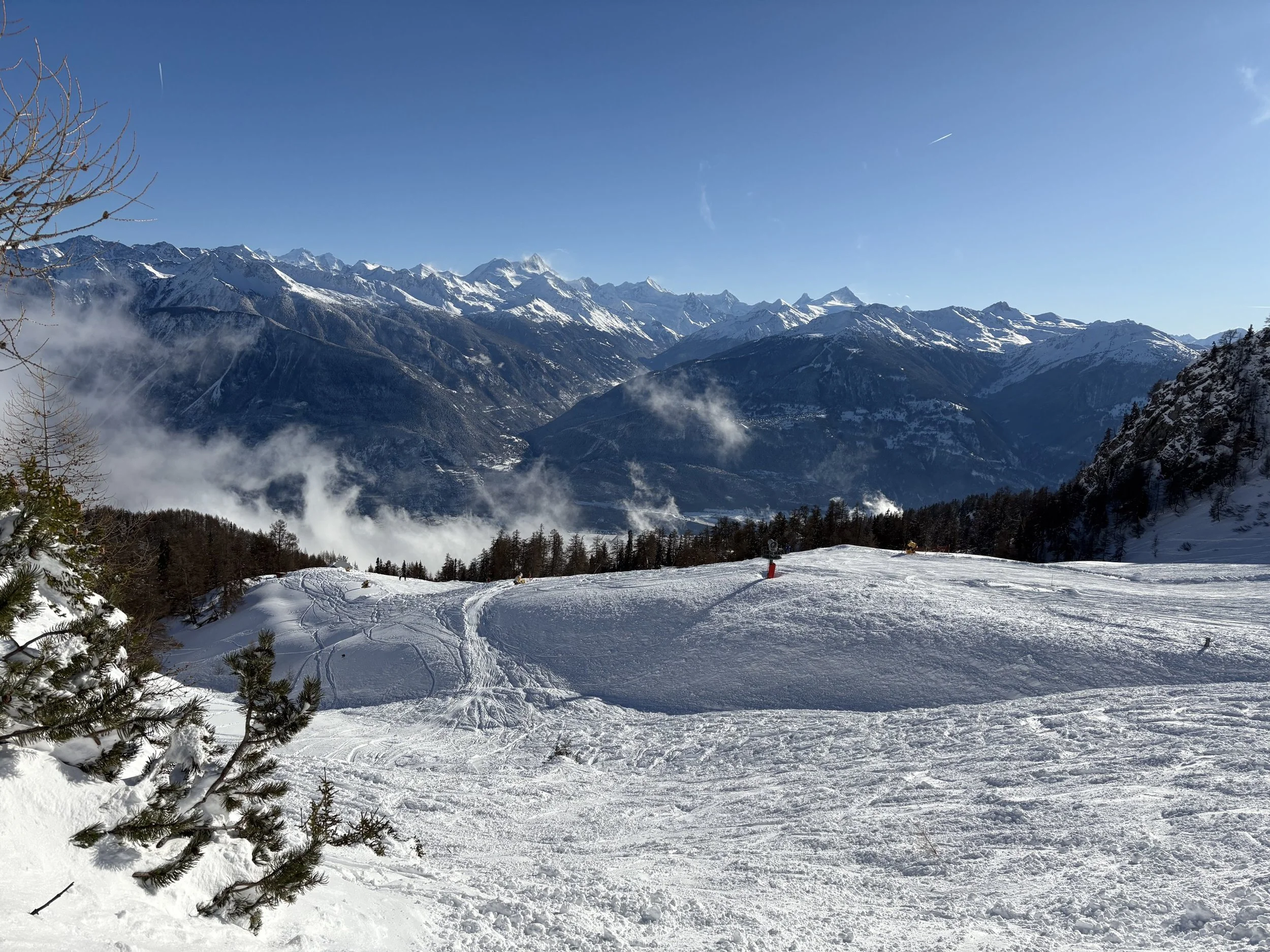
Clear days at Crans-Montana bring sweeping views across the Rhône Valley to the peaks beyond.
Verdict
Crans-Montana isn’t a perfect mountain. It’s on the smaller side compared to Europe’s mega-resorts, its terrain is mostly geared toward intermediates, and its sunny, south-facing slopes make for variable snow. But the endless views, top-tier facilities, and strong lift system make it worth a stop for those who value a high-end, easygoing ski vacation, especially if you already have an Epic Pass.
Pricing
Crans-Montana’s lift tickets are on the pricier side for Switzerland but still a great value by global standards. Tickets are dynamically priced and cheapest when bought in advance online, with adult day tickets ranging from roughly 39 CHF to around 90 CHF in peak periods.
