MOUNTAIN SCORE
CATEGORY BREAKDOWN
See our criteriaGOOD TO KNOW
1-Day Ticket: CHF 63–94 ($77–$114 USD)
Pass Affiliation: Epic Pass
On-site Lodging: Yes
Après-Ski: Extensive
Nearest Cities: Geneva (2 hrs), Zurich (4 hrs by train)
Recommended Ability Level:

+ Pros
Exceptional patrolled freeride and expert terrain
Massive interconnected footprint
Strong après scene in Verbier
Easy train access from Geneva
– Cons
South-facing slopes with variable snow
Confusing, time-consuming travel between sectors
Long tram waits for the highest terrain
Slow lifts and T-bars outside Verbier proper
MOUNTAIN STATS
Skiable Footprint: 8,335 acres
Marked Pistes: 410 km
Resorts: 6
Top Elevation: 10,925 ft
Vertical Drop: 6,496 ft
Lifts: 74
Trails: 352
Beginner: 37%
Intermediate: 46%
Advanced/Expert: 17%
VIDEO
Mountain Review
Looking for the best in European big-mountain skiing? Verbier 4 Vallées is a must-hit ski region. With 410 km of pistes across six interconnected ski areas, this destination already stands out for its sheer size, but what makes Verbier really special is its extensive selection of maintained and patrolled freeride terrain. So is this Swiss ski region the right choice for your next European ski trip?
Size and Terrain Layout
On top of its headline ski area, Verbier, the region includes five other resorts linked by a continuous lift network. From right to left on the trail map, they include Bruson, a modestly sized mountain that mainly serves intermediate terrain and is only connected to the others by a gondola route; Verbier itself, which is the largest and most expert-oriented of the resorts, although it offers terrain for all abilities; La Tzoumaz, a primarily beginner and intermediate area at a lower elevation; Nendaz, an intermediate-to-advanced area that snakes through several smaller peaks; Veysonnaz, which is mostly intermediate but offers access to what might be the longest freeride run in the region; and Thyon, the most beginner-oriented area of the bunch.
Because the resorts are so connected, some runs start in one resort and end in another, especially when it comes to freeride terrain. Combined, these areas offer 410 km of pistes and 8,335 acres from edge to edge, making Verbier 4 Vallées the largest ski area located entirely in Switzerland, with weeks’ worth of terrain to explore.
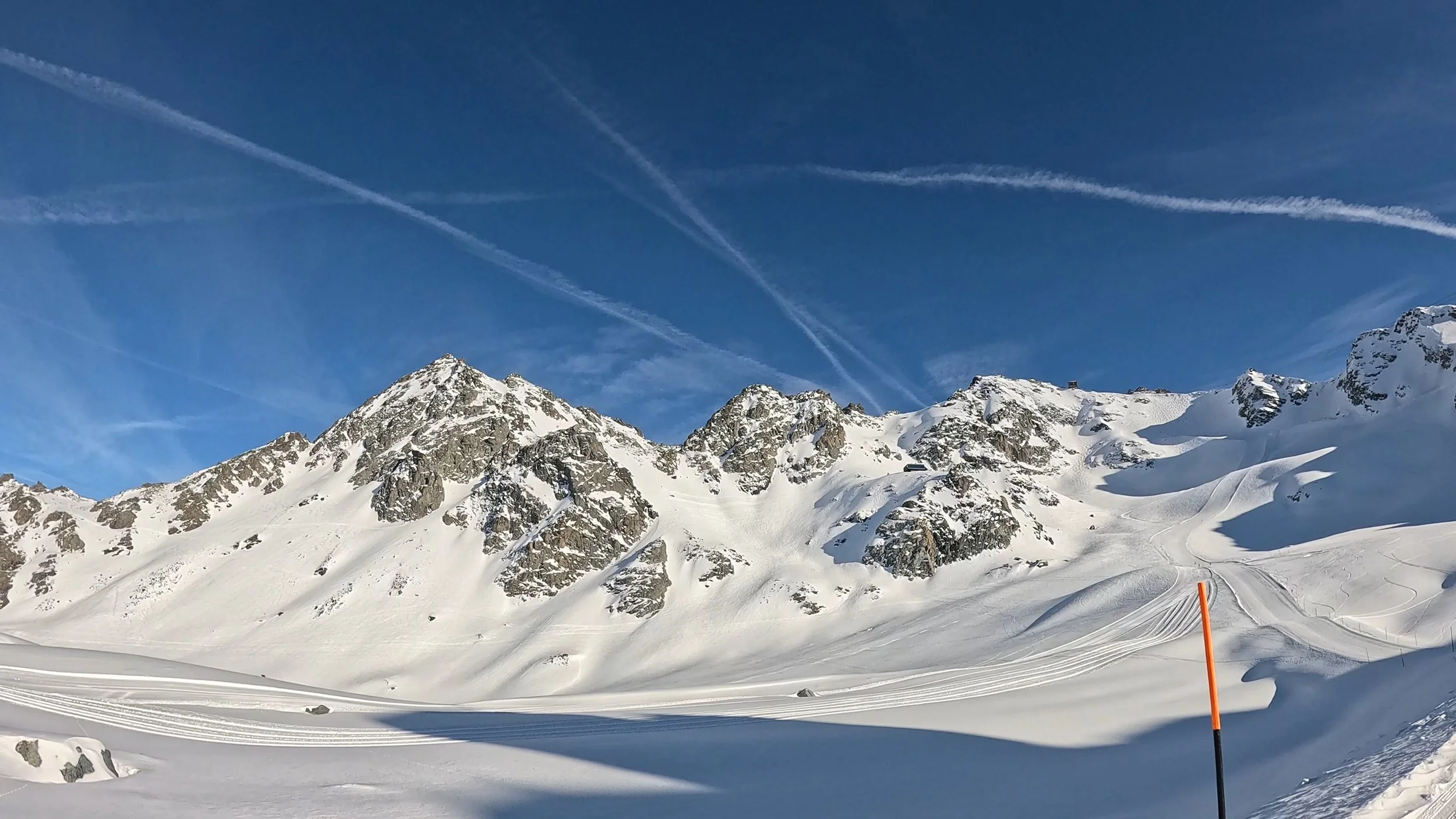
Verbier 4 Vallées links six ski areas across more than 8,300 acres from edge to edge.
Beginner
While there are far worse options out there, Verbier probably isn’t the best destination in the world for beginners. Each resort area includes at least some blue-rated beginner pistes, but these beginner zones are disconnected from those in other sectors, so getting between them requires either downloading a lift or taking some intermediate trails. As a result, those who aren’t comfortable above true beginner terrain will probably end up sticking to one specific area and won’t be able to explore much.
Intermediate
Verbier 4 Vallées becomes a more compelling destination for intermediates. Most of the resort areas offer enjoyable red-rated cruisers, with the Veysonnaz sector and the La Chaux area of Verbier hosting the largest concentrations of intermediate pistes, and many of these runs have some of the best views in the region. However, the footprint is not fully accessible for intermediates, and as with the beginner terrain, there are a few places where downloading a lift is required to get from one zone to another.
Terrain Parks
While not the best in Europe, Verbier 4 Vallées has some very solid terrain parks. The best freestyle complex sits in the La Chaux area of Verbier, with boxes, rails, jumps, and rollers ranging from small to large, plus an airbag feature for particularly adventurous freestylers. On the other side of the region, Thyon has an additional park that’s a bit smaller but still has features for all abilities.
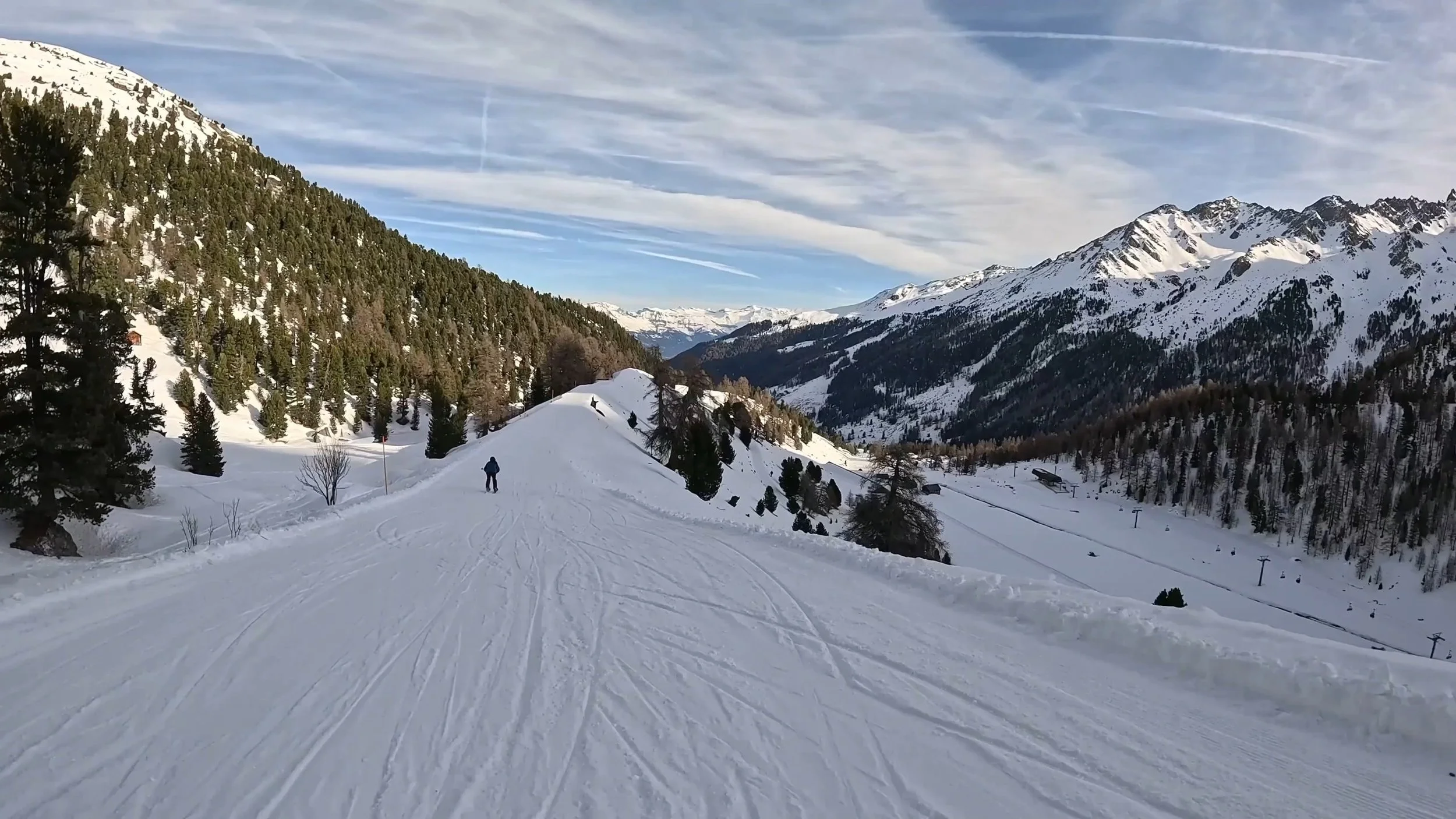
Red-rated cruisers like this one near Tortin make up much of the region’s intermediate terrain.
Expert
What you really want to be when you visit Verbier is an expert skier or rider. The mountain has a few solid black-rated pistes that make for steep, mostly groomed descents, but especially within Verbier proper, it stands out with its yellow-marked freeride itineraries, which involve ungroomed terrain, serious pitches, and in some cases obstacles such as cliffs and chutes. Some of these routes are long as well, so endurance is key. Extreme skiing enthusiasts should check out the Mont Fort and Mont Gelé areas for the best concentration of patrolled big-mountain terrain. These areas have no easy ways down, and from the top of Mont Gelé, a freeride itinerary is the only way down. These circumstances are extremely rare for a European ski resort, let alone anywhere in the world. A couple of other itineraries, most notably Col des Mines in lower Verbier and L’Eteygeon at Veysonnaz, stand out for their natural beauty, remoteness, and length.
Off-Piste
Even beyond its designated freeride zones, Verbier is an expert’s paradise when it comes to off-piste terrain. Several incredible chutes and couloirs exist in mid- and upper-mountain areas, and with some searching, you can find some truly iconic lines. However, any line that isn’t marked on the trail map is not patrolled or maintained for avalanches, so anyone heading off-piste should bring proper equipment, including a beacon, shovel, and probe, check avalanche conditions, and either bring a partner or hire an experienced guide.
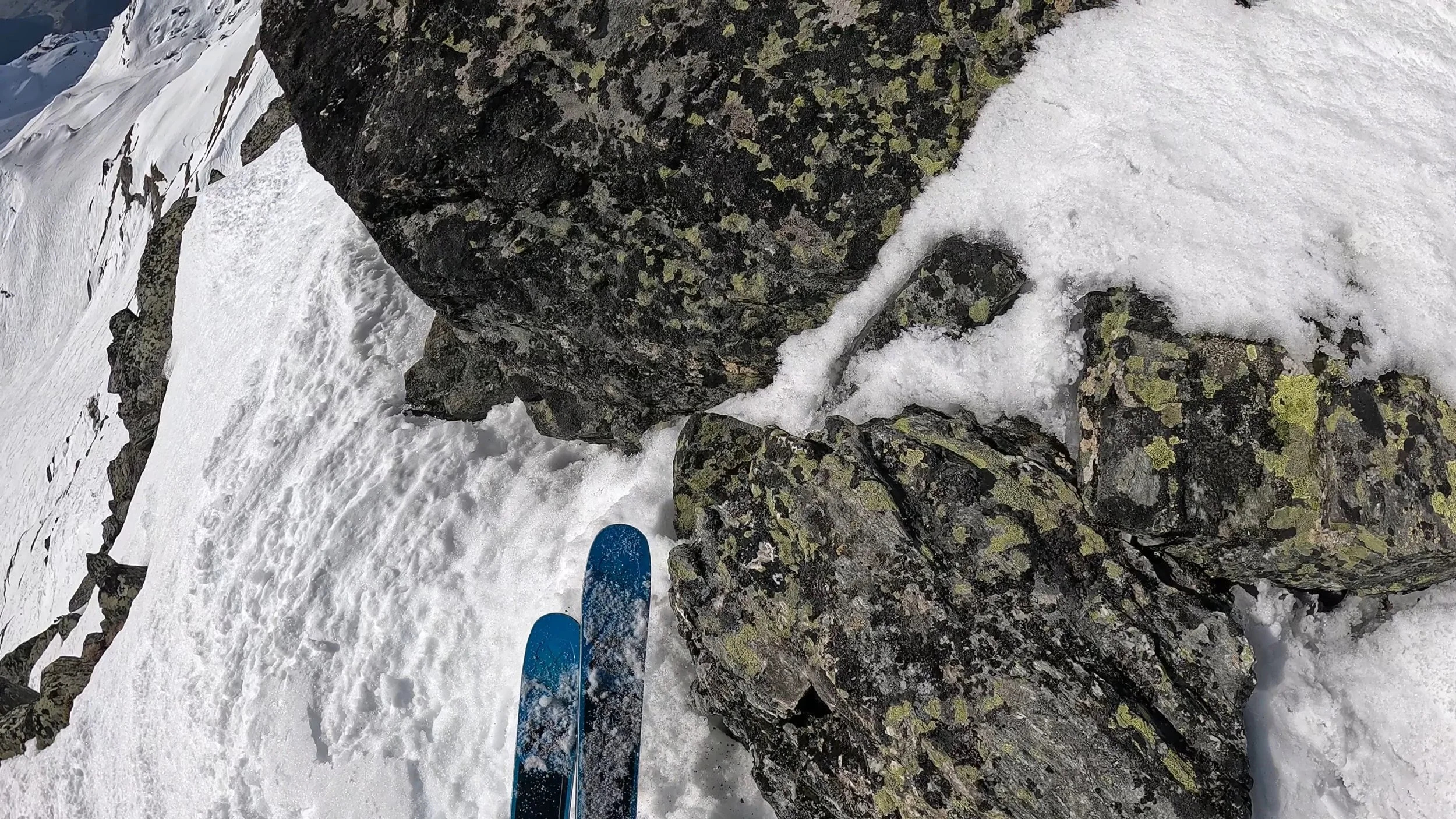
Verbier’s freeride terrain includes steep, rocky lines that are rare at a European resort.
Snow Quality and Resiliency
Verbier is generally a snow-sure region for the European Alps, averaging close to 200 inches (about 470 cm) of snow per season, with more at higher elevations. However, many parts of the resort face south, especially within Verbier proper, which can lead to inconsistent, spring-like conditions throughout the season. After a stretch of sunny, warm weather, guests in Verbier’s upper-mountain freeride areas may find icy conditions in the morning and corn or slush in the afternoon, and these slide-prone conditions make avalanche gear all the more important. A few areas within Verbier proper, including Gentianes-Tortin, Mont Gelé-Tortin, and to a lesser extent the Mont Fort summit, have much more favorable aspects and hold their snow well. Tzoumaz and Nendaz also have terrain with favorable aspects, but their lower elevations hurt snow retention, especially in below-average seasons. To keep coverage reliable, Verbier 4 Vallées has snowmaking on most lower and some mid-mountain areas.
Because the footprint is primarily above treeline and heavily exposed, storms can have a big impact on the experience. Visibility can be difficult when new snow rolls through, and flat light on cloudy days makes it tough to read the snow surface. Variable weather can also affect terrain openings, with the freeride-only Mont Gelé being the area most likely to close. On the plus side, color-coded boundary poles for each trail, including the yellow freeride itineraries, help visitors stay on the right terrain when other cues are hard to see.
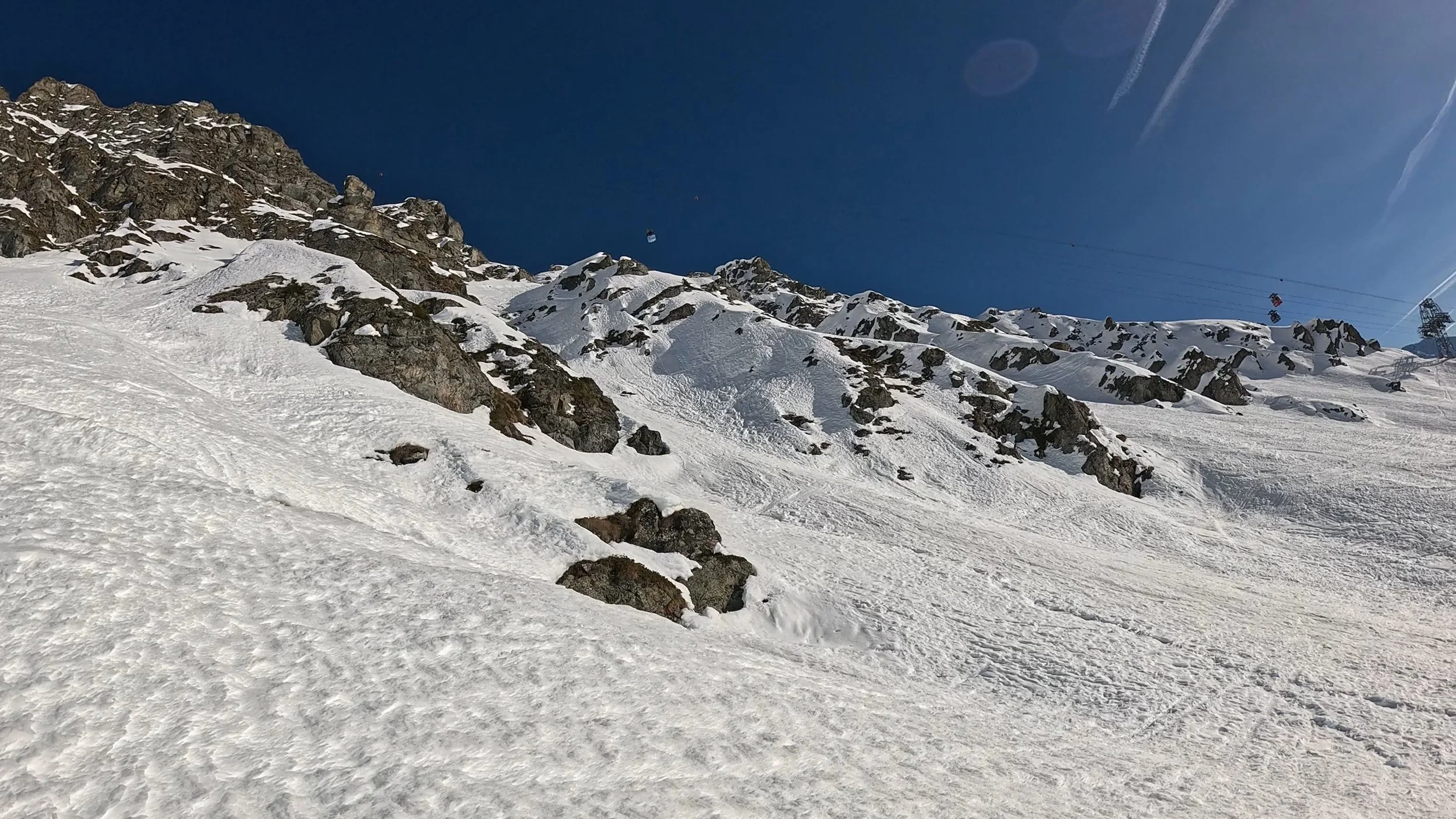
Many of Verbier’s slopes face south, which can leave the snow icy in the morning and slushy by afternoon.
NOTE: We may receive a small affiliate commission if you click on the below links. All products listed below are unisex.

Recommended all-mountain ski

Recommended carving ski

Recommended glade ski

Recommended expert/touring ski
Lifts
Verbier 4 Vallées has a generally modern lift fleet, although there are a few issues. Most of the lifts are high-speed, and several areas are served by bubble chairs, gondolas, funitels, and trams that keep visitors out of the elements. But especially outside Verbier proper, some areas are still served by slow fixed-grip chairlifts or surface lifts, so if you’re spending time in Veysonnaz, and to a lesser extent Thyon and Bruson, come prepared to ride plenty of T-bars and platters. Upgrades are steadily arriving: the long Prarion–Tracouet quad, which used to provide part of the only link between the rest of the region and the Nendaz base, was replaced with a chondola for 2024-25, and new six-seat chairs have been added at Lac des Vaux and, for 2026-27, between Les Chottes and Greppon Blanc.
Verbier’s highest areas, including Mont Fort, Col des Gentianes, and Mont Gelé, are served exclusively by aerial trams. This helps keep traffic down on these lightly pisted, expert-oriented areas, but with just two cabins on most of these trams, and only one on Mont Gelé, waits to get up can be long. Reaching the base of the Mont Fort tram also requires taking either the Tortin or Jumbo tram first, so getting to the very top of Verbier can take quite a while.
Navigation
Verbier 4 Vallées isn’t the hardest ski region in the world to navigate, but things can get complicated when moving between resorts. Signage is clear and readable, but there are a few confusing elements, most notably that signs pointing to the other ski areas all say “4 Vallées,” even though the entire footprint is part of the 4 Vallées. This can mislead visitors into thinking that trails leading to faraway areas like Nendaz, Veysonnaz, or Thyon actually go to Verbier proper. Getting between Verbier proper and the resorts further north is a maze-like trip involving multiple lift rides, some of them surface lifts, and it can take over an hour even if you know what you’re doing. Within Verbier proper, the lift setup is somewhat unintuitive as well: the full top-to-bottom vertical isn’t continuously skiable, and you can’t always reach lifts where the map suggests you could.
La Tzoumaz has historically been a hassle to reach, since getting there from the rest of the region meant either skiing a freeride itinerary or taking a shuttle through the town of Verbier. That’s changing with a new combined chair-and-gondola link between Les Esserts, Les Planards, and Savoleyres, whose final section is scheduled for the 2026-27 season along with a new piste that allows skiing over from Les Ruinettes. Bruson remains a bit of a trek, with two gondola rides between Verbier and your first run there.
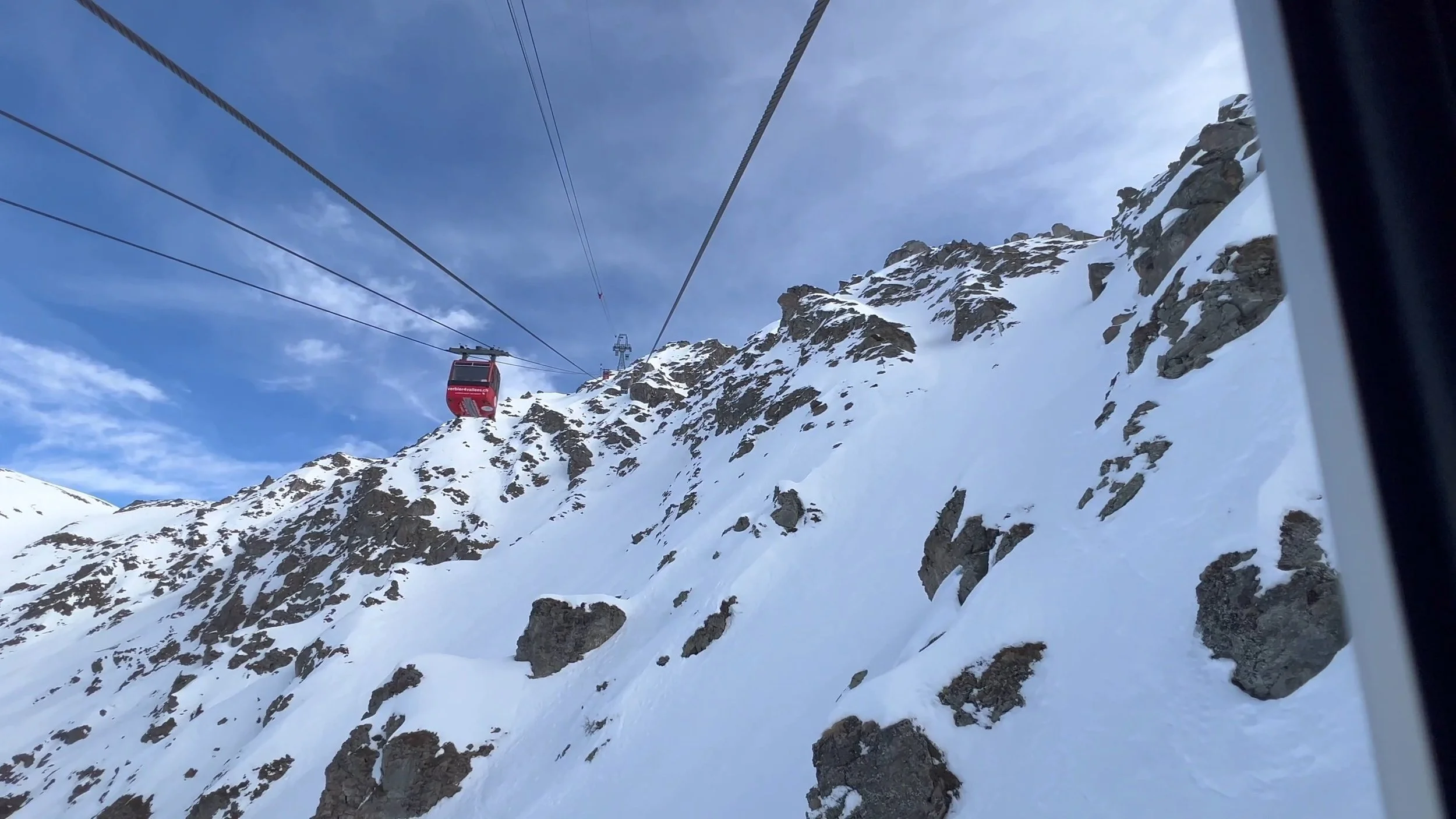
Enclosed lifts serve much of Verbier proper, keeping visitors out of the elements.
Crowds
Outside of the trams, Verbier 4 Vallées isn’t the most crowded resort in the world, although lines can build in popular areas. Most of the crowds form within Verbier proper, with the La Chaux area, home to the Verbier Snowpark and some fun lower-level terrain, typically seeing the biggest crowds. The four-seat gondola from Le Châble up to Verbier can also become a chokepoint first thing in the morning, and its narrow cabins feel cramped. Lines for the T-bars connecting Verbier with the other 4 Vallées resorts can get really bad at the end of the day, with the Tsa T-bar, which links Thyon and Veysonnaz back toward Verbier, being the worst offender. Beyond these spots, lines typically aren’t horrible, and unlike many other European resorts, some of the busier chairlifts and gondolas have singles lines.
Facilities
No matter where you are in the region, there are plenty of places to stop for a break. Sit-down restaurants are easy to find, and in some areas, they feel like they’re around every turn. One downside is how hard it can be to find casual, cafeteria-style food: a sizable minority of spots do offer grab-and-go options, but it can be tricky to tell them apart from full-service restaurants, which can lead to a frustrating search for a quick meal if you don’t know the resort.
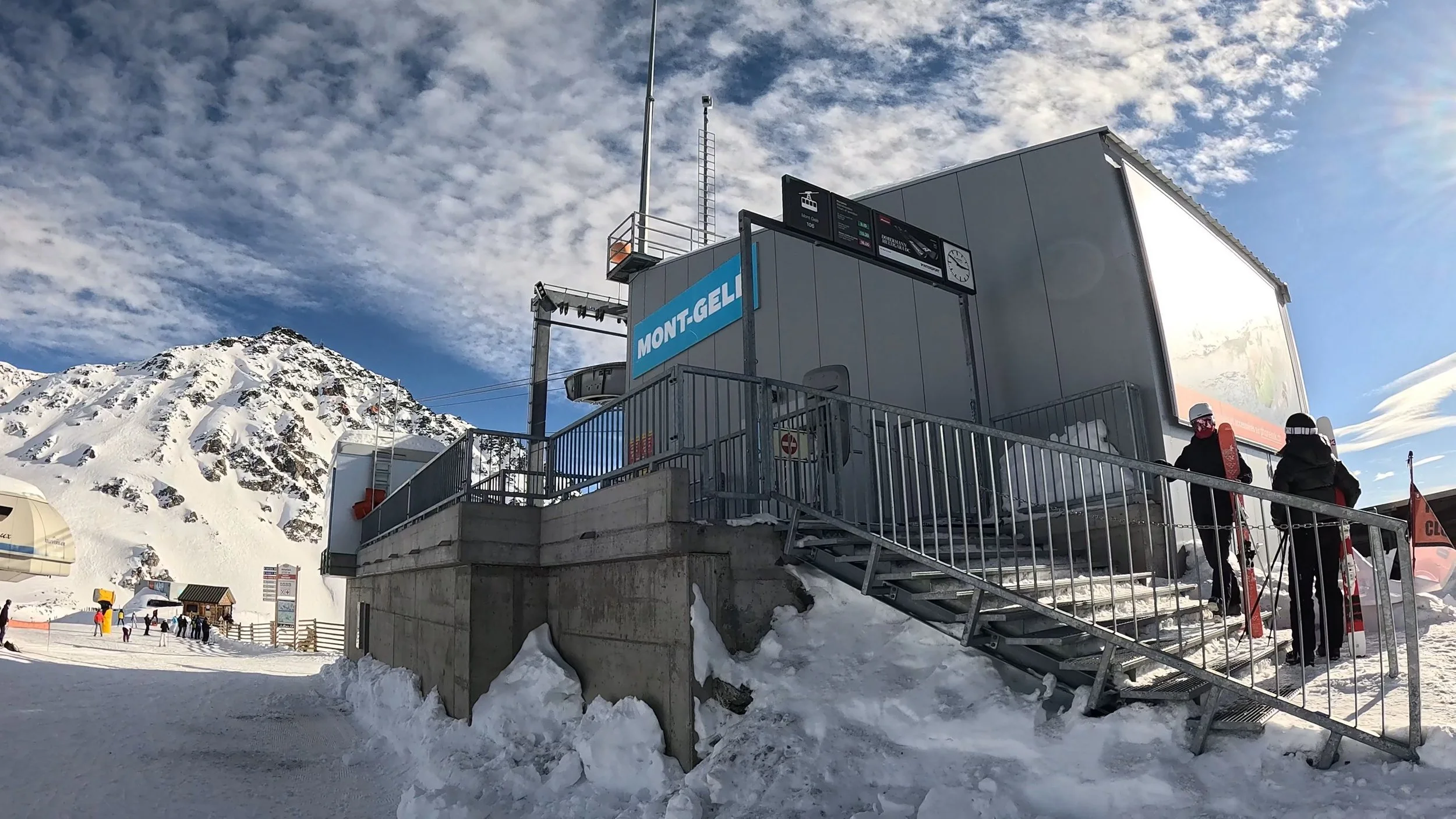
The Mont Gelé tram has just one cabin, so waits to reach its freeride terrain can be long.
Getting There
How you get to Verbier 4 Vallées depends on which resort you’re heading to, but the closest major airport for all of them is Geneva, about two hours away by car. The region also stands out for its public transportation access. Verbier and Bruson are reached through a different valley from the other resorts, via Le Châble, which is about two and a half hours from Geneva by train with a change at Martigny, and a direct Verbier Express train runs from Geneva on winter weekends. Nendaz, Veysonnaz, and Thyon are reached via Sion, and La Tzoumaz via Riddes, each about three hours from Geneva by train and bus. Verbier and Bruson are the easiest to reach from the station, with gondolas up to the villages. The town of Verbier is big enough that many accommodations aren’t walkable from the gondola, but free buses run around town and from Le Châble.
Lodging
Each resort offers at least some lodging. Most of the desirable options for destination visitors are centered on Verbier, although Nendaz, Veysonnaz, and Thyon offer several hotels and chalets as well, while La Tzoumaz and Bruson are more limited. For Verbier proper, options span the alpine town of Verbier, the valley town of Le Châble, and the broader Val de Bagnes. Le Châble tends to offer the more budget-oriented options, including no-frills lodges and rentals, while Verbier is primarily upscale and luxury in a more convenient and majestic setting. If you’d rather not sort out lodging on your own, our PeakHouse Les 3 Vallées trip offers an optional Verbier add-on from March 23 to 26.

Recommended intermediate board

Recommended advanced board

Recommended expert board

Recommended touring board
Après
Verbier is where guests will want to be for après. While not quite as wild as top party resorts like Val Thorens and St. Anton, Verbier’s on-mountain bars get going as early as lunch, with live music and party vibes common even on weekdays. The music and dancing can continue well after the lifts close, with many people staying late enough to end up skiing down to the village in the dark, which is not a great idea.
Once après on the slopes winds down, Verbier has plenty of bars and restaurants in town. Alongside fancy Swiss restaurants and steakhouses, there are a few surprises, including Boca, which might be the only Mexican restaurant we’ve seen at a European ski resort, and a genuinely good one. After dinner, bars and nightclubs stay open as late as 4 a.m. Le Châble has its share of more casual restaurants and bars, but the scene is much more muted, and après at the other five resorts is generally limited, although Nendaz does have a few nightclubs.
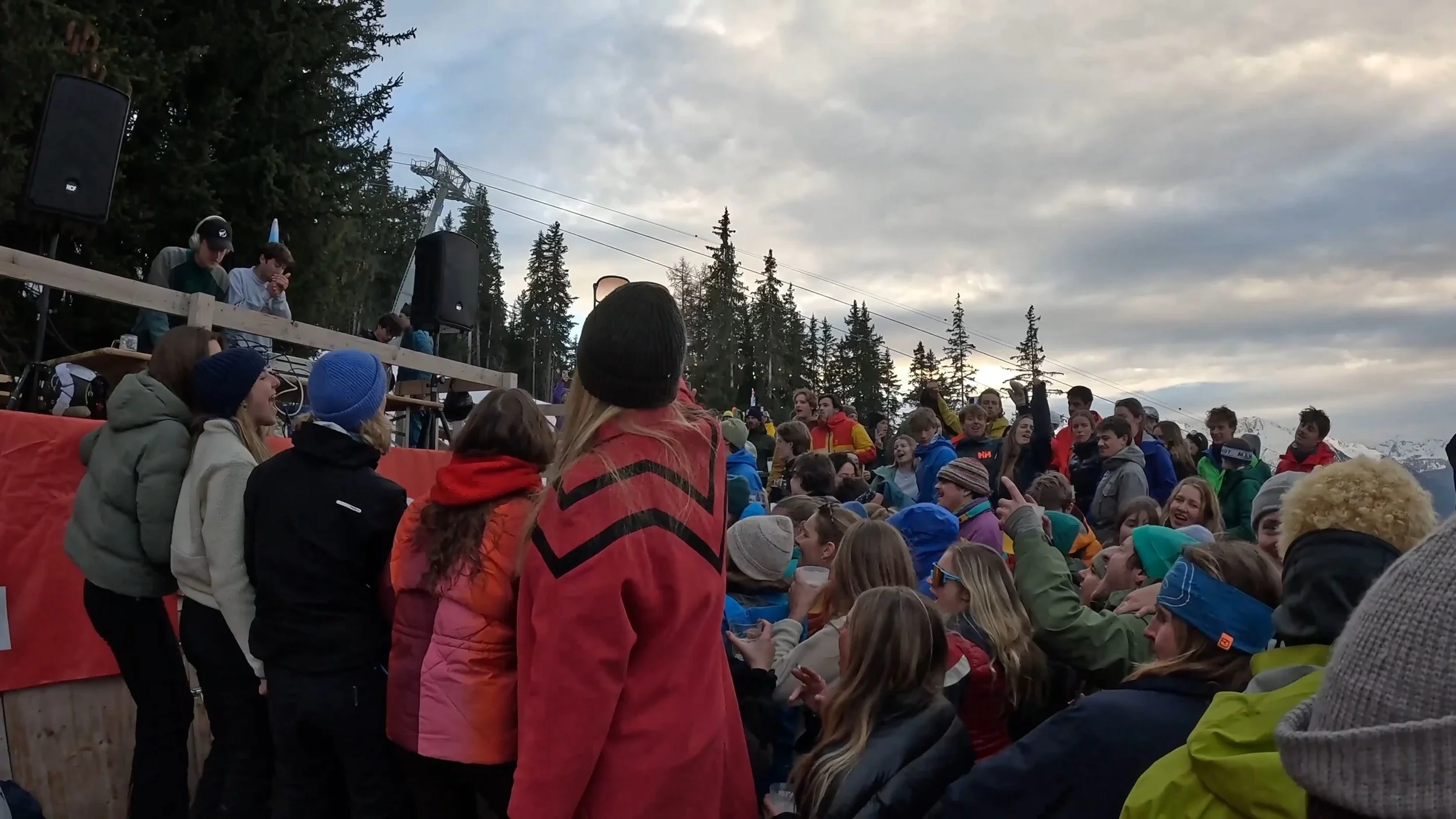
Après on Verbier’s slopes often starts at lunch and continues well after the lifts close.
Pass Partnerships
Verbier 4 Vallées is on the Epic Pass for 2026-27, with five consecutive days on the full Epic Pass and five consecutive days with restricted dates on the Epic Local Pass. Unless you’re also planning plenty of skiing at Epic resorts in North America, buying lift tickets is usually the better deal.
Mountain Aesthetic
Verbier 4 Vallées may not be quite as iconic as destinations like Zermatt and Chamonix, but it still stands out for natural beauty. Guests will find a true big-mountain feel, especially within Verbier proper, with a massive interconnected footprint and striking peaks both within the resort and beyond. The footprint is mostly above treeline, which only accentuates the wintry alpine views when it’s clear out.
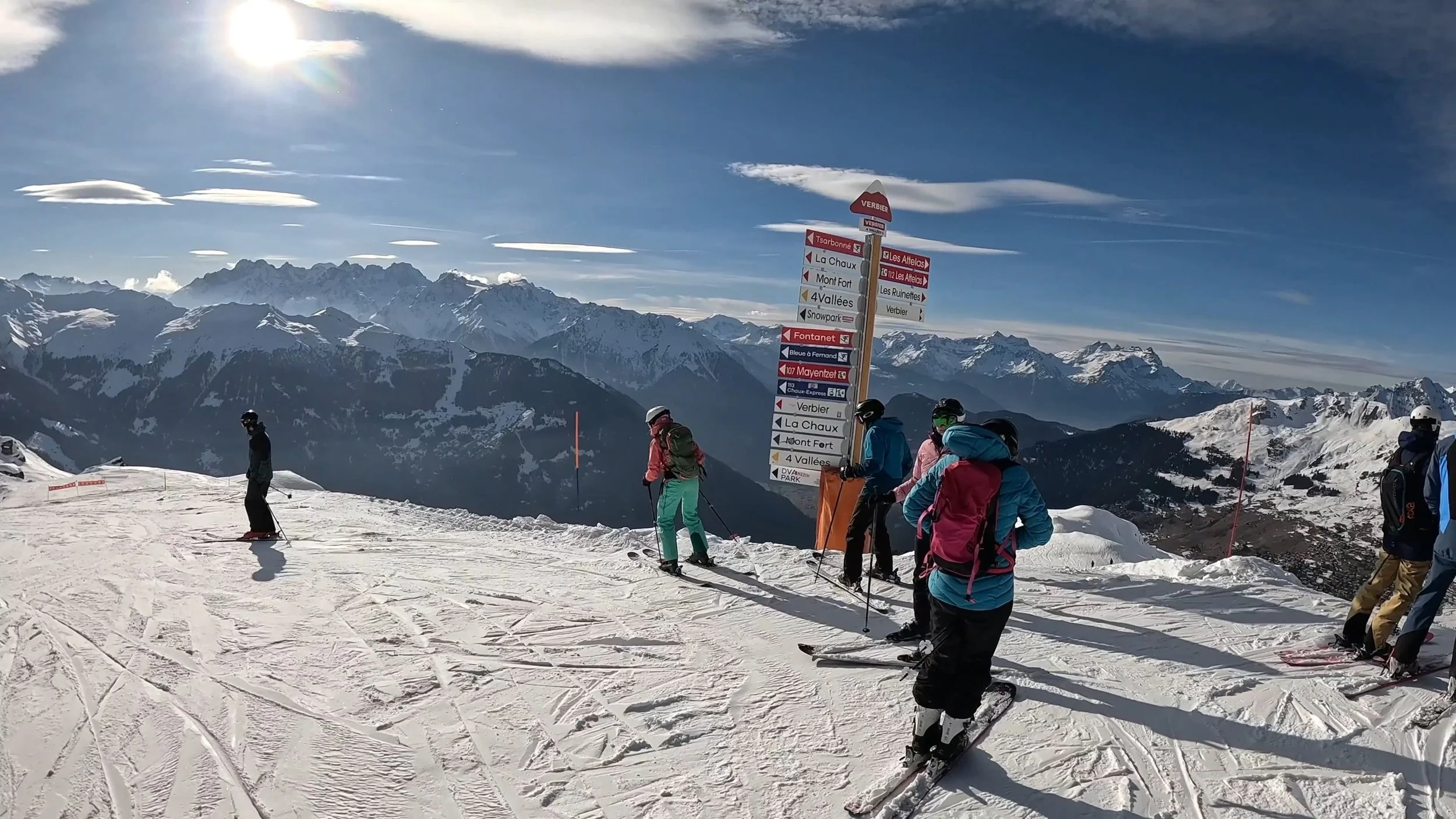
Verbier’s upper slopes have big-mountain views across the surrounding Alps.
Verdict
Verbier 4 Vallées is a must-hit destination for proficient skiers and riders looking for some of the best big-mountain terrain in Europe. Other destinations may be more well-rounded for lower ability levels, but the region’s massive footprint, fantastic scenery, and strong après make it tough to have a truly bad experience.
For most destination visitors, Verbier proper itself will be the star of the show, although those looking for gentler, lower-key skiing will probably enjoy some of the other connected resorts as well. Some resorts offer better infrastructure and après scenes, but Verbier 4 Vallées’ size, generally reliable snow, distinctive alpine feel, and in-bounds thrills for experts make it a great choice for most people planning a European ski trip.
Pricing
Lift tickets are quite reasonable for what you get. For 2026-27, a full-day adult ticket for the entire 4 Vallées is 94 CHF at the ticket window, with online prices starting lower and further discounts for buying at least 10 days ahead. Tickets limited to specific sectors are cheaper, starting at 86 CHF for Verbier–La Tzoumaz and 63 CHF for Bruson.