If you’ve been following the Ikon Pass situation over the past couple of weeks, it might not seem as if things are looking all that great. The pass brand shocked the ski world earlier this month by adding its most premium owned ski resort, Deer Valley, back to its lower-tier Ikon Base Pass product only about a month before the pass is expected to go off sale permanently. But besides all the disgruntled Ikon holders who specifically upgraded to the full pass to get Deer Valley access, only to find that it’s now included with a cheaper product, some eye-opening additional developments have come out in the past couple of days that really provide color as to what’s going on with the business health of Alterra, the Ikon Pass’s parent company. So what exactly is going on, and should you be worried about the long-term sustainability for Alterra and the Ikon brand? Let’s take a look.
Deer Valley Base Pass Addition
The first sign of a serious cry for help from the Alterra team came earlier this month, when Alterra announced that, for the first time in years, Deer Valley would be joining the Ikon Base Pass. For the 2026-27 season, Base Pass holders will get three days at the skier-only Utah resort (snowboarding is banned), with holiday blackouts. Full Ikon Pass holders still get seven days with no blackouts. Both groups need lift reservations, and Deer Valley still caps how many skiers it lets on the mountain each day.
The change comes in the wake of a massive and unprecedented expansion on the part of the mountain, and one that generated less-than-desired headlines for the resort for especially poor coverage during last year’s terrible winter. The resort is hoping for a better season this winter, with 200 new acres and seven new runs served by a new high-speed quad, on top of the over 2,000 acres it’s added already.
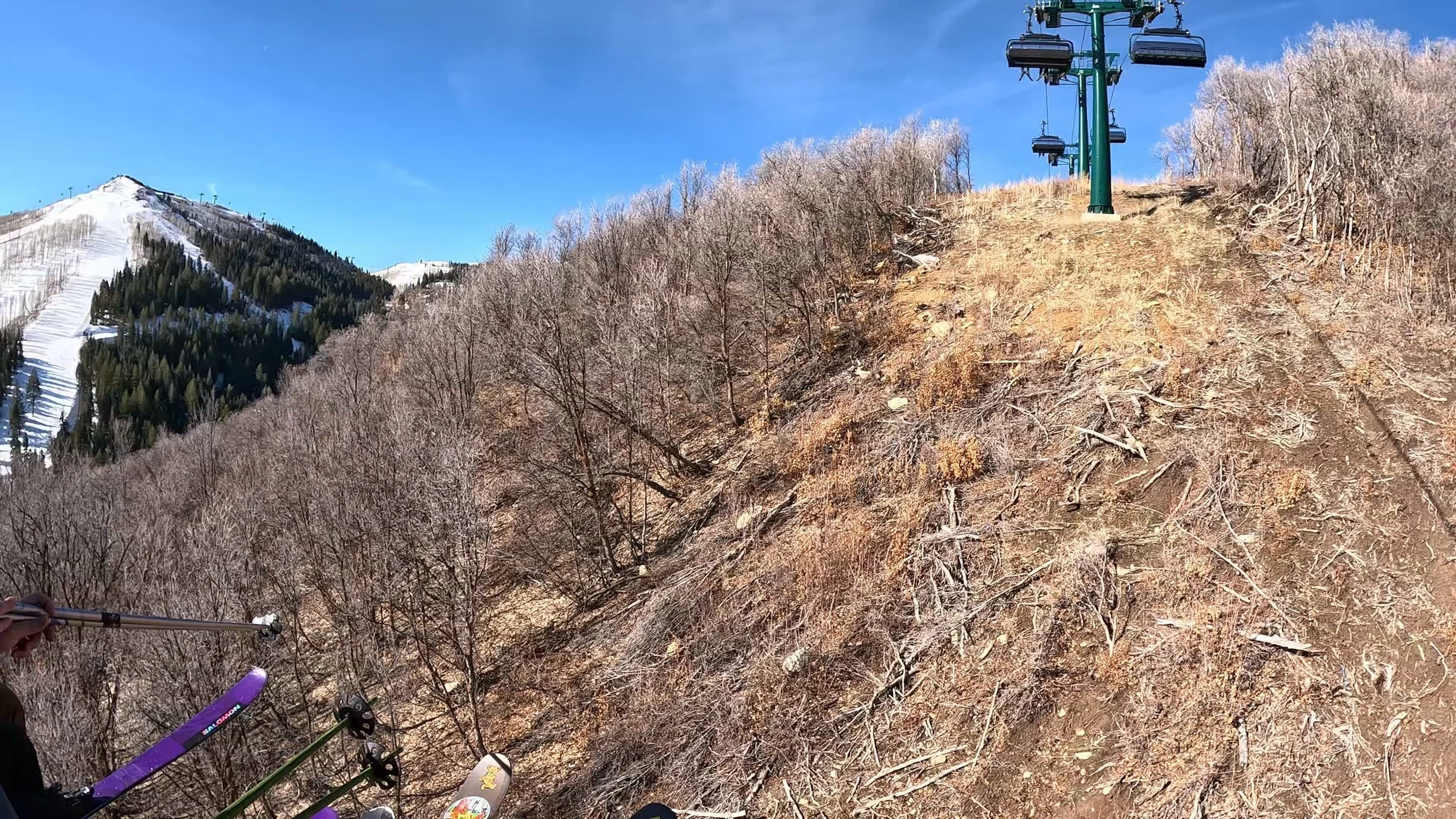
Deer Valley generated less-than-desired headlines for especially poor coverage during last year’s terrible winter.
But while it’s certainly not a bad thing for Ikon Base Pass holders to have more resort access, it’s hard to overstate how crazy it is that Ikon is making this addition so close to the late fall pass deadlines. Deer Valley has long been one of the most expensive resorts to access on a multi-mountain pass. Last winter, it was the only one of Ikon’s six premium destinations where you had to buy the full Ikon to get in. The other five were all available on the cheaper Mountain Collective.
To make a move this late in the game, it’s easy to conclude that Ikon, and Deer Valley in particular, may be looking at much softer demand than they’d hoped for after last year’s poor winter. After all, with the season just around the corner, putting Deer Valley on the Base Pass is a pretty big lever to pull to juice the numbers.
But just how much of this move is truly a response to disappointing pass sales? Normally, it would be hard to tell. That’s because unlike Vail Resorts, Alterra is not a publicly traded company, meaning it doesn’t have to release quarterly financial results to the public. However, on literally the exact same day as the Deer Valley announcement, an under-the-radar credit report release gave us a shockingly detailed look into the financial pressures facing Alterra.
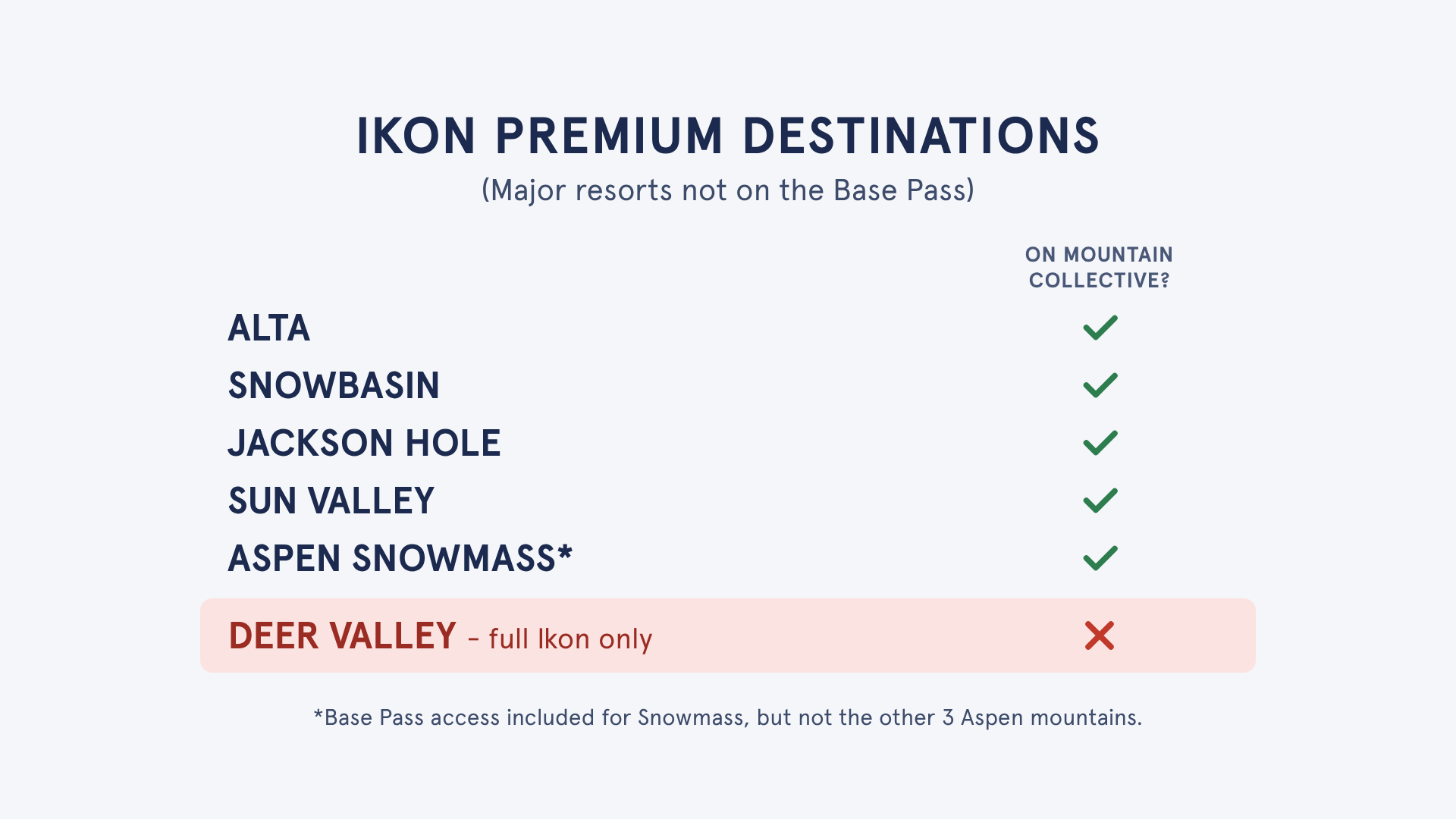
Up until November 9, Deer Valley was the only “premium” Ikon ski resort that could not be accessed on a cheaper multi-resort pass product, like Mountain Collective (which all other five full-Ikon-only resorts are participants in).
Alterra Financials Unveiled
On November 9, S&P Global Ratings published an analysis of several metrics related to Alterra Mountain Company. And its analysis gives us a much clearer picture of both what went wrong last winter and what might come next.
According to S&P, skier and rider visitation, at least at the resorts owned by Alterra, fell approximately 20% during the 2025-26 season. That is a jaw-dropping number, especially considering that Vail Resorts reported a decline of “just” 13.4% during that same winter. Think about that: Vail has had a really tough time from an investor standpoint in recent months. And now we know that its main competitor may be faring worse in some ways.
This also finally puts some of last winter’s promotions into perspective. Last January, Ikon brought back a generous Friends & Family promotion, offering up to 50% off window prices at the resorts it owns instead of the usual 25%. This is something it almost always historically kept to just the fall. Some passholders were also offered up to $60 in resort credits to spend on restaurants, shops, and rental. These incentives were exclusive to the mountains Alterra owns, and the pushes to get people on the slopes make a whole lot more sense now.
But on the other hand, Alterra seemed to have done an even better job than Vail at protecting its revenue, at least last year. During its 2026 fiscal year, which ended July 31, Alterra’s revenue declined only about 1%, with prepaid Ikon Pass revenue helping cushion the impact. Vail’s resort revenue declined by 4.5% during the same time period.

According to S&P, skier and rider visitation at the resorts Alterra owns fell approximately 20% during the 2025-26 season.
One interesting aspect about Ikon’s pass strategy this year was that they continued to increase prices for most of its pass products, made the incentives really complicated in the places where there were new discounts, and actually cut back some renewal perks, such as cutting the straightforward renewal discount in half. And it seems like… it might pay off? S&P’s forecast assumes that pass sales are pacing behind the same point last year, although it doesn’t quantify that shortfall, either from a unit or dollar metric. But more interestingly, S&P still expects modest revenue growth this fiscal year, helped by higher pass prices and a recovery in other spending. It’s also important to note that Alterra only owns 18 of the over 70 ski resorts on the Ikon Pass, so the visitation for its partners is not included in the 20% drop. It’s entirely possible those partner mountains fared a lot better in terms of visitation last winter, and that could be helping to keep pass sales from falling too badly, although we don’t know for sure.
However, while revenue growth sounds good, how much does this actually mean from a business health perspective? One thing to consider is this revenue expectation isn’t unique to Alterra; Vail also expects its overall resort revenue to recover this year, also despite weaker advance pass sales. Both companies are counting on customers returning to their mountains, and spending more once they arrive. That’s a significant claim we could spend a whole piece talking about for both companies.
But there’s one question we haven’t really answered yet: why did this report appear publicly in the first place? A private company like Alterra probably won’t be skipping to lay out its full financial picture to the public. However, it seems like the company may have had its hands tied in terms of these details surfacing.
That’s because S&P Global Ratings, the company that published this report, assesses the ability of companies to repay their debts. And the stated purpose of its report was to assess Alterra’s plans to replace some existing borrowing, which was due two years from now in 2028, with new financing that would give it between 3-5 more years to repay. Those current facilities include a $1.57 billion term loan and a $500 million revolving credit line, so not chump change. To put it another way, it looks like allowing this financial report to come out may have been part of the cost of securing the refinancing Alterra wanted.
And indeed, the document goes into eye-opening detail on Alterra’s cash flow picture. The company plans to complete more than $350 million in capital investments for this upcoming winter, and S&P expects these investments to leave Alterra with minimal free operating cash flow this fiscal year. Indeed, it looks like Alterra could really benefit from some outside help while it continues investing massive amounts of money into some of its capital projects, most notably the completion of the Deer Valley expansion.

The completion of the Deer Valley expansion is the most notable of the capital projects Alterra continues to invest in.
Now to be clear, borrowing money from a lender is a normal move from a growing business, and by no means suggests an immediate cash crisis. But just four days after the report’s publication, Alterra announced another decision that made the situation a lot more interesting: it was selling one of its businesses.
The Start of a Selloff?
On November 13, Andromeda Software, part of the larger Constellation Software group, announced that it had acquired Aspenware from Alterra Mountain Company.
Now, Aspenware probably isn’t a name most skiers and riders think about when planning a vacation, although you’d be forgiven for immediately thinking of the ski resort Aspen. But it operates behind the scenes of the ski industry, providing software that resorts use to sell lift tickets and other access products. According to the acquisition announcement, it serves more than 12 million users and processes more than three million transactions annually.
So this is an actual operating business changing hands. And against the backdrop of weak visitation, declining pass sales, and substantial investment commitments, it raises an obvious question: is Alterra starting to sell businesses to give itself more financial breathing room?
That’s certainly one possible interpretation. Selling a business can generate cash and remove the need to fund its future development. For a company committing hundreds of millions of dollars to its mountains, that could be attractive. However, we do not know the transaction price of the sale, so it’s very difficult to tell just how useful of a windfall Alterra is expected to get from it.
There’s also a part of this ownership transition that raises some questions. Alterra didn’t originally acquire Aspenware on its own; back in May 2022, it purchased the company through a joint venture with Aspen Skiing Company (the latter company had no relation with Aspenware prior to this deal, despite the similar name). But the latest announcement names only Alterra as the seller. And when POWDER asked Aspen Skiing Company about its involvement, a spokesperson said it was no longer an owner when the transaction happened and wasn’t a party to the sale. That leaves a strangely unanswered question about when, and why, that earlier ownership arrangement changed, and raises the strong likelihood that Aspen Skiing Company had independently decided to divest from this lift ticket platform. It is worth noting that Aspen Ski Co. and Alterra have some overlapping ownership, with Henry Crown and Company wholly owning the former and having a minority stake in the latter, although we have no idea if that played any role here.
So what if there was another reason Alterra was looking to offload Aspenware besides new cash on hand? Indeed, there’s another development involving Aspenware that could put this sale in a very different light.
A Legal Problem Instead?
Back in August, a group of skiers filed an antitrust lawsuit against Alterra, Vail Resorts, Boyne Resorts, Powdr, and two industry organizations. The accusation was that these companies had exchanged sensitive business information and coordinated to keep the cost of destination ski vacations artificially high. And one of the platforms specifically discussed in that complaint was Aspenware.
Now, Aspenware itself isn’t a named defendant. But the complaint points to Alterra, Boyne, and Powdr’s shared use of its software as part of the alleged arrangement. It describes a platform that handles customer transactions and supports dynamic pricing, allowing resorts to adjust prices based on factors such as demand and how far in advance someone books. The plaintiffs argue that the shared platform helped facilitate the information exchange underlying their allegations.
To be honest, when we first looked at this case, we weren’t convinced that the arguments added up to the industry-wide price-fixing scheme being alleged. Charging higher prices or buying software from the same provider doesn’t, by itself, demonstrate an agreement to coordinate. And the defendants have pushed back along those lines, arguing that the complaint doesn’t establish an agreement and that using the same software vendor isn’t inherently suspicious.
But we have to admit, the whole situation produces a pretty tempting line to draw. Alterra wasn’t simply a customer of a platform its competitors also used; it was an owner. Selling Aspenware to an independent software company removes that particular ownership connection. So could this sale have been about distancing Alterra from a business that had become part of an uncomfortable legal argument, rather than simply bringing in cash?
That’s a possible interpretation, but a bad one. First off, Alterra has explicitly rejected it. And while one could say that’s just Alterra’s word and not legally binding, there’s good reason to actually believe them here. Most of the recent developments with this legal battle have been motions to dismiss the case, and we still don’t see a high likelihood that even if the case were to move forward, and Alterra were to still own Aspenware, they’d be able to rid themselves of the legal troubles that would come with the lawsuit. Also, Alterra probably would have had a whole lot of trouble selling it if it seemed like the company’s business model was in serious legal jeopardy.
Taken together, the Deer Valley addition and Aspenware sale could still suggest that Alterra is looking for more financial breathing room right now. Without knowing what Aspenware sold for, we can’t tell how much that sale might help, or how urgently the company wanted the money. But while we’ve been focusing on what’s changed with Alterra’s finances, there’s something else that changed just weeks before these announcements: its leadership.
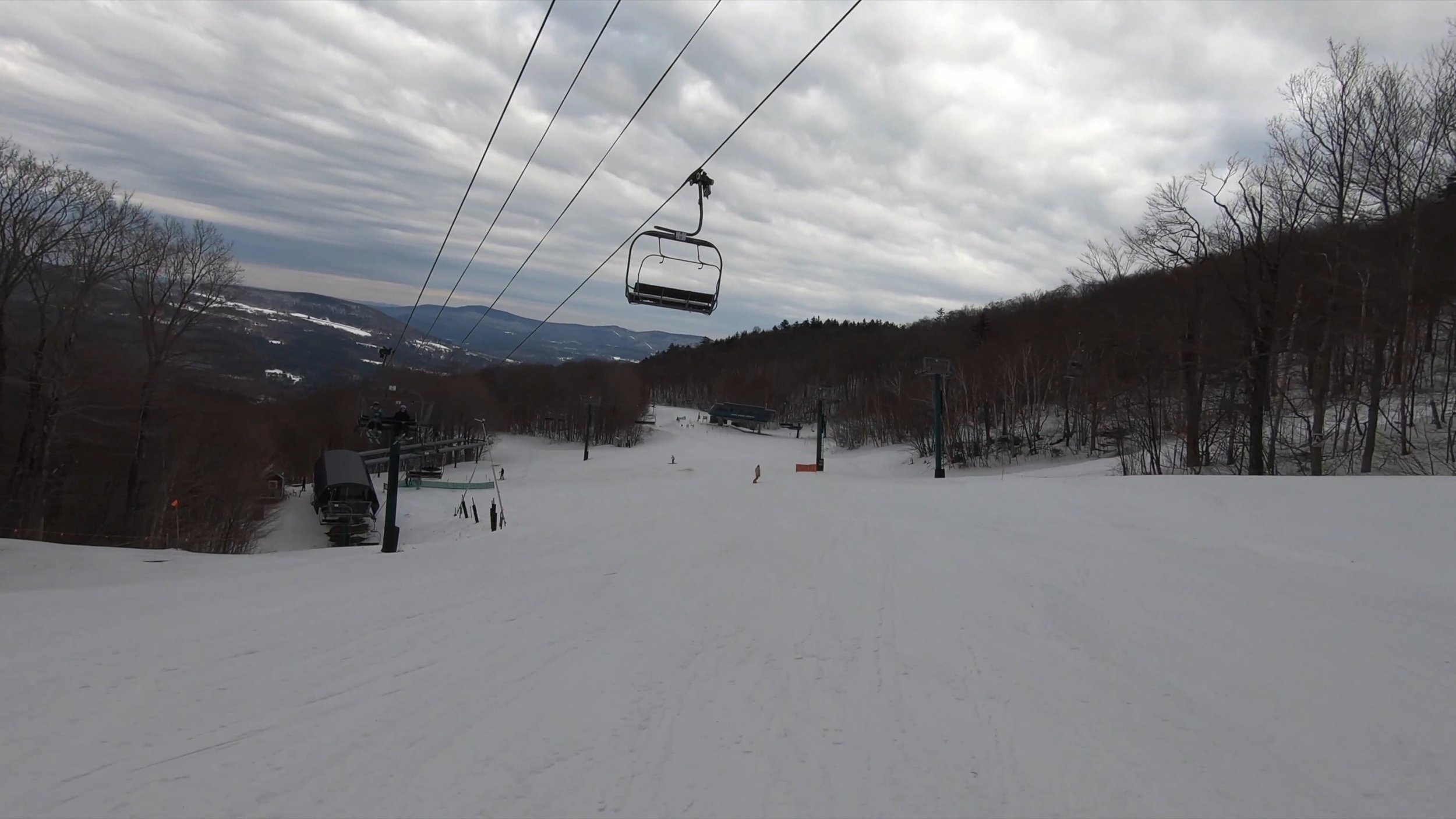
Alterra has had a record of delaying capital investments outside its flagship, multi-million-dollar initiatives at Steamboat and Deer Valley.
A Change in Direction?
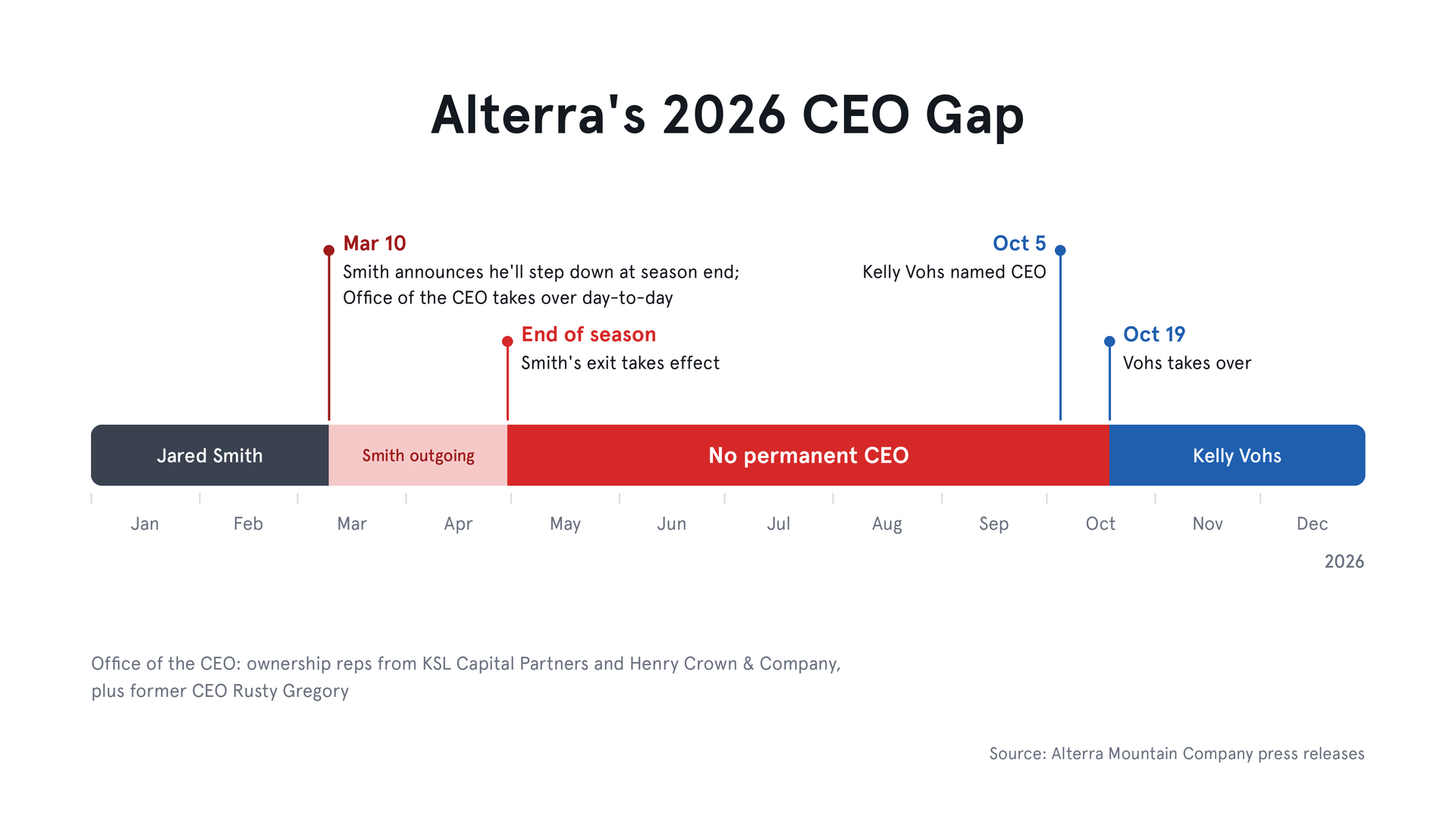
Back in March, Jared Smith announced that he was stepping down as Alterra’s CEO. But the company didn’t announce his replacement until October. During the transition, day-to-day leadership fell to an Office of the CEO made up of ownership representatives and former CEO Rusty Gregory. So for much of this year, Alterra was being run through a temporary leadership arrangement while it searched for someone permanent.
And that transition overlapped with a consequential pass-selling season. The higher launch prices and complicated Renewal Rewards were announced just before Smith’s departure announcement, and remained the strategy as the year unfolded. So the company spent months selling that offering without its next permanent CEO in place. And perhaps as a result, they failed to steer the ship appropriately during what we now know was a decrease in pass sales and the tail end of a horrendous visitation dip.
Then, on October 19, Kelly Vohs took over. Within his first month, Alterra announced both the Deer Valley addition and the Aspenware sale. We don’t know how much he personally influenced either decision, especially since a business sale could have been negotiated for months. But after months under temporary leadership, the timing raises the possibility that these moves are the brainchild of a new leadership team taking a look at the company’s problems and reassessing its priorities. Selling Aspenware is a pretty valid way to allow management to concentrate on its mountains while still continuing to use the platform. And if you are trying to get visitation back up at the mountains your company owns, potentially to drive more revenue in dining, retail, and lesson spend, making sure all of them are on both the lower and higher tier of your flagship pass suite (and indeed, Deer Valley was the only ski resort Alterra had ownership of that was not included on the Ikon Base Pass) is not a bad way to do that. As controversial as they are, Vail Resorts has always had its flagship Vail, Beaver Creek, and Whistler mountains on its local pass product in some capacity, and we have to imagine that the economics team at that company has probably cited the ancillary spending as a big reason why.
So perhaps these moves reflect, more than anything else, a new leader getting things in order after a difficult year. That wouldn’t make the financial issues disappear, nor does it necessarily reflect exactly what the company plans to do next. But it would make them consistent with a broader reset in how Alterra runs its business.
And to go full circle here, there’s another major Alterra decision that could have been influenced by the new CEO: the refinancing itself that prompted the S&P report in the first place. Whoever (or whatever) prompted the timing, it would give the company several additional years before those billions of dollars in debts needed to be repaid.
For a new CEO taking over after a terrible winter, that would be a totally understandable priority: give the business more time to recover and get its major investments producing results, without those repayment deadlines approaching quite so quickly. And if accessing that financing meant accepting a public assessment of Alterra’s finances, new management might consider that an acceptable tradeoff, even if in the past, the team was more tight-lipped. After all, would this information coming out really impact people buying passes? It’s hard to say, but one could plausibly assume that having an attractive package and pricing would play significantly more of a role.
And whatever one might think of Alterra sinking so much money into capital investments, which, as we detailed earlier, seems to be a big reason the company is looking so hard at refinancing, it makes a ton of sense for them to be focusing on it. Alterra’s ski resorts will need competitive infrastructure to keep guests coming back for the winters to come, and in recent years, several capital projects in the company's portfolio had not been properly prioritized. Alterra has had a record of delaying capital investments outside the flagship, multi-million-dollar initiatives at Steamboat and Deer Valley, with projects like Tremblant’s Timber expansion, Sugarbush’s North Ridge Express, and Schweitzer’s Creek Village parking lot seeing yearslong delays before finally getting greenlit and prioritized for the upcoming 2027-28 season. These projects have been waiting in the wings after being originally announced as early as eight years ago, and it would look really bad to defer them further. And on top of those, Alterra has dozens of aging lifts that are likely close to the ends of their useful lives and will almost certainly need to be replaced in the next few years, lest the company risk significant operational downtime, as they infamously did at Sugarbush last year.
But earlier this week, we got a welcome announcement suggesting that Alterra’s new leadership no longer finds it acceptable to fall behind on these infrastructure investments. The company announced the replacement of its nearly 40-year-old Soleil Express lift at Tremblant, with the new lift expected to open in December 2027 at the same time as the Timber expansion. The fact that Alterra is not just actioning on capital investments, but taking the initiative to actively announce new ones, is a massively positive sign that it’s changing up the way it thinks about the customer experience despite the near-term financial pressures.
Ultimately, the next pass-selling season will give us a much clearer indication of whether something has really changed at Alterra. Does the company stick with higher prices and complicated rewards, or make a more straightforward effort to win customers back? Does Deer Valley remain a one-off eleventh-hour addition, or does it signal a broader rethink of which mountains belong on which passes, and how it influences visitation? And does Aspenware turn out to be an isolated sale, or the beginning of a much broader asset sale? Those are the decisions that will tell us whether we’re watching a temporary response to a bad year or the beginning of a substantial change in direction.
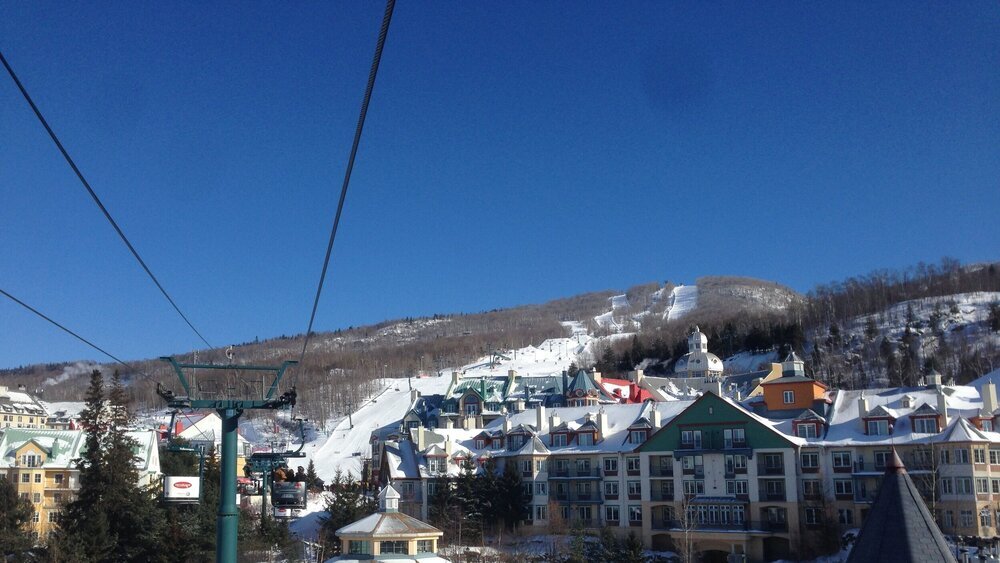
While it’s very promising that Alterra is investing heavily in resorts like Tremblant (pictured), the company’s underlying financial concerns aren’t going away.
Final Thoughts
So it certainly seems that the events of the last couple of weeks have brought some rather alarming developments at Alterra Mountain Company. And perhaps shockingly, there’s been some very concrete financial evidence to support the crunch behind some of those decisions. But at the same time, the timing of everything explained here could suggest, more than any singular metric, a new company leadership that is actually trying to get its act together and address the situation. Adding Deer Valley to the Base Pass, selling Aspenware, and pursuing longer-term financing could all fit an effort to address the company’s problems and give it more breathing room.
Still, the underlying concerns are not going away. Alterra’s reported visitation decline was substantially worse than Vail’s, and continuing to raise pass prices could create more trouble if customers increasingly question the value and decline to return. Is this a struggling company that new leadership can get back on track? Or are we seeing a deeper revolt against a business model built around selling access to an ever-expanding collection of mountains, while counting on customers to keep paying more before they know what kind of winter they’ll get?
This upcoming winter, and the next round of pass renewals, should certainly tell us a lot.