MOUNTAIN SCORES
CATEGORY BREAKDOWN
See our criteriaMountain Score by Area
GOOD TO KNOW
1-Day Ticket: €69–€84 ($77–$94 USD)
Pass Affiliation: Epic Pass (full pass only)
On-site Lodging: Yes
Après-Ski: Extensive
Nearest Cities: Chambéry (1.25–1.75 hrs), Geneva (2–2.5 hrs), Lyon (2–2.75 hrs), Grenoble (2–2.75 hrs)
Recommended Ability Level:

+ Pros
The largest interconnected ski area in the world
Modern, mostly high-speed lift network
Snow that’s reliable by Alps standards, especially at Val Thorens
Lively on-slopes après
Lift tickets far cheaper than North American destinations
– Cons
Extremely complex to navigate as one footprint
Limited below-treeline terrain for storm days
Long lift lines on routes between valleys at peak times
Long, expensive road transfers if you end up in the wrong valley
MOUNTAIN STATS
Skiable Footprint: 25,780 acres
Marked Pistes: 600 km
Resorts: 6
Top Elevation: 10,597 ft
Vertical Drop: 6,332 ft
Lifts: 168
Trails: 877
Beginner: 60%
Intermediate: 28%
Advanced/Expert: 12%
VIDEO
Mountain Review
If you’ve hit the slopes at a destination ski resort before, chances are you’ve felt like it took multiple days or even over a week to cover. But the idea of a big mountain enters a completely different realm at Les 3 Vallées, France, which not only offers over 600 km of marked ski trails but spans over 25,000 continuous acres from edge to edge. Skiing or riding at a typical cadence, it would take about 40 hours to do each marked trail once, and probably over 100 hours to properly cover all the off-piste. So what’s it actually like to plan a trip to a destination this big, and are there any reasons you shouldn’t go?
Size and Terrain Layout
The ski region is essentially exactly what it sounds like: three valleys in a row, although there is a bit more nuance to how it’s all set up. From east to west, the big resorts in the region include Courchevel, which is known for its incredibly upscale bona fides, Méribel, which is the largest and most centrally located of the bunch, and Val Thorens, which is essentially one huge above-treeline bowl spanning multiple aspects and offering the highest base elevation of any ski resort in the European Alps. All three of these resorts are huge in their own right, and to put this into perspective, Méribel alone is bigger from edge to edge than every single ski resort in North America.
A few smaller sectors also sit on the west side of the region, including Saint-Martin-de-Belleville, which serves lower-elevation terrain near the commune of the same name, Les Menuires, which offers family-friendly slopes immediately below Val Thorens, and Orelle, which is effectively the Val Thorens back side and includes the highest lift-served point in the entire region. Across all six of these sectors, there is plenty of skiable terrain for all ability levels, although as with most European Alps resorts, below-treeline terrain is a bit limited.
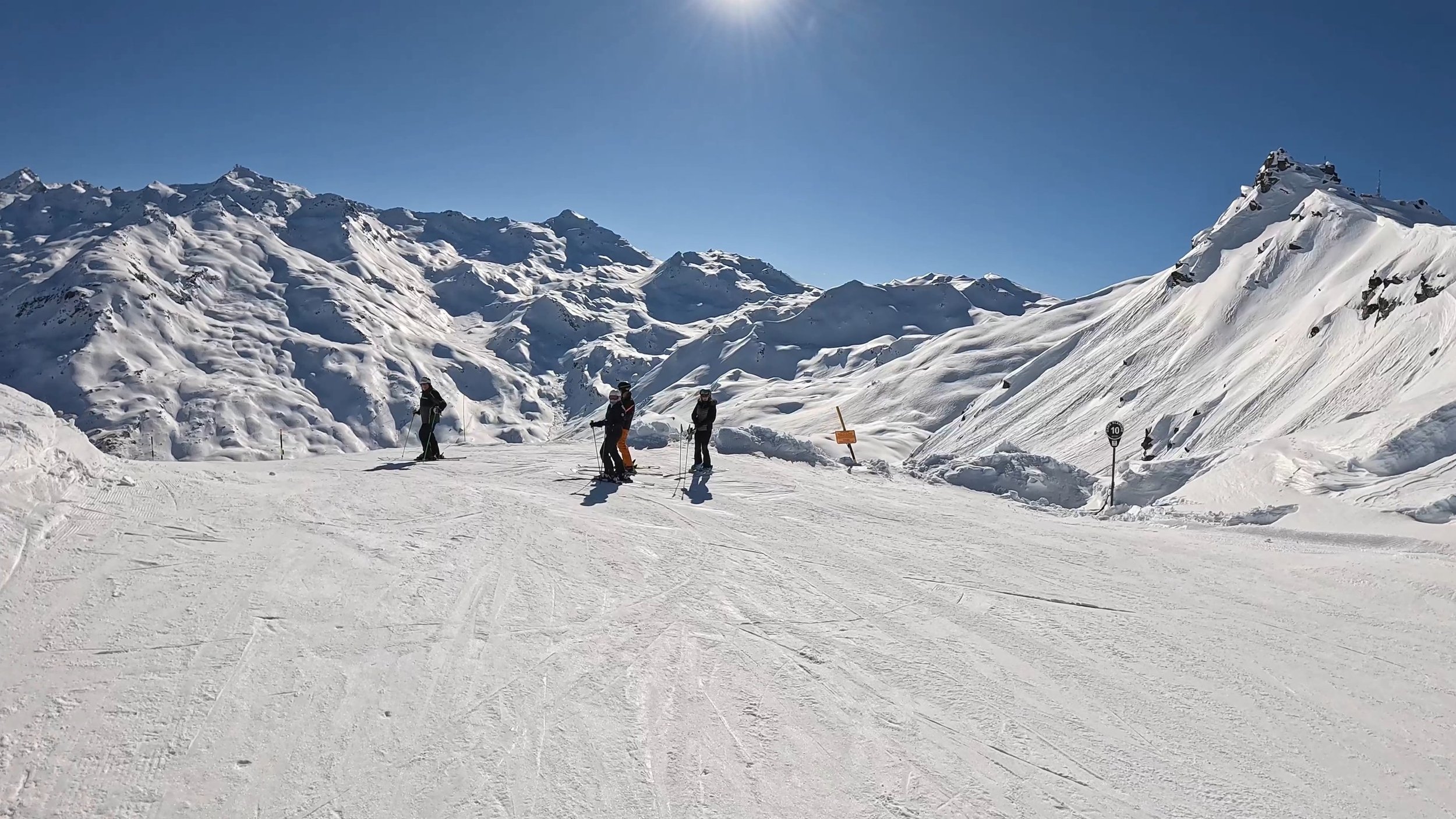
Above-treeline pistes like this one at Val Thorens make up much of the region’s enormous footprint.
Snow Quality and Resiliency
No matter how big a ski area is, it’s nothing without good snow, and despite significant variations in elevation and exposure, Les 3 Vallées delivers quite well on this front for the European Alps. The sub-150-inch snow totals in the lower areas of Courchevel, Méribel, and Les Menuires aren’t all that impressive, but upper mountain areas average well over 200 inches, and the high-elevation Val Thorens typically sees a very robust 250 inches, which is competitive with some areas of the North American Rockies. Even if Mother Nature doesn’t deliver, Les 3 Vallées generally maintains strong conditions thanks to snowmaking on over half of its terrain, primarily in mid- and lower-mountain areas.
All of the Les 3 Vallées resorts have bases of at least 1,300 meters, which is quite high for the French Alps, and unlike some competitors, the valley runs have mostly remained open in recent years. Orelle and the Brides-les-Bains section of Méribel are the only parts of the region where downloading the lifts is regularly required for skiers and riders of all ability levels. However, some of the valley runs, especially those to Le Praz at Courchevel and Les Allues at Méribel, can get quite icy or bare throughout the season.
Due to the region’s high-alpine-biased nature, visibility tends to be quite difficult when storms roll through. This is a huge issue at Val Thorens, Orelle, and most of Les Menuires, which sit entirely above treeline and provide very few natural landmarks. Even in flat light, reading the snow surface in front of you can be extremely difficult. Courchevel, Méribel, and Saint-Martin do have some below-treeline terrain to retreat to when visibility is low, but this type of terrain is limited.
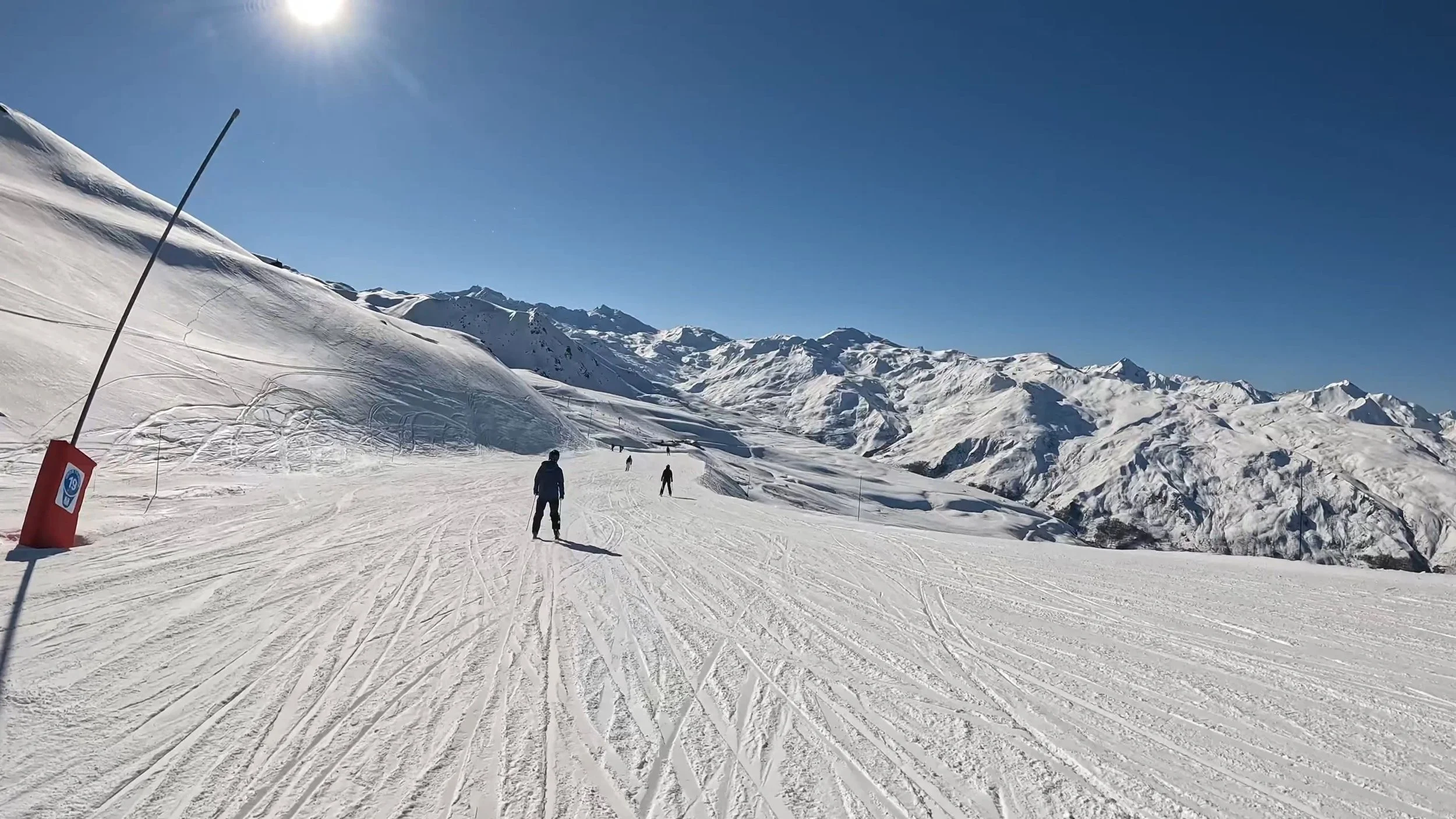
Val Thorens and the upper mountain areas of Les 3 Vallées average well over 200 inches of snow a year.
Beginner
Despite its massive footprint, Les 3 Vallées isn’t a bad destination for beginners, although lower-level visitors may want to consider the region for its individual resorts rather than the overall domain. Easier green-rated pistes can be found across four of the six sectors (the smaller Saint-Martin and Orelle being the exceptions), and the best green trails are arguably at Courchevel, which offers easy slopes across multiple lifts and elevations. Green trails are mostly confined to the lower mountain within the other sectors. There are no green trails linking the resorts to one another, but less-experienced visitors probably won’t be there to ski all 25,000 acres anyway.
Intermediate
Les 3 Vallées is a great destination for intermediates, who should be able to take advantage of the vast majority of the region. Blue trails span all but a handful of lift pods, and large mid-mountain areas are all but dominated by this level of terrain. At Saint-Martin-de-Belleville, almost every single trail is an intermediate blue piste. For those coming from North America, the blue pistes here tend to be a bit easier than many in the Rockies and on the West Coast.
Advanced
Les 3 Vallées is also an awesome choice for those who love advanced-level groomed terrain. With the exception of some lower-elevation sections of Courchevel, Méribel, and Saint-Martin, every part of the region is home to reasonably steep red pistes, which would likely be considered doable for advanced-intermediate to true advanced skiers and riders. This terrain is more prevalent in high-alpine areas, but there are a few good below-treeline cruisers in Courchevel and Méribel. While typically groomed every day, a handful of red pistes can see moguls build up, especially in the afternoon.
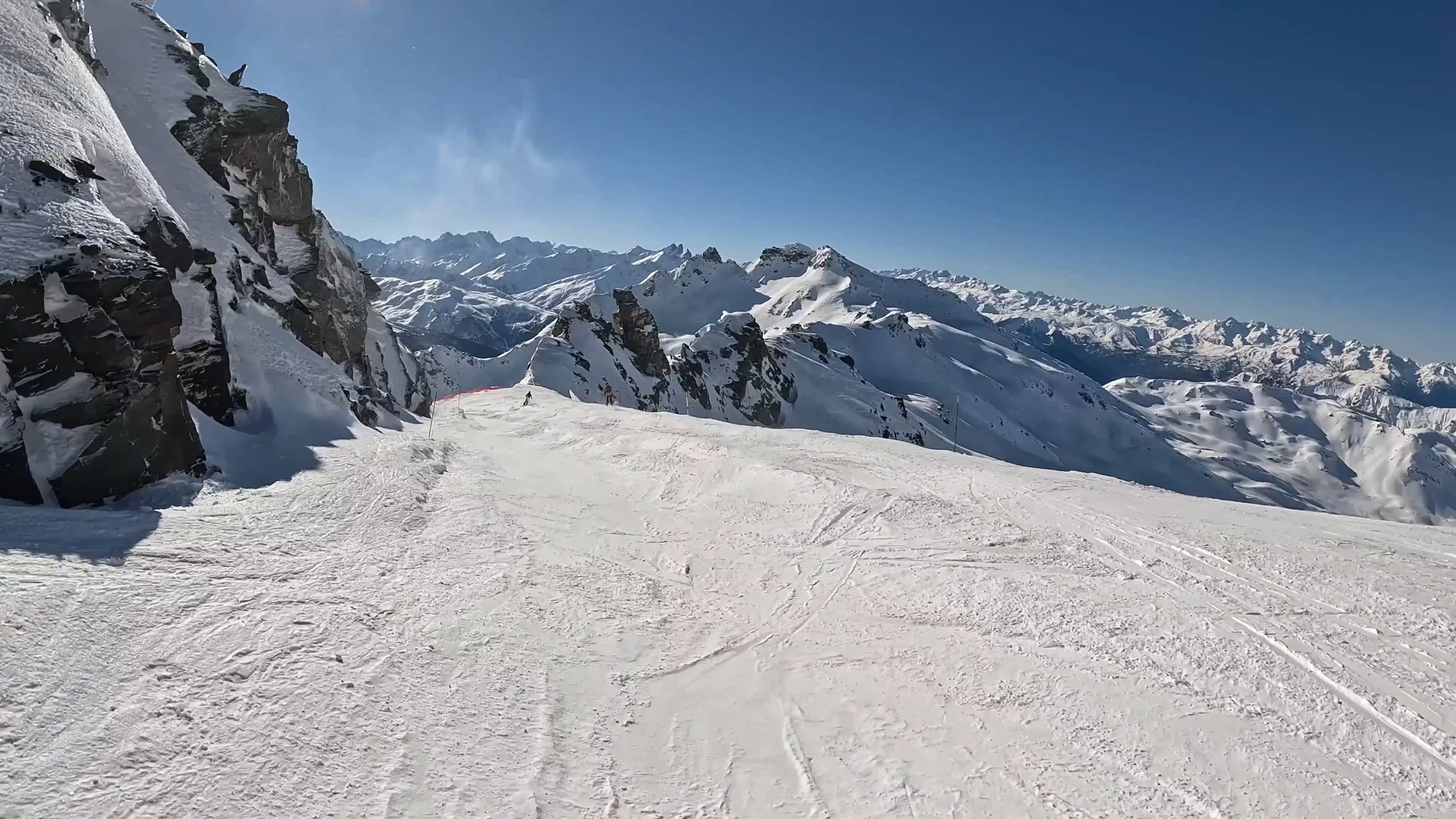
Orelle’s upper slopes are typical of the steeper groomed terrain found across the region’s high-alpine areas.
Terrain Parks
There are six snowparks across the full footprint, with two at each of Val Thorens and Méribel, and one each at Courchevel and Les Menuires. Those looking for the best possible park build need to head to Val Thorens’s VT Park, which has massive jumps, rollers, a half pipe, and even an airbag feature. Méribel’s Open Park is also worth checking out, with two half pipes ranging from medium to extra-large, while the parks at Courchevel and Les Menuires are somewhat tamer but still home to some decently large features.
Expert
Les 3 Vallées’ hardest slopes are designated with a black color. This terrain is not quite as widespread as blue and red pistes, but plenty of runs still exist throughout the massive footprint, especially in upper mountain areas. Normal black pistes are typically groomed, but they can get bumped up. For the hardest on-piste challenges, freeride pistes, which are marked with an orange boundary around the black rating, are never groomed, and these runs are often supremely steep as well. Thrill-seekers should check out the Grand Couloir at Courchevel, which has the steepest gradient of any marked trail in the region and no-fall-zone topography. The Couloir Tournier, which extends off the same Saulire ridge into Méribel, is a close second.
There is also a small selection of hike-to pistes. Located at the very top of Courchevel, the Freeride Lab has two marked pistes: one advanced red run and one expert black. This area is left over from a lift that was removed several years ago and never replaced. It can hold some great hidden powder stashes if it hasn’t snowed in the past few days, but the hike probably won’t be worth it for most visitors.
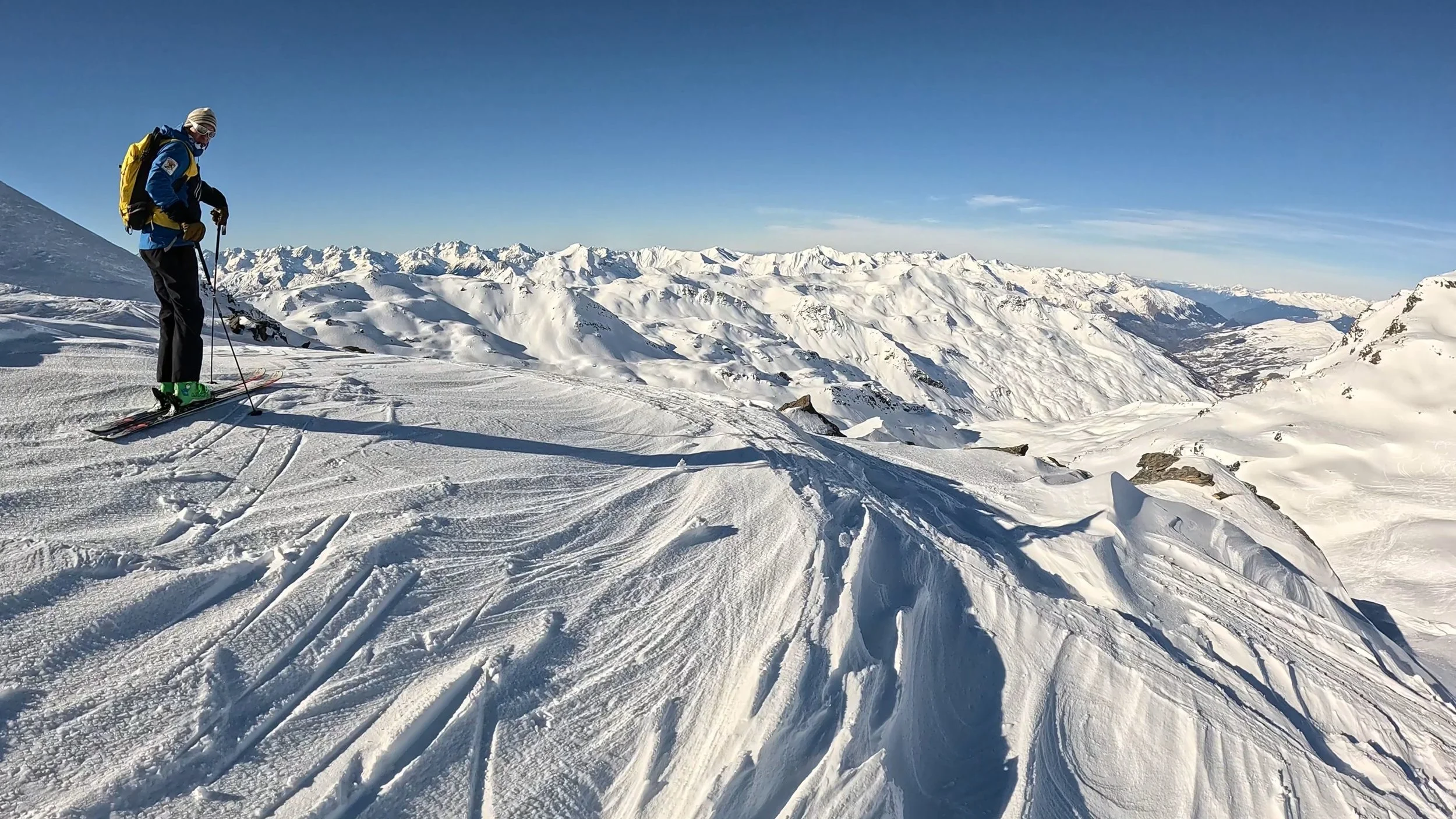
Lift-accessed off-piste sits just beyond the marked trails in many upper-mountain areas of the region.
NOTE: We may receive a small affiliate commission if you click on the below links. All products listed below are unisex.

Recommended all-mountain ski

Recommended carving ski

Recommended glade ski

Recommended expert/touring ski
Off-Piste
If 600 km of marked terrain isn’t enough, Les 3 Vallées is home to an incredible selection of off-piste terrain. This includes plenty of terrain in between the marked trails, especially in upper-mountain areas, with some of it fairly mellow and some involving substantial obstacles, including rocks, cliffs, and unmarked chutes. There are also enormous sections of lift-accessed off-piste outside the outer trails of Méribel, Val Thorens, Orelle, and Les Menuires, and if you’re not careful, you can easily get lost in these areas. Even more terrain is accessible with a bit of hiking, with great touring routes nearby in the French Alps.
Even if you venture just outside the bounds of a nearby slope, the off-piste in Les 3 Vallées is true backcountry terrain. There is no maintenance for avalanches or other hazards, so you are on your own to assess the safety of the conditions. If you’re planning to ski this type of terrain, bring proper backcountry equipment, including a beacon, shovel, and probe, and if you’re not familiar with the region, it’s a good idea to hire a guide.
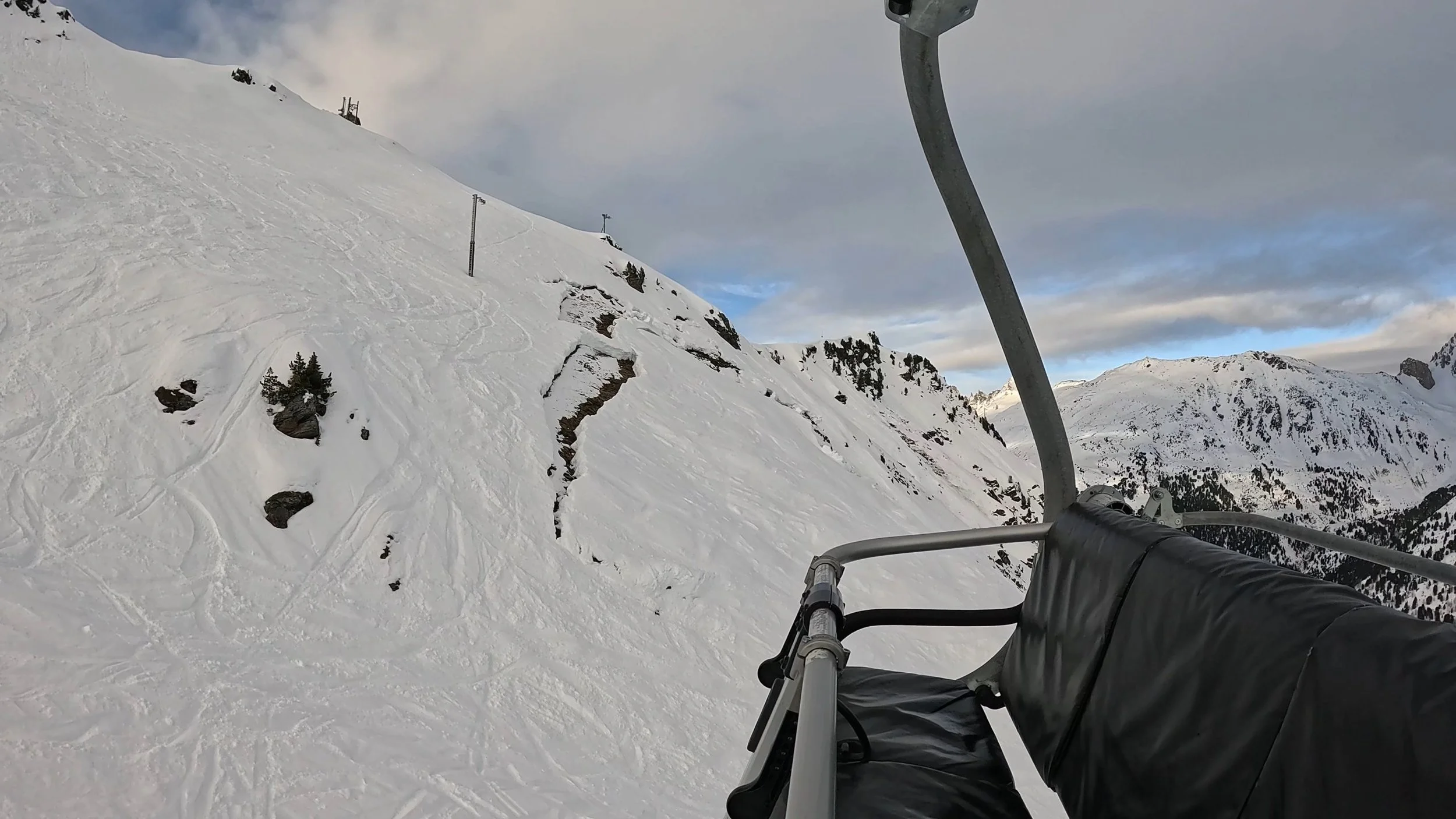
Avalanche debris near a Courchevel lift is a reminder of the hazards that come with the region’s steep high-alpine terrain.
Lifts
Les 3 Vallées enjoys a mostly modern lift setup. With the exception of a handful of lifts in upper-mountain areas at Courchevel and Orelle plus a few lifts that mainly serve real estate in Les Menuires and Courchevel Village, the entire domain is served by high-speed lifts. There are some surface lifts, but they’re much rarer than at many other high-end Alps resorts. The footprint boasts a huge variety of lifts, from bubble chairs, to enclosed gondolas, to funitels, to aerial trams, and it’s often possible to get from the bottom to the top of a valley using only enclosed lifts. Many of the funitels and trams use a jigback design, which hurts capacity, but with tram cabins that fit as many as 160 people at a time, the deficiency isn’t as bad as one might think.
Navigation
Most of the individual sectors are reasonably straightforward to get around, with the exception of Méribel, which has a somewhat confusing base setup and indirect lift layout. Resort signage is straightforward and intuitive, even for those who don’t speak French, and every piste is lined with boundary poles (the left and right poles have slightly different designs) along with numbered markers showing how far you are from the bottom of the run.
Things get a whole lot more complicated when navigating the domain as one comprehensive footprint. The major sectors have a bit of a staircase setup, and when moving from one end of the trail map to the other, crossing sectors often involves gaining elevation as much as it involves simple transport. To get to any part of Val Thorens from Courchevel, for example, guests need to find their way to what’s basically the highest-elevation lift at Méribel to avoid a circuitous detour through Les Menuires. It often takes two or three lifts to get from any given base area to the nearest neighboring resort, so it’s best to allot at least half an hour to get from one sector to the next, and over an hour if you plan to traverse more than one resort.
The worst part of the setup is what happens if you end up at the wrong resort at the end of the day. The resorts may be closely connected by their lift networks, but the same is most certainly not true of their roads. If you end up at Val Thorens or Les Menuires after the lifts close and need to get back to Courchevel or Méribel, expect to pay a few hundred euros for a taxi ride that takes well over an hour.
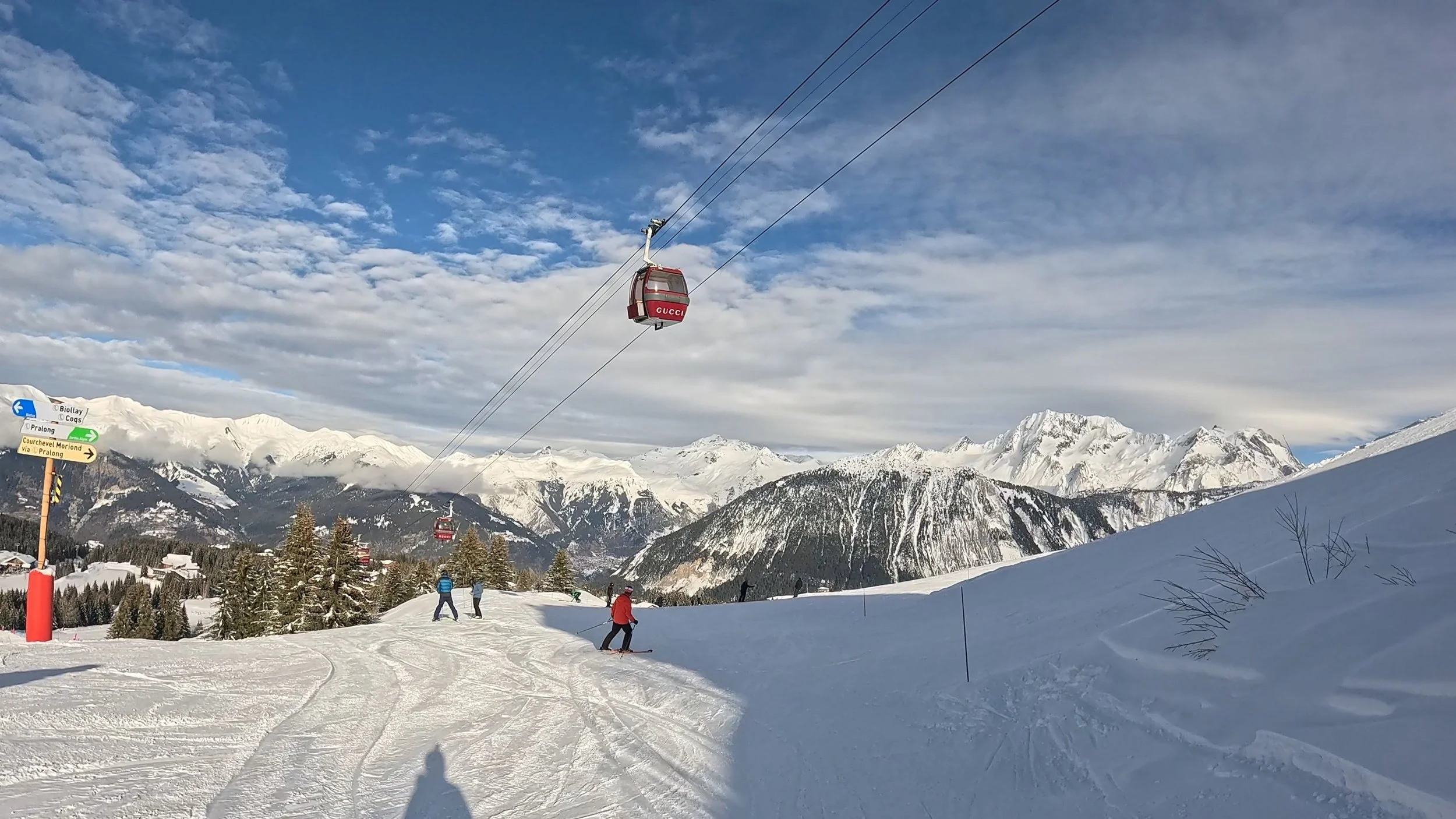
Enclosed gondolas like this one at Courchevel make up a big share of the region’s mostly high-speed lift network.
Getting There
Since Les 3 Vallées is the largest interconnected ski area in the world, getting there depends heavily on which resort you plan to stay at. The two furthest-removed towns, Orelle and Courchevel, are nearly an hour and a half apart by road. For most international travelers, the best airport is Geneva, although Lyon, Chambéry, and Grenoble are also reasonably close.
Public transportation is less convenient than at some competing resorts. There’s no direct bus service from the airports, but visitors can take a bus or train to Moûtiers and transfer to buses serving each base town. These routes often involve multiple transfers and can take over five hours from Geneva. Many guests will find it easiest to rent a car or book a private shuttle, which takes closer to two or two and a half hours from Geneva depending on the resort.
Lodging
Getting to Les 3 Vallées may not be the easiest thing in the world, but the wide variety of lodging options makes up for it. For those on a budget, there are basic apartments in places like Brides-les-Bains, Saint-Martin-de-Belleville, and Orelle. No true shared-room hostels exist in Les 3 Vallées, but the cheapest options can be found in small French communes about 15 to 20 minutes from the bases. Mid-range accommodations are common in Méribel and Courchevel-La Tania, with a mix of chalets and hotels that provide good comfort and value. Val Thorens has some mid-range options as well, though they’re generally a bit more upscale than Méribel and the smaller resorts down the Belleville valley. At the highest end, Courchevel’s lodging is just as expensive as one might expect, with five-star hotels like Les Airelles and Cheval Blanc in Courchevel 1850 offering fine dining, private spas, and concierge services. If you’d rather not sort out lodging on your own, our PeakHouse Les 3 Vallées trip includes six nights in a ski lodge with hot tubs and fireplaces, plus daily breakfasts.

Recommended intermediate board

Recommended advanced board

Recommended expert board

Recommended touring board
Crowds
The interconnected nature of Les 3 Vallées has a big impact on lift lines. They aren’t universally horrendous, but certain popular transit routes can see massive queues at peak times. Some of the biggest culprits are the Plattières gondola at Méribel, which is used to reach both Val Thorens and the popular Mont Vallon summit area, and the relatively low-capacity Cime Caron tram at Val Thorens, which accesses the best advanced terrain at both Val Thorens and Orelle. Any lift on a direct route from one valley to another gets busy at peak times, while lifts on a limb are usually a lot quieter.
Facilities
Les 3 Vallées has a very competitive restaurant scene. Unless you’re in the Col de Chanrossa area of Courchevel or at the very top of Orelle, you’re sure to be close to one or more dining options, ranging from basic cafeterias and sandwich shops to Michelin-star restaurants. Courchevel has the highest-end dining setup, and outside of Col de Chanrossa, it feels like there’s a restaurant around every corner. Méribel and Les Menuires offer the most down-to-earth eateries of the bunch, with more grab-and-go options. Unlike many North American resorts, several on-mountain restaurants offer sit-down service only, so you can’t expect a quick bite at every lodge.
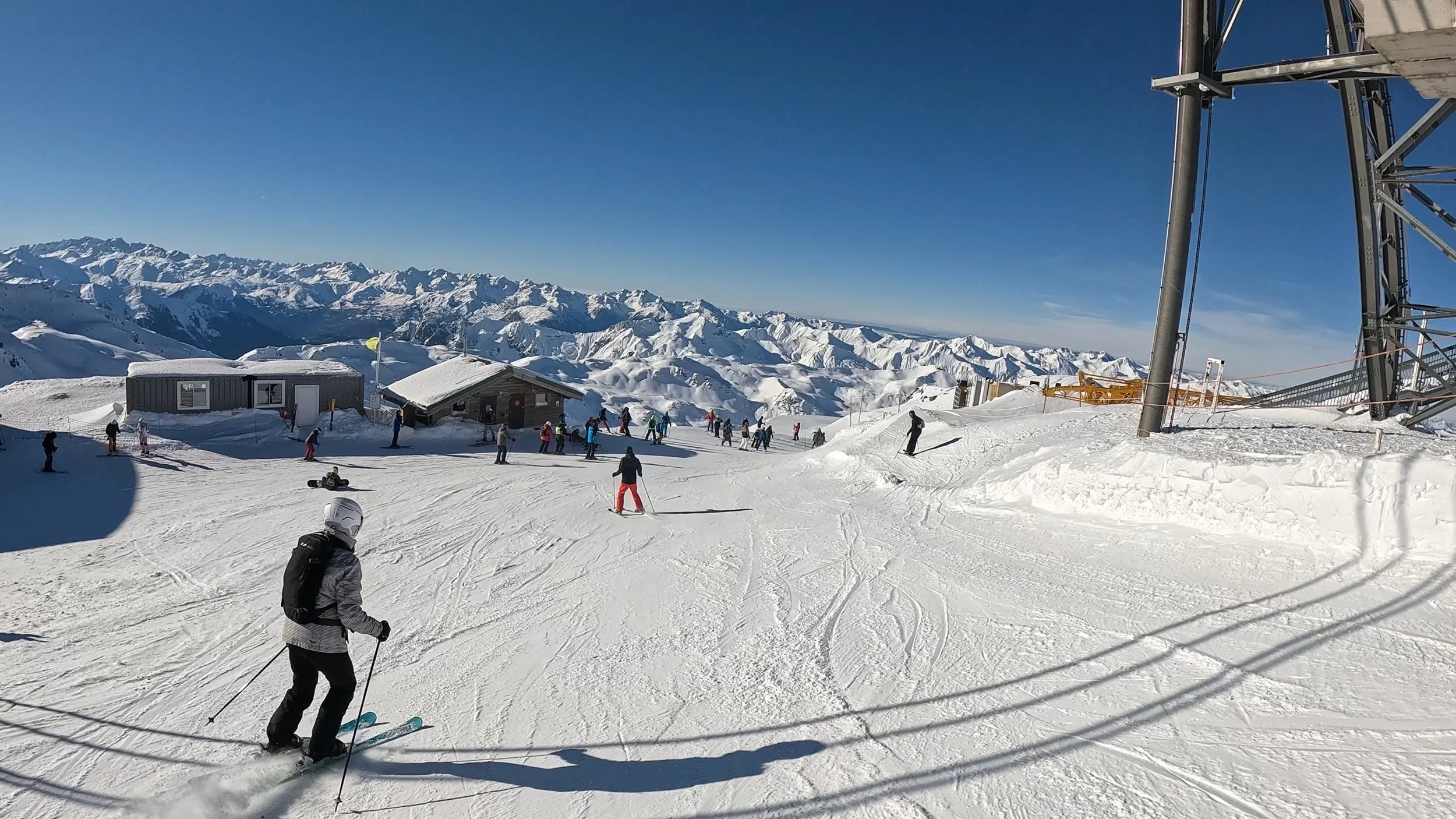
Lifts along the routes between valleys, like those around Val Thorens, get busy during peak times.
Après
At many of the region’s resorts, the bar and restaurant action doesn’t stop with lunch, although how much après you’ll find depends on the resort. To start partying before the slopes close, head to one of the two La Folie Douce locations at Val Thorens and Méribel, which get rowdy even on weekdays, with live music and DJs until the sun goes down. Both resorts have several other on-slope après venues worth checking out, including Rond Point at Méribel and Bar 360 at Val Thorens. If you stay at one of these until close, be careful, because you’ll be heading back down to the base alongside a large group of people who aren’t exactly sober. Courchevel and Les Menuires have less of an on-slope après scene, but their base villages have a decent number of options with live music, while Saint-Martin and Orelle are not the places to be for après.
Off the slopes, guests will find a strong variety of bars and restaurants across the numerous base areas. Bases such as Courchevel 1850 are on the significantly fancier side, while Les Menuires and Brides-les-Bains lean more casual. For night owls, Méribel, Val Thorens, and Les Menuires all have nightclubs that stay open well past midnight, in some cases as late as 5 a.m.
Pass Partnerships
Les 3 Vallées is available for seven consecutive days on the full Epic Pass (it isn’t included on Epic Local or Epic Day passes). Unless you’re skiing or riding in the United States at least one other time this winter, it’s probably worth just buying lift tickets.
Mountain Aesthetic
The sheer scale of the footprint, with seemingly unending networks of resort infrastructure, is already a sight to behold, and the region’s upper-mountain areas have stunning views of the surrounding ranges. Val Thorens, Orelle, Méribel, and Les Menuires all have photo-worthy vistas, and Val Thorens’ completely tree-free base village and white-painted chairlifts make for an unforgettable aesthetic. But the real star of the show is Courchevel, which directly overlooks Vanoise National Park, and its Col de Chanrossa zone feels the most at one with nature of anywhere in the region.
Courchevel is also by far the most moneyed resort in Les 3 Vallées, with extremely high-end restaurants and stores and even Gucci- and Moncler-branded lifts and gondola cabins. If you’re looking for down-to-earth vibes, Méribel and Les Menuires are a much better fit.
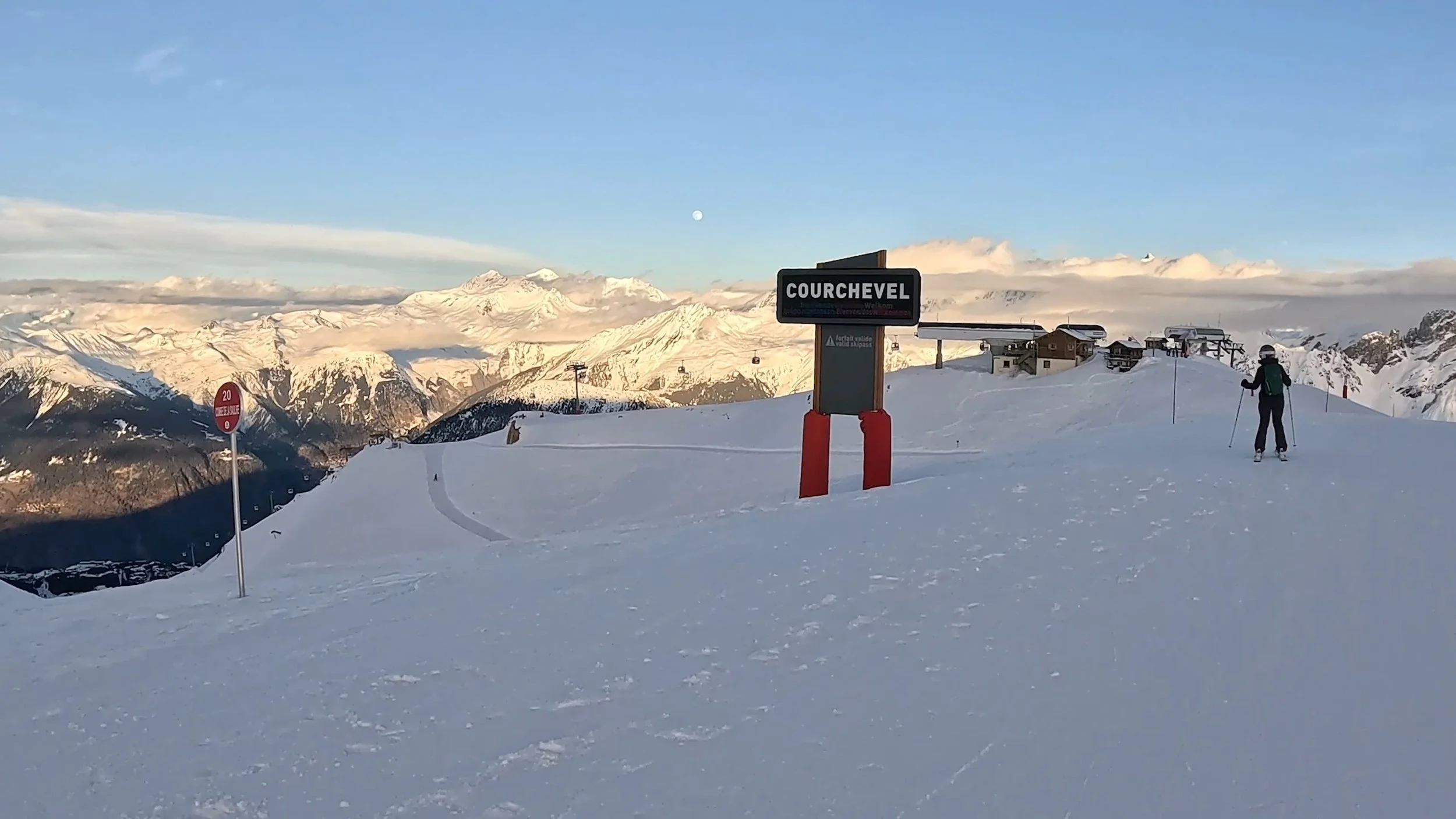
Courchevel directly overlooks Vanoise National Park, giving it the most stunning setting in the region.
Verdict
For most people, Les 3 Vallées is a bit unwieldy to treat as one comprehensive resort, and for most visitors, skiing from Courchevel to Val Thorens and back won’t be a common occurrence. Still, the domain is so extensive that it’s worth a visit for any skier or rider looking to cross one of the most unique ski areas in the world off their bucket list. Courchevel, Méribel, and Val Thorens are each well-rounded enough to rank among the best ski resorts in the world even if they weren’t connected to one another.
Les 3 Vallées is probably the best European ski region we’ve visited. Its continuous size, well-rounded terrain for all abilities, and comprehensive infrastructure are hard to come by anywhere in the world, and with snow that’s reliable by Alps standards, it’s a must for anyone with the Alps on their radar.
Pricing
The best part about Les 3 Vallées, especially for those coming from the United States, may be its lift ticket price. For 2026-27, a peak-season adult day ticket for the full Les 3 Vallées footprint costs €84.20, and tickets for the individual valleys are even cheaper, starting around €69. That’s an almost unthinkable value for those coming from across the pond.