Was the 2025-26 Season the Worst Ever in North America?
If you booked a fly-to vacation this winter and stayed in the United States, chances are your vacation looked like the above thumbnail.
Yes, things were dire this winter, and the CEO of Vail Resorts publicly called it the worst winter they’ve seen in over three decades—and that was before a series of late-season weather events effectively brought the season to a close at many of the places that are usually considered the most dependable. But weather wasn’t the only notable story from this winter, and there were several developments that could have meaningful ripple effects on your ski vacation experience for years to come.
So what actually happened this winter, and what does it mean for the ski industry going forward? In this video, we’ll go through what we see as the most important developments from the season, and why they matter to you as a consumer.
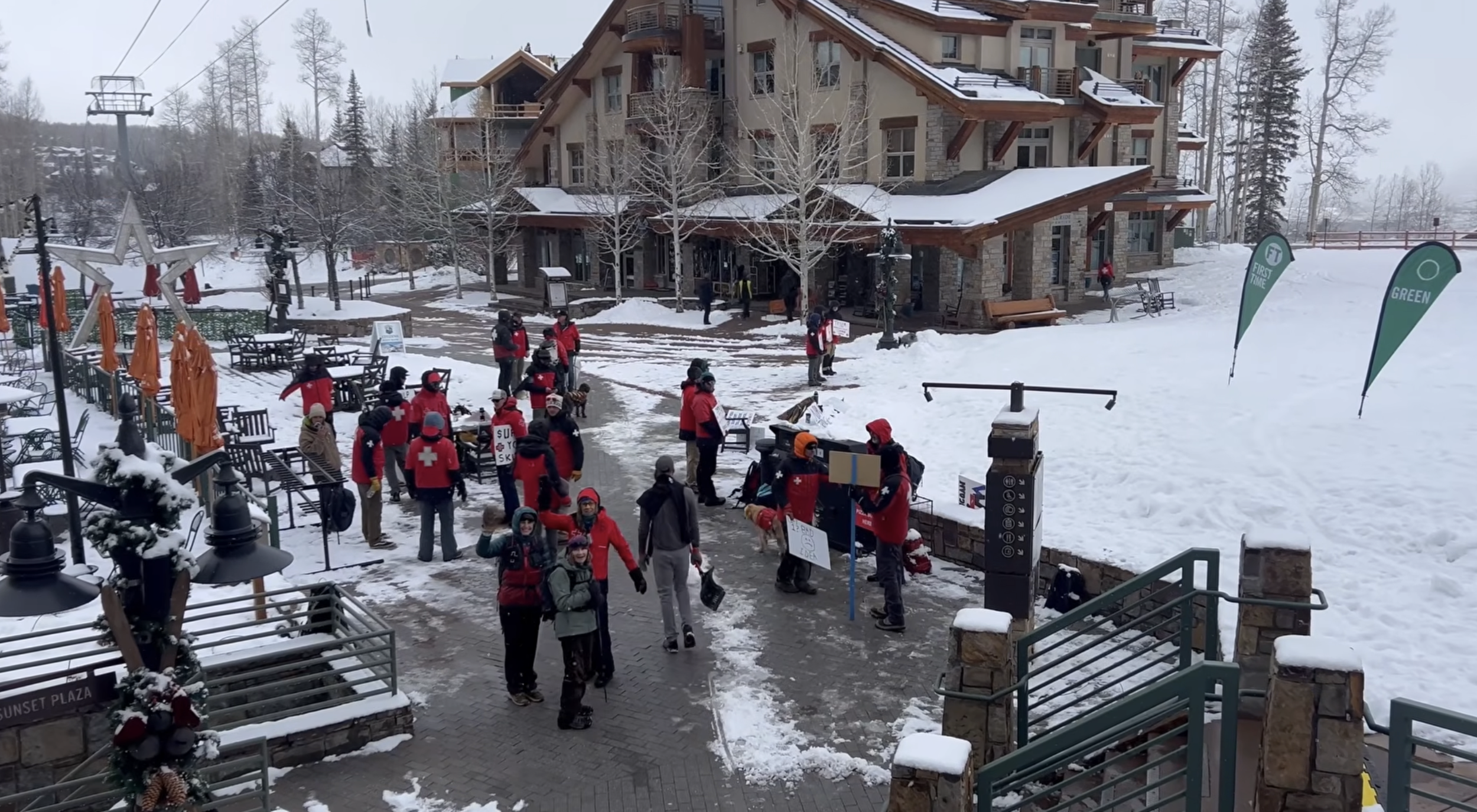
Striking ski patrollers demonstrate and picket at Telluride’s Mountain Village, January 2026
Ski Patrol Strikes Continue
First off, even before the weather patterns of the season became a defining factor, a significant theme from the prior year resurfaced—and that was labor strike action. In December 2024, ski patrollers at Park City went on strike and ultimately won several concessions versus the resort’s owner, Vail Resorts. Perhaps seeing the fruits of that action, two other North American ski resort unions also decided to strike this winter, first at Colorado’s Telluride and then at Quebec’s Le Massif.
On paper, the Telluride ski patrol strike bore a near carbon-copy resemblance to the Park City one, starting on the exact same calendar date just one year later. But the events that followed ended up being far messier. The patrol walkout resulted in a full shutdown of the resort during perhaps the busiest period of the year, but rather than giving in quickly like publicly-traded Vail did at Park City, privately-owned Telluride held firm, even as it was likely losing hundreds of thousands of dollars a day. The economic fallout was immediate, and it wasn’t long before the town put pressure on the patrollers to come to an agreement. The strike ended after 13 days with what appeared to be limited goals achieved by the patrollers.
However, the story didn’t end there. It later came out that during the strike, the mayor of Mountain Village, which is where most of the resort’s slopeside condos are, and the mayor pro tem of Telluride itself had flown to California to try to persuade resort owner Chuck Horning to sell a majority stake. That effort clearly failed, and the fallout from it triggered investigations into both officials and ultimately led them to resign. And then on February 25, the resort filed a lawsuit against the two former officials, along with Mountain Village’s town manager, alleging harassment and tying their actions to millions of dollars in strike-related losses.
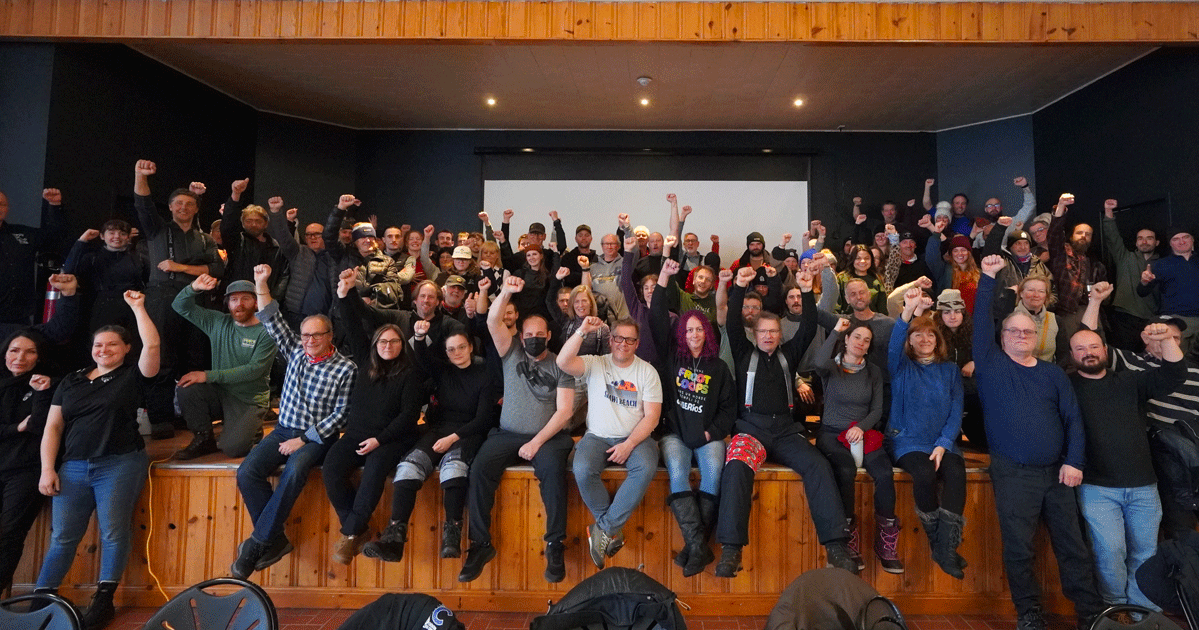
Le Massif’s unionized workforce.
Source: Confédération des syndicats nationaux (CSN)
North America’s other labor strike at Le Massif seemed equally chaotic at times, but after what one could argue was a turbulent finale, it ended with a resolution that appeared to satisfy the union far more clearly. The Le Massif strike started rather suddenly, with little notice that the January 2 walk off would happen until the December holiday period. This strike was also notable in that it involved the vast majority of the mountain’s workforce, rather than just ski patrol in the cases of Telluride and Park City.
Over the following weeks, the standoff became increasingly messy, with the resort eventually saying it would have to suspend the season if the two sides couldn’t come to a compromise. But just two days after management announced an indefinite season suspension, the two sides reached an agreement and made plans to reopen, with a deal that appeared to address many worker concerns. Even so, Le Massif lost several prime weeks of what had otherwise been a strong eastern season, and it certainly seems that the mountain has trust to rebuild with travelers who had their vacations upended. Ultimately, this season tells us that ski resort workers are becoming more assertive in a fight for fair compensation, especially as the cost of living continues to rise in mountain towns, albeit with mixed outcomes depending on how much leverage they have.
Oregon Skiing Gets New Lease on Life
Next up, we move to a story that’s also not generated a huge number of national headlines but may be finally spelling the resolution of a long-running legal crisis in the state of Oregon—albeit with one catch. For years, a slow-moving liability crisis has threatened the viability of the state’s ski industry, with state-level court rulings making liability waivers effectively unenforceable and insurance carriers leaving the state, with only one provider left as of June 2025. This has resulted in Oregon ski resorts experiencing dramatic premium increases, with Mount Hood Meadows in particular citing insurance costs rising by as much as 600% in recent years. This has left a serious question mark as to how long the industry could sustain itself—and whether certain operations could continue at all.
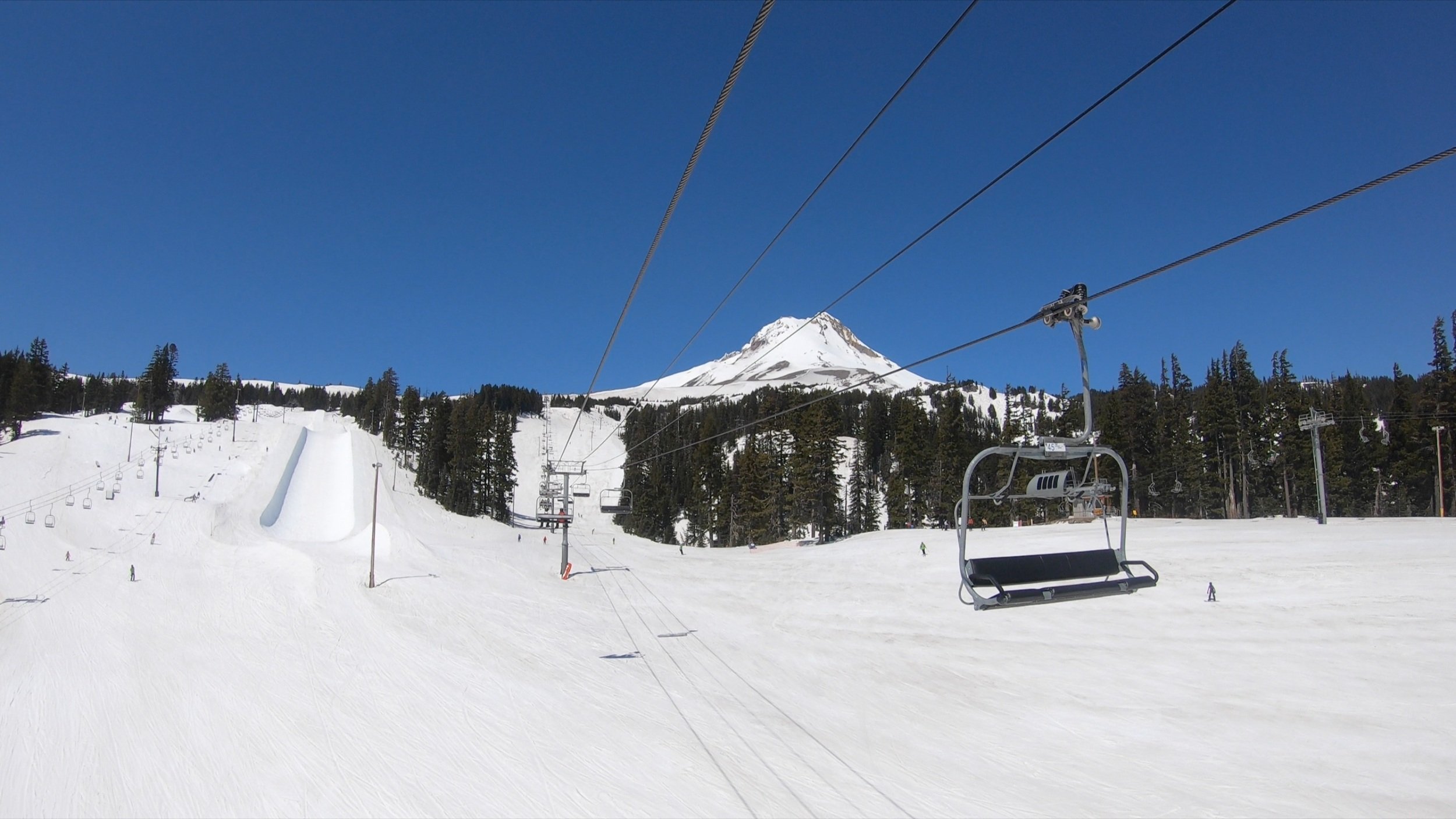
Mount Hood Meadows is just one of several Oregon resorts that had been crippled by skyrocketing insurance costs.
But after years of deferred action, Senate Bill 1517 was designed as a targeted fix to that issue. At a high level, the bill restores the ability for recreation providers—including ski resorts—to require participants to sign liability waivers that are enforceable for claims of ordinary negligence, while still preserving the right to sue in cases involving gross negligence, reckless conduct, or situations outside the scope of the activity itself. It also clarifies that determining whether a risk is “inherent” to an activity is a question of law rather than something left entirely to a jury. In other words, it brings Oregon’s liability waiver enforcement on par with essentially every other state with a significant recreational industry.
Legislatively, SB 1517 moved quickly once a compromise was reached. It passed both chambers of the Oregon Legislature with strong bipartisan support, and Oregon’s governor signed the bill into law on April 7, 2026. Because the bill includes an emergency clause, it took effect immediately upon being signed.
Relative to where things stood heading into this season, the passage of SB 1517 represents a long-awaited solution to a difficult problem, and signals that liability-related lawsuits are no longer likely to be the downfall of the state’s ski industry.

Lake Tahoe’s Heavenly was the site of an incident that led to an unusual lawsuit this season.
Lawsuits Continue
However, lawsuits across other parts of the ski industry have continued to arise, and a couple of notable ones popped up in the headlines this year.
At least on the surface, one of the more unusual lawsuits to emerge this season came out of South Lake Tahoe’s Heavenly ski area. The suit centers on a 5-year-old girl who allegedly received severe burns after being served an excessively hot cup of hot chocolate without a lid, which then spilled inside her clothing. The family is suing Heavenly, claiming that the resort failed to exercise reasonable care in serving a dangerously hot beverage to a child.
As was made abundantly clear for those following the Oregon situation, resorts in most states are generally shielded by liability waivers tied to the inherent risks of skiing. However, the plaintiffs argue that drinking hot chocolate is not one of those risks, and that because this incident was not directly related to skiing or riding, it falls outside those typical protections.
There is precedent for this type of argument in U.S. tort law, most notably in Liebeck v. McDonald's Restaurants, where a jury found McDonald’s liable for serving coffee at temperatures far above what was considered safe, resulting in severe third-degree burns. While the case became widely mocked, the legal outcome rested on evidence that the company knowingly served a product at a temperature capable of causing serious injury and had received numerous prior complaints.
Unlike the McDonald’s case, it is not yet clear whether similar patterns of prior incidents and internal knowledge exist within Heavenly or its broader owner, Vail Resorts. But regardless of the legal outcome, we could see a broader shift in how ski resorts handle their food and beverage services, perhaps taking more precautions around drink temperatures, how items are served, and the overall protocols for handling hot products. Don’t be surprised if when you go on your next ski vacation—especially if it’s at a Vail-owned mountain—you no longer see unlidded hot drinks handed out.
It is difficult to say as of yet whether the lawsuit against Vail and Alterra will bear any fruit.
But shortly after that, a lawsuit that generated exponentially more headlines came out—and that was that Vail Resorts and Alterra were being sued for anticompetitive practices. The federal antitrust case filed was on March 23, 2026, and the plaintiffs allege that the companies used control over marquee destination resorts to push skiers and riders into bundled multi-mountain passes like Epic and Ikon. The plaintiffs also claim that the companies have kept single-day lift ticket prices high enough that buying into those bundles became the only rational option. They are seeking damages and an injunction that could force changes to how these passes are structured.
Rather than being about pricing on its own, this case seems to be more about whether the structure of the mega-pass model itself limits competition by steering consumers toward large bundled products and away from cheaper access options for smaller, more local mountains, including those owned by Vail and Alterra themselves. That said, proving that claim will be difficult. The companies can point to multiple pass tiers—including many that offer significant discounts for those only accessing the smaller mountains, especially when it comes to Vail—as well as the fact that many skiers and riders do receive real value from these products.
At this stage, the lawsuit could still be dismissed before trial, which would effectively end the case. But if it survives early motions—or even partially proceeds—it would quickly become a much larger story, with potential implications for how multi-resort passes are priced and sold across the industry.
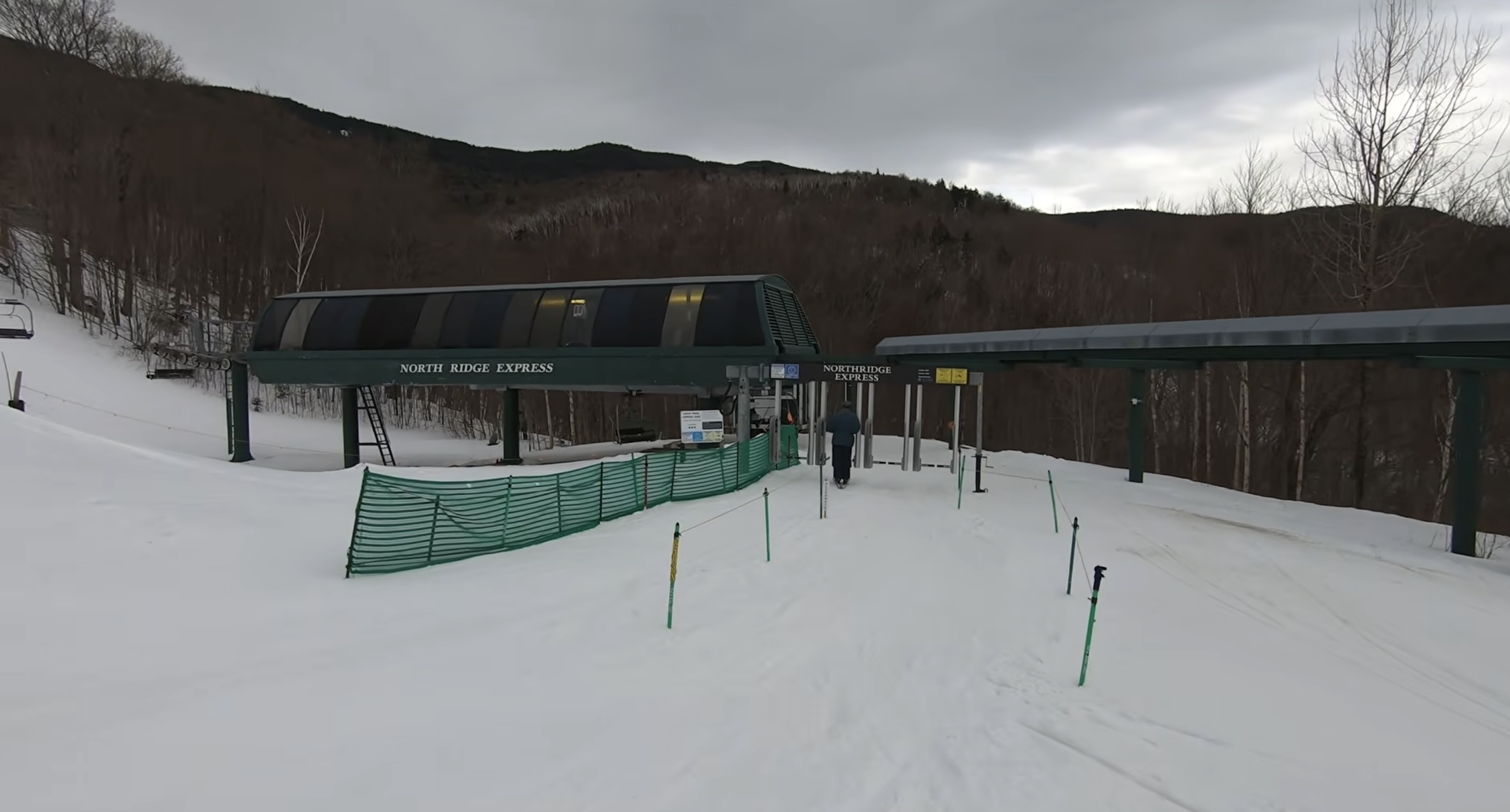
Sugarbush’s North Ridge Express is one of the only lifts at an Alterra mountain with a planned upgrade in the near future.
A Creeping Aging Lift Problem
But at this stage, the bigger headache for Vail Resorts and Alterra may be the status of their aging lift fleets. Despite aggressive investment in the early 2020s, these companies have lagged behind on replacing their outdated lifts in recent years and still have dozens of old lifts reaching the ends of their useful lives or capital improvements that have not materialized.
And as of mid-2026, very little has been announced to rectify that. Over the next two off seasons, Vail Resorts is currently set to replace lifts at Park City and Whistler, while Alterra’s focus remains heavily concentrated on the Deer Valley expansion, along with a new North Ridge lift at Sugarbush. Outside of those projects, there have been relatively few major announcements across their broader portfolios. The third-most prominent ski resort operator in North America, Boyne Resorts, does seem to be slowing down on its investments versus the huge slate of capital improvements it made in previous years as well.
This all being said, major destinations not owned by these larger companies seem to be faring better, with resorts owned independently, such as Sun Valley, Lake Louise, Aspen Snowmass, Killington, and Powder Mountain, continuing to see significant planned capital improvements. It’s hard to say exactly what’s causing this slump specifically for the mega corps, but declining pass sales on Epic’s side, high demand for lifts, and rising construction costs could all be playing a role.

Resorts partnered with Alterra, such as Snowmass, are improving much more aggressively than those owned by Alterra.
Turnover at the Mega Corps
And perhaps these aging lifts are reminiscent of a broader issue within the large ski resort corporations, as the companies that own and issue the Epic and Ikon Pass have shown remarkable turnover over the last 12 months. Vail had its reckoning several months ago, but it now seems Alterra is entering its own.
Last May, Vail replaced outgoing CEO Kirsten Lynch and reinstated previous CEO Rob Katz. And in December, they announced a new CRO focused on pricing, marketing, and the overall guest experience. Within the past few months, we’ve seen notable changes to Vail Resorts’ pricing strategy, with deeper discounts on lift tickets purchased in advance, a 20% young-adult Epic Pass discount, and much more generous buddy tickets that offer 50% off the window price. It also seems like the company is taking steps to revamp its lift ticket purchase platform so that it can offer more flexibility with pricing.
On the other hand, it seems like Alterra may be going through somewhat of a similar transition to what Vail dealt with a little bit less than a year ago. Jared Smith announced in March that he would step down as CEO at the end of the season, although a statement from the company made it seem that he stepped away from day-to-day duties immediately. Around the same time, this year’s Ikon Pass debuted with a significant number of policy changes, including some new benefits and discounts, but a lot of those perks have been widely viewed as half-baked in effort, and there’s now a steep extra-cost add-on required to get any kind of pass insurance.
Either way, it seems like the theme here is that the current Epic and Ikon business models are not working as intended. With Epic, we have public data showing that pass sales are slightly declining. With Alterra, we obviously do not have that same visibility because it’s a private company, but the fact that they are changing CEOs likely tells us at least something.
It sure seems like both companies are now working on changes to make their pass products more appealing while operating within the constraints of their respective business models. Ikon may be more constrained than Epic, as Vail Resorts owns most of the resorts on the Epic Pass, while Alterra relies more on partners for Ikon. At the same time, Vail may still be struggling to attract new pass partners, as it has not added a new North American partner since acquiring three Pennsylvania mountains in 2021. This spring brought perhaps the biggest structural shake-up in the entire lifetime of both the Epic and Ikon Pass suites, and as Vail and Alterra work to make their products more sustainable, don’t be surprised to see more changes in the coming seasons.
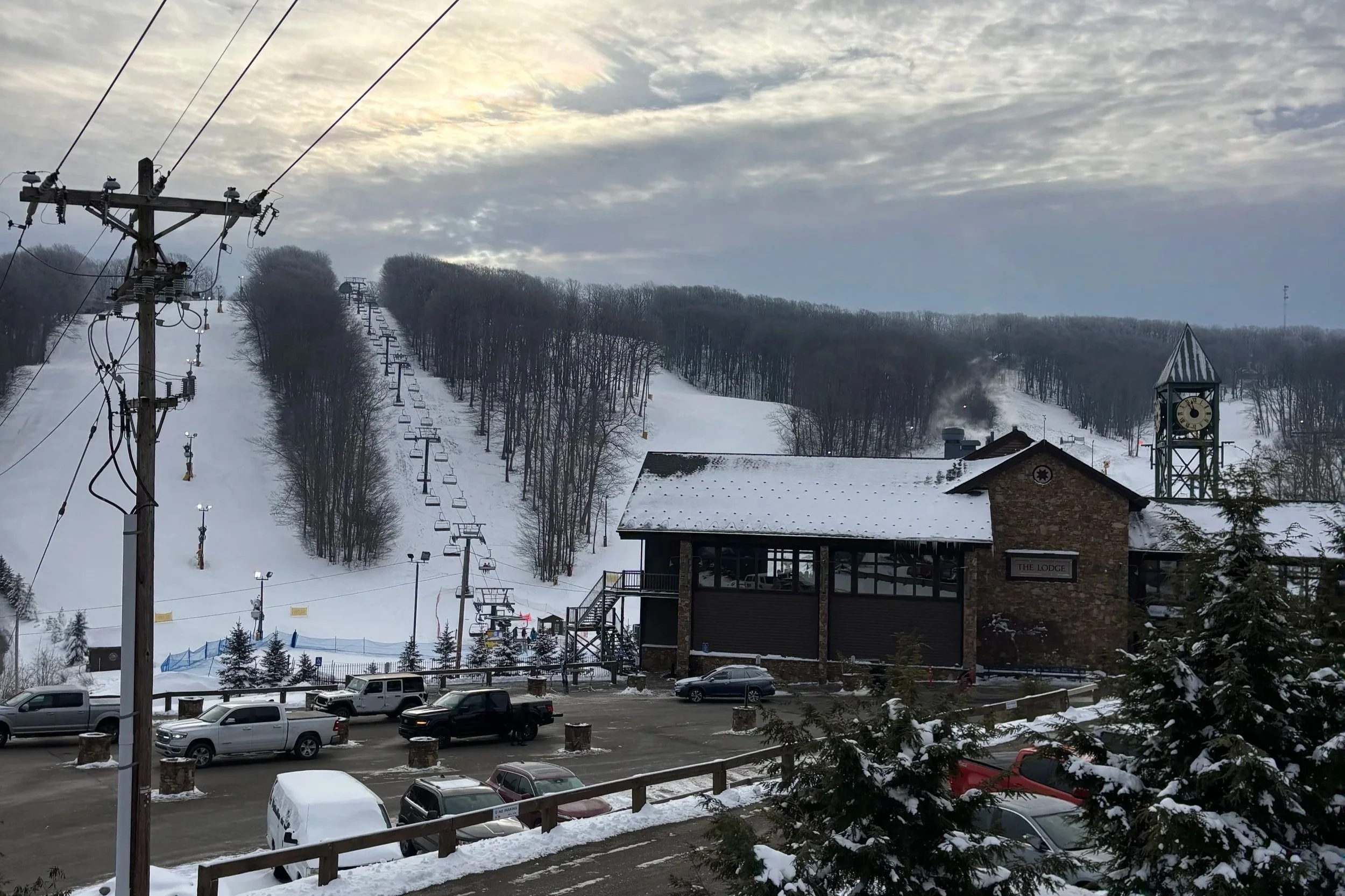
Seven Springs, Laurel Mountain, and Hidden Valley (pictured), all in western Pennsylvania, were the most recent resort acquisitions by Vail in 2021.
Big Moves from the Indy Pass
Next up, let’s cover a development that arguably got little attention outside of a small sliver of the industry but has significant implications for independent ski resorts. And that was Erik Mogensen’s decision to fully buy out Black Mountain, NH and abandon the previous co-op path, which shows how personally invested Indy Pass leadership has become in a single independent mountain. When Entabeni Systems and Indy first got involved with Black in 2024, the plan was to rescue a mountain that couldn’t financially operate anymore and eventually transition to a co-op ownership model. But this March, Mogensen and his team reversed course, buying back the shares that had been lined up for the co-op structure and announcing plans to relocate Indy Pass and Entabeni operations from Colorado to Black Mountain.
Mogensen’s stated idea is that Black can be used to build and test systems that help independent ski areas solve the problems that keep crushing them, from operations to business model. And to his credit, the mountain has already become a proving ground for a wide range of unconventional ideas. Some are practical, like heavy snowmaking investments that have pushed the season later than most comparable Northeast mountains, or the addition of hike-to terrain, which is still a rarity in that region and a potential draw even when Black Mountain’s size and lift stats aren’t that competitive. Others have been more experimental, or even borderline bizarre, such as the mid-mountain champagne hut selling bottles for as much as $2,500—in a location that doesn’t even have a bathroom. And then we can’t talk about Black Mountain without touching on the team’s hard lean into storytelling. Mogensen and Indy have leaned hard into documenting everything, publishing a steady stream of blogs and updates that seem to be intended to make the mountain feel like a shared community project—but one that extends across all Indy Pass holders.
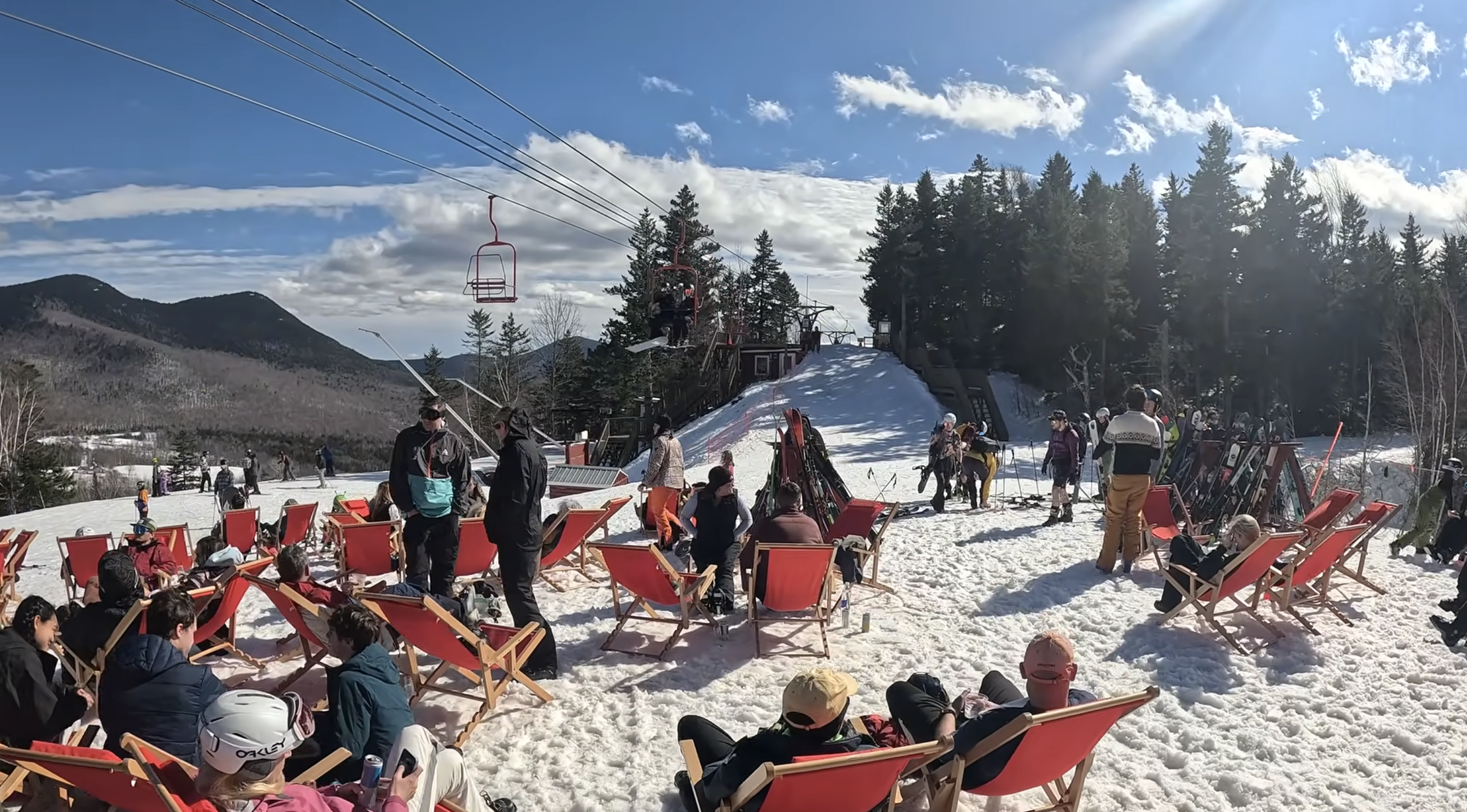
Black Mountain has become a unique testing ground for Indy Pass’s leadership to test strange operational ideas.
But despite the focus on community in these blog posts, Indy Pass has paired that with getting noticeably more aggressive about how it sells itself. The company still says the pass is capped to preserve the uncrowded, independent feel of its partner resorts, which has been central to the Indy identity for years now. But alongside that, the company now seems to be leaning much harder into high-growth marketing tactics.
One clear example is the move into auto-renewal. For the 2026-27 season, Indy introduced a system where existing passholders are automatically renewed at the lowest available price unless they opt out. The Indy Pass is still an incredible deal for those who can make proper use of it, but this move signals that Indy may be trying to bank on its purchasers effectively converting into annual subscribers.
That shift also sits awkwardly next to the way the pass is marketed. Indy continues to emphasize limited supply and the idea that access is not guaranteed, utilizing a waitlist for most new signups rather than allowing a direct purchase. That dynamic was on full display this year, with the pass selling out in just 37 minutes during its first public sale period on April 3, which was the first time people who had not renewed or been on the waitlist had the opportunity to buy. But at the same time, there is no publicly available information on just how many passes are sold, with it seeming like many of those who signed up for the waitlist already had their opportunity to buy before this sale period. On top of that, messaging campaigns have become more urgent and significantly more aggressive, with the company at times sending out multiple text and email messages to consumers in only a single day. The company is also continuing to add dozens of new downhill skiing and riding partners every year, although we have limited color as to how that affects the number of passes sold.
Ultimately, the Indy Pass is still positioned as an alternative to Epic and Ikon that gives access to smaller but less crowded mountains. And it’s continued to achieve that effectively this year. But with these new shifts in how the product is being structured and marketed, as well as the decision to center operations around a single-owned mountain, we’re now seeing a model that is becoming more centralized and aggressive in its position. We’ll be monitoring whether that leads to any meaningful changes in the experience for one of the few remaining ways to access multiple ski resorts affordably in the coming seasons.
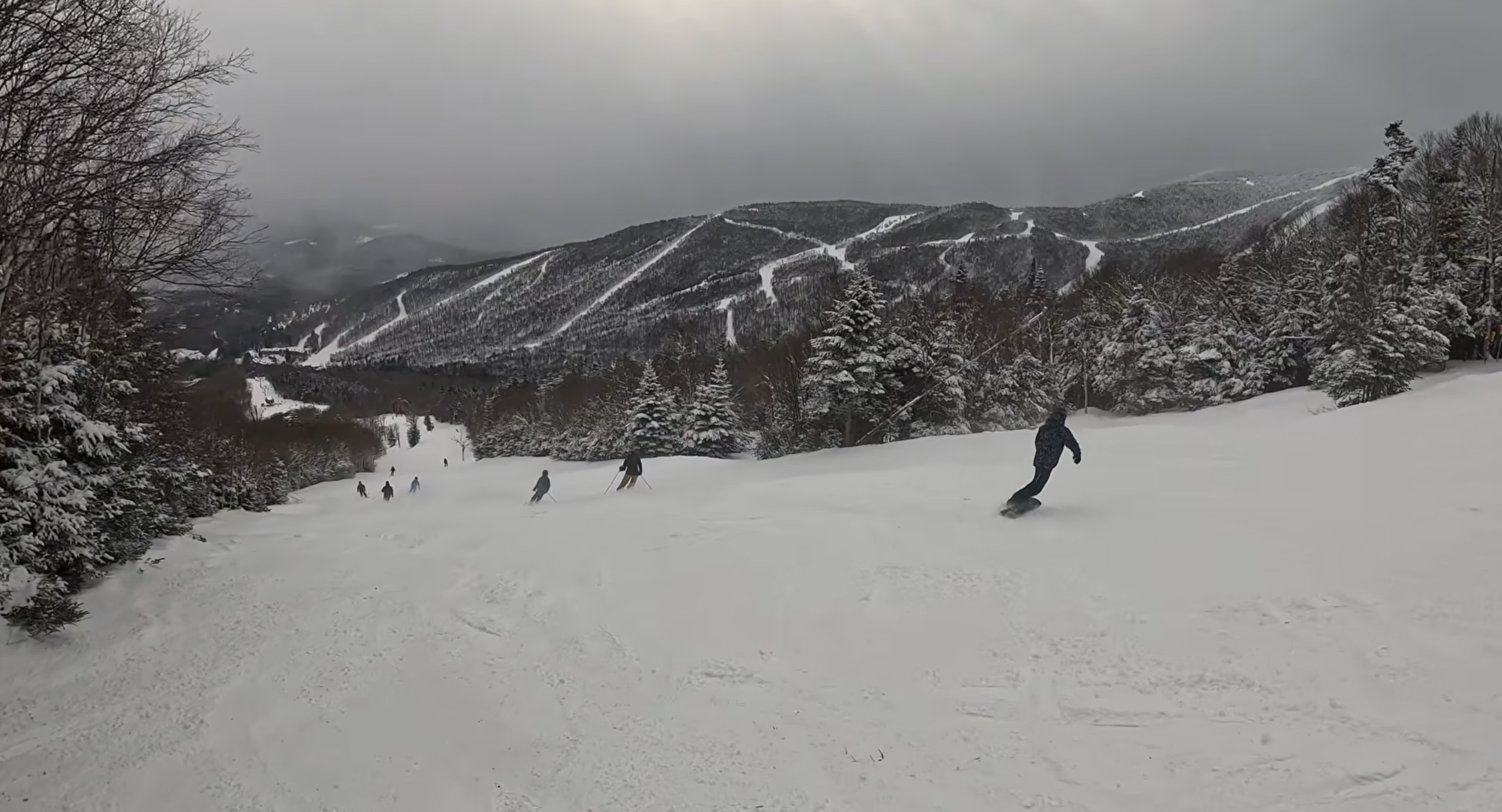
Many ski resorts in Vermont, including Sugarbush (pictured), had incredible core seasons with regular snowstorms and consistently low temperatures.
The East’s Killer Season
And now, we finally get to the story of the season that most of you who took a vacation this winter plainly noticed: the weather. But if you spent significant time skiing or riding this winter, there’s a chance this actually wasn’t your worst season. In fact, for a significant portion of the skiing and riding population, this was one of the greatest seasons in recent memory. That is because the East Coast had an absolutely incredible season, with top-tier conditions through January and February, and into early March. This was in large part thanks to several accumulation events that regularly brought snow refreshes, as well as conditions staying relatively consistent thanks to a much lower occurrence of warm spells than in typical years. In fact, for much of the season, Vermont’s Jay Peak had the highest snow base of any North American ski resort. Seldom-open terrain areas like Whiteface’s Slides and Sugarloaf’s backside snowfields, the latter of which hadn’t opened in three years, were able to get enough coverage to justify a rope drop.
However, that good eastern season also had secondary effects. Through parts of the season, there was perhaps too much cold. Ski resorts in Northern New England and parts of Canada reported wind chills of over -30°F at times, making it nearly impossible to stay outside for prolonged periods of time. In addition, some of the massive storm events hampered travel more than usual, including a series of bomb cyclones that impacted major cities as much as—if not more than, in the case of one February storm—the ski resorts themselves. Meanwhile, around Stowe, the resort reported a significant rise in backcountry-related rescues, with Stowe Mountain Rescue saying it now sees over double the number of calls it handled just a few years ago.
And as strong as the season was, it didn't last forever. By early and mid-March, rain wiped out bases at many resorts south of Vermont, while warmer temperatures farther north brought slushier conditions for much of the month. Still, several resorts made aggressive pushes to extend the season. Killington invested heavily in artificial snow on its Superstar trail, aided by a new six-pack chairlift and a substantial snowgun overhaul; the resort appears well positioned to keep skiing and riding going into late May and possibly June. Black Mountain, which we covered earlier in this piece, has taken a similar approach. Ultimately, it’s hard not to argue that the East had an epic season overall, and one that’s going to be cemented in the history books.
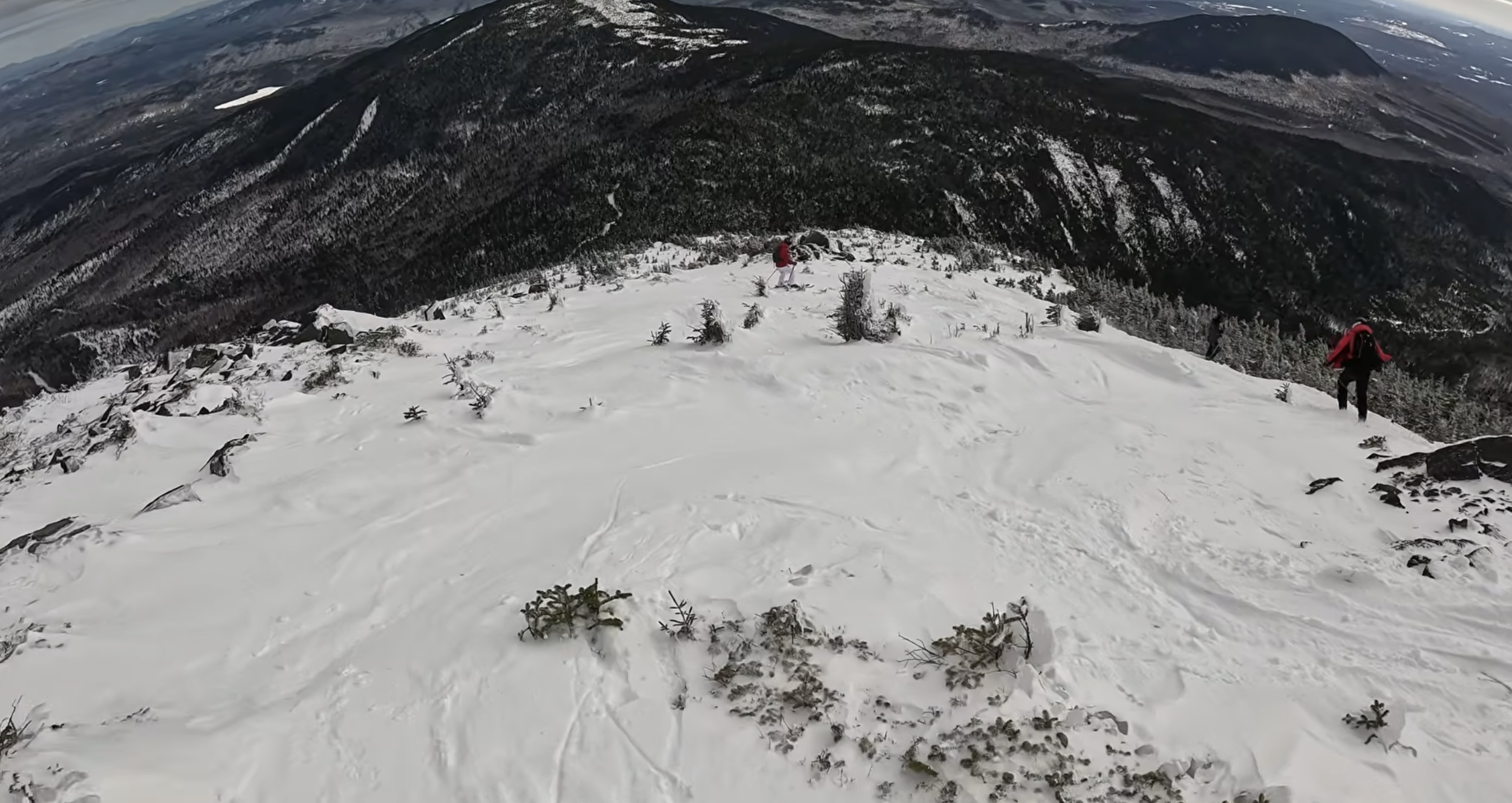
Sugarloaf in Maine was able to open its backside terrain this season for the first time in years.
The Historically Terrible Western Season
But what made the East’s above-average season particularly remarkable—and arguably defined the season as a whole—was the absolutely horrible season experienced by the American West. For decades, ski resorts in places like Colorado and Utah have been viewed as dependable even when all else fails. But this winter, the reality on the ground proved otherwise at most destination ski resorts.
Out West, the problems started early. There was virtually no snowfall in Colorado and Utah through the first half of November, and when storms did arrive later in November and most of December, they came in warm, with much of the precipitation hitting the mountains as rain rather than snow. By late December, not a single ski area in Colorado had surpassed 70 inches of total snowfall for the season. In Utah, November and December brought the warmest average temperatures in roughly 130 years of record-keeping. Several Oregon and Southern California ski resorts shut down simultaneously at multiple times throughout the first few weeks of the core season. And in Washington, early December brought an atmospheric river so catastrophic that it washed out the access roads to multiple different ski resorts, with Stevens Pass in particular not accessible for weeks. At one point this season, the Florida Panhandle had seen more total snowfall than Salt Lake City.
By mid-January, the business side of the industry started reacting in ways that also reflected how weak the western product had become. Ikon’s standard Friends & Family perk provides 25% off single-day window rates, but for a significant portion of the season, the company rolled out a temporary “Friends & Family Blitz” offer of up to 50% off at several destinations. Ironically, some of the eligible resorts for those elevated discounts were those out East that were experiencing a great season, like Sugarbush and Stratton, and we’re not fully sure if this was an oversight or if Alterra was just trying to push visits to any of its mountains. In that vein, Ikon also ran a promotion where its pass holders could get up to $60 in mountain credits for skiing or riding up to three days in February at an Alterra-owned mountain.
Even so, there were points in the middle of the season where it looked like the West might at least stabilize. January brought a few moments of relief, with a series of storms that briefly restored something close to full operations at many areas for MLK weekend. Another three feet fell at many Rockies resorts across the second half of the month, though accompanied by bitter cold at the time of the snow. But a persistent dry spell across the broader West meant most states received 50% or less of normal precipitation for January, and above-normal temperatures ensured that what did fall didn’t last.
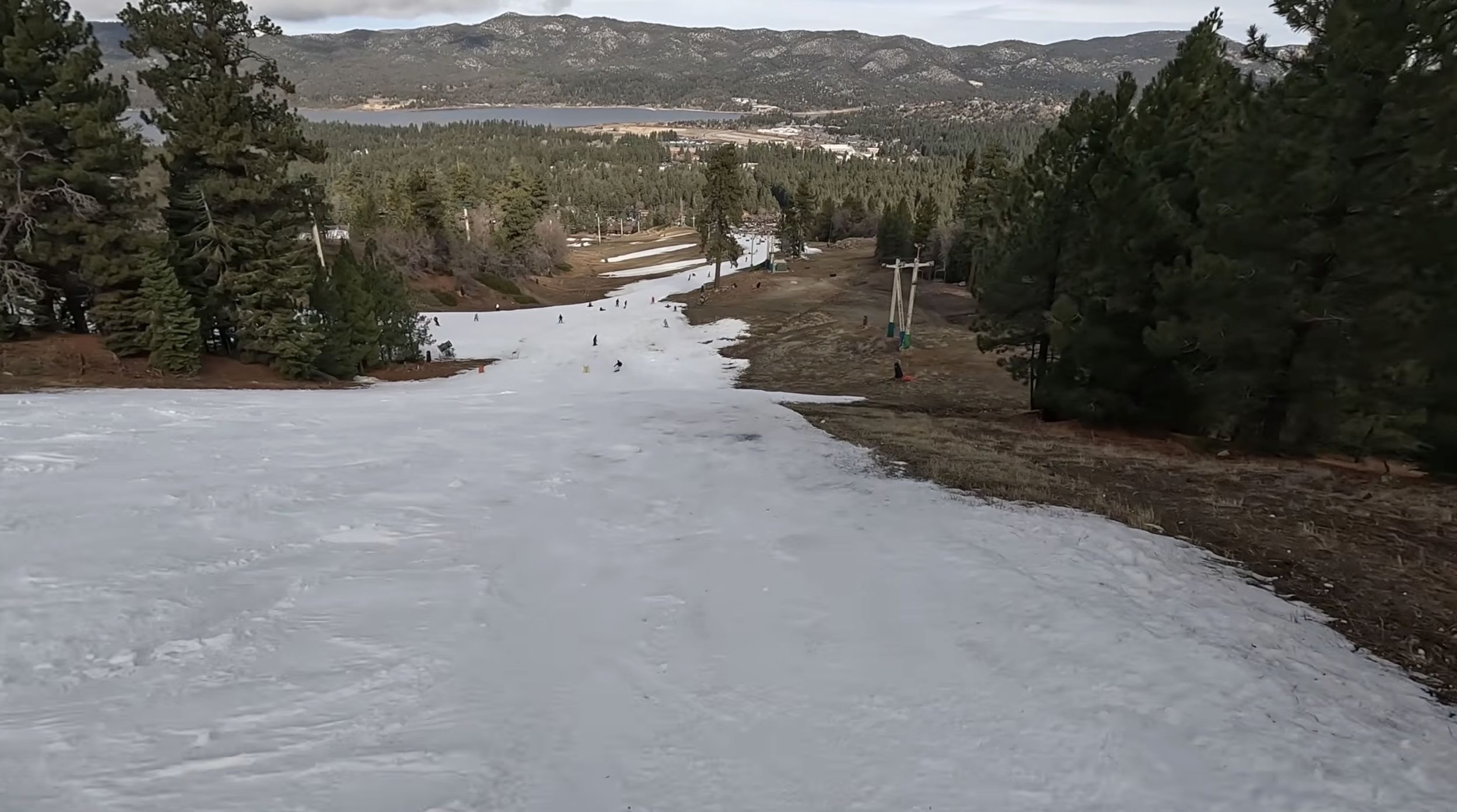
Many ski resorts out West had white-ribbon conditions around the December/January holiday period.
February also brought some real storm cycles to places that had badly needed them. But that rebound also came with extreme consequences. In Washington, a skier was caught in an inbounds avalanche at Stevens Pass on February 26 and survived after an extraordinary burial and rescue timeline. On February 19, sad news came out that an 11-year-old girl passed away after getting caught in a soft slab avalanche out-of-bounds at Brighton, with her and her family having exited a popular lift-served gate on a high-risk danger day. And in California, the February storm cycle helped set up the Castle Peak avalanche near Tahoe on February 17, which killed nine backcountry skiers in what was later described as the deadliest avalanche in the state’s recorded history.
The month of March started off at least somewhat promising, at least in the Rockies. Colorado and Utah saw decently strong storms in the first week and a half of the month. The Pacific Northwest also got a brief reprieve around the same time, with a major system hitting Washington during the second week of March and delivering the deepest snowfall totals of the season for some areas.
However, that was probably the closest the western season came to feeling like it might be salvageable. The Utah snowpack in most places peaked in the first week and a half of March, three weeks earlier than usual, while Tahoe’s peaked in February versus a typical April timeframe. In the Pacific Northwest and Tahoe, the fairly decent snowpack was eroded almost immediately by rain reaching higher elevations, with Mammoth perhaps being the only major Pacific Coastal state ski resort that wasn’t totally destroyed by the impacts. Further inland in the Rockies, things might have been mediocre but acceptable if there were just a dry spell through the end of the winter, but essentially the entire American West was hit by an unseasonably warm heat wave, with temperatures as high as 30°F above normal through the last week of the month. While Western ski resorts do often see above-freezing high temperatures in March, the lack of below-freezing low temperatures at night killed the snowpack. By the last full week of the month, several typically-dependable slopes were completely bare, and others were closed due to wet loose avalanche hazards, with some especially steep runs sliding completely.
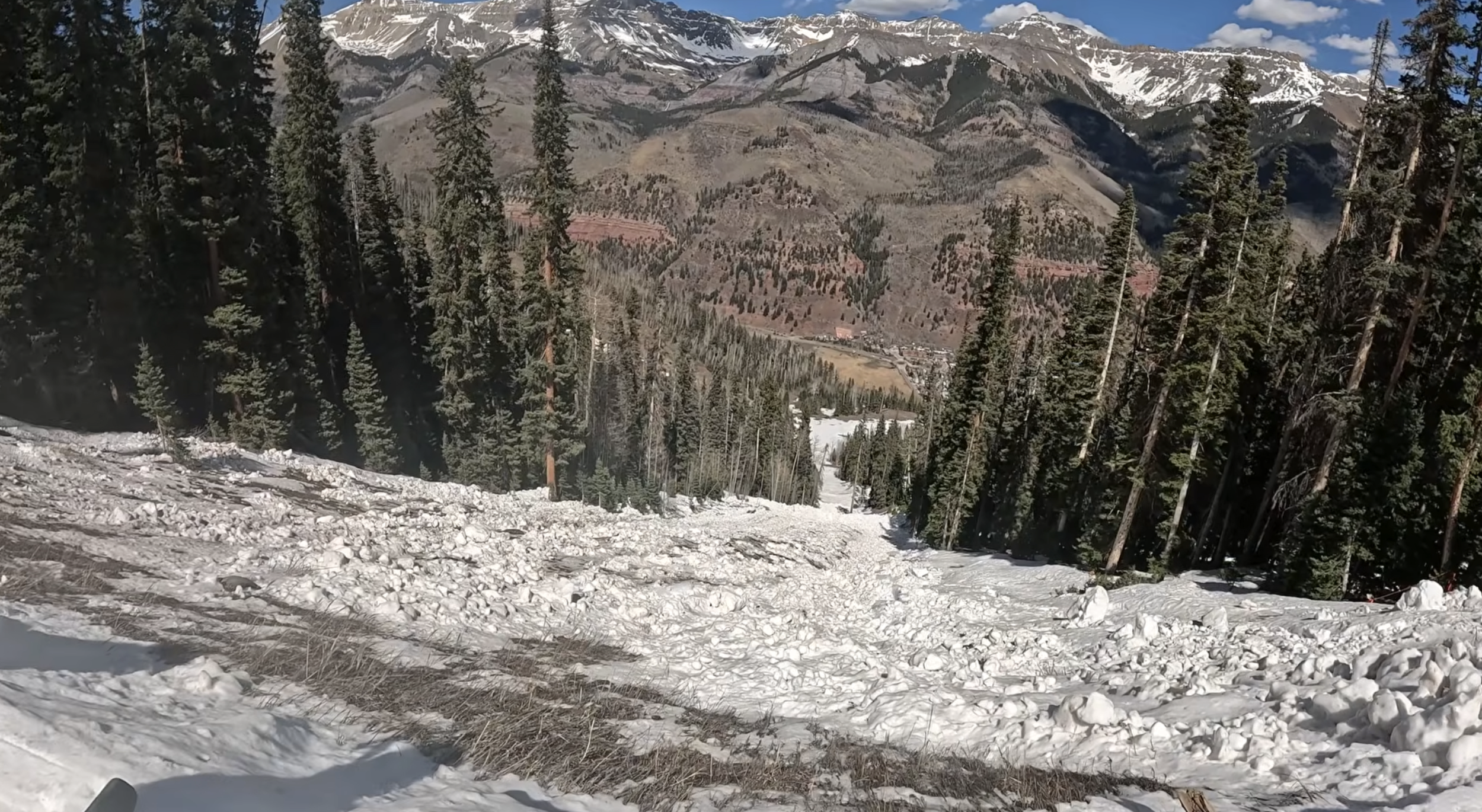
A closed trail due to a wet avalanche slide at Telluride in late March 2026.
Some resorts resorted to drastic measures to save the snowpack. With limited snowmaking windows available, there were reports of redistributing snow across trails that were losing their snowpack, throwing in the towel on some runs and scalping what was left of their accumulation so at least some offerings would be available as long as possible. Some resorts even went as far as trucking in snow from elsewhere and packing it on the ground.
By mid-March, several destinations were pushing substantial discounts, and deals offering half or more off lodging and lift ticket rates became widespread. But pricing wasn’t consistent across the industry. At Vail-owned Park City, window lift tickets were still over $300, even as the mountain was effectively operating a single terrain pod centered around the Saddleback lift.
The tragedy of the western finish was probably best captured in Utah. Deer Valley, which had just spent the season celebrating the largest resort expansion in North American ski history, closed on March 29, several weeks earlier than the expected April 19 end date. That created a particularly awkward situation for a resort built around slopeside lodging, and one engaging in a multi-hundred-million-dollar real estate expansion revolved directly around some of the lowest-elevation, most-unfavorably-facing terrain in the region. Some guests had booked ski-in/ski-out stays beyond the new closing date, and local sources tell us the resort ended up shuttling them to Snowbird so it could still deliver something resembling the experience they had paid for.
And then, almost in a cruel feat of irony, right as many of those resorts had already closed or were limping to the line, winter finally came back. There was meaningful snowfall from March 31 into the beginning of April across effectively every region of the West. But by then, at most ski resorts, the season had already been lost. And as of April 1, many parts of Colorado and Utah had logged their worst snowpack in recorded history.
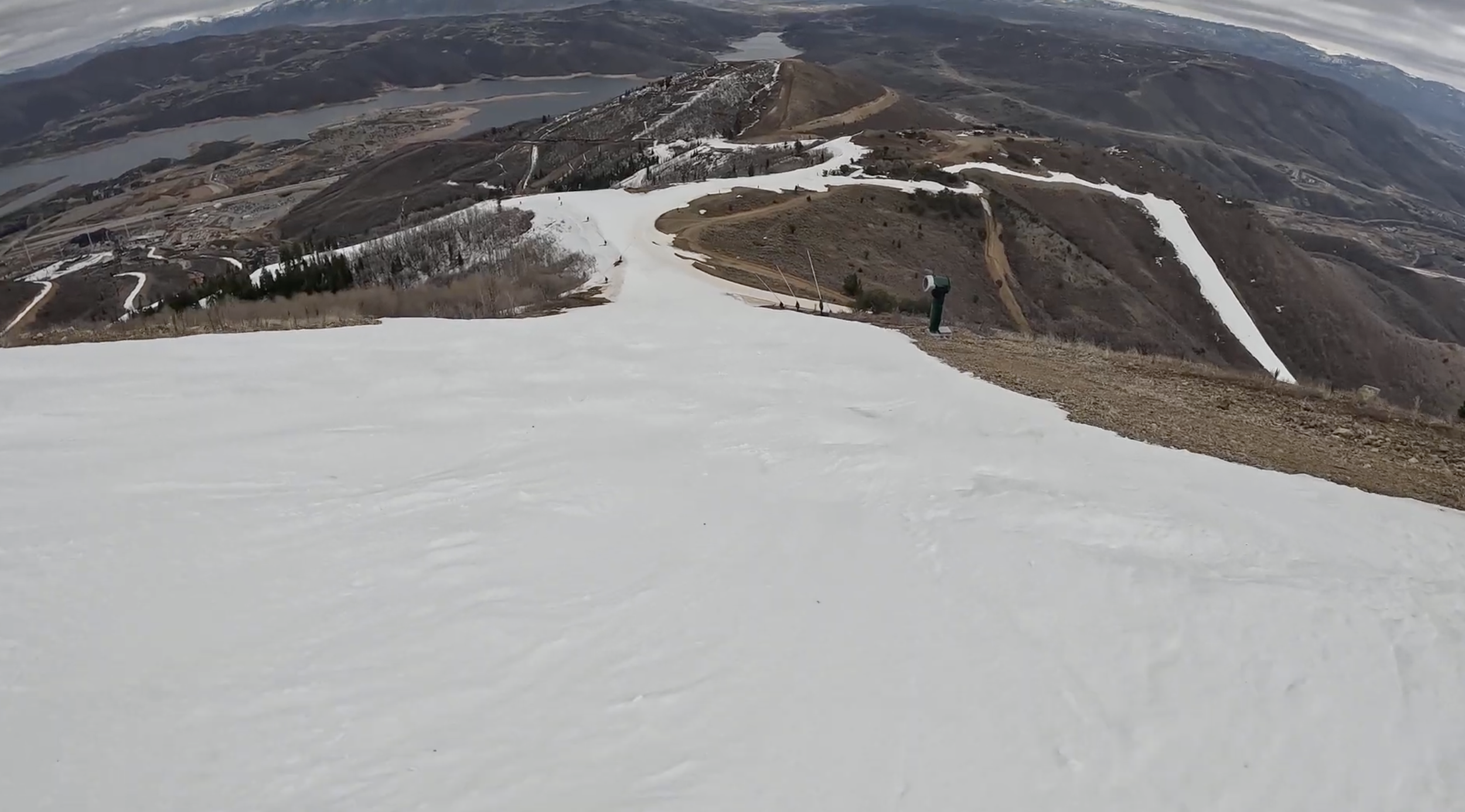
Conditions on Deer Valley’s new expansion terrain this season.
But was the season absolutely terrible everywhere in Western North America? Absolutely not. Western Canada generally held up better than much of the U.S. West, though the experience varied by region. Across British Columbia, snowpack levels were closer to normal through much of the winter before trending lower into March. The most stable conditions were found in the Interior part of the province, where higher elevations and more consistent storm patterns supported a functional snowpack and allowed resorts to maintain normal operations through much of the season. The coastal region, including Whistler Blackcomb, was more variable although not abnormally so.
The real standout in the North American West was the Canadian Rockies. Resorts around Banff, particularly Sunshine Village and Lake Louise, benefited from favorable storm tracks and colder temperatures, building a deep base early in the winter and continuing to receive regular snowfall through March. These areas were able to sustain strong coverage and long operating timelines even as conditions deteriorated across much of the U.S. West. It’s also worth noting that those who trekked all the way up to Alaska were able to experience favorable conditions through March as well, with a pretty solid base, notable storm activity, and a long-planned season through the end of April.
Another thing worth a mention is that if there was one part of the American West that still delivered a functional (albeit somewhat diminished) experience, it was Utah's Cottonwood Canyons. Alta, Snowbird, and Brighton sit at high enough elevation with favorable enough aspects that even in a historically bad snow year they had something to work with. Alta typically averages around 550 inches annually, but even with only a little over 250 inches in mid-March, that number was still higher than what most resorts in the country see in a normal year. And for much of the season, all of these resorts were still able to offer access to the vast majority of their beginner-to-expert terrain zones.
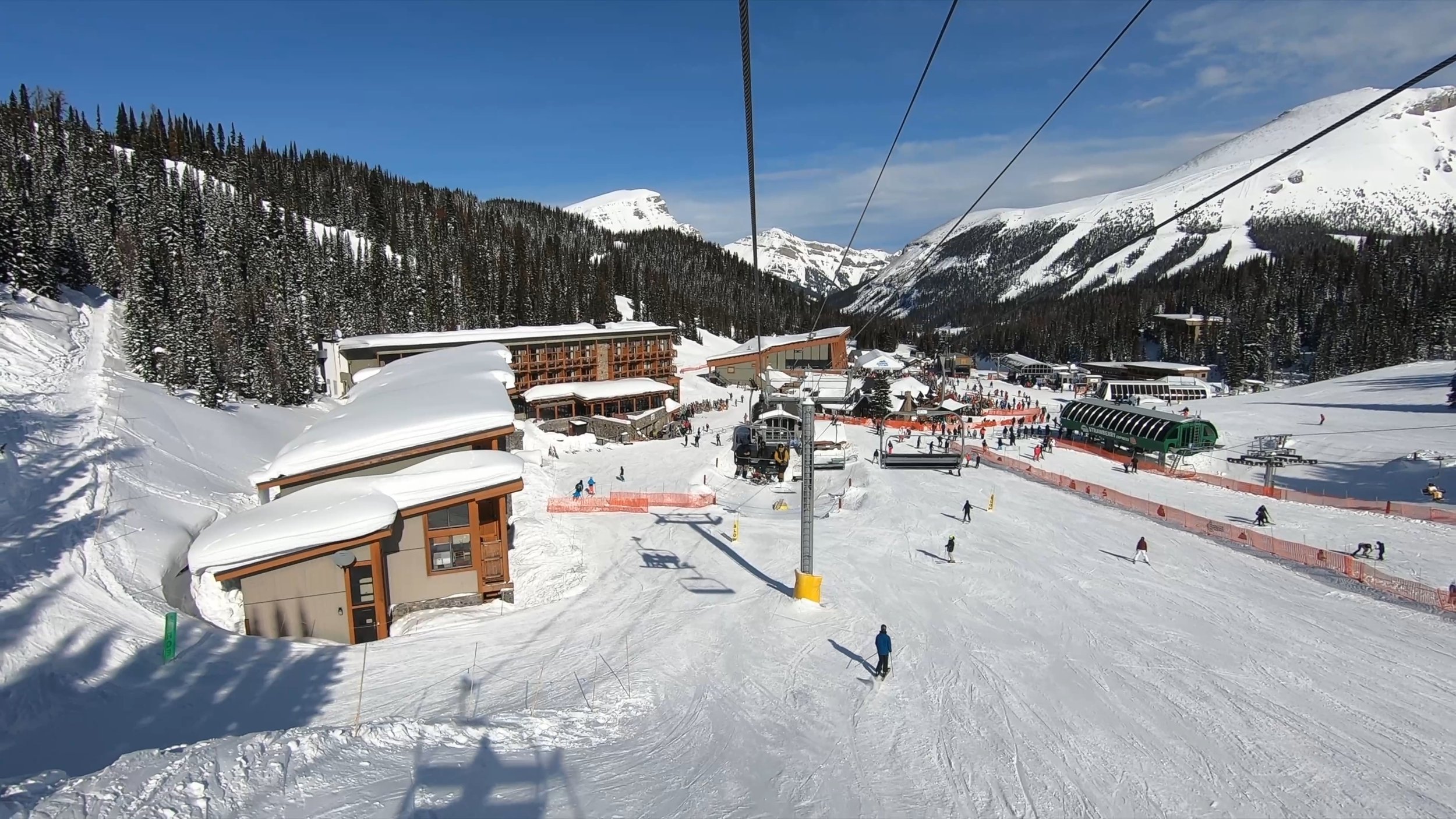
The Banff resorts such as Sunshine Village and Lake Louise had arguably the most normal and successful seasons of any major destination resorts on the continent.
Final Thoughts
Ultimately, the 2025-26 season had a lot of different stories going on, but nearly everything we just discussed loops back to what may be the ski industry's most uncomfortable structural tension: the business model is built on advance commitment, but the product is increasingly unreliable. Labor disputes from unhappy employees, struggles to replace outdated equipment, a subscription-style push from the Indy Pass, and rocky internals at the largest ski resort operators in North America all make a little bit more sense when viewed against a backdrop where the weather itself is getting harder to count on. And as that becomes harder to ignore, it raises an uncomfortable question for the industry: how do you keep selling and maintaining a product that depends on certainty when the experience it's tied to is anything but? We expect more strategic changes over the coming years to try to address that, and we’ll keep you posted as we learn more.