How a Military Loophole Unlocked Deer Valley’s Extraordinary Expansion

The multi-year expansion is the most massive in North American skiing history.
Background
Even with all the new ski resort developments in the twenty-first century, few have been as monumental as the Deer Valley East Village expansion.
The project nearly triples the resort's terrain, making Deer Valley the third largest ski resort in the United States by skiable acreage. But as was on full display this season, there are fundamental resiliency issues with this new terrain. The low elevation and unfavorable aspect makes the expansion so reliant on artificial snow, that it calls into question how it got green-lit at all.
So how did such a mind-bogglingly expensive project actually get approval, not just from Deer Valley's leadership, but from every entity involved? As we dug into this story, we found several layers of uncomfortable truths, involving real estate moguls, local government coercion, and even the military. And in this piece, we’ll tell the story of how perhaps the most controversial ski resort project of the 21st century got off the ground, along with the incentive structures behind it, the real risks attached to this terrain, and the people who are affected most.
Origin of the Deer Valley Expansion

Plans to expand Deer Valley into this area of land have been around for years.
Credit: The Park Record
So first of all, where did the idea to expand Deer Valley’s terrain onto this land, which is mostly located on a parcel known as Mayflower, even come from? Well, development rights for the land date back to the 1980s, only a few years after Deer Valley itself opened as a ski resort. Then, in 2013, representatives from Deer Valley and land owners for Mayflower engaged in initial discussions on expanding the ski terrain and adding new real estate development (there was most likely very specific reasoning for this 2013 timing, as we’ll get into later). However, for reasons that never became public, these talks failed to go beyond the idea phase, and the idea for expansion was tabled.
A year later in 2014, things took a turn when the Mayflower parcel officially hit the market. The 4,000-acre land—and its substantial development rights—had been held since the early 1980s by a Netherlands-based ownership group. But it seemed like this group no longer wanted to play a part in that development. For over three years, this massive parcel remained unsold.
But then in 2017, Mayflower finally found its new owners: the New York City-based Extell group. In November of that year, Extell acquired more than 2,300 acres of the Mayflower land near Deer Valley, pairing it with other nearby land parcels it had been quietly buying since 2014. But unlike its owners for the past four decades, Extell had serious intentions for the Mayflower land. The company immediately framed the combined holdings as the basis for the resort village, new ski slopes, and major real estate development opportunities that had been disregarded for decades.
So who exactly was Extell, and why were they so interested in such an ambitious project? Extell Development Company, founded and run by Gary Barnett, is by any measure, one of the most aggressive real estate operators in New York City. Their specialty is assembling complex land deals—patiently buying up parcels and acquiring coveted air rights, and using creative financing structures to build the tallest, most expensive residential towers money can buy. The original One57 tower was, at the time of its conception, a wildly speculative bet that the Manhattan ultra-luxury market could absorb $90 million-plus penthouses. Barnett’s crown jewel, Central Park Tower, is the tallest purely residential building in the world at 1,550 feet. It cost $3 billion to build and was originally projected to sell out at $4 billion.
The Mayflower acquisition fits the same pattern, just transposed onto a mountain instead of a city block. Five years of buying parcels through BLX LLC, their affiliated investment entity. Twenty-six separate transactions, inclusive of the Mayflower terrain itself. Nearly 7,000 acres ultimately assembled.
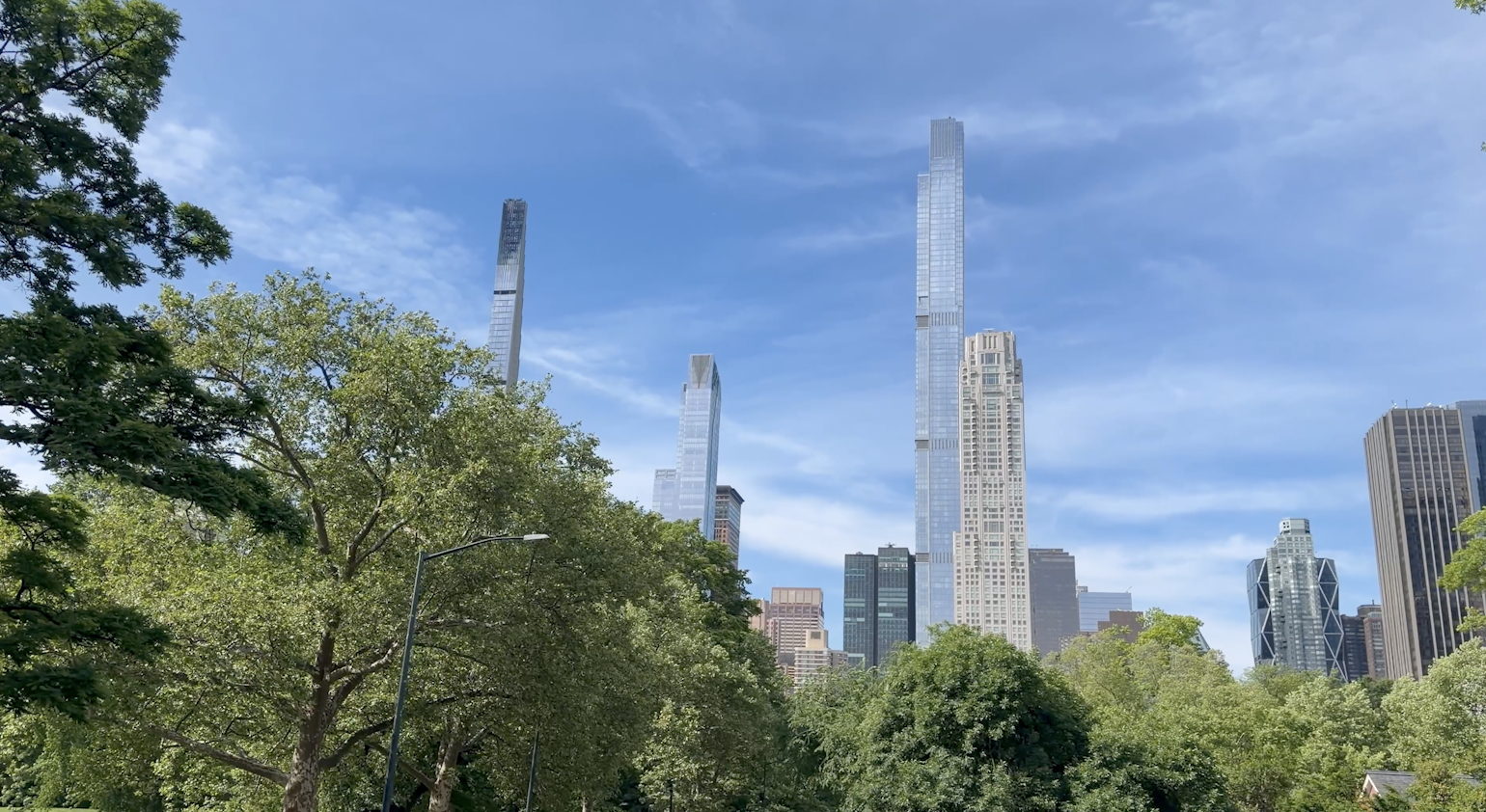
The One57 and Central Park Towers in New York City, Extell’s most prominent projects before the Deer Valley expansion.
MIDA: The Financing Vehicle That Made Everything Possible
But perhaps the biggest piece to Extell’s puzzle was the creative financing. As Gary Barnett himself acknowledged, there was one public financing entity that made the entire project feasible: the Military Installation Development Authority, or MIDA, originally created by Utah’s legislature in 2007 as a way to work with private companies to economically sustain military lands. So if this land was supposedly being developed for a ski resort, how was Extell able to qualify for MIDA?
Well, there is a nominal military justification. Back in the 1990s, the Air Force used to have a very small MWR (short for Morale, Welfare, and Recreation) ski lodge near Snowbasin. The lodge was special in that it offered the opportunity for military members to stay by the ski slopes for significantly discounted rates. However, this lodge was closed in the late 1990s to make way for the 2002 Olympic downhill course, and no immediate replacement came about.
In 2001, Congress passed legislation granting the Air Force a 26-acre parcel in Park City as a replacement site, with the requirement that it partner with a private or governmental entity for construction (Congress appropriated no money for the project itself). When Utah created MIDA in 2007, it inherited this unresolved replacement project.

This graph shows the initial size of the project area for the Military Recreation Facility in orange, and then all the subsequent extensions of it over several years.
Then, in 2009, Utah state code was amended to allow MIDA project areas to be created on private land outside of military ownership, provided the property owner and the local government consented. This meant that almost any private development could attach itself to some military-related purpose in order to become eligible for MIDA financing. The 26-acre parcel in Park City provided by Congress, which had now received years of pushback from local residents, was thus abandoned in favor of a privately-owned 40-acre parcel in Wasatch County along US-40.
In 2011, the consent needed from the local government was received. Wasatch County agreed to the creation of the Military Recreation Facility project area, initially covering just that modest footprint of around 40 acres. However, once the county had made that agreement, it found itself with less effective control than it had anticipated. Direct language from County Administrator Mike Davis implies that after agreeing to the initial project area, the state effectively pushed Wasatch County into accepting MIDA as the land-use authority west of US-40, and forcing their hand into accepting future expansion amendments. So technically, the county did provide their consent every step of the way, but the structural dynamics made meaningful resistance difficult. And through the process of at least eight formal amendments to the Project Area Plan, what initially looked like a series of small asks eventually expanded to cover roughly eight square miles or over 5,000 acres, wrapping around the Jordanelle Reservoir from Mayflower all the way north to SR-248 at Hideout.
And crucially, MIDA itself certified that the project met the legal requirements—which were remarkably low. Under Utah Code §63H-1-401, a MIDA project area must include at least some qualifying military land, but the rest of the project area may include public or private land whether or not it is contiguous to that military land, just as long as the relevant municipality and the landowner consent. There is no minimum percentage of the project that must serve military personnel, nor is there any state or federal agency sign-off on whether the military nexus is genuine or substantial. In the Mayflower project’s case, the legal military hook was the military land component at East Village itself, where MIDA’s project includes the MWR hotel site at the Grand Hyatt. And that’s how the Grand Hyatt Deer Valley’s 100 military-rate rooms, which constitute about 26% of one hotel within the entire development, became the legal hook that justifies including thousands of acres of private Extell land within the project area.
So why was MIDA such a coveted financing tool for Extell—and really the only way to make this project financially feasible?
The answer is public bond and tax increment financing. MIDA has now issued a staggering $650 million in bonds across two authorizations—$260 million in 2021 and $390 million in 2024—to finance roads, parking lots, and lifts, among other things. And to pay it back, MIDA keeps 75% of the incremental property tax revenue generated within the project zone for 40 years. That's not a typo—four decades. Recent legislation also allows MIDA to collect up to a 15% resort tax on lodging within its zones and levy an additional 0.5% sales tax. The remaining 25% of incremental tax revenue trickles down to local entities like the Wasatch County School District.
In practical terms, this means that as billions of dollars of luxury real estate backed by one of New York City's wealthiest private developers gets built, the vast majority of the property tax revenue that would normally fund local schools, fire departments, and roads is instead being redirected to pay off MIDA bonds that are, in turn, financing the infrastructure that makes the luxury real estate possible in the first place. And yes, it’s effectively just a block of discounted hotel rooms, along with a military concierge on-site, that is sufficient to unlock all of this.
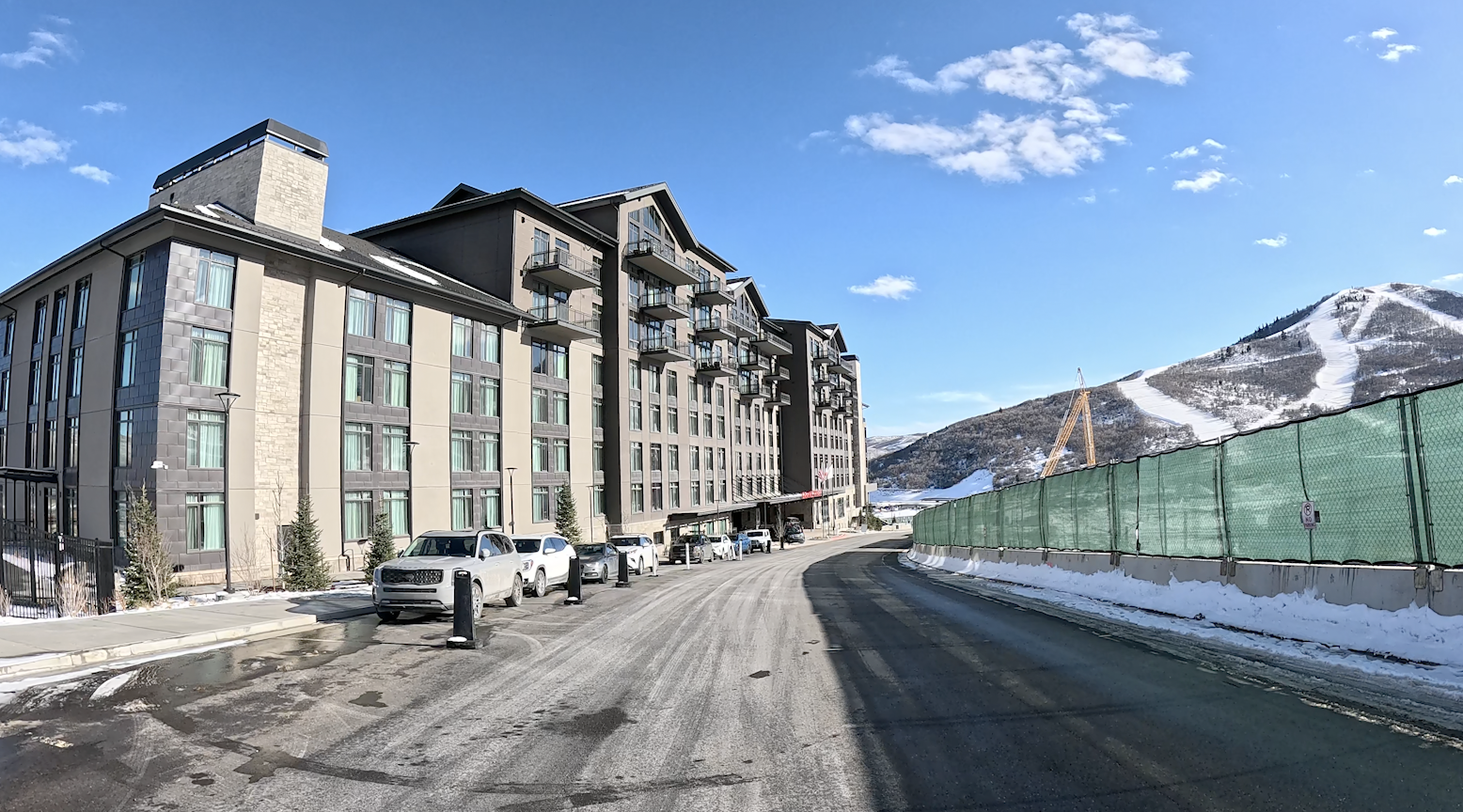
The inclusion of 100 military-rate rooms in the new Grand Hyatt hotel at the East Village base is what allows the entire expansion to qualify for MIDA financing.
Extell Gets Alterra On Board
So it was clear that Extell now had access to a public financing structure that no other ski resort developer in modern history has had access to. However, around the same time Extell was assembling the Mayflower parcel, another potential wrinkle came up.
In 2017, the same year Extell closed on the Mayflower acquisition, Deer Valley entered new ownership. The new parent company was a newly formed joint venture between KSL Capital Partners and Henry Crown and Company—the same partnership that had just acquired Intrawest's 11 resorts and Mammoth Resorts. By early 2018, this entity had a name: Alterra Mountain Company. Suddenly, Deer Valley had gone from an independently operated luxury ski resort to a flagship property in a national portfolio, competing directly with Vail Resorts for the future of the destination ski industry.
This changed everything for the Mayflower project. Yes, Deer Valley and Extell had held some preliminary discussions as early as 2017, according to reports. But after Alterra took control, these talks seemed to slow down. And as the months turned into years with no deal, something notable started to happen: Extell’s public messaging shifted, and Mayflower began positioning itself as a fully independent ski resort.
By 2019 and into the early 2020s, the company began emphasizing that Mayflower had enough acreage to operate as a standalone destination, with 4,300 skiable acres, 3,200 feet of vertical, and up to 15 planned ski lifts. Extell representatives told reporters that Mayflower would be an equally world-class resort to its neighbors. A 199-year land lease Extell signed with Deer Valley in 2019, which covered a small sliver of land Deer Valley was already using in its Jordanelle area, was carefully structured to not include an operating agreement.

It initially appeared to the public that the Mayflower terrain would be an entirely new ski resort sitting right next to Deer Valley.
But there was a critical complication to Extell’s new marketing plans. In New York City, Extell's projects sit among one of the most established metro areas in the world. The location itself sells the real estate. In Utah, Extell was attempting to build luxury condos at the base of a ski resort that didn’t exist yet. Without Deer Valley's name attached, one could argue that real estate strategy started to have serious problems.
On top of that, if Mayflower had truly decided to staff up an entirely new ski operations division, the structural challenges were brutal. Their team had no experience running ski patrol, managing snowmaking systems, training ski instructors, or securing the construction and/or operation of ski lifts. And despite their local leadership having no mechanism to stop the project, there was also the issue of Wasatch County leaders originally approving the project as a Deer Valley expansion and expressing some public concerns about Mayflower developing independently. So while operating Mayflower as a fully independent resort may have been a useful negotiating position for Extell—and one they seemed very committed to on the surface, with the company hiring trail designers, clearing runs, and engaging in initial conversations with lift manufacturers—their true plan was almost certainly to win Alterra over.
And in the end, after five years of slow-motion negotiations, that’s exactly what happened. Extell had secured perhaps the greatest public financing deals for developing terrain of this magnitude in the industry’s modern history, providing an unprecedentedly favorable cost basis for such a monumental endeavor. And in the final deal, Alterra was able to invest in mountain infrastructure, like lifts and snowmaking, without having to put any speculative capital into real estate, which wasn’t as much of an area of expertise. It’s also worth noting that without the Mayflower deal, Alterra would potentially watch a major competitor materialize 15 minutes from its flagship property, with the same target customer and a brand-new development advantage that Deer Valley couldn't match.
In August 2023, the official announcement came. Deer Valley would operate Mayflower's ski terrain, and the entire expansion would be rebranded as "Deer Valley East Village." The combined resort would close to triple in size to 5,726 acres—larger than Vail, larger than Whistler Blackcomb's individual mountains, and turning Deer Valley, of all places, into the third-largest ski resort in the United States. It was simply and truly the largest single ski resort expansion in North American history.
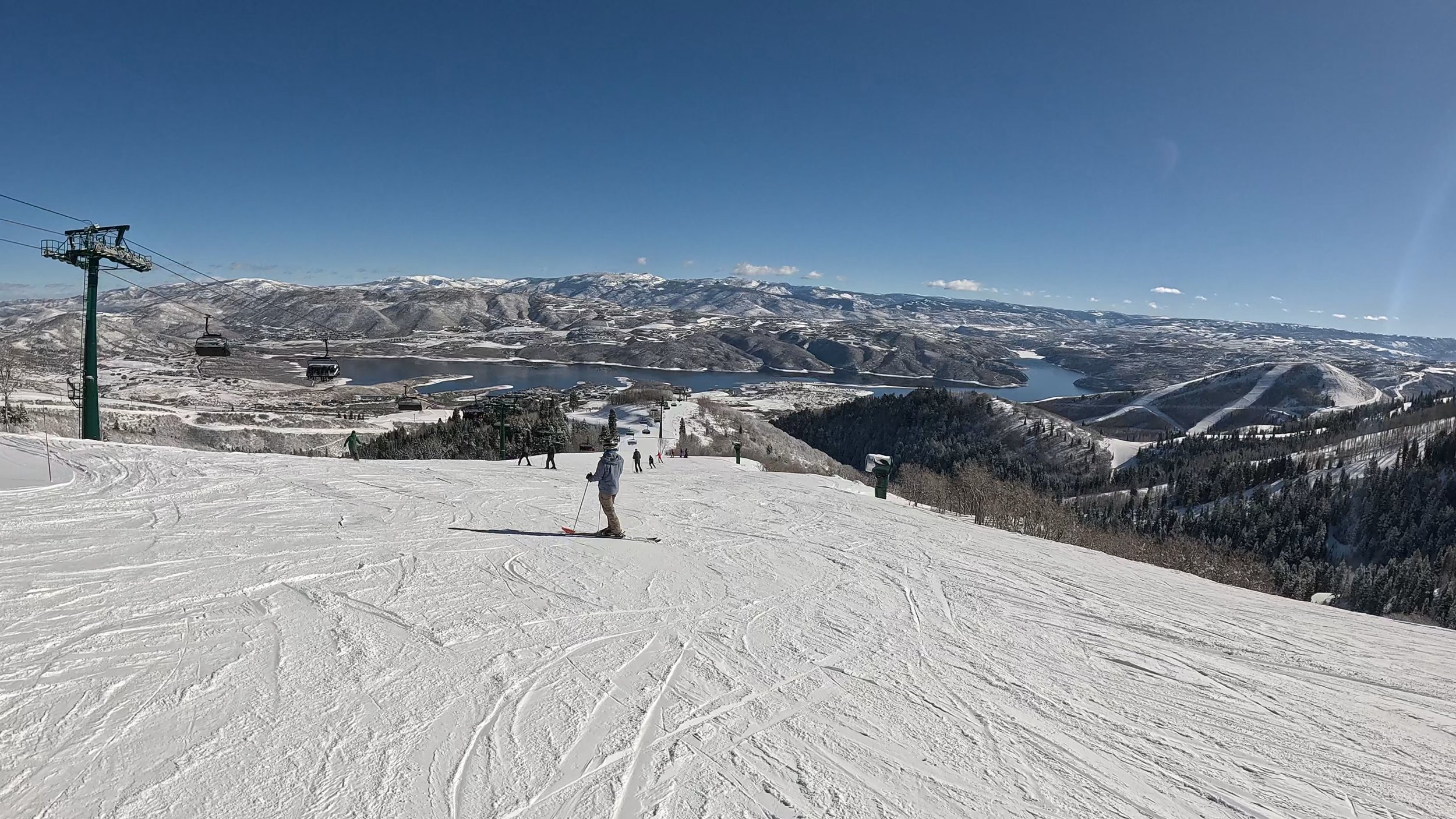
Alterra and Extell’s deal allowed both entities to invest in the parts of the project that they had experience with.
Is The New Terrain Any Good?
At this point, we can reasonably conclude that this land was chosen primarily because of the MIDA incentives and the developer partnership, not the actual quality of the terrain. So what does that all mean for the skiing itself? With nearly three-quarters of the expansion already built out, we feel it's fair to make an initial assessment.
On the plus side, there is a significant amount of new terrain in Deer Valley's footprint, and the scale alone is hard to understate. This includes the first true 3,000-foot continuous vertical descent at Deer Valley, despite the fact that the resort had advertised a 3,000-foot vertical drop for years—a figure that was technically accurate from peak to base but never achievable in a single uninterrupted run until now. The lifts are mostly excellent and largely high-speed, with the flagship installations being heated bubble chairs and a two-stage, 10-passenger gondola connecting the East Village base to Park Peak. As a pure infrastructure achievement, it's incredibly impressive. Some of the higher elevation meadows included with the expansion, most notably those served by the Pinyon Express, introduce some excellent beginner terrain and low-angle glade runs.
But if it weren't for the almost comically favorable MIDA tax and bond structure, and the real estate incentives on Extell's part, it's hard to see any developer focused specifically on finding the highest quality ski terrain choosing to develop here. On the whole, the terrain is somewhat plain; it’s mainly beginner and intermediate trails with not much in the way of challenge. Small sections of advanced terrain do exist, but they’re not particularly extraordinary in the grand scheme of things.
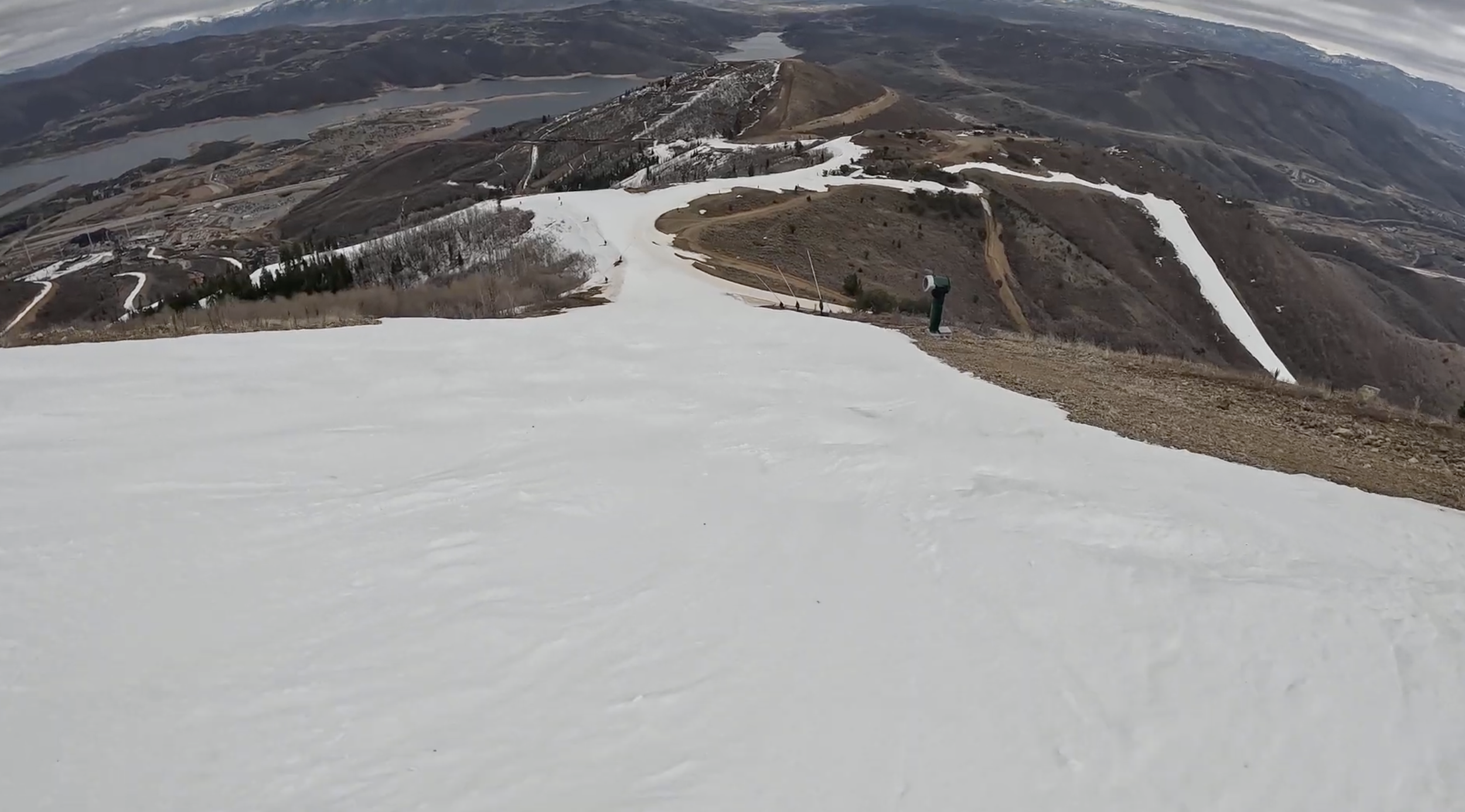
For large parts of the 2025-2026 winter, Deer Valley’s new terrain looked like this.
But perhaps much more importantly, there are serious snow resiliency issues. Most of the trails face unfavorable aspects for snow preservation, with a large portion of them facing east, creating serious sun bake. This is compounded by the low elevation of the new terrain; the new base village bottoms out at 6,350 feet—low for Utah, and well below the threshold that climate experts say will become increasingly problematic in coming decades.

On top of the unfavorable elevation and exposure, Deer Valley’s expansion terrain will have less snowmaking per acre than the legacy footprint.
Deer Valley has invested heavily in snowmaking infrastructure to try to address this, with 1,200 snow guns, 80 miles of pipe, four pump houses, and a 10-million-gallon snowmaking pond. But the numbers reveal a structural problem. Extell's acquisition of the Mayflower land came with water rights from the Jordanelle Reservoir totaling 900 acre-feet per year, or about an 125% addition to Deer Valley's original water rights. But when it’s fully completed, the expansion terrain will increase Deer Valley's total size by 183%, from 2,026 to 5,726 acres. Since the water rights grew by nearly a third less than than the terrain itself, this means significantly fewer snowmaking water rights per acre on the new terrain that has worse exposure and lower elevation than the rest of the resort.
Those factors were arguably on full display this past season, which, to be fair, was the lowest snowfall year in Utah history. Two of the expansion's lifts, Pioche Express and Neptune Express, alongside the terrain they served, never opened at all. But it also confirmed what locals had worried about for years: that in a bad snow year, this low-elevation, poor-aspect multi-million-dollar expansion funded in large part by taxpayers would simply sit bare.
One final note on the terrain worth mentioning: as has been Deer Valley’s policy since its creation, snowboarders are entirely banned from the new expansion terrain. This raises eyebrows in the context of MIDA's military justification. Industry data suggests roughly one in three winter resort visitors is a snowboarder, and there's no particular reason to think the military population skews differently. If the Grand Hyatt's 100 discounted rooms are genuinely intended to serve military recreation, what does banning roughly a third of that potential user base from the terrain those rooms are built to access say about military well-being?
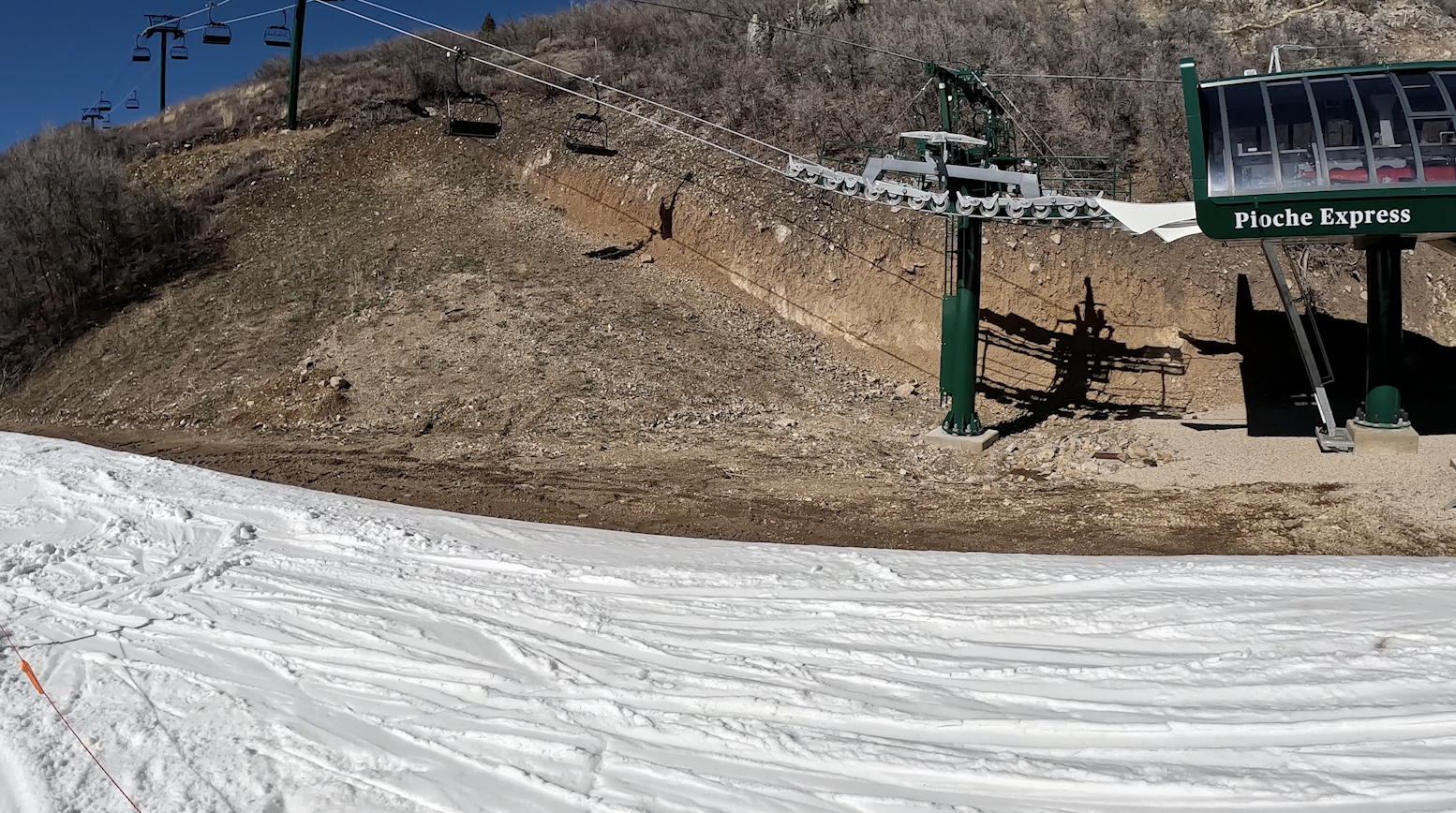
Amidst the poor conditions, a part of the expansion that included two new lifts was never even able to open for 25-26.
Who Really Bears The Risk?
And perhaps the most uncomfortable part of all this development, despite the issues it brings, is that the financial risk is distributed in a way that heavily favors the developer.
Extell isn’t without risk. They still need to sell units, and as it turns out, they have run into demand generation issues before, especially in Manhattan’s supertall market. Central Park Tower has been an enormously difficult sell. Units have moved at an average discount of roughly 25% from offering-plan prices, with some full-floor units selling at 35-42% below their original ask.
But the structure of Extell’s deals creates meaningful risk insulation. Development and management fees are earned during construction itself. Pre-sales fund the build—60% of the Four Seasons hotel residences were reportedly sold before the building was finished. Construction loans are secured against the property instead of Extell’s personal balance sheet. And critically, MIDA’s $650 million in bonds paid for the roads, parking, and infrastructure that would normally sit on the developer’s books. Extell can have a project underperform significantly and still survive.
Alterra, meanwhile, is in a more complicated position than it might appear. They don't own the land or the real estate, and the MIDA bonds have helped pay for lifts and snowmaking. But there's a second risk that's harder to quantify: brand reputation. Deer Valley has spent four decades cultivating the country's premier luxury ski identity. Despite continuing to excel hospitality-wise, when a meaningful chunk of the mountain sits bare for an entire season, that brand takes a hit.
In March 2026, just weeks before the end of one of Alterra's most challenging operational seasons, CEO Jared Smith announced he would step down with no public reason given. Was Mayflower the cause? Almost certainly not entirely. But executing the largest single-season ski resort expansion in North American history through the lowest-snowfall winter in Utah history—with visible bare terrain anyone driving US-40 could see—is the kind of thing that creates pressure at the top of an organization whose owners' patience with operational stumbles is finite.
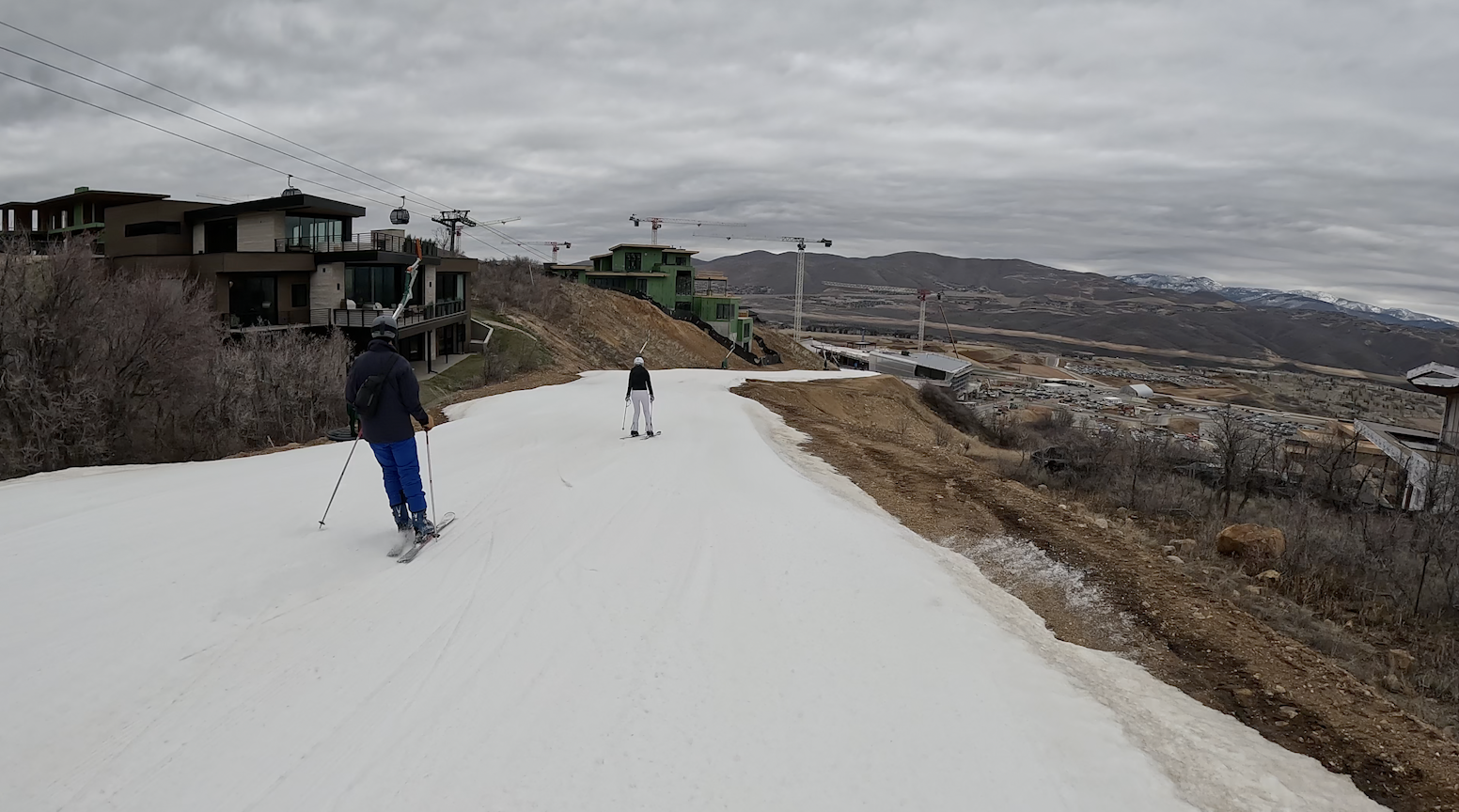
Many new upscale ski-in ski-out properties are under construction around the lower areas of the East Village expansion.
But perhaps the party that got the shortest end of the stick risk-wise is the local population. The public bears the infrastructure risk through MIDA’s $650 million in bonds. If the development doesn’t generate the tax revenue projected, if luxury ski real estate demand softens (as it did in Manhattan’s supertall market), and if climate change continues to hammer snowfall at lower elevations—the bonds still need to be serviced. The 40-year tax diversion means that for the better part of half a century, Wasatch County will be receiving a fraction of the property tax revenue that this massive development would otherwise generate for schools, roads, and emergency services, among other things.
The environmental and community risk is borne by the Wasatch Back’s existing residents and ecosystems. Nearly 6,200 residential units in the Jordanelle Basin will and already have fundamentally transformed the character of the area, straining water resources, increasing traffic on US-40, and altering wildlife corridors. The 2034 Winter Olympics will bring additional development pressure. And the workforce housing crisis will only intensify as thousands of new hospitality and service positions compete for an already-strained labor pool.
Let’s revisit the demand question one last time. The development and its associated footprint impacts are coming regardless, but is there really enough demand for luxury ski real estate at this scale, in this specific location? The East Village base likely receives less than 150 inches of snow annually—well below what destination skiers expect from Utah’s vaunted “Greatest Snow on Earth” brand. The resort’s ban on snowboarding, while popular with its existing clientele, excludes a third of the winter sports market and potential demand as a result. And the broader luxury real estate market is not immune to economic cycles—just ask anyone trying to sell a $50 million condo at Central Park Tower at a 42% discount.

It’s difficult to make a full judgment off of just the 25-26 season, but the entire East Village project raises questions about the future of the winter sports industry.
Final Thoughts
Here's the truth about the Deer Valley East Village expansion: it might work out spectacularly for everyone involved. The skiing could be very popular among Deer Valley’s clientele. The hotels look very promising from a hospitality standpoint. The real estate could sell. And the Wasatch Back could benefit from the economic activity.
But step back and look at what we actually have here: a luxury ski resort expansion built on terrain chosen for its real estate appeal rather than its skiing. An expansion that only became financially feasible through the contortion of a state authority originally created to serve military land—quietly stretched from 40 acres to eight square miles with no independent oversight and no one required to seriously question whether any of it made sense. This project could flop, and if it does, nobody escapes clean—not Extell and not Alterra, and especially not the Wasatch County taxpayers who will spend four decades watching tax revenue flow into bond payments for a resort that never reached critical mass.
The deepest irony is that this outcome was entirely preventable: had MIDA remained what it was actually created to be, with real guardrails and genuine independent oversight, someone would have had to defend this project on its merits—the terrain, the snowfall, the workforce, the demand—before a single bond was issued. Instead, a self-certifying, self-expanding authority made all of those questions optional, and now everyone is along for the ride whether they want to be or not.