Mountain Review: Mont Orford
MOUNTAIN SCORE

CATEGORY BREAKDOWN
See our criteria5
Snow:
5
Resiliency:

2
Size:
5
Terrain Diversity:

6
Challenge:
5
Lifts:

8
Crowd Flow:

3
Facilities:
8
Navigation:
5
Mountain Aesthetic:
GOOD TO KNOW
1-Day Ticket: $57-$68 USD ($80-$95 CAD)
Pass Affiliation: None
On-site Lodging: No
Après-ski: Limited
Nearest Cities: Sherbrooke (30 mins), Montréal (1.5 hrs)
Recommended Ability Level:

+ Pros
Low crowds and local feel
Technical glade terrain
Lift ticket value
– Cons
Small size
Variable quality of conditions
Mostly slow lifts
MOUNTAIN STATS
Lifts: 7
Trails: 62
Beginner: 37%
Intermediate: 23%
Advanced/Expert: 40%
Mountain Review
Mont Orford is one of the most intriguing and uneven resorts in Quebec’s Eastern Townships. Its best days rival the East’s greats, offering steep, sustained, and gnarly tree lines unlike anywhere else in the province—but its worst days expose just how dependent the experience is on snow quality. When everything lines up, Orford becomes a legitimate expert’s playground with big-mountain character; when it doesn’t, it can feel limited and scratchy next to its neighbors Sutton and Owl’s Head.
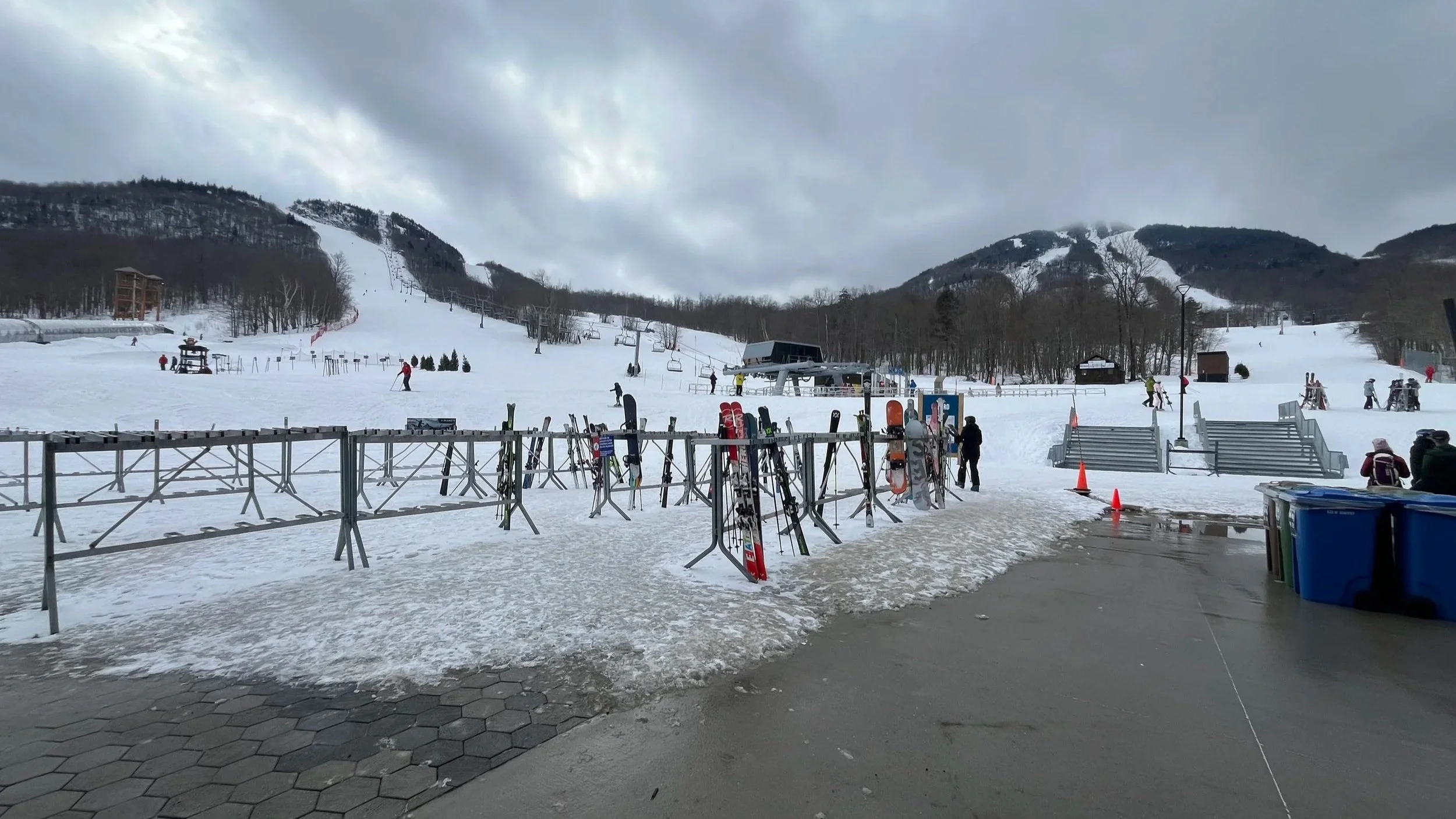
Mont Orford stands out dramatically amidst the surrounding flat plains.
Orford’s operational efficiency stands out: the RFID kiosks, conveyor-belt lift loading, and seamless gate access make it one of the most tech-forward small resorts in eastern Canada. The overall atmosphere is relaxed and local-driven, striking a balance between authenticity and modern convenience.
Mountain Aesthetic
Mont-Orford’s peaks rise sharply from the surrounding flatlands, giving the mountain a surprisingly grand profile. Views from the summit stretch over lakes and rolling farmland, though they’re not quite as dramatic as Owl’s Head’s panoramas. The wooded lower slopes, particularly the Sous-Bois zones, give Orford a rugged, authentic feel—very different from the polished ski areas farther south.
Size and Terrain Layout
Orford spreads its terrain across three distinct peaks—Mont Orford, Mont Alfred-Desrochers, and Mont Giroux—each offering a very different flavor. Despite only moderate acreage, the layout feels impressively vertical thanks to Orford’s 1,933-foot drop and its efficient fall-line trails. Mont Orford itself skis the biggest, hosting the resort’s steepest and most sustained runs, while Alfred-Desrochers is home to a set of playful, rolling blues and tree shots. Mont Giroux, the lowest of the three, mixes approachable cruisers and lift-served glades. Navigation between zones is intuitive, with nearly everything funnelling back to the main base.
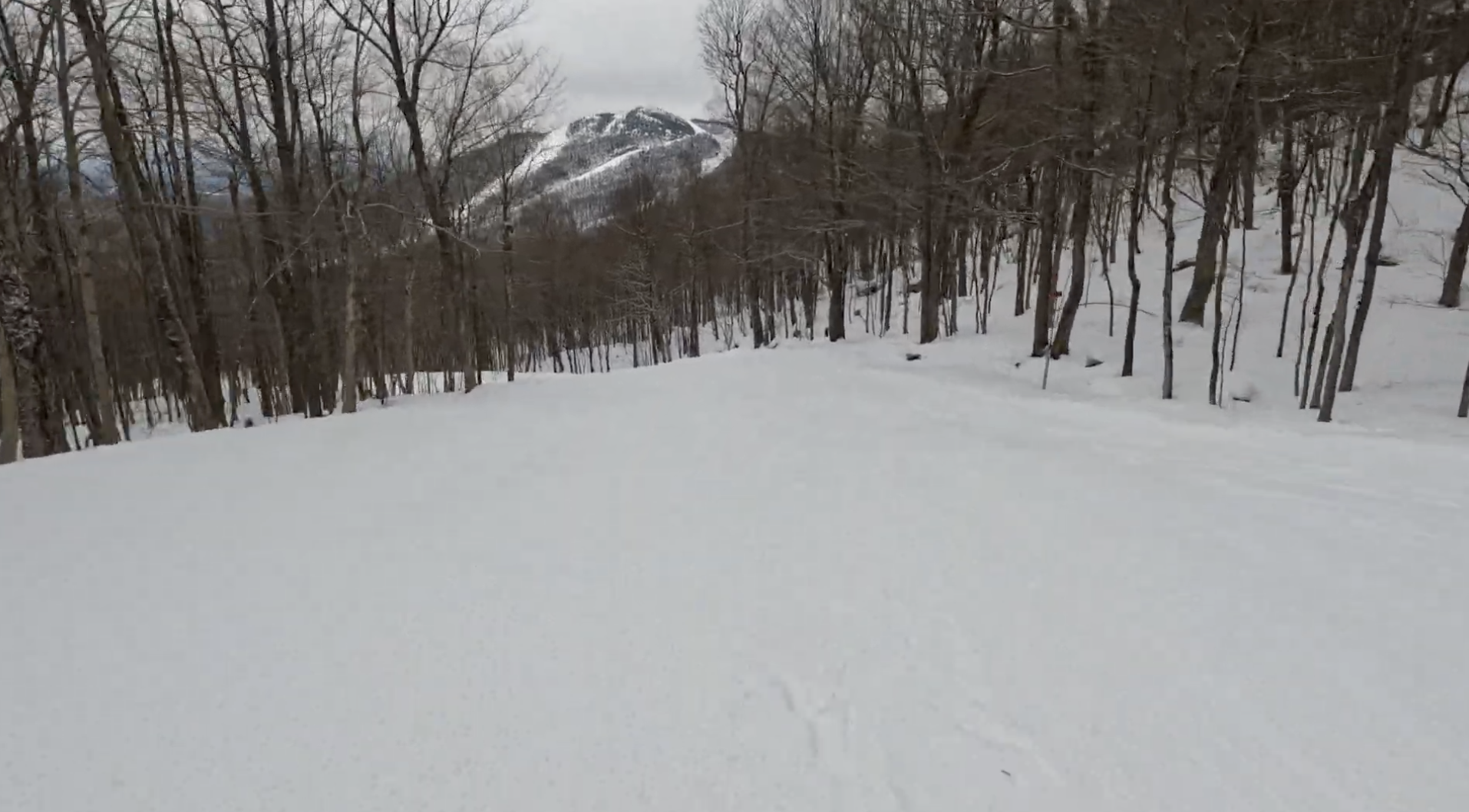
Trail #12, Toussi Ski, stands out as a long, leisurely beginner trail in the Mont Alfred-Desrochers area.
Beginner Terrain
Beginner offerings are limited but thoughtfully designed. A dedicated learning area with a large magic carpet and even a small kids’ ski-cross course creates an ideal environment for first-timers. The true green trails sit mostly on Mont Giroux and Alfred-Desrochers, though they’re served by painfully slow fixed-grip chairs with long traverses and minimal vertical. “Toussi Ski” (run 12) stands out as a scenic, isolated green—great when snow conditions cooperate. However, the green trail off Mont Orford’s summit is misgraded; it’s narrow and steep enough to intimidate many intermediates.
Intermediate Terrain
Intermediates will find a solid mix of groomers and blues across the resort’s three peaks. The runs on Alfred-Desrochers are the most forgiving, while those on Mont Giroux tend to be smoother and more consistent. The highlight is Grand Coulée (trail 4), a wide, scenic boulevard from Orford’s summit that’s easily one of the best cruising runs in southern Québec. Some of the mellower single-black runs, such as the liftline under Chair 1, also ski comfortably at an advanced-intermediate level.
TRAIL MAP

Advanced Terrain
Advanced skiers looking for steep groomed runs will appreciate a few laps off Mont Orford’s summit. The fall line here is excellent, and the high-speed chondola makes for quick turnarounds. Still, Orford’s selection of single-black groomers is limited, and those craving variety may burn through them quickly. Many of the double-blacks, however, are serious business—steep, technical, and best left to experts when the snowpack is deep.
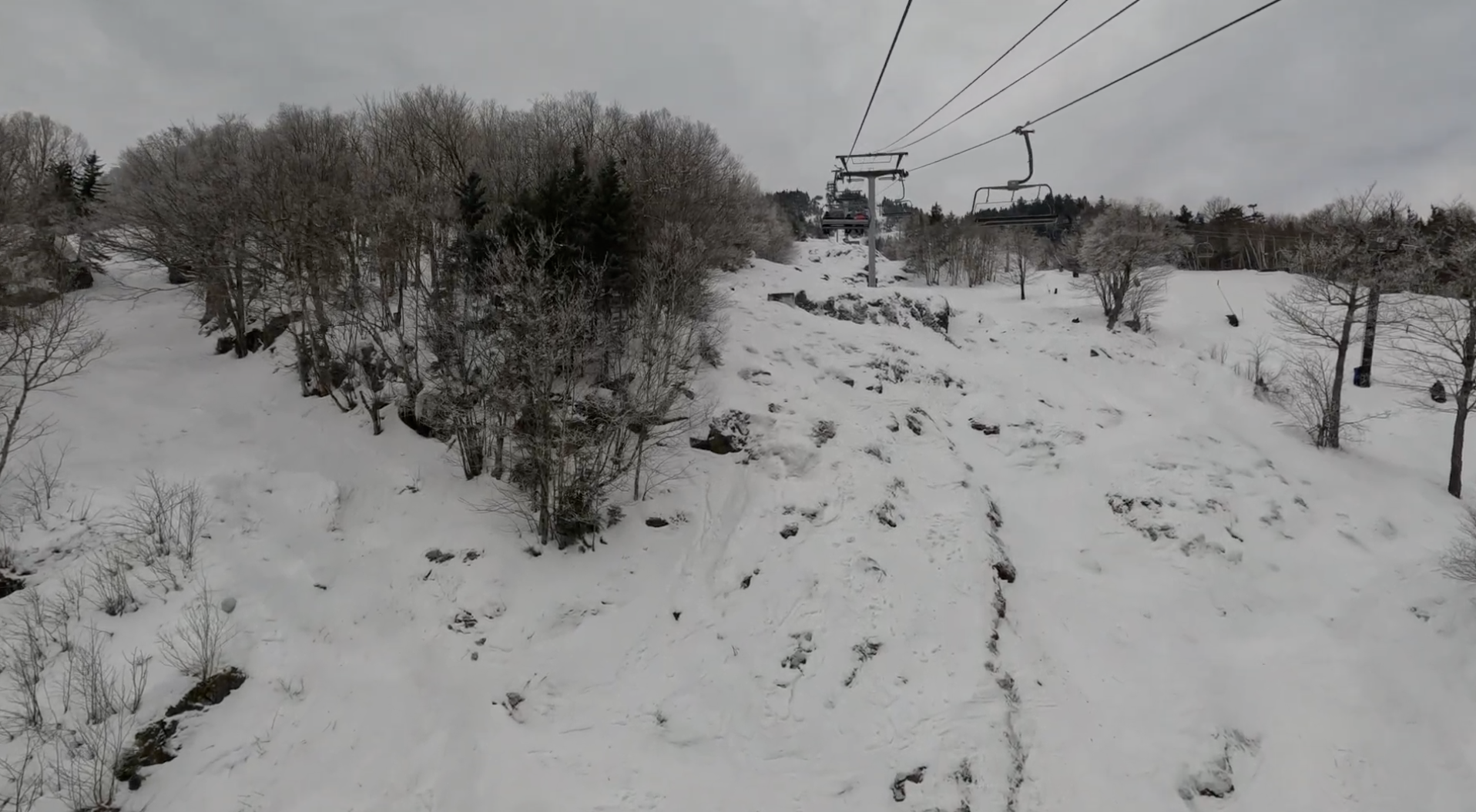
Mont Orford’s best advanced and expert terrain is served by its chondola.
Expert Terrain
This is where Orford separates itself. The mountain’s double-black terrain—both open trails and glades—covers a massive percentage of the total acreage and ranks among the steepest in the East. The Super liftline beneath the chondola is a technical gauntlet of mandatory airs, fall-line chutes, and scattered cliffs reminiscent of Smugglers’ Notch’s Madonna liftline. But the crown jewel is the Sous-Bois des Légendes zone on Mont Giroux’s east face. This sprawling labyrinth of trees, gullies, and natural features feels endless, like Stowe’s Tres Amigos glade multiplied across rolling ridgelines. Unfortunately, it only opens on weekends or when snowpack allows, which is increasingly rare in warmer winters. On the right day, though, Orford becomes a legitimate contender for best marked glade skiing in the East, rivaling Jay Peak, Stowe, and Mad River Glen.
Terrain Parks
Orford’s terrain park program is strong for its size. Features span multiple ability levels, with well-maintained jumps and rails accessible from both the chondola and Chair 2. It’s no Woodward, but for Québec, it’s above average and consistently maintained.
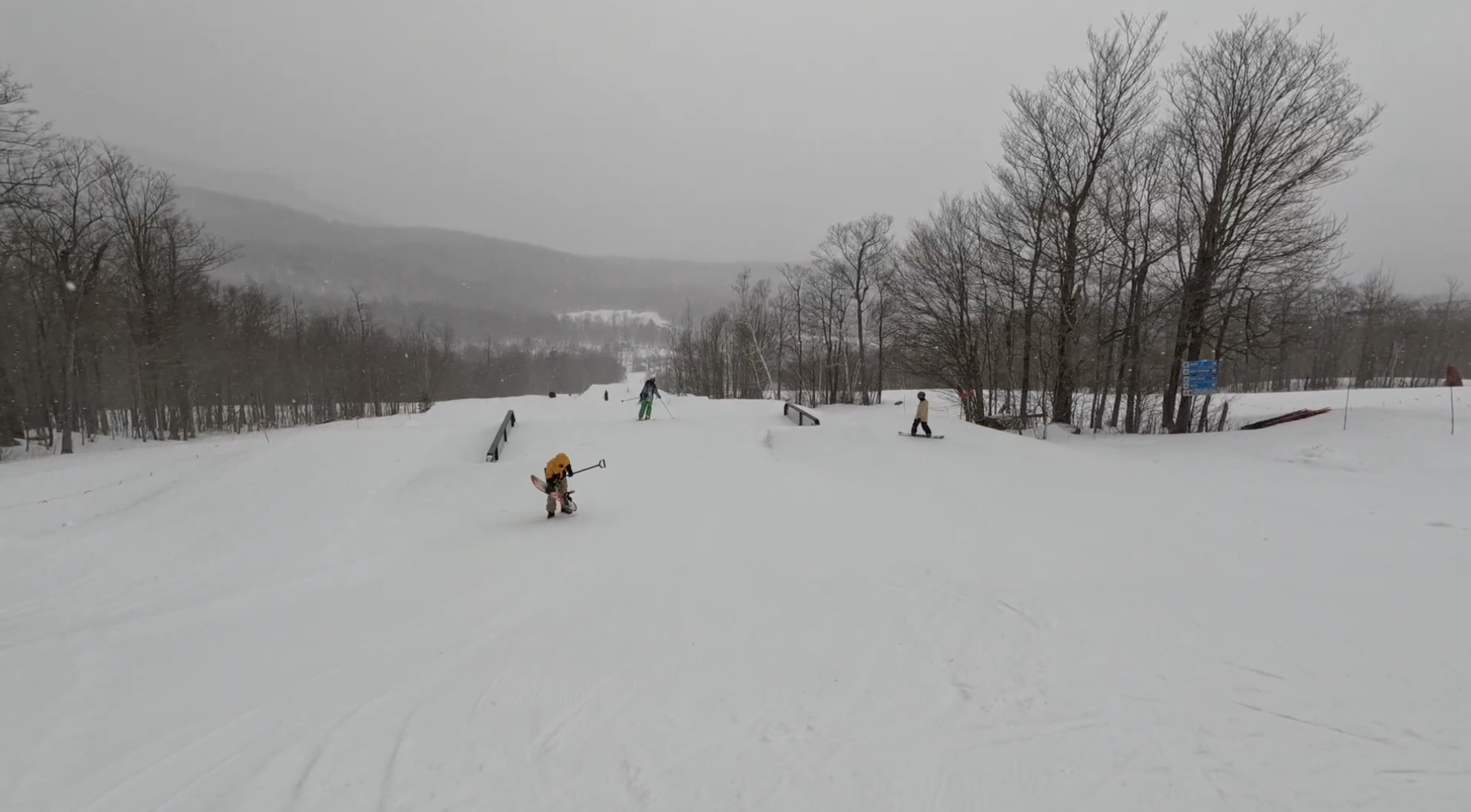
Mont Orford offers a generally enjoyable terrain park setup, although it’s not necessarily world-class.
RECOMMENDED SKIS FOR MONT ORFORD
NOTE: We may receive a small affiliate commission if you click on the below links. All products listed below are unisex.

Recommended all-mountain ski

Recommended carving ski

Recommended glade ski

Recommended expert/touring ski
Snow Quality and Resiliency
Snowfall at Orford can be fickle. The resort sits inland and at relatively low elevation, so it misses many of the lake-effect and orographic boosts that nearby Jay Peak benefits from. When storms hit, snow quality is fantastically light and grippy, but droughts and freeze-thaw cycles are common. The mountain’s best terrain also relies heavily on natural coverage, which means its signature woods often stay closed for long stretches of the season.
Snowmaking coverage is solid on the main groomers, but it doesn’t reach the majority of expert terrain. When natural snow is lacking, only a fraction of the mountain skis well. The chondola’s exposure also makes the summit vulnerable to wind holds on storm days, though the lower peaks remain reliable backups.
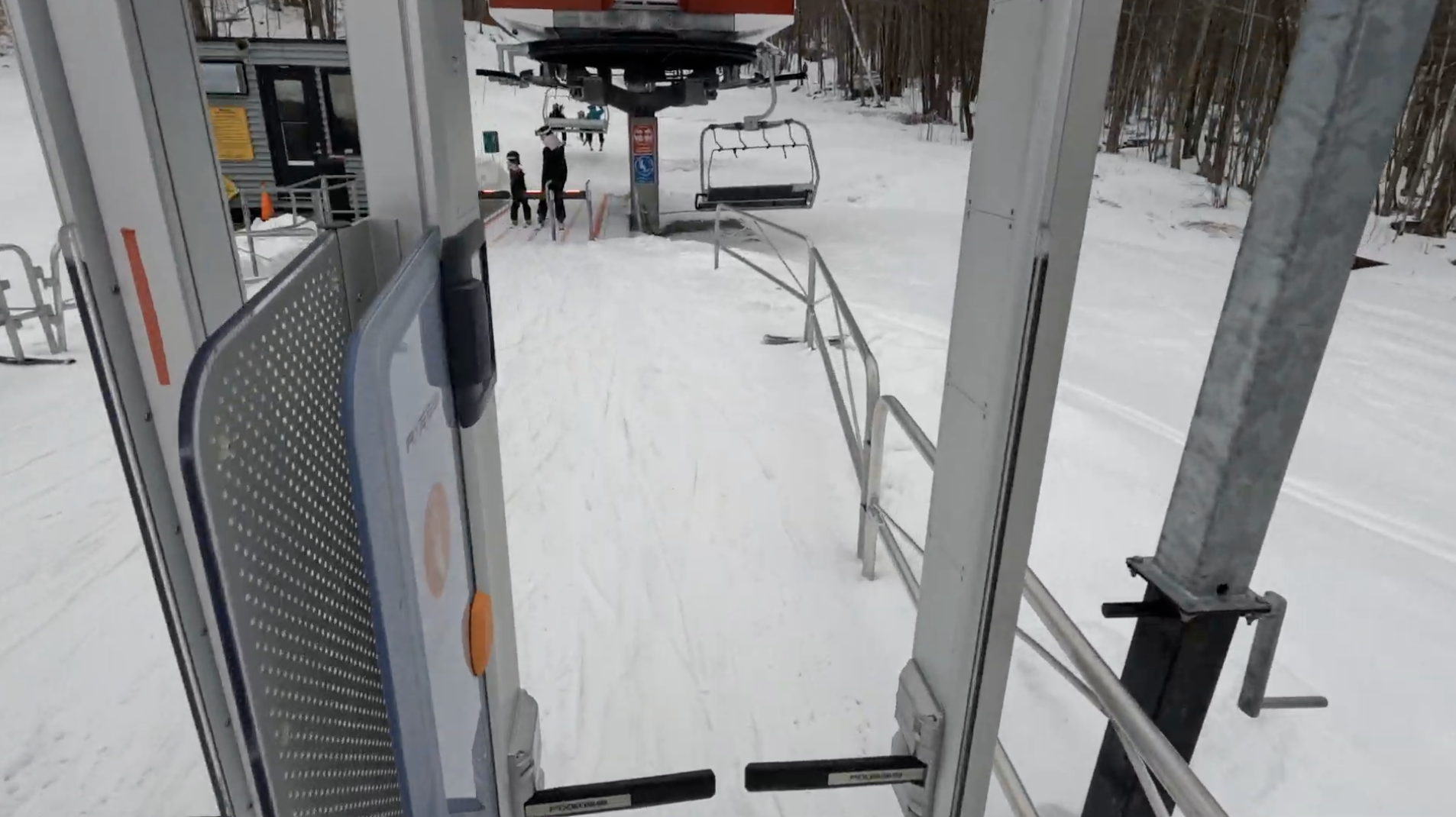
While many of Mont Orford’s lifts are slow, they feature tech such as RFID gates and loading carpets.
Lifts and Crowd Flow
The chondola is a standout—fast, efficient, and capable of swallowing crowds even on busy days. Its capacity is remarkable, and combining chairs and gondola cabins works surprisingly smoothly. The rest of the lift fleet, however, is outdated. Chairs 2 and 5 are excruciatingly slow and traverse long distances with little vertical gain. Chair 1, serving weekend-only terrain, is quicker and better aligned with the fall line. Notably, every lift except Chair 1 features a ChairKit conveyor loading system, which beginners may appreciate but experts will find unnecessary.
Despite its proximity to Sherbrooke and Montreal, Orford rarely feels packed. Even on a busy weekend, the chondola absorbs traffic well. Lines can form on the lower fixed-grip lifts, especially Chair 2, but they move steadily. The advanced zones and woods remain relatively quiet due to their difficulty.
Navigation
On-mountain navigation is excellent, with abundant signage and logical trail connections that all funnel back to the base. The base lodge, however, can be confusing for English speakers—French-only signage and an unconventional layout (cafeteria upstairs from the entrance) can make orientation tricky at first.
RECOMMENDED SNOWBOARDS FOR MONT ORFORD
NOTE: We may receive a small affiliate commission if you click on the below links. All products listed below are unisex.

Recommended intermediate board

Recommended advanced board

Recommended expert board

Recommended touring board
On-Mountain Facilities
The single main base lodge is large, comfortable, and modern by regional standards. Food options are strong: the cafeteria serves quality hot meals at affordable prices, and the café downstairs impresses with good coffee and pastries. The RFID ticket kiosks and automatic gates are a revelation—instant pass pickup and zero wait times put most U.S. resorts to shame. Combined with the contactless gate system, the experience feels efficient and contemporary.
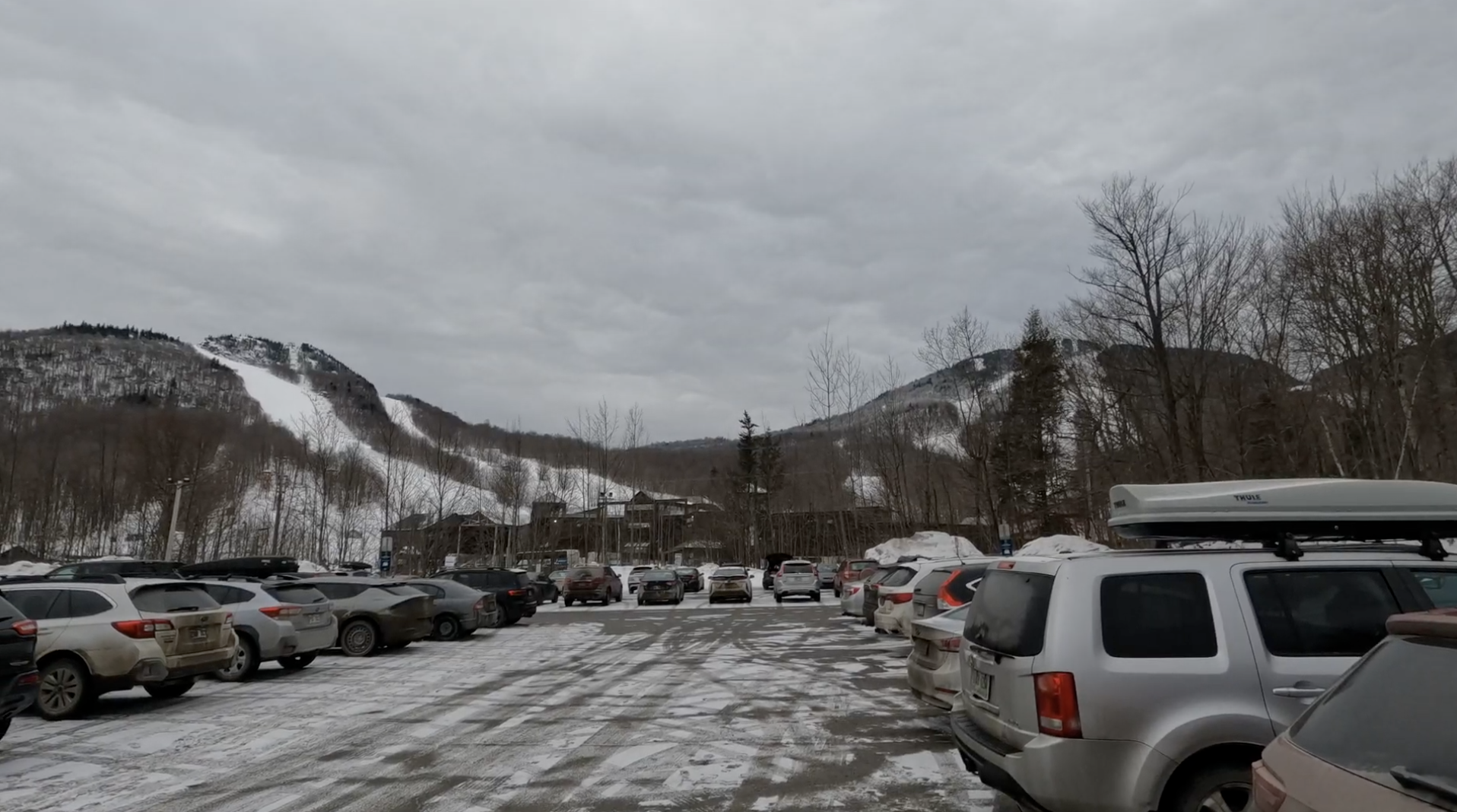
Mont Orford is conveniently located for day trips from various Quebec population centers.
Getting There and Parking
The resort sits just over 90 minutes from Montreal and about 25 minutes from Sherbrooke. Access roads are well maintained, though winter storms can make the final approach slow. Compared with Sutton and Owl’s Head, Orford is the most centrally located of the three and easiest to reach for day-trippers.
Main-base parking is plentiful and conveniently close to the lifts. There’s also a small lot near Chair 1, which allows advanced skiers to lap the expert terrain without returning to the main base, an underrated perk on powder days.
Lodging and Après-Ski
While Orford lacks true ski-in/ski-out accommodations, the nearby village of Magog offers a wide range of hotels, Airbnbs, and restaurants within a short drive. The local scene is livelier than most Québec ski towns, giving visitors more off-hill options.
Après options are modest but pleasant. The base-lodge bar is cozy and affordable, and Magog’s town center—15 minutes away—offers solid restaurants, breweries, and cafés for a more social evening. It’s no party hub, but it’s enough to unwind after a demanding day in the woods.
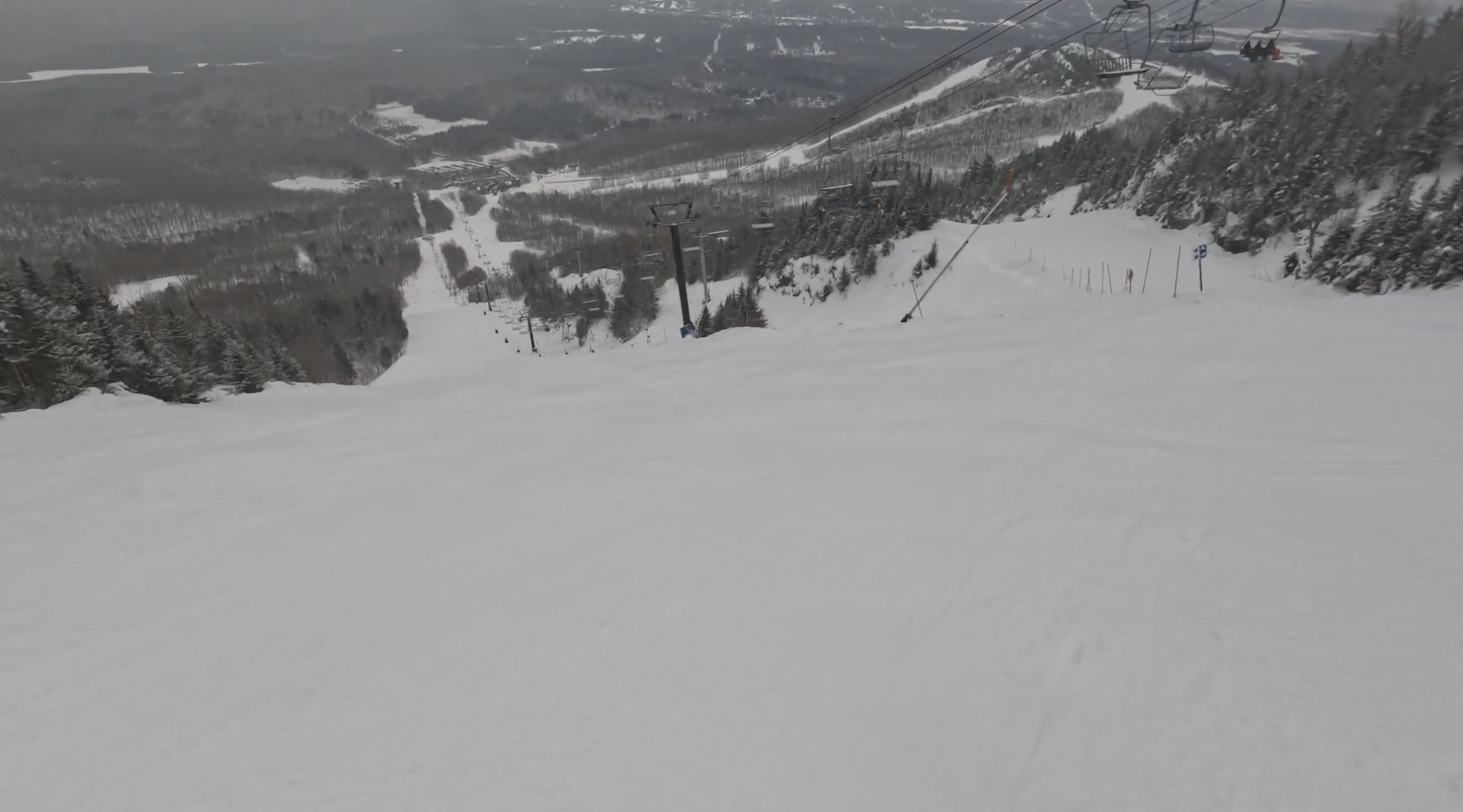
Mont Orford’s strengths become clear if the conditions align—but your trip can be a bust if they don’t.
Verdict
Orford is the definition of a “conditions-dependent” resort. On a good year—or even a good week—it can deliver some of the most thrilling expert skiing east of the Rockies. But on marginal days, its appeal shrinks rapidly. It’s not a consistent destination, but for those chasing challenge and variety in Québec, it deserves a spot on the bucket list.
Pricing
Lift tickets and passes are far more affordable than those at comparable U.S. resorts, and the overall on-mountain costs—from food to rentals—remain reasonable. The value proposition is outstanding when the snow is good, but given the hit-or-miss conditions, it’s a gamble that rewards those who time it right.