Most Underrated Ski Resorts in North America
When it comes to planning to a destination ski vacation these days, it feels like the only way to go is accepting the reality of huge lift lines on weekends and holidays, committing to one of the two mega passes ahead of time, and exorbitant lift ticket prices for those who wait. But what if we told you there are some options where some of these things aren’t true—and in fact, there are more than two dozen of them? Indeed, there are still a number of ski resorts that have remained under the radar over the past several years, even with the seismic trends in the industry, and if you know what you’re doing, you can get some incredible terrain for a reasonable price and limited crowds.
So just what are these resorts that still haven’t been brought under the radar of Epic and Ikon?
#24: 49° North
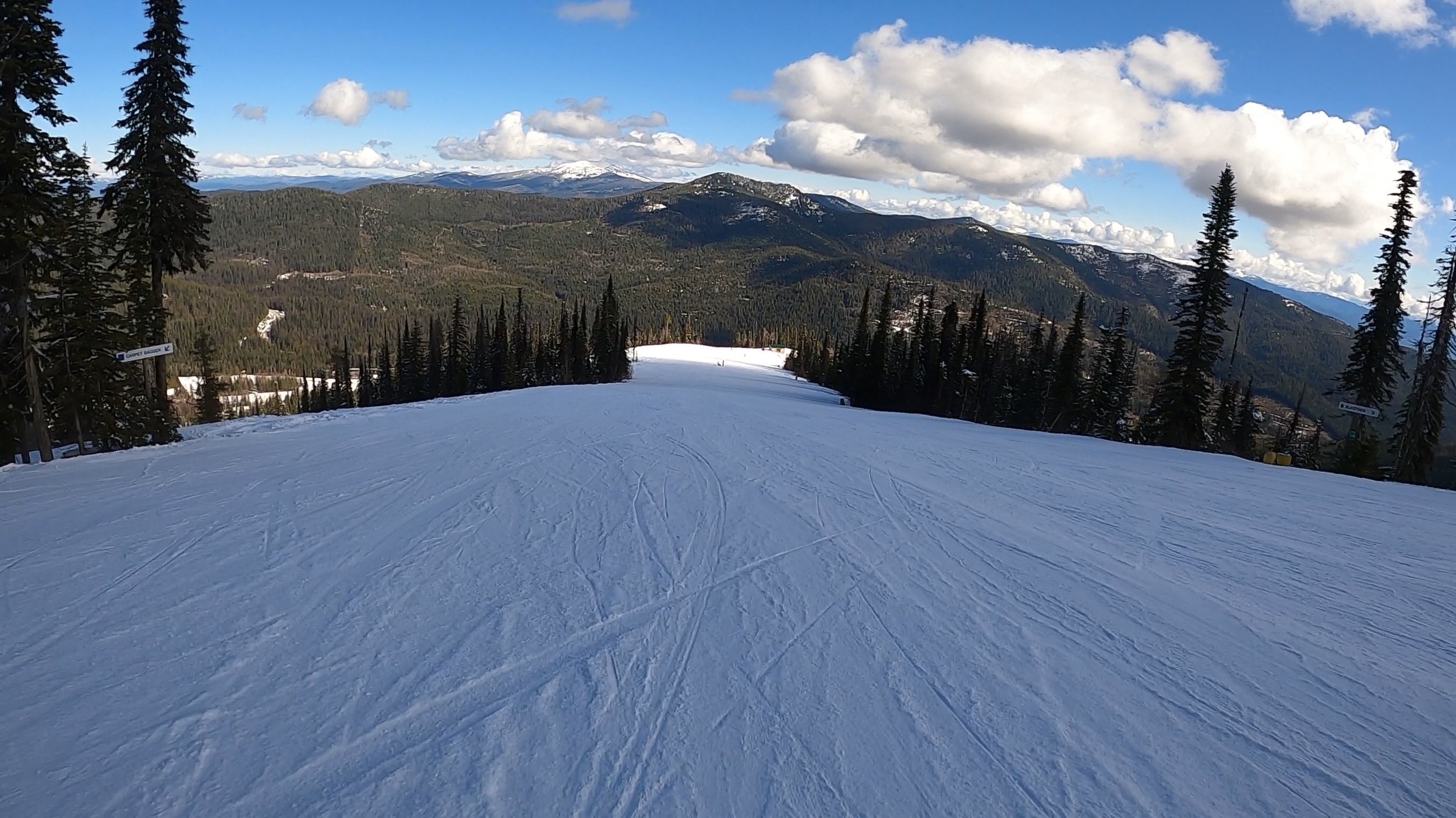
First off, we start in northeastern Washington State with 49° North. This resort might appear first in the alphabetized list of many aggregated snow report sites, but it usually doesn’t appear first on the top of people’s short list for their next ski vacation. But that’s a bummer, because 49° North stands out for snow quality, with light and dry accumulation that is much more reminiscent of the Rockies than what one might typically expect from a ski resort in a Pacific Northwest state like Washington. Below-treeline terrain diversity is excellent, with standout glades, especially for advanced skiers and riders, and a solid mix of groomed cruisers and sustained mogul runs. The resort also offers a local feel with very little in the way of commercialization, limited crowds, and a convenient location close to Spokane.
So why hasn’t 49° North been noticed by the broader crowd? Well, we would argue that the main reason is its vertical drop. While the resort is by no means truly short, with a top to bottom rise of just under 1,900 feet, the resort doesn’t have the big mountain feel that many competitors offer. On top of that, while the resort recently got its first-ever high-speed quad, which made huge strides to enhance the overall experience, many parts of the resort are still served by slower lifts. And finally, while the resort certainly has a friendly feel to it, it’s not the best for less-experienced skiers and riders because the green runs outside the bunny hill are pretty steep for their terrain rating.
Still, if you want an uncrowded ski resort experience with excellent glade terrain, 49° North is a great option—and it’s especially standout if you are used to the jam-packed ski resorts in the Western part of Washington State. Lift tickets are very reasonable by today’s standards, going for just $82 during peak times, and dropping as low as $47 if you buy for an off-peak weekday. The resort is also a two-day member of the Indy Pass, albeit with holiday blackouts on the Base tier of this product.
#23: Brian Head
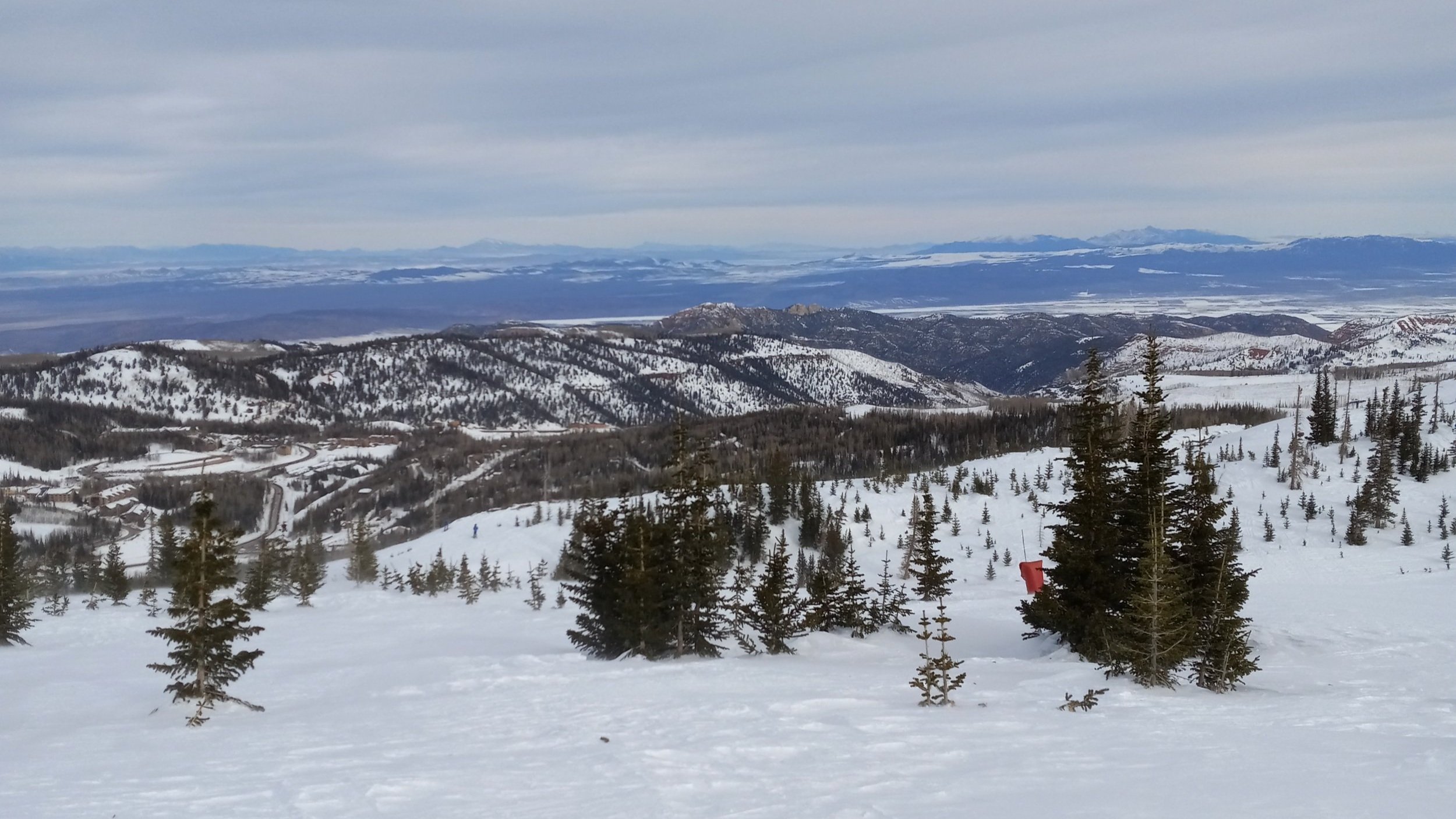
Next up, we move to Southwest Utah to cover the state’s Brian Head ski resort. If you’ve only skied at resorts that are on Epic or Ikon before, Brian head will be unlike any other ski resort you’ve ever seen—the landscape surrounding it is filled with red rock topography by nature of its location on top of a massive plateau, and the resort has the characteristics to feel like it could be in Zion National Park, which makes sense because the park actually happens to be quite nearby. The resort also offers a family-friendly footprint, with great cruising terrain and some solid glades as well, and there’s even easy access to backcountry terrain from certain parts of the mountain. Brian Head’s desert location also brings very high-quality snow, meaning that when storms arrive, guests will experience enjoyably light and dry accumulation.
So why isn’t Brian Head all that well known in the grand scheme of things? Well, it’s probably because there’s very little business case for that to become a reality. The resort is empty on off-peak weekdays, but it does get fairly busy on weekends and holidays, with 10 to 15 minute wait times at the express lifts during more crowded periods. But while the resort does attract quite a few people when they have off from work or school, these are chiefly driving vacationers from Las Vegas, and to a lesser extent, Salt Lake City, and given the fact that the nearest convenient airport is more than three hours away, it’s a pretty huge slog to get out there for a fly-to vacationer. And while that drive might be justified if the resort were truly giant, Brian Head’s vertical drop is actually even shorter than that of 49 Degrees North, coming in at under 1,500 feet from bottom to top, meaning that despite some pretty unique terrain and incredible views, you’re not taking any runs that are longer than many people will find at regional hills. Also, while it helps with snow retention, the incredibly high base elevation of nearly 10,000 feet probably doesn’t help with people who aren’t used to high-elevation skiing and riding.
But despite its drawbacks, Brian Head may be worth the visit if only for the fascinating backdrop and the unique terrain that comes with it. The resort tops out at over $130 for a one day ticket if you buy close to the day of, but perhaps one of Brian Head’s biggest benefits of all is the fact that you can get lift tickets for an absolute steal if you buy very far in advance. In fact, there are some core winter days that go for as low as $26, making for one of the best lift ticket values you can get anywhere in North America, let alone in the world. The resort is also a member of the Power Pass, providing unlimited access to Brian Head and several other ski resorts chiefly in the southwest region.
#22: White Pass
Next up, we move back to Washington State to cover White Pass, a resort that unlike 49° North, is actually in the heart of the Cascade Range. White Pass may not be the biggest household name in the Pacific Northwest, but it stands out for solid terrain, including great cruiser runs, a handful of bowls and mogul runs, and, much like the other resorts we’ve covered so far, pretty unique glade terrain. The resort also sees the same high volume of snowfall as other Washington State Cascade resorts, making for frequent powder days and a snowpack that sticks around through April or even May at times. And White Pass offers two things that are pretty hard to come by in Western Washington State: a decent lack of crowds, with reasonably manageable lines on weekends, and actual on-site lodging.
But from a megapass perspective, White Pass’s biggest disadvantage might be that it’s further from the region’s major city, Seattle, than its main competitors, Crystal, Stevens Pass, and Summit at Snoqualmie. The resort also shares some of the same disadvantages as those competitors, such as wet and heavy snow and perennially low-visibility conditions. And compared to those resorts, White Pass’s true expert offerings are just not that competitive, and the resort’s lift infrastructure is a little bit behind as well. However, White Pass brings something its Epic and Ikon-affiliated competitors don’t: lift ticket value. 1-day lift tickets start at a very affordable $69, and they top out at just over $100 on peak weekends and holidays. The resort is also a two-day member of the Indy Pass, albeit with severely restrictive weekend and holiday blackouts on the lower-tier Indy Base product, as well as a member of the Powder Alliance, which grants three days of partner access to participating mountains for any person who has a season pass for one of those mountains. So if you’re looking for a ski resort with available accommodations and enjoyable terrain in the Pacific Northwest, White Pass may be the right mountain for you.

#21: Mount Hood Meadows
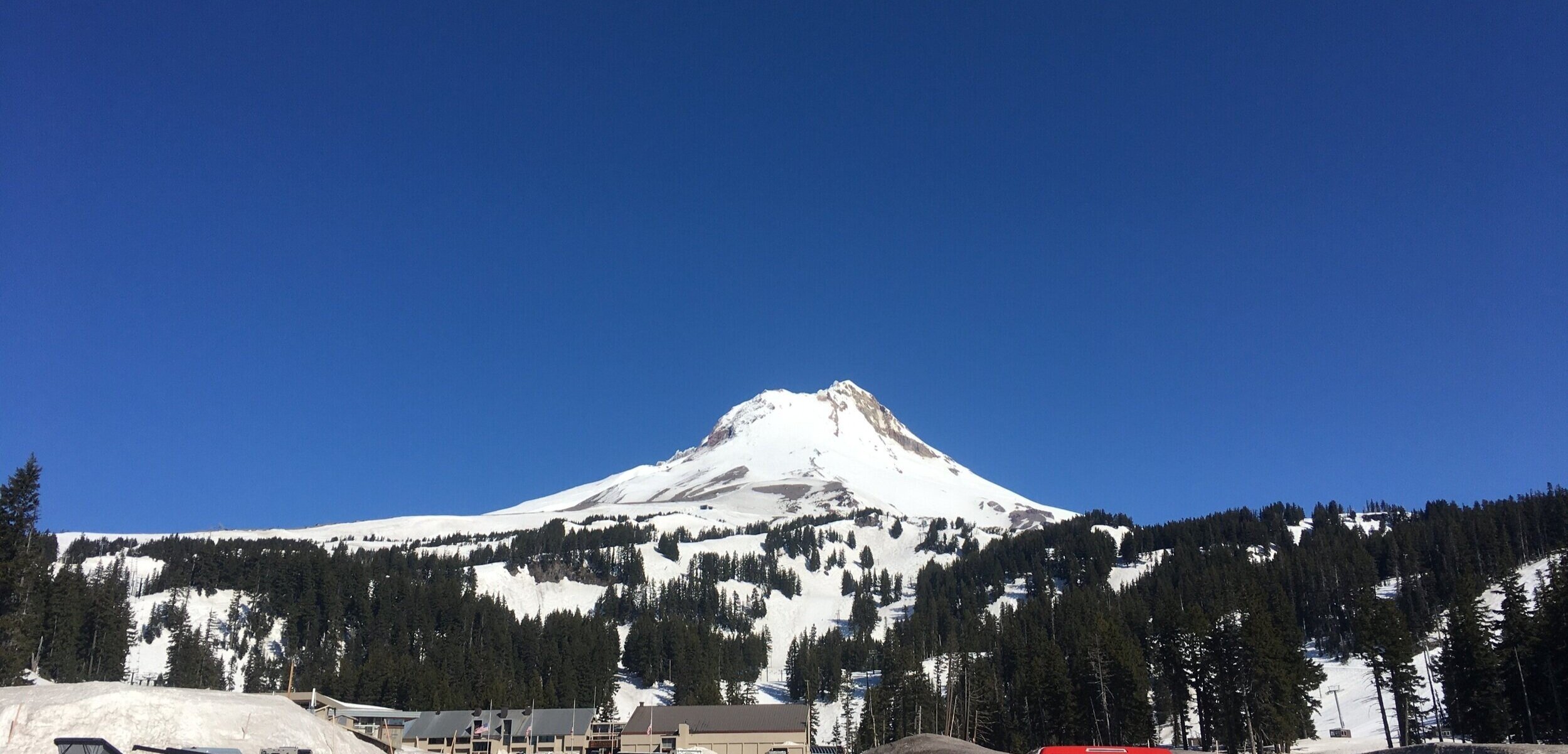
Next up, we stay in the Pacific Northwest yet again and move a couple hours down to Mount Hood Meadows, the largest ski resort on the face of Oregon’s iconic Mount Hood volcano. Mount Hood Meadows isn’t exactly known for being a fly-to destination, but on a good day, it’s home to an almost unbelievable combination of factors for a resort that’s not a continent-wide household name. The resort stands out for its terrain diversity, even compared to some of the best ski destinations in North America, ranging from unique high-alpine zones to glades to tree-cut trails, with options in nearly all of these terrain categories ranging from beginner to expert. And speaking of expert, Mount Hood Meadows’ most difficult lines are truly extreme, offering challenges difficult enough to truly compete with the most technical mountains in North America. And on clear days, the resort has the views to boot too, with a clear line of sight up the massive Mount Hood while you’re riding most of the lifts.
But while people outside the Pacific Northwest may not know Mount Hood Meadows all that well, people who are local to the region certainly do. The resort is easily the most competitive within an hour and a half of Portland, and people know it, resulting in significant lines on weekends, including access road backups. But there are other local resorts that attract significant visitation on weekends and still find a way to affiliate with Epic and Ikon, taking advantage of the less-busy weekdays. And given that circumstance, we’d argue the crucial factor that hurts Mount Hood Meadows’ ability to gain a sizable out-of-town audience is its reliability. The resort’s volcano footprint results in extremely volatile weather patterns, and upper mountain terrain is perennially closed outside of the less-popular spring months. This, combined with the lack of on-site lodging that would provide alternate activities in the event of a bad weather day, makes planning an in-advance multi-day trip risky and complicated.
But despite these factors, Mount Hood Meadows offers one of the most diverse and underrated footprints for all abilities, provided you time your trip correctly. The resort does top out at a pretty expensive $174 if you go on a peak Saturday or holiday and buy at the window, but as one might expect given its day-trip-oriented clientele, off-peak weekday tickets are much more reasonable and arguably a steal for what you can get. Mount Hood Meadows is also a member of the Indy Pass, albeit with severely restrictive weekend and holiday blackout dates on the lower-tier Indy Base Pass.
#20: Mission Ridge
Next up, we move to Washington State’s Mission Ridge, sticking to the Pacific Northwest once again (okay, yes, we know this is the fourth Pacific Northwest mountain of the five covered so far, but we promise there are other regions covered and we’ll be moving solidly towards them after this one). But there are a variety of reasons why Mission Ridge is worth a visit. Like 49° North, the resort sees surprisingly light snow for this region of the continent, and when it’s not good, a robust snowmaking system helps keep quite a bit of terrain open. When it’s good, experts seeking a challenge can find a strong variety of chutes and steep tree runs, and intermediates have access to plenty of enjoyable cruiser trails. The resort also offers a distinct natural beauty, with breathtaking views of some of iconic Cascade peaks and exposed volcanic rock features across much of the mountain. And this is all paired with significantly lighter crowds than the Seattle-area resorts and the state’s only bubble lift.
And ultimately, that distance from Seattle, much like with White Pass, is likely a big reason why Mission Ridge has flown so under the radar for quite some time. Another factor is that while the snow quality is generally high, total snowfall is typically lower than at many competitors further west in the heart of the Cascades, leading to more variable off-piste conditions. And while Mission Ridge is competitive size-wise with other Washington State resorts, it’s small compared to most fly-to destinations, only offering 1,040 skiable acres as per our independent measurements. Even so, these drawbacks are relatively minor when weighed against what the resort offers, particularly on off-peak weekdays. Peak ticket prices can be high, topping out around $165 for 1-day adult tickets, but advance purchase rates are far more reasonable, going for as low as $75 during the core winter season. Mission Ridge is also a two-day member of the Indy Pass, albeit with severely restrictive weekend and holiday blackout dates if you have the lower-tier Indy Base Pass, as well as a three-day member of the Powder Alliance if you have a relevant season pass.

#19: Mount Rose
Next, we move to our first ski resort in the Tahoe region and only Nevada ski resort on this list, Mount Rose. Mount Rose faces an extremely competitive Tahoe ski scene, but it offers a few unique draws that help it stand out even against some of the biggest name brands in that region. Mount Rose offers the highest base elevation of any Tahoe-adjacent ski area, and snow quality tends to be on the higher side as a result. The resort also offers high-speed lift service nearly everywhere, including two on the frontside that help manage crowds, incredible views into downtown Reno from the backside, and decidedly awesome off-piste runs, including unique rock-riddled glades. And when conditions allow, Mount Rose is notorious for its Chutes zone, which offers extremely steep fall lines with plenty of natural obstacles that will give even tenured experts a serious challenge.
So why is Mount Rose so overlooked? Compared to the well-known destinations nearby, the biggest reasons may be size and vertical. With only 815 skiable acres and an 1,800-foot vertical drop—and only about 1,300 vertical feet that can be directly lapped outside of the Chutes zone, the resort lacks the big-mountain terrain common at bigger destinations and many better-known mountains in Tahoe. While the resort is a lot more convenient than some of the other mountains on this list, being a short drive from Reno, there’s no lodging truly nearby and the access road involves a steep and windy road at times. Also, despite some unique naturally-formed slopes, the terrain feels rather ordinary if you plan to stick to the groomers. And the resort’s high elevation also hurts its resiliency, with often-wind-scoured slopes and lift holds being common.
Still, if you want to check out some of the most unique off-piste glades and chutes out there, Mount Rose is certainly worth a trip if you properly plan around snow and wind conditions. The resort isn’t as cheap as the other mountains we’ve covered so far, with 1-day adult tickets starting at $139 and topping out at $200 a day, but if you only want to ski or ride the afternoon, you can grab tickets at very reasonable, substantially discounted rates, and you can also get full-day tickets for two people for the price of one if you go on a Tuesday.

#18: Sugar Bowl
Next up, we move just a little bit west to the other side of Lake Tahoe to cover California’s Sugar Bowl resort. Like with Mount Rose, Sugar Bowl stands out for its snow; with the infamous Donner Lake nearby, the resort always seems to get just a little bit more accumulation than the rest of the North Lake Tahoe mountains when storms roll through. Sugar Bowl also offers incredibly impressive terrain diversity, with runs that are great for beginners, but also a surprising selection of rock-formed expert and extreme terrain, with chutes, couloirs, and cliffs that make for some of the most technical terrain in the West. And skiers and riders won’t be dealing with a frustrating lift setup either, with high-speed quad chairs serving the vast majority of resort areas.
Just like Mount Rose, we’d argue Sugar Bowl is overshadowed by some of its neighbors because of its vertical drop. The resort boasts some seriously technical terrain, but none of it is all that long, and the top-to-bottom descent of 1,500 feet falls well short of most big destinations as well as several regional destinations. The longest lappable pod at the resort is only around 1,260 feet, making the mountain feel even shorter than it really is. But if you can put up with that lack of endurance terrain, Sugar Bowl provides an excellent experience for a wide variety of skill levels. 1-day adult tickets reach outrageous rates if you buy close to the day of for a weekend or holiday, but for in-advance off-peak weekdays, you can get incredibly reasonable rates for the Tahoe area. Sugar Bowl is also a member of the Mountain Collective Pass, with two days of flexible access and no holiday blackouts.

#17: Bear Valley
Next up, we stick with California but move out of the Tahoe area and head to perhaps the least-known mountain in the Golden State on this list: Bear Valley. This Northern Sierra resort may not be known for it, but it actually offers some surprisingly varied challenges, ranging from steep advanced trails and glades in the upper mountain to cliff-riddled, leg-burning bowls in lower elevations. The resort also has plenty of family-friendly terrain as well, high-speed lifts in major mountain areas, and snow totals that are close to if not equivalent to the better-known resorts in Tahoe.
So what’s kept the Bear Valley secret from getting out? We’d argue the biggest reason Bear Valley is so overshadowed is simply because it’s not in Tahoe, and its location is so remote. The mountain is very difficult to tack onto a Tahoe or Mammoth-area road trip, and with a 1,300-acre footprint and vertical drop of just under 2,000 feet, it doesn’t exactly have the attention-grabbing stats to attract typical destination-goers in its own right. In addition, more than 40% of Bear Valley’s footprint is not directly lift-served and requires bus service to get back to the main slopes; while some people may love the quirkiness and backcountry-esque lack of tracks in this area, it’s somewhat of a hassle to many others. And finally, the Grizzly chair, which serves the best advanced and expert terrain, sees sporadic openings at times due to its low elevation. But still, if you’re looking for a mountain with diverse terrain in a unique location on your next trip, Bear Valley punches significantly above its reputation. Bear Valley can get expensive if you buy peak tickets close to the day of, but it’s more reasonable if you buy off-peak or in advance; the resort is also a two-day member of the Indy Pass, albeit with holiday blackouts on the Base product, as well as a member of the Powder Alliance, which grants three days of partner access to participating mountains for any person who has a season pass for one of those mountains.

#16: Brundage
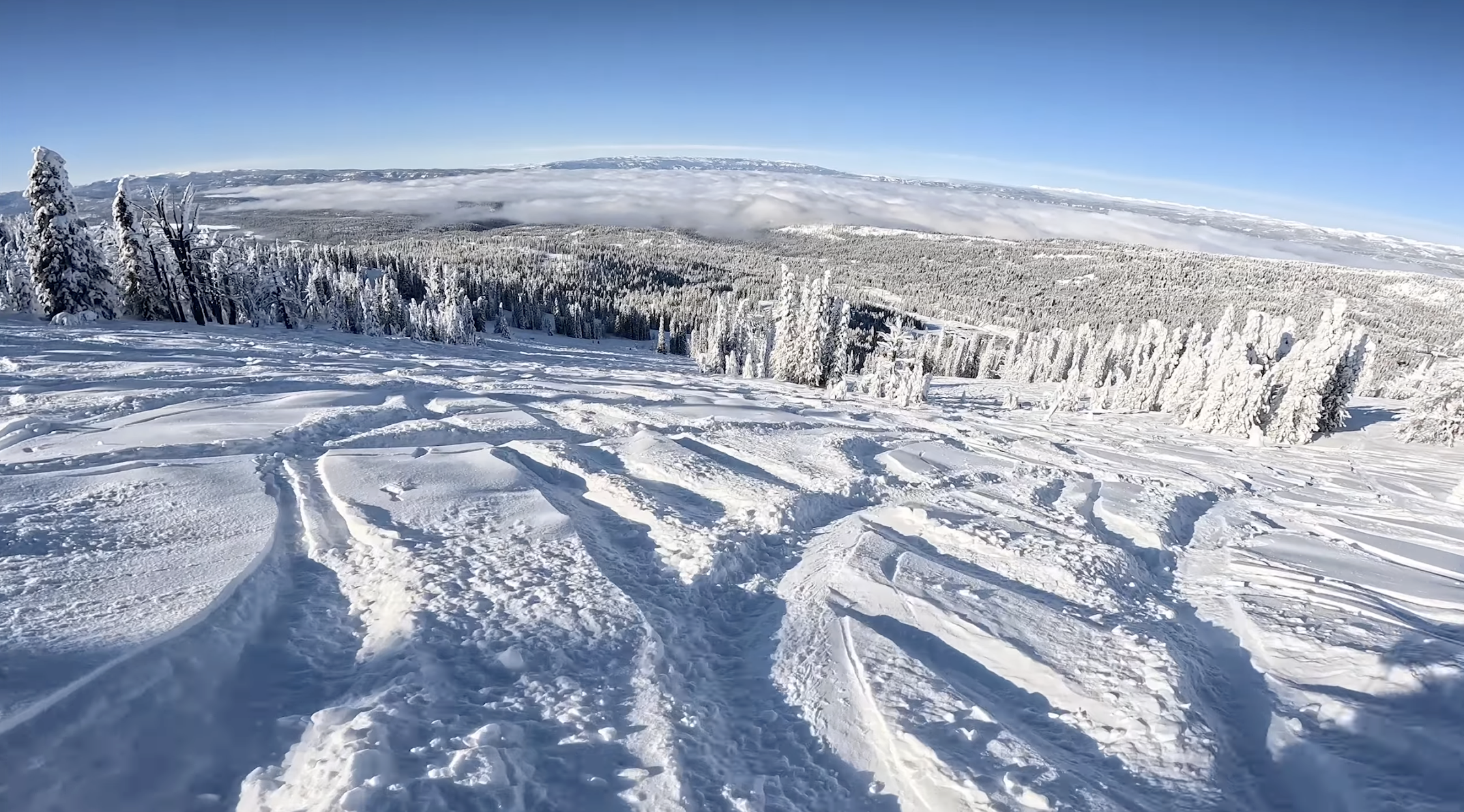
Next up, we move inland to our first of several Idaho ski resorts on this list, Brundage. While it’s not a resort people outside the local region typically think of visiting, Brundage punches above its weight for a number of reasons. First off, the terrain experience feels decidedly unique, even among destinations, with great lightly-spaced glade terrain that’s accessible for a variety of abilities, fantastic views of nearby Payette Lake, and a remote atmosphere that feels decidedly off-the-beaten-path. The resort has strong lift infrastructure that allows for fast laps to much of its terrain, as well as easy access to some solid lift-served backcountry terrain for untouched snow.
But despite its strengths, we’d argue Brundage largely flies under the radar because of its size and location. The resort claims a 1,920-acre footprint, but we found that only 1,160 of these acres are skiable in-bounds, making for less terrain to explore than better-known competitors. And while the nearby ski town of McCall is growing and offers quite an après scene, Brundage is still pretty hard to get to for the typical fly-to vacationer, taking nearly three hours from Boise with typical traffic conditions. Still, if you’re looking for enjoyable terrain, good snow, and low crowds on your next trip, Brundage isn’t a bad way to go. The resort offers value to boot as well, with 1-day adult tickets during the core winter going for as low as $65 if you buy in advance, and topping out at just over $100 if you buy at the window. Brundage is also a two-day member of the Indy Pass, albeit with holiday blackouts on the Indy Base product.
#15: Apex
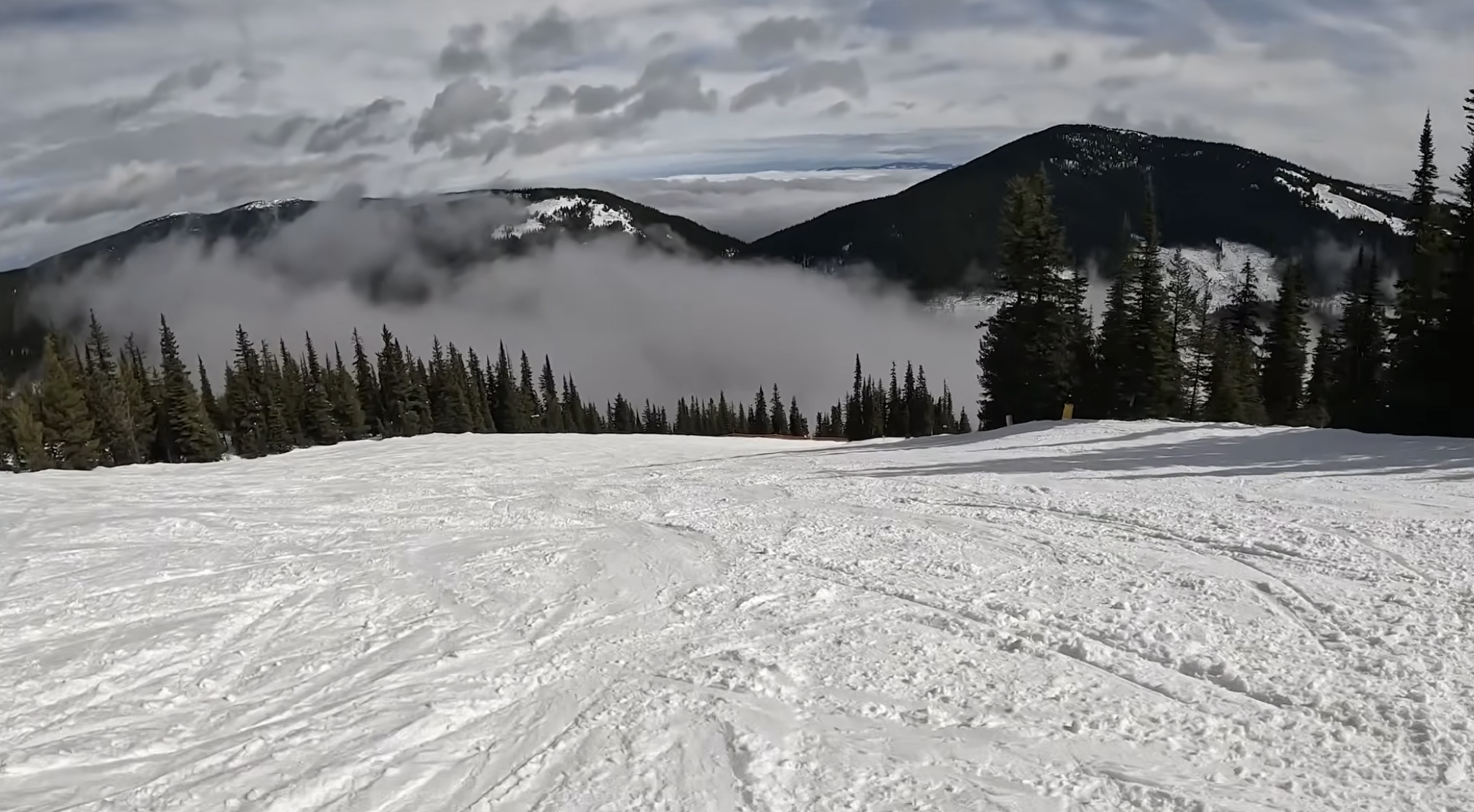
Next, we move up to Canada for the first time to cover Interior British Columbia’s Apex. The resort isn’t as well known as several Western Canada giants, but it punches above its prominence in terms of natural snow quality, terrain variety, and overall convenience. Apex offers a good mix of cruisers, bump runs, and even a handful of expert chutes in an unassuming footprint, and it pairs that all with high-speed lift access to the vast majority of terrain and nearly nonexistent crowds, even on weekends and holidays. The resort also boasts a surprisingly extensive base village and easy access from the nearby town of Penticton.
Ultimately, like many other mountains we’ve covered so far, we’d argue Apex falls short of destination prominence because of its modest size. With a footprint we measured in at less than 1,000 skiable acres, the mountain is my no means truly small, but there’s a lot less terrain than at the best-known North American resorts. And while Apex sees high-quality snow, it does not see nearly the same quantity of it as many competitors, and while by no means truly bad, the snowmaking infrastructure isn’t extensive enough to provide the level of reliability some destination-goers might expect.
But despite its drawbacks, if you’re looking for a laidback mountain with exceptionally limited crowds and impressive terrain variety for the size, Apex might be for you. The resort is an incredible value as well, with 1-day adult tickets going for between $99-$128 CAD, or about $71-$92 USD with today’s exchange rates. That is an incredible value for the quality of terrain you’ll be getting here. Apex is also a two-day member of the Indy Pass, and unlike some of the other resorts we’ve covered so far, the resort does not have blackout dates on either tier of pass.
#14: Castle Mountain
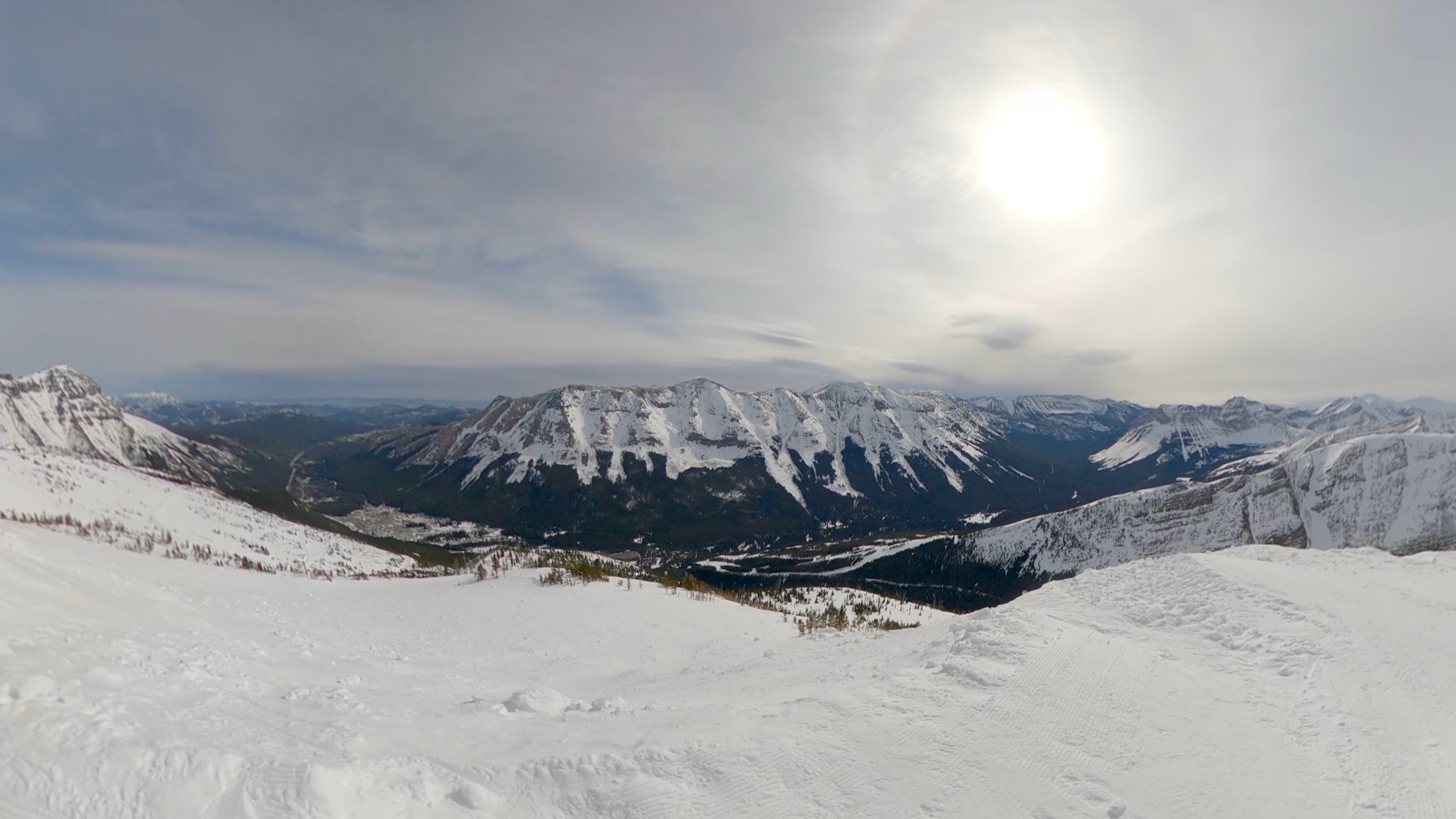
Next up, we stick to Canada but move over to the other side of the Continental Divide to cover Alberta’s Castle Mountain. This resort flies under the radar of the Banff-area giants further north, but it offers a combination of snow and terrain that’s among the best one can find anywhere. Castle stands out for its light and dry snow accumulation, wind-drifted snow that provides fresh tracks longer than its snow totals might expect, and some of the most incredible steep skiing and riding in Canada across a competitive vertical drop. And if you’re looking for views, Castle has plenty of those as well, with some of the most stunning and remote-feeling slopes one can find anywhere.
But despite its numerous strengths, we’d argue Castle flies under the radar largely because of its infrastructure. Despite a massive lift-served terrain expansion this winter that also introduced the resort’s first-ever high-speed lift, every other lift at the resort is slow and low capacity, and even the new high-speed quad is a used model that spent nearly four decades in service before being re-installed at Castle. The resort also doesn’t offer quite as strong beginner and intermediate terrain as its offerings for more experienced guests, and the limited uphill capacity means notable lift lines can actually occur on powder days, even though the raw number of people on the mountain never gets too bad.
But while it’s certainly rough around the edges, Castle is an incredible destination for advanced and expert skiers and riders looking for an off-the-beaten path Western Canadian mountain. The resort offers some of the cheapest lift tickets in the region as well, with 1-day adult tickets going for between $128-$160 CAD, or around $92-$115 USD, and the mountain is also a two-day member of the Indy Pass with no blackouts.
#13: Purgatory
Next up, we move far south of Canada and head to our first resort in Colorado, Purgatory. Purgatory is one of the last places skiers and riders from outside the southwest would think of for their next ski vacation, but it has a lot of things going for it that make it a worthy alternative to better-known destinations. Purgatory offers high-quality snow, stunning views, and a generally modern lift fleet across a varied footprint. The resort has plenty of easier terrain for families but some significant steeps as well, as well as a cute base village with numerous on-site lodging options and low-enough crowds that serious lift lines are rare.
But Purgatory ultimately stays under the radar due to a couple of circumstances. The resort sees very high quality snow, but like many other resorts in Southwest Colorado, it doesn’t see the same raw snow totals as some other parts of the state, meaning powder days can be less frequent than some might expect from a trip to the Rockies. Purgatory’s vertical drop is also a bit shorter than some competitors, coming in at around 2,000 vertical feet, and there are some logistical issues with navigation and facilities placement that more polished destinations may be less likely to have. And finally, Purgatory is a harder sell than the Colorado destinations when it comes to fly-to access, sitting closer to Albuquerque than Denver and requiring either flying into Durango regional airport or engaging on an hours-long drive from the nearest international hub.
Still, if you’re looking for a combination of incredible views, limited lines, and a reasonably modern lift fleet on an enjoyable footprint, Purgatory may be a solid choice. Purgatory’s case is also helped by the fact that like its corporate sibling Brian Head, it has some of the most reasonably-priced tickets in the world if you buy in advance for an off-peak weekday. Busy holidays can go for more than $150, but 1-day adult rates during the core winter season can be had for as low as $25 if you buy in advance. That’s an incredible deal for some pretty high-quality skiing. Purgatory is also a member of the Power Pass, providing multi-day or unlimited access to Purgatory and a dozen other mountains mostly throughout the southwest.

#12: Loveland
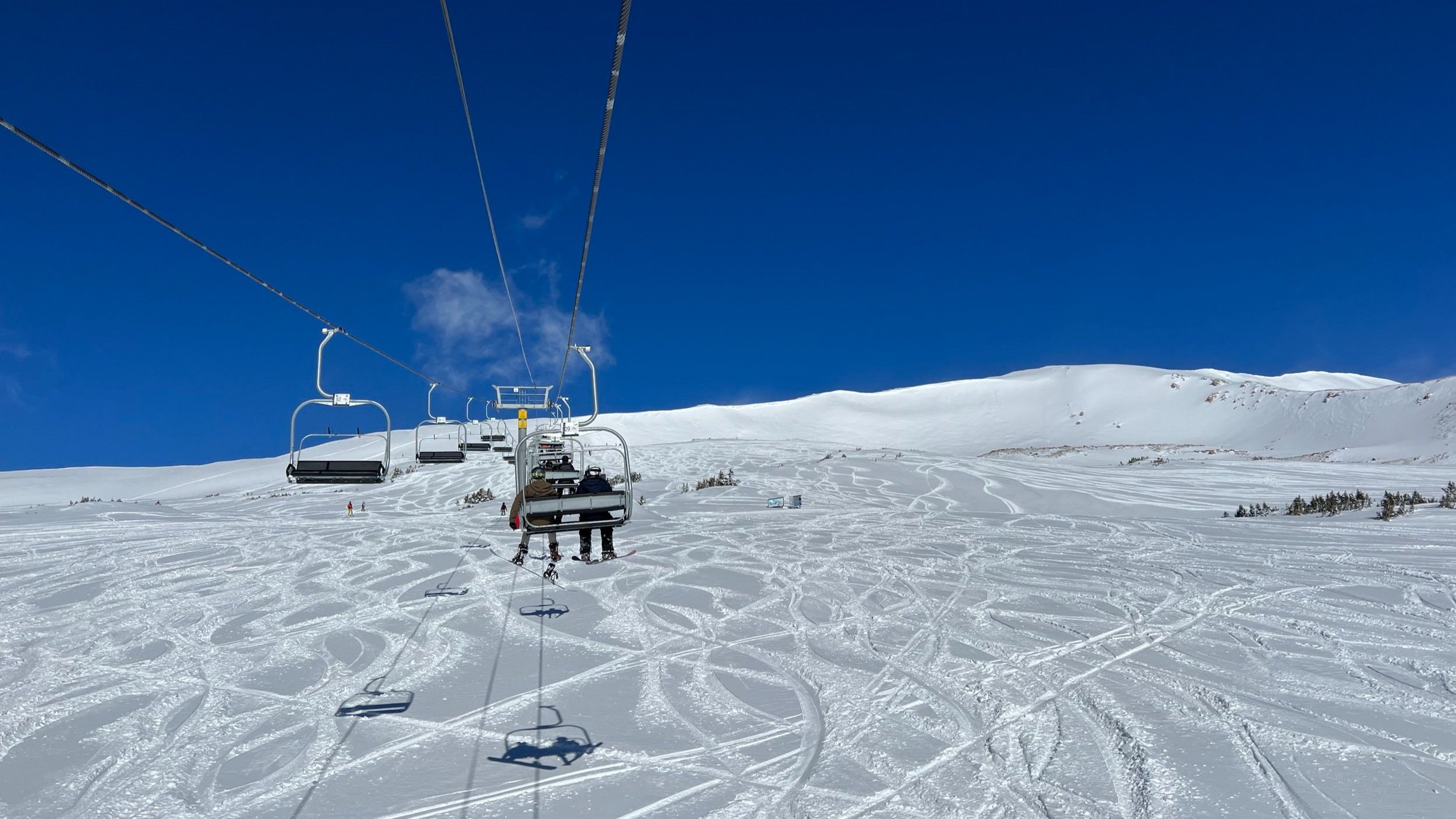
Next up, we move to a region of Colorado that many of you are probably a lot more familiar with: the I-70 Corridor. But our next mountain, Loveland Ski Area, happens to literally sit on top of this critical highway—and in fact, most people just pass right under it when they’re going to the better-known destinations just a few miles west of it. But Loveland is worth visiting in its own right for a number of reasons. First off, the resort is home to an incredible array of high-alpine bowl terrain, with a base elevation of 10,800 feet—the highest of any ski resort in North America—and several distinct faces providing bowls for all ability levels. The resort’s Continental Divide location furnishes it with extraordinary accumulation each season, resulting in some of the highest snow totals anywhere in the state, and the resort offers snowcat operations in its upper mountain Thursday through Sunday at no extra cost, making it one of only a handful of resorts in North America to offer snowcat skiing included in the price a lift ticket.
So why hasn’t Loveland become a destination magnet in the same way as other I-70 Corridor mountains? There are probably a handful of reasons for that, but we’d argue the biggest is its wind exposure. The resort’s exceptionally prominent location helps it get a lot of snow, but those same slopes are perennially susceptible to becoming windblown, with unmarked rough patches common in many bowls. Unfavorable terrain exposures, with many parts of the resort facing east or south, don’t help either, and nor do slow lifts in all but one terrain pod. And Loveland also suffers from a lack of nearby lodging; while missing strictly ski-in/ski-out lodging isn’t always a dealbreaker, the nearest hotels are several miles away on the other side of the Continental Divide, which is not a fun drive—and involves roads that can become impassable during snow storms.
So yes, Loveland’s accommodation situation makes it tough for a convenient weeklong ski vacation, as does the fact that such a large portion of its terrain is highly susceptible to wind scour. But if you can make it work at the right time, the resort offers some of the most slept-on high-alpine terrain in North America. Lift tickets top out at $149 for a peak holiday, but if you can plan in advance, you can buy a 1-day adult ticket during the core winter season for much more reasonable rates as low as $78. Loveland is also a two-day member of the Indy Pass, with no blackouts on either tier of pass, and a three-day member of the Powder Alliance for those who have a participating season pass.
#11: Mount Baker
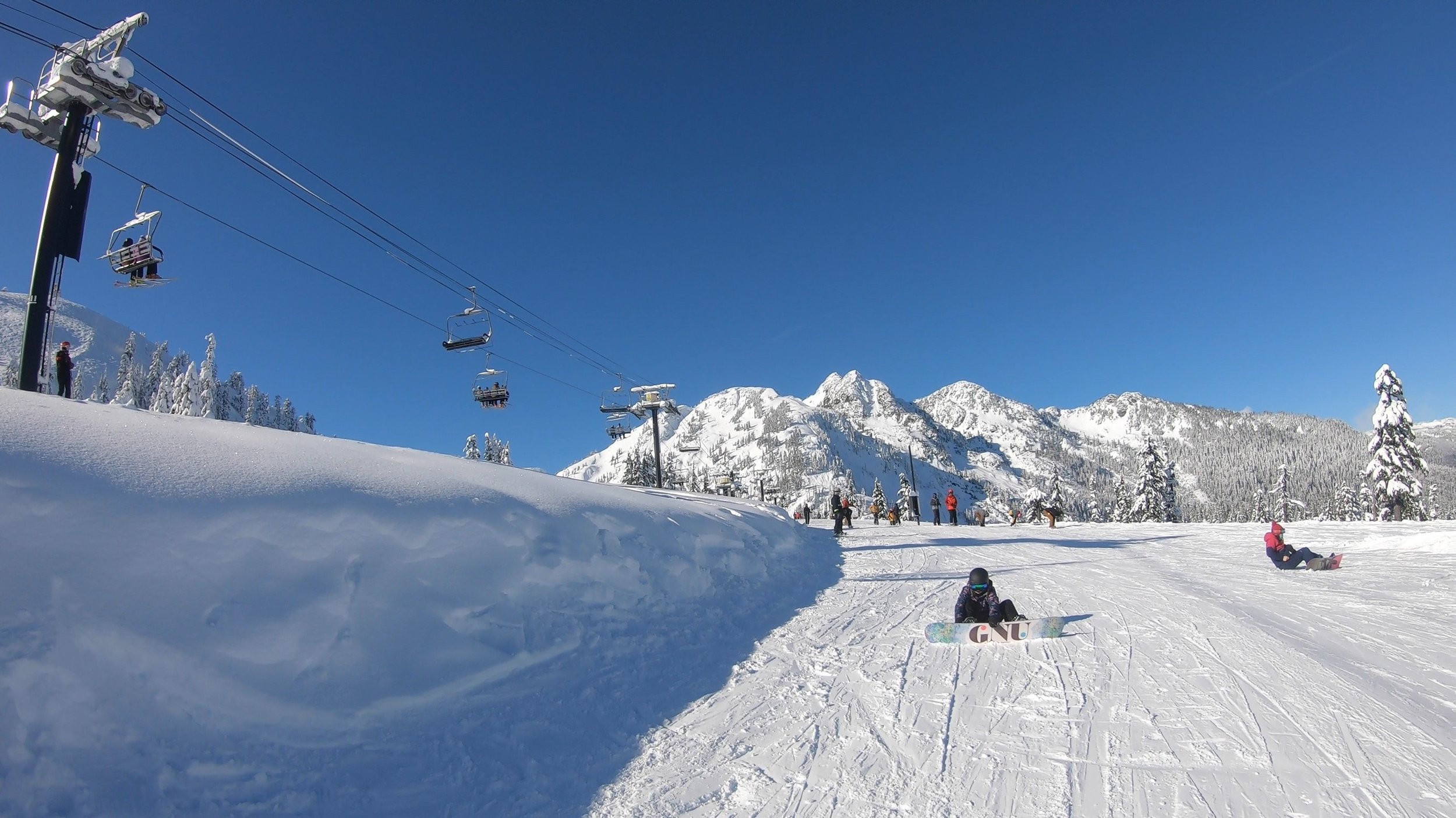
Next up, we move back to Washington State one more time to cover one of the most incredible ski areas for snowfall in the world, Mount Baker. Mount Baker may not be the first place that comes to mind for a casual vacationer, but if raw snow totals are your number one criteria, Mount Baker may be among the best places you’ll ever visit. The resort often sees the highest snow totals of any ski resort in North America, with seasonal snow totals that regularly top 500 inches and have even crested 1,000 in some cases, and if you get there on the right day, you might even experience powder refills by the time you get back up the chairlift. Mount Baker also stands out for some of the most technical extreme terrain anywhere in the world, with its “extreme danger zones“ involving terrain with huge cliff drops and almost mind-bogglingly long mandatory straight lines.
So why isn’t Mount Baker a renowned destination resort? Well, many would say it’s not a resort at all. Mount Baker not only lacks on-site lodging, it’s in a remote patch of forest in the North Cascades wilderness and doesn’t even offer true lodging options within 30 miles of the ski area. And with the drive involving mountain roads that can get pretty sketchy at times, it’s not exactly a fun experience to drive to and from the slopes on a daily basis. Mount Baker also lacks high-speed lifts and despite access to incredible backcountry terrain, also falls short size-wise specifically in-bounds. Also, Mount Baker’s snow tends to be wet and heavy much like the rest of the Cascades, so while it’s common to see absolutely stupid snow totals, they can be a bit of a slog to ski or ride through.
Still, if you’re looking for crazy chutes and incredible snow totals—and you can accept the long commute or sleeping in your car—Mount Baker should be on your bucket list, perhaps even more so than the well-known destination resorts. 1-day adult lift ticket prices are fairly reasonable as well, ranging between $102-$113 depending on when you visit.
#10: Bridger Bowl
Next up, we move over to Montana to cover what be the most unassuming ski area in North America for the terrain it offers: Bridger Bowl. Bridger is a state run ski resort that on the surface tends to attract a lot of families in the Bozeman, Montana area, but once you get to know it, you will learn that Bridger Bowl is one of the most insane beasts of a ski resort in all of North America, if not the entire world.
Bridger Bowl is home to some of the most extreme inbounds ski resort terrain one can find anywhere, with its expert-oriented areas involving chutes, cliffs, and gullies that can warrant anything from mandatory straight lines to cliff drops to zero-margin fall lines. And with many of the obstacles in these terrain zones being unmarked, you can’t just access Bridger Bowl‘s toughest lines with a typical ski or snowboard setup; the resort requires you to bring a beacon on several of its runs, including one entire chairlift you can’t even ride if you don’t have one.
So why isn’t Bridger Bowl a household name when it comes to a world-class destination ski trip? Well, it’s really not trying to be. Besides that extreme terrain it has in its more remote resort areas, Bridger Bowl is a family oriented hill for Bozeman locals, with its more regular terrain zones oriented towards more traditional beginner-through-advanced terrain designed for progression. Bridger Bowl doesn’t even try with the niceties of a traditional destination ski resort, with slow lifts in all areas and no on-site lodging. So Bridger Bowl is not really trying to attract you from out of town, but if you really want a once in a lifetime extreme terrain experience—and you have the partner and beacon to appropriately tackle this high consequence terrain—it may be well worth your journey. Bridger Bowl’s status as a non-profit hill comes with decidedly non-profit prices, and lift tickets are very reasonable, with 1-day adult rates going for between $84-$99.

#9: Silver Star
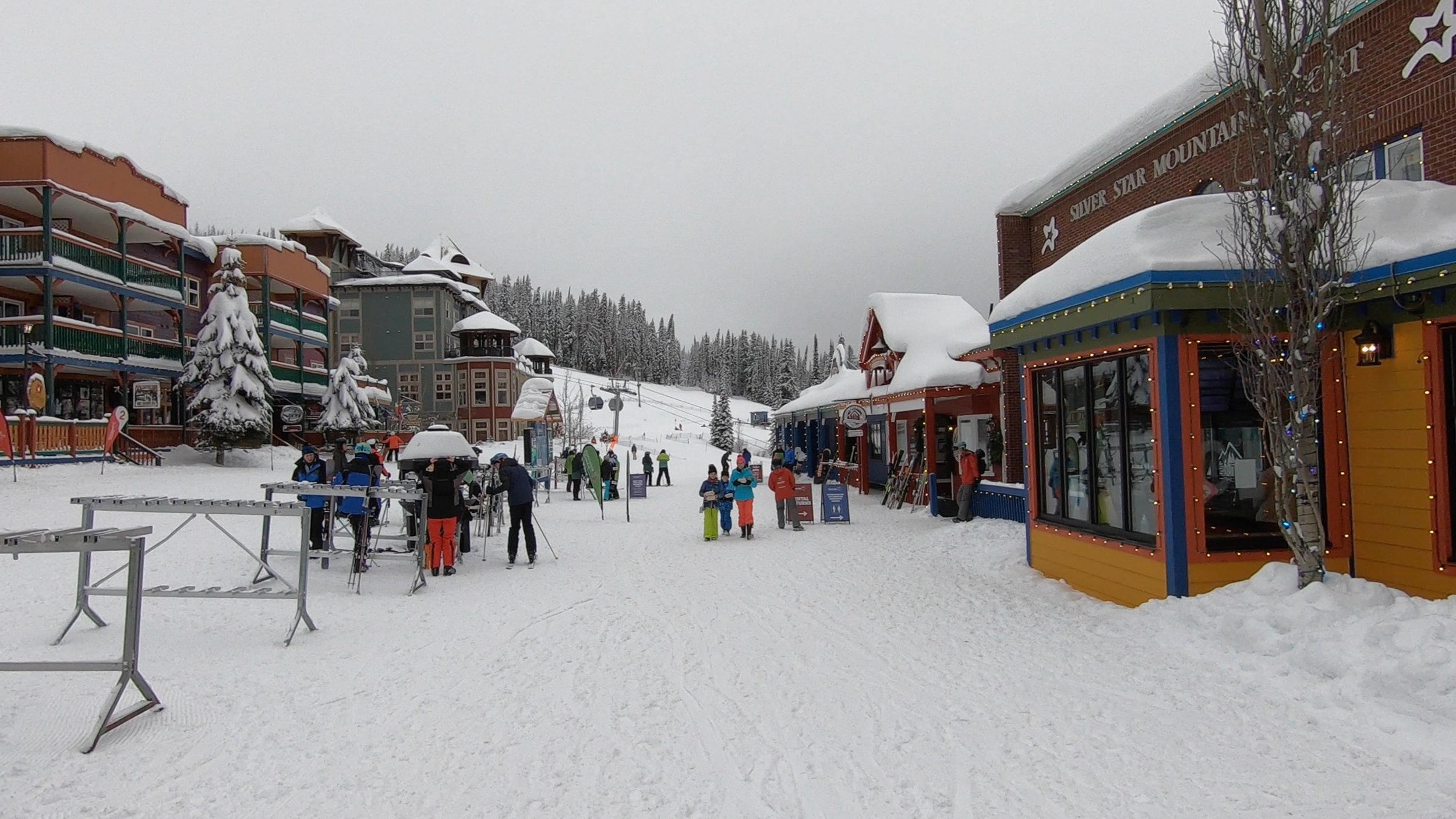
Next up, we move back up to Canada to cover Silver Star, a large ski area in the Okanagan region of Interior British Columbia. Silver Star isn’t as popular as many other resorts in Western Canada, but if you’re looking for a convenient destination with a wide range of terrain, the resort offers a surprisingly compelling proposition. With a footprint coming in at over 3,000 acres, Silver Star is decidedly destination-grade in terms of its skiable footprint size, and with a wide range of terrain areas spanning from beginner to expert, mostly modern lifts, and one of the most convenient ski-in/ski-out villages we’ve seen anywhere, it’s almost hard to believe that so few people have put Silver Star on their destination vacation shortlist.
So why hasn’t Silver Star become more of a known entity? We would argue that the biggest reason is its location. While it’s only about an hour from the Kelowna airport, this is pretty inconvenient to fly into for a lot of folks who can get the same family-friendly terrain in places like Colorado or Utah with many more direct flight options. And while some people who are looking for the truly most extraordinary extreme terrain or vertical drops may be willing to put in the extra journey to go on an out-of-the-way ski vacation, Silver Star’s vertical and expert terrain are strong, but not truly the top of the class in a way that might warrant going so out of the way to visit.
Still, if you’re looking for a well-rounded ski resort for all abilities with plenty of terrain, an inviting and hassle-free ski-in/ski out experience, and fast lifts that rarely see lift lines, Silver Star’s a resort that should probably be on your radar. 1-day adult tickets go for between $116-$174 CAD, which with today’s exchange rates translates to about $84-$125 USD, making the resort a very strong deal for the amount of terrain you get. Silver Star is also the one ski resort that made it on this list that’s technically an Ikon Pass partner, although it’s only a “Bonus Mountain”, meaning there are only two days of access, it’s only on the full pass, and there are blackout dates during holiday periods.
#8: Whitewater
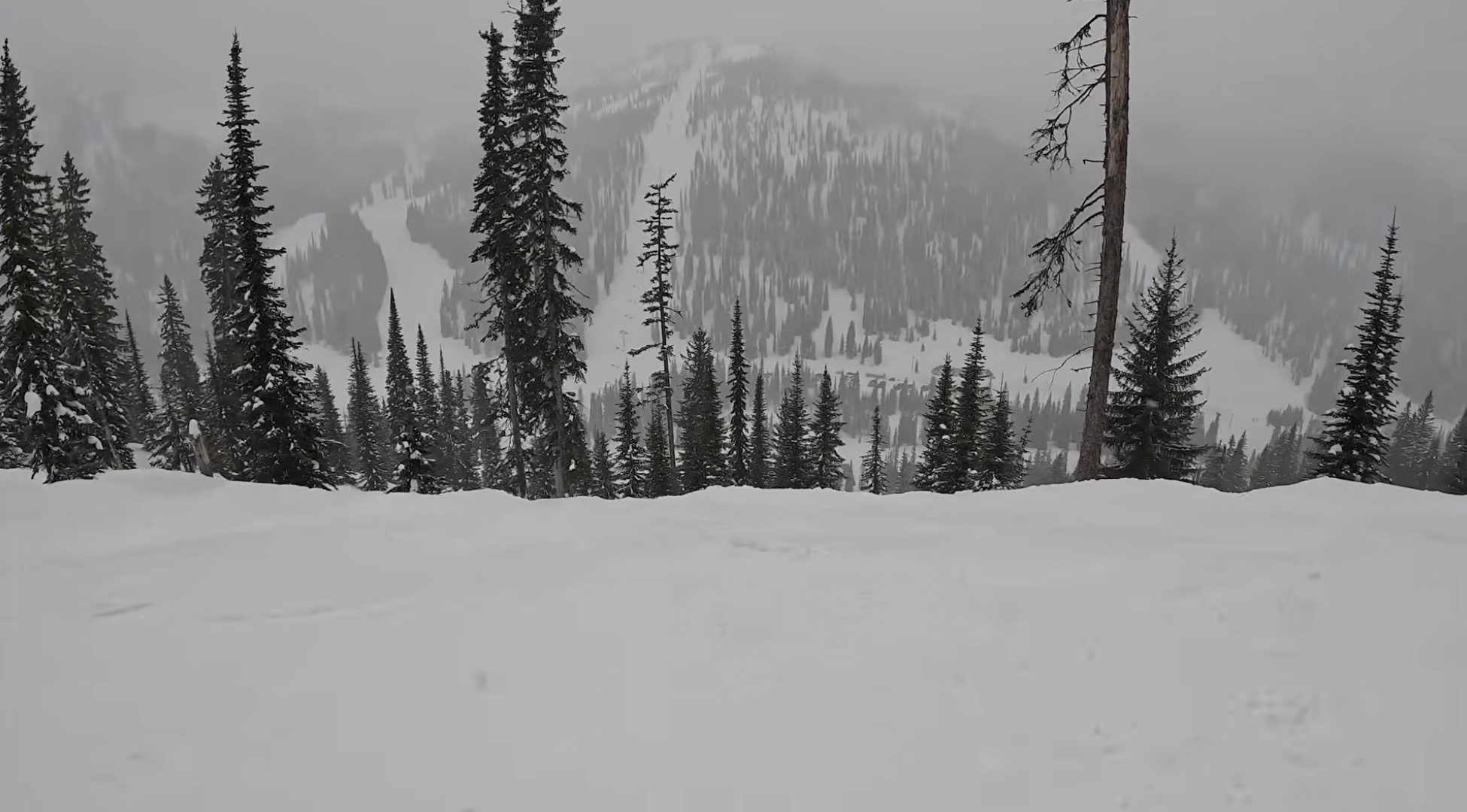
Next up, we stick to Canada once again, but move to a ski resort that is very different in vibe from Silver Star, Whitewater. Whitewater is not exactly the best known resort outside of certain powderhound circles, but it’s consistently home to some of the most incredible snow conditions one can get at any ski resort in North America. The resort sits in a sweet spot of elevation, location, and exposure that consistently furnishes it with the highest-quality snow in Southern Interior British Columbia. Whitewater offers exceptional terrain as well, with incredibly fun steep tree skiing that’s easy to lap and consistently pitched, as well as easy access to nearby lift-adjacent backcountry terrain that’s often less tracked than within the resort.
So given its extraordinary snow, why isn’t Whitewater a household destination? To put it plainly, the resort just isn’t built for that. All the resort’s lifts are slow, on-site lodging is extremely limited, and the nearest major airports are several hours away. There’s also very little at the mountain to entertain beginners and intermediates, and while each individual terrain pod feels pretty awesome for what it is, the resort as a whole is fairly moderately sized. And while it’s still significantly less crowded than the typical destination, people have been finding out about Whitewater in recent years, and untracked powder, at least in bounds, isn’t sticking around as long as it used to. But if a no-frills, high-quality powder experience is your MO, you’ll probably still want Whitewater on your bucket list. 1-day adult tickets go for $132-$154 CAD, or about $95-$111 USD with today’s exchange rates, making the Whitewater experience a pretty reasonable deal for those who value its strengths.
#7: Wolf Creek
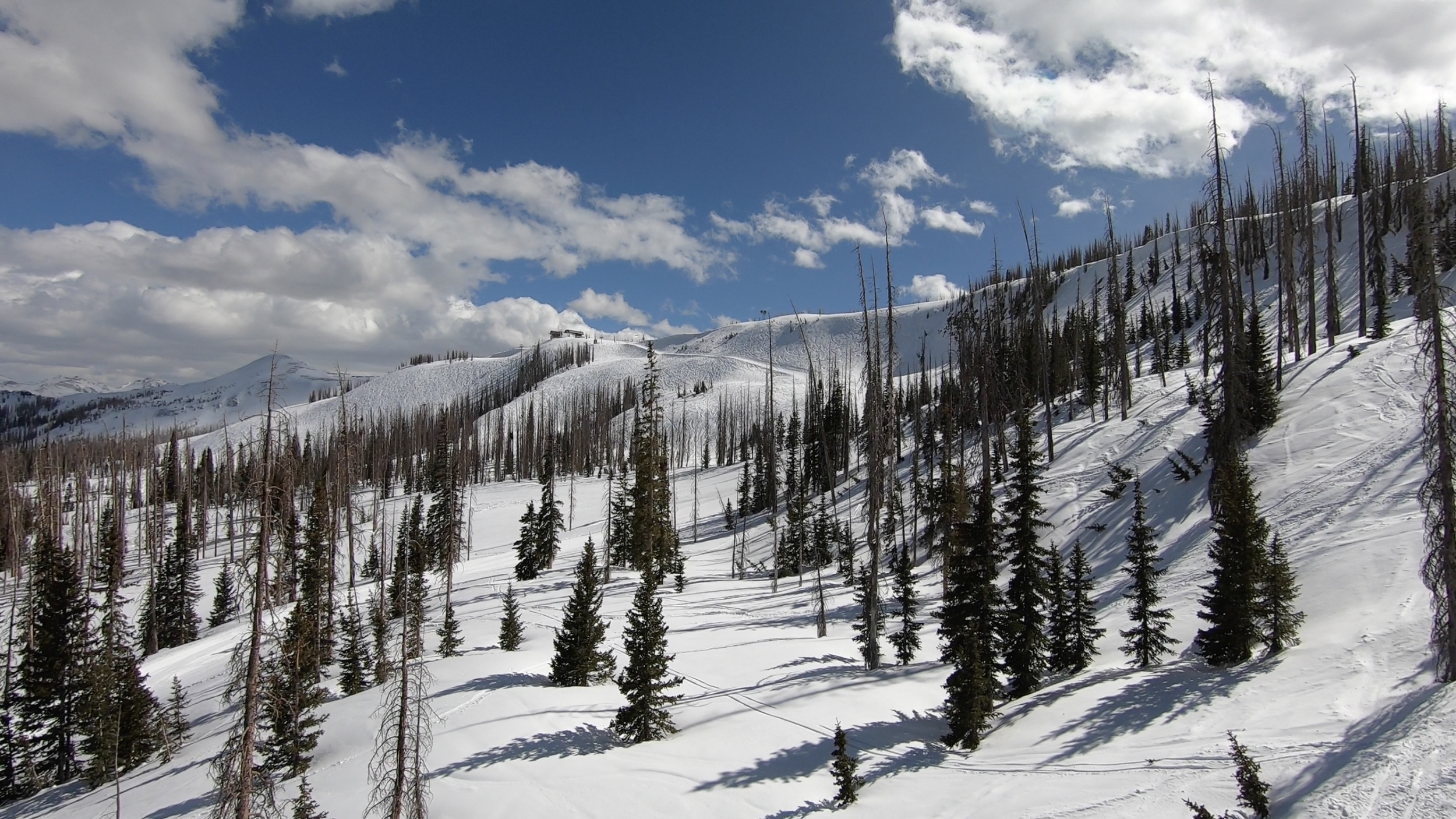
Next up, we move to another ski area that’s known for its powder but sits in a vastly different region of the continent: Southern Colorado’s Wolf Creek. People often hear about Wolf Creek in the news when it’s the first in Colorado to open during the early season, but the press often dies down after that. But there’s a reason Wolf Creek is often so quick to get its slopes open, and that’s an absolutely bonkers amount of snow. Storms come reliably and start as early as October, and a very high base elevation and favorable winds help preserve conditions. The resort offers the terrain to complement that accumulation as well, with excellent trees and some surprisingly technical expert lines.
So if Wolf Creek ends up in the headlines so often during the early season, why does everyone outside the local area forget about it otherwise? We’d argue the two biggest reasons are size and location. Wolf Creek is snowy, but it’s not exactly tall, and its 1,600-foot vertical drop is nowhere near competitive with the true destinations in the state. The other big issue has to do with accommodations; Wolf Creek sits atop a significant mountain pass of the same name, and guests will have to drive for at least 20 miles of windy roads in either direction to find lodging. In addition to the long daily drives, this setup presents issues in inclement weather if the mountain pass is forced to close in one or both directions. But if you can accept the remote location and lack of convenient lodging, Wolf Creek might offer the combination of consistent snow and low crowds you’ve been looking for on your next trip. 1-day adult tickets are a great value for what you get, topping out at just $105 if you buy the day of at the window, and the resort offers discounted half-day tickets as well.
#6: Bogus Basin
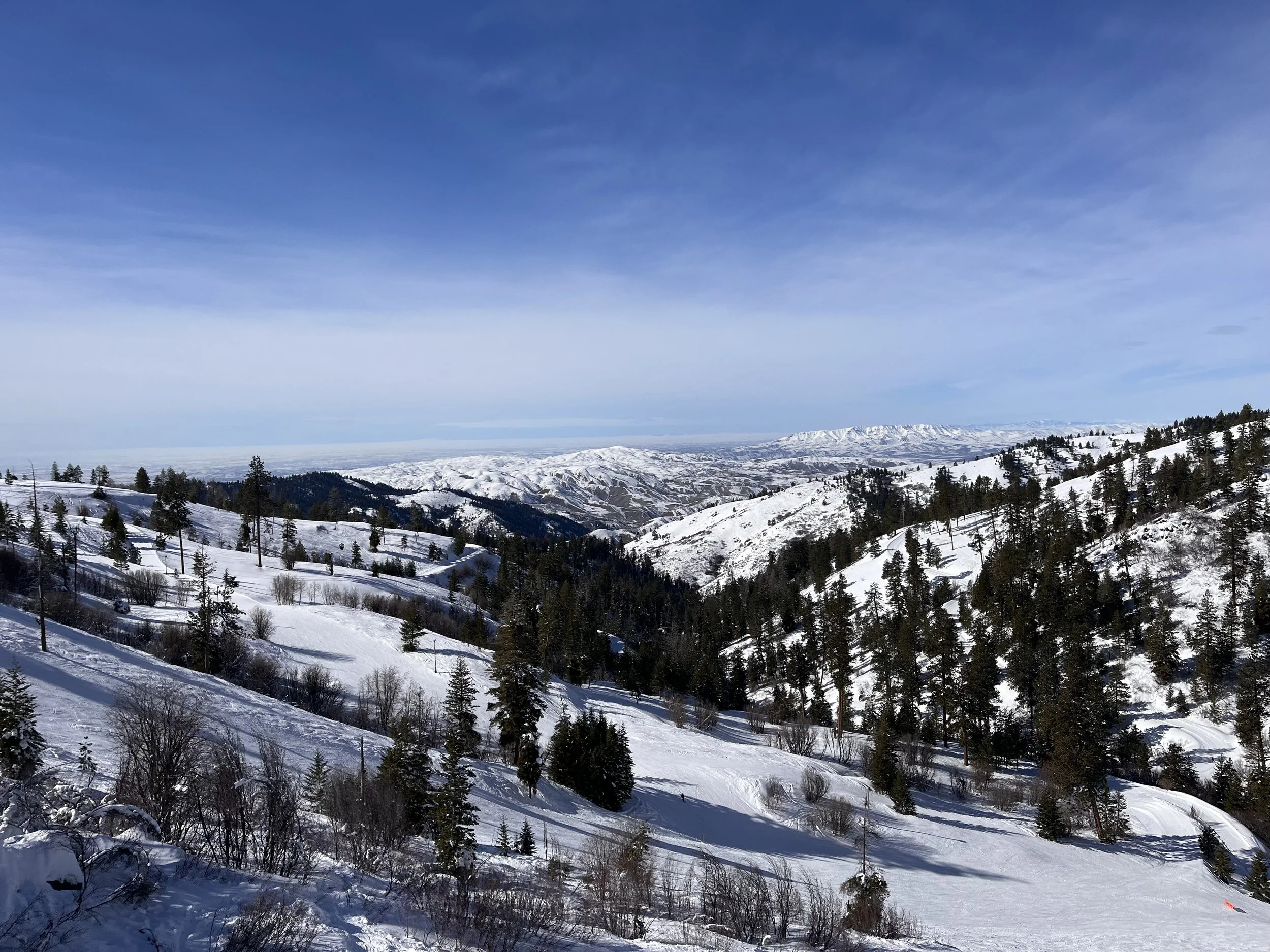
Next up, we move back up to Idaho to cover Bogus Basin. This unassuming ski area is effectively the town hill for Boise, but it has a ton of things going for it that makes it worth the journey for many of those outside the metro area as well. The resort has a decidedly big-mountain feel, with multiple mountain faces encompassing diverse sets of terrain, including some incredible glades and short bowl runs.
The resort’s terrain is further enhanced by a variety of different aspects, which can directly overlook the city of Boise or make you feel like you’re riding in isolated wilderness, depending on which direction you’re facing. The resort also offers high-speed lifts in most mountain areas, and by virtue of its proximity to a large metropolitan area, Bogus Basin is one of the only resorts on this list with a significant night skiing operation, providing an added benefit for those who appreciate unusually long hours on their ski vacation.
So why isn’t Bogus Basin as well known across the continent as it is in central Idaho? Like several of the other resorts we’ve covered so far, it likely comes down to being a tier below the major destinations in terms of size. While Bogus Basin claims a 2,600-acre skiable footprint, which would in theory make it competitive with many fly-to destinations, we found that the true skiable acreage is closer to 1,700 acres. Much of that difference comes down to a modest 1,800-foot vertical drop, which limits how much terrain can realistically be developed. Bogus Basin also doesn’t see the same snowfall totals as the top destinations in Colorado and Utah, or even some of its competitors further north in Idaho.
Still, if you’re looking for surprisingly diverse terrain packed into a reasonably-digestible-but-not-truly-small size, Bogus Basin may be the hidden gem for you on your next ski trip. It also helps that Bogus Basin offers some of the most reasonable lift ticket prices we’ve seen anywhere for a resort of this scale, with 1-day adult tickets going for between $59-$89 depending on how far in advance you purchase and whether it’s a weekend or holiday. Bogus Basin is also a member of the Powder Alliance, offering three partner days with participating season pass products.
#5: Tamarack
Next up, we stick to Idaho for (at least what many will consider to be) the final time to cover Tamarack. This is a mountain that tried to come onto the stage as a world-class destination-beater when it opened in the early 2000s but never quite caught on. But the resort actually has quite a bit going for it despite its lack of household name recognition, with a massive variety of terrain including standout glades and stunning cruiser runs, paired with an impressively extensive base village. The resort also offers a competitive vertical drop of nearly 3,000 feet, making for plenty of runs that compete admirably with other destinations in terms of length, as well as high-speed lift service to all major areas, meaning Tamarack’s slopes are among the speediest to lap at any resort in North America. And like many of the other resorts we’ve covered so far, there are almost never any lift lines, making Tamarack a rare place where you can ski or ride almost any category of run you can imagine super quickly and with minimal waiting.
So if Tamarack has so many characteristics to present as a destination, why isn’t it known as one? Well, the resort still hasn’t quite achieved the master plan it originally envisioned. While its vertical drop is competitive, it’s paired with a relatively narrow footprint, as several terrain pods on the edges of the resort that were intended to be part of the ski area remain out of bounds. Tamarack is also not especially strong when it comes to marquee expert terrain, and its location roughly two hours from Boise makes it fairly remote, with the nearest airport not typically associated with major ski travel.
Still, if you’re looking for fast, long laps paired with low crowds and a strong base village, Tamarack may actually deliver on the fly-to destination experience it has been aiming to establish for years. Lift tickets do get quite pricey if you buy at the ticket window for a peak holiday, but 1-day adult rates end up at much more reasonable rates of under $100 if you buy in advance for an off-peak weekday. Tamarack is also a two-day member of the Indy Pass, with no blackouts on either tier of pass.
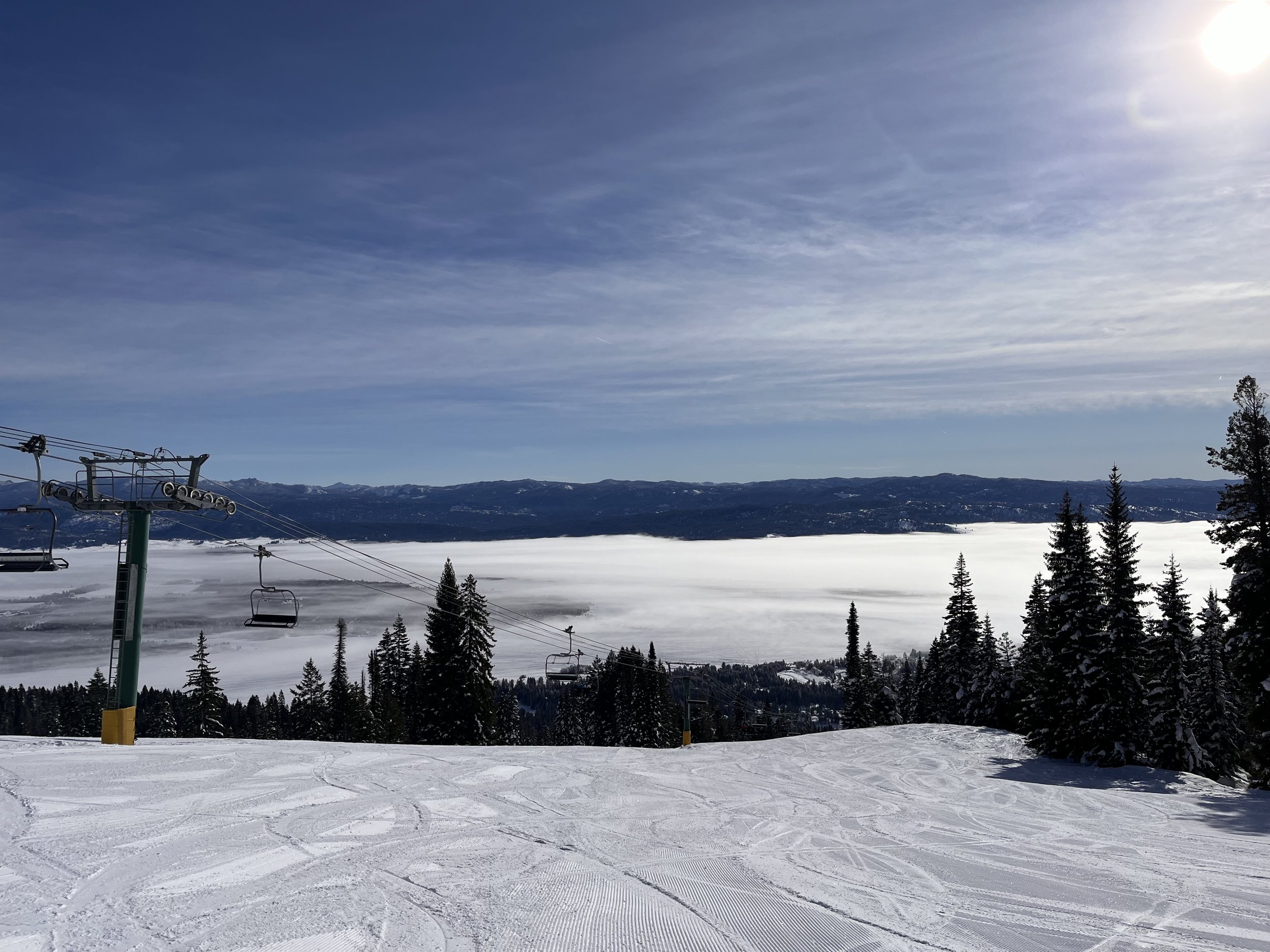
#4: Whitefish
Next, we move up to northwest Montana to cover Whitefish, a ski resort located directly adjacent to Glacier National Park. Whitefish isn’t one of the most well-known resorts in the world, but it has a lot going for it that makes it far more of a true vacation destination than many people likely realize.
Whitefish’s standout terrain feature is its glades. The resort’s trees are almost universally spaced widely enough to allow for enjoyable glade skiing, and its weather patterns frequently turn these forests into ice-crusted “snow ghosts,” creating an extraordinary sight that’s difficult to find at most North American destination ski resorts. Whitefish also offers strong terrain variety, with runs ranging from long cruisers to some surprisingly technical cliffs. And all of this sits just minutes from the lively town of Whitefish, which provides plenty of restaurant and bar options after a day on the slopes, along with accommodations that are typically an excellent value. This is largely due to winter being Whitefish’s off-season, as the area sees the bulk of its tourism during the summer months for Glacier National Park.
So why haven’t more people been flocking to Whitefish for their next destination ski vacation? We’d argue the primary reason is its location. While the resort is only about 30 minutes from Glacier Park International Airport, it can be difficult to find direct flights from most major cities. Combined with the inherent complications of winter travel, many folks are probably unwilling to trade convenience and reliability for fewer crowds and a more complex flight itinerary. And while Whitefish is by no means lacking in either category, its overall footprint size, and vertical drop may not be large enough to fully offset that remoteness for some visitors. Additionally, while snowfall is generally reliable despite the resort’s relatively low elevation compared to much of the Rockies, you could spend a week there without consistently clear views from the mountain due to persistent fog issues.
Still, if you’re looking for a big-mountain feel with limited crowds and truly unique terrain, Whitefish is a strong option if you can make the logistics work. On top of those strong lodging values, the same affordability extends to lift tickets, with 1-day adult rates topping out around $110. That makes Whitefish an incredible value given its terrain quality, proximity to nightlife, and overall reliability.

#3: Marmot Basin
For our bronze medalist, we move away from a resort that sits next to a national park and head into one that’s actually inside one: Alberta’s Marmot Basin. While it may not be as heavily traveled to as many of the other large western Canadian ski resorts, Marmot Basin feels like it should be, with a towering footprint and absolutely extraordinary views of the surrounding national park wilderness, including some of the most beautiful scenery we’ve seen anywhere. Marmot Basin also benefits from excellent snow preservation thanks to consistently cold temperatures. The resort’s terrain impresses as well, especially when it comes to its upper-mountain bowl zones and some very demanding expert-level chutes.
However, there are a handful of reasons why Marmot Basin has remained so under the radar, and we’d argue the biggest of those is its location. Despite being set within a stunning national park, the resort is quite far north, even compared to other western Canadian ski areas. The nearest major airport is more than four hours away in Edmonton, which already has limited direct flight options from many major North American cities. A relatively modest skiable footprint compared to the largest destinations, along with lower raw snowfall totals than some competitors despite strong snow preservation, can make it harder for many to justify the journey.
But if you’re looking for a truly exotic ski vacation with virtually no crowds, Marmot Basin may be exactly what you’re after. One-day adult tickets go for $125-$155 CAD, which translates to roughly $89-$112 USD with today’s exchange rates, making Marmot Basin an exceptional value for the backdrop you’ll be skiing or riding against. Marmot Basin is also a two-day partner resort on the Mountain Collective Pass, with no holiday blackouts.

#2: Big White
For our silver medalist, we stay in Canada and return to British Columbia one final time to cover Big White. While many people in the United States and perhaps even some parts of Canada have never heard of this resort, it gets its name for a reason, with a decidedly destination-grade footprint encompassing nearly 2,700 acres of skiable terrain. That size translates into an incredible variety of slopes, especially for lower-ability skiers and riders where interesting terrain is often lacking even at many traditional fly-to destinations. And much like Whitefish, Big White is also known for its iconic snow ghosts, which can create an otherworldly backdrop under the right conditions. You might be especially surprised that you’ve never heard of Big White once you see its base village; the resort features a massive village complex integrated right into the slopes, with abundant ski-in/ski-out lodging and on-mountain amenities.
So if Big White has all the tools to compete with best-known destinations on paper, why isn’t it better known? Ultimately, it comes down to location. Like nearby Silver Star, the Kelowna airport simply isn’t convenient enough to make access easy for many travelers. And while more minor in comparison, Big White also experiences frequent low-visibility conditions and offers less extreme terrain than some competitors, though there is still plenty to be found if you know where to look.
But with this all being said, if you can work through the logistics, Big White may offer nearly everything you’re looking for in a destination ski vacation within a far less crowded footprint. One-day adult lift tickets can be very expensive if purchase at the last minute, but if you book for off-peak times well in advance, you can get pretty incredible deals here. Big White is also a member of the Indy Pass, albeit like with many other resorts we’ve covered, blackout dates on the Base pass are severely restrictive and exclude all weekends and holidays. It may not be perfect, but we’d argue that Big White is better than every other truly underrated ski resort we've tried in North America, except one.

#1: Grand Targhee
That’s right, Grand Targhee is our pick for the number one most underrated ski resort in North America. While it isn’t on either the Epic or Ikon Pass, this Wyoming resort, which sits just over the Idaho border and can only be accessed directly from that state, has so many things going for it that you might be hard-pressed to understand why it isn’t better known.
Grand Targhee especially stands out for its snow. Sitting on the western side of the Teton Range, the resort receives exceptionally light and dry snowfall each winter, and it gets a lot of it, making powder days very frequent here. The mountain also offers strong terrain variety, ranging from enjoyable cruisers to some very technical chutes. And when it's clear out, the resort delivers some of the most astonishing views of the iconic Grand Teton and its surrounding peaks one can get from any human-accessible location during the winter.
So why hasn’t everyone in North America been getting in on the Grand Targhee action? Like many of the mountains we’ve covered so far, the two biggest limiting factors come down to size and location. Grand Targhee packs a lot into its footprint, but based on our measurements, it still only comes in at around 1,800 skiable acres. That’s far from small, but reaching the resort typically requires flying into either Jackson Hole or Idaho Falls—both of which can be inconvenient airports compared to hubs like Denver or Salt Lake City. And while Grand Targhee offers excellent terrain, it lacks the truly world-class vertical drop of Jackson Hole or the massive acreage of Big Sky, making it harder for some travelers to justify the added transportation friction. On a more minor note, Grand Targhee is also susceptible to fog conditions more often than some skiers and riders might prefer.
But if you’re looking for a well-rounded destination experience with the terrain, snow quality, and atmosphere of a major ski vacation—and without the lift lines that now define many destination resorts—it’s hard to find a better bet than Grand Targhee. Lift tickets are slightly more expensive than at some of the other resorts we’ve covered, with 1-day adult rates typically ranging from roughly $140-$170, but that’s still far from outrageous in today’s ski pricing landscape. And if you’re planning a road trip through the Northern Rockies, Grand Targhee is also a member of the Mountain Collective Pass, offering two days of access with no holiday blackouts.

Final Thoughts and Ranking Recap
So that’s our list of the most underrated ski resorts in North America. While planning a trip these days may seem hopeless in terms of crowds and affordability, it turns out there are a huge number of resorts that undercut these trends—and if you’re know what you’re doing, you can still make that trip happen even if it isn’t months in advance. With the exception of a couple of the very best, the biggest drawbacks of these lesser-known mountains are their smaller footprints or more inconvenient locations than the more commercialized mountains. But that still doesn’t fail to underscore how incredible they are relative to their prominence, and they’re much more worth a visit for a wide variety of folks than they’re often known for.
Considering a ski trip to one or multiple of these resorts? Check out our more detailed reviews for: