Worst Ski Lifts in North America
When it comes to a day at a ski resort, ski lifts are a vital part of the experience that makes your day great, enabling you to ski down the mountain without taking any physical effort to get up. But despite the engineering marvels behind them, there are a couple of ski lifts out there that have circumstances so infuriating that they leave you more frustrated than if you hadn’t ridden them at all. And in many cases, a bad lift can turn a otherwise fantastic ski day into one filled with a frigid or uncomfortable ride, incredibly long lift line, or just a general sour taste in your mouth. And this is especially the case if you drop hundreds, if not thousands of dollars to go on a destination ski trip. So of the ski lifts in North America, which ones are the worst offenders, and why? In this video, we’ll go through our picks for what are currently the worst ski lifts in North America, why they’re so bad, and what each resort should really do in order to fix the situation.
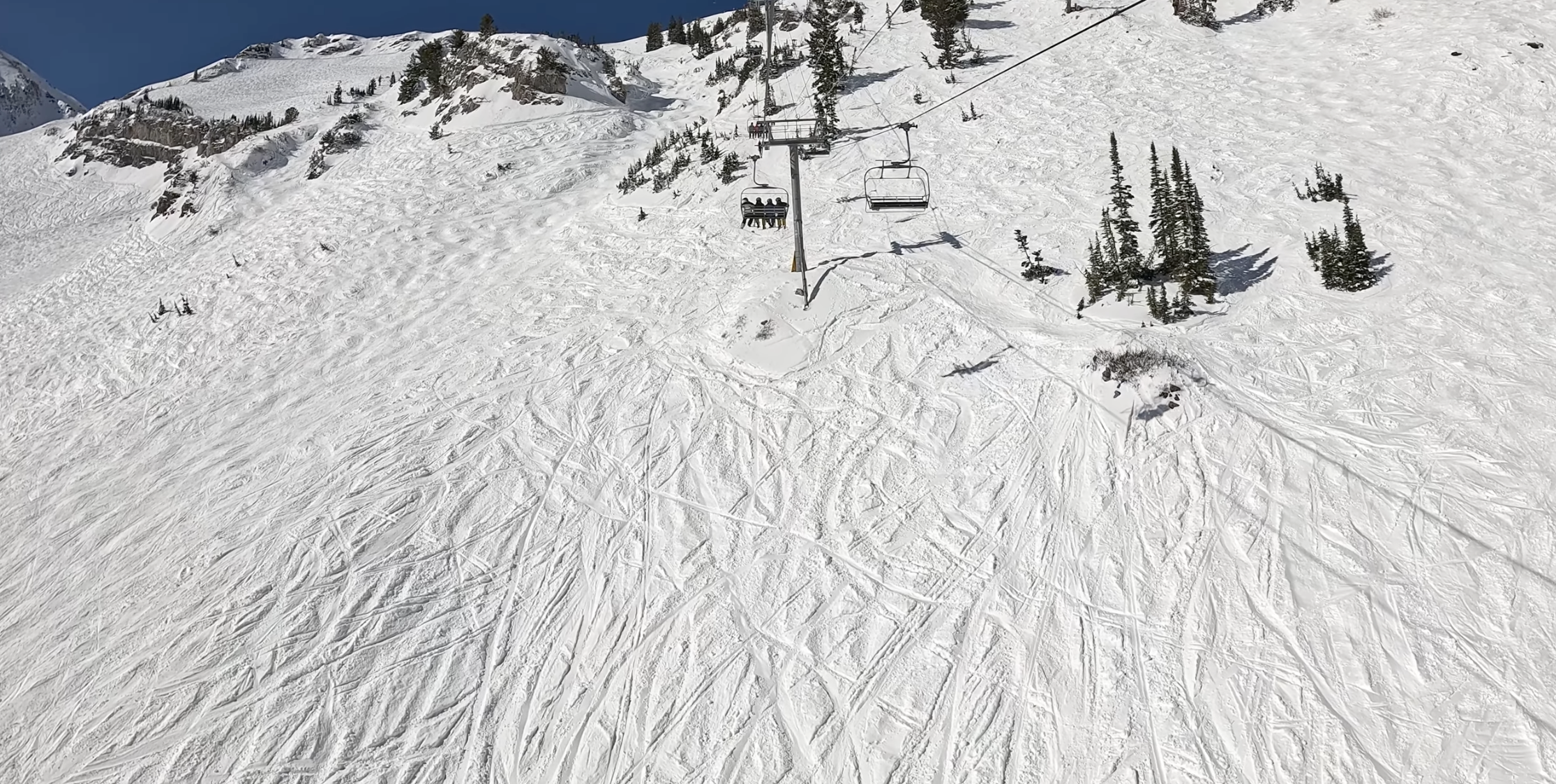
#19: Mineral Basin Express - Snowbird
First up, we’re starting with a hot take: Snowbird’s Mineral Basin Express is one of the worst lifts in North America. And it has nothing to do with the terrain — Snowbird’s Mineral Basin is one of the most unique and beautiful high-alpine bowl areas on the entire continent, and it’s a must-visit zone when you ski or ride here.
On the surface, the Mineral Basin lift itself doesn’t look too bad. From an infrastructure standpoint, it’s a high-speed quad that gets you back up the area fairly quickly. The real problem is that this lift was never designed to handle the level of crowds that the rest of the resort pushes its way. There are three primary uphill routes from the front side that funnel skiers and riders into Mineral Basin: the Gadzoom and Little Cloud route, the tram route, and the Peruvian Express and Peruvian Tunnel route. All of these options eventually lead into the backside. But the bigger issue is that the Mineral Basin Express is the only way out of this area of the resort while staying in bounds. Technically, the neighboring Baldy Express also services some backside terrain, but you can’t return to the front side from it. You can cross the gate into neighboring Alta Ski Area from the top of Baldy, but that isn’t practical for most guests, and it’s not especially clear or easy to make your way back to Snowbird from Alta without passing through Mineral Basin again.
And that brings us to the biggest issue of all: capacity. Despite being a high-speed quad, the Mineral Basin Express was not built with chair spacing that maximizes throughput. As a result, there are fewer chairs on the line than a typical high-speed quad would have, which significantly limits how many people the lift can move uphill. The result is that long lift lines have become a perennial issue here. In fact, it’s gotten so bad that at the Peruvian Tunnel — which, if you commit to it, effectively forces you to take the Mineral Basin Express to get back to the front side — there is now a sign displaying the current wait time for the lift.
Given the amount of pressure placed on this one chair, Snowbird really needs to address its capacity if it wants to improve the Mineral Basin backside experience, and therefore the resort’s experience overall.
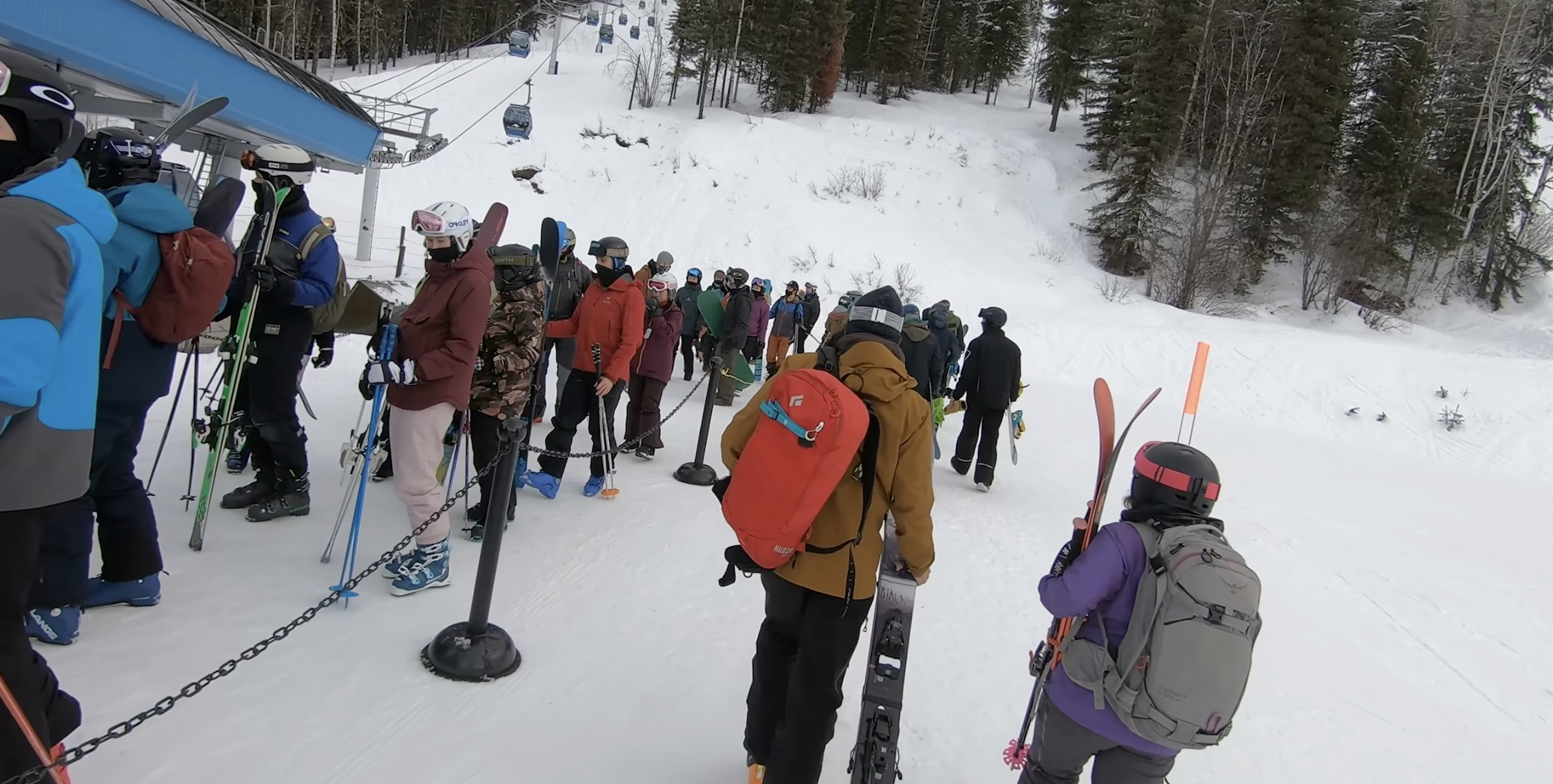
#18: Revelation Gondola - Revelstoke
Next up, we move north to British Columbia’s Revelstoke Mountain Resort, which happens to have the longest vertical drop of any ski resort in North America and a fairly modern lift fleet, all things considered, given that it only debuted as a resort in 2007. The first lift that skiers and riders encounter when they arrive at Revelstoke is the gondola, which covers over 3800 feet of vertical and serves as a critical link in the resort’s lift infrastructure, providing the only access out of the base area. This lift operates in two stages, and that is the crux of the gondola’s design flaw. While at the beginning of the day, nearly everyone riding the gondola is taking it the full two stages to reach Revelstoke’s mid-mountain and its most enjoyable lifts for lapping, the two stages are not connected by a continuous cable line.As a result, guests must unload at the top of the first stage and then reload onto the second stage.
For some lifts, this wouldn’t be the most annoying thing in the world. But the problem at Revelstoke is that you have virtually everyone boarding the gondola at the start of the day, which already results in lift lines — even when the mountain isn’t as busy as many Colorado and Utah resorts, or even some other Western Canadian competitors. Because every guest has to unload at the top of the first stage and reload at the second, and because the lift attendants cannot reload the second stage with perfect efficiency, you’re often forced to wait in a second lift line after already spending a significant amount of time waiting for the first stage. Now, this isn’t quite as frustrating as some of the other lifts we’re going to mention later, but we wanted to at least mention it because this is such an avoidable setup. With relatively minor re-engineering of the lift terminals to allow the two-stage gondola to operate continuously, the uphill experience would become far more efficient and would eliminate this frequent, and largely unnecessary, daily annoyance.
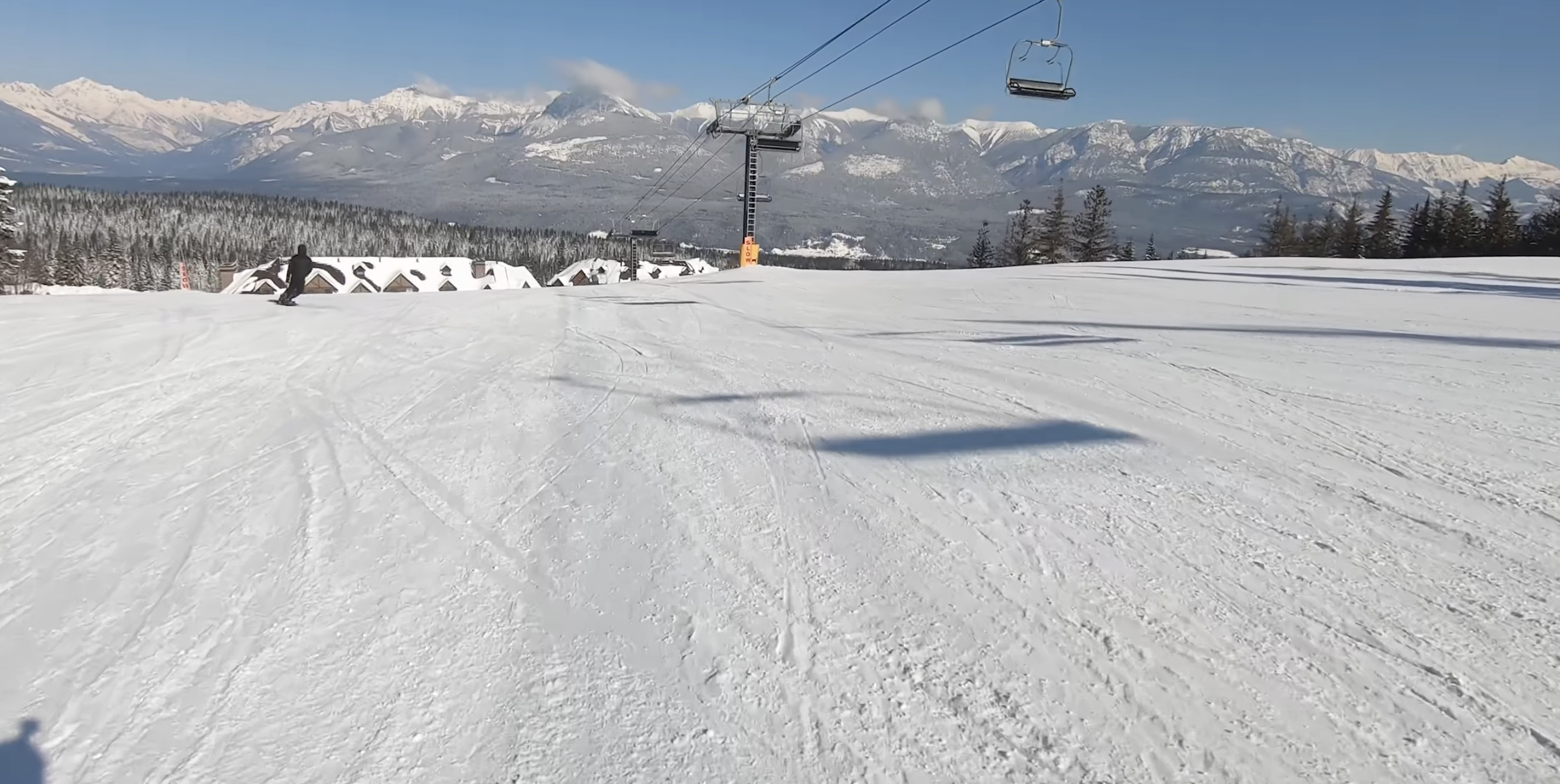
#17 & #16: Pioneer & Catamount - Kicking Horse
Next up, we move over to Revelstoke’s neighbor, Kicking Horse. And much like at Revelstoke, we have some qualms that the primary way to get up the mountain at the beginning of the day is a singular gondola. In the case of Kicking Horse, this lift is even more critical, as it provides access to the overwhelming majority of the resort’s terrain outside of the very lower mountain. As a result, outside of the very start of the day, the gondola at Kicking Horse may actually be even more important than the one at Revelstoke, since it provides the only access from the base area to any mid- and upper-mountain terrain.
That’s why we’d argue that the worst lift at Kicking Horse isn’t necessarily the gondola itself, which already carries an enormous load for a mountain with over 4,000 feet of vertical. Instead, the bigger issue lies with one of the lower-mountain lifts — either the Pioneer Double Chair or the Catamount Quad. These lifts start at the base and serve some fairly uninteresting terrain, but they don’t extend high enough to provide access to the Stairway to Heaven Quad, which is the secondary lift serving some of Kicking Horse’s upper-mountain terrain. As things stand today, you must take the gondola in order to ski or ride to the base of the Stairway to Heaven lift.
If one of those lower-mountain lifts were extended high enough to connect to the Stairway to Heaven Quad — with the Pioneer Chair being the most likely candidate — it would finally provide some redundancy to the heavily overworked gondola. That gondola suffered a catastrophic failure at the end of last season, which, while now fixed, at the time required the closure of the vast majority of the mountain due to this major weakness in the lift network. All in all, it’s a significant missed opportunity that the Pioneer lift does not currently extend high enough to connect to the Stairway to Heaven chair. Even a fixed-grip replacement would bring meaningful benefits to crowd flow if it were extended far enough to provide that access. And adding this redundancy would not only protect the resort against future issues, but would also help reduce lift lines that really shouldn’t exist given the amount of crowds the resort typically sees.
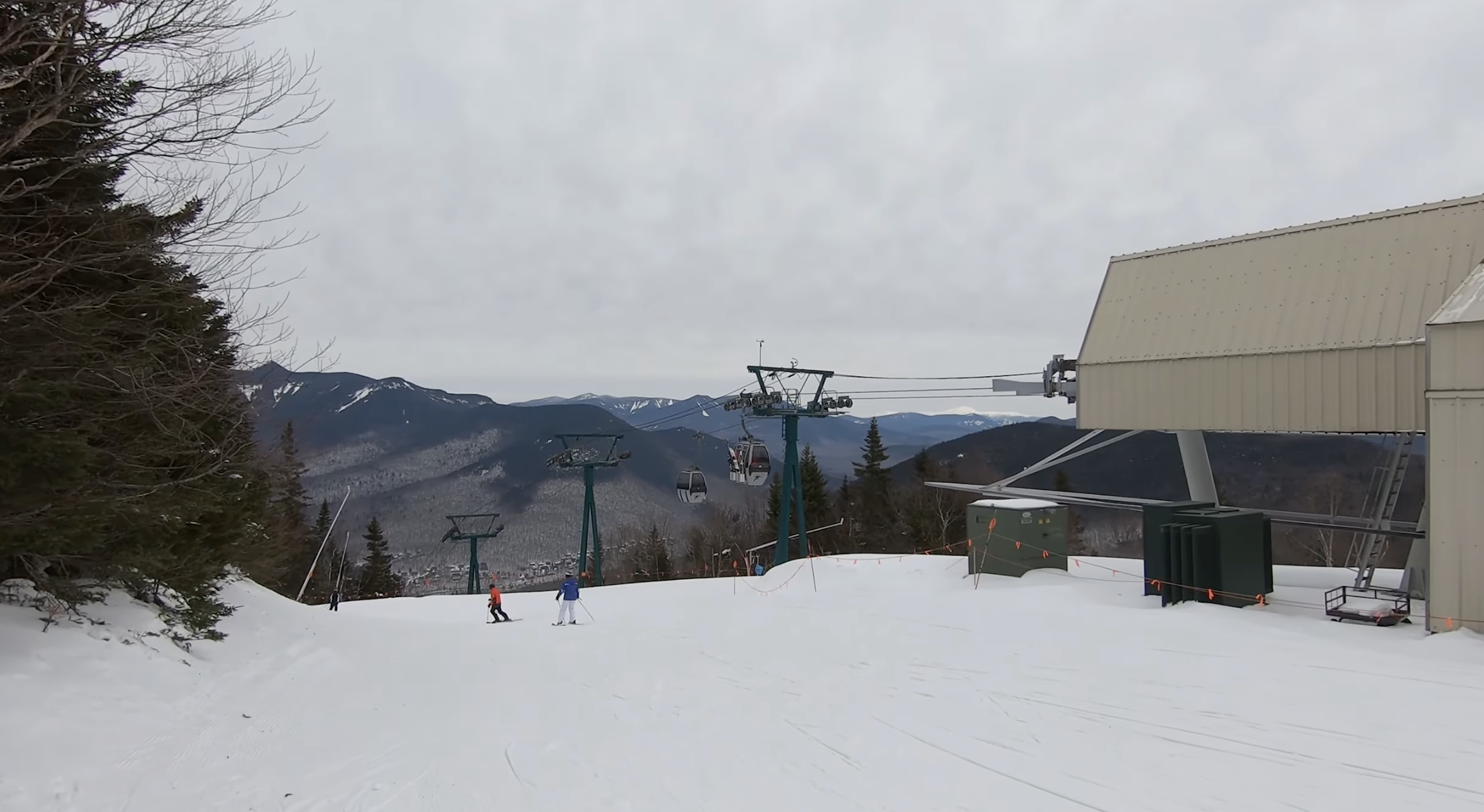
#15: White Mountain Gondola - Loon
Next up, we move over to New Hampshire’s Loon ski resort, which isn’t the biggest mountain in the world but has some rather eye-catching lifts, including multiple high-speed quads and the state’s only bubble eight-pack. But one of those lifts that’s perhaps eye-catching for the wrong reason is the resort’s gondola. While most ski resorts in the United States have gondolas that seat six, eight, or ten people per cabin, Loon’s gondola only seats four per cabin. This creates some less-than-ideal logistical issues.
First off, riding up in the cabins feels somewhat cramped, with the interiors being especially narrow compared to those of other gondolas one might ride elsewhere. But perhaps more significantly, Loon gets packed on weekends, and with the gondola’s wider carrier spacing than a four-person high-speed quad, it suffers from a lower throughput capacity than most other workhorse ski lifts. While there are some redundancies to similar areas, the result is a lift that is underbuilt for its purpose and substantial lift lines during peak times. This is especially wild when you consider the Kancamagus 8 eight-pack bubble lift next door, which is arguably overbuilt for its purpose but only extends about a third of the way up the mountain, making it way less useful than the gondola in terms of its alignment. Loon is a leader when it comes to its lift setup overall, but its guests deserve a less claustrophobic and higher-capacity experience, and even six-place gondola cabins would do wonders to help out here.
#14: Northstar Express - Kimberley
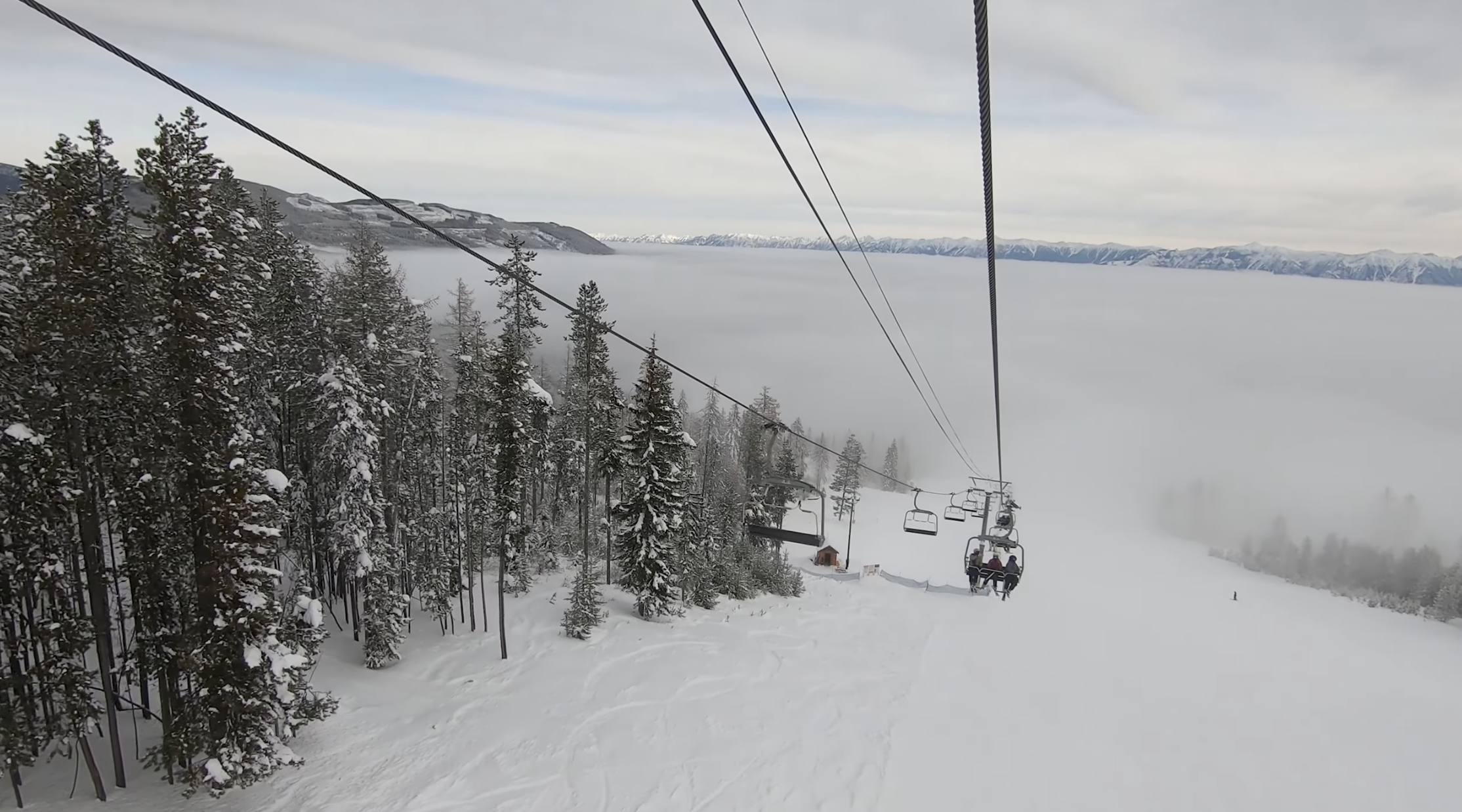
Next up, we move back to British Columbia again to cover Kimberley, a resort with a lift set up that won’t necessarily rub you the wrong way if you get there on a good or average day, but has an Achilles heel with the potential to completely blow up the ability of the entire mountain to run.
On the surface, the Northstar Express quad is a pretty enjoyable lift to ride to start your day - it’s a high-speed quad that provides top-to-bottom lift service on the front side. But the problem is that this lift does not have any redundancies – and if this lift goes out, it shuts off access to the entire mountain. And unfortunately, there have already been two incidents in the past five years that have resulted in season-long closures for this lift; first, a catastrophic gearbox failure, and then, a deliberate arson attack. Kimberley was forced to operate with a severely hobbled footprint in both these years, with way fewer visitors able to access the mountain and very limited snowcat service utilized as the means to transport guests over to the backside lifts, which were running.
Given the circumstances, Kimberley should really at the very least install a redundant lift to get over to the backside from the base village, although a full on replacement for the Northstar Express might not be a terrible idea as well.
#13: Lone Peak Tram - Big Sky
Next up, we move to what’s actually one of the best lifts in North America: Big Sky’s Lone Peak Tram. Wait a minute — did we just say one of the best lifts? Well, we’ll explain in a second.
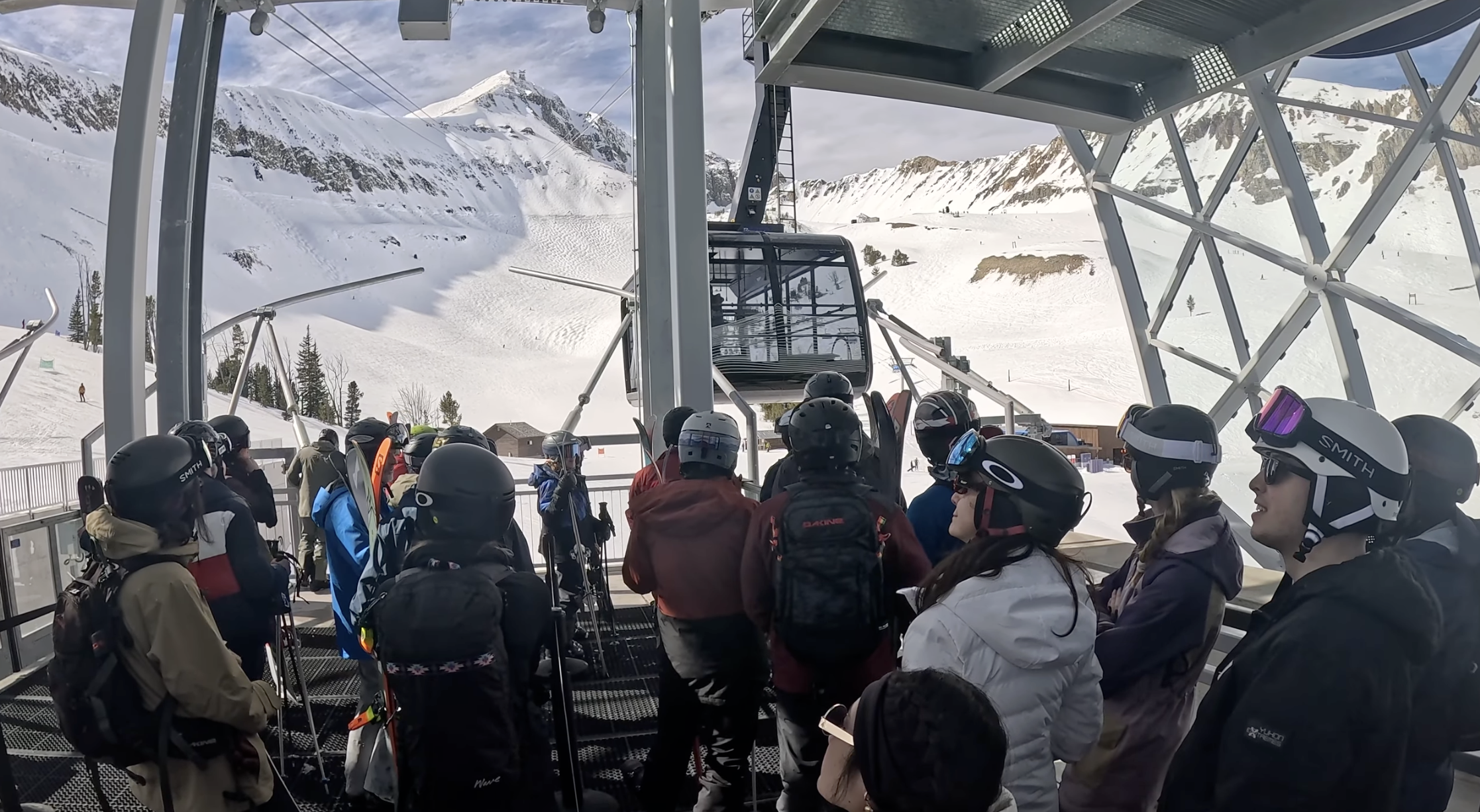
First off, we need to explain what makes Big Sky’s Lone Peak so special. This area of the resort is home to some of the most extreme and otherworldly terrain you can find anywhere in North America, let alone the world. You have access to extremely high-consequence chutes, views of four states, and trails that effectively can’t be found anywhere else on the continent. And all of this is amazingly served by a 75-passenger tram that, in theory, would provide convenient laps to continuously spend time on this terrain.
So why does the Big Sky Lone Peak Tram make this list? Well, it has to do with the access policy.
The Lone Peak Tram is the only lift at a major ski resort in North America that isn’t included with several major pass products. Instead, if you have an Ikon Pass, Mountain Collective, or a lower-tier Big Sky season pass, you have to pay per ride to access the tram, with rates typically landing around $30 to $40 per ride. This premium is not pleasant to learn about, to say the least. And while the resort argues that it helps reduce lift lines for this low-capacity but extremely popular lift, we’ve still noticed lines anyway — suggesting that people are simply willing to pay and absorb the cost.
It often feels like Big Sky is charging this extra fee simply because they can. And if capacity were truly the concern, the resort could implement a reservation system or something similar without charging guests additional money. To be fair, Big Sky did eliminate this extra cost add-on for lift ticket products a few years back, and we do have to give them credit for that. However, lift tickets at Big Sky can now exceed $200 per day, meaning you’re effectively forced to choose the most expensive access product in order to receive unlimited tram access.
We would strongly prefer that the resort eliminate the per-ride policy entirely and allow guests to ride the tram without paying extra, especially when a vacation to Big Sky already costs most visitors well into the four-figure range. If every other ski lift on the continent can operate without an extra cost add-on, including some iconic low-capacity trams at other resorts like Jackson Hole and Jay Peak, we are confident that the Lone Peak Tram can do it too.
#12: Alberta - Wolf Creek
Next up, we move to Southern Colorado’s Wolf Creek Ski Resort, which we’ve actually given high marks for having a surprisingly solid lift setup for such a low-key, off-the-beaten-path ski area. The resort isn’t the biggest in the world, but it does have three high-speed quads, providing fast lift service to significant portions of the mountain.
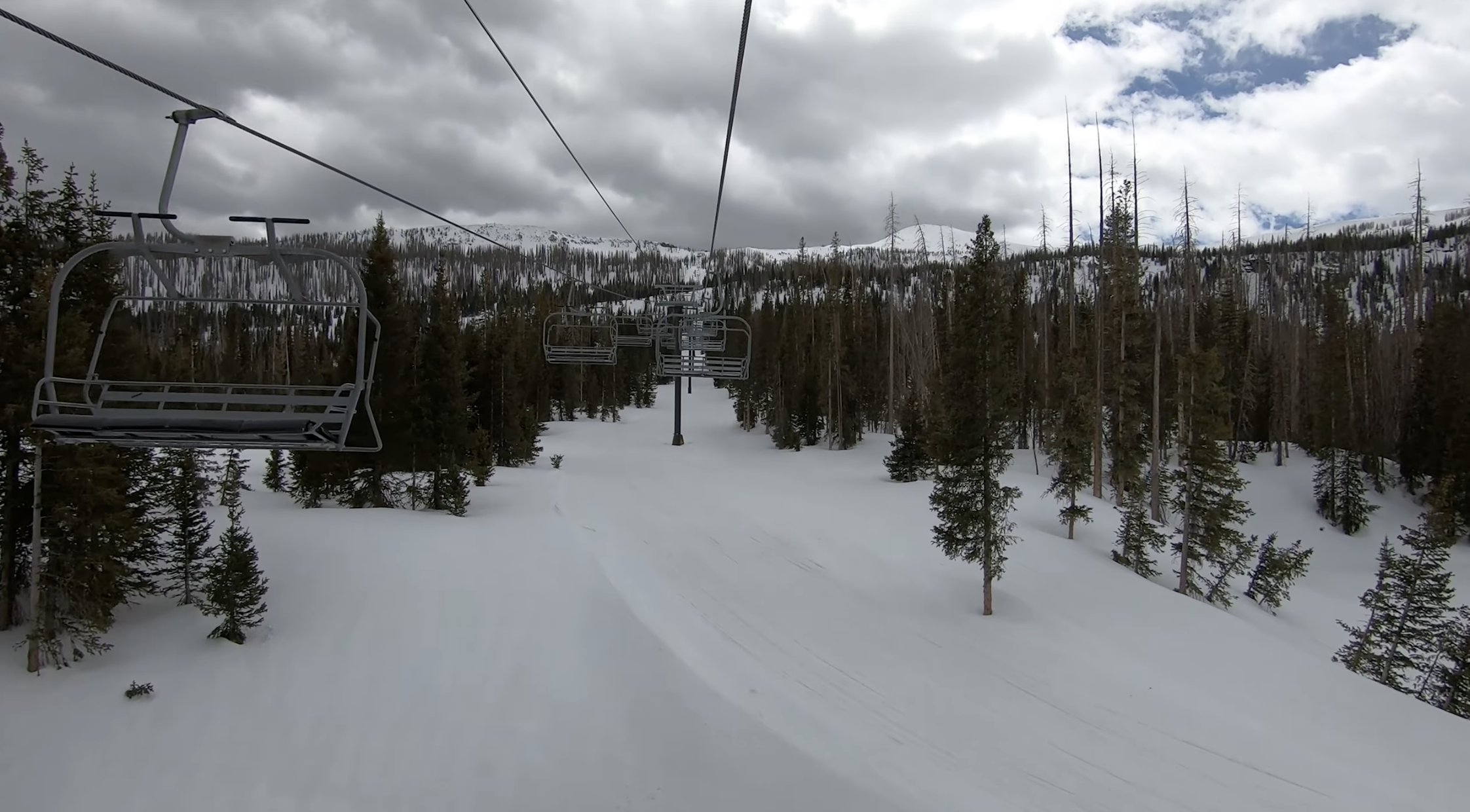
Unfortunately, the longest lift at Wolf Creek — the Alberta Quad — is not one of those high-speed lifts. And while guests in other parts of the resort can enjoy quick rides uphill, those who need to ride the Alberta lift, which services some of the best expert terrain at the resort and provides access to excellent hike-to terrain, are stuck with a ride that takes over 10 minutes. That’s a real shame, because some of the best non–family-focused terrain at the resort is accessed directly off this lift.
It’s also particularly frustrating because right next to the Alberta lift is the Charity Jane Express — a beginner-oriented detachable lift with a short ride time. The problem is that you can’t actually reach that beginner terrain without first skiing intermediate terrain to get there, which makes the lift itself largely unnecessary. It would have been far more useful if the Alberta lift were the high-speed quad, and the Charity Jane being a fixed-grip lift wouldn’t actually be that bad of a situation, since very few people use it anyway.
We would strongly recommend that Wolf Creek upgrade the Alberta lift to a high-speed quad once they have the opportunity. If the resort can afford to install three high-speed quads elsewhere on the mountain, the Alberta lift is an area that could absolutely benefit from being that fourth one.
#11: Toll House - Stowe
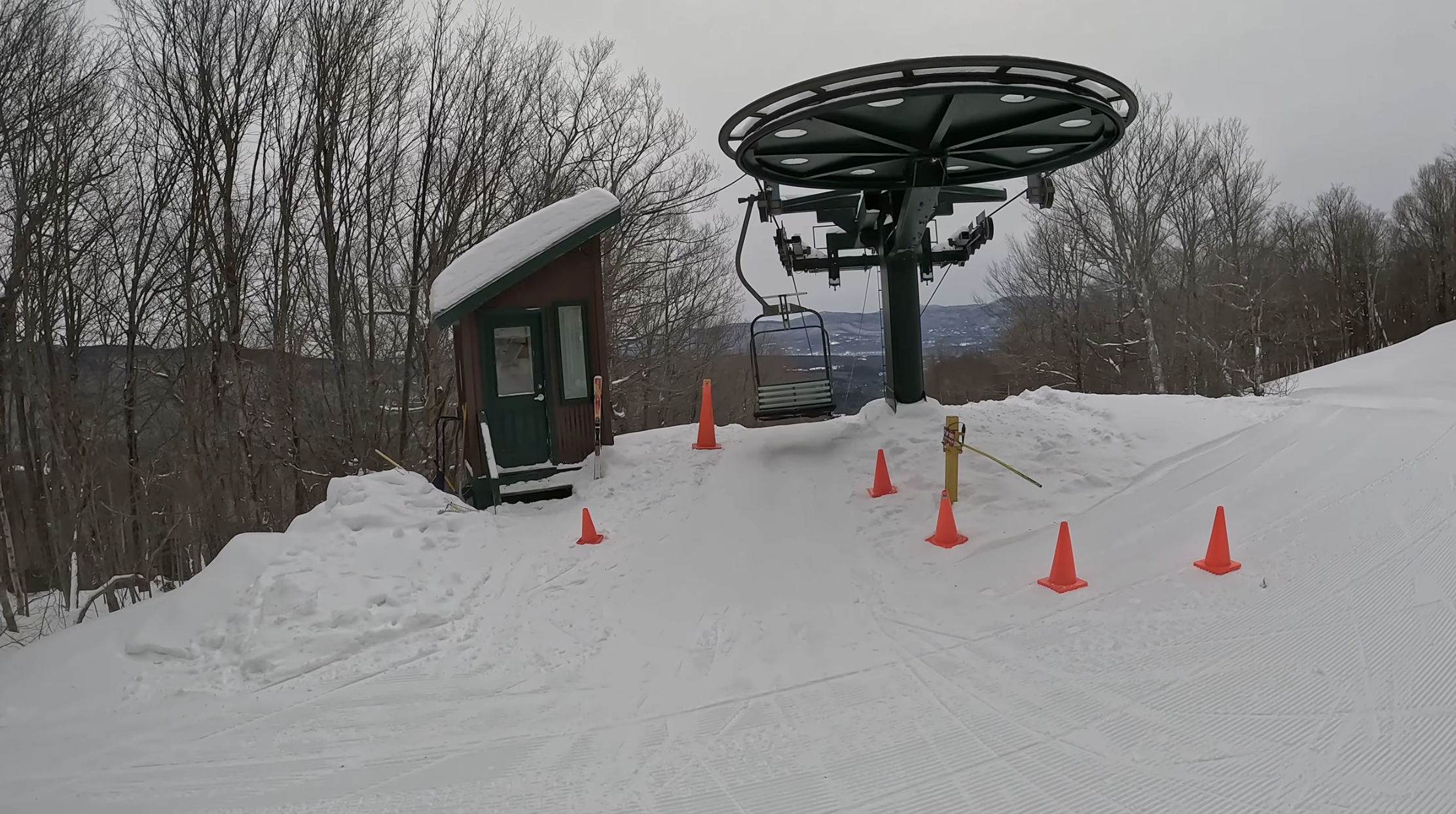
Next up, we move to Northern Vermont’s Stowe Ski Resort, which is known for its upscale atmosphere and modern lift setup. But there’s one small area of the resort that has been neglected for years, and that’s the far skier’s-right side of the mountain, which is served by the Toll House Double lift. This beginner area was largely overlooked in years past because of its mellow terrain and the lift’s almost unconscionable nearly 14-minute ride time. This long of a journey for something that isn’t truly special terrain is completely out of place at a competitive ski resort these days.
But in recent years, the Toll House Double has actually become much more important due to changes in Stowe’s parking policies. On weekends and holidays, parking near the main base area is no longer free unless you arrive with a carpool group. That leaves the free overflow lots — at least the most convenient ones — centered around the Toll House base, making the Toll House Double the most convenient way to access the mountain without taking a shuttle bus.
But this hasn’t resulted in the impact that one might expect. While the unassuming capacity nerd might think that the parking policy changes would put undue pressure on Toll House, the lift is so slow that it’s actually faster to take the shuttle to get to the main parts of the resort that people typically enjoy, such as FourRunner and the Mansfield Gondola. As a result, there are rarely enough people riding this thing to even generate lift lines at all.
As has been the case for decades, Stowe could unlock a far better beginner experience for its guests if it upgraded the Toll House lift to a high-speed chair. This isn’t quite as significant of an issue anymore now that the Sunrise Six has finally introduced high-speed lift service to at least some green beginner terrain elsewhere on the mountain. But it would still make Stowe a much more beginner-friendly mountain if this area weren’t such an afterthought.
#10: South Ridge A & B - Okemo
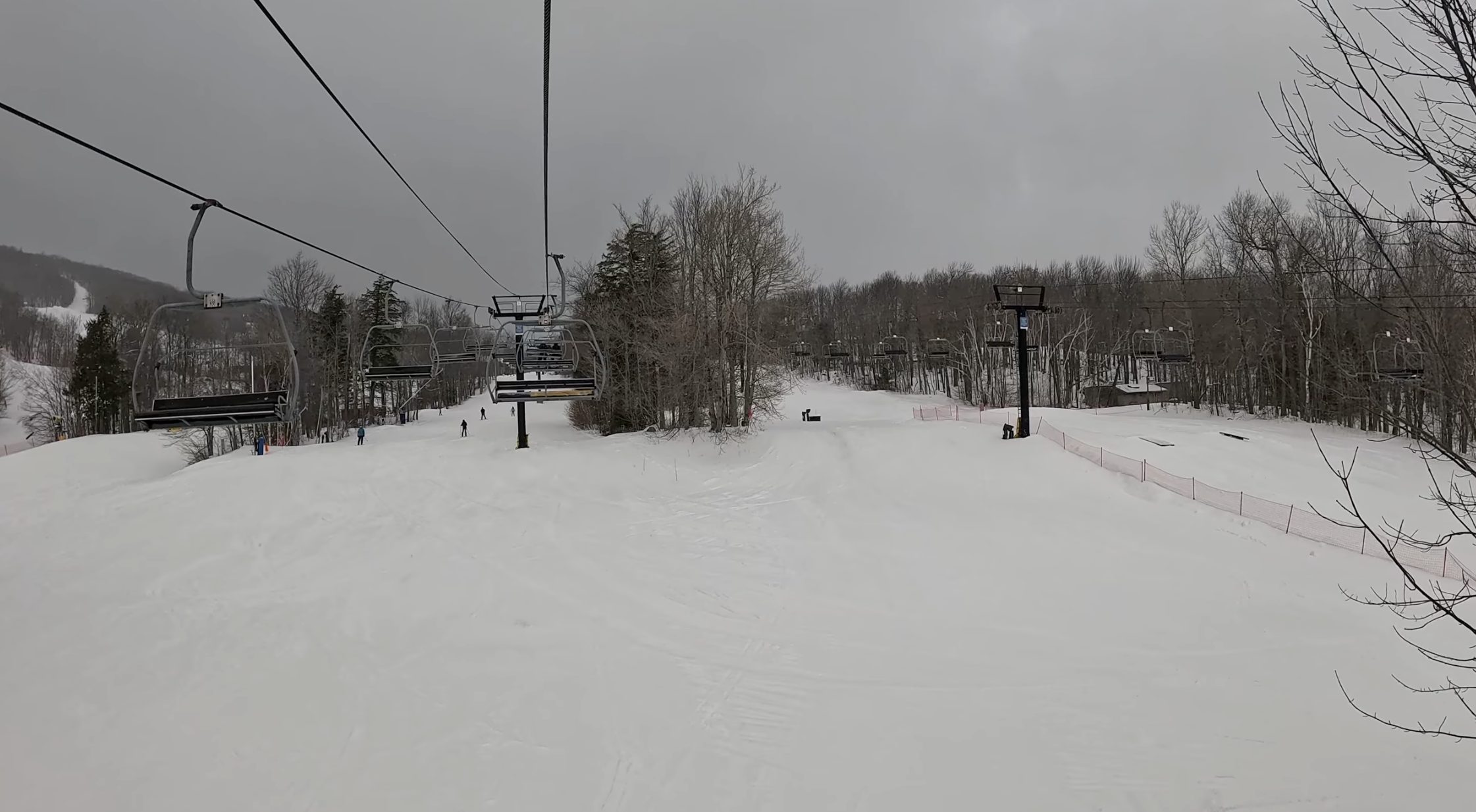
Next up, we move to Central Vermont’s Okemo Resort, which overall we’ve given pretty high marks for its lift setup. The resort has fast lifts in the majority of its terrain areas, including two high-speed bubble chairs on its main mountain and four other high-speed quads serving some of the best pods of terrain at the resort. But the one significant exception to Okemo’s otherwise fast lift setup is found directly out of the main Clocktower base area, which is held down by the South Ridge A and B quads.
These are the only chairlifts that provide direct access out of the base, and the only terrain they provide direct lift service to is a flat beginner area — which is not very enjoyable for the vast majority of people visiting the resort. And worst of all, these slow, fixed-grip quads extend further uphill than they need to, making the already leisurely lift ride even longer than it needs to be. They offload quite far away from the loading area for the Sunburst Six bubble lift, which is the chair most people at the resort are actually trying to reach. Trust us from experience: it is not fun passing by the entrance for that lift only about 40% of the way up the ride, and then having to endure the rest of the ascent over what is essentially meaningless terrain. Another factor that makes this ride slower than it needs to be is the fact that the terrain these lifts serve is so beginner-oriented, which by design leads to frequent misloads and a longer ride time than the roughly six-minute journey listed on paper.
If Okemo has already put in the work to build a strong lift network across the rest of the resort, we’d argue it at least owes its visitors an enjoyable setup for getting out of the base area at the start of the day — and should upgrade at least one of these two quads to a high-speed lift.
#9: Wayback - Keystone
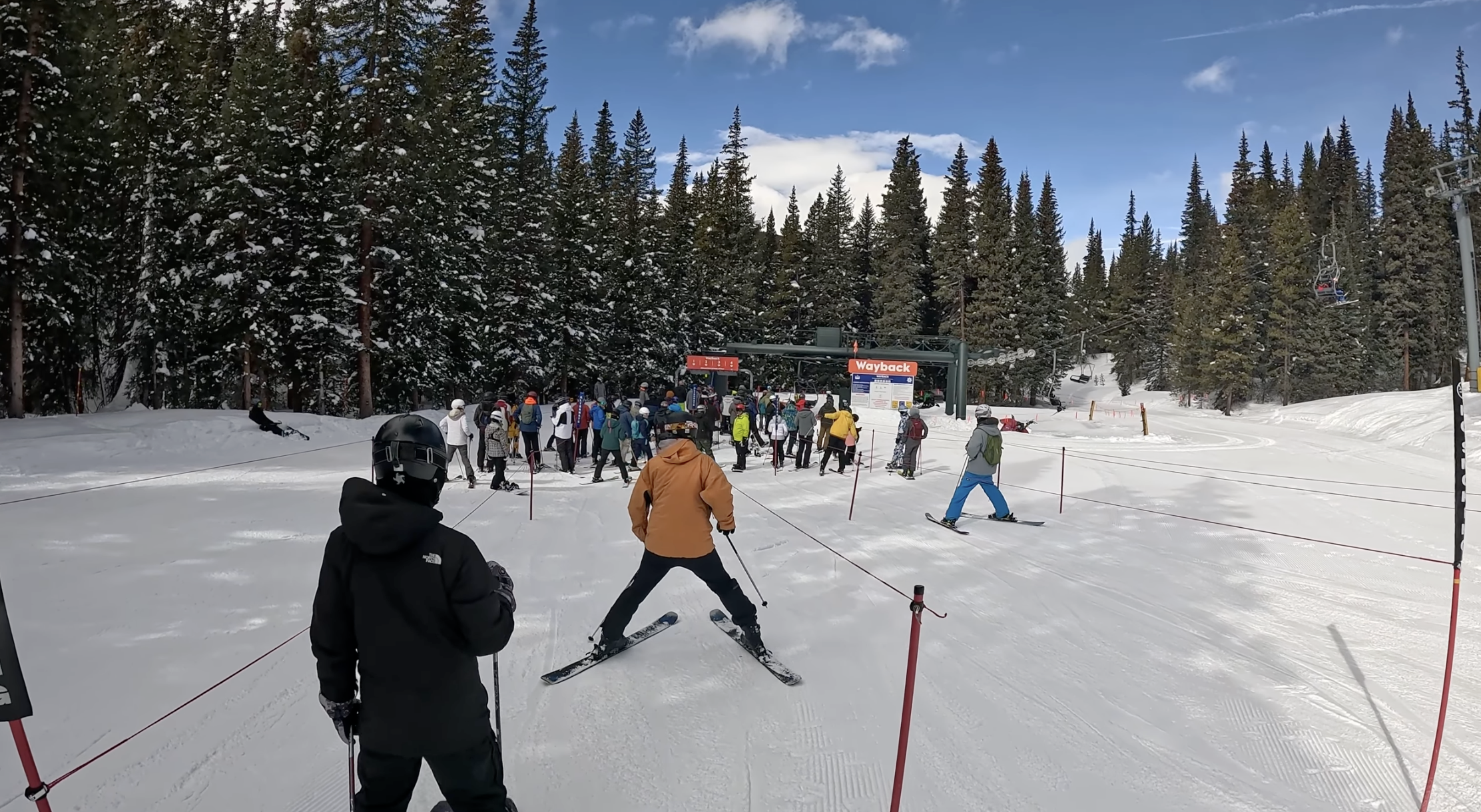
Next up, we have a lift that not many people think about riding until they actually have to. Keystone has high-speed lifts that directly service nearly all of its terrain pods, and the lone exception comes when you realize you need to get back from the Outback area, which is the most remote zone from the base.
That’s when you find out that your only way out is the Wayback fixed-grip quad. This involves a slow, nine-minute ride time that feels especially laborious given that you’re not even riding good terrain, you’re just trying to get out and get back home. On busy days, this lift can back up late in the afternoon, making the situation even worse, where you not only have to wait in a long lift line, but then endure a slow ride up as well. And because this is a fixed-grip quad, you also often have to deal with misloads from less experienced guests, which can slow the lift down even further.
With the Bergman Bowl expansion a few years back, the Wayback lift has become even more important. New gladed terrain now filters down into this area, making it more enjoyable to ski or ride—but also increasing the number of guests who need to rely on the Wayback lift to get back. We’ve been saying for years that Keystone needs to upgrade this lift to a detachable, and we hope they do so soon. For such a prominent destination resort, it’s pretty out of place for such a weak link in the lift network to still exist.
#8 & #7: Galaxy & Sky Express - Heavenly
Next up, we move to Lake Tahoe’s Heavenly Ski Resort, which actually has a lift setup that frustrates us for multiple reasons. When choosing between two lifts at Heavenly — one that is probably objectively the worst at the resort from an experience standpoint, and another that is subjectively the most frustrating — we couldn’t decide. So we decided to include both.
First, we have to cover the lift that feels the most out of place from an infrastructure standpoint, and that is the Galaxy lift on the Nevada side of the resort. The Galaxy lift serves some nice intermediate terrain, including glades, but it’s not exactly a short ride. It’s also a bottom-out lift, meaning you don’t ride it to access terrain — you ride it to get out. And the worst part is that it’s an agonizingly slow fixed-grip triple chair that takes over 13 minutes to ride. You don’t realize how long it is until you end up at the bottom of the lift with no skiable egress and absolutely no choice but to ride it out.
This is an unconscionable ride time by North American destination-resort standards — especially for a resort that competes with, or at least aims to compete with, the best in the country. If Heavenly truly wants to showcase this area as worthy of inclusion in a destination ski resort, this lift should really be upgraded to at least a high-speed quad.
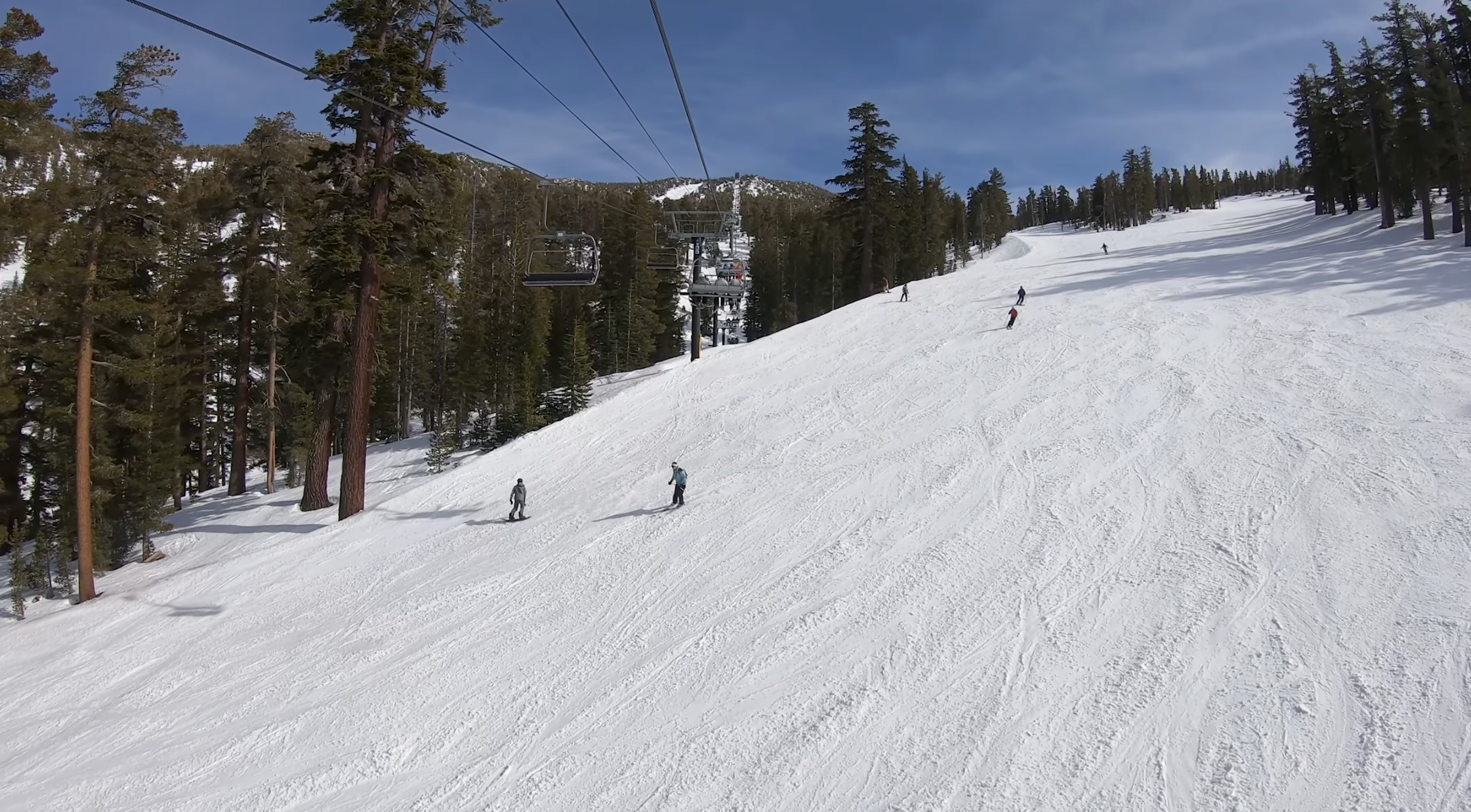
But the lift issue that far more people are likely to experience at Heavenly involves the Sky Express lift. Now, Sky Express is a high-speed quad, and once you’re actually on it, there isn’t much of an issue with the ride time. The problem is that Heavenly is made up of two sizable resort areas: the California side and the Nevada side. And if you are on the California side, the only way to get back to the Nevada side is by taking the Sky Express lift.
This turns Sky Express into a massive choke point — especially during busy periods and particularly near the end of the day — because there are no true redundancies for traveling between these two major mountain areas, or at least from the California side back to the Nevada side. Sky serves some of the best upper-intermediate to advanced terrain at the resort as well, so it’s not just frustrating to get to Nevada, but also for the many people that would like to lap that terrain. Also, since it’s in such a prominent location, the Sky Express is fairly susceptible to wind holds — and if you’re on the California side and need to get back to the Nevada side under this circumstance, you’re just out of luck.
We would strongly recommend that Heavenly either upgrade this lift to a higher-capacity detachable, or better yet, add another redundant lift — one with better wind resistance — that provides the same connection and takes significant pressure off this one.
#6: Morningside - Steamboat
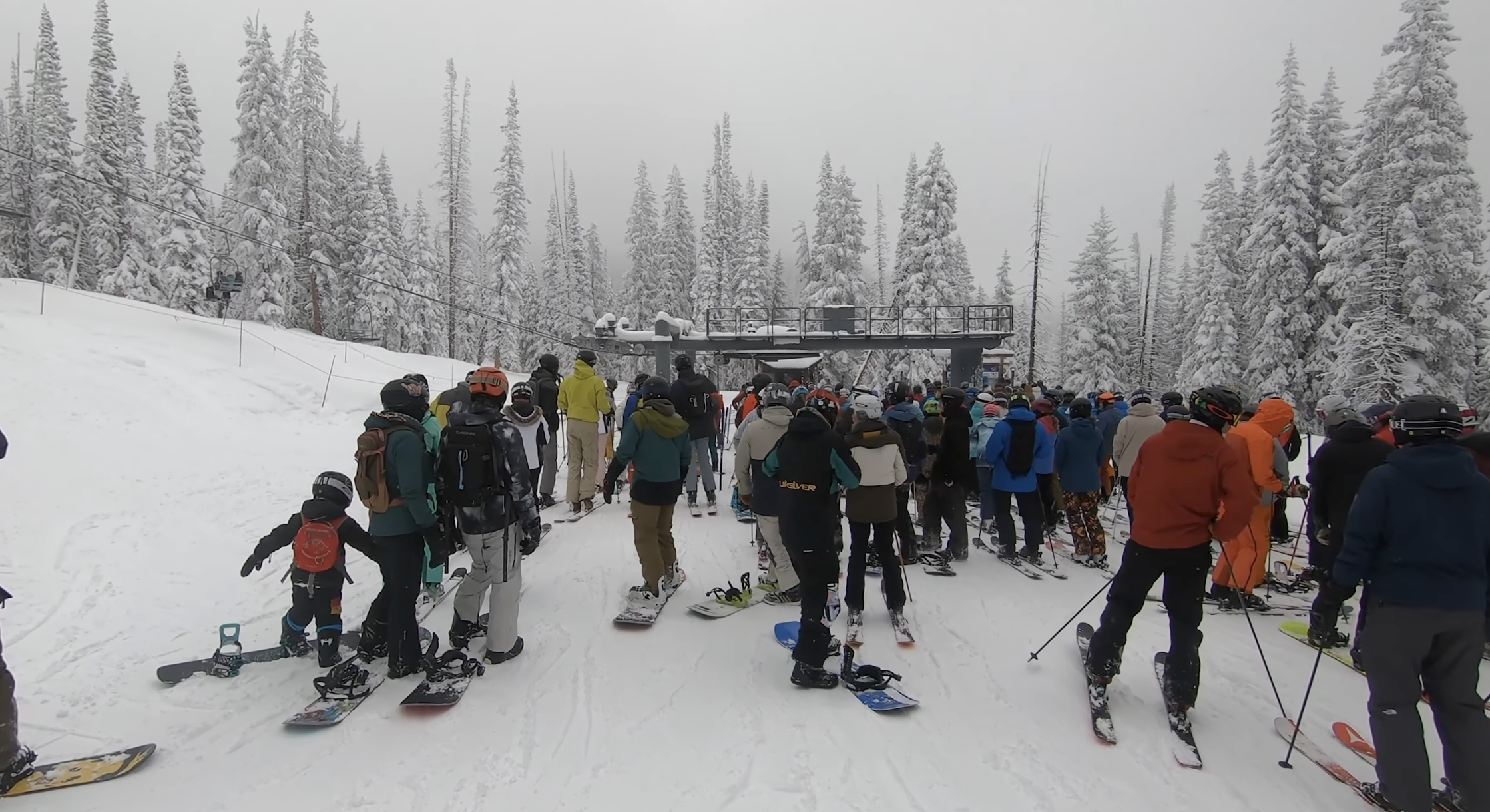
Next up, we move over to northwest Colorado to cover Steamboat’s Morningside Triple chair. Steamboat has made a number of substantial investments in its lift network over the past several years, but the one place they’ve seemingly neglected to address is this slow lift on the backside. Now, the problem isn’t necessarily the Morningside Triple Chair’s ride time — don’t get us wrong, it is the slowest lift at the resort that most guests will regularly take — but the bigger issue is that it’s an unconscionable choke point in the resort’s lift network.
The lift receives traffic from both the Storm Peak and Sunshine Peak zones, with three primary uphill routes that can deliver skiers to the backside: the Storm Peak Express, the Sunshine Express, and the Wild Blue Gondola. And once you’re there, there is no way out of the bottom of this zone without riding the Morningside Triple back up. Funneling that much traffic into a lower-capacity triple chair predictably creates significant lift lines.
But the problem is actually even worse, because the Morningside Triple Chair also happens to be the only way to access some expert-level chutes on the front side. In other words, for many of Steamboat’s hardest runs, you have to take a frontside lift, ski down into the backside, and then ride the Morningside Triple back to the front side in order to lap them.
The Morningside Triple Chair is a clear case study in poor lift design in more ways than one. And while a higher-capacity or high-speed replacement would likely improve the experience, even adding a second lift to provide redundancy out of this zone would make a massive difference.
#5: Mount Rainier Gondola - Crystal
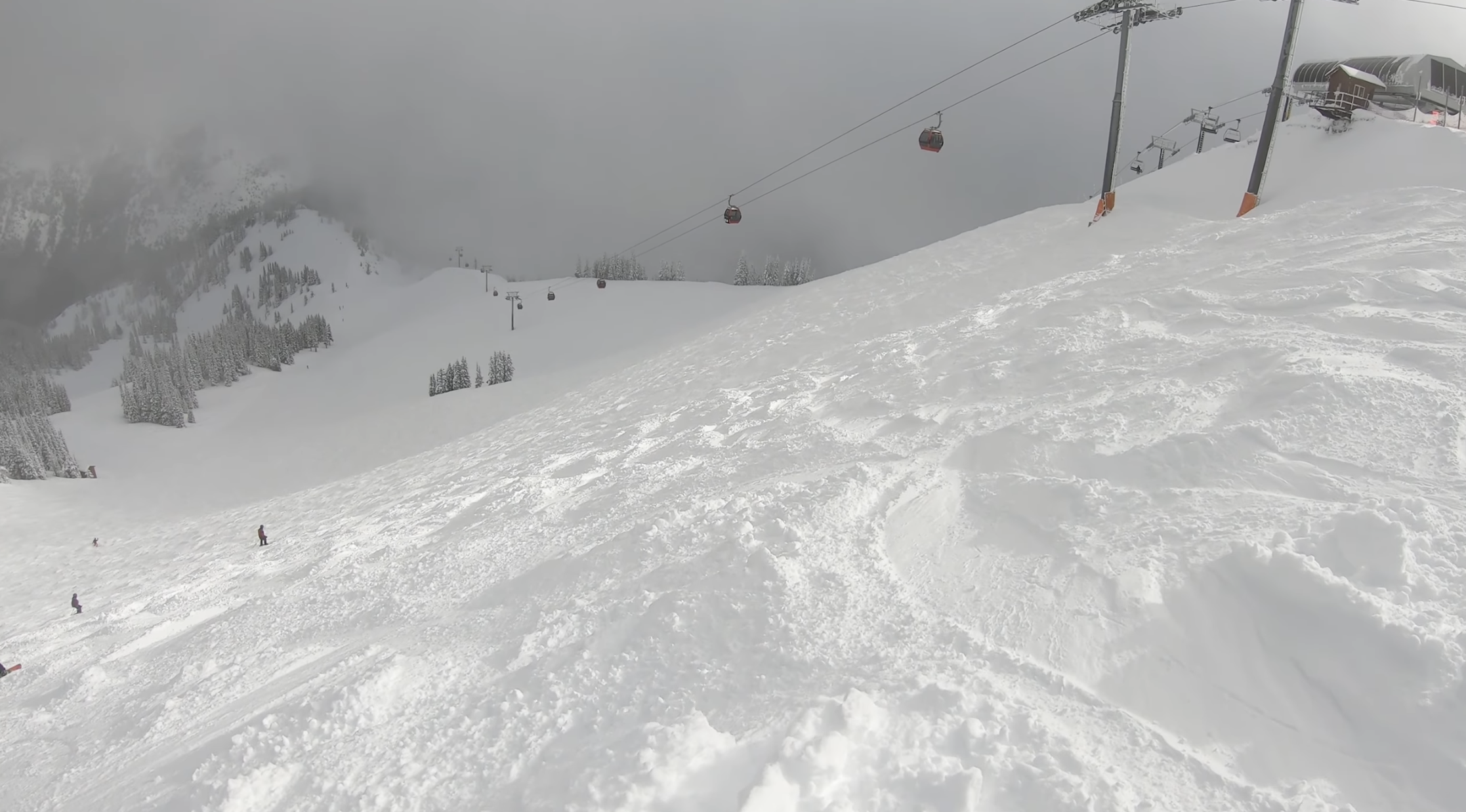
Next up, we move to Washington State’s Crystal Mountain, where the resort’s flagship lift was not even designed for use at a ski resort — and it’s bluntly apparent every time you visit. Crystal’s Mount Rainier Gondola, which debuted more than 15 years ago at this point, was originally designed with sightseeing in mind. As a result, the lift has abnormally wide carrier spacing and therefore much lower capacity than a typical eight-passenger gondola. To give you some context for just how low that capacity is, a typical eight-passenger gondola can carry about 2,800 people per hour. The Crystal gondola can only carry around 900, which is less than one-third of that figure.
This has become a significant problem in recent years, because the Mount Rainier Gondola is now the most desirable lift at the resort in a number of ways. It provides the only direct base-to-summit lift access on the front face of the mountain, as well as the only uphill service at Crystal that’s enclosed from the elements, which can be especially favorable under the wet storm conditions that the Pacific Northwest is fairly infamous for. As the resort has grown busier and busier, this has turned into a major issue, with perennial lift lines forming not only at the gondola itself, but also at the Chinook and REX Express lifts, which together provide redundancy in this zone.
While this would unfortunately require significant re-engineering of the lift, we truly believe that the only real way to solve this problem — especially given the fact that the resort recently replaced the REX lift with another high-speed quad without any capacity upgrade, citing topographical constraints — is to bite the bullet and make the necessary investment to convert the gondola into a fully functional winter ski lift.
#4: Burfield - Sun Peaks
Next up, we move to interior British Columbia to cover Sun Peaks, a resort that, when you first set foot there, feels pretty modern and family-friendly all things considered. The resort has high-speed lifts in its major areas and a family-friendly setup with plenty of terrain for a wide range of abilities.
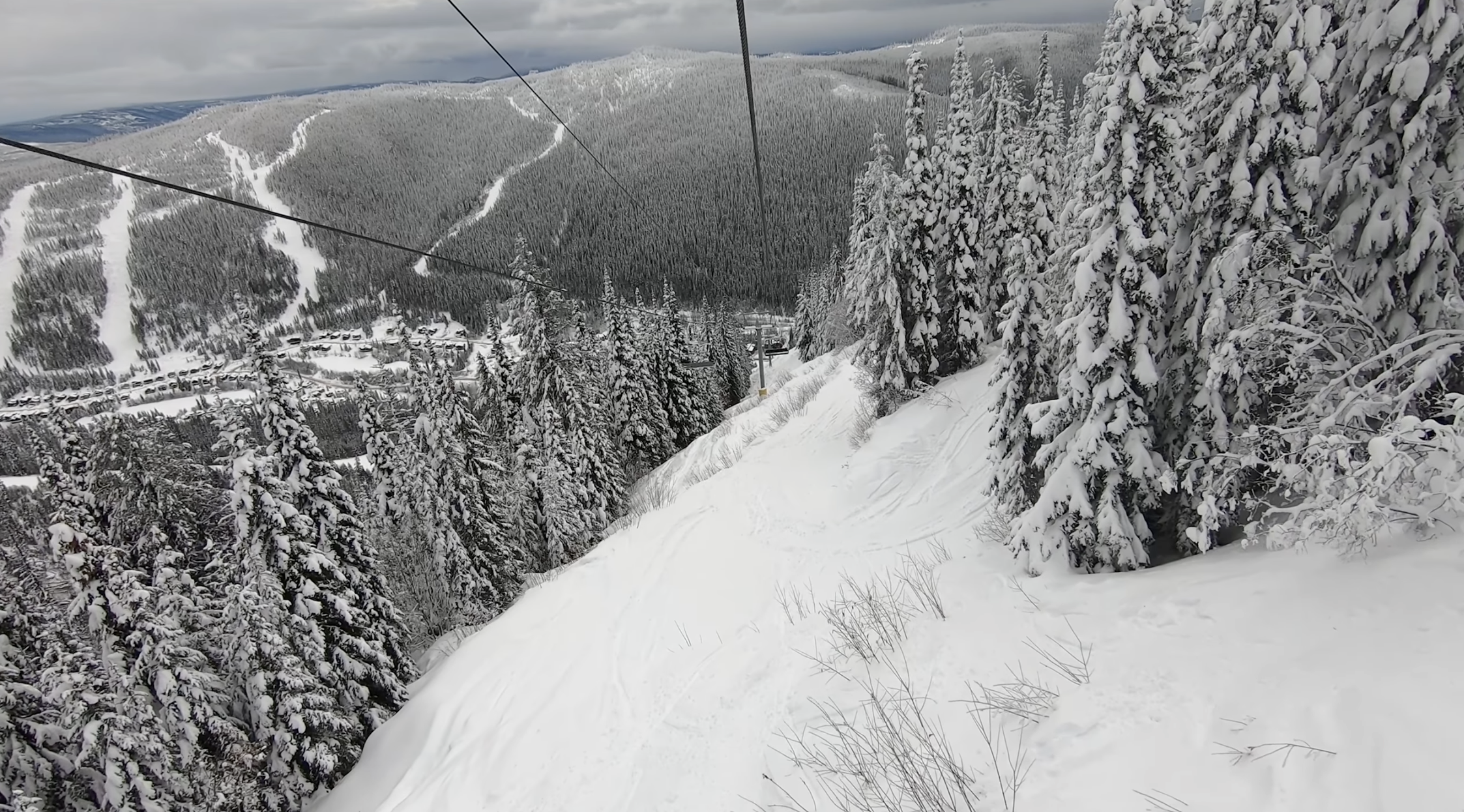
That’s why it might be so surprising to hear that Sun Peaks is also home to one of the most dreadfully out-of-place bottom-to-top lift rides we’ve seen anywhere: the 9,500-foot-long Burfield Quad. At the time of this recording, this lift is the longest fixed-grip chairlift in all of North America—and potentially the world—and it is, in fact, longer than all but about a dozen high-speed chairlifts on the continent. And with a length that long on a ride that moves no faster than any other fixed-grip quad, a single trip along the entire length of this lift takes 21 minutes, a ride time that’s so long it’s almost insulting to you as a paying guest. This makes the Burfield Quad home to the longest chairlift ride you will probably experience anywhere in your life.
So let’s start with something you might be wondering: if Burfield is home to the longest lift ride on this list, why isn’t it the worst lift overall? Well, despite the full ride being completely unacceptably long, the lift does have a mid-station for both loading and unloading. This allows guests to get on or off partway through and effectively ride it in two separate sections. And with the West Bowl Express installed recently nearby, along with the Crystal Chair, there are now redundancies that allow guests to spend time on the upper portion of Burfield’s lift line without committing to the entire ride. While the lower section of the lift line, known as “Bottom Burf” by locals, does not have any direct redundancies, it primarily serves expert terrain, and it’s somewhat understandable that this area has not been prioritized for high-speed lift access. The bigger issue is that when you end up at this lift for the first time in a completely unsuspecting way, you have no idea just how long of a journey you’re about to be in for. And on cold days, let’s just say you could consider yourself a hero for enduring it.
When you look at the circumstances behind Burfield, including the mid-station and the lower-mountain expert terrain, it becomes easier to understand why this lift hasn’t been replaced yet. But even with that context, a 21-minute ride time at a destination-oriented resort like Sun Peaks is absolutely wild to see in today’s world. Some locals might consider it heresy, but for a resort of this caliber, we really believe this lift needs to be upgraded to at least a high-speed quad.
#3: Mogul Mouse’s Magic - Smugglers’ Notch
Next up, we move to Northern Vermont’s Smugglers’ Notch Resort, which is already fairly infamous for its fleet of entirely slow, low-capacity double chairlifts. But when you decide to book a trip to Smugglers’ Notch, you probably already know what you’re signing up for in this respect — unless you happen to have the misfortune of getting on the Mogul Mouse’s Magic Lift on the beginner-oriented Morse Mountain side, which, despite its name, has nothing magical about it besides how much it might sour your mood after riding it.
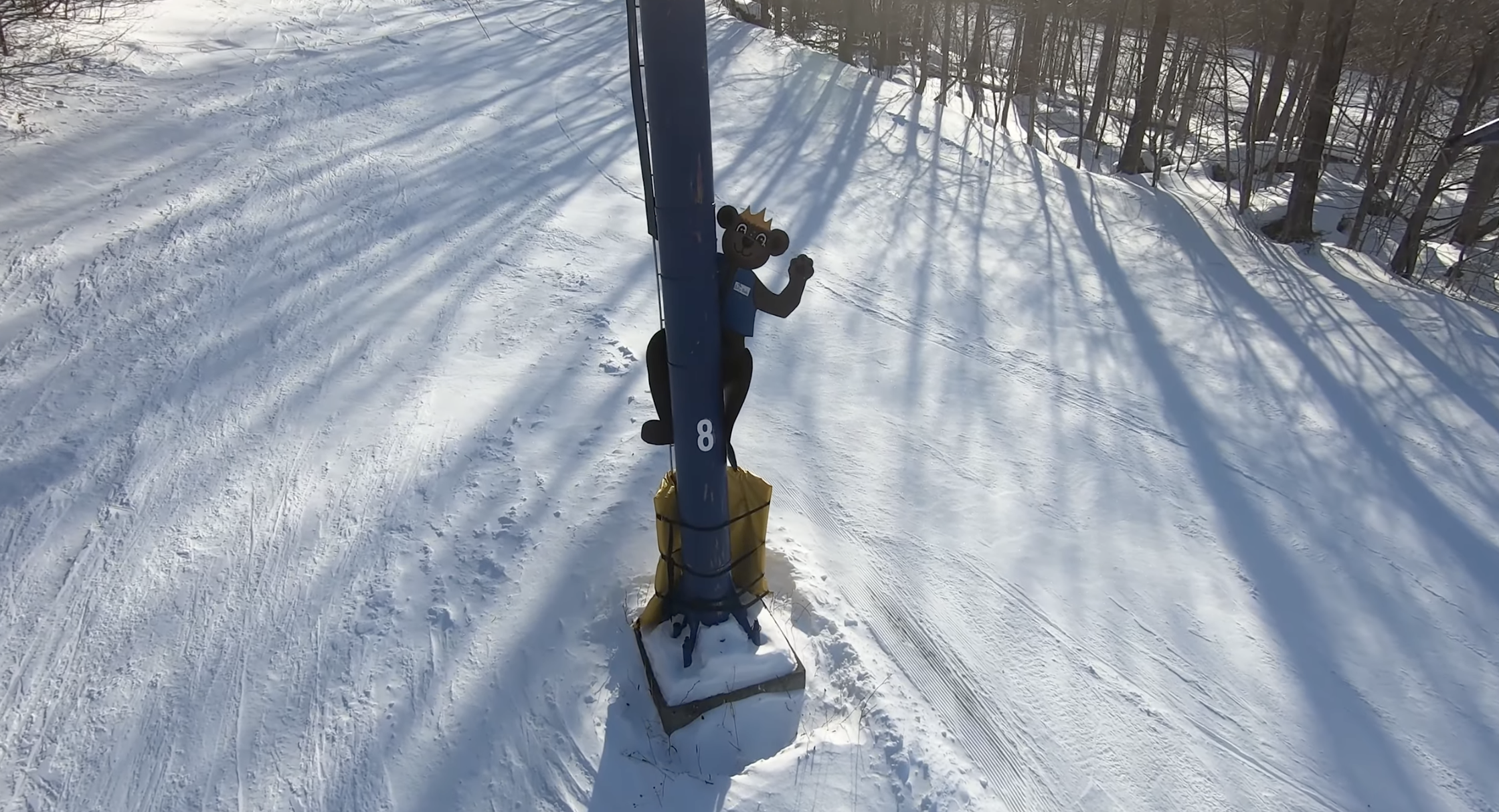
Despite being the same fixed-grip double chair on paper as every other ski lift at Smugglers’ Notch, the Mogul Mouse’s Magic Lift — which at first may only be distinguished from the parallel Village Lift by its blue chairs and inviting animal mascot cutouts along the lift line — is actually significantly slower than all of those other lifts. It runs at roughly the same speed as a traditional bunny hill lift, which does make some sense, since this is effectively Smugglers’ Notch’s bunny hill chairlift. But while this lift may be easier to load for beginners and ski school groups, it is an absolutely miserable ride, taking approximately 15 minutes. To make matters worse, it runs immediately parallel to the Village Lift the entire way — a lift that operates at least 50% faster and gets you uphill in five fewer minutes. As you watch chair after chair on the neighboring Village Lift pass you by, with effectively no benefit from choosing the Mogul Mouse’s Magic Lift unless you are a true beginner who struggles with loading or unloading, it becomes very difficult not to spend those 15 minutes completely regretting your decision.
We can understand why Smugglers’ Notch operates this lift given the limitations of its lift network, but the resort at least owes visitors clearer signage or some kind of warning — letting them know about the significantly slower lift speed and encouraging non-beginners to take the Village Lift instead for routine uphill access.
#2: Sojourn - Mountain Creek
For our penultimate lift, we move down to New Jersey of all places, where there is actually a real outdoor ski resort — Mountain Creek — in the northern part of the state. Now, as one might expect from a state that’s not exactly known for its mountains, Mountain Creek is pretty small overall, with a less than 200-acre footprint and about a 1,000-foot vertical drop. With stats like that, you wouldn’t expect there to be any lifts long enough to actually rank among the most miserable rides in all of North America, right? Wrong.
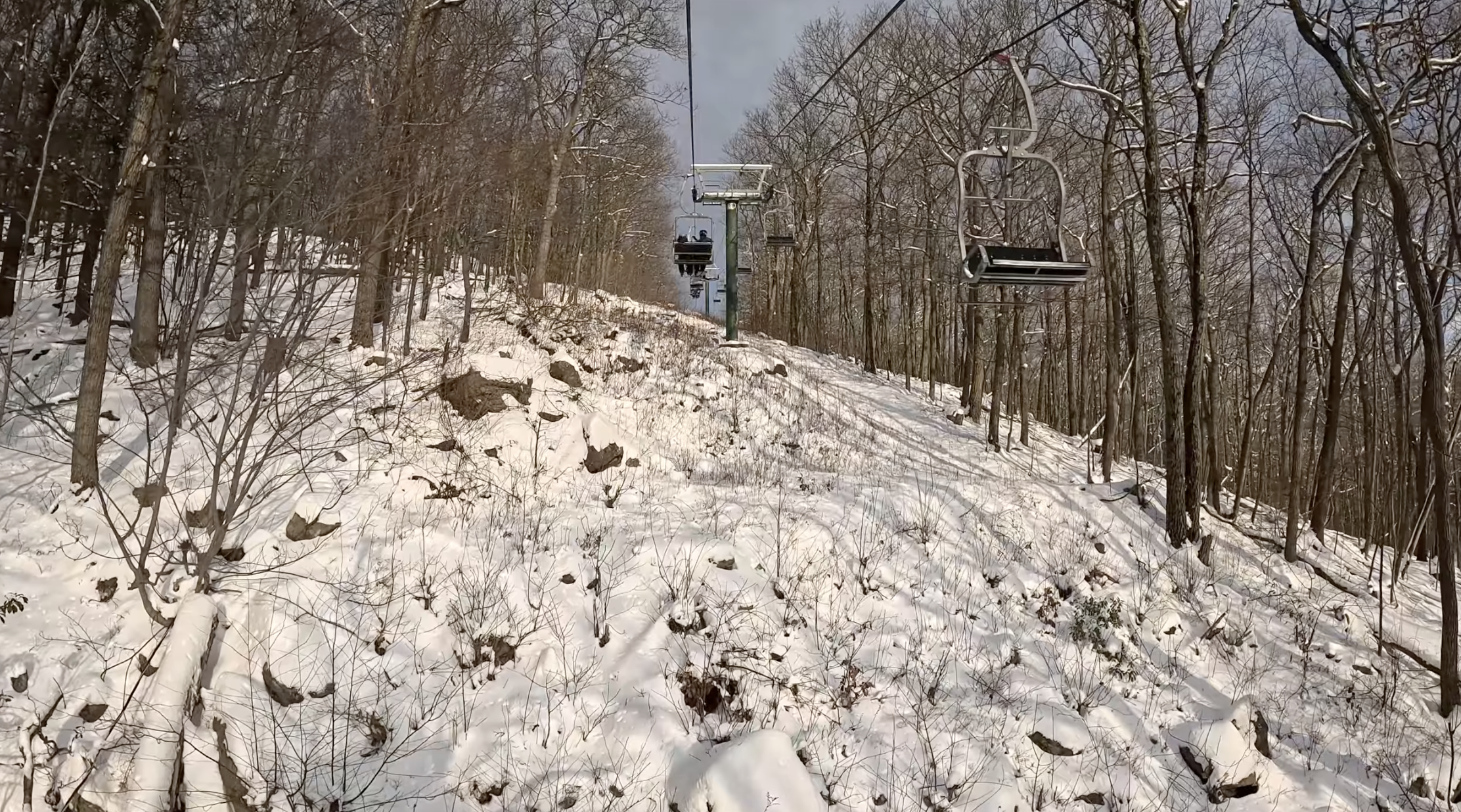
Now here’s where we have to tell you a little bit about how Mountain Creek works. The resort is comprised of two distinct areas: the Vernon Peak area and the South Peak area, and the main terrain pods between them are fairly far away from one another. So what’s Mountain Creek’s solution to connect these two areas? Well, to go from the Vernon Peak side to the South Peak side, there is a long and meandering blue trail that has several flat sections. But to go back from the South Side to the Vernon Side, your only option is to take the Sojourn fixed-grip double chair. That’s how you get a situation where, while this lift only covers about 500 feet of vertical, it extends roughly 4,800 feet from bottom to top and, based on our experience, takes an almost soul-crushing 15 minutes to ride — and that’s with no misloads.
Sadly, the lift’s entrance is super unassuming for the ride time involved, and unless you’ve actually spent significant time at the resort, there’s very little that would tell you about the severe ride time you’re about to endure when you get on. And with the way the lift is set up, you don’t actually realize how bad the ride is going to be until you’re quite a ways up and realize there is no end in sight.
That’s a good time to also mention that Mountain Creek, given its proximity to New York City, is a very popular resort for night skiing. And this is where things get especially spooky. Mountain Creek is open for night skiing until 9p.m. most night, but the resort only lights the ski trails at night, not necessarily every piece of equipment that guests touch. This means that because there are no ski trails under the vast majority of the Sojourn Double lift line, you’ll be riding up completely in the dark.
We doubt Mountain Creek will put in the capital to replace this thing with a high-speed lift anytime soon. After all, the current double chair is actually a replacement for a previous double chair and was only installed about a decade ago. But it really deserves to be a faster lift for the sake of people’s sanity — or at the very least, they should throw up some lights on the towers to keep guests from feeling uneasy.
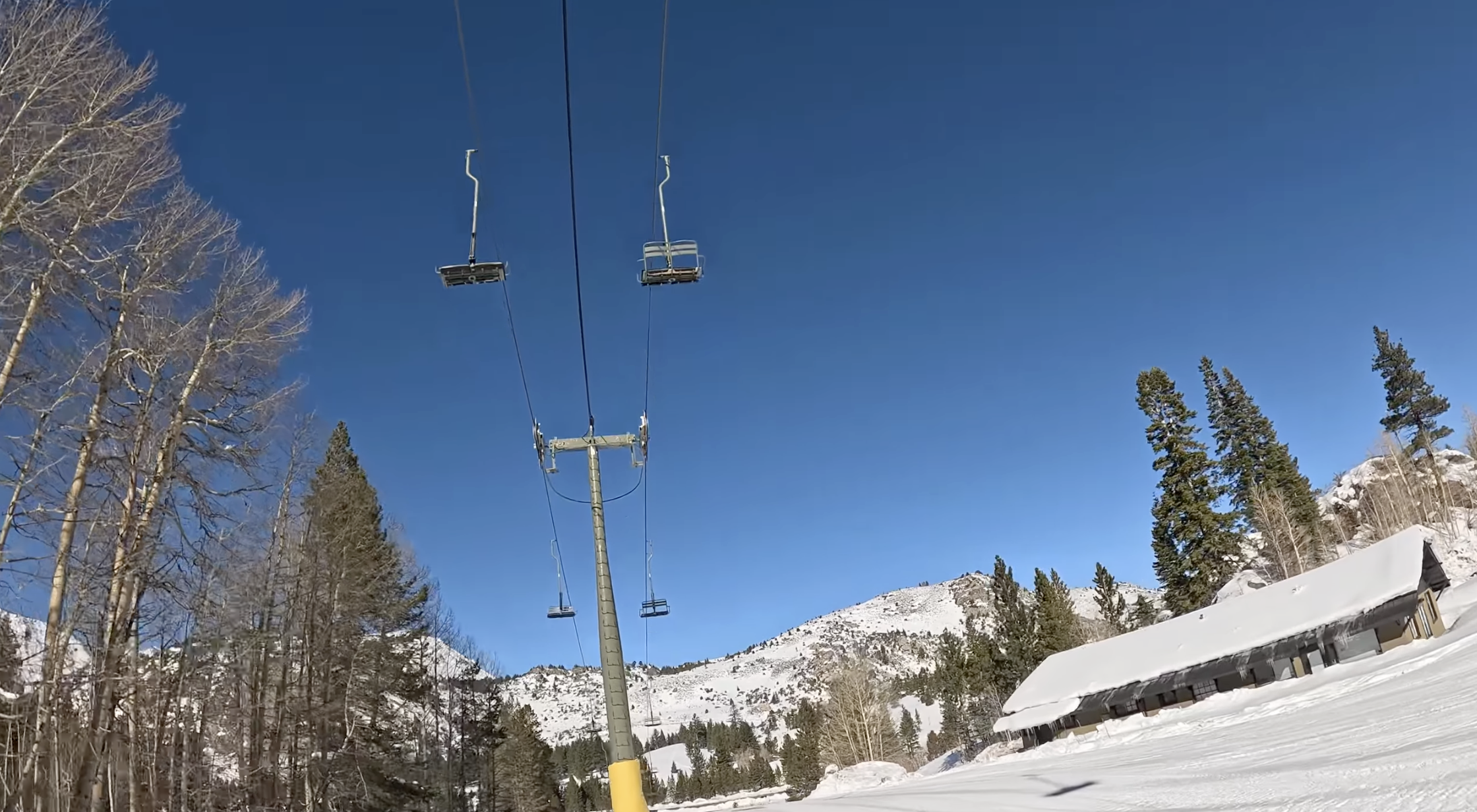
#1: J1 - June Mountain
And finally, we move back to the Sierras of California to cover June Mountain of all places. Most of you have probably never visited June, but the J1 Double exists in a setup that is so unfavorable it causes a number of problems that impact nearly every part of the resort experience. The J1 lift has existed for over six decades at this point, operating as a center-pole double chair serving the lower mountain. Unfortunately, this lift provides the only access up from the parking lot, meaning guests must endure not only a slow ride, but one with a difficult loading experience due to the pole in the middle of each chair and exceptionally low capacity for an out-of-base lift. This creates serious lift lines on weekends and holidays, despite the resort not actually being all that busy overall. And with everyone having to ride this lift — including beginners — misloads are very common, which makes the lines even longer and slows the ride time down even further.
This is especially unfortunate because J1 directly serves some of the best expert terrain at the resort, but because of the lines at the beginning of the day, lapping this lift can make you want to pull your hair out. It’s also worth noting that if you are a beginner, there are no green trails down from mid-mountain to the parking lot. That means those same beginners who may have already been sketched out by the ride up will have to download the lift at the end of the day. The resort also doesn’t allow you to wear your skis while riding down, so you’ll need to either place them in a special carrier or hold onto them if it’s too busy.
June Mountain advertises itself as a family-friendly escape from the crowds at nearby Mammoth, but the J1 lift single-handedly detracts from both of those promises. The resort did have an alternative people mover called the QMC from 1986 to 1996, but it was removed as part of the Yan detachable scandal and never replaced, leaving the J1 lift as the only base-area access for the past three decades.
J1 is probably deserving of retirement in its own right, but at the very least, it needs redundancy. Even a single high-speed quad would be sufficient to handle crowds and virtually eliminate lift lines. And even if the resort chose to keep costs down and install a fixed-grip helper lift instead, that alone would do wonders for improving the start-of-day experience.
Final Thoughts
So that’s our list of the worst ski lifts you can experience in North America. Some of them are less than ideal to ride for the exact reason you’d expect—they’re agonizingly slow—but others are frustrating for much more complicated reasons, including serious crowd flow issues, irritating quirks that can get on your nerves, and access policies that take away from your vacation. The good news is that nearly all of these issues can be rectified with the proper investments or policy changes, and we hope to see some, if not all, of these lifts appropriately addressed soon.