Places You Have to Ski Before You Die in North America
Taking a ski vacation in North America? You have no shortage of appealing and iconic options. But at a handful of North American resorts, there are certain slopes and terrain areas that stand out from the pack. Whether it’s due to difficulty, scenery, or some other factor, taking these runs can be an experience that you’ll remember for the rest of your life. So what exactly are the places that you need to ski before you die, can you access any of them even if you’re not an extreme expert, and what makes them so special?
Beginner
#26: Whistler High Alpine
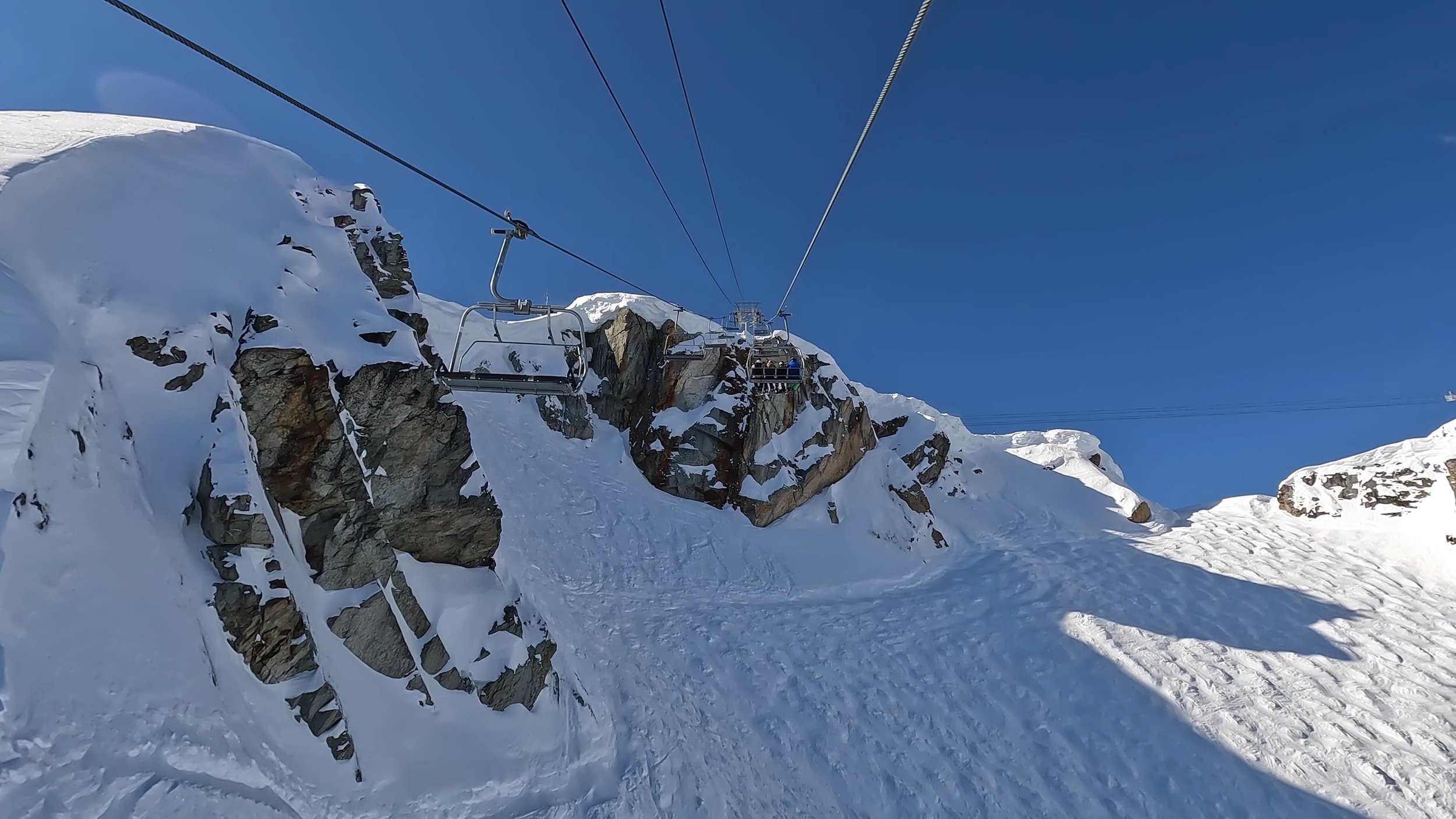
One of the best parts about these standout areas is that some of them are accessible to everyone, and that happens to be the case for the first zone that we’ll be highlighting on this list: the high alpine terrain on the Whistler side of Whistler Blackcomb. If you’re looking for incredible views, a wide variety of runs, and an outstandingly unique topography, you have to include these bowls on your bucket list.
Whistler’s high elevations have some of the coolest features anywhere, sitting as high as 5,200 feet above the base of the resort. On clear days, this allows for not just incredible views into the town far below, but also of neighboring Blackcomb Mountain, including the cut trails that are squarely in your face on some of these runs. This really gives you a sense of just how gigantic a footprint you’re spending time on, not to mention the sight of a staggering array of nearby mountains beyond the resort boundary.
While there is plenty of terrain for harder abilities, including ungroomed bowls, rock-riddled chutes, and even some extreme couloirs, there’s also green terrain up here, with options that allow you to experience the bowls and views in all their glory without having to do anything particularly technical. These beginner paths allow for a scenic and stress-free tour down the mountain, even if there are some flat spots in certain places. They also feature guide posts on either side that can keep you on course even on days with flat light or fog, which can be common in the Whistler upper mountain.
While not for beginners, a particularly iconic way to experience the high alpine and make it all the way down to the village is to do Whistler’s Peak to Creek Trail, which takes you all the way from the summit to the base along a whirlwind 5,200-foot vertical drop. This trail changes dramatically multiple times as you descend and is a memorable way to truly take in the vertical scale of the resort.
But no matter your ability level, the Peak, Harmony, and Symphony areas will make for an experience you won’t soon forget.
#25: McCoy Park - Beaver Creek
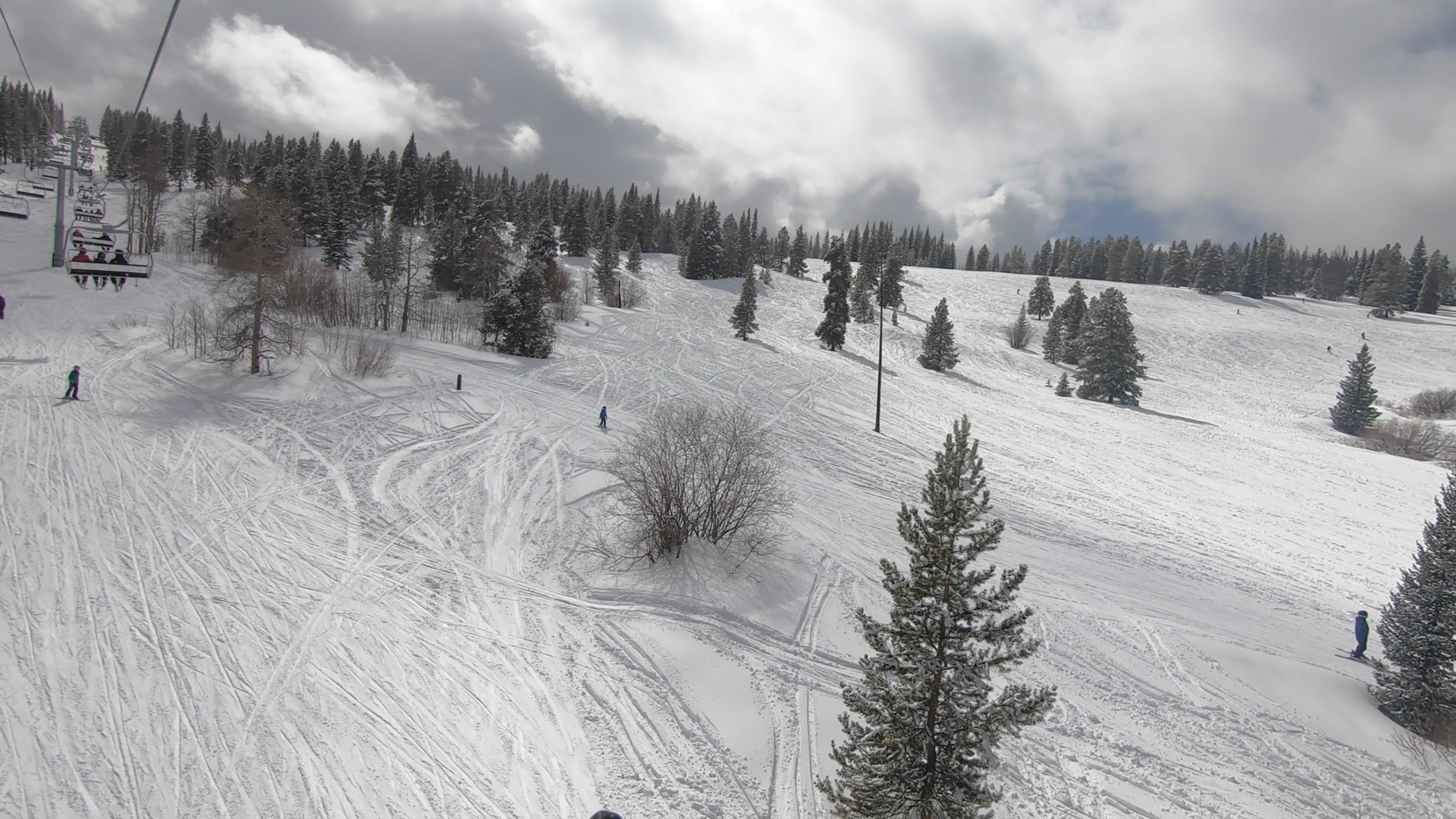
Next up, we move to a terrain zone that’s more strictly beginner terrain, but is absolutely worth a bucket list trip to if you don’t intend to ever ski anything harder than moderate difficulty. And that area is Beaver Creek’s McCoy Park. While McCoy Park is quite mellow, and for some folks even arguably too flat in certain sections, the diversity of the surrounding scenery is some of the most unique we’ve ever tried—and that’s really hard to say about truly easy terrain anywhere else in North America. There is a factor of exploration here that elevates it from other beginner areas that have more rigidly defined trails.
McCoy Park may just be one pod amidst a large selection of terrain zones at Beaver Creek, but it’s possible to take several runs in this area without it getting repetitive. One run might potentially be a wide open meadow, another run may be through what feels like a botanical garden of low growth shrub and tree species, and another one could be through a mellow glade of aspens or pines—the latter being notable as beginner glades can be especially rare at destination resorts. There’s nothing particularly challenging in McCoy Park, but the terrain is visually interesting and playful enough that you will likely remember it for years to come after visiting. Even if you’re an advanced or expert skier and rider, you’ll probably remember this area for just how distinctive it feels.
#24: Lake Louise Upper Mountain
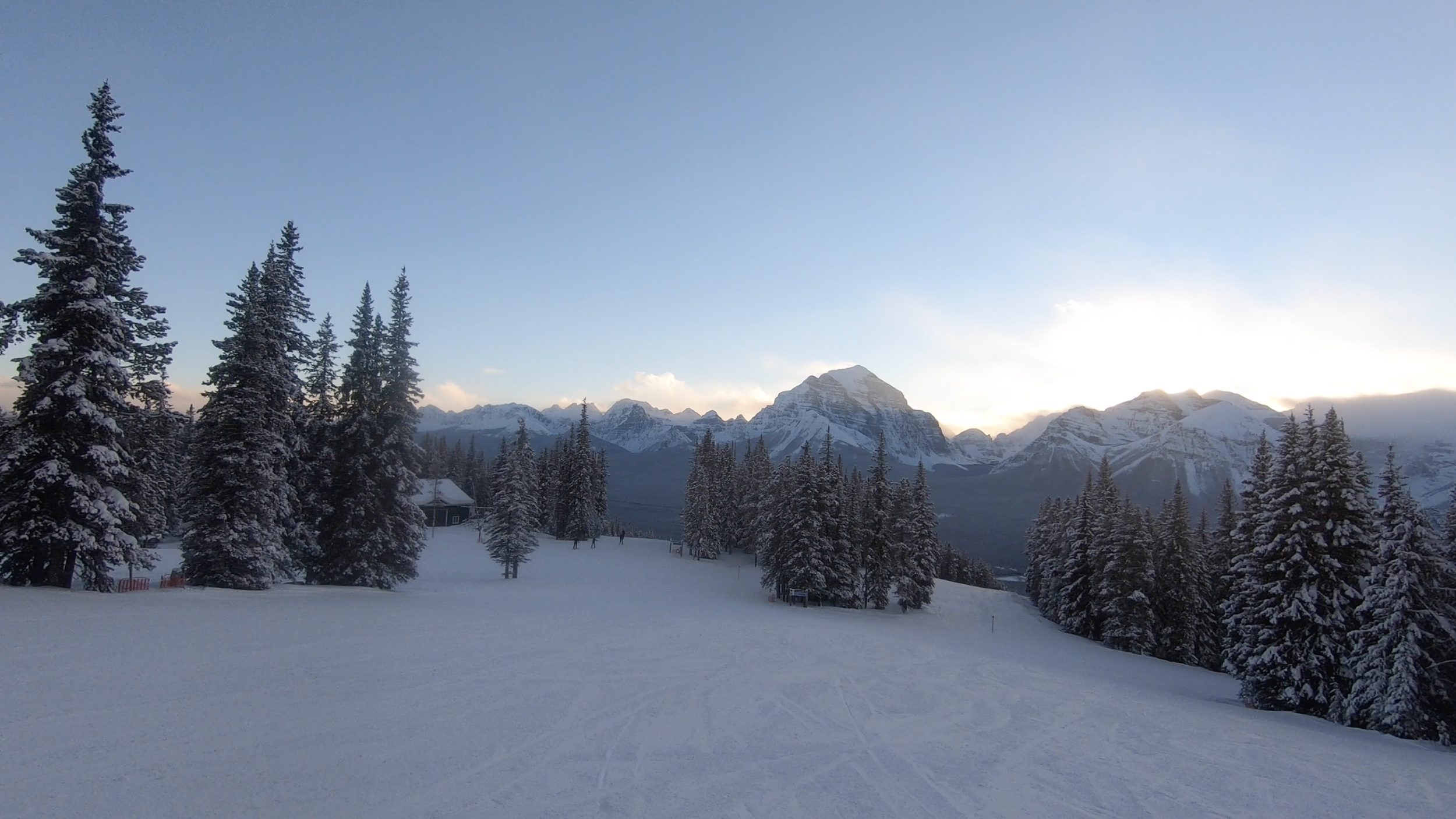
Next up, we move to what is arguably the most beautiful ski resort in the entirety of North America: Lake Louise. And the resort’s backdrop of surrounding glacier-carved peaks in Banff National Park is something that everyone should try to see at least once in their life. The good news is that from the resort’s mid-mountain area, there are options for all ability levels to see these glorious mountains in their full majesty.
The more remote backside offers arguably the best views amid a more secluded backdrop. While this area technically has a green trail down it, it is pretty flat, and beginners will likely enjoy going down the front side more—but for the views, it may still be worth it. For those of higher ability levels, a range of cruisers, bowls, and expert-level chutes provide this stunning backdrop on some of the most enjoyable terrain in North America.
So no matter your ability level, seeing Lake Louise and its surrounding mountains in the flesh is a trek you should make at least once in your life.

Intermediate
#23: Vail Back Bowls
Next up, we move over to one of the most famous terrain areas in the world, and for good reason: Vail’s Back Bowls. The Back Bowls are well known for the breadth of high alpine terrain they provide, but the degree to just how massive and expansive they truly are has to be seen in person to be believed.
These high alpine bowls, which are mostly treeless but do have some pockets of glades throughout them, extend for what feels like an endless distance and make you feel truly small in a massive world, perhaps more than any other resort zone in North America. Just a single one of these bowls can feel as large as an entire ski area on its own, and when riding up a lift, the chairs on the next lift over from you can seem as small and distant as ants.
While many of the Back Bowls’ terrain areas do get quite busy at times and are easily accessible from the front side, there are others on the far reaches of the resort that rarely get tracked, and these can put you in a place that feels completely isolated from the outside world, to a degree that is very rare even at a big resort out West.
Many of Vail’s bowls are steep, but they are almost entirely doable for folks who have reached advanced proficiency. Also, the resort often grooms certain areas of the bowls, most notably China Bowl, to make them readily accessible for intermediates. So if you have some experience skiing or riding, you don’t want to make it too technical, and you’re looking for the terrain of your dreams, Vail’s Back Bowls are really hard to beat.
#22: Long Shot - Snowmass
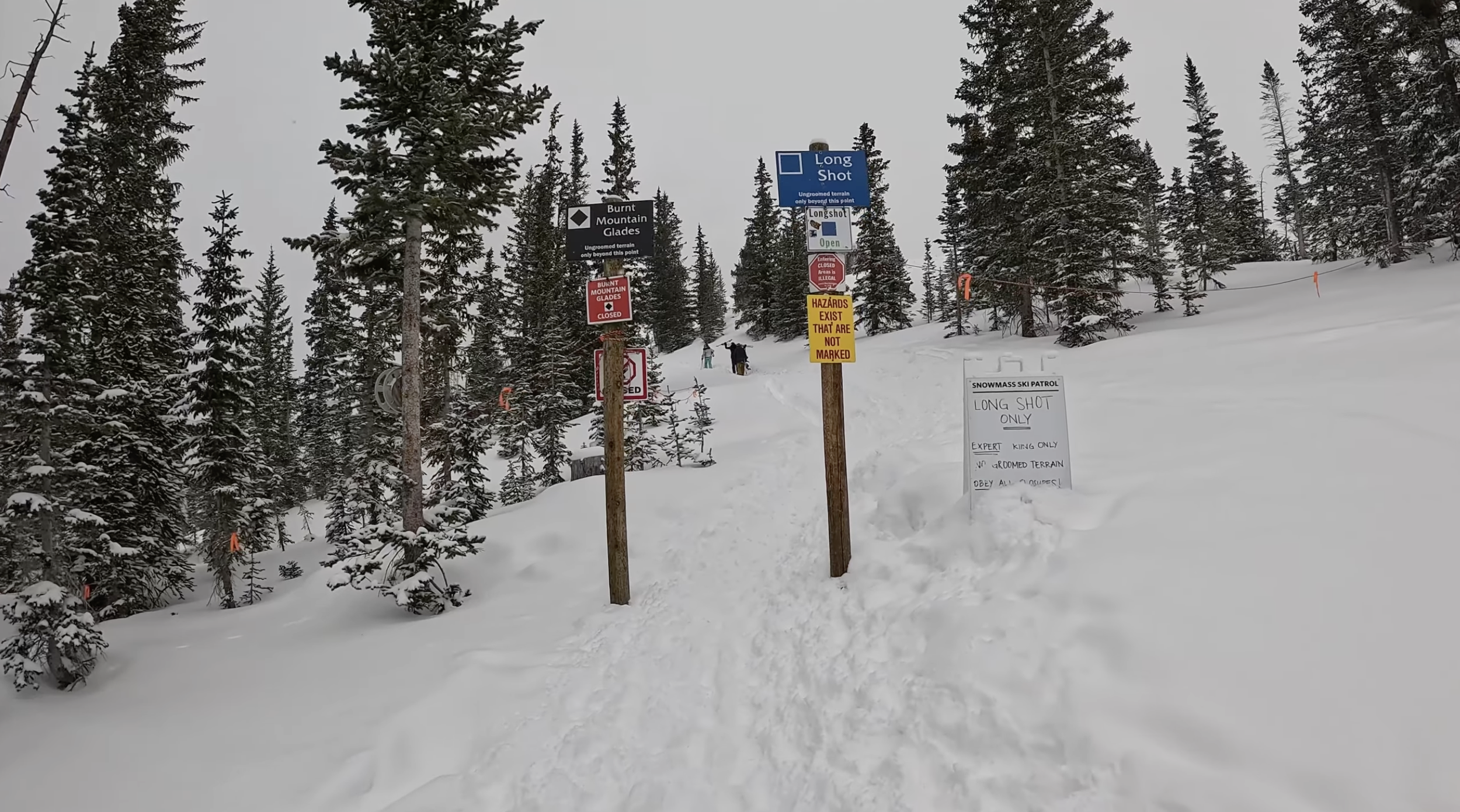
Next up, we move over to what might be the most iconic blue trail on the entire continent, and that is the Long Shot trail at Snowmass. This run has a number of factors that make it a perfect pilgrimage for those looking to have an adventure without venturing into terrain harder than intermediate.
First off, the trail is one of the only blue runs in the world that requires hiking to reach, making for perhaps the first bootpack that many people who attempt the run will ever do. It’s pretty short by North American standards and manageable if you’re in decent cardio shape. What you get with that bootpack is a lightly tracked run that extends five miles in length and approximately 3,000 vertical feet, making for a serious commitment, but one that feels incredibly distinct. There are a number of unique paths to take, with opportunities for glades, off-the-beaten-path side hits, or simply sticking to the groomer and getting into the cruising groove.
If you love intermediate terrain and want to do something that stands out in that category, Long Shot at Snowmass should be the ultimate bucket list run that you aspire to do.
#21: Palmer - Timberline Lodge
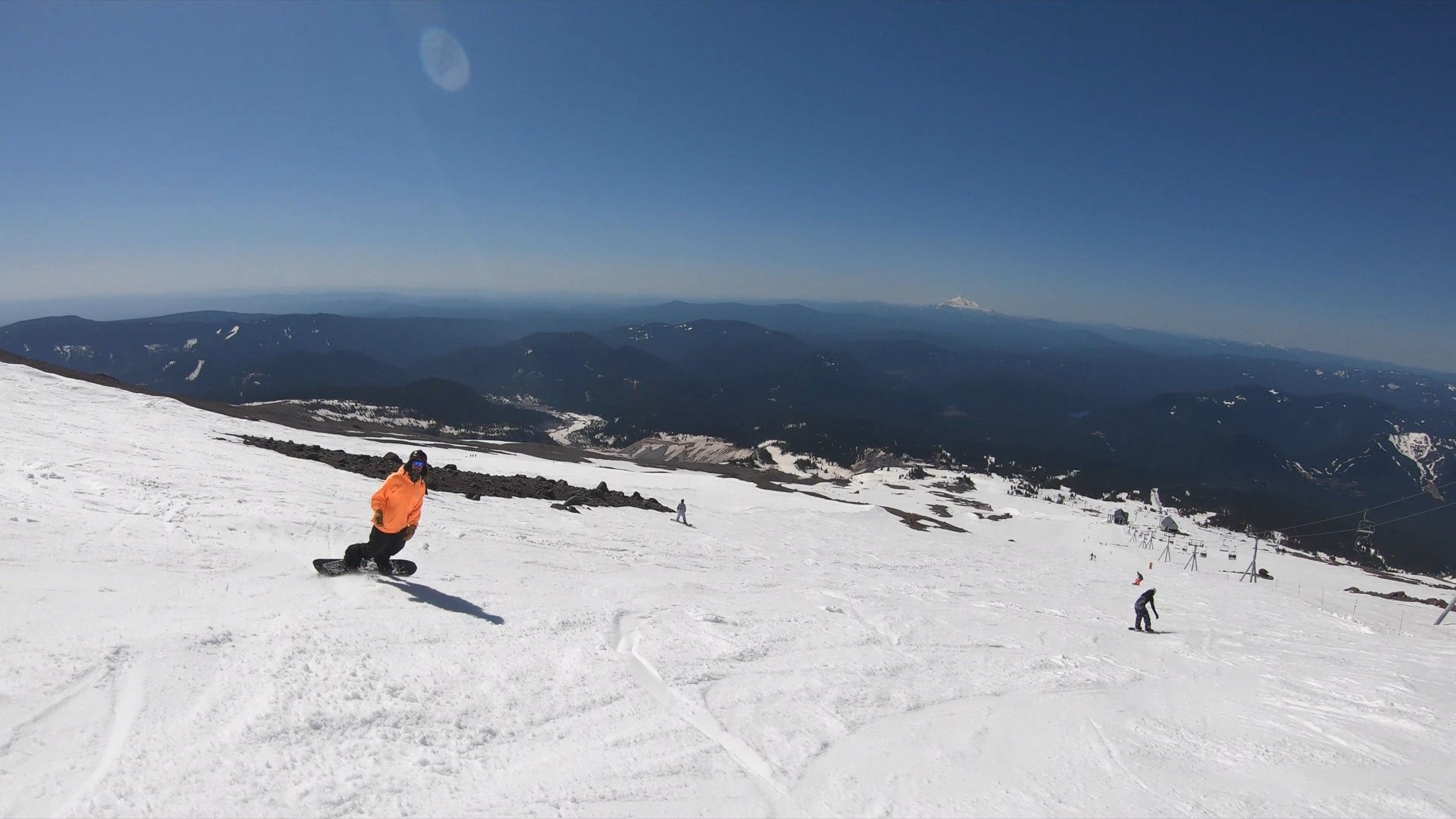
Our next terrain zone makes the list simply because of the time of year you can ski it. The core skiing season in the United States and Canada is between the months of December and March, with a few resorts offering significant operations a little earlier or later than that.
But there’s one incredibly notable outlier to that timeframe, and that is the Palmer zone at Timberline Lodge in Oregon, a volcanic glacier that offers North America’s only public, chairlift-served summer skiing operation. This lift regularly operates into July and even August, and if you make the trek to Mount Hood in the summer, you can throw on some shorts and a t-shirt and ski or ride on real snow even in 70 or 80 degree weather. This experience is unlike any other “winter” sports adventure you’ll ever have at a North American ski resort.
The Palmer Glacier is technically characterized as a black on Timberline Lodge’s trail map, although advanced intermediates should be able to handle the pitch in most cases. That said, the very warm-weather snow conditions, including corn and slush, may throw off certain visitors.
With the Palmer Glacier receding in recent years and operations generally getting shorter over the past few decades, it’s unclear whether this summer skiing will continue forever. But for now, this is a place you absolutely have to check out if you want to try true outdoor skiing in North America during the off season.

Advanced
#20: Imperial Bowl - Breckenridge
For the rest of the places to ski or ride on this list, you’ll probably need to be of advanced or better proficiency to really appreciate them. But this next place might make you want to get to advanced proficiency pretty quickly, because Breckenridge’s Imperial Bowl is a must-hit if you want the epitome of high-alpine bowl terrain.
With the Imperial Express lift topping out at just under 13,000 feet, this is the highest lift-served point at a ski resort in all of North America. With it, you get some of the longest and most expansive above-treeline terrain you will see anywhere. Other ski resorts do have high-alpine bowls, but it is hard to overstate just how much taller and more removed from the trees this area of Breckenridge is than almost any other in-bounds experience you will get, which is what really makes it feel so iconic.
Imperial Bowl itself allows you to lap this high-alpine zone, but if you traverse a bit, you can end up in the Whale’s Tail or the Peak 7 Bowls, which feel equally expansive but much more isolated. For a more serious challenge, you can hike up to the Lake Chutes for rock-riddled expert and extreme terrain, including some mandatory cliffs and straight lines.
If you’re looking for something similar but a little easier, Breckenridge’s Peak 6, all the way on skier’s left, offers comparable above-treeline terrain. These runs are shorter than Imperial’s but are more accessible for advanced intermediates. The one major caveat with all of the hike-to terrain here is that it is some of the highest altitude hiking at any North American ski resort, and the stamina required to complete it is no joke, whether the hikes initially appear short or not.
#19: Castlerock - Sugarbush
Next up, we move over to the East Coast to cover what is perhaps one of the most notorious terrain zones on the entire continent. Wait a minute, did we say East Coast? Yes, that’s right. It turns out that if you really want to understand the world of skiing and riding, there is some eastern terrain you should absolutely try. And the first of a couple on this list is Sugarbush’s Castlerock zone.
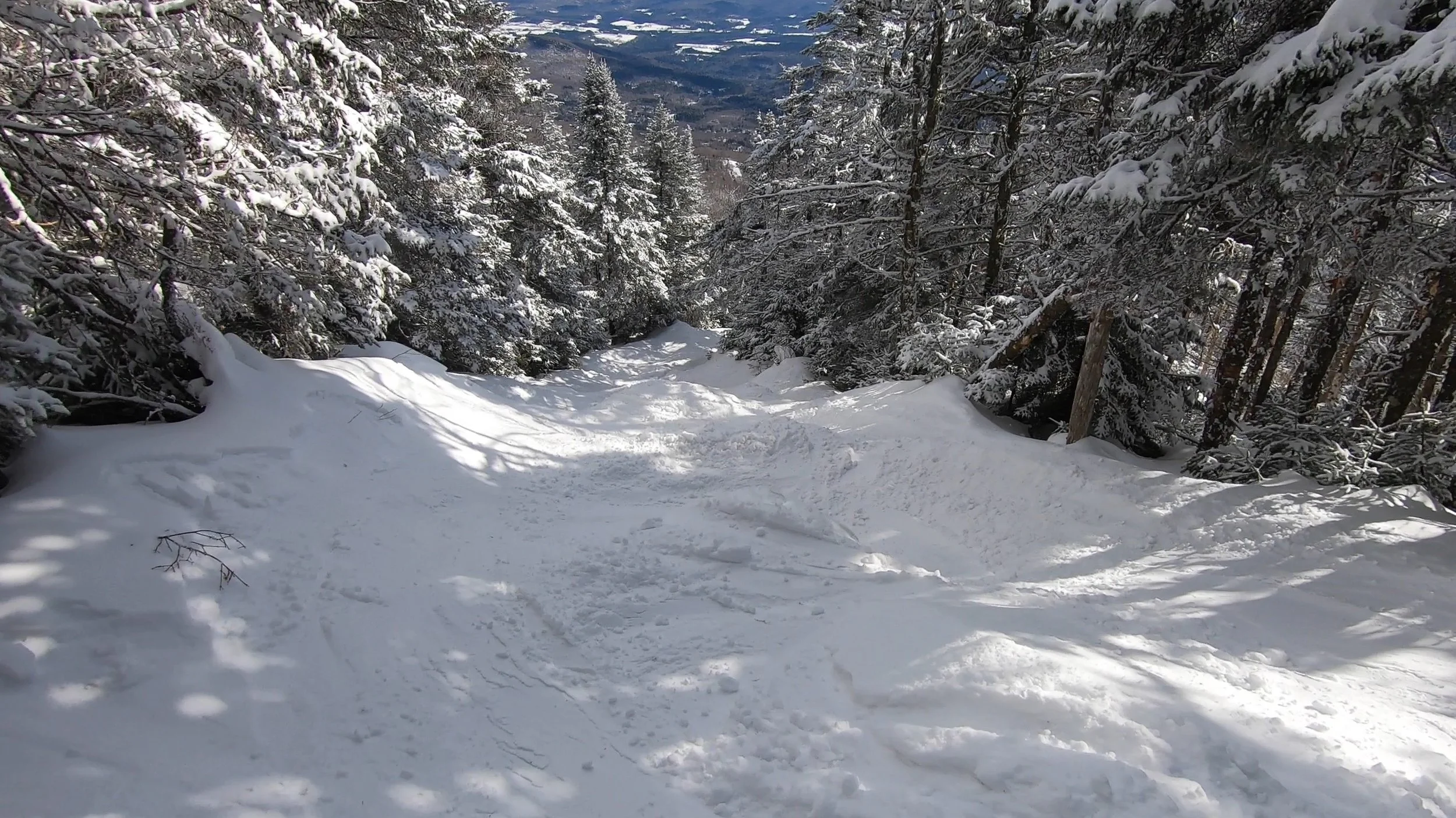
Served by a low-capacity double chair, this area is one of the few east of the Mississippi to offer absolutely no routes down easier than advanced or expert. The zone also lacks snowmaking and almost never sees grooming, meaning the resort makes no effort to “pamper” the trails for those who want to attempt them.
Going to Castlerock means extremely long and demanding mogul runs, often with ice and thin cover, making it one of the best places in the East to test your endurance. The “easier” runs in the pod are marked as single black diamonds, and they are already narrow and steep. But if you want a truly technical challenge, the extremely narrow and icy Rumble is the most difficult of the marked trails. And yes, there are hidden unmarked lines in the woods that one could feasibly argue are even more technical.
If you call yourself an advanced or expert skier or rider but really want to put your skills to the test, the Castlerock zone is relentless and a rite of passage. Resorts out West may offer better snow conditions, but if you really want to know if you can handle technical terrain without bailing, this is the place to be.

#18: Lone Peak - Big Sky
Next up, we move back out west to Big Sky, Montana to cover the unparalleled Lone Peak. Many other North American mountains have high alpine terrain that is clearly above treeline and already pretty unique, but Lone Peak stands out for just how jagged and prominent it is, with an iconic shape that won’t be mistaken.
From the top, you have your choice of decently steep above-treeline snowfields, even steeper rock-lined chutes with profound sustained vertical, and extremely high-consequence terrain that requires a partner to enter and only allows timed entry, including the North Summit Snowfields and the notorious Big Couloir. These runs offer a combination of beautiful, big-mountain features, and technicality that’s hard to come by anywhere else.
Now, we do have to mention the elephant in the room: the only lift-served access to the top of Lone Peak is a 75-passenger aerial tram that charges an extra-cost add-on for those who visit Big Sky with an Ikon or Mountain Collective pass. But the resort arguably can get away with this add-on because they know people pay it just for the chance to ride this terrain. It’s also worth noting that you can still access part, but not all, of Lone Peak without taking the tram if you choose to hike the Headwaters bootpack.
If a truly exotic and demanding trip is in your dreams, Lone Peak has to be on your bucket list.
#17: Alta High Traverse
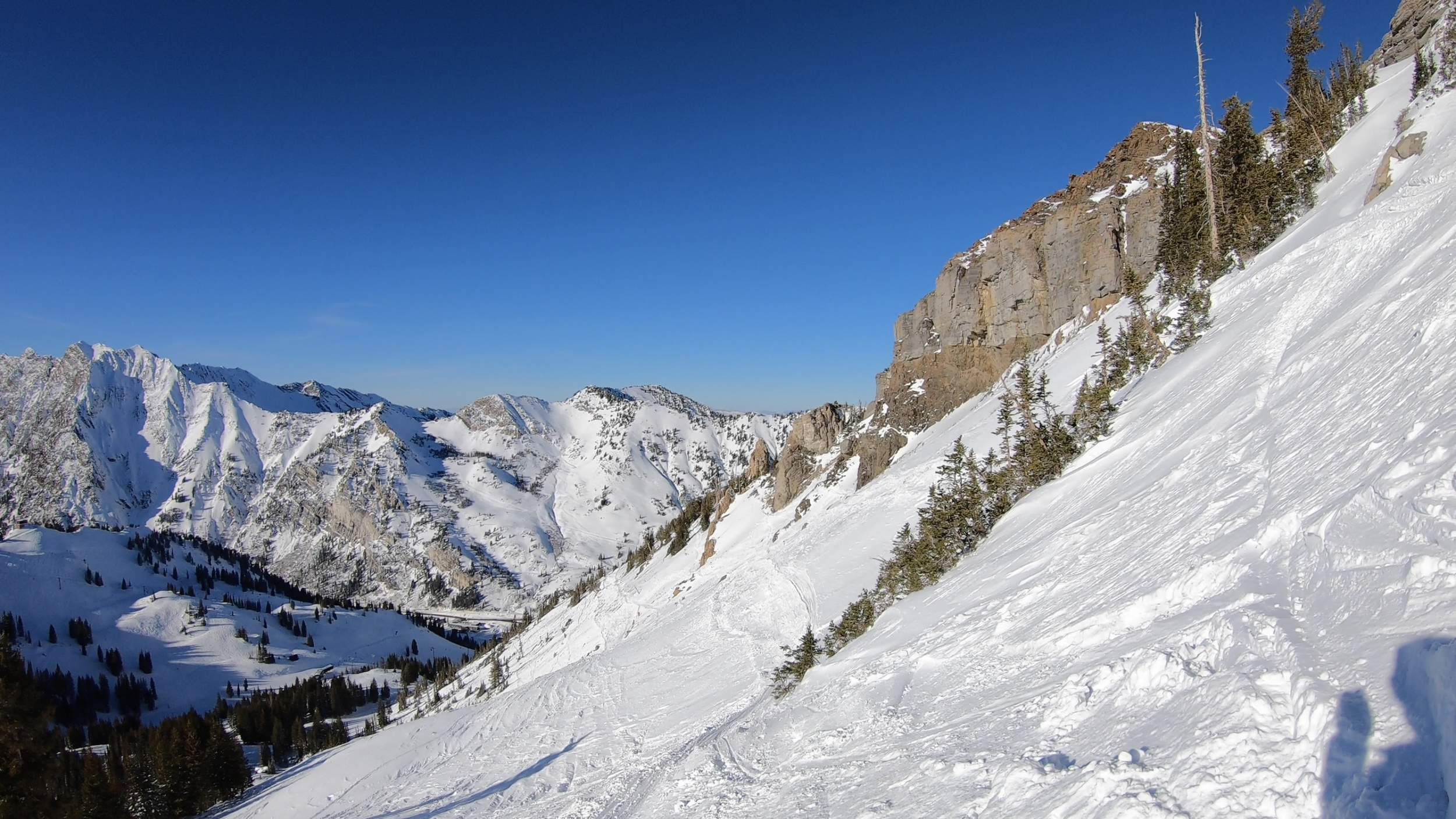
Next up, we move to what’s perhaps the most premier terrain zone that requires some work—but not too much work—to reach: the High Traverse at Alta in Utah. The traverse itself is a fairly lengthy shuffle along the ridgeline starting on the Collins side of the resort, but the payoff is access to some of Alta’s most consistently preserved in-bounds snow. Little Cottonwood Canyon is famous for its storm totals, and because the High Traverse filters out anyone who doesn’t want to traverse to get to a ski slope (or doesn’t know exactly where to drop), it routinely holds soft turns longer than the more directly lift-served terrain.
Now, Alta is not exactly a secret anymore, and the more prominent lines off the traverse do get more tracked out than they used to. But if you traverse far enough and know where to look, you can still find untracked terrain days after a storm. And the traverse itself is part of the magic, with great views and a sense that you’re stumbling upon something special without ever leaving the resort boundary.
The ridge also has a backside that is often even less tracked than the terrain directly off skier’s left from the main traverse. Some of it does require a little extra hiking or sidestepping to reach, but the reward can be even more solitude.
All of the runs off the High Traverse at Alta are pretty steep, and perhaps the most notorious one is Alf’s High Rustler, a towering mogul run that directly overlooks the base area. So this zone is not for less experienced skiers and riders. Given that the traverse gives so much access to such a significant portion of the resort, the track gets pretty clogged at times, so you’ll need to be careful to stop in safe spots and keep the traverse moving. Also, Alta is one of only three ski resorts left in North America that still bans snowboarding, so sorry riders—you won’t be able to tackle this one.
But if you want a terrain zone with a seemingly endless array of lines to choose from, and you don’t mind putting in a little effort to get there, you’ll really want to make sure to check out Alta’s High Traverse.
#16: Blackcomb Glacier
Next up, we move back to Whistler Blackcomb again, but this time it’s to cover the Blackcomb side’s iconic Glacier area.
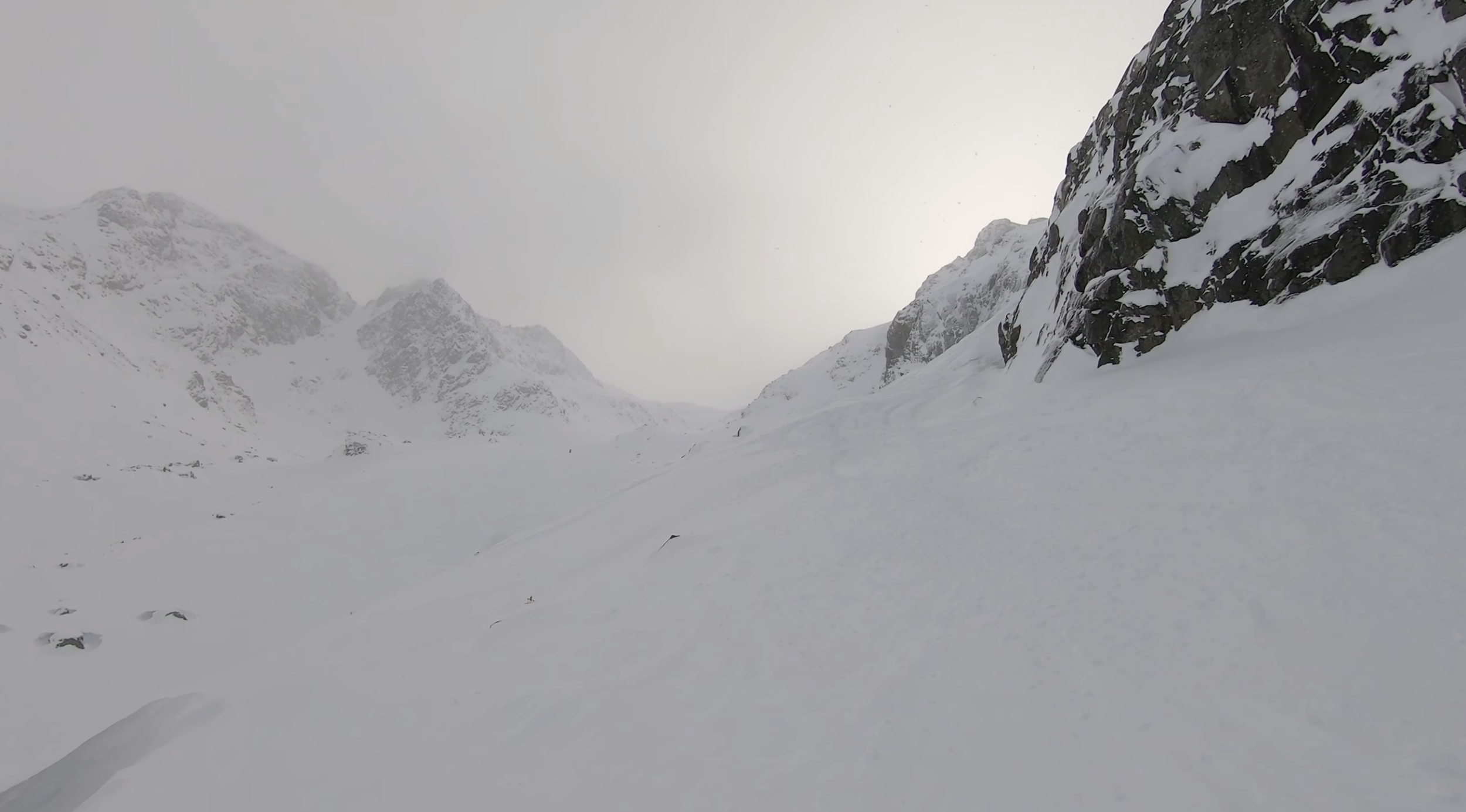
Only accessible by a variably open t-bar or some decidedly technical chutes, entering Blackcomb Glacier brings you to an extraordinarily stunning and isolated terrain zone, even when compared against the rest of the already beautiful and unique Whistler Blackcomb. If you go in through the t-bar, you have a bit of a steep entrance and then a long, more moderate runout that is surrounded by prominent peaks on both sides, making for one of the most visually spectacular cruiser experiences you will ever witness.
The more challenging entrance to Blackcomb Glacier is Spanky’s Ladder, which requires a short hike to reach but offers the opportunity to drop in via a series of expert-level chutes, some of which are so tough that they can require mandatory straight-lining, cliff drops, or both in the same run. There is also a hidden ice cave in the glacier that is only accessible during certain times of year, and is worth a visit if you can find it.
Whether you’re looking for something a bit more moderate or hoping to truly test your limits, Blackcomb Glacier delivers one of the most dramatic high-alpine resort environments anywhere. The t-bar hasn’t been operating all that frequently in recent years, and it is on track to be replaced with a fixed-grip quad in the coming seasons, so you’ll want to be careful to time this one right.
#15: 7th Heaven - Stevens Pass
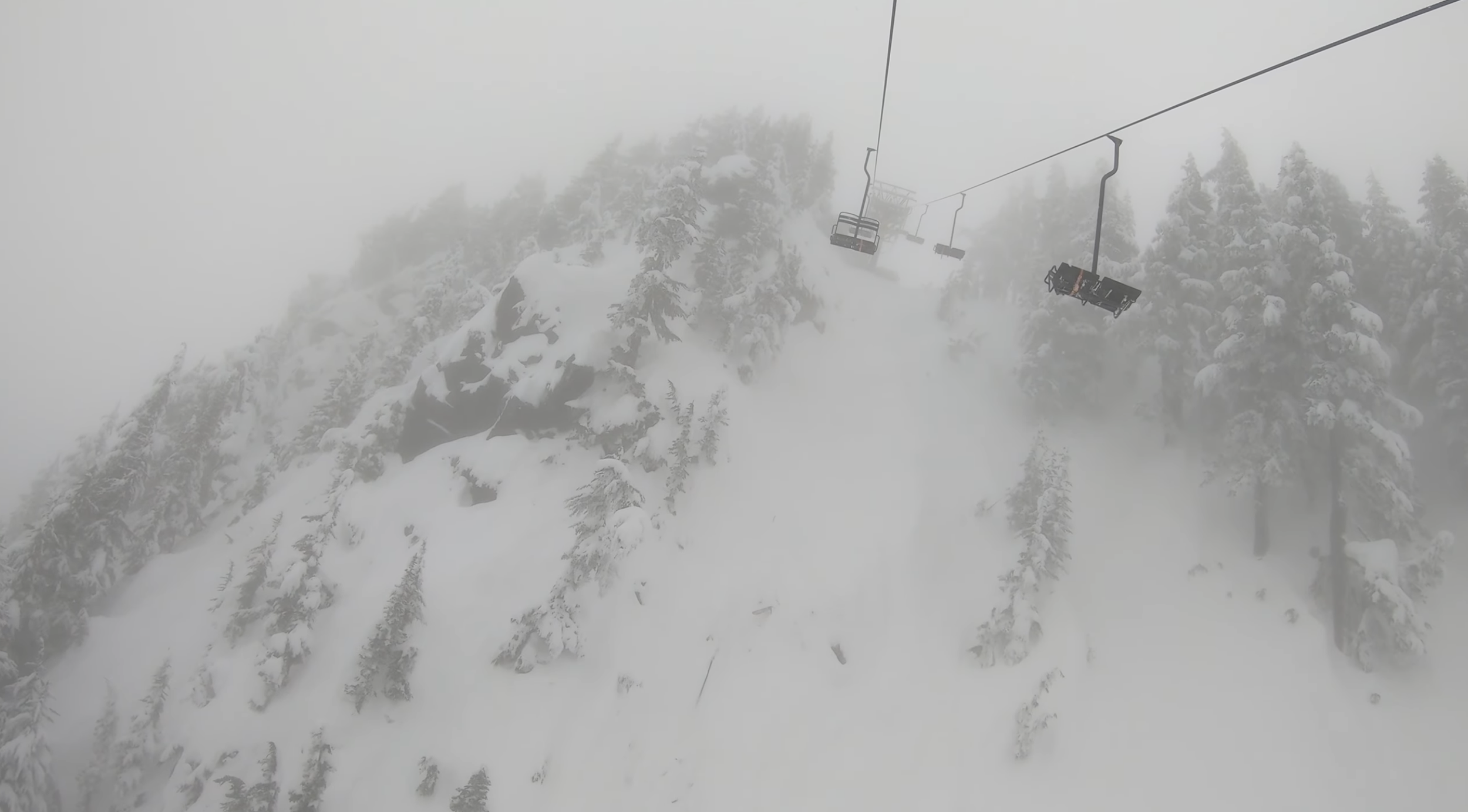
Next up we head over to 7th Heaven—but actually not the one at Whistler Blackcomb. Rather, the one you really need to hit is the original 7th Heaven at Washington State’s Stevens Pass, widely regarded as the namesake for the more famous lift at Blackcomb. And, it’s for good reason.
Stevens Pass may be a pretty unassuming ski resort in the grand scheme of things. It’s not a name-brand destination, nor does it have the largest vertical drop. But the resort’s upper mountain is home to the 7th Heaven lift, a 65-year-old double chairlift with a ride so distinctive it’s worth trekking to at least once for any serious skier or rider. While the lift consists of a short ride spanning less than 1,000 feet, it achieves over 420 feet of vertical in that span, making for an average gradient of over 30° and a ride that is widely considered the steepest of any chairlift in North America.
Unlike most modern lifts that avoid steep terrain, 7th Heaven climbs straight up the fall line, giving riders a front-row seat to the chutes directly beneath their skis or boards, and with no safety bars to provide any sense of comfort. The lift offers one-of-a-kind opportunities to lap short but steep terrain, with the Bobby, Nancy, and Solitude chutes dropping directly off the face of the lift on some of the most dramatic pitches we’ve seen anywhere, thanks in part to the region’s heavy snowfall that fills in some very gnarly topography. The latter two also allow for really quick repeat laps when it’s less crowded. There are also opportunities for some longer and mellower but still technical chutes and bowls off the backside of the lift, as well as truly extreme lines up the ridge to the top of Cowboy Mountain.
If you’re looking for an expert lift unlike anything else in North America, 7th Heaven at Stevens Pass is a must-hit place that will teach you that an expert zone doesn’t necessarily need a long vertical span to be exciting. The lift itself is also one of the last of its kind. The resort does get packed on weekends, so go Monday through Thursday under good conditions for the best experience.
Expert
#14: Highland Bowl - Aspen Highlands
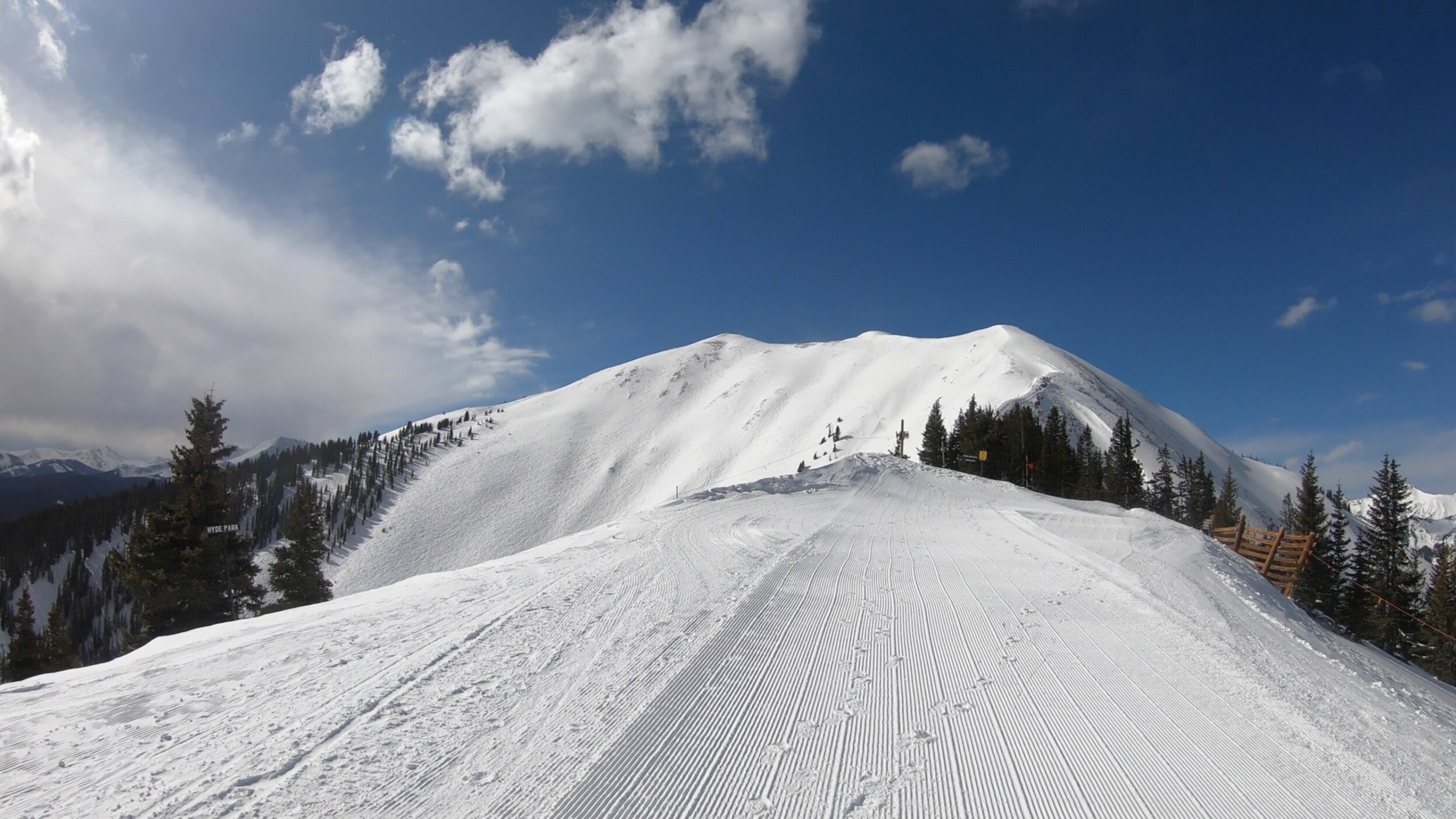
Next up, we move over to what might be the most famous hike-to terrain zone in North American resort skiing: the Highland Bowl at Aspen Highlands. Aspen Highlands is already often regarded as the expert mountain within the Aspen Snowmass system, but the Highland Bowl is the part of the resort that truly defines that.
Reaching the Highland Bowl requires a commitment. After riding the Loge Peak Lift, skiers and riders follow a bootpack along the ridge for roughly 700-800 vertical feet to reach the summit at over 12,000 feet (with a snowcat ride sometimes available to assist with a small fraction of the journey). The hike typically takes 30 minutes to an hour depending on fitness, conditions, and traffic. But while that effort may sound like a barrier, it is actually what makes the terrain work so well. Because everyone skiing the Highland Bowl had to hike to reach it, trail traffic is naturally spread out and the terrain often skis better than similarly steep lift-served terrain at other major resorts. That said, the Bowl is very much a known entity, so it is one of the few hike-to terrain zones at a ski resort where you may actually have to deal with a line of bootpackers ahead of you.
Once you reach the ridgeline, the Highland Bowl opens into a large, high-alpine face with dozens of possible descent lines. Some are wide and more moderately spaced, while others funnel into steeper chutes and tighter entrances. But the two things that stand out most about the Highland Bowl are its vertical drop and snow preservation. From the summit to the bottom of the Bowl, it’s over 2,000 feet, which is unusually long for hike-to terrain inside a resort boundary. And while the Highland Bowl does see more demand than hikes of similar length at many other resorts, it still benefits from the lack of tracks that is typically associated with hike-to terrain, and you’ll probably get one of the longest high-quality runs of your life up here. The east-facing B-Zone and south-facing Y-Zone runs do not require the full hike to drop into, but the Highland Bowl’s G-Zone runs are the most reliable by nature of facing north, and they are fully worth the commitment.
If you are willing to put in the hike, Highland Bowl offers one of the most distinctive inbounds skiing and riding experiences in North America. The combination of a relatively accessible bootpack, a long continuous steep descent, and untracked snow makes it one of the most memorable terrain experiences you’ll ever have.

#13: Chair 23 - Mammoth
Next up is one of the most consequential lift-served expert zones in North America: the terrain off Chair 23 at Mammoth Mountain. Plenty of resorts have expert terrain, and plenty have a few steep sections. What makes Chair 23 different is how concentrated the difficulty is. Almost everything directly lappable off the lift is steep right out of the gate, and much of it stays steep. Once you drop in to one of these runs, there are very few forgiving exits before you get to the bottom.
The second reason it belongs on a bucket list is that it skis exceptionally naturally. Many of the lines are riddled with rocks, exposed features, and irregular fall lines that force real decision-making instead of simply following a marked corridor. In lower snow years, that rockiness turns the entire zone into an even bigger test. This level of feature-driven terrain is not common even at other destination resorts, especially in zones that are served directly by a lift.
Chair 23 is also unusually “efficient” for how serious the terrain is. At many mountains, the steepest lines are only accessible via hikes or long traverses. Here, you can lap genuinely hair-raising runs with just a lift ride, along with waiting in whatever line may exist at the bottom.
If you are an expert skier or rider looking for a North American resort zone that is both highly lappable and truly consequential, Chair 23 is one of the cleanest examples of that category.

#12: KT-22 - Palisades Tahoe
Next up, we stay in California to cover one of the most legendary lift-served areas in North America: Palisades Tahoe’s KT-22.
One of the reasons KT-22 has developed such a reputation is that, similarly to Chair 23, it accesses high-caliber terrain incredibly directly. The most iconic and technical descents are located beneath or around the lift, and they are surprisingly lappable compared to expert runs at other resorts. The terrain offers a wide variety of natural features including rock bands, cliffs, narrow chutes, and extraordinarily steep faces.
Many of the lines off KT-22 have garnered a borderline mythical reputation, including The Fingers, Eagle’s Nest, and Chute 75. And a big contributor to that is the experience of actually riding up the lift. Much of the terrain is fully visible from the chair, and this gives you the opportunity to spectate other skiers and riders. That visibility has shaped the culture around KT-22 for decades and has turned it into a genuinely communal experience.
Conditions at KT-22 can vary based on snowpack, with some years having significantly more rock exposed than others, but the combination of difficulty, ease of access, and the culture surrounding the lift is why KT-22 has become one of the most legendary terrain zones in North America, and it should absolutely be on any expert’s bucket list.

#11: Quail Face - Homewood
Next up, we stay in California once again to cover a much less heard-of zone that some may be surprised to see on the list: Quail Face at California’s Homewood ski resort. This run stands out for its scenery. Many ski areas around Lake Tahoe offer impressive lake views, but very few combine those views with genuinely steep terrain the way Quail Face does.
Homewood sits directly along Tahoe’s west shore, and the terrain here drops straight toward the lake. Once you reach the face, the view stretches across most of the lake basin, with the distant peaks of the Sierra Nevada rising beyond the far shoreline. Compared with better-known viewpoints at places like Heavenly or Diamond Peak, the terrain here is noticeably steeper, which makes the experience feel less like sightseeing and more like true expert skiing with a world-class backdrop.
Getting there does require some effort. Reaching Quail Face typically involves a fairly long traverse, and once you commit to the line you will often need to traverse again to exit the zone. However, that extra work contributes to a sense of isolation on the run that can be hard to find inbounds in the Tahoe region.
It may not be as well known as other expert zones at nearby resorts. But for those who can handle it, Quail Face represents an awe-inspiring intersection of dramatic scenery and serious terrain, and that makes it our pick for the flagship lakeview descent in the Tahoe area.

#10: Snowbird Cirque
Next up, we return to Utah to cover the Cirque at Snowbird. This is a well-known zone amidst expert skiing and riding circles, but it’s hard to overstate just how formidable it is. The Cirque dominates the center of Snowbird’s frontside, and is directly accessible off the tram or any of the summit lifts. From that summit, a short traverse brings you to the Cirque entrance, where you have an expansive selection of steep drop-ins to choose from.
What makes the Cirque stand out is how serious the terrain becomes immediately. The entrances are harrowing and often narrow, and many of the lines funnel into rock features that leave little room for error or hesitation. In several of the chutes, mandatory straightlines or cliff drops are not uncommon depending on the snowpack.
The scale of the Cirque is also part of what makes it special. Rather than a small area of chutes, it stretches across a long section of the resort and contains dozens of possible entrances. Some are narrow, committing slots between rock walls, while others open into wider faces, albeit ones that are still seriously steep. Also, much like some of the other areas we’ve covered so far, the whole area is easily lift-accessible, which is no guarantee when it comes to this level of expert terrain.
The combination of expanse, accessibility, and sheer intensity is why the Cirque at Snowbird has the reputation it does. Though this does mean that on a good snow day, you’ll no doubt be sharing your runs with plenty of others. However, this doesn’t mean the Cirque shouldn’t be high on the bucket list of any expert skier or rider.
#9: Sugarloaf Snowfields
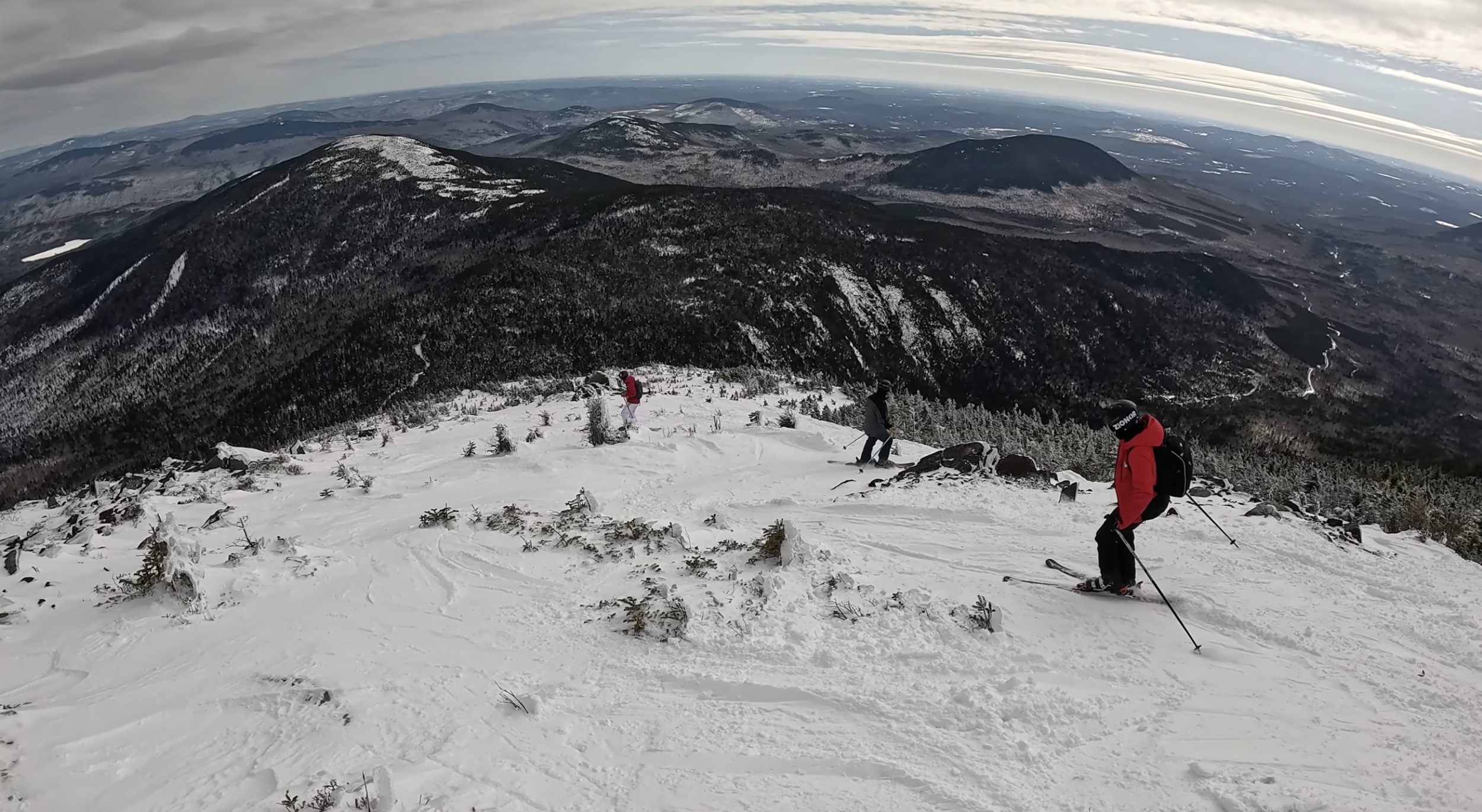
Next up, we return to the East Coast for one of the rarest zones at any North American ski resort—the Snowfields at Sugarloaf in Maine. The East is not known for bowl skiing, and most resorts simply do not have the elevation or exposure to create true alpine terrain above treeline. Sugarloaf is the major exception. At the top of the mountain, the Snowfields form a broad alpine face that is widely considered the only true ski resort bowl terrain in the East.
Part of what makes the Snowfields so interesting is how infrequently they open. Because they sit in an area with no trees and rely on natural snow, coverage has to be unusually good before the terrain can safely operate. Some of the lines only open for a few days every few seasons, and there have been years when the Snowfields never open at all. When conditions finally line up, however, the terrain offers an experience that is completely different from typical eastern skiing, or even from high alpine bowls out west.
The Snowfields are rugged and irregular, shaped by exceptional wind exposure rather than being above a specific elevation where trees can’t survive. Rocks, shrubs, and small chutes are common, and the lines often require careful decision making to navigate around obstacles. The terrain is not always particularly steep by western standards, but the combination of exposure, variable coverage, and natural features makes it a serious challenge when it is open.
It is also important to underscore what we’re actually counting as the Snowfields here. Runs such as Gondola Line Extension and White Nitro do technically make their way down the Snowfields area, but they’re groomed trails and don’t necessarily capture the true character of the zone. You’ll need to venture into the off-piste part of this area to really experience it in its true glory.
For many expert skiers and riders in the East, hitting the Snowfields can often be something of a pipe dream. Because the conditions needed to open them come together so infrequently, many in-the-know skiers and riders spend years waiting for the right day. But when the Snowfields finally do open, they provide a genuinely one-of-a-kind experience, and one that is well worth seeking out at least once, no matter where you live.

#8: Rambo - Crested Butte
Next up is perhaps one of the most famous tree-defined trails in North America, Crested Butte’s Rambo. Crested Butte has long been known as one of the most challenging mountains in the United States, but Rambo stands out even within that reputation. With a sustained pitch of 55 degrees down 900 feet, it is widely regarded as the steepest lift-served tree-cut run in North America.
Part of what makes Rambo so unusual is how sustained and awkward the run is. While it’s not the longest in the world, it is intense and technical the whole way down. A fall on any part of the slopes likely means tumbling all the way to the bottom. Crested Butte itself has even noted that skiers and riders may want to side-step the first section of the run if they are not comfortable hopping around prominent rocks. Over the past few years the resort has cut back some of the vegetation on the run, opening up the line slightly compared to how it once skied. Even with that work, however, Rambo remains far from forgiving. The terrain is still extremely steep, the moguls grow large and irregular, and the run demands precise control from top to bottom.
All this means that Rambo represents a very specific type of challenge for expert skiers and riders that stands apart from a lot of the difficult double-black terrain we’ve covered so far. While some might argue the run’s reputation has been overblown, it still deserves a spot on this list, and it’s certainly worth the trek out to Crested Butte for expert skiers and riders.
#7: Sub Peak - Revelstoke
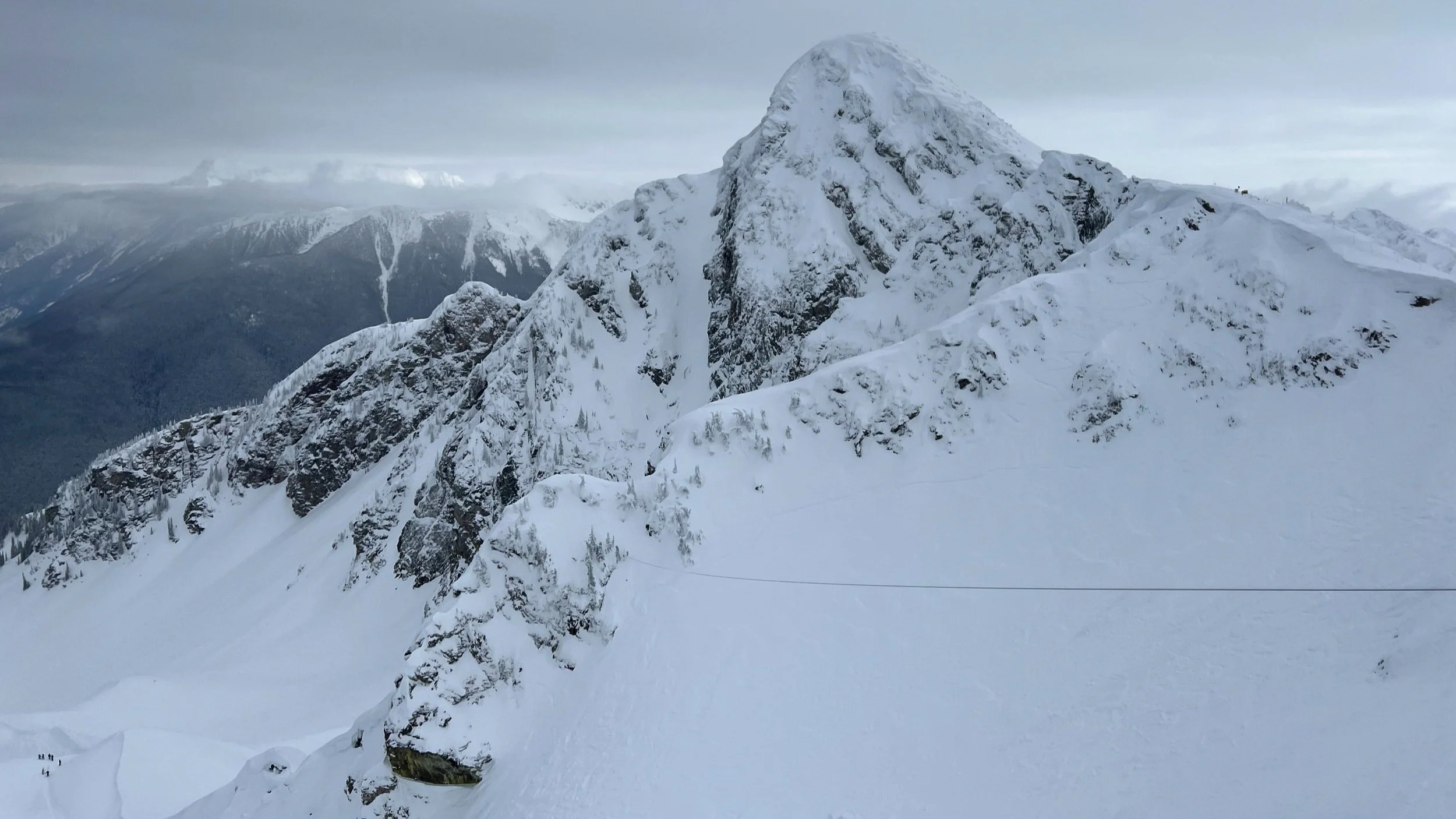
Next up, we return to Canada for one of the most rewarding in-bounds hikes in North America: Sub Peak at British Columbia’s Revelstoke ski resort. Revelstoke is already famous for having the largest lift-served vertical drop on the continent, and this hike is where you’ll want to go to really appreciate that metric. A short bootpack from the top of the Stoke Chair takes you onto the upper ridgeline of the resort, opening up a swathe of remote-feeling alpine terrain.
The views alone are enough to justify the hike. From the ridge, you are standing in the middle of the Selkirk Mountains with unobstructed views in nearly every direction. Most striking of all is Mount Mackenzie, which towers directly above the ridge and feels profoundly close from this vantage point. The mountain dominates the skyline and gives the entire setting a big-mountain feel that few places you’ll visit can match.
But the Sub Peak hike is about more than just scenery. On the north side, you can drop into chutes that filter into high-alpine bowl terrain surrounded by staggering peaks on all sides. On the south side, you can ski or ride the whole way down to the bottom and rack up more than 6,000 vertical feet, making this the longest in-bounds descent in North America by a significant margin. The combination of elevation, exposure, and distance from the lifts also helps these runs hold good snow well after storms.
We’ve covered plenty of other hike-to expert alpine areas with comparable terrain on this list, but the vertical drop and views are what elevates the Sub Peak hike and really makes it stand out. Revelstoke in general should already be a must-hit for any expert skier and rider, but this terrain is the cream of the crop.

#6: East Wall - Arapahoe Basin
Next up, we return to Colorado to cover the East Wall at Arapahoe Basin, one of the highest elevation ski areas on the continent. A-Basin is already known for steep terrain and a rugged, above-treeline setting, but the East Wall is where the mountain’s reputation for high alpine expert skiing and riding is most fully realized. The top of this area is accessed via a substantial bootpack along the ridgeline from the top of the Lenawee and Zuma chairs. This hike is exposed, incredibly high altitude, and susceptible to strong winds, but the effort required is well worth it for those looking for a seriously dramatic challenge.
What makes the East Wall really stand out is the scale and variety of terrain packed along that ridge. The wall stretches across a large section of the mountain and contains dozens of potential descent lines, from broader but nevertheless steep faces to narrower rock-lined chutes. The entrances can get pretty hairy, and if you end up attempting the wall’s Second Notch during a period of low snow, you may even have to downclimb to enter it.
Because of the technical nature of the terrain, the East Wall often takes time to fill in and may not open until February or even March in some seasons. But when coverage finally comes together, it becomes one of the most memorable expert zones in Colorado and a place well worth planning a late-season trip around.
#5: Whiteface Slides
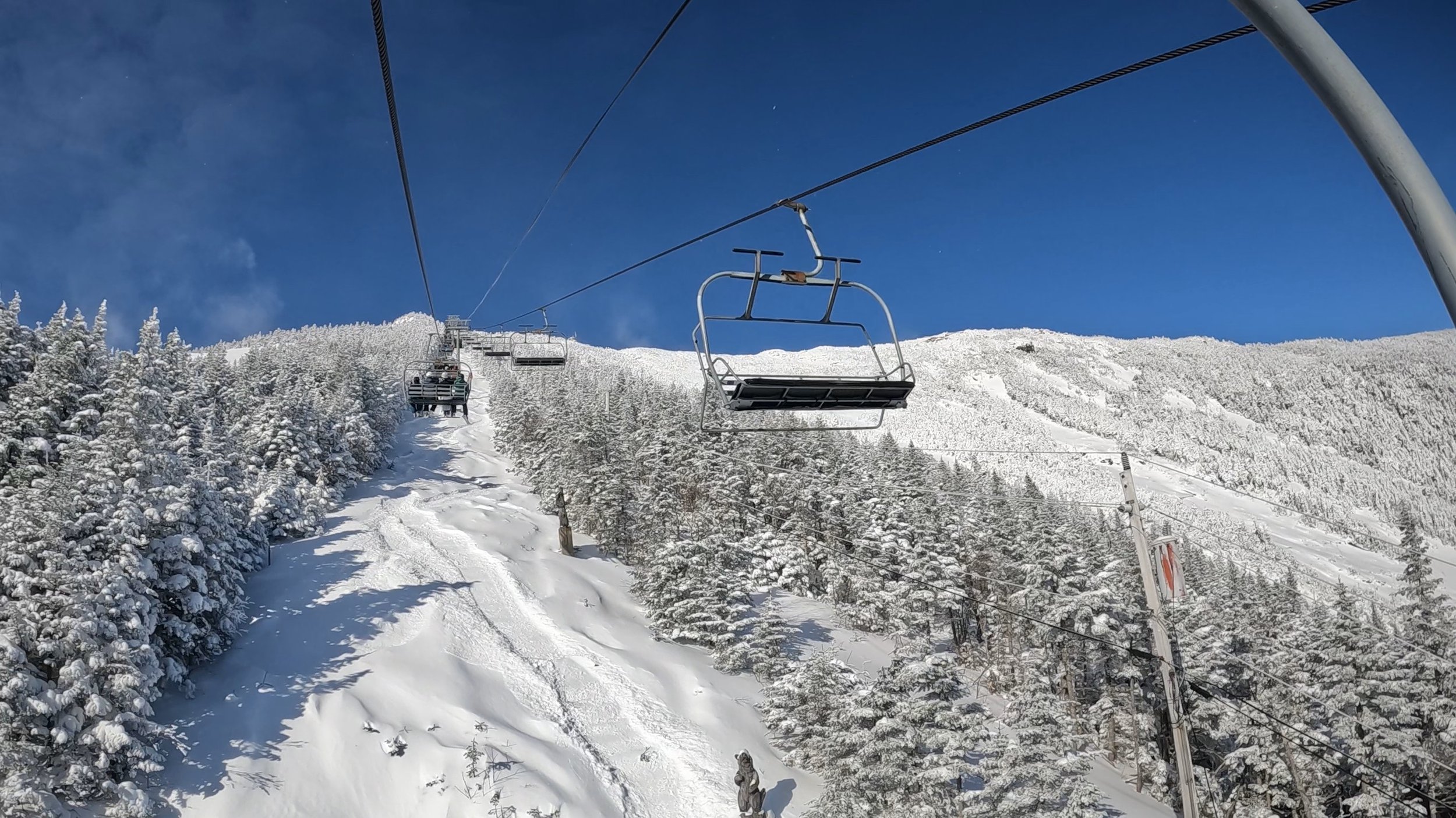
Next up, we return to the east a final time to cover a zone that can be just as difficult to access as Sugarloaf’s Snowfields: the Slides at New York State’s Whiteface ski resort. While the East is known for tight and narrow tree-cut trails, true slide terrain—wide avalanche paths that cut straight down a mountainside—is extremely rare inside resort boundaries. At Whiteface, however, several of these natural slides have been incorporated into the ski area. Due to their origin out of natural avalanches rather than human development, the Slides feature rugged terrain filled with rocks, ledges, and even waterfalls.
When open, the Slides are only accessible through a gate and a traverse from the main part of the resort. Because the terrain sits outside the regularly maintained trail system, skiers and riders are sometimes required to carry avalanche safety gear before entering the area.
But that “when open” qualifier is a big thing to note. Because the terrain is so rugged and exposed, it requires a substantial natural snowpack before patrol will open it. As a result, the Slides do not open every season, and even in good winters they may only be available for limited periods of time. When they do open, however, they offer a style of skiing and riding that is almost impossible to find elsewhere in the eastern United States, let alone the rest of North America, where avalanche slides do exist but are almost universally too dangerous to be skied or snowboarded from an in-bounds perspective. It may not be easy to time the openings, but the Slides have to be on your bucket list if you want to understand the limits of in-bounds North American skiing and riding.
#4: Kicking Horse
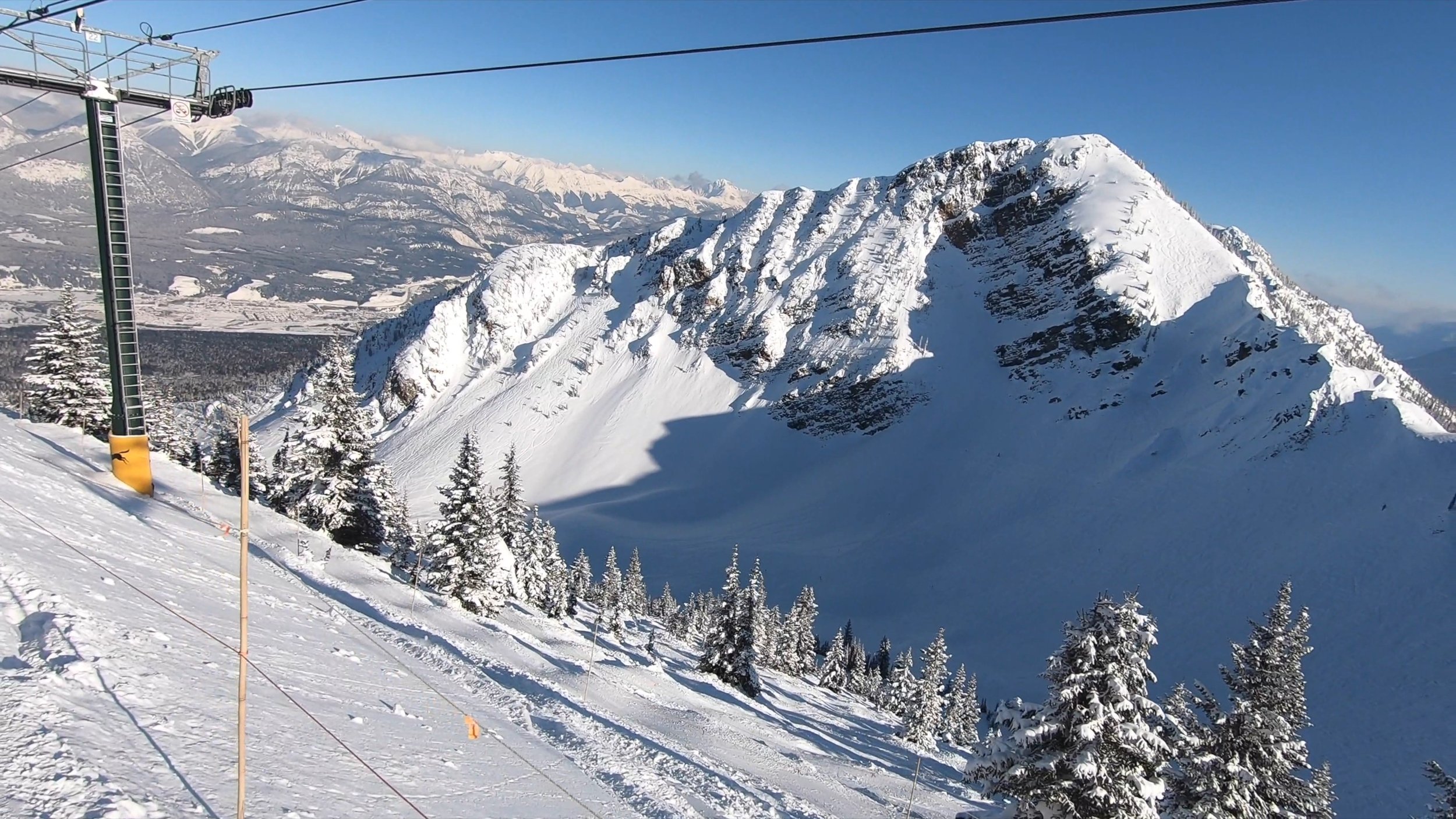
Next up, we have the one whole mountain that earns a spot on this list, and that’s Kicking Horse. And if you’ve ever visited this Western Canada resort before, you’ll know why this mountain’s entire setup lends itself to a bucket list trip for those proficient enough to handle it.
Kicking Horse is the only ski resort we’ve ever visited where simply riding the main out-of-base lift immediately sets you up for a serious commitment. The gondola rises over 3,700 vertical feet to the top of the mountain, and the resort is laid out in a way where for most runs you’ll have to commit to the full top-to-bottom descent. And we are not talking bunny hill terrain here. The overwhelming majority of Kicking Horse’s terrain is highly technical, with steep chutes, cliffs, and couloirs spreading out in every direction. It’s a level of sustained technicality that is extremely difficult to come across in such an extensive manner anywhere else in the world.
But another thing that makes Kicking Horse so unique is the sheer number of hike-to areas integrated into the mountain. Bootpacks such as T1, T2, and Ozone can take anywhere from 10 to 45 minutes, and they bring you to runs that maintain the steepness of the strictly lift-served terrain while often offering much less tracked snow. With the runs already so long, it’s common for skiers and riders to integrate some level of hiking as often as every other run.
Few areas demand the level of endurance and technical ability that Kicking Horse does, and if you want to understand just how hard an inbounds ski resort can push you, you have to check it out at least once in your life. Thankfully, the resort is reasonably consistent from late January through March, and it has incredible views to boot as well.
Extreme
#3: Corbet’s Couloir - Jackson Hole
Next up is a run that simply had to make the list. Jackson Hole’s Corbet’s Couloir is perhaps the most famous extreme run in the entire world. While there may be a few more difficult runs and chutes elsewhere, perhaps even within Jackson Hole itself, nothing can match Corbet’s in terms of pure notoriety and fame.
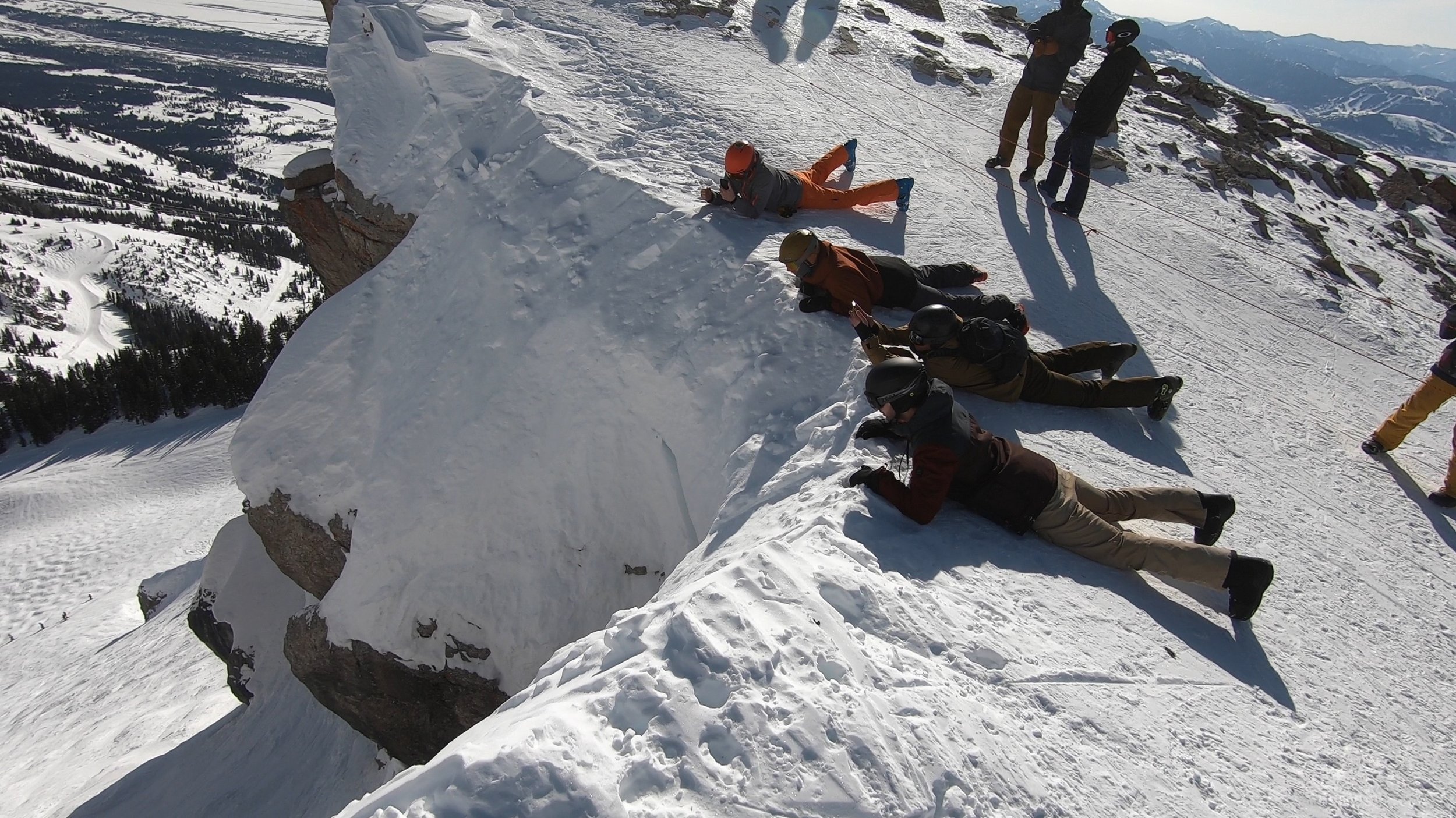
The entrance of the run is a big part of that. The couloir drops away abruptly from the top of the ridge, forming an almost vertical first section that forces most skiers and riders to jump or commit to an incredibly quick turn in order to drop in. Adding to the intimidation are towering rock walls on either side. Simply standing at the top and looking in is an experience in itself, and it’s common to see people spend several minutes peering over the edge before deciding whether they are actually going to commit.
Another reason Corbet’s has become so iconic is how it is set up for spectators. The run sits directly beneath the tram and ridge area, making it one of the most watched runs in North America. On busy days, crowds gather above and below the entrance, turning each and every attempt into an event. Jackson Hole has enabled this as well, by hosting events that revolve around the couloir and even recently installing a mountain cam that allows you to watch people attempt the run on the resort website. All this visibility has turned Corbet’s into a sort of rite of passage, where skiers and riders can truly test their mettle under the pressure of tons of people watching them.
For all these reasons, Corbet’s has been elevated to an almost mythical status in the North American ski world, even if there are some runs out there that could be considered more extreme. The culture surrounding it alone makes it a must-do for any expert skier and rider that finds themselves at Jackson Hole, provided it’s actually open.

#2: Palmyra Peak - Telluride
Next up, we have to cover one of the most demanding in-bounds hikes at any North American ski resort: Telluride’s Palmyra Peak. This one makes the list largely because of the sheer amount of effort required just to reach it—and the payoff that you get once you do. Depending on your fitness, making it all the way to the summit typically takes between 2-3 hours of hiking, eventually bringing you to the highest in-bounds point at a ski resort anywhere in North America.
Simply reaching the top is an accomplishment in itself. The hike climbs steadily through steep, exposed terrain, and the altitude is no joke, with the summit sitting around 13,300 feet. But once you reach the top on a clear day, you’ll be greeted with astonishing views of the San Juan mountains, which may alone make the effort feel worth it.
But even from there, there’s still the matter of skiing or riding back down. The descents available are seriously technical, with steep chutes and daunting entrances, and the vertical they provide is sustained and substantial compared to many other extreme hike-to areas in Colorado. If you don’t want to commit to the entire hike but still want to ski some of this terrain, there are a few options to drop in early as well, which may be worth it if you want to preserve some of your stamina for your descent.
Palmyra Peak is a highly technical and highly exposed area that’s even difficult for patrol to get to, and as a result, it is not always guaranteed to be open. But if you time it right, and you want to experience the highest and most demanding terrain accessible within a ski resort, Palmyra Peak is definitely worth making the journey out to Telluride.
#1: Palisades - Palisades Tahoe
And finally, we have to return to Palisades Tahoe to talk about one of the most legendary extreme terrain zones in North America: the Palisades themselves. And yes, there is a reason why the resort was renamed after this terrain zone in its early 2020s rebrand. These lines are not only extremely steep and technical, but in many cases require a significant amount of nerve to even attempt.
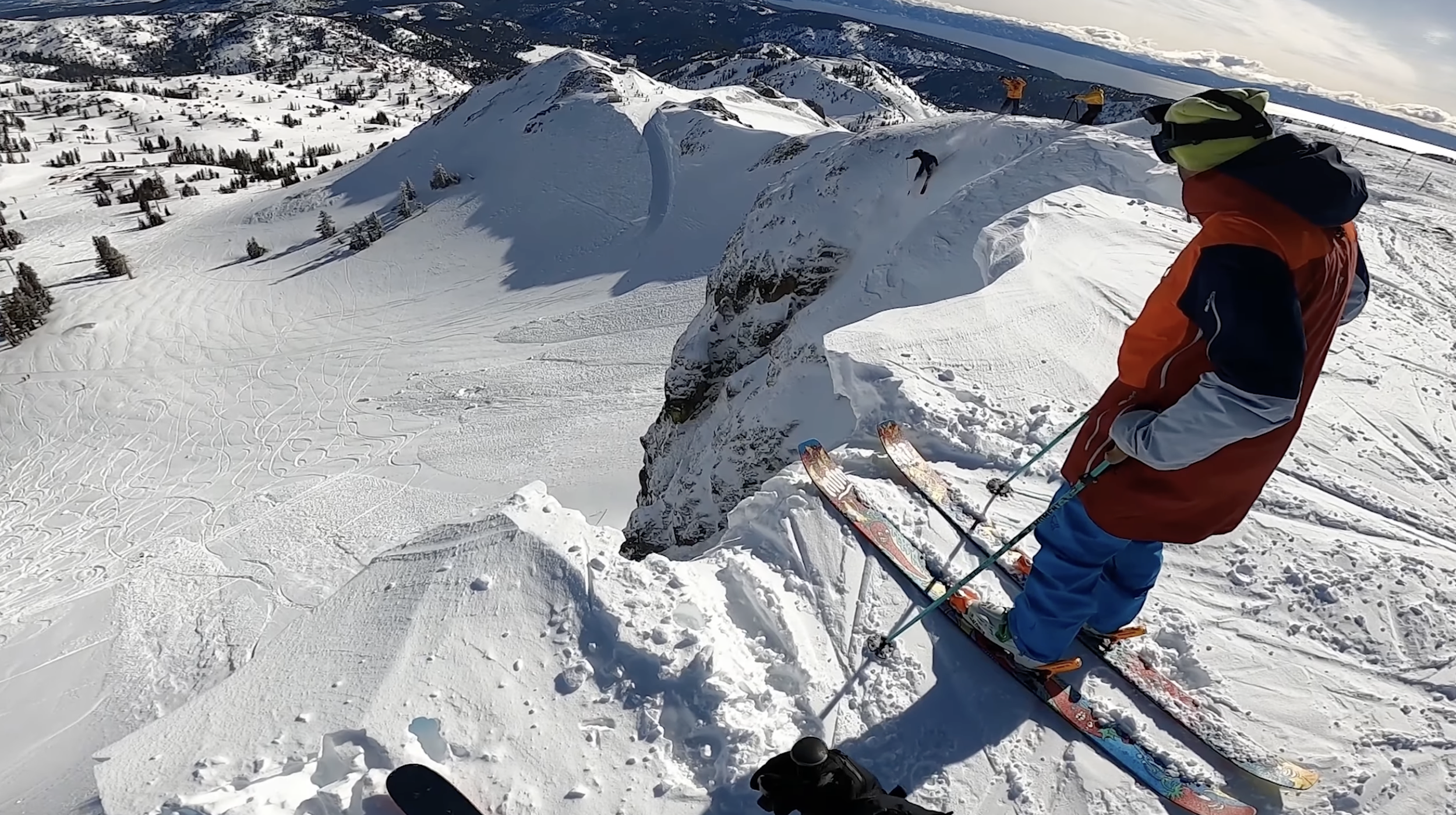
Similarly to KT-22, which we covered earlier from the same resort, what really defines this zone is not only the sheer concentration of extreme terrain packed into one part of the mountain, but also its visibility. Much of the Palisades terrain is directly visible from the Siberia lift. This makes it easy to watch skiers and riders attempt the chutes and cliffs, and has turned the area into one of the most recognizable extreme terrain zones in the world. Runs like Main Chute, National Chute, and the infamous Chimney have become iconic precisely because of how intimidating they look from both above and below. The Palisades carry an extraordinary amount of history and lore, and they helped shape the identity of the resort, the Tahoe region, and the wider evolution of extreme skiing in North America. However, unlike KT-22, actually skiing the area does require some hiking.
Once you do get into a position to ski the area, the cliffs and chutes that make up the Palisades drop abruptly off a jagged ridgeline, creating lines that often require mandatory air, precise decision-making, and complete commitment from the moment you drop in. The visibility of the area adds additional pressure, and much like Corbet’s, the Palisades have become a proving ground for expert skiers and riders to really show their stuff.
In many ways, the Palisades are where the culture of in-bounds extreme skiing truly took hold, and the terrain here has been pushing the limits of what skiers and riders attempt inside resort boundaries for decades. And if you want to be a part of that culture, this might be the ultimate place to make sure you check off your bucket list before you kick the bucket.
Final Thoughts
So if you’re a dedicated skier or rider, that’s our list of the places you have to hit in North America before the end of your winter sports career. And while some of them are pretty famous, there are others out there that are much more low key but critical to understanding what a ski slope is truly capable of.