Mountain Review: Terry Peak
MOUNTAIN SCORE
Lead, SD

53
CATEGORY BREAKDOWN
See our criteria5
Snow:
5
Resiliency:

3
Size:
3
Terrain Diversity:
5
Challenge:

8
Lifts:
8
Crowd Flow:

4
Facilities:
8
Navigation:
4
Mountain Aesthetic:
GOOD TO KNOW
1-Day Ticket: $67-$74
Pass Affiliation: Indy Pass
On-site Lodging: Yes
Après-Ski: Limited
Nearest Cities: Rapid City (1.5 hrs)
Recommended Ability Level:

+ Pros
Fast lifts
Long vertical for the Midwest
Cheap pricing
Unique nearby mountain towns
– Cons
Unreliable and windy weather
Some terrain only open on weekends
Some genuinely dangerous obstacles off runs
MOUNTAIN STATS
Lifts: 4
Trails: 28
Beginner: 18%
Intermediate: 39%
Advanced/Expert: 43%
VIDEO
Mountain Review
When you think of South Dakota, you think of Mount Rushmore, and maybe some grass. But did you know there’s a decently-sized ski resort there as well? That’s right—not only is Terry Peak one of the most modern ski areas in what’s technically still the Midwest, but it also sits on one of the most distinctive footprints in the United States. But how does Terry Peak compare to ski areas further west in the Rockies—and is it worth a stop on a road trip out to Colorado?
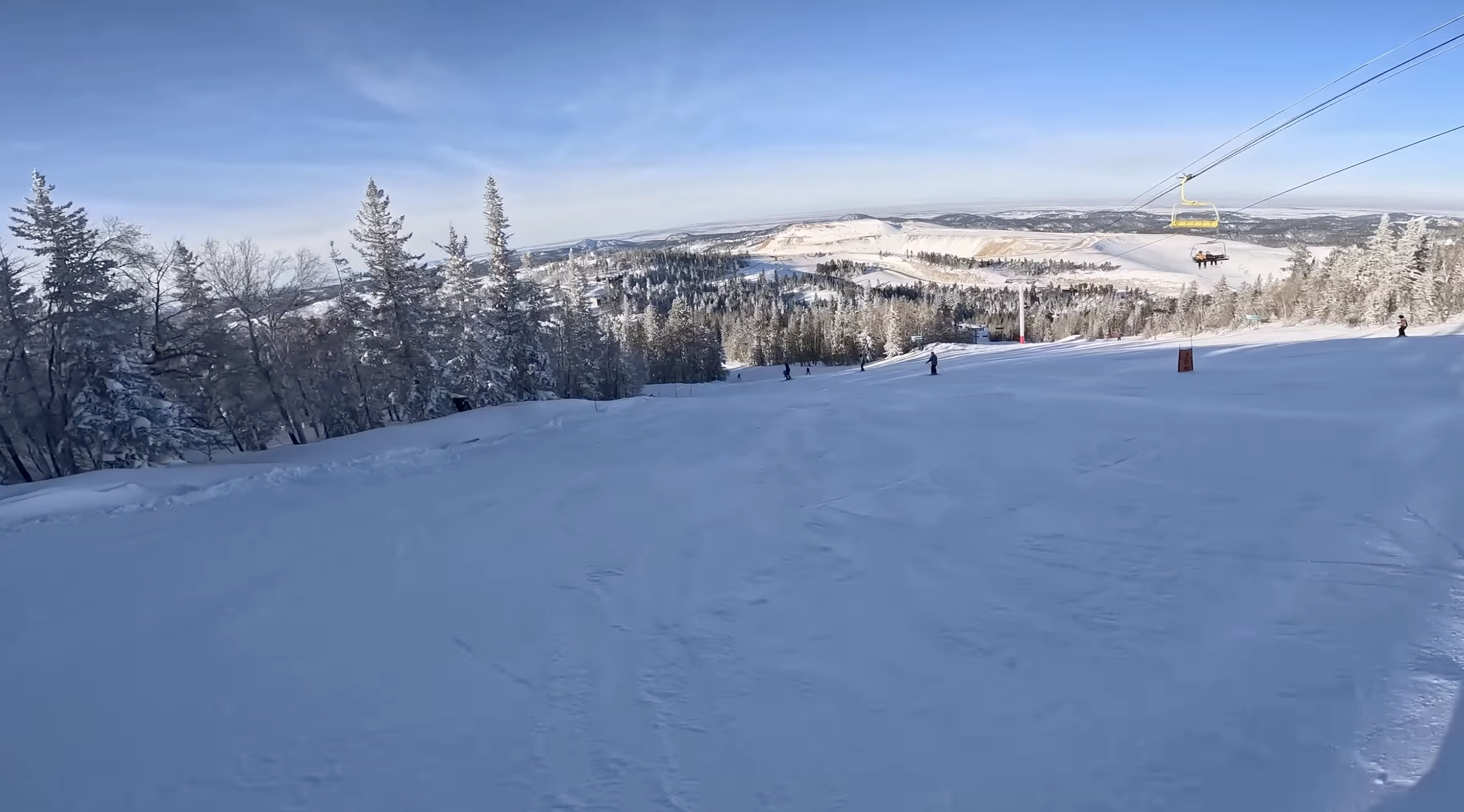
Active mines are visible in the distance from many of Terry Peak’s trails.
Standouts
When you first get to Terry Peak, one of the first things that stands out is the influence of mining in the area. The nearby town of Lead is home to the Homestake Mine, once the most profitable gold mine in U.S. history, and even today, active open-pit operations nearly surround the ski area. Even in the areas around the runs themselves, you can still find open mine shafts. Parts of the mountain are marked as off limits, and for good reason: straying past these signs could mean falling into a mineshaft or dropping off a cliff into a railroad cut. Some of these dangerous obstacles are even next to beginner runs, so it’s important to stay alert no matter where you are on the mountain.
Size
With a vertical drop of over 1,000 feet, Terry Peak is the tallest ski area between Colorado and New York. That vertical also comes with some altitude, as Terry Peak’s base elevation of 5,900 feet is higher than even the summits of every North American ski mountain east of it. While some may say Terry Peak is a Midwestern ski area given its location in South Dakota, it has much more in common with ski areas in neighboring Wyoming, with lighter snow, windy weather, and genuine mountain views (i.e. not just glorified hills).
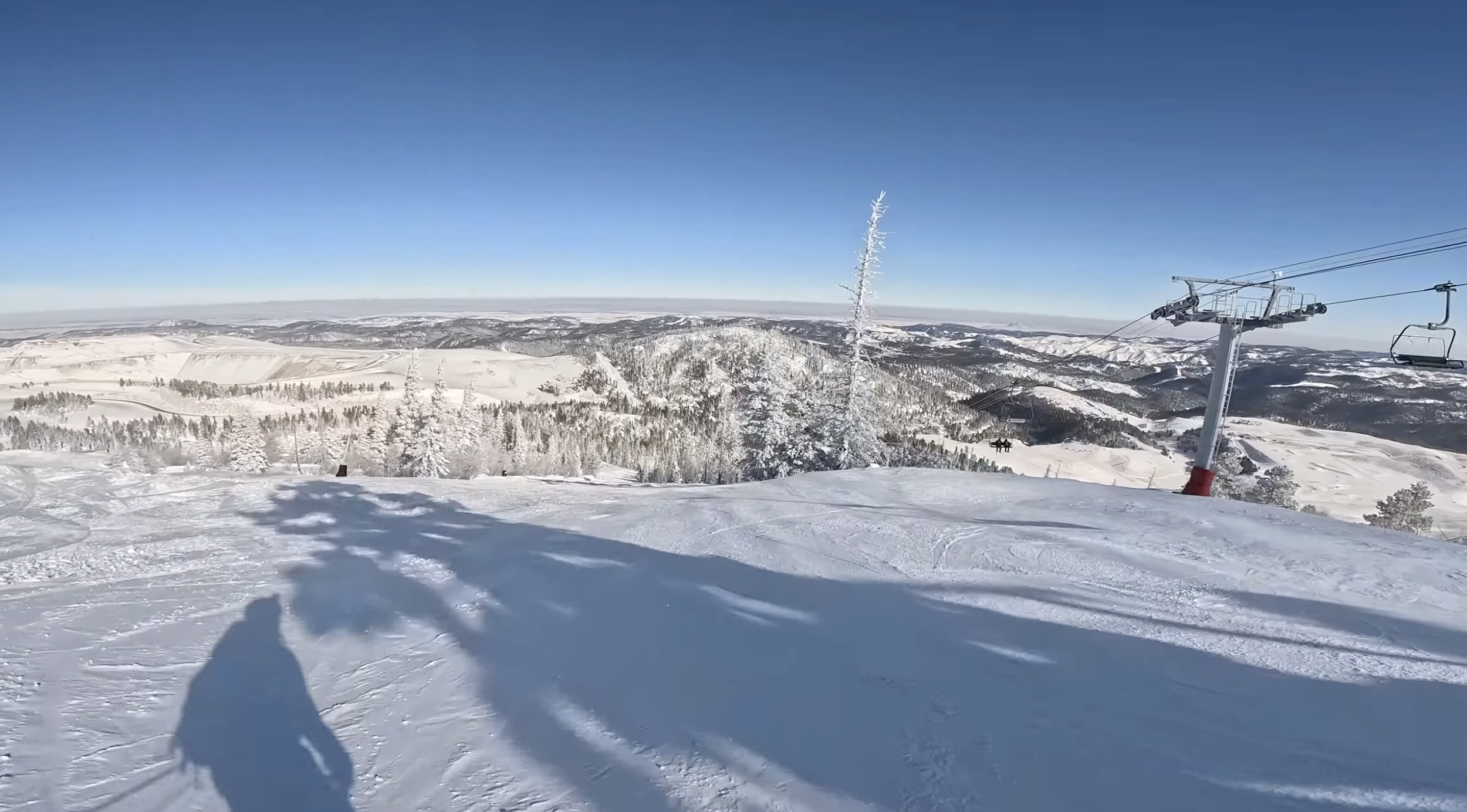
Terry Peak is higher than every North American ski resort further east than itself.
Snow Quality and Resiliency
Terry Peak doesn’t see the same snow as nearby Wyoming ski areas, but its annual average of around 100 inches is above average in comparison with many Midwest ski areas to the east. This natural snowfall is also supplemented by snowmaking, which covers more than half of the terrain, and is getting an upgrade for the 2025-26 ski season. In addition, Terry Peak is situated at a higher elevation than any ski area to its east in North America. This, along with its predominantly north-facing slopes, contributes to excellent snow retention.
However, the higher elevation also means that strong winds are common. These conditions can blow snow off some of the wider runs, and the resort is particularly susceptible to wind holds, especially with all of its main lifts topping out at the summit. If you arrive on a particularly gusty day, you may arrive to a substantial portion of the resort being closed and end up being disappointed.
Terrain Layout
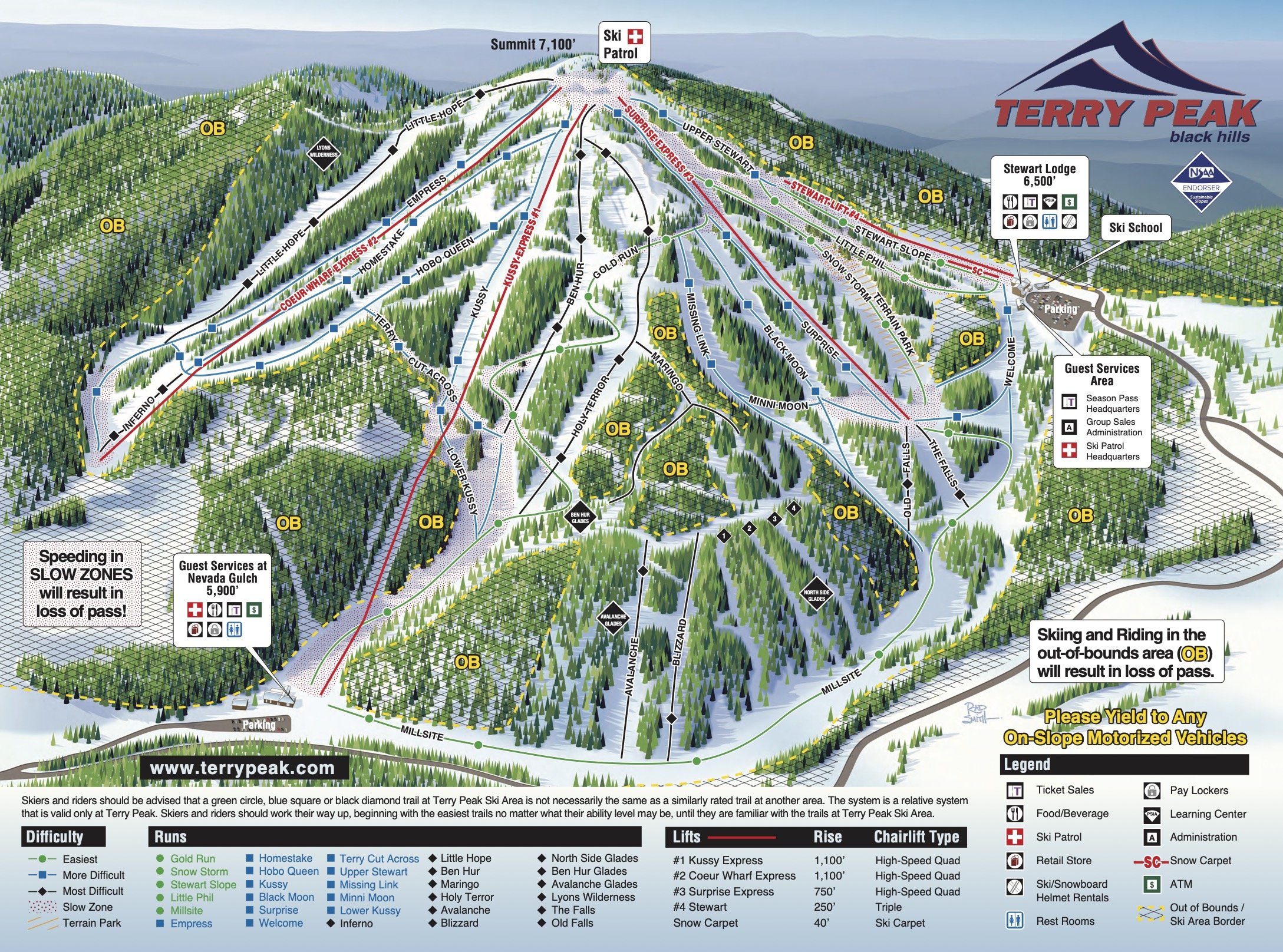
Terry Peak has a somewhat unorthodox terrain layout, as the main lodge is located at mid-mountain, and the longer lifts start below the main lodge. On the plus side, this means that if a line is long at any of the main lifts near the lodge, you can simply ski down to another one. However, it’s important to note that the cat track connecting these lifts can get quite flat in some sections. Almost all the lifts meet at the peak of the ski area just below the mountain’s true summit, which is home to some quite substantial communication towers. It should be noted that the most isolated skiing pod, served by the Coeur Wharf lift, only runs on weekends.
It’s also worth noting that while Terry Peak’s mountain layout is unique, the same can’t necessarily be said for its runs. With the exception of some runs that directly border mines, neighboring trails feel relatively similar to one another and indistinct in their own right, with only gradual changes as you make your way across the cone of the mountain.
TRAIL MAP
Lift Infrastructure
One place where Terry Peak stands out, especially given its isolation, is in its lift infrastructure. The hill is primarily served by three high-speed quads, with a fixed-grip triple and carpet lift holding down the bunny slopes. The main quad lifts provide quick access to the 1,100-foot vertical drop, and they typically have short lift lines. However, the summit can become quite crowded since all the lifts end in the same area. Fortunately, there is enough space between the unloading zones, so you won’t immediately run into other skiers and riders.
Crowds
Thanks to the modern lift setup, crowds aren’t typically a problem across most of Terry Peak. The one exception is the beginner area, which can see its fair share of lines; Terry Peak is the only public ski area for a few hours in every direction, so most people in western South Dakota will travel long distances to learn here. For non-first-timers looking to avoid some of the lines at the learning area Stewart triple, the nearby Surprise quad technically serves a few beginner runs as well, though as we’ll discuss in detail later, they are a significant step up in difficulty from the Stewart Slope.
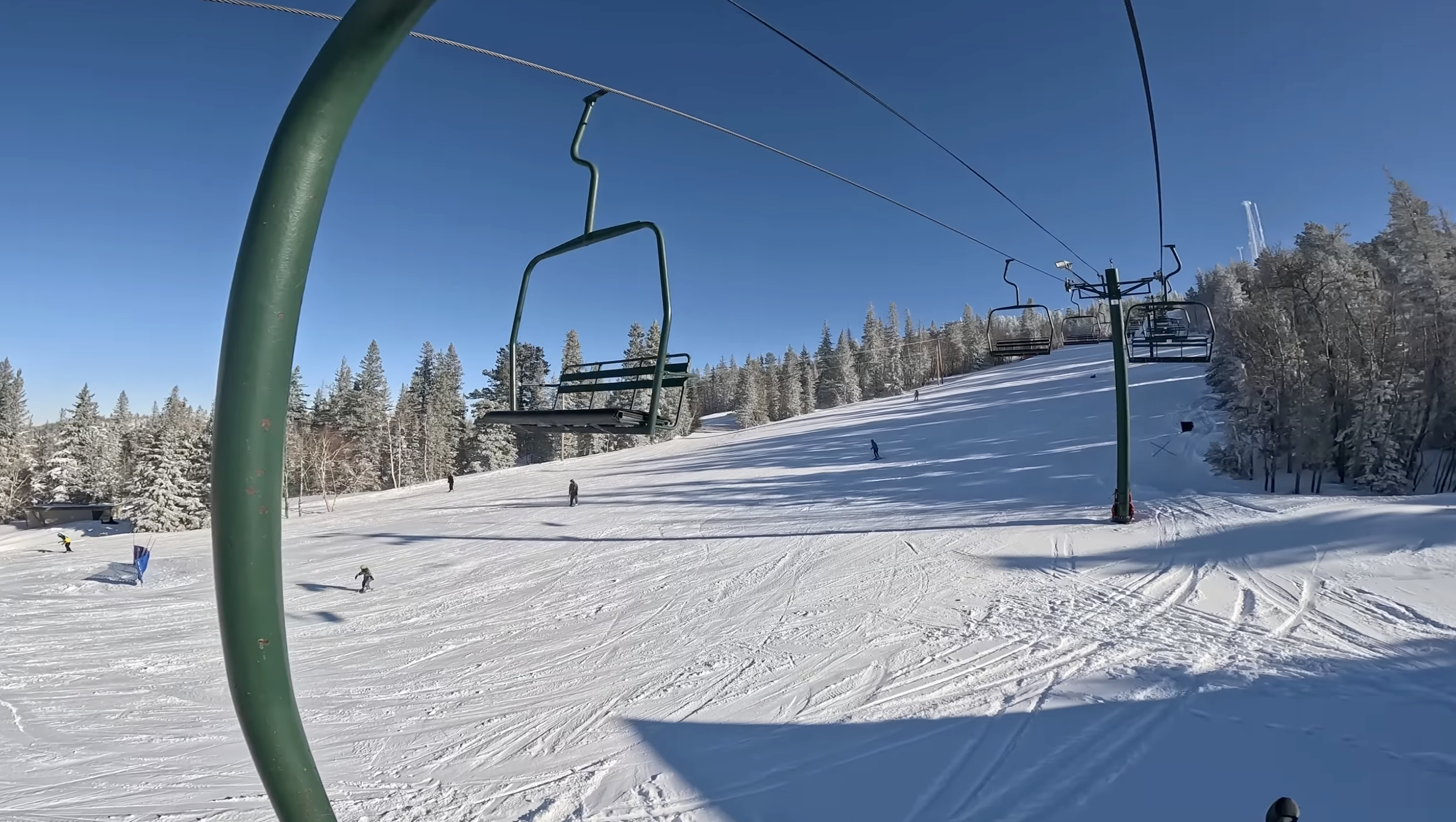
The Stewart triple chair serves the most accessible beginner terrain at Terry Peak.
Beginner Terrain
Terry Peak has a handful of true beginner slopes, but they're mostly clustered around the base lodge. The bunny hill offers wide, gently sloped terrain which is great for learning, but they get old quickly otherwise—and, as we mentioned earlier, tend to be the most congested slopes at the entire resort. Terry Peak’s other beginner runs offer a little variation in run width and length, but you can’t effectively ski or ride any of them without taking a short section of intermediate terrain, which makes them less-than-ideal for guests who haven’t figured out linked turns yet. Observant guests may note that some of Terry Peak’s main-mountain green runs can be entered without taking blues; however, there is a huge catch with these runs, as they all funnel to lifts where the easiest routes down from the top start with intermediate pitches, creating the same challenge.
Intermediate Terrain
Speaking of intermediate terrain, Terry Peak becomes a much more accessible mountain once guests get to this level of proficiency. Blue-rated runs exist in every mountain pod, and generally take the form of wide groomers and mellow ungroomed slopes. There are a few places for intermediates to duck into the trees, but heed any out of bounds or closed markers, as mining-related hazards can pop up in multiple mountain areas.
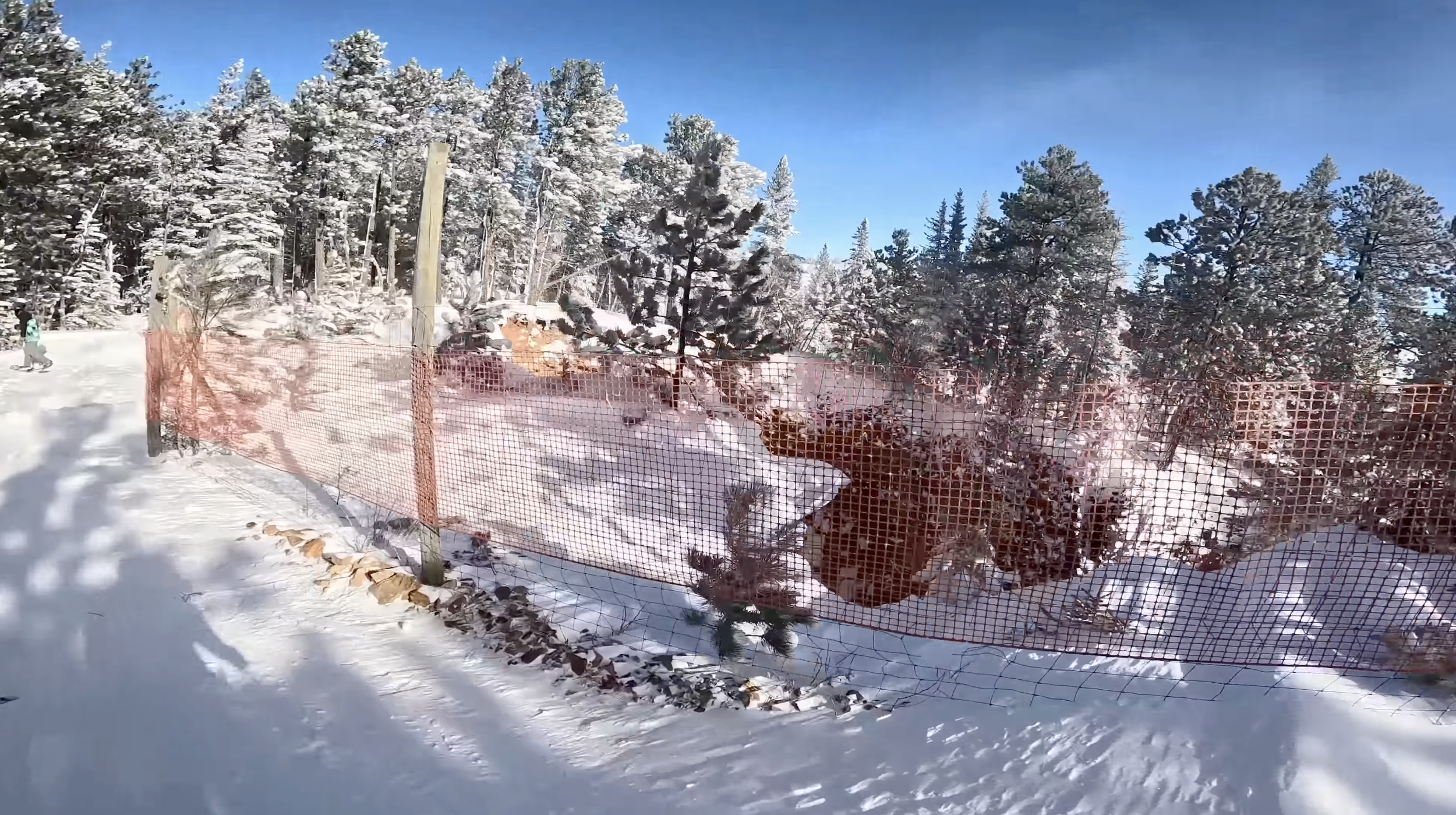
Terry Peak’s main expert glade zone features this abandoned mining pit which is marked off by a fence.
Advanced Terrain
For advanced skiers and riders, Terry Peak offers a varied set of runs, though it can’t compete with the number of advanced slopes found further west. Advanced runs range from wide, steep groomed runs to narrow moguls and tight trees. Most of the advanced runs are found off the Kussy Express lift which spans the entire vertical, so while the runs aren’t the longest in the country, they are the longest you’ll find between the Rocky Mountains and the Appalachians.
Expert Terrain
While there isn’t a large quantity of expert terrain at Terry Peak, there are a few runs that offer the quality to test the mettle of any skier or rider. The Avalanche and Blizzard runs, as well as the surrounding trees, are the most unique runs, offering quite steep pitches through narrow, tree-defined trails, though there aren’t any expert features such as cliffs or rocks. These trails also go through some unique mining features, with the catwalk to access them passing by a railroad cut through the mountain and some fenced off mine shafts. Hidden in the trees are a few other interesting mining features, though you should be cautious skiing through this area as some of these aren't completely fenced off.
Terrain Park
When it comes to terrain parks, Terry Peak is decidedly non-Midwestern. That is to say the resort has one terrain park featuring the typical rails, boxes, and jumps, but overall, the park doesn’t stand out in any notable way.
RECOMMENDED SKIS FOR TERRY PEAK
NOTE: We may receive a small affiliate commission if you click on the below links. All products listed below are unisex.

Recommended intermediate ski

Recommended advanced ski

Recommended glade ski

Recommended powder ski
Facilities
But one place in which Terry Peak is decidedly Midwestern is in its on-mountain facilities—chiefly in that they are bare-bones, but quite charming. The resort has two lodges, both at the respective base areas. The Stewart Lodge offers the typical base lodge experience you’d expect for a mid-sized regional mountain, with rentals, food service, and a bar. At the base of the Kussy lift is the Nevada Gulch Lodge, which is a very down to earth and affordable bar that serves as a second base area; additional parking and ticket sales are available here as well. The food prices at Terry Peak are some of the most affordable at any ski area across the country, and quality is on par with other ski areas, making it a standout part of the experience.
Navigation
Another standout part of the Terry Peak experience is that you probably won’t get lost. Getting around Terry Peak is a breeze, with an intuitive mountain layout, direct lifts, and well-placed signage. The only part of the mountain that requires a lift to reach the nearest facilities is the Coeur Wharf pod, and lines in this area are nonexistent. A handful of runs require sidestepping or brief hiking to access, including the Ben Hur glades, Avalanche, and Blizzard. However, these are the most expert-oriented areas, so most typical visitors won't notice this.
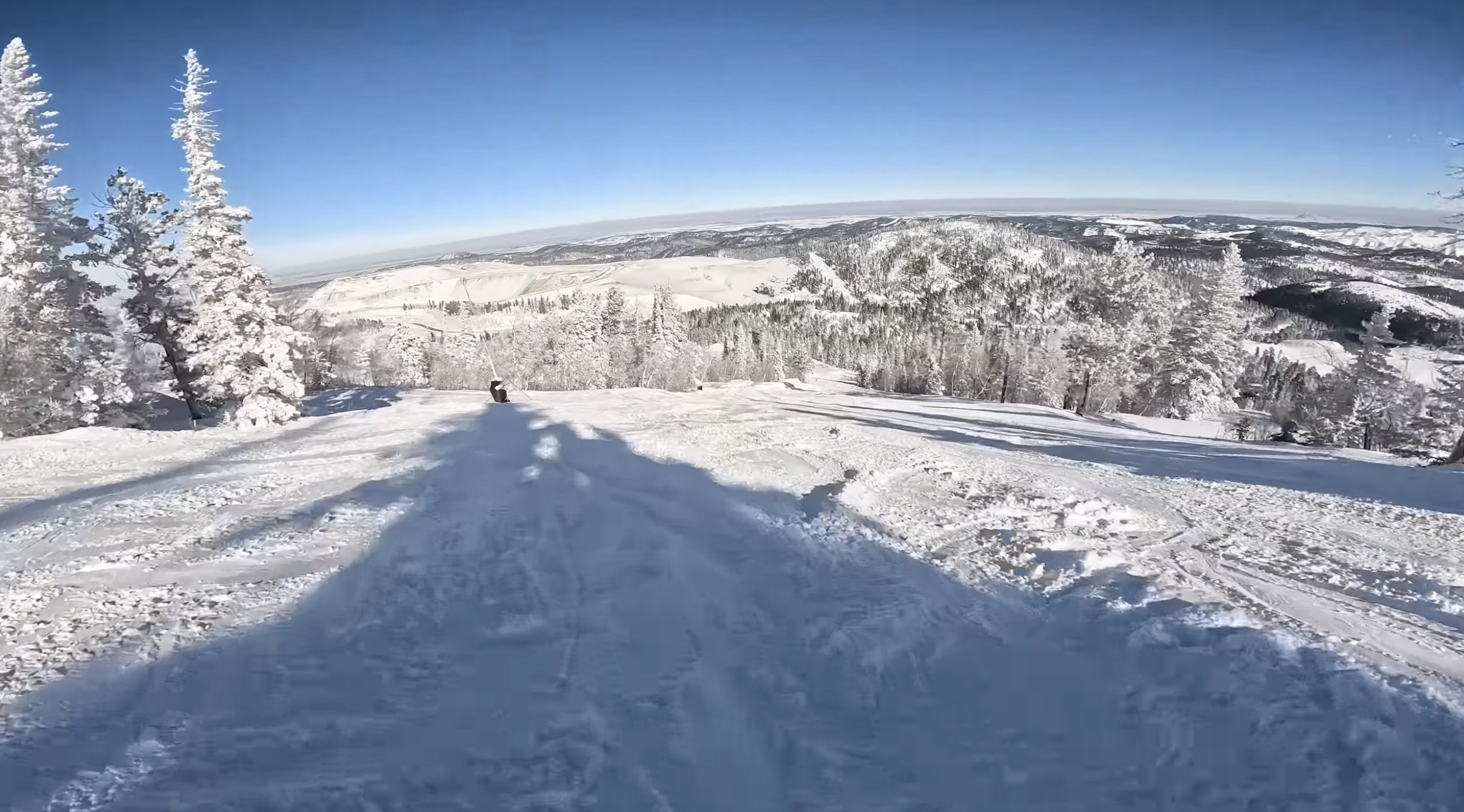
On clear days, skiers and riders at Terry Peak can see all the way to the Great Plains near the horizon.
Mountain Aesthetic
Due to the extensive mining operations around Terry Peak, the views you’ll find at the resort are some of the most unique on the continent. Open pit mines are in the foreground of any view, but looking past that reveals some spectacular sights, as beyond the Black Hills you can see across the Great Plains for miles to the north and east. To the south, the rocky peaks around Mount Rushmore are visible, though don’t expect to see the presidential faces themselves, as that is more than 30 miles away and facing the wrong direction. One standout peak that is visible is Bear Butte, which is on the edge of the plains and is a significant cultural site for the Lakota and Cheyenne nations.
RECOMMENDED SNOWBOARDS FOR TERRY PEAK
NOTE: We may receive a small affiliate commission if you click on the below links. All products listed below are unisex.

Recommended intermediate board

Recommended advanced board

Recommended expert board

Recommended powder board
Getting There and Parking
When it comes to getting to Terry Peak, the resort is a lot more remote than other typical ski resorts of its size. The mountain is located in the Northern Black Hills, about an hour from Rapid City. The nearby towns of Lead and Deadwood are lively, historic mining towns, with Lead being home to the most profitable gold mine in U.S. history and Deadwood hosting many casinos and bars, including the infamous Saloon Number 10, where Wild Bill Hickock was killed. The road up to Terry Peak is good for two-wheel drive unless there has been a recent storm, as some steeper sections may require four-wheel drive.
Parking is available at both the Stewart Lodge and Nevada Gulch, and no matter when you visit it’s ample and free.
Lodging
Terry Peak offers a handful of ski-in/ski-out lodging options, though they tend to be on the pricier side. There’s also a small hotel just across the parking lot from Stewart Lodge. For travelers looking to save money or enjoy more nightlife, staying in nearby Deadwood is often the better choice—its casinos frequently offer hotel deals that can make a Terry Peak trip surprisingly affordable.
Après-Ski
Terry Peak does have an après-ski scene, but as far as ski resorts typically go, it's decidedly unorthodox. The nearby nightlife leans heavily toward gambling halls and old west saloons rather than traditional ski bars. The towns of Lead and Deadwood have a more blue-collar vibe than typical mountain destinations, which can be either a positive or a negative, depending on what you’re after. Deadwood is also home to a number of live music venues just about every night.
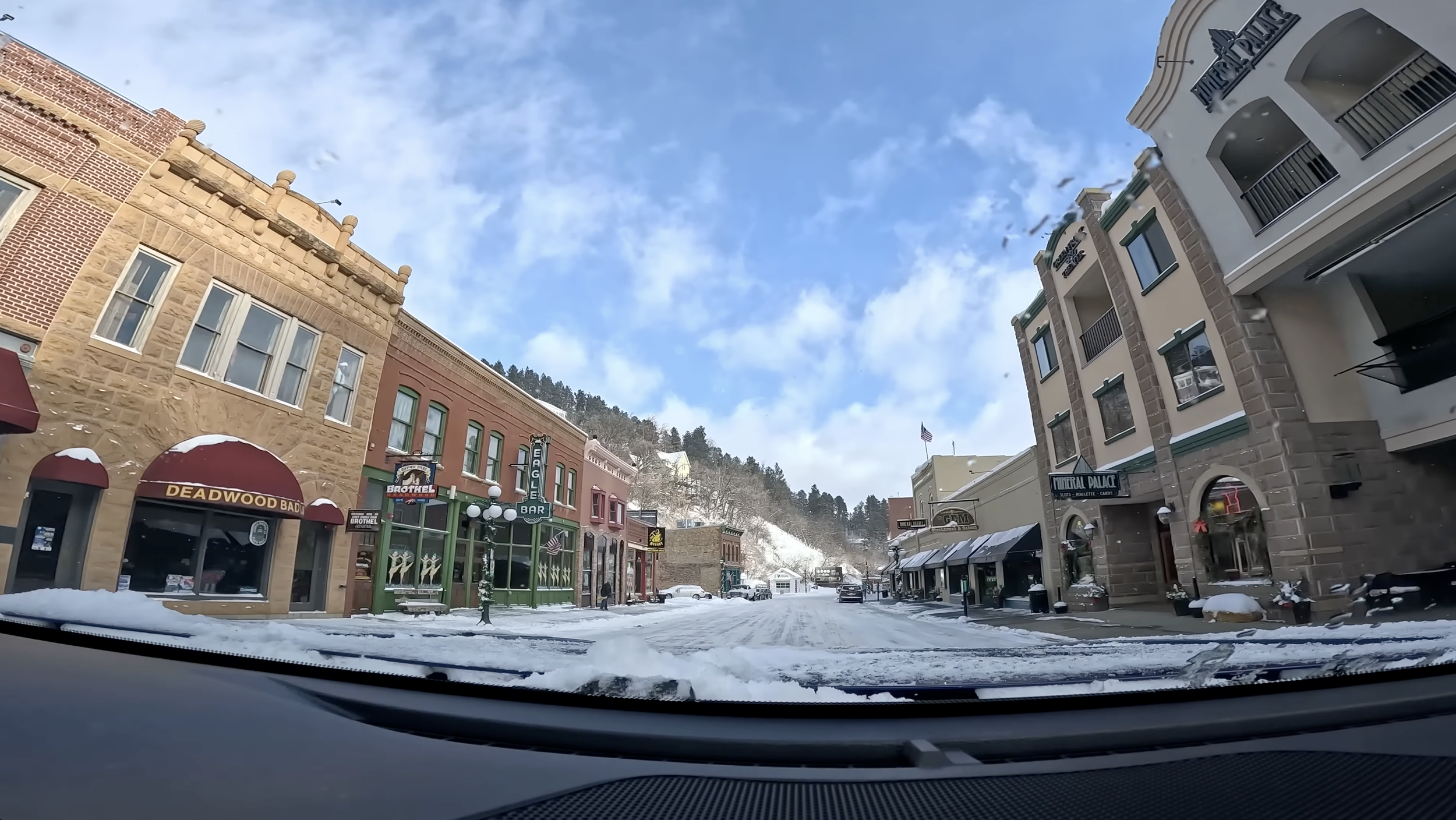
The nearby town of Deadwood is the best bet for some unconventional après.
Verdict
So Terry Peak is really a mix of West and Midwest skiing in one ski area. Its snowmaking and smaller size are reminiscent of ski areas in Minnesota and Wisconsin, but its high elevation, mountain views, and high speed lifts are similar to areas found in Colorado. While it’s not up to the quality of the best in the West, it’s certainly good enough to be a bucket list stop if you’re driving across the plains or looking for some old west flavor in your ski vacation.
Pricing
Day tickets at Terry Peak are quite reasonable in comparison to many competing resorts, with adult tickets topping out at $74 for the 2025-26 season. Additionally, Terry Peak is a two-day partner on the Indy Pass, making it a great stop for those traveling from the Midwest to the Rockies by car if they have that pass.