Mountain Review: Owl’s Head
MOUNTAIN SCORE

CATEGORY BREAKDOWN
See our criteria5
Snow:

6
Resiliency:

2
Size:

3
Terrain Diversity:
5
Challenge:

7
Lifts:

9
Crowd Flow:
3
Facilities:

8
Navigation:
8
Mountain Aesthetic:
GOOD TO KNOW
1-Day Ticket: $73-$89 CAD ($52-$64 USD)
Pass Affiliation: Indy
On-site Lodging: Yes
Après-ski: Limited
Nearest Cities: Montréal (1.5 hrs)
Recommended Ability Level:

+ Pros
Excellent scenic views of Lake Memphremagog
Non-existent crowds
Simple layout served almost entirely by high-speed lifts
– Cons
Small size
Lack of facilities beyond base lodge
Lower snow totals than nearby resorts in Northern Vermont
MOUNTAIN STATS
Lifts: 6
Trails: 50
Beginner: 25%
Intermediate: 35%
Advanced/Expert: 40%
Mountain Review
For many skiers and riders, spending time outside cruising through beautiful snow-covered landscapes is what makes the sport truly unique, and few resorts can match the stunning natural vistas of Owl’s Head.
Located in Southern Quebec, just north of the Vermont border and in direct view of Jay Peak, the resort may deserve to be on your radar if you’re looking for an East Coast hidden gem. But the resort does have a number of drawbacks that may not make it a fit for everyone.
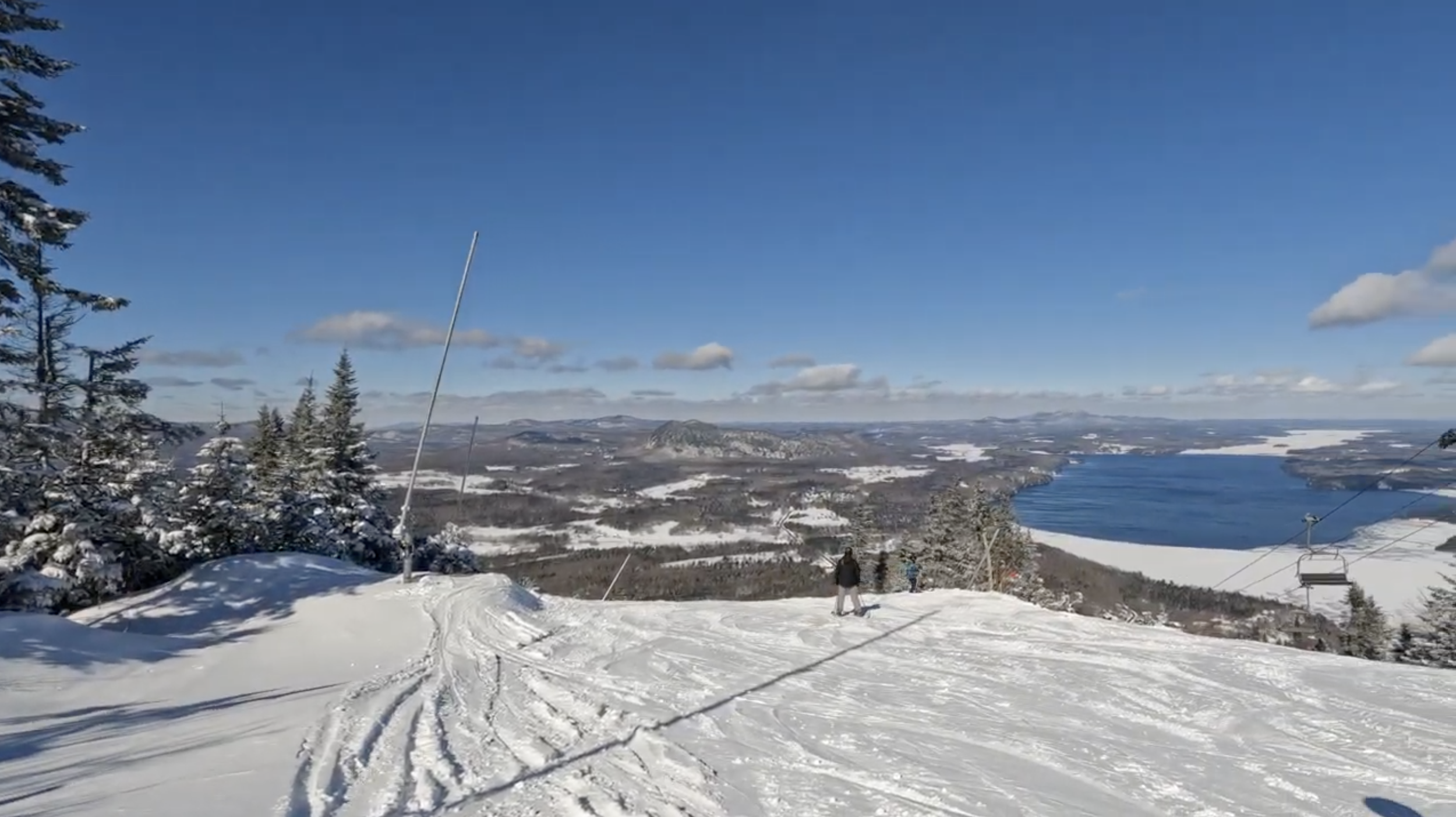
The summit of Owl’s Head provides views of both the stunning Lake Memphremagog and other nearby ski areas.
Mountain Aesthetic
Overlooking Lake Memphremagog, Owl’s Head has one of the most spectacular views anywhere on the East Coast. Almost all runs overlook this stunning vista, with the mountain’s prominence allowing for upper mountain views spanning for miles and even lower mountain runs offering beautiful landscapes across the lake. A few lower mountain areas see a degree of development, but despite a small acreage, plenty of runs offer a pleasant sense of isolation. From the summit, a few other resorts are visible, including nearby Jay Peak and the backside of Mont Sutton. If for no other reason, Owl’s Head belongs on any East Coast skier’s bucket list for the stunning views alone.
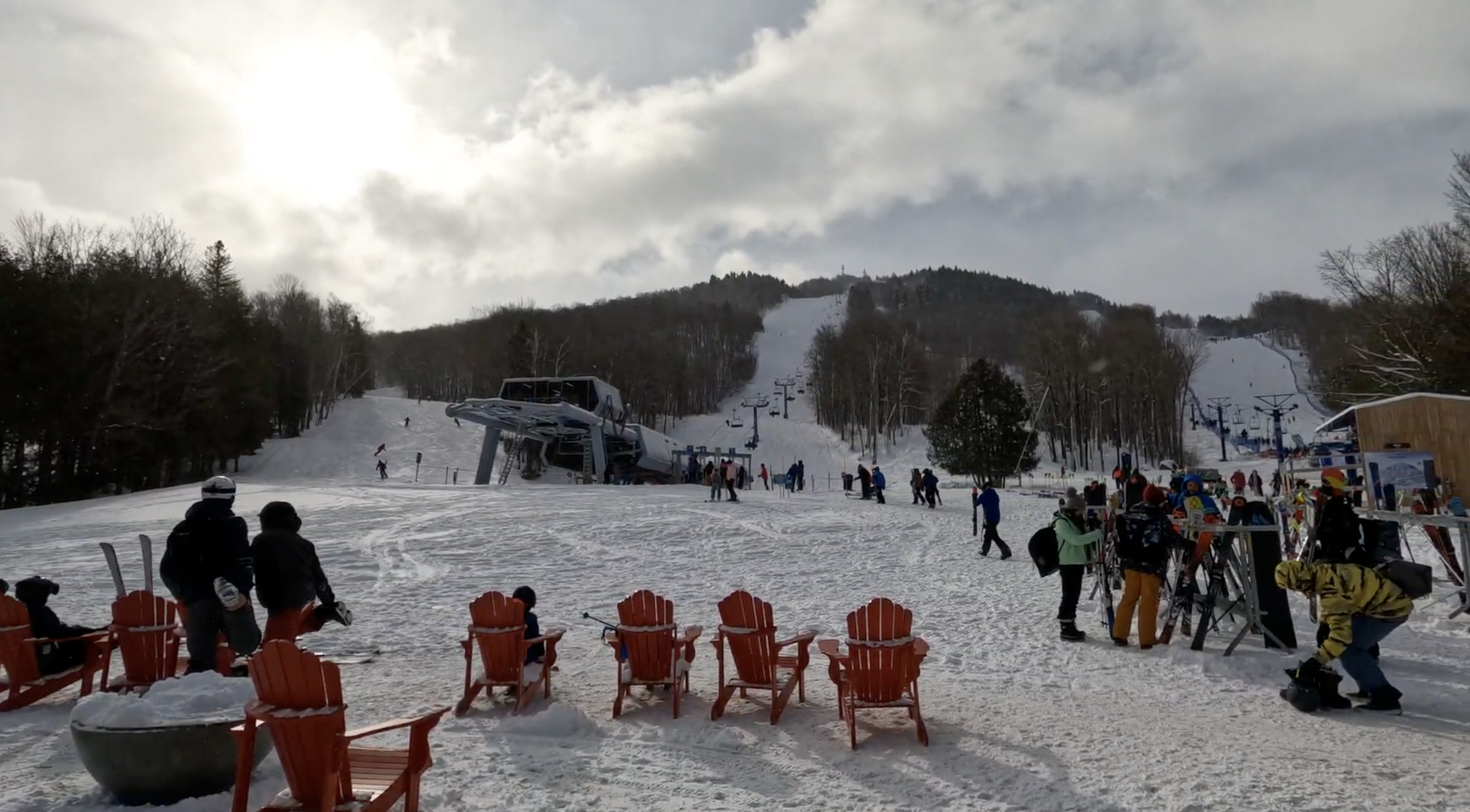
Owl’s Head is much taller than it is wide.
Size and Terrain Layout
Advertising 163 skiable acres stretched up a 1,558-foot vertical drop, Owl’s Head is a small resort that skis bigger than it is, thanks to a strong vertical for its size and a pronounced footprint standing tall above the surrounding geography.
With two high-speed chairs serving the majority of the terrain in Owl’s Head’s two major terrain pods, runs often feel comparable in length and sustained pitch to those of far larger East Coast resorts by acreage. That said, after skiing here for a day or two, most advanced visitors will feel as though they’ve explored the whole mountain, and for visitors of certain levels and terrain preferences, you’re likely to be often lapping the same terrain.
Beginner Terrain
Green terrain at Owls Head is exclusively contained to the lower mountain off Chairs B and D, as well as the magic carpet. That said, being on the lower mountain doesn’t make the views any less spectacular. In fact, the beginner-oriented Chair D offers some of the most spectacular lake views in the entire resort, although such views are abundant everywhere. This beginner terrain is wide open and perfect for newer or less athletic skiers, although it's worth noting that some of these trails are taken up by terrain parks not seen on the map. Some of these routes, such as the #18 Panorama trail, are wide open to allow for beginner access despite the terrain park setup off to one side; however, these park setups are worth looking out for when planning your route down as a beginner.
Ultimately, if you don’t mind the lack of upper-mountain access, Owl’s Head is a very good place to learn to ski, particularly due to its low crowds, low cost, and ease of access to beginner terrain.
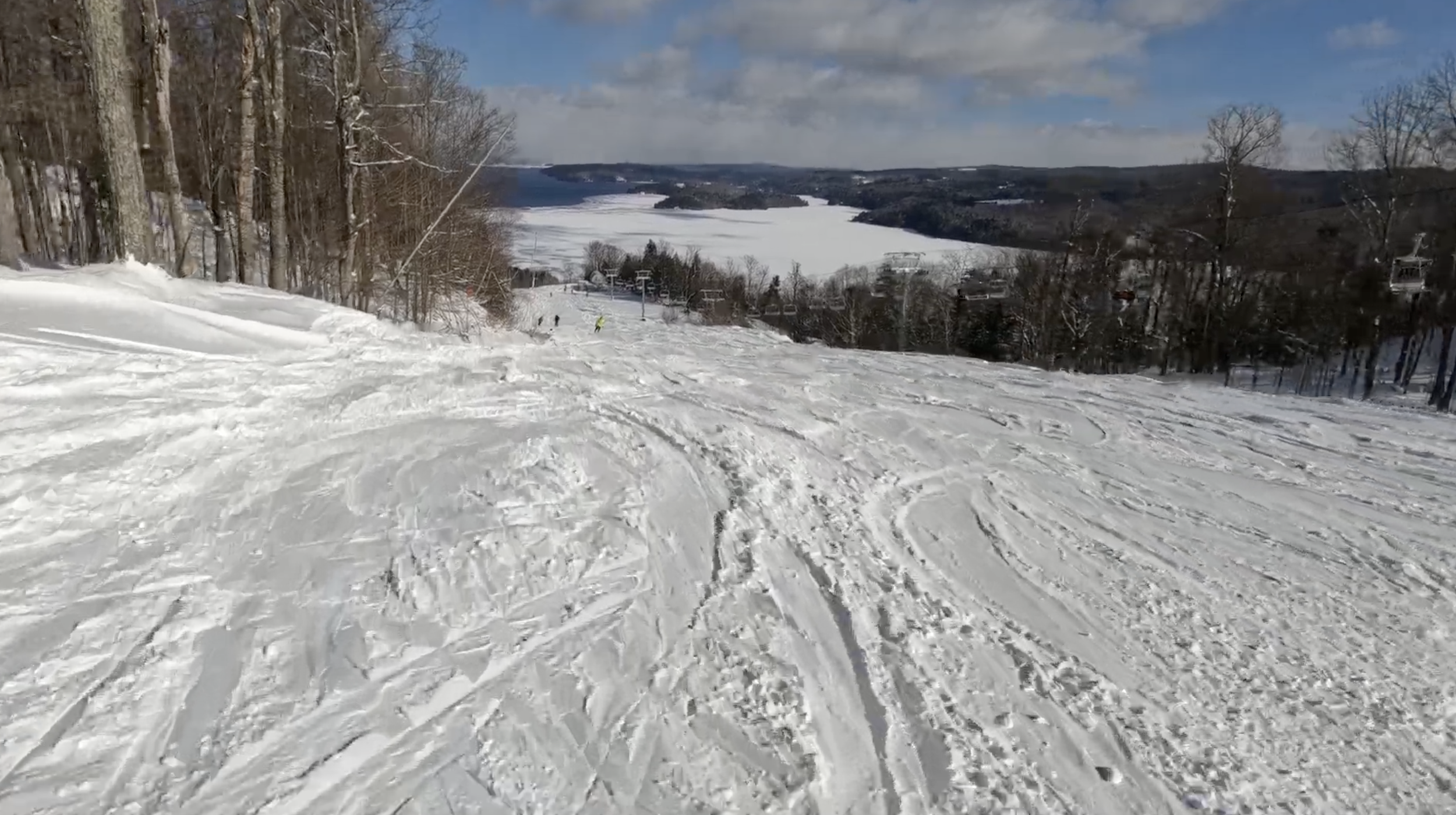
The Upward Trail, #25, provides one of the best lake views of any blue run at Owl’s Head.
Intermediate Terrain
Getting to intermediate proficiency at Owl’s Head opens up essentially the whole mountain. The biggest positive is the wide, open, massive pistes available from every lift, combined with the truly spectacular views along these trails. Guests should be sure to check out the #14 Lilly’s Leap trail, which arguably has the best views of the whole resort, as well as the best sense of isolation. For some, this trail alone will make the experience at Owl’s Head worth the day trip. Another standout blue is the #25 Upward Trail, which offers the closest lake views of any blue trail and sees even fewer crowds than the already fairly-empty upper-mountain runs. Grooming, particularly off Chair A serving the majority of intermediate terrain, can be sparse particularly on powder days, but other times, the resort’s blues are perennially groomed.
TRAIL MAP

Advanced Terrain
Single black terrain at Owl’s Head varies in difficulty depending on its grooming status. Some trails, such as #9 Kamikazee and #26 Lake View, are ideal single black semi-groomed trails for advanced skiers. However, others are left ungroomed when conditions allow, making for an experience sometimes more comparable to double-black trails at other East Coast resorts. These trails are topographically unique and very fun for skiers up to the challenge.
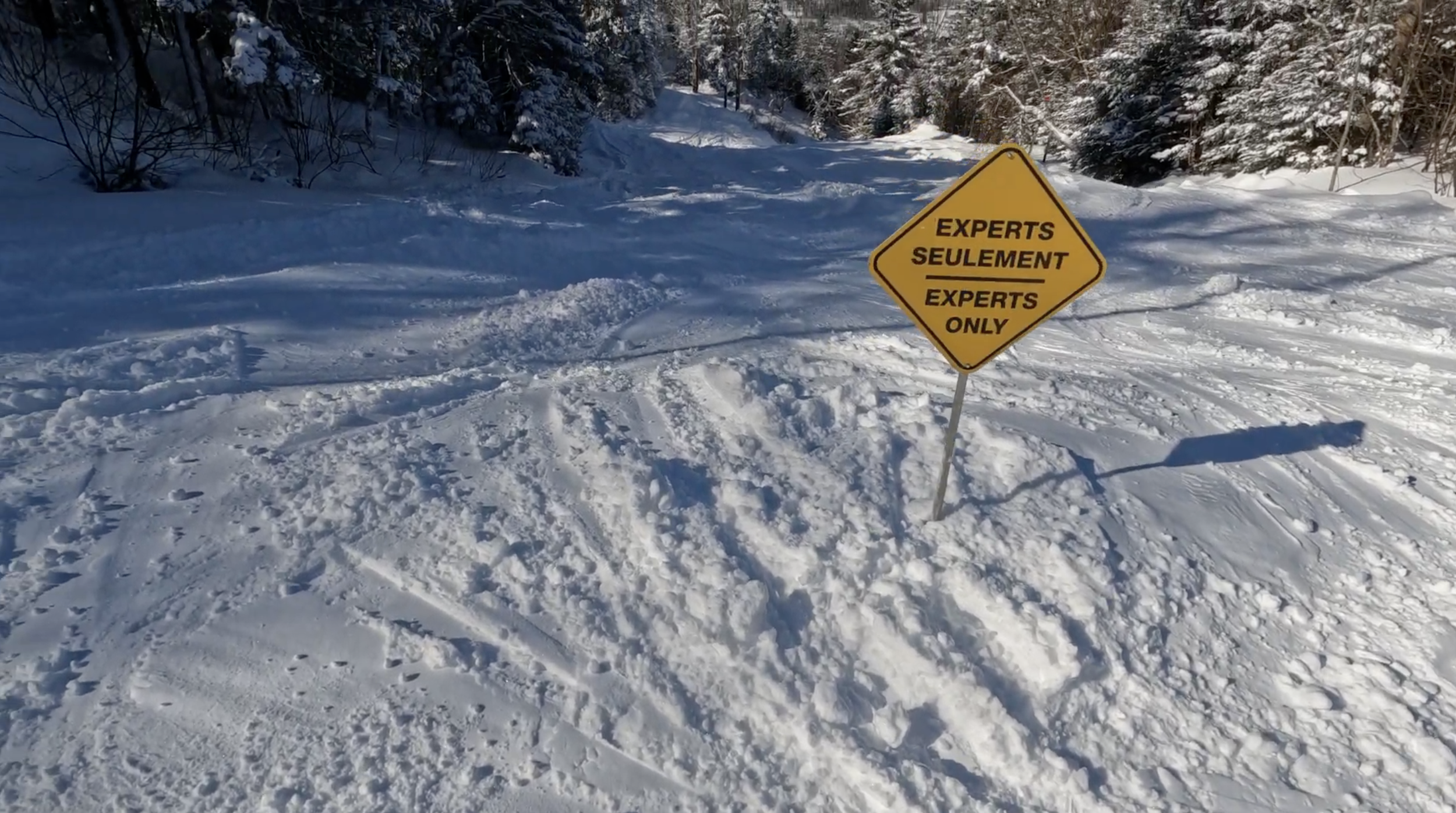
Owl’s head does offer a variety of narrow, untamed trails for advanced and expert skiers and riders.
Expert Terrain
Similar to its advanced level terrain, Double Blacks at Owl’s Head vary greatly in difficulty based on snow conditions and grooming status. The main challenge of the trails at Owl’s Head lies in their coverage and technicality, rather than merely the steepness. Often, the steepest trails may not always present the most challenging experience at the resort.
Owl’s Head's steepest pitches are also its most widely cut, and even sometimes see grooming. On the other hand, the resort’s moderately-less-steep double-black woods trails often feature fairly technical lines and, even on good snow years, regularly see exposed rocks, roots, and dirt. Expert terrain at Owl’s Head is overall present enough to keep experts entertained, and the mountain’s open, natural feature-filled footprint is very fun to jib around for experts, but it falls somewhat short in challenge compared to most Northern Vermont resorts, as well as to its nearby Quebec neighbor Mont Sutton, in terms of the prevalence, quality, and reliability of expert terrain.
Terrain Parks
For a resort in southern Quebec, terrain parks at Owl’s Head are surprisingly abundant and built up, despite not all being depicted on the trail map. A few quite substantial terrain parks exist in the lower mountain, although these park setups focus almost exclusively on medium to large features, with very few progression-oriented zones—and in our experience, the low slope angle often conflicts with the size of these builds.
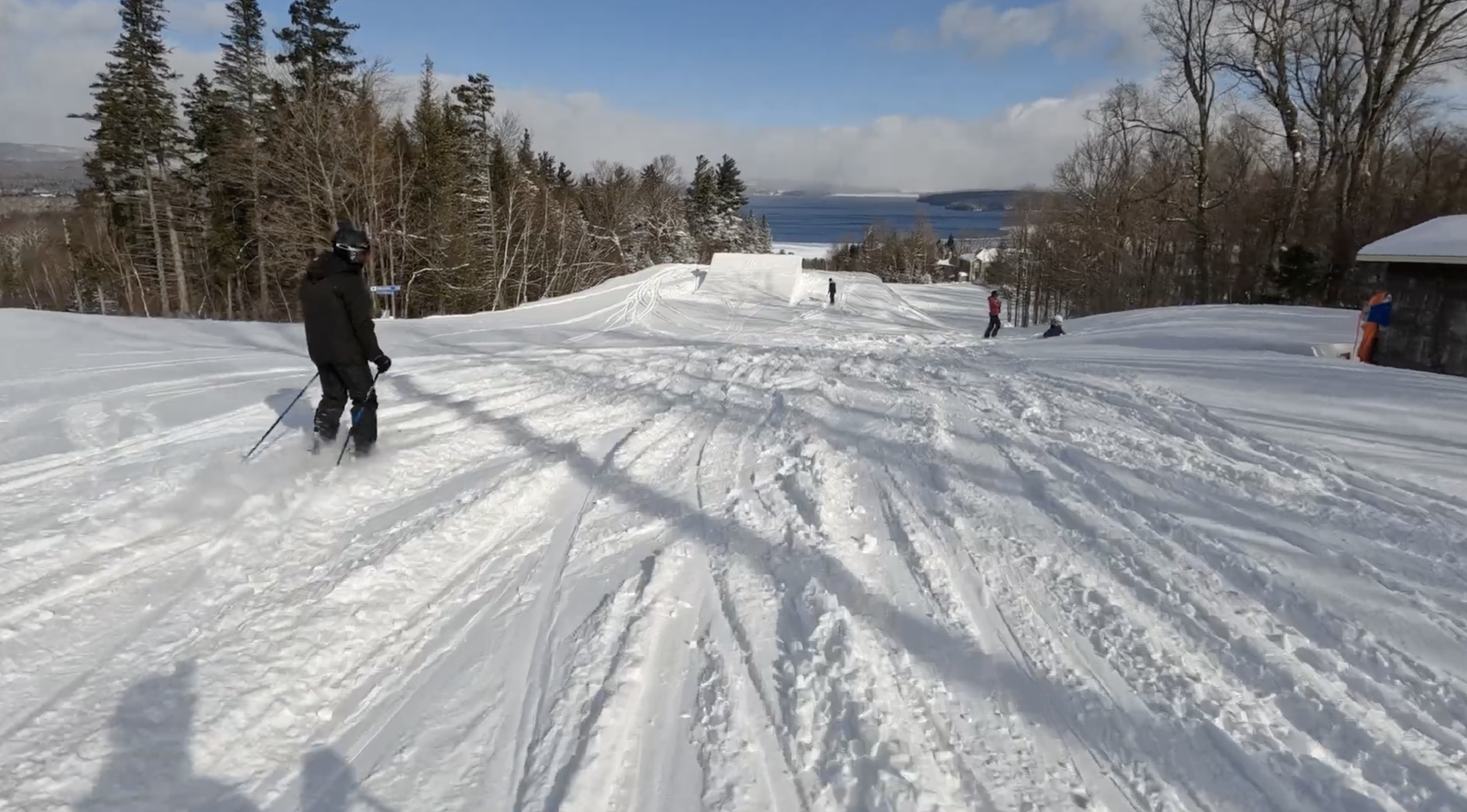
Owl’s Head builds some surprisingly large terrain park features, to the point where getting enough speed to hit them is difficult.
RECOMMENDED SKIS FOR OWL’S HEAD
NOTE: We may receive a small affiliate commission if you click on the below links. All products listed below are unisex.

Recommended all-mountain ski

Recommended carving ski

Recommended glade ski

Recommended expert/touring ski
Snow Quality and Resiliency
With only 125 inches of average annual snowfall, Owl’s Head falls well short of the snow totals of its Vermont competitors, seeing totals far more similar to resorts in New Hampshire, although comparable to those of other southern Quebec hills. In particular, Owl’s Head’s snowfall falls dramatically short of its nearby neighbor Jay Peak, which regularly sees more than double the annual snowfall of Owl’s Head.
To account for its modest snowfall totals, Owl’s Head’s natural snow is supplemented by one of the most expensive snowmaking operations in southern Quebec, covering the vast majority of non-gladed runs across the resort. Even if there hasn’t been natural snow in a while, as long as temperatures stay cold the trails will stay covered.
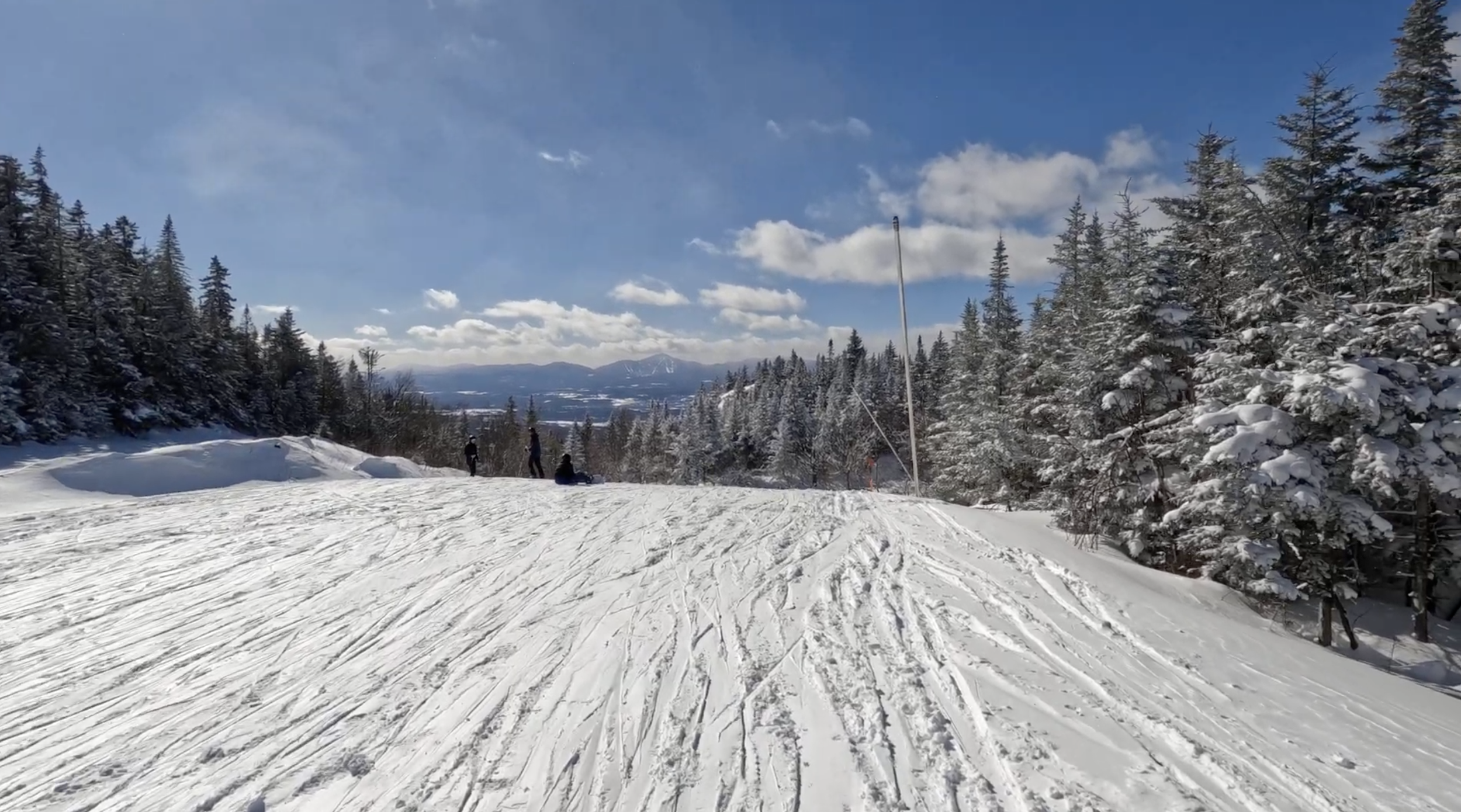
Most cut runs at Owl’s Head feature snowmaking infrastructure.
Lifts
The majority of chairs most visitors will use regularly at Owl’s Head are high-speed and efficient, particularly Chairs A and D, which serve the vast majority of lappable terrain. While fixed grip, Chair B is short and mostly serves the terrain parks, and Chair C is mostly just used for racing; all of the terrain served by both is also accessible by the high-speed Chair A.
The experience most hurt by Owl’s Head’s fixed-grip chairs is arguably the beginner experience. A slow ride up Chair B isn’t the most pleasant start to the day for those looking to lap green-rated trails and unable to take the blues off Chair A, although once you arrive at Chair D, it’s smooth sailing up a high-speed chair until it’s time to return to the base lodge.
With the exception of the terrain park and handful of short green trails off Chair B, the only terrain primarily served by a slow, fixed-grip chair is the intermediate and advanced terrain off of Chair E. The views from this lift are tremendous, and the slow chair helps this terrain feel isolated and preserve fantastic snow on a powder day, but despite these caveats, it's still a frustratingly slow ride to the top. Guests can technically access this terrain from the summit by riding Chair A or the bottom half of many of these runs by taking Chair D, but doing this often feels like more of a hassle than it’s worth. Long-time industry observers may point out that Chair E actually replaced an older high-speed quad several years back, resulting in a rare occurrence where there’s now a slower ride time than used to exist there—although it is worth noting that the old high-speed lift was both longer than the current chair and built with a different and slower design than today’s detachables, so the decrease in ride time wasn’t as significant as one might expect.
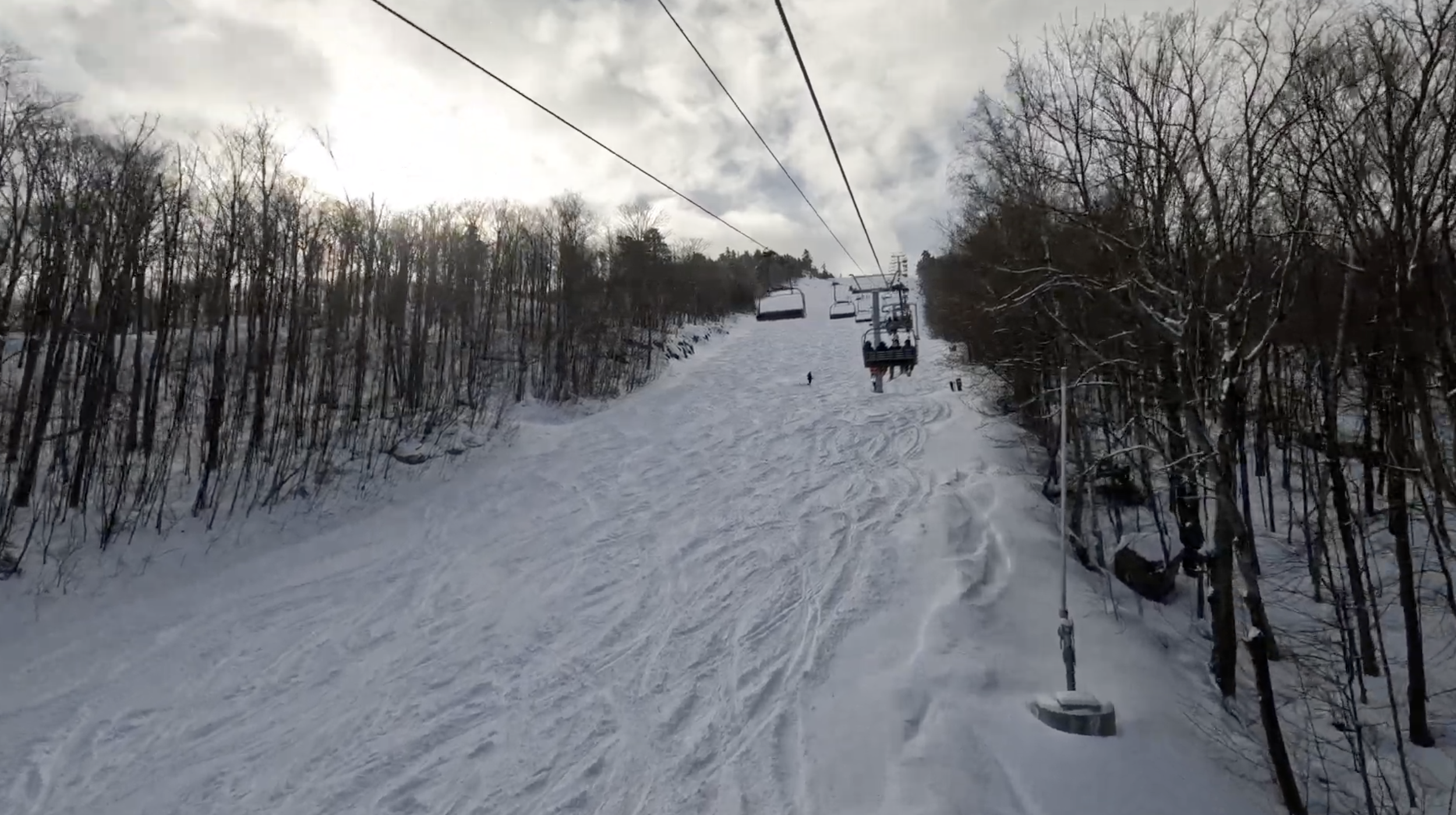
Most of Owl’s Head can be explored via the two high-speed lifts.
Crowd Flow
While slightly busier than some more locally oriented resorts in southern Quebec, Owl’s Head still enjoys the extremely low crowds typical of a Quebec resort. Even on powder days, it's commonplace for most or all lifts at Owl’s Head to be ski-on or close to it, particularly with the high uphill capacity of the primary high-speed lifts.
Navigation
Chiefly by nature of its small size, getting around Owl’s Head is quite straightforward. Signage is abundant and the resort's vertical layout makes it very easy to get between lifts, with most terrain filtering back down to the same main base and all other terrain easily filtering down to Chair D. The only major difficulty can be in finding the entrances to certain woods pitches using the trail map, although these entrances are well marked when you do find them. However, it is not advisable to ski through most unmarked woods at Owl’s Head, as they frequently cliff out or become too dense to ski.
RECOMMENDED SNOWBOARDS FOR OWL’S HEAD
NOTE: We may receive a small affiliate commission if you click on the below links. All products listed below are unisex.

Recommended intermediate board

Recommended advanced board

Recommended expert board

Recommended touring board
On-Mountain Facilities
There is one base lodge at Owl’s Head, but it’s quite nice if not overly upscale. This base lodge features a cafeteria with ample seating for the modest crowds typically found at this resort. It also includes a restaurant offering slopeside views and outdoor seating for warm days. This lodge is accessible from all lifts; however, some traversing is required to return from the secondary terrain pod skier’s right. This base lodge is also about a third of the way up the mountain, so for visitors lapping Chairs D and E, it’s important to make it back to this elevated base area before the lifts shut for the day.
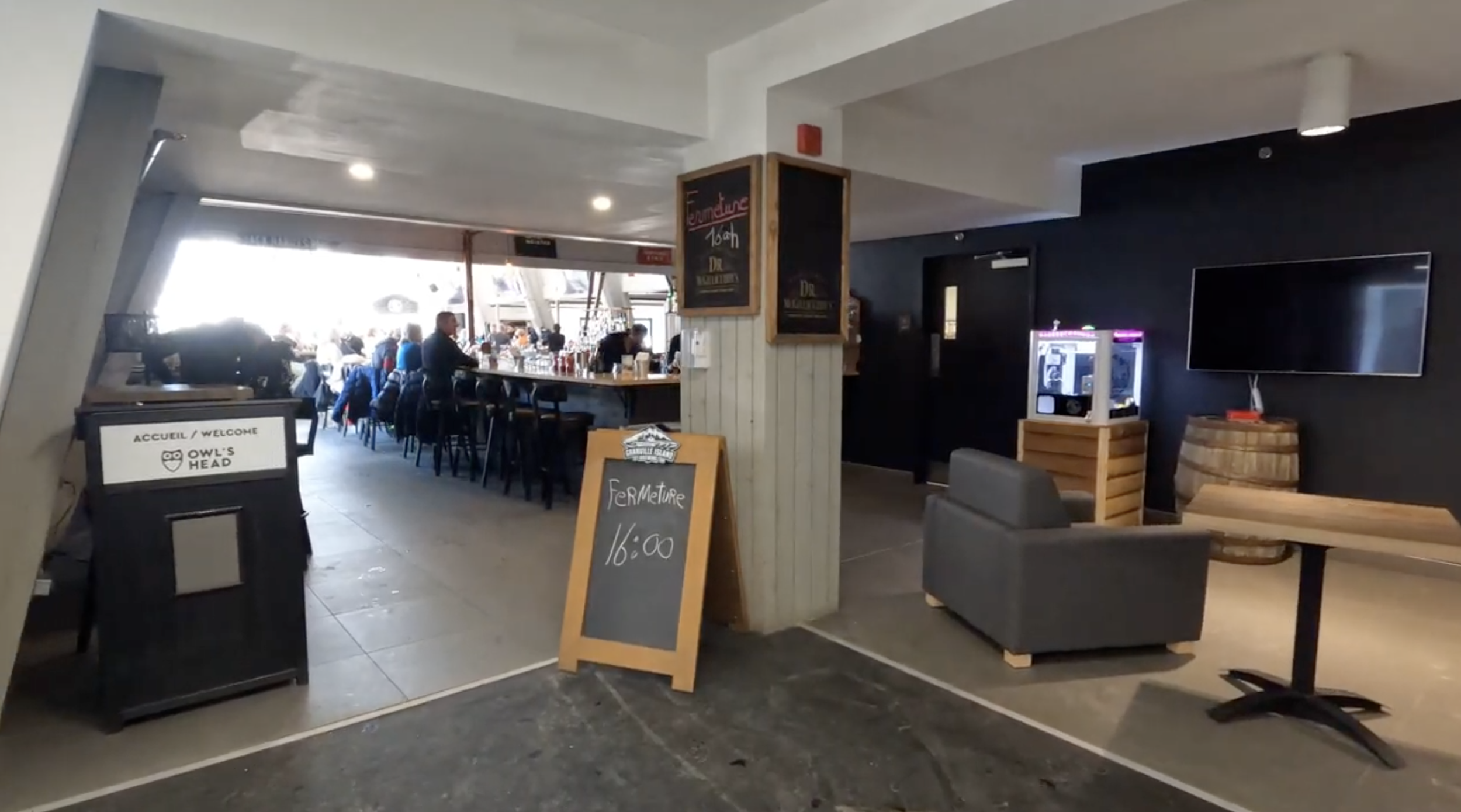
There is only one lodge at Owl’s Head to stop in for a break.
Getting There and Parking
Sitting two hours northeast of Burlington, Owl’s Head is a hidden gem in large part due to its isolation. The nearest major airport is Montreal an hour and a half to the west, making Owl’s Head a difficult resort to access even for those willing to fly. And, as a 6.5-hour drive north of New York and four hours from Boston, Owl’s Head is a long trek even for those used to the trek to northern Vermont. However, for those looking for great views, cheap tickets, and isolation from the crowds, the long ride can be justified for dedicated visitors.
Lodging and Après-Ski
Owl’s Head offers a decent selection of accommodations both slopeside and nearby for visitors. However, there are only a few motels or hotels available, which means options are mainly limited to condo rentals. While many of these rentals are not particularly affordable, a favorable exchange rate makes this option more palatable for American visitors.
Owl’s Head has a restaurant onside with a full bar and good vibes, but otherwise, the resort sits in what could be described as functionally the middle of nowhere, lacking many other immediately nearby food options. The town of Magog has some dining options 40 minutes to the north, but for a true party and nightlife, you’re in for the long haul an hour and a half east to Montreal.
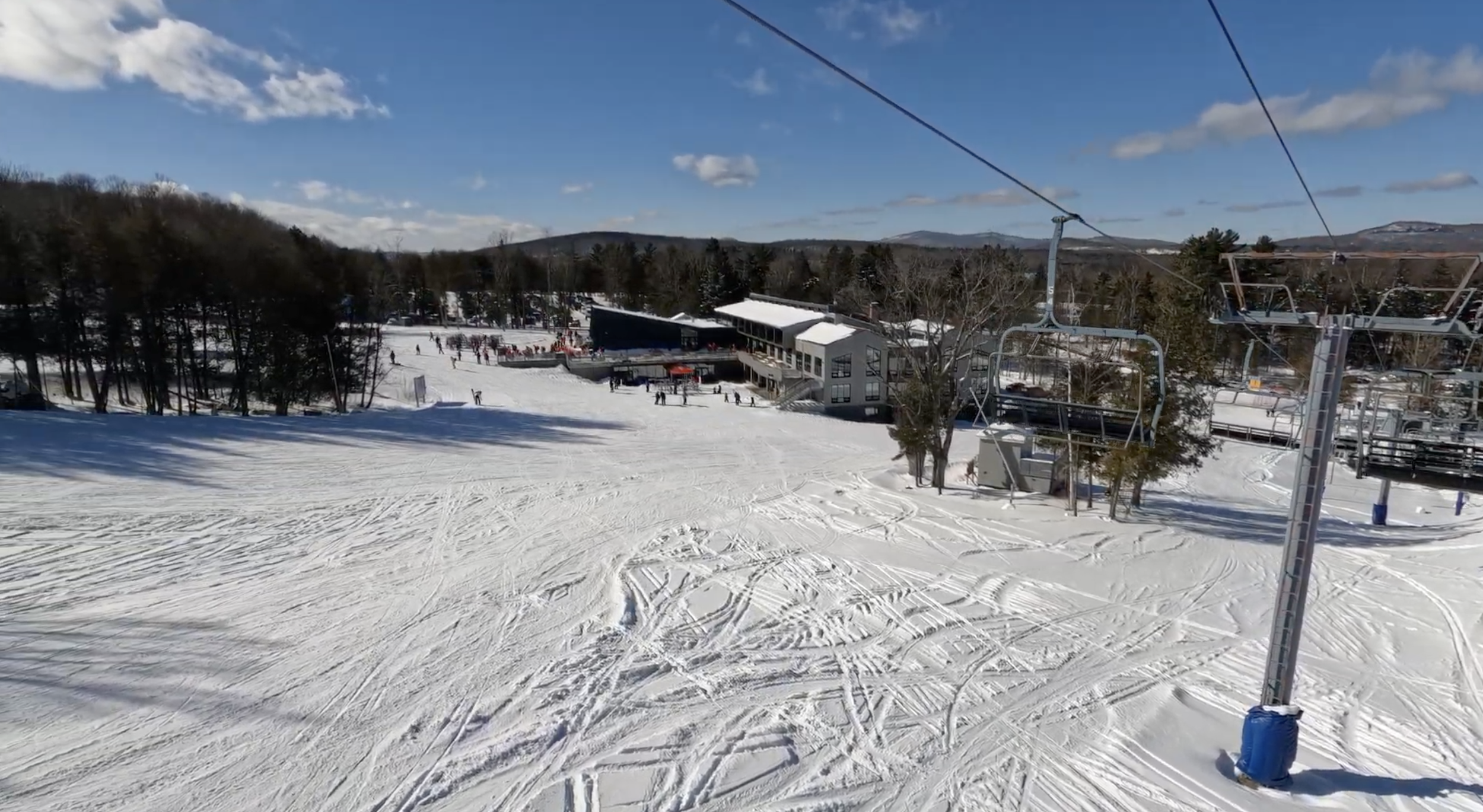
A view of the main lodge at Owl’s Head
Verdict
Owl’s Head offers great views, reliable snowmaking, and affordable lift tickets, all wrapped in a low-key, uncrowded setting. It’s not a destination for deep snow or endless terrain, but for a scenic, relaxing day on the hill, it’s a strong pick, especially for East Coast skiers looking for something off the beaten path and not afraid to embark on a long drive.
Pricing
For the 2025-2026 winter season, on-site day tickets at Owl’s Head go for $73 CAD ($52 USD) on weekdays and $89 CAD ($64 USD) on weekends, with discounts available for online purchase. This is an absolute bargain value compared to destination resorts, particularly for those coming from the United States with current exchange rates, although this value isn’t entirely unique for a resort in the Eastern Townships. Still, with advance midweek tickets as low as $48 USD, Owl’s Head offers a value that’s hard to beat.
Owl’s Head is a member of the L’EST GO card program offering presale deals shared with the neighboring eastern townships resorts: Sutton, Bromont, and Orford. Owl’s Head is also a two-day member of the Indy Pass.