Vail Resorts Epic Experience: The Death of a 20-Year Strategy?
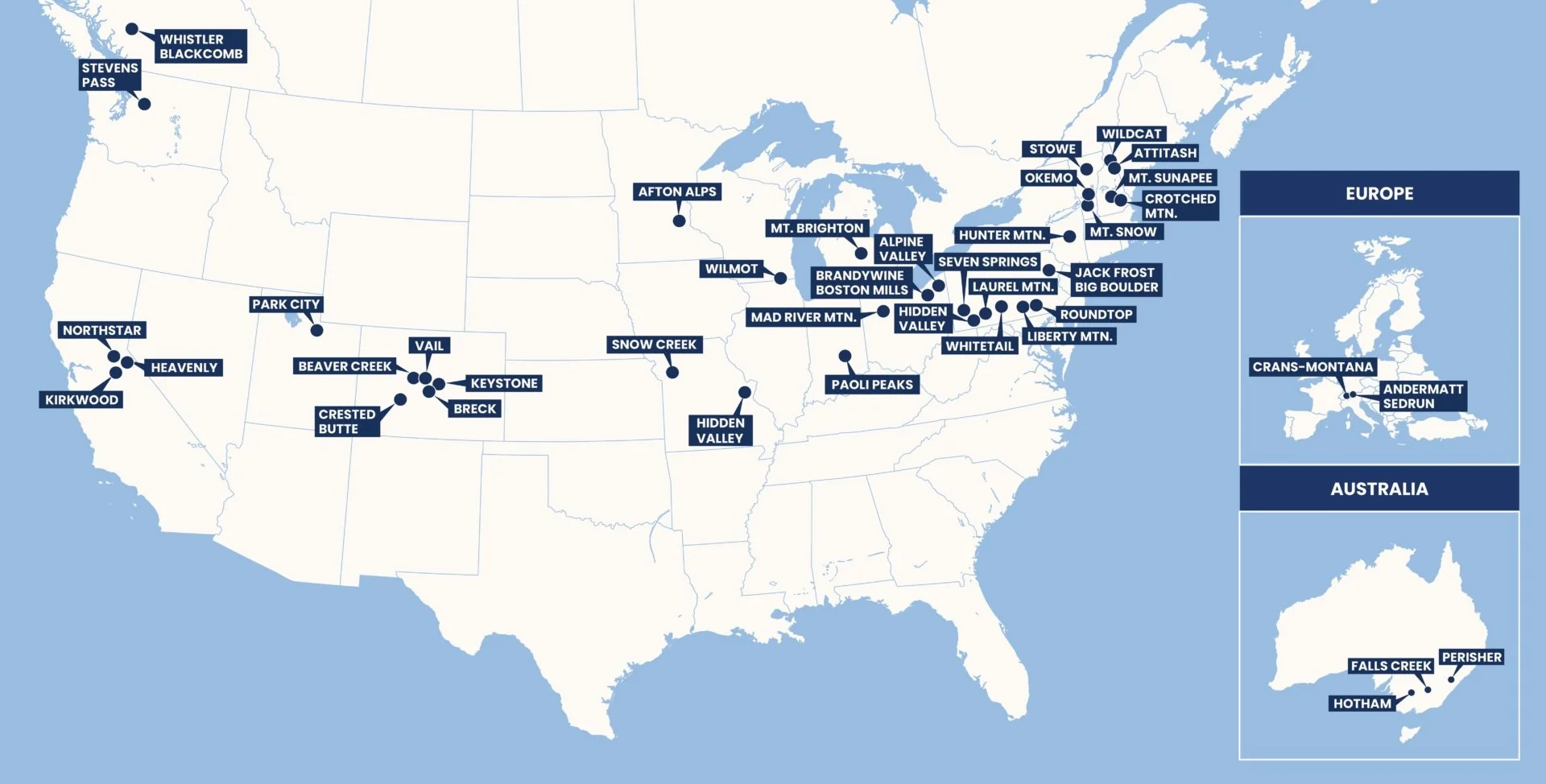
Vail Resorts has all but admitted this map will not expand for quite awhile.
Background
On Tuesday, Vail Resorts announced "Epic Experience," a multi-year plan that CEO Rob Katz is framing as a new era for the company, one built around guest experience rather than pass sales and acquisitions.
The announcement spans five self-proclaimed pillars, which can essentially be broken down as the following: food, lessons, gear rentals, digital engagement, and staffing. The flashiest piece is a food overhaul at 15 destination resorts, where Vail says it will upgrade its most popular menu items, such as chili, burgers, pizza, fries, chicken fingers, and mac and cheese, with higher-quality ingredients and, notably, an explicit promise that prices won't rise beyond normal inflation next season.
On the lessons side, Vail Mountain and Beaver Creek will convert all private lessons this winter to a new premium tier called Epic Ascent, which bundles a dedicated trip concierge, white-glove gear rental, and high-touch support, with more resorts to follow in 2027-28. The connected ski-and-ride-school experience in the My Epic app expands from four resorts to 14.
On the rental side, Vail is continuing its previously-announced move to fold several my My Epic Gear features, including online model selection, BOA boots, and step-on bindings, into regular demo rentals at 12 resorts, without the membership fee.
Vail looks to be investing quite a lot in its digital guest experience. Starting this fall, guests can buy passes and lift tickets and share Epic Friend Tickets directly in the My Epic app, with Apple Pay and Google Pay coming. Lessons and rentals also move in-app ahead of 2027-28, along with AI-driven trip planning. And on the staffing side, Vail points to its $175 million wage-and-benefits investment as the foundation of a fully staffed, more service-oriented frontline workforce.
Nothing in the release announces new lifts, new terrain, or changes to pass and ticket pricing.
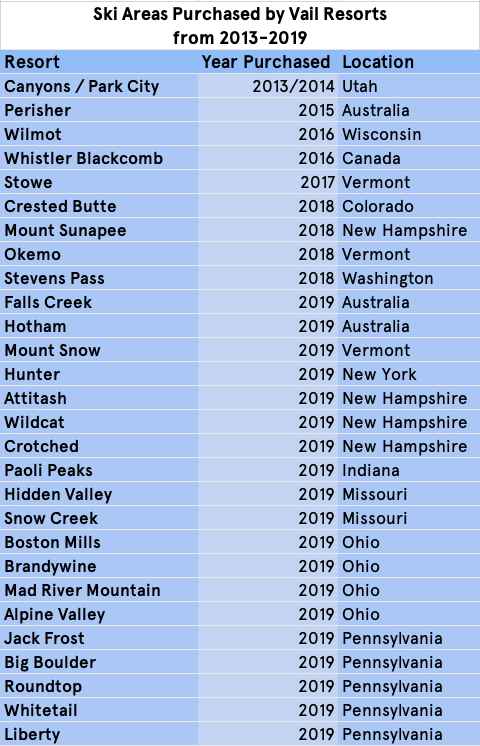
From just 2013 to 2019, Vail Resorts bought 28 ski resorts, more than quintupling its portfolio.
Our Take
On the surface, the changes to the food structure might look like the biggest part of the announcement. But read a little bit more closely, and you’ll see something much more consequential, which is Rob Katz now saying that the Epic Pass and the acquisitions are “not the end goal.”
For nearly two decades, the pass and the acquisition machine have been the strategy. The company has bought over two dozen resorts in the past two decades, and for quite awhile, it was able to funnel those acquisitions to aggressively grow Epic Pass units. This all made Vail the largest ski company on earth, driving the stock to roughly $370 at its 2021 peak.
But now, that stock now trades at less than half that. Per Vail's own April 23 metrics release, season-to-date skier visits across its North American resorts and ski areas were down 14.9% through April 19 versus the prior year. Pass unit growth has stalled to the point that Vail is offering 20% discounts to skiers under 30 just to keep young buyers in the system.
So where does growth come from now? Look at what every pillar in this release actually is: a lever to extract more revenue per guest. Concierge private lessons. Premium rentals bookable in-app. Passes, tickets, lessons, and food increasingly routed through the My Epic app, where Vail controls the storefront and the data.
And as we noted a few months ago, none of this should surprise anyone who's been paying attention. Back in November, Vail hired Lululemon's Celeste Burgoyne as its first-ever Chief Revenue Officer—a role, effective this past January, that Vail said makes her “directly responsible for the majority of the Company's revenue,” spanning marketing, the guest journey, and the digital experience. You don't really need an executive who scaled a retail company like Lululemon in order to buy more mountains. No, you need her to help with customer conversion.
The first thing that comes to mind here is the company’s impending My Epic app updates. By allowing guests to purchase passes and lift tickets with Apple Pay and Google Pay, Vail is removing friction from the checkout process, which is a classic conversion rate optimization tactic. If someone can complete a purchase with a quick Apple Pay confirmation instead of digging out a credit card and manually entering payment information, they're substantially less likely to have something come up that causes them to drop off from the purchase.
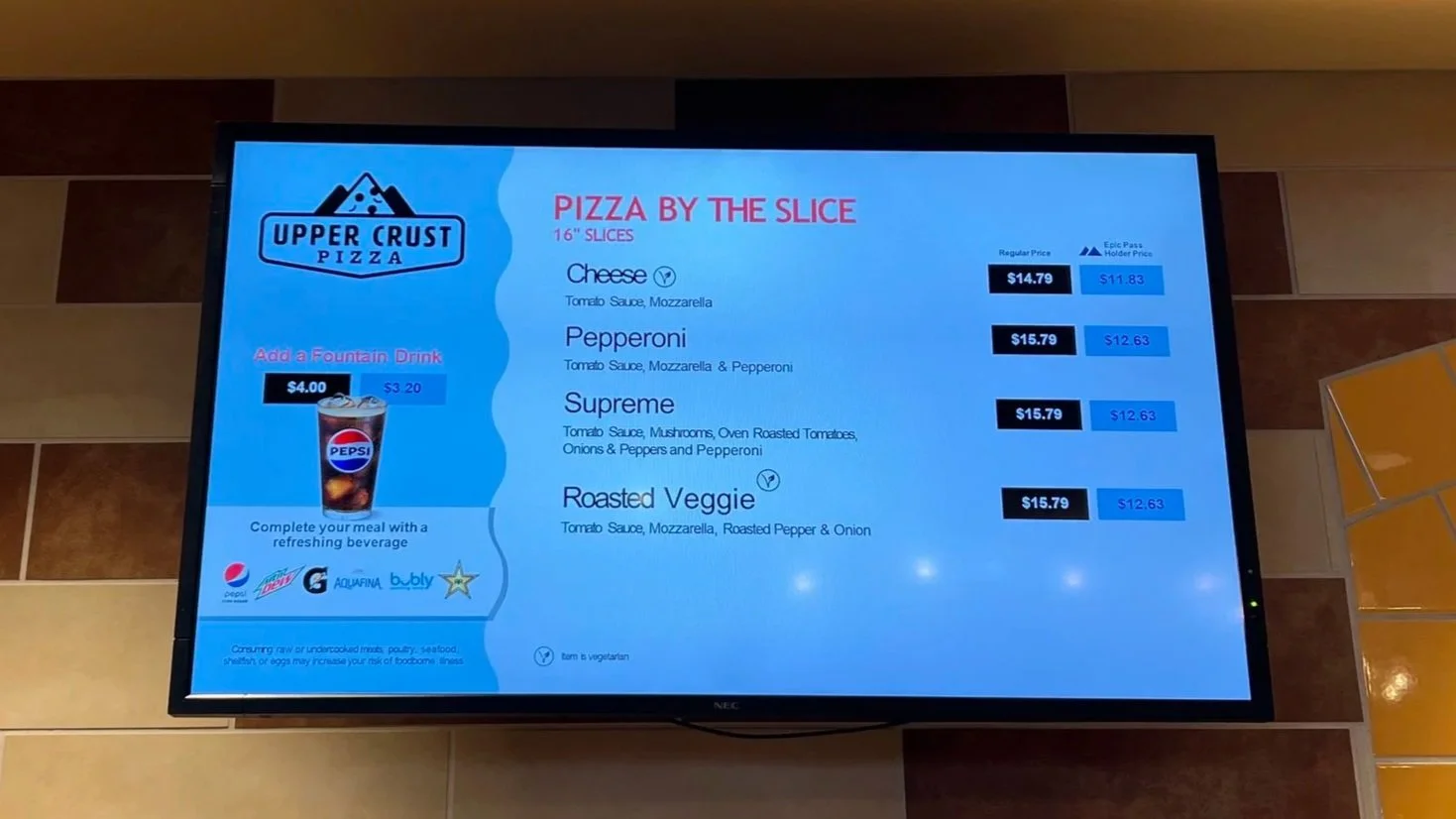
We’re optimistic that Vail Resorts’ food will see investment in its ingredients. But when a single pizza slice is already $15 ($12 for Epic) at a place like Park City, will the food still be desirable if no price cut is coming?
Now, about those burgers. Vail's one concrete food example is a “butcher's blend burger with melted New School American Cheese and pecan-smoked bacon on a griddled brioche bun, with waffle fries and a house comeback sauce.” Count the premium-signaling modifiers in that sentence. “Butcher's blend” has no fixed culinary meaning. Every brioche bun that has ever touched a flat-top is "griddled." A “signature comeback sauce” will probably be some variety of mayonnaise and ketchup with some relish.
A tried-and-true move has long existed across the restaurant industry: keep the food roughly the same, upgrade the adjectives, and let the menu copy do the work of the kitchen. We’re not saying this is what’s happening here, as Vail does explicitly state that it will be investing in higher-quality ingredients. But here's something to note: Vail quantifies its wage investment to the dollar—$175 million—but the food investment is only ever described as “significant.” So it remains to be seen just how much nicer the newer ingredients will actually be.
To give Vail a bit more credit, the release contains an explicit, on-the-record pricing commitment, which is that the food improvements next season “will not come with higher prices, beyond normal inflation” (which, by the way, is something we can fully intend to check for ourselves next winter).
But note the fine print. “Beyond normal inflation” is doing heavy lifting—mountain dining prices have outrun CPI for years, so whose “normal” are we using? Holding prices steady on the most expensive on-mountain food in North America isn't necessarily a gift if the prices were already outrageous to begin with. Keeping a $12 slice of pizza at the same price adjusted for inflation is not going to win that many people back, even if it is now a “gourmet” offering. Also, the commitment covers next season only, with no word on 2027-28.
Given the lower price point of Epic than Ikon, Vail's customer base now skews more price-sensitive than that of Ikon-affiliated destination resorts, and after two rough seasons, jacking up food prices under cover of “elevation” would be a self-inflicted wound. We are cautiously optimistic that this is the real investment the release claims, although it still seems that if you couldn’t stomach the price tag of last year’s cafeteria food, you won’t be able to next season either.
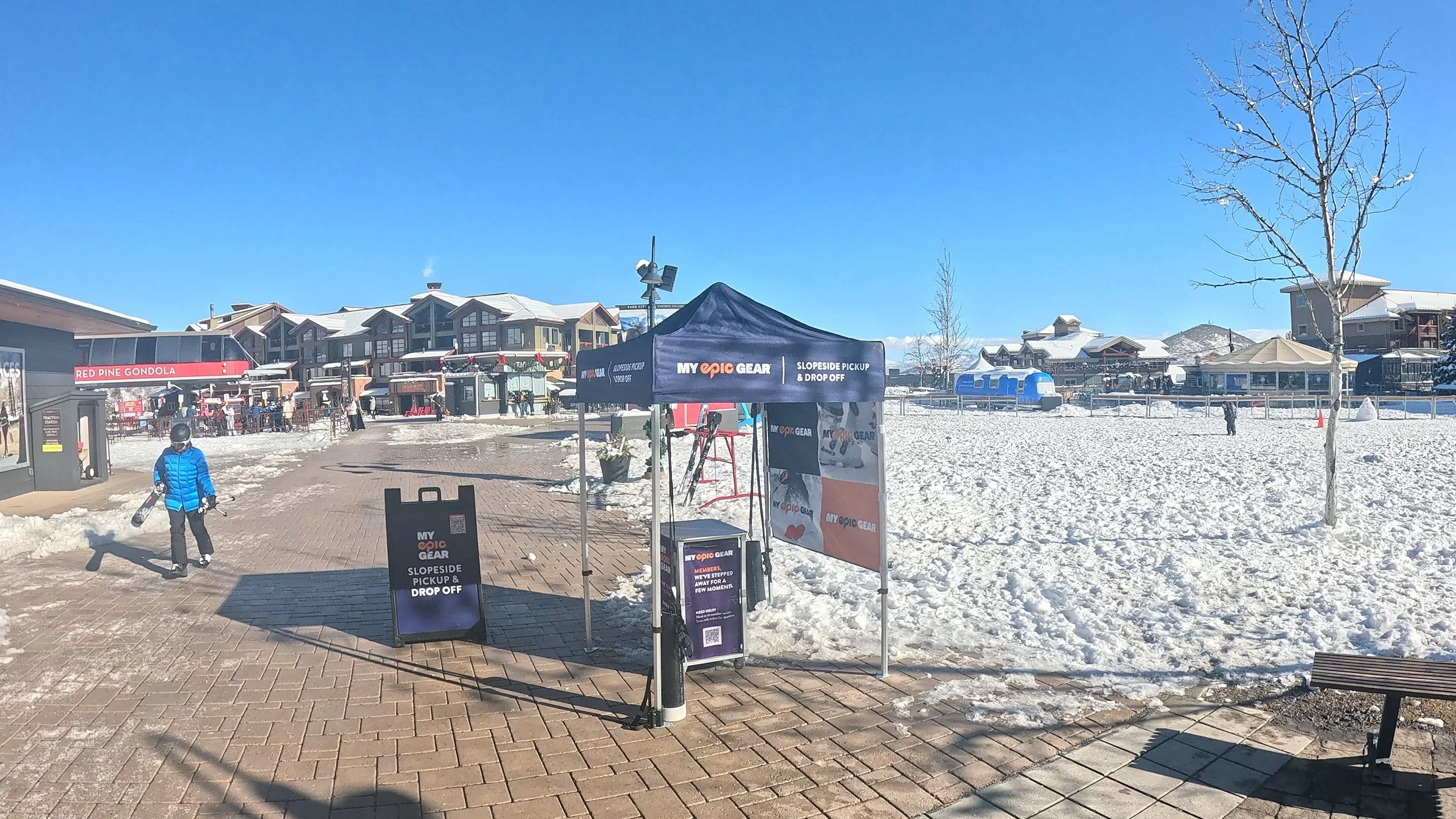
We can only imagine that My Epic Gear has not been performing as expected.
It’s also worth touching on price sensitivity in looking at the new “Epic Ascent” product. In making this rebrand for its private lessons, it looks as if Vail is trying to attract higher net worth customers who spend more across lodging, dining, lessons, and rentals, but perhaps more importantly, is less likely to drop out of the ecosystem in the event of bad weather.
Two other notable things from this release. First, the My Epic Gear integration is arguably a flop dressed as a rollout. Dropping the $50 membership fee and folding the features into standard demo rentals is what you do when a standalone membership product didn't sell.
Second, the on-snow section of this release commits to nothing. While this may not be the biggest surprise, especially given that a few investments have already been announced in previous months, the company is still far behind where it needs to be in order to address an aging lift fleet, with over two dozen detachable lifts that are now over 30 years old, or beyond their useful lives. The company will really need to start ramping up beyond a handful of new chairs a year to stay competitive in this regard.
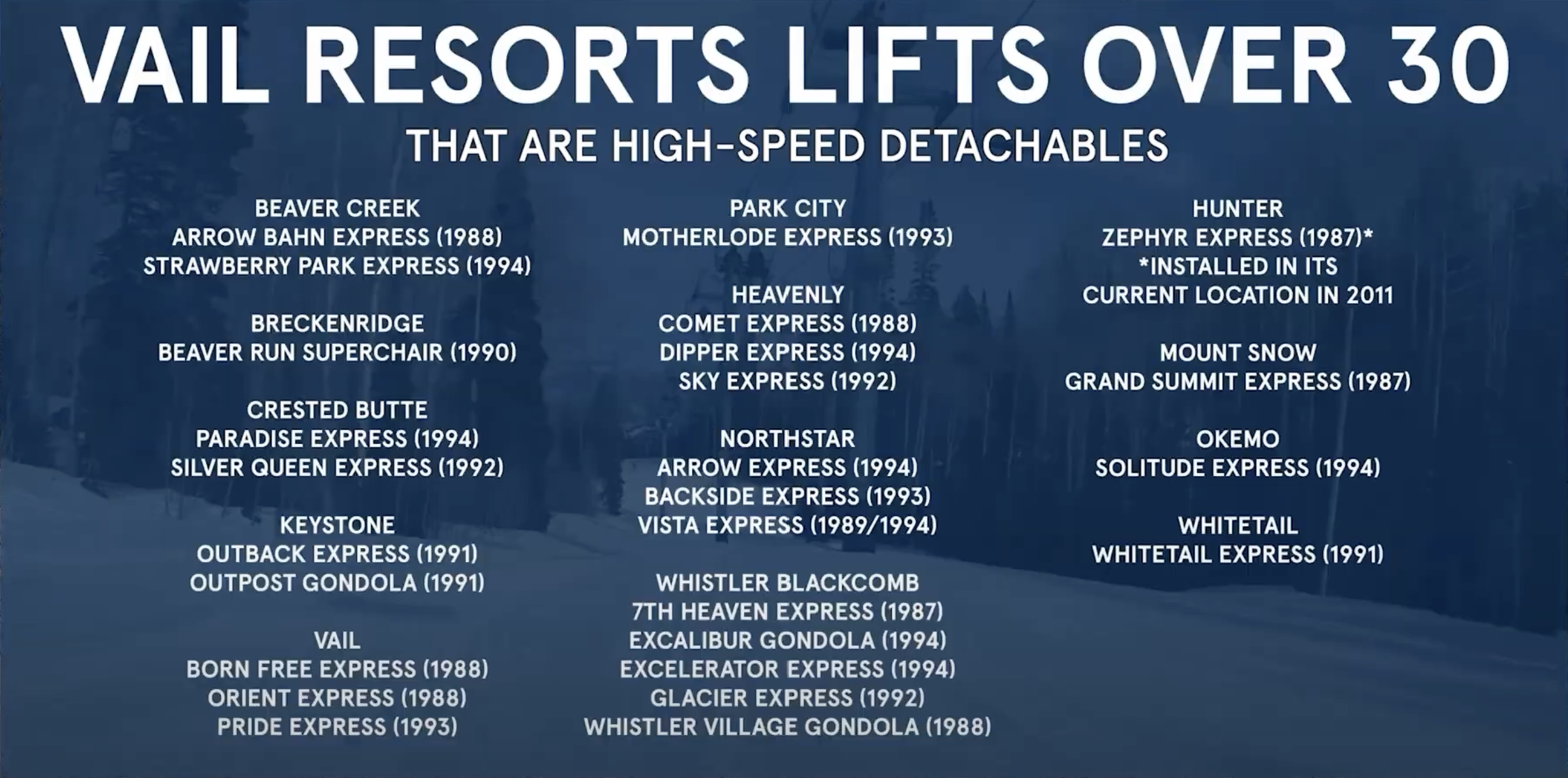
At this time, none of the above lifts have concrete plans for replacement.
Vail’s CEO just told us the pass era is over and the experience era has begun. Whether “experience” means a genuinely better day on the mountain or just fancier text on the menu board is the question we'll be answering, on the ground, all next season.