How to Predict Ski Resort Crowds
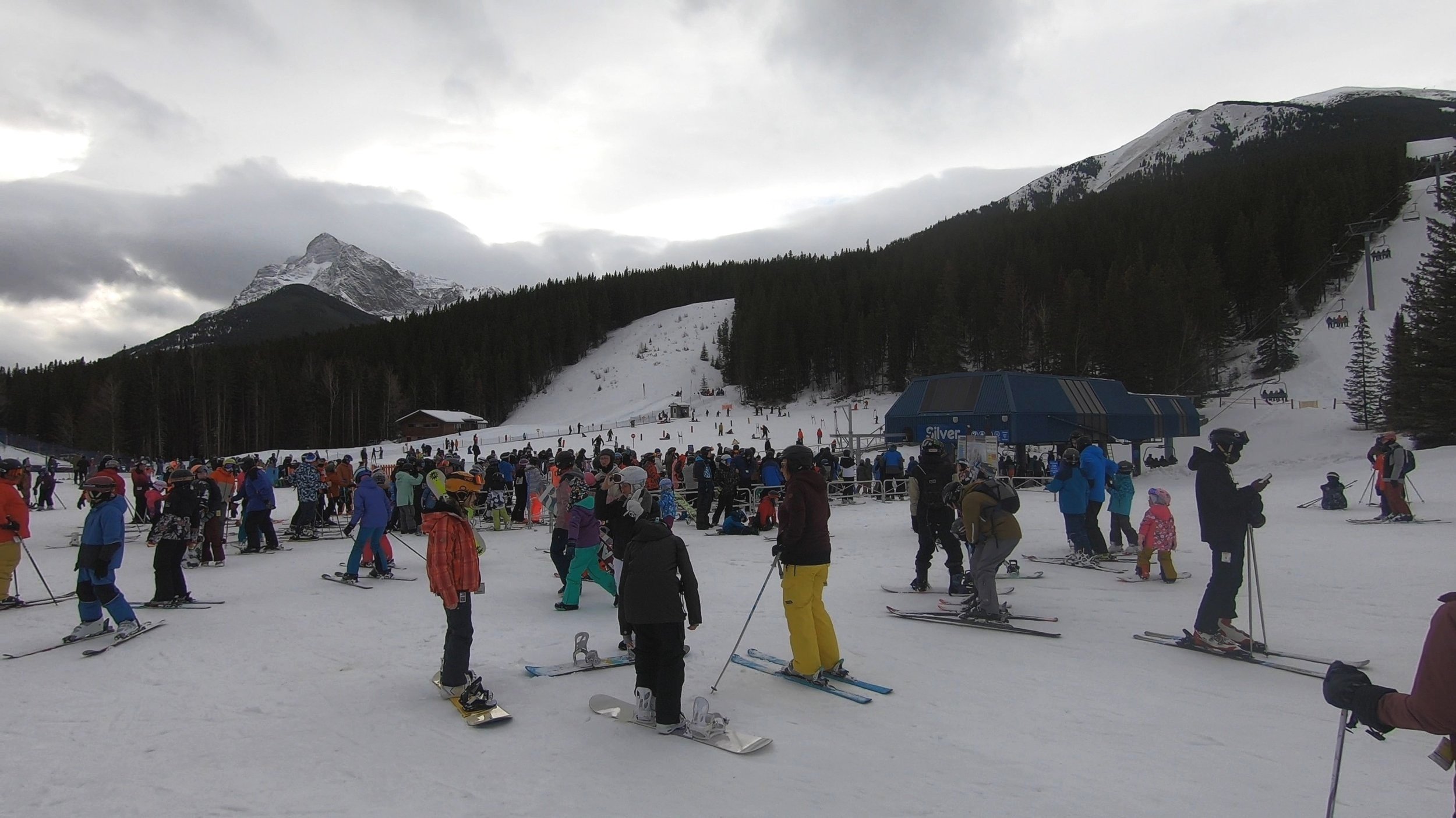
A crowded base area at Nakiska in Alberta, Canada.
When it comes to planning your ski trip, there’s little that can spoil your experience more than significant crowding. Even if you have perfect snow and incredible terrain on paper, the experience changes completely if you spend half the day waiting to even get a crack at it. But thankfully, avoiding crowds is a lot more straightforward than you think if you actually understand the patterns.
So what exactly are the factors that influence crowding?
Lift Infrastructure
When it comes to crowds during your ski trip, the first place that comes to mind is the lift line. And there’s good reason for that, because a mountain’s uphill network determines how many people can actually get up the mountain at any given time.
And of course, the first circumstance that impacts crowds is simply a singular lift’s uphill capacity. On paper, the more people a lift can carry, the shorter a lift line will be. One-person platter lifts are typically the least efficient, followed by two-person t-bars and double chairlifts, and so forth; under ideal conditions, the best high-capacity lifts and gondolas can carry over 3,000 people an hour, or more than triple the typical double lift. Specialty lifts such as 3S and funitels are serious workhorses, and they can carry more than 4,000 people per hour. And surprisingly, high-speed rope tows, which lack fixed grab-on points, can theoretically take up as many people as can squeeze on and shuffle up guests more efficiently than almost any aerial lift. On the other hand, aerial trams are typically the least efficient; they might look really promising on paper because their cabins are so big, but in reality, only having two cabins per lift makes for the lowest capacity and longest waits of any lift type. There are some exceptions to these rules of thumb, mostly driven by variations in chair or cabin spacing, but if you want to know for certain how efficient your resort’s lift is, you should check out liftblog.com, which has an incredible encyclopedia of every North American ski lift including its carrying capacity.

Breckenridge has four high-speed lifts out of its main Peak 8 base, but detachables don’t always automatically equal shorter lines.
But in reality, there is a ton of nuance to how much a lift’s capacity translates to lines. People naturally gravitate toward faster, flashier lifts, so you’ll often see people choosing to ride a high-speed chairlift or gondola over a fixed-grip lift. However, while high-speed detachables get guests up the mountain faster, they don’t actually offer much of an hourly capacity benefit over slow lifts because the chairs have to be spaced more widely to account for safe terminal loading. As a result, it’s not uncommon for busy crowds to pile up at the detachable lift while the fixed-grip “helper” next door spins half empty.
Speaking of neighboring lifts, it’s often more useful to think about total uphill capacity from a given terrain zone rather than a single lift. Even a massive ten-person gondola out of the base might not be enough if it’s the only route up. The busiest base areas often rely on two, three, or even four high-capacity lifts to spread people out effectively. In addition, if a single lift is the only way out of a terrain pod, or if trails from multiple other zones with higher capacity throughput filter down into it, that lift can easily turn into a chokepoint (no matter its capacity).
Jackson Hole is a great example of both good and less-than-ideal lift design. On the plus side, major lifts at the base, including two gondolas, a high-speed quad, and the tram, generally spread people efficiently in the morning and keep base lines manageable. However, the tram is the only way to reach the peak, and combined with its low capacity by way of design, it often develops substantial lines, especially on powder days.
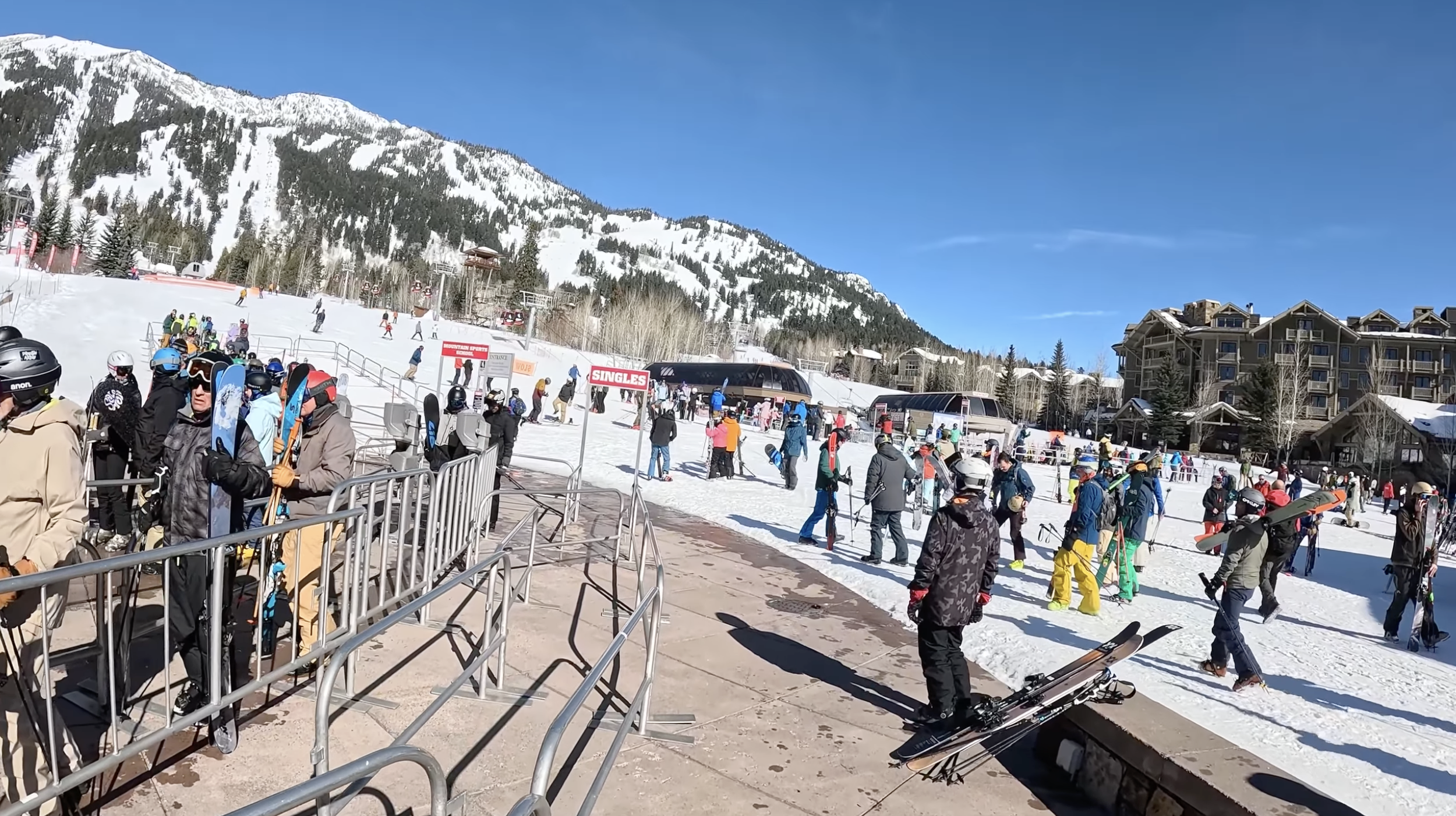
The main base at Jackson Hole, Wyoming, during the morning rush
Another significant circumstance that’s dependent somewhat on lift capacity but can play a role in its own right is line management. If mountains are letting chairs go up half empty and there are crazy lines, that’s a big problem. Most large North American resorts have gotten much better at managing mazes and loading procedures in recent years, but a few eight-packs and newer high-speed chairs still see uneven spacing as staff learn to handle their volume—so if you want to avoid these types of situations, steer clear of mountains that have documented problems with line management.
Speaking of understanding the mountain, knowing which individual lifts will draw the biggest crowds can help you plan your laps around them, even on a busy day. Pods that serve a high concentration of intermediate blue terrain almost always attract the largest share of skiers and riders, given that the intermediate demographic is by far the biggest at most popular resorts. Similar chokepoints exist at many resorts where a single, low-capacity chair offers the easiest access to a broad swath of expert terrain. If you want to ski or ride those pods without long waits, make them your first stop of the morning while most guests are still arriving (unless it’s a powder day), or return late in the day once the early rush has thinned.
Speaking of timing, lift line patterns are by no means static. And while the lift issues at many resorts often occur throughout mid-day, there can be especially wild variations in lift demand in the morning and afternoon. Out-of-base lifts almost always see the longest lines first thing in the morning, because everyone has to take them to get anywhere else on the mountain. If the resort has multiple base areas, starting from a less popular one can get you ahead of the rush.
Afternoon patterns aren’t typically as bad as the morning (after all, people are leaving the mountain rather than trying to get up it), but there are a few circumstances that can make for havoc right before the slopes close. At some of the biggest resorts, certain lifts are unavoidable bottlenecks at the end of the day because they provide the only way out of key terrain pods, or they offer the only route back to a specific base. Keystone’s Wayback lift and Steamboat’s Elkhead Express are classic examples; both become chokepoints late in the day as everyone has to ride them to get back to their respective home bases. If you want to avoid getting stuck in a bottleneck during your last run, plan your route so you’re out of those zones before the rush starts.
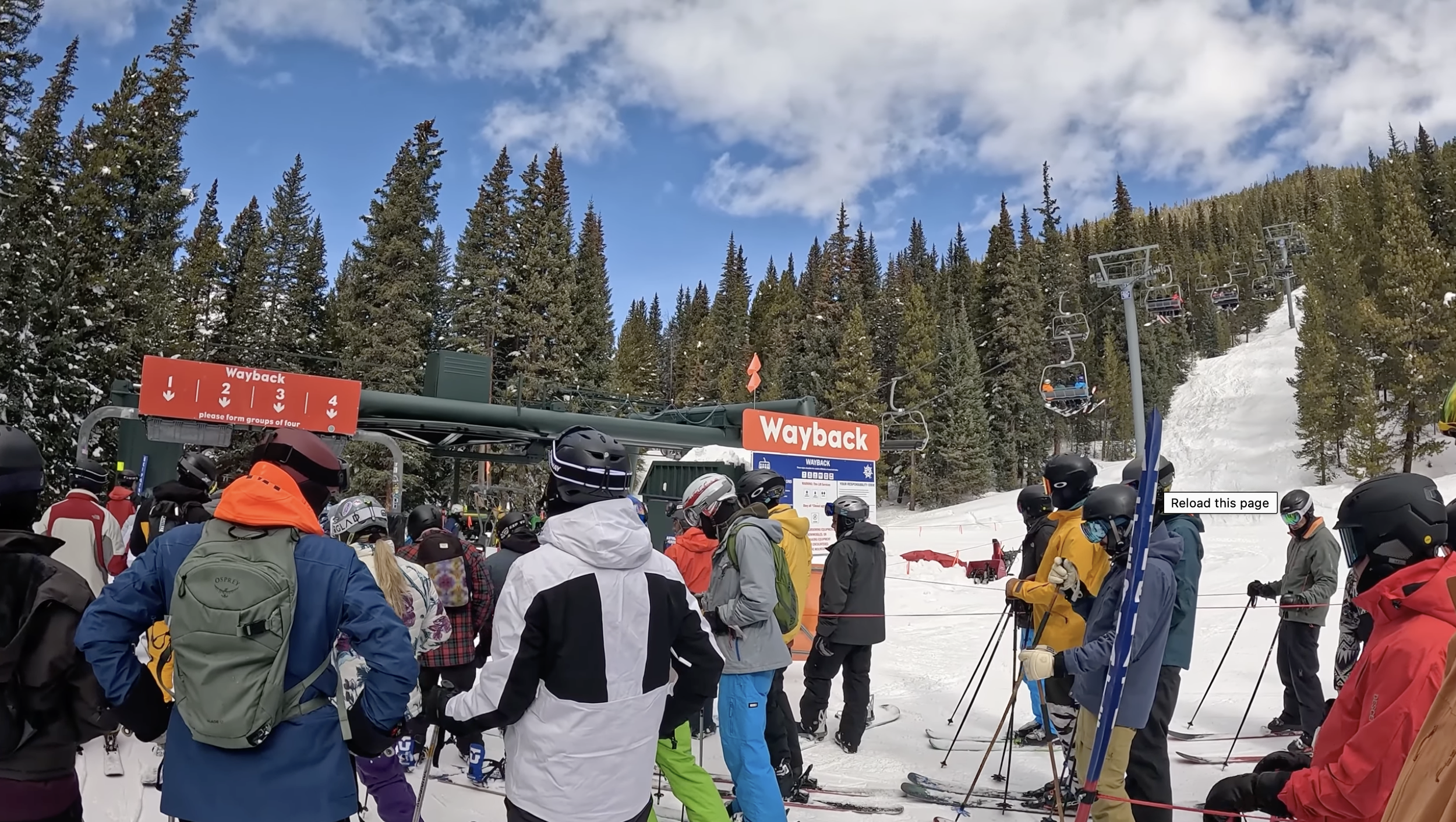
Keystone’s Wayback lift is a fixed-grip quad that provides the only return access to the rest of the mountain from the popular Outback area.
Terrain Layout
Okay, so waiting in line might be one of the first experiences you have with crowds on your ski day. But when you get off the lift, different issues can materialize. While the number of people on the mountain at any given time is limited by lift capacity, if you end up at a resort with a poorly-designed trail network or a less-experienced clientele, you might find yourself struggling to avoid other skiers and riders on the slopes.
Here's a general rule of thumb: the easier the terrain area, the more congested it tends to be. Since less experienced skiers and riders take longer to go down, it takes more time for them to clear out of the trail, and hence results in a higher visitor density. If you've visited Schoolmarm at Keystone, you know what we're talking about. On popular green trails, it’s common to spend as much time navigating around others as you do focusing on your own skiing or riding.
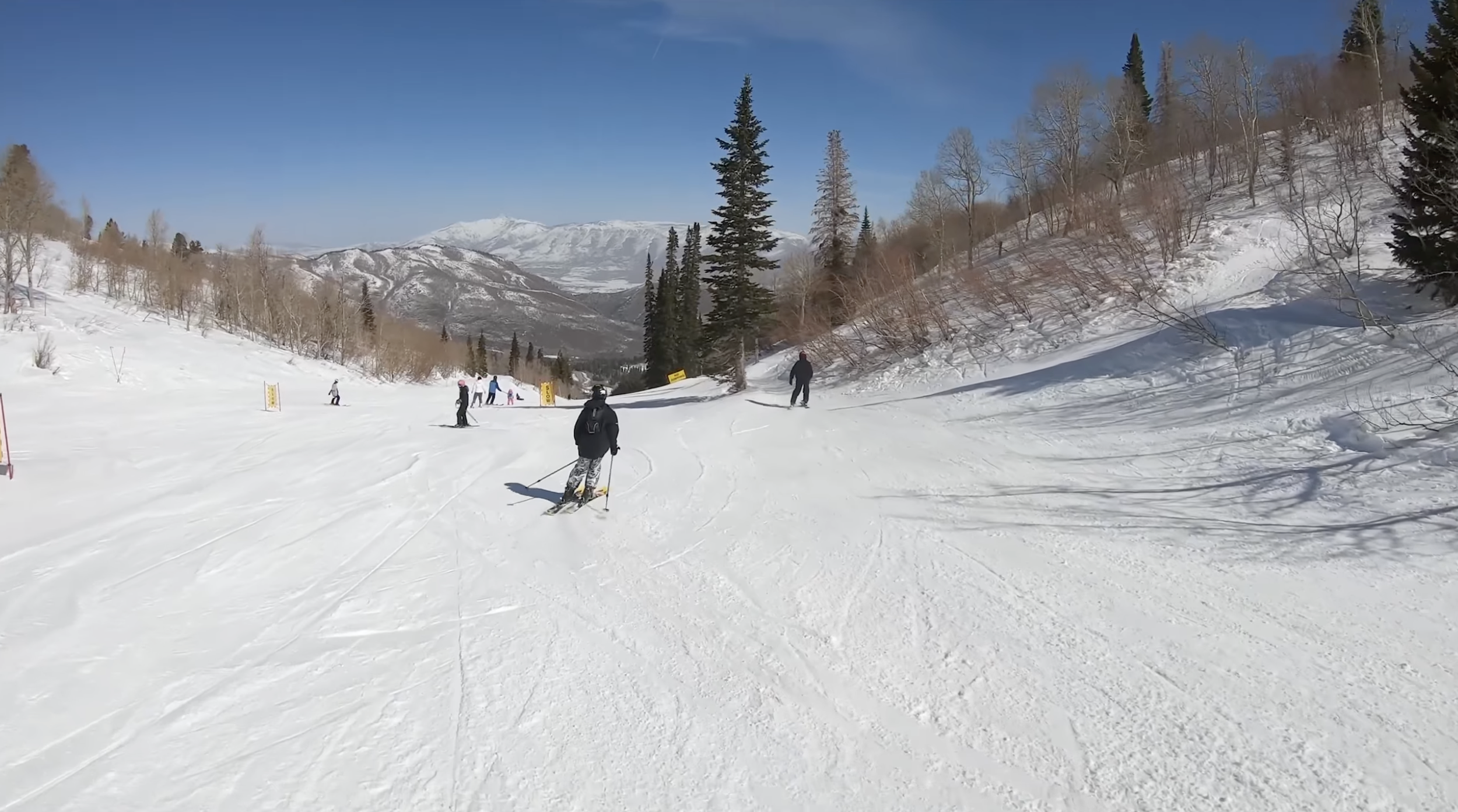
Bear Hollow at Snowbasin is an example of an already-popular green trail that also serves as a funnel for a plethora of more difficult upper mountain terrain, creating a dangerous mix of traffic.
Speaking of popular green and blue trails, bottlenecks can also form when a mountain’s layout forces too many people through too few trails. If there’s only one route of a certain ability level—usually green or blue—or a canyon that several trails funnel into, that section can become gridlocked. The same thing happens on connector runs that link one terrain pod to another. When only one or two trails provide access between major zones, everyone trying to transition ends up in the same place. In both cases, even a mountain with great lift capacity can feel crowded if the trail design doesn’t give people enough ways to spread out.
Overly narrow runs are another culprit, and they're especially bad when combined with the factors we discussed above. When trails don’t offer enough space for skiers and riders to spread out, it's tough to share the space to make enjoyable turns, passing becomes difficult, and avoiding others becomes a full-time job. This usually isn't as much of a problem on narrow advanced and expert runs, especially when they're ungroomed, as the harder terrain filters many folks out, but on beginner and intermediate trails, narrow width can be a big annoyance.
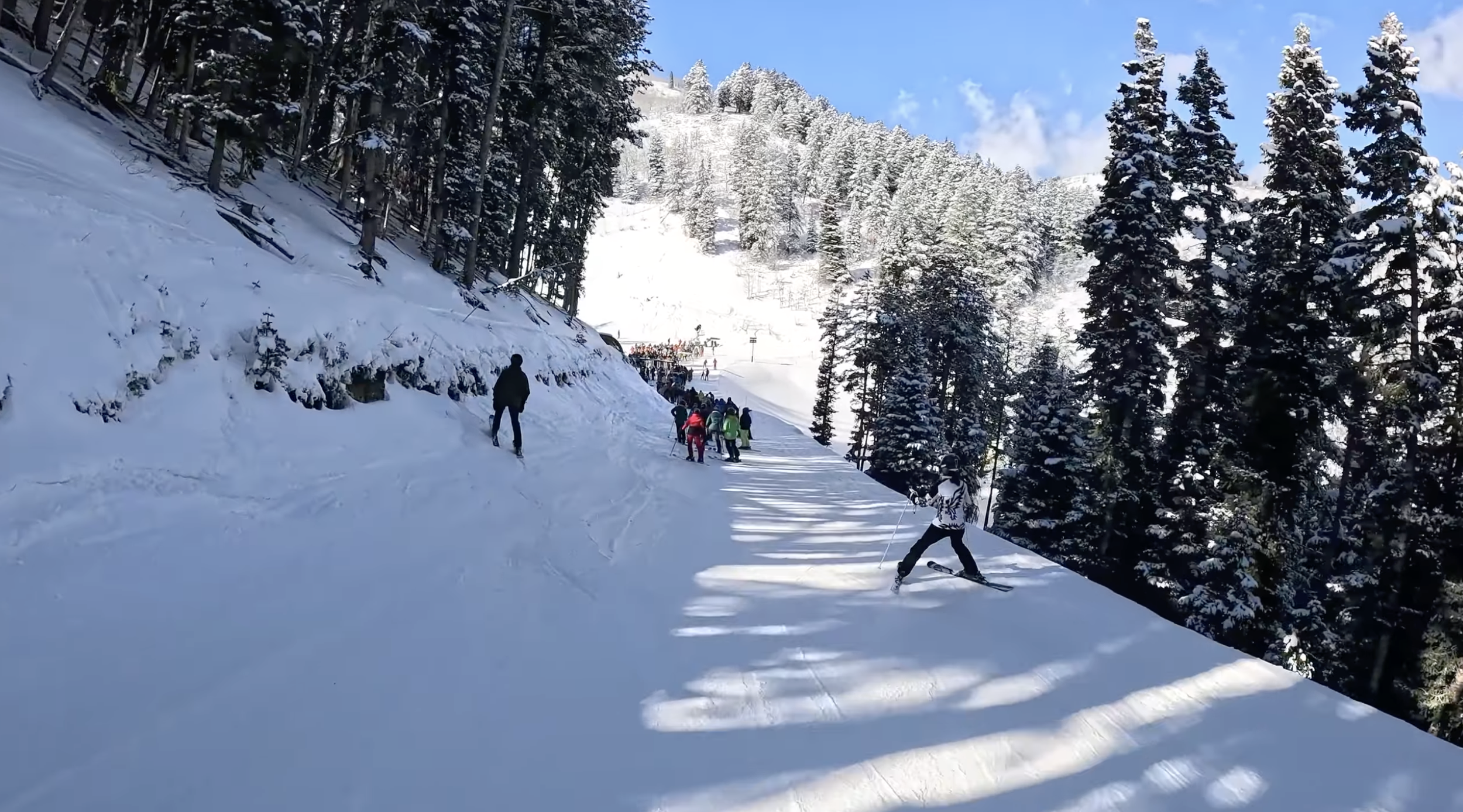
The line for Deer Valley’s Sultan Express with increased traffic from the 2024-25 terrain expansion
Terrain Expansions
It’s also worth noting that while they don’t necessarily bring trail congestion, terrain expansions can also change crowd dynamics in subtle ways. When a mountain adds new acreage, it rarely just increases space—it also changes how people move across existing terrain. For example, Keystone’s Bergman Bowl expansion added new lower-ability terrain but also added green terrain outside of the front face of the mountain for the first time, creating more congestion at the bottom of the back side than there used to be. The first phase of Deer Valley’s massive expansion toward the Mayflower area produced growing pains as well, with the resort seeing its Sultan lift turn into a new chokepoint, but additional expansions this upcoming season are set to remedy this issue.
But usually, terrain expansions solve more problems than they cause. It’s also worth noting that since regular vacationers don't really instinctively know about how to get to the terrain yet, certain terrain expansions—especially when they aren’t readily accessible from a resort base—are often emptier than one might expect in their first year.
The best way to go about avoiding trail congestion, short of word-of-mouth guidance, is probably studying the trail map. If you're looking at a terrain pod and it only has one green or one blue route down—especially if that route looks more narrow or traverse-like—steer clear of it on busy days. Same goes for if it looks like your route will funnel you down into a singular trail with everyone else on the mountain, or if it’s marked on the map as the easiest way down. In fact, within the last decade, several ski resorts have removed their sole green trails in certain areas and marked them as blue (or done so for certain blue trails, marking them as black), in large part to remedy this congestion problem.

The narrow Mountain Run at Palisades Tahoe is the prevailingly popular way down from the upper mountain for anyone who’s not an expert.
Conditions
Even the best-designed lift system and terrain layout in theory can fall apart when mountain operations are limited by conditions. In other words, while weather and snowpack obviously influence snow and terrain quality, they also directly control crowd distribution.
The most obvious example is early season. When coverage is thin and only a few frontside runs are open, every person on the mountain ends up lapping the same narrow footprint of snow. There’s already something to be said about there being limited lift capacity due to so much of the mountain being closed, but even when a resort is able to efficiently shuffle its early-season guests up the mountain, the limited terrain on the other end may not be able to absorb the volume of people they’re moving.
But once the snowpack sets and resorts move into the core winter, different issues arise. At many resorts, certain terrain zones are not dependable for consistent openings; for example, high alpine bowls can regularly close due to wind or for avalanche mitigation, and low-elevation terrain may close for protracted periods of time due to low snow cover. This limits the amount of terrain skiers and riders can be on, putting pressure on the areas that remain open. Even an exceptional lift network struggles when only half the mountain is spinning, and it's often situations like these when the worst lift line clips go viral.
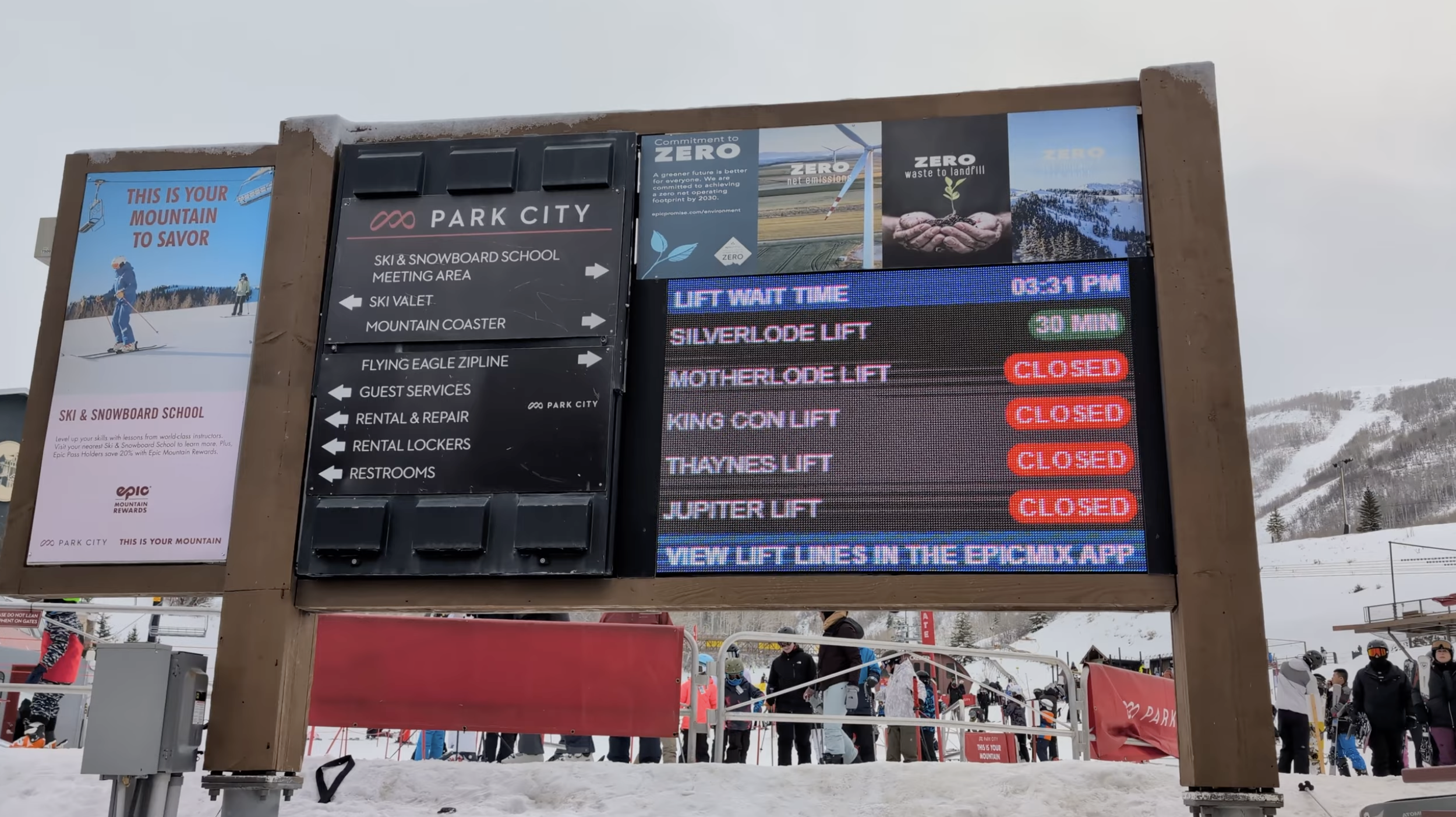
Park City made headlines in December 2024 due to a ski patrol strike that crippled operations across the majority of the mountain, funneling crowds into just a few open areas.
Conditions also vary across different parts of the same mountain, and skiers and riders often gravitate toward the best snow. If conditions are mediocre in one resort area and much better in another, you might see all the crowds funneling into just a small section of the mountain. And on powder days, once one area gets tracked out, guests will certainly be making their way to another one—and if a new terrain zone opens up after avalanche mitigation, you can be assured that nearly the whole mountain will flock over there.
Weather also plays a significant role into how crowded your on-mountain dining experience will be. The more uncomfortable the weather, the longer people will stay inside—and the longer you’ll have to wait to get a seat during the peak rush. On the other hand, when the weather is more pleasant, most ski resorts offer outdoor seating; the extra capacity there really opens up the ability to find a stopping ground for a breather, even during more busy times.
Ultimately, here’s a good rule of thumb: a mountain’s capacity on any given day is best viewed by its current operational footprint, not its theoretical maximum size. Checking the snow, weather, and terrain report before you leave for the mountain is a great way to understand conditions, but if you know what you’re doing, it’s also one of the most reliable ways to anticipate sudden crowding.
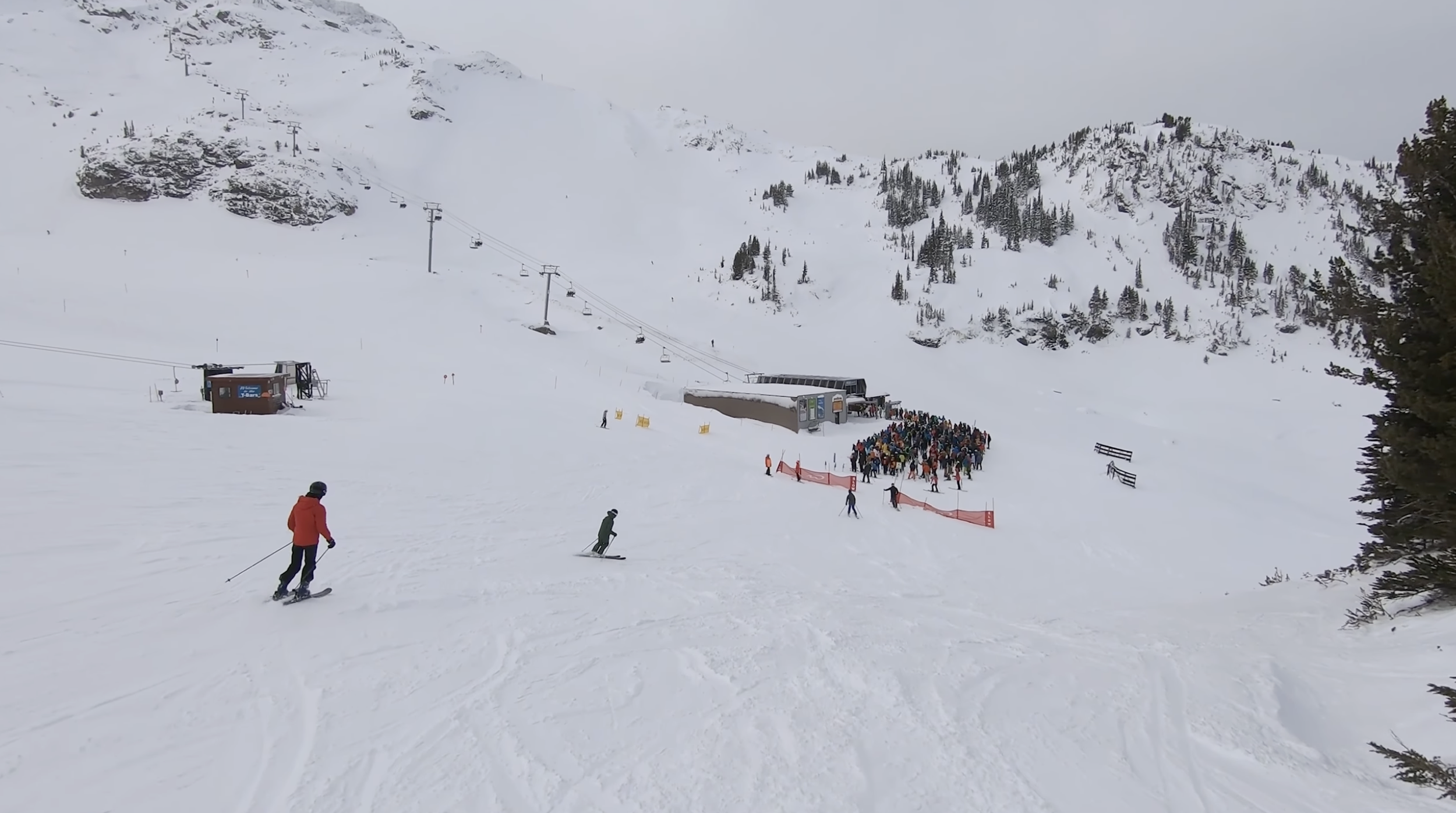
Due to its long vertical drop, conditions at Whistler Blackcomb often vary across the mountain, leading crowds to form in the areas where conditions are good.
Geography
Okay, so capacity, conditions, and the terrain network are pretty solid indicators of how crowded the resort is likely to be. But sometimes, the crowds are heavily dependent simply on where the resort is located.
Indeed, geographic proximity to large cities remains one of the most reliable predictors of peak-time crowds. Mountains within a couple hours’ drive of massive cities like New York, LA, Seattle, or Boston draw huge day-trip audiences, even if conditions are mediocre. Day trips also tend to attract a less-experienced audience than an overnight or destination vacation, so expect more beginner-heavy crowds—and therefore more congested trails—at many of the resorts in these areas. These circumstances also often result in significant traffic jams to drive up there, especially if there’s only a singular access road or highway to get to the resort.
In places like Colorado and Utah with mountains that get world-class snowfall, the proximity to major metropolitan areas also creates crowding when fresh snow rolls in. If you live in the area, it’s only natural that you’ll want to ski or ride on the best days, and if it’s a powder day, you’ll be much more likely to be rushing up to the canyon than if it’s a day with average conditions.
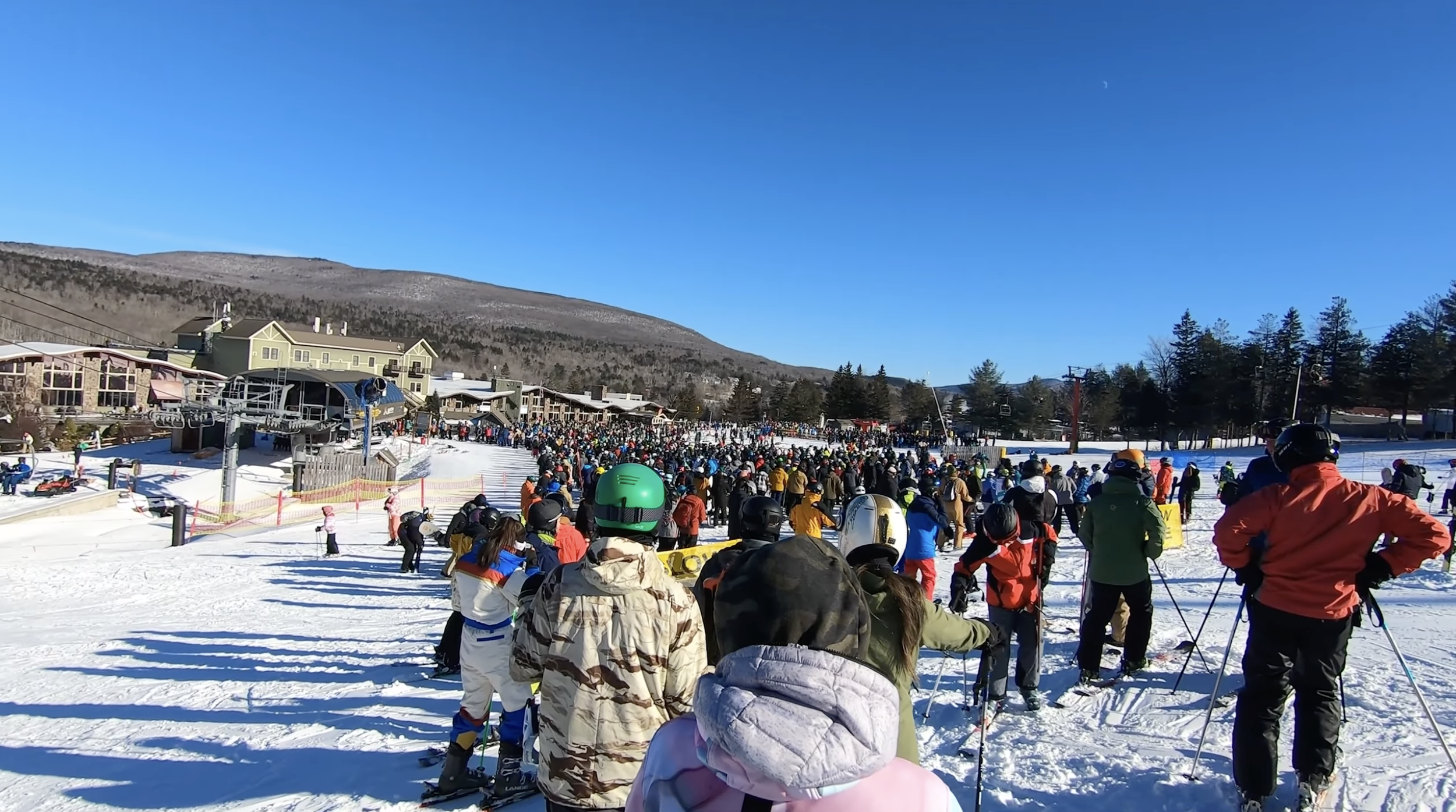
Hunter Mountain, only 3 hours’ drive from New York City, faces massive crowds and lift lines on weekends and holidays.
On the other hand, if your resort is in an incredibly remote location very far away from the nearest major metropolitan area, it’s very hard for a single weekend date or storm event to influence crowds. If you go to a resort in interior British Columbia or rural Montana, it’s going to be a lot harder for people to get up there if there’s a sudden powder day or for a simple weekend getaway. As a result, powder days in places like this are the most likely to remain uncrowded and allow for preserved conditions as long as possible.
But even if a ski resort is very close to a metropolitan area, other factors can influence crowding patterns. And perhaps the biggest one is parking policies. In order to mitigate crowds during peak times, several ski resorts near metropolitan areas, including the Cottonwoods resorts near Salt Lake City and the Cascade resorts near Seattle, have implemented advance parking reservations where you have to reserve a spot ahead of time in order to drive to the mountain. While there will always be some people who don’t read the fine print and try to drive up (and there is some controversy to the paid nature of most of these parking reservations), there’s no doubt that when a resort has them, access road traffic is substantially lower.
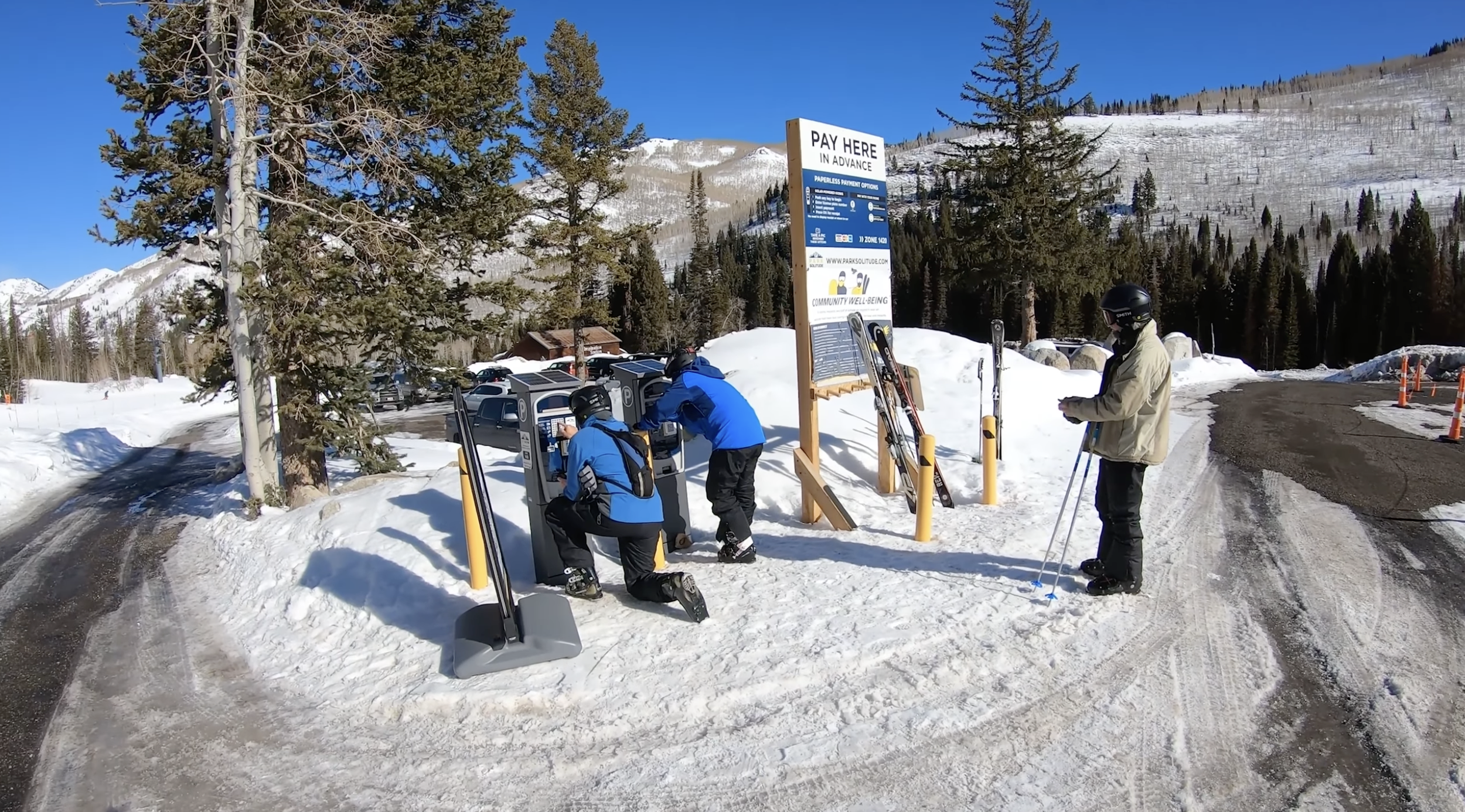
Pay-to-park kiosks at Utah’s Solitude
Public Transportation
Public transportation adds another layer to the crowding equation. In well-organized ski towns like Breckenridge and Aspen, and metro-linked regions such as Salt Lake City, bus systems move thousands of visitors each day between lodging, parking lots, and base areas. These networks ease pressure on parking and access roads, but they’re not immune to congestion themselves. During the morning and afternoon rush, it's common for buses to reach capacity before hitting every stop, creating long bus stop queues and forcing you to wait for multiple buses to go by before you get a spot. Even high-quality systems like Breckenridge’s Free Ride and Aspen’s RFTA experience this, while Utah’s UTA ski buses, which run less frequently these days, can see far longer waits. The frequency listed on a schedule tells you a lot, and routes running every few minutes usually handle peak demand a lot better than those on 15-minute headways.
If you’re relying on public transportation, plan your rides strategically. Avoid the heaviest morning rush when everyone is heading uphill, and if possible, plan to head back to town before 3pm. Those small timing adjustments can mean the difference between a walk-on experience or watching several full buses roll past.
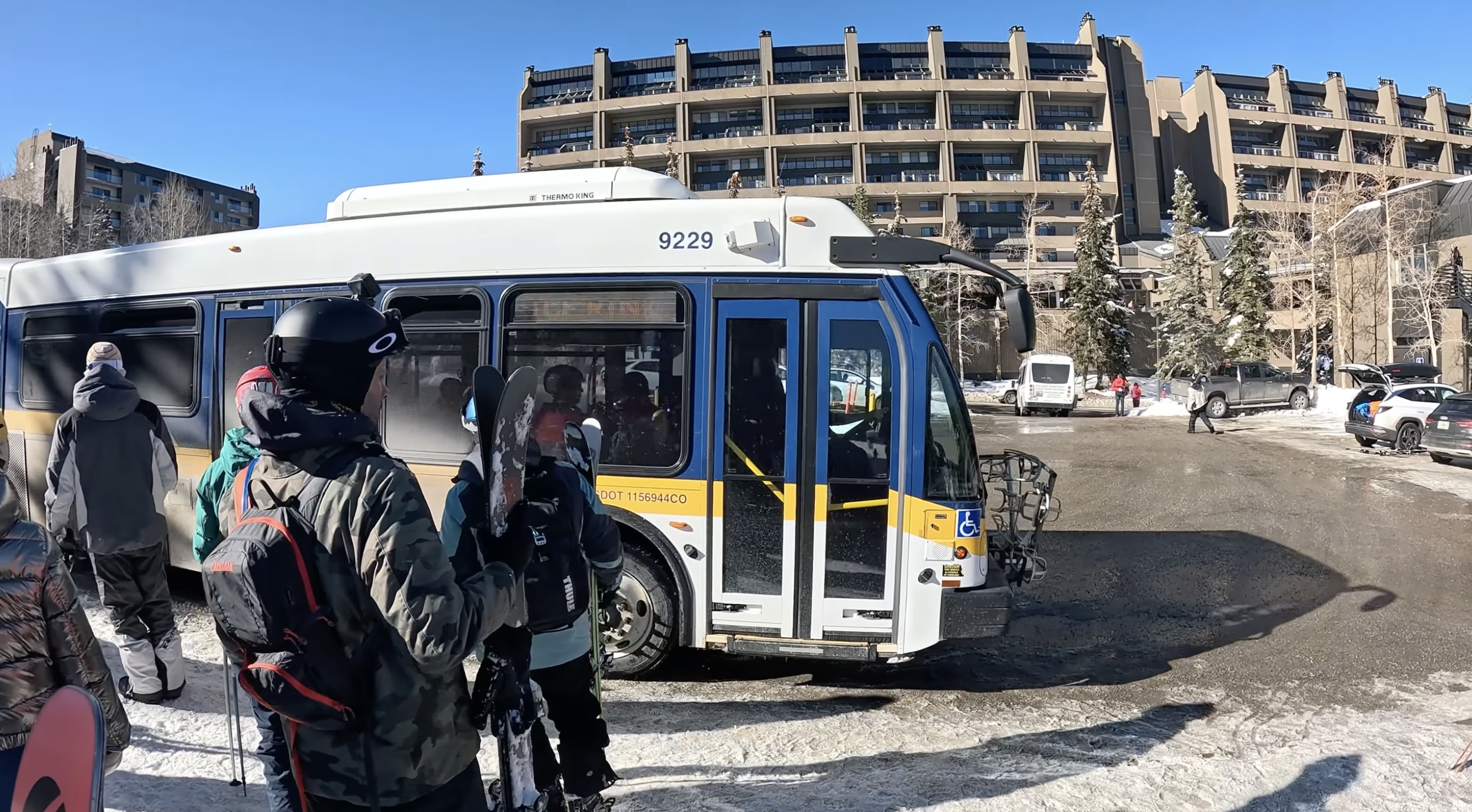
A Free Ride bus arrives at the busy Beaver Run stop near the base of Breckenridge’s Peak 9.
Pricing & Pass Access
If geography determines who can reach a resort, pricing determines who chooses to. Lift tickets and season passes are the economic levers that shape when, and how many, people decide to ski or ride. The financial barrier to entry has always influenced crowd levels, but the rise of multi-resort passes in the last decade has transformed those dynamics more than any other single factor in modern skiing.
To put it plainly, high day-ticket prices discourage casual visitors. When the walk-up rate pushes $250 at major destinations, someone who wants to ski or ride spontaneously with no pre-season forethought will think twice before committing to a day on the hill. This keeps daily numbers lower at the few truly expensive places that rely heavily on single-day tickets.
But as the popularity of season-long and multi-mountain passes has exploded, the way skiers and riders think about cost has flipped. Once someone buys a pass—Epic, Ikon, Mountain Collective, Indy, or otherwise—every additional day on snow feels “free.” That perception drives a massive increase in spontaneous visitation, especially to resorts close to big cities where day trips are easy.
At the same time, the specific rules attached to each mountain on the pass can drastically change how crowded a resort gets. Epic and Ikon resorts that grant unlimited or near-unlimited access, especially those with no holiday blackouts on the base pass products such as Breckenridge and Winter Park, generate huge skier and rider pools. On the other hand, resorts that restrict visitation to the highest-price full passes, have blackouts on the base products, or require reservations, such as Deer Valley or Telluride, maintain far more manageable traffic despite the demand.
Meanwhile, the Mountain Collective and Indy Passes shape crowding in much subtler ways than Epic and Ikon. Their two-day partner access, rather than weeklong or unlimited on Epic and Ikon, creates enough access to let passholders get a taste of each partner mountain, but not enough flexibility to let buyers plan a full weeklong or holiday vacation. The Indy Base Pass also has severe weekend and holiday blackouts at the busiest resorts in its network. As a result, while there can be some short-term visitation spikes at these resorts, the partners that are exclusive to these networks are much less likely to see serious crowding surges from pass visitors.
Ultimately, if you’re trying to figure out how crowded your resort will be, a good rule of thumb is the more restrictive the pass access—and more expensive the lift ticket—the less busy it will be. A resort that’s unlimited on Epic is susceptible to severe crowding, but so is one that’s on no pass but charges $50 for a peak-time lift ticket.
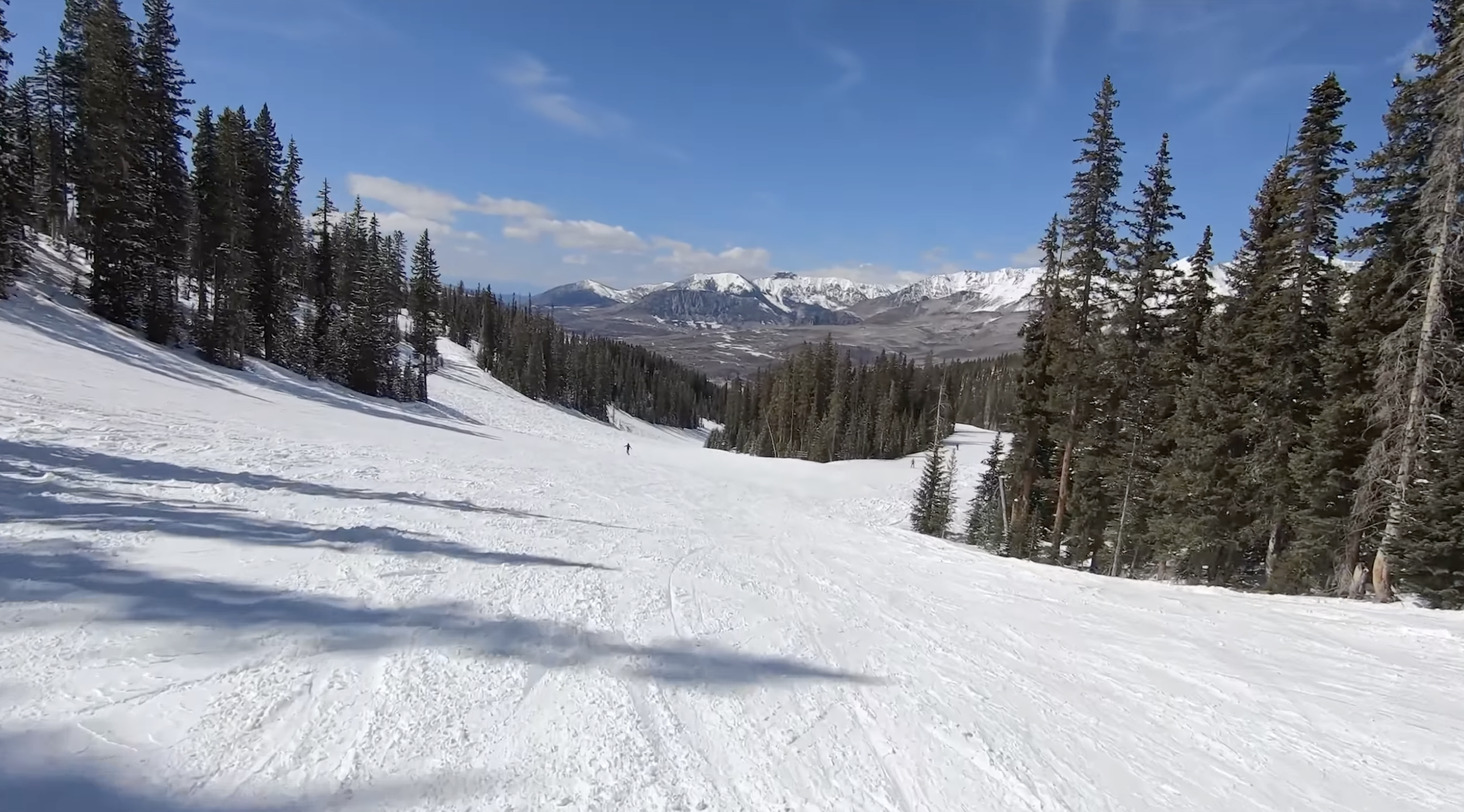
Southern Colorado’s Telluride requires advanced reservations for Epic Pass users and limits their access to 7 days outside of holiday blackouts, greatly reducing skier traffic on the mountain.
Competitive Landscape
Okay, but even disregarding a resort’s mega-pass status or distance from a metropolitan area, another factor can significantly influence a resort’s crowds: its competitiveness over other nearby mountains.
If a ski resort is way bigger, snowier, or more unique in some capacity than all the others in the vicinity, it will naturally attract more people regardless of the other circumstances. For example, a 1,500-acre ski resort in New Zealand will attract a lot more visitors than one in the American West simply because there are so few nearby similarly-sized alternatives. And if a region is getting a storm, you know the most dedicated powder chasers will be checking their OpenSnow subscriptions and heading specifically to the resort with the highest snow totals.
If we want to get more specific with examples, we can talk about Breckenridge, which has what’s arguably the only historical slopeside ski town in the Colorado Front Range, attracting those who care about a non-artificial après experience way more than the other resorts in the region. Another example is Park City, which has a combination of several unique and desirable factors: it’s the biggest ski resort in the United States in terms of skiable acres, the only one in the state of Utah with a truly strong slopeside ski town, and the only destination resort in the U.S. with both an extensive après-ski scene and a drive that takes less than an hour from an international airport. And perhaps the most infamous example of this is Whistler Blackcomb, which is both way bigger and more interesting terrain-wise than every other resort in the Pacific Northwest. Understanding these “outlier” attributes can really help you steer clear of especially busy mountains.
On the other hand, when multiple similarly-competitive resorts sit in the same region, the overall skier and rider population tends to spread out and no single mountain bears the full brunt. Places like Keystone, Copper, and Beaver Creek are great mountains overall, but they have a lot of solid competitors that offer similar packages nearby, resulting in a situation where there isn’t an overwhelming number of people visiting those mountains in particular. Also, if a ski resort lacks on-site lodging and isn’t a primarily day-trip destination, such as Utah’s Snowbasin or Colorado’s Arapahoe Basin, it tends to be a little bit quieter than a comparable resort with slopeside accommodations might be. Same goes for if a resort falls short in one particular area, such as the speed of the lifts at Kirkwood.
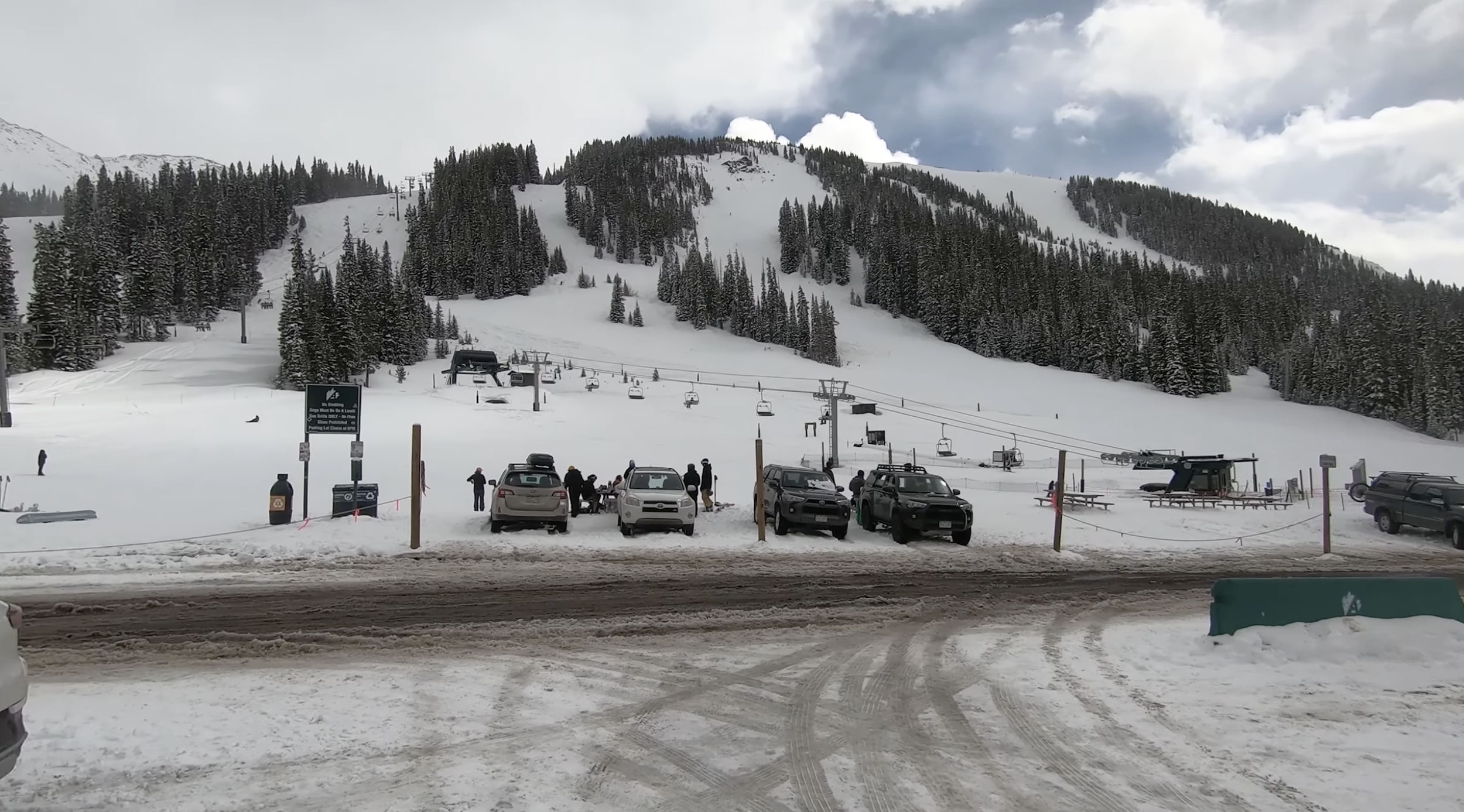
Partially due to its lack of onsite lodging, Arapahoe Basin doesn’t see the same level of crowds as other nearby resorts in Colorado’s Front Range.
Trip Timing
Okay, so all of these factors play significant roles in whether or not your ski trip will see crowds or not. But if you know anything about winter sports, you know we’ve been dancing around the single most reliable factor of whether or not a ski resort will be busy: the timing. If you visit a ski resort on a weekend or holiday, it’s generally going to be crowded, and if you go on a weekday, it’s generally going to not be. The degree to how crowded it will be is heavily dependent on conditions, capacity, terrain, geography, and the like, but every mountain follows predictable crowd patterns that repeat every winter, and if you go on a Tuesday in the middle of January, you’re unlikely to find notable congestion issues (absent absolutely terrible lift design or an access road that’s shared with rush hour traffic).
But even on weekends, certain holidays, and even some weekdays, timing within the season also matters. While we covered some of the issues with early-season skiing in our Conditions section, late-season skiing in the West can deliver excellent coverage with far fewer people. Resorts in Colorado, Utah, California, and the Pacific Northwest often stay open well into April, yet by then many casual visitors have moved on to other activities. This is an incredible sweet spot for anyone seeking an uncrowded ski trip without compromising on conditions or time off from work.
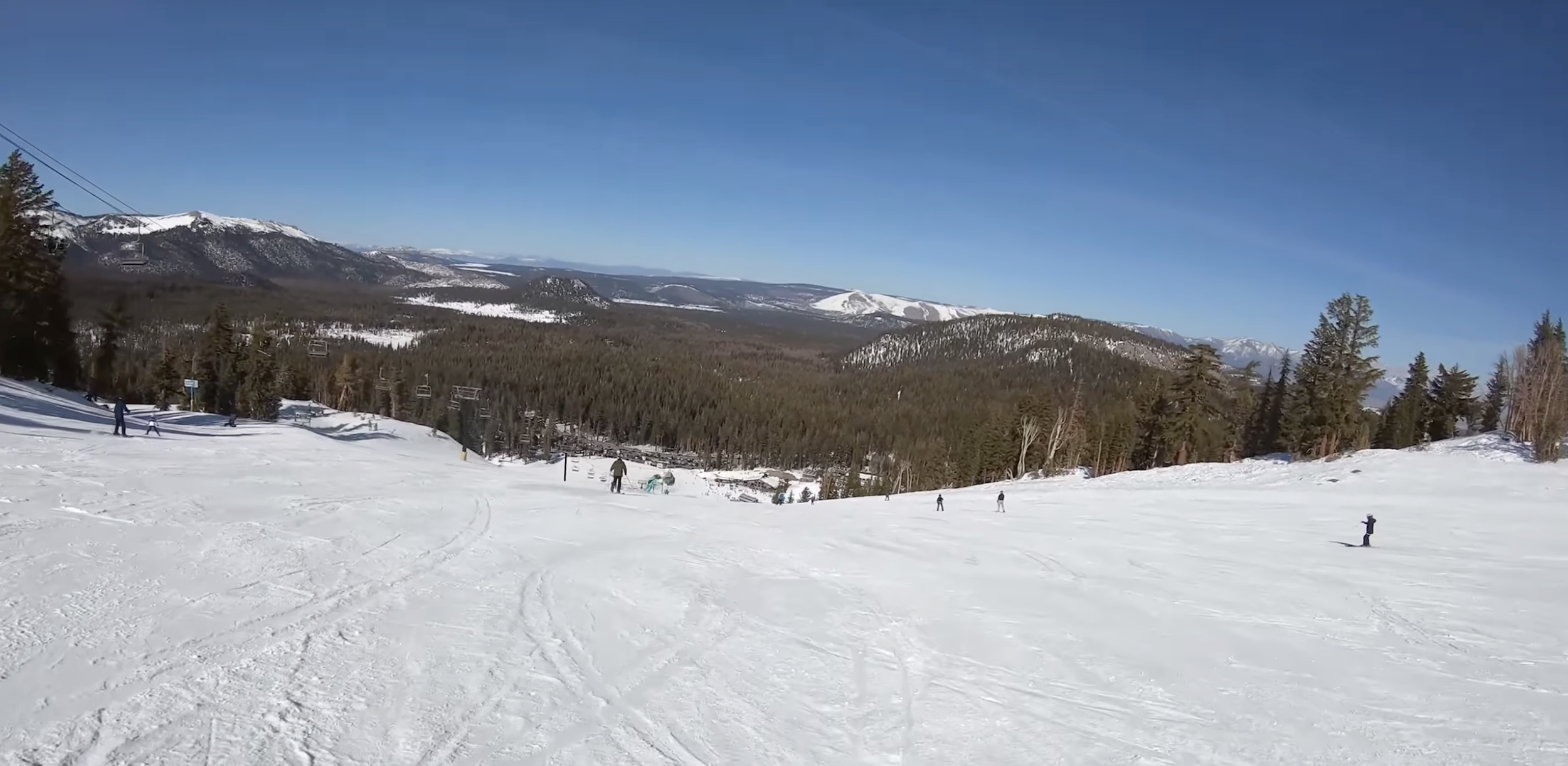
Mammoth in California is an example of a resort that stays open very late into the season, with decent conditions often lasting well into the spring.
On the other hand, even weekdays can be crowded during the spring break season. Between early March and early April, most colleges and school districts across North America have at least one week off—and those breaks don’t all align. The same goes for February in Europe. This means that even though mountains in the Rockies and West can be empty by mid-April, they can experience several consecutive weeks of peak traffic in the period before that. If you’re planning a trip during this window, it’s worth checking school calendars in your target region or using online spring break tracking tools to see when local or regional schools are off.
You can’t change a resort’s geography or its lift design, but you can change when you show up—and in most cases, that’s enough to turn a crowded mountain into a wide-open one.
Final Thoughts
So ultimately, crowding is a serious factor in planning a ski trip, whether it’s local or destination grade. But if you understand the components that go into it, you can plan around the worst circumstances that could theoretically upend your day—and even if you can’t make it on an off-peak weekday, there are several ways to design your vacation such that your experience getting bogged down by congestion is limited to nonexistent.
Join Us at PeakHouse This Winter!
But not super interested in dealing with the crowd planning on your own? We’ve got you covered! We have several group PeakHouse trips planned this winter that are designed to minimize the amount of time we’ll be waiting in line, including our Southern Colorado trip, which will cover multiple resorts that are way too remote to attract day trippers, our Utah trip, which is designed to take advantage of the busiest resorts on weekdays, and our Austria trip, which will bring us to some of the best terrain in the world at Sölden on an off-peak weekday. And while it’s currently completely full, you can still join the waitlist for our Whistler trip, where we’ll be skiing and riding North America’s #1 ski resort on a five-day, off-peak weekday trip. Spots for our open trips are limited and filling up quickly, so if you want to snag a spot, check out the links here.
What are your thoughts on crowding at ski resorts? Any tips or tricks you want to share? Let us know in the comments below.